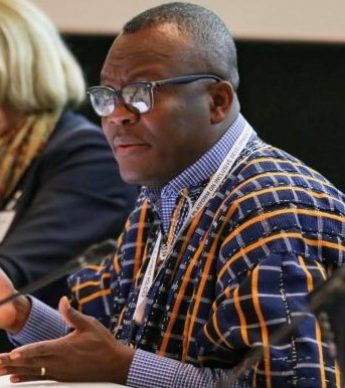
On the sidelines of the 2025 World Bank/IMF Spring Meetings, Devex and Open Society Foundations (OSF) convened an essential dialogue on the theme “Critical Raw Materials (CRM) for Energy Transition: Bottlenecks and Civil Society Solutions.” The event underscored the complex intersection of geopolitics, equity, sustainability, and governance in the emerging global landscape shaped by critical minerals, fundamental to powering electric vehicles, renewable energy systems, and advanced technologies.
In his opening remarks, Pedro Abramovay, Vice President, Programs of Open Society Foundations, framed the urgent crossroads at which many countries find themselves: aspiring for democratic consolidation, sustainable development, and strengthened state institutions, yet facing significant political and economic headwinds. At such a moment, he argued, the role of civil society has never been more critical. Organizations working at the intersection of democracy, equality, and long-term development must not only hold institutions accountable but also contribute to building inclusive, resilient systems. Pedro underscored that this gathering, bringing together diverse actors committed to these values, offered a vital space to explore how civil society can lead and shape solutions to these complex challenges.

This dialogue gains even more relevance in the context of the accelerating global race for critical raw materials. As countries position themselves to harness these resources for energy transitions and economic recovery, civil society faces a dual responsibility: to ensure that the governance of these minerals reflects transparency, equity, and environmental responsibility, and to challenge extractive models that risk reinforcing inequalities.
Geopolitical Stakes and Emerging Dynamics
Brian Kagoro, Managing Director of Programs at OSF, emphasized the complex geopolitical game that underlies CRM dynamics. “This isn’t primarily about development or even the energy transition; it’s about militarization and geopolitical rivalry,” Brian explained. Indeed, the scramble for CRM is significantly driven by national security concerns, particularly between major global powers such as the US and China. Brian noted China’s dominance, controlling significant portions of lithium and cobalt processing, as a strategic challenge for the US and Europe, which seek to break such monopolies through alliances and domestic initiatives like the US Inflation Reduction Act and the EU Critical Raw Materials Act.

Equity and Sustainability at Risk
Suneeta Kaimal, CEO of the Natural Resource Governance Institute, highlighted how the global rush to secure CRMs risks repeating historical injustices associated with extractive industries. Suneeta stressed the potential “race to the bottom,” where lower governance standards could exacerbate environmental degradation, social exclusion, and economic inequalities. This issue is especially acute for low- and middle-income countries, rich in resources but at risk of falling into exploitative relationships and incurring environmental and social costs without fair economic returns.
Benjamin Garcia, Executive Director of Chile’s Espacio Público, discussed Chile’s experience, underscoring the need for context-specific policies to ensure community benefits from resource extraction. Benjamin highlighted Chile’s challenges in lithium extraction and governance, emphasizing the crucial role of civil society in advocating transparency, accountability, and meaningful community participation to avoid pitfalls seen in past resource booms.
Africa’s Critical Opportunity and Challenges
Africa, home to about 30% of the world’s CRM reserves, faces particular challenges and opportunities. African nations currently capture only a fraction of potential revenues due to minimal processing capabilities and limited value-chain integration. For example, Africa earns approximately USD 11-55 billion from raw CRM exports but could generate up to USD 658 billion annually by moving up the value chain. Brian emphasized the importance of regional collaboration among African nations to negotiate collectively, resist monopolistic pressures, and maximize development benefits.
However, Brian cautioned that resource-rich African nations risk perpetuating structural inequities and environmental harms unless supported by robust governance frameworks, strategic partnerships, and equitable policies that prioritize community inclusion, human rights, and environmental stewardship.
Ukraine’s Strategic Position
Olena Pavlenko, President of DiXi Group, highlighted its critical position due to significant CRM deposits essential for the EU’s green transition and defense needs. Olena noted Ukraine’s ongoing efforts to balance short-term economic benefits with long-term environmental risks, emphasizing the need for comprehensive national strategies and international cooperation, especially amidst its ongoing geopolitical conflict and reconstruction efforts.
The Crucial Role of Civil Society

A recurring theme was the indispensable role of civil society organizations in shaping a just and sustainable CRM landscape. CSOs, through advocacy, strategic litigation, transparency initiatives, and capacity-building, have emerged as key actors capable of holding governments and corporations accountable. Kaimal recounted the evolution of civil society’s role, from advocating transparency and accountability to now influencing policy implementation and monitoring project impacts closely.
In Chile, Benjamin shared successful examples of civil society campaigns leading to reforms corruption scandals involving lithium companies. Such examples underscore the potential of informed, empowered civil society to influence equitable resource governance significantly.
Pathways for Inclusive and Sustainable Solutions
Participants underscored several strategic pathways forward:
- Multilateral Cooperation and Global Governance: Participants emphasized the urgency of strengthening multilateral cooperation frameworks to address CRM supply chain vulnerabilities and geopolitical tensions. Brian Kagoro proposed forming a Global South Critical Minerals Council to enable collective bargaining power, equitable sharing of benefits, and balanced geopolitical negotiation.
- Local and Regional Value-Addition: Both Brian and Kaimal advocated realistic approaches to local value addition. Recognizing not all countries could achieve complete vertical integration (e.g., battery production), they suggested prioritizing feasible intermediate stages like mineral refining and precursor manufacturing, particularly through regional cooperation.
- Enhanced Transparency and Accountability: Participants agreed that robust transparency measures including mandatory disclosure of contracts, revenues, environmental impacts, and beneficial ownership, are essential for public accountability and equitable resource governance. OSF highlighted initiatives such as using blockchain for CRM traceability, particularly in the Democratic Republic of Congo.
- Environmental and Social Safeguards: Strong environmental stewardship and human rights compliance were identified as critical conditions for sustainable CRM development. This includes mandatory Human Rights and Environmental Impact Assessments, strict adherence to Free, Prior, and Informed Consent (FPIC) standards, and community-driven monitoring frameworks.
- Support for Artisanal and Small-Scale Mining (ASM): Recognizing the employment and livelihood significance of ASM, especially for women and youth. Participants called for formalizing ASM, investing in infrastructure and technical support, and integrating ASM more thoroughly into national and regional economies to maximize socio-economic benefits.
Conclusion: A Call to Collaborative Action The session concluded with a shared understanding that addressing the complexities of CRM governance requires coordinated global, regional, and local actions, backed by robust civil society engagement. As the world accelerates its energy transition, participants stressed that the CRM revolution must not perpetuate the historical injustices of resource exploitation but rather serve as a transformative opportunity for equitable and sustainable development. Civil society, governments, industries, and international organizations must collaboratively redefine the CRM landscape, ensuring it benefits not only global markets but also the communities and nations where these critical resources originate

 Assodesire