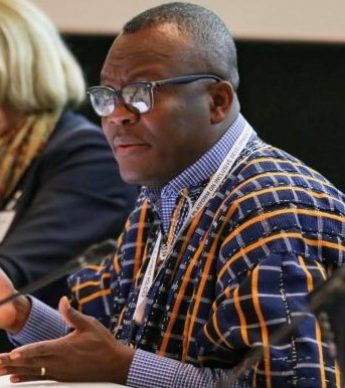
🌍 Highlights from AfDB Annual Meetings 2025 in Abidjan:
At the opening of the African Development Bank (AfDB) Annual Meetings in Abidjan, African leaders issued a strong call for continental capital mobilization and economic self-reliance.
Key points:
🔹 Urgency for Africa to rely less on external aid and instead harness its natural resources, youth potential, and domestic capital to drive inclusive development.
🔹 AfDB President Dr. Akinwumi Adesina Reflected on his 10-year tenure, highlighting over $100 billion invested and 565 million lives impacted through the Bank’s “High 5s” strategy (Power Africa, Feed Africa, Industrialize Africa, Integrate Africa, Improve quality of life).
🔹 African Leaders discussed the need for a new African financial architecture, advocating for reforms that prioritize the continent’s voice in global finance and promote homegrown solutions to development challenges.
🔹 A new AfDB President will be elected during these meetings, marking a transition in leadership at a crucial time for Africa’s economic future.
🟢 The overarching message: Africa must unlock its own capital, strengthen institutions, and build resilient economies from within.
African Development Bank’s (AfDB) 2025 African Economic Outlook report:
🌍 AfDB’s African Economic Outlook 2025: Resilience Amid Global Challenges
Despite global economic and political headwinds, Africa’s economy is projected to grow from 3.3% in 2024 to 3.9% in 2025, reaching 4.0% in 2026. This resilience is attributed to effective domestic reforms and improved macroeconomic management. (African Development Bank Group)
Key Highlights:
📈 Growth Leaders: 21 African countries are expected to achieve growth rates above 5% in 2025, with Ethiopia, Niger, Rwanda, and Senegal projected to exceed 7%.(African Development Bank Group)
🌍 Regional Performance:
East Africa: Leading with a projected growth of 5.9%, driven by resilience in Ethiopia, Rwanda, and Tanzania.
West Africa: Maintaining solid growth at 4.3%, bolstered by new oil and gas production in Senegal and Niger.
North Africa: Expected to register 3.6% growth.
Central Africa: Projected to slow to 3.2%.
Southern Africa: Anticipated to grow at 2.2%, with South Africa expected at 0.8%.(African Development Bank Group)
💰 Domestic Resource Mobilization: With appropriate policies, Africa could mobilize an additional $1.43 trillion in domestic resources from tax and non-tax revenue sources through efficiency gains alone.(African Development Bank Group)
⚠️ Challenges: Fifteen countries are experiencing double-digit inflation, and interest payments now consume 27.5% of government revenue across Africa, up from 19% in 2019.(African Development Bank Group)
The report underscores the importance of Africa looking inward to mobilize resources needed for its development in the coming years.
Full report: https://www.afdb.org/en/documents/african-economic-outlook-2025
Month: May 2025
My Africa Day 2025 Speech – Justice, Reparations, and Renewed Commitment
Every year, Africa Day invites us to pause, reflect, and recommit to the long journey of unity, liberation, and dignity for our continent and its diaspora. But in 2025, this moment carries deeper urgency and purpose. Under the theme “Justice for Africans and People of African Descent Through Reparations,” Africa Day becomes not just a commemoration, but a clarion call for action.
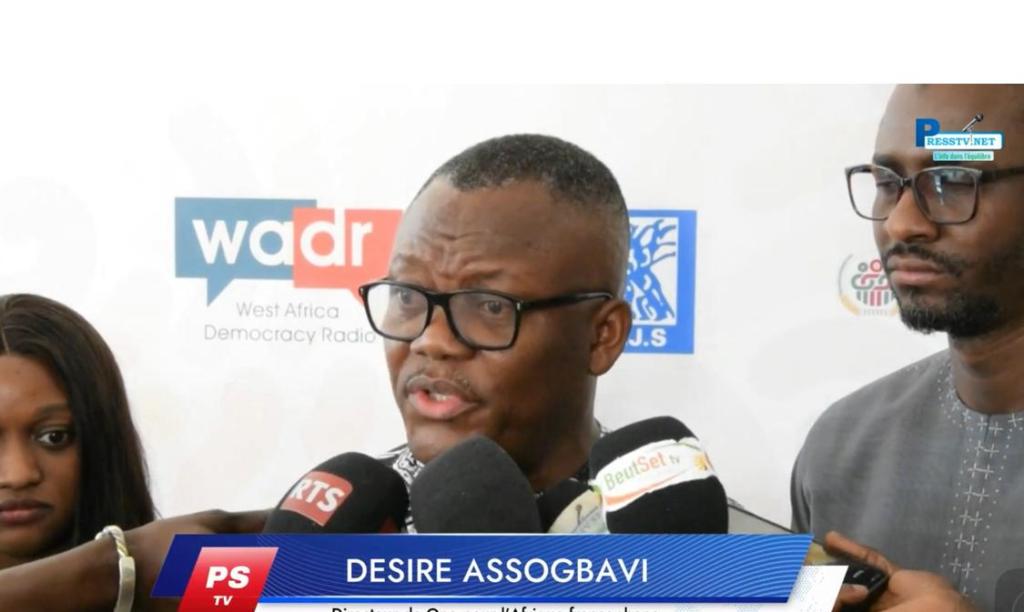
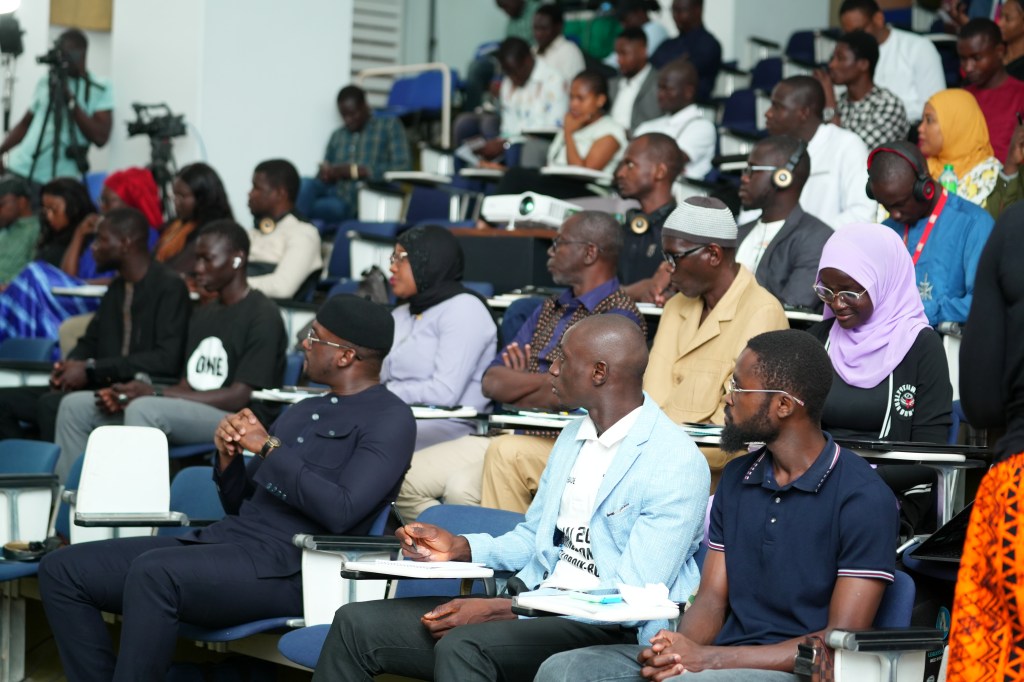
During an inspiring intergenerational dialogue in Dakar, held in a packed room alongside distinguished leaders, including Mr. Ousseynou Ly, Spokesperson for the Presidency of Senegal, I delivered this speech as a call to conscience. I urged African states, institutions, and global partners to move beyond symbolism and engage in real, structural transformation.
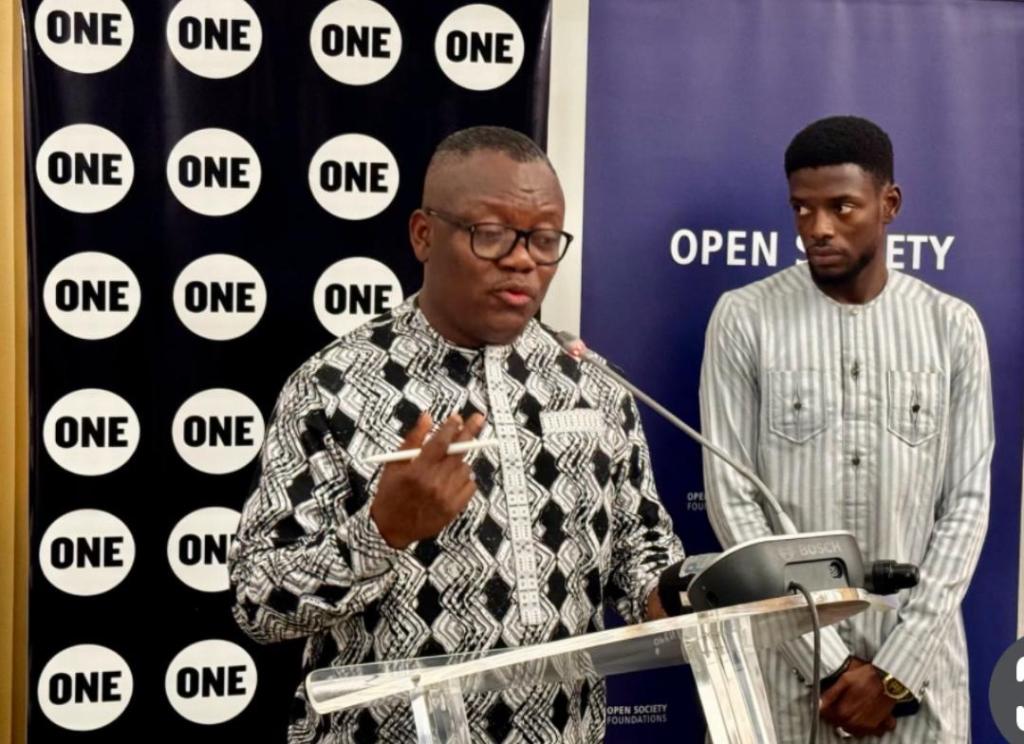
It is time to confront the legacies of slavery, colonization, apartheid, and the enduring injustices that continue to shape African realities. Reparative justice must be more than historical acknowledgment; it must be the foundation for bold reforms, accountable governance, and a future defined by dignity, equity, and African leadership.
Read the full speech below.
Mr. Ousseynou Ly, Minister-Counselor and Spokesperson of the Presidency of the Republic of Senegal,
Mr. Eyole Monono, Chair of the Political Affairs Sectoral Group of the AU Economic, Social and Cultural Council,
Representatives of various institutions,
Distinguished experts and partners from sister organizations,
Friends of the press,
Ladies and Gentlemen,
Today, we gather to celebrate Africa Day 2025, an occasion for deep reflection and renewed commitment to our continent and its global diaspora. This year’s theme, “Justice for Africans and People of African Descent Through Reparations,” echoes as a call to action, an invitation to confront past injustices and to build an equitable future.
On May 25, 1963, the Organization of African Unity (OAU) was founded, marking a historic step in the continent’s pursuit of independence and unity. Today, the African Union (AU), successor of the OAU, continues that mission by placing reparative justice at the heart of its 2025 agenda.
The scars left by slavery, colonization, apartheid, and systemic discrimination are still visible. These historic injustices have led to enduring inequalities, hindering our nations’ development and our peoples’ well-being.
Reparative justice is not limited to financial compensation; it involves recognition of the wrongs committed, restitution of looted cultural property, and the implementation of policies to correct structural imbalances.
Adopted in 2013, Agenda 2063 is an ambitious 50-year vision for an integrated, prosperous, and peaceful Africa. Its seven aspirations envision a democratic Africa, driven by its citizens, especially youth and women, free from fear, disease, and want, and actively engaged in global affairs.
But a decade later, many wonder whether these aspirations are still within reach. Despite the immense energy of our youth, the continent faces serious structural challenges: persistent poverty, rising inequality, democratic regression, debt burdens, and a resurgence of coups. Between 2020 and 2023, seven African heads of state were overthrown by their own militaries, an alarming sign of institutional fragility.
The AU at a Crossroads
The transition from the OAU to the AU aimed to shift from state-centered diplomacy to citizen-centered governance. The goal was to build an institution rooted in shared values: democracy, human rights, the rule of law, and good governance. Yet for many Africans, the gap between AU declarations and their lived realities remains wide.
Young people, who represent over 60% of the population, still struggle to participate in decision-making. Women’s representation progresses slowly. And poor governance continues to crush hopes for transformation.
Injustice Amid Abundance
The paradox of a resource-rich but impoverished Africa remains a harsh reality. The continent holds the world’s largest reserves of cobalt, platinum, gold, arable land, and forest resources… yet 34 of Africa’s 54 countries remain classified as Least Developed Countries (LDCs).
Each year, $89 billion illegally exits the continent through illicit financial flows—an amount that exceeds the total of development aid and foreign investment. Meanwhile, millions of African youth try to escape poverty. Since 2014, more than 20,000 people have died or disappeared in the Mediterranean, not counting those lost in the Sahara.
A Call for Accountability
The reparative justice we demand from the world also requires us to uphold accountability toward our own populations.
African states must clean up governance, fight corruption, and invest in education, health, and economic opportunity. International partners must support efforts for restitution, debt cancellation, and transparency in trade and taxation.
Rethinking Africa Day as a Moment of Commitment
Previously celebrated with parades, dances, and cultural performances, Africa Day must become a time for civic mobilization, political reflection, and intergenerational dialogue.
It is time to assess the implementation of key continental instruments: the African Charter on Democracy, the African Peer Review Mechanism, the African Continental Free Trade Agreement, and Agenda 2063. These are not just documents—they are promises made to our peoples. They must be honored.
Silencing the Guns in Africa: A Call to Action
Despite the AU’s commitment to “silencing the guns by 2020,” conflicts persist. More than 20 armed conflicts are currently raging across the continent. These are not inevitable. They stem from poverty, inequality, exclusion, and mismanagement of resources and identities.
Without the political will for structural transformation, peace will remain fragile. Extending the deadline to 2030 will not suffice if the root causes are not addressed.
Toward a New African Doctrine in Global Affairs
In the face of geopolitical tensions, energy transitions, and climate crises, Africa must define a unified strategic doctrine. It must build on the legacy of the Lagos Plan of Action and the Monrovia Strategy and develop a pan-African response grounded in resilience, unity, and sovereignty.

From Celebration to Commitment
Africa Day 2025 cannot be a mere commemoration. It must be a collective wake-up call. A call to bridge the gap between visionary declarations and everyday realities. A moment to renew pan-African solidarity.
The Africa we want will not be built through speeches, but through concrete actions, equitable justice, and inclusive governance. Only then can Africa write its future with dignity.
God Bless Africa.
 Assodesire