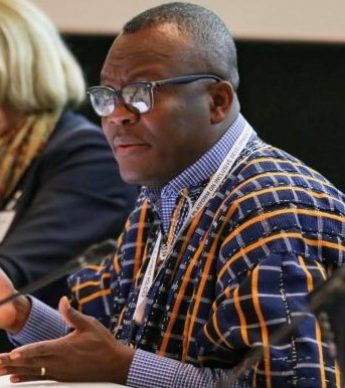
At the Fourth Financing for Development (FFD4) Conference last month (July 2025) in Seville, Spain, the Open Society Foundations (OSF) and the International Institute for Environment and Development (IIED) brought together policymakers, experts, and civil society leaders to debate one of the defining questions of our time: whose energy transition is Africa’s critical minerals boom really serving?
As global powers from China to the EU and the United States compete to secure supplies of cobalt, lithium, and copper, Africa finds itself at the crossroads of a new geopolitical scramble. Projects such as the $1.6 billion Lobito Corridor, linking Angola, Zambia, and the Democratic Republic of Congo, are being touted as game-changers for development. Yet, as participants noted, the financing, design, and governance of such mega-projects raise uncomfortable questions: are they designed to serve African citizens and economies, or primarily to feed the energy transitions of others?
Moderated by Lindlyn Moma, Director of Strategic Impact at IIED, the discussion cut to the heart of Africa’s development dilemmas: who defines Africa’s critical minerals agenda, who benefits from it, and at what cost?

The conversation underscored three urgent realities.
1. The Infrastructure Mirage
From billion-dollar transport corridors to solar-powered grids, Africa’s infrastructure boom is being marketed as the key to unlocking mineral wealth. Yet, as Brian Kagoro, Managing Director of Programs at OSF, pointed out, the numbers don’t always add up: “A project worth $1.6 billion sounds impressive, but when compared to the revenues it generates, the figure is small substantively. What have we oversold and what have we undervalued?”
Participants reflected on recent developments such as Zambia’s newly launched Chinese-built solar grid. While such projects dominate headlines, the real question is whether they deliver sustainable returns or simply deepen dependency. Kagoro noted that infrastructure costs are soaring while social and environmental impacts remain largely ignored.
2. The Trap of Long-Term Deals
Critical minerals contracts, trade agreements, and investment treaties being signed today could lock African states into decades of dependency. Lorenzo Cotula, Head of Law, Economies and Justice at IIED, cautioned: “These agreements are long term, they’re difficult to get out of, and they will constrain options for governments 10 or 20 years from now, when circumstances may have completely changed.”
This is especially pressing as technologies for cobalt, lithium, and other minerals evolve quickly. Signing inflexible deals today risks leaving Africa locked into obsolete arrangements tomorrow. Short-term capital inflows must not mortgage Africa’s long-term sovereignty.
3. Who Owns the Vision?
China has a strategy for Africa, the Netherlands has a strategy for Africa, Canada, France, Spain, Italie etc. have strategies for Africa, but Africa has no strategy for anyone.
The African Mining Vision (AMV) remains aspirational rather than binding. Without a proper collective strategy, African states respond piecemeal to external initiatives, forfeiting leverage and reinforcing fragmentation. Trevor Simumba, a Zambian trade and investment policy expert stressed that unless countries like Zambia and the DRC coordinate their approaches, they will continue to negotiate from a position of weakness.

Beyond Extractivism
The panel challenged the assumption that building corridors and exporting raw minerals will automatically generate jobs and industrial linkages. Brian Kagoro reminded the audience that history proves otherwise: “We keep assuming that value addition will happen naturally. It doesn’t. We’ve seen decommissioned railways and unemployed workers left behind by past extractive booms.”
True transformation requires rethinking infrastructure and minerals policy as tools for industrialization, human rights, and ecological sustainability, not just extraction.
A Call for People-Centered Strategy
For Ketakandriana (“Ke”) Rafitoson, Executive Director of Publish What You Pay, the minerals agenda must be rooted in transparency and accountability: “Critical minerals governance cannot just be about contracts and corridors. Citizens need to be part of the conversation, because this is as much about rights and democracy as it is about economics.”
The panel agreed: critical minerals are Africa’s leverage in the global energy transition. But without participatory governance and regional coordination, that leverage risks being squandered.
Conclusion: The Road Ahead
The discussion reminded us that the fight over Africa’s minerals is also a fight over its future. If Africa fails to craft its own infrastructure and critical minerals strategy, others will continue to do it on its behalf. The stakes are generational: sovereignty, sustainability, and the ability to harness mineral wealth for people, not just for profits.
The message from Seville was unambiguous: Africa must move from being the object of global strategies to being the author of its own.
If you’d like to receive my articles automatically as soon as they’re published, simply follow this blog using the “Follow” button at the bottom left of this page or send me an email at Desire.Assogbavi@Assodesire.com

 Assodesire