Tanzania: The Ballot Box Becomes a Battlefield

When elections cease to be a moment of choice and become an instrument of control, democracy turns into theater and citizens, no longer believing in the script, start to write their own story in the streets. The unfolding crisis in Tanzania is another troubling chapter in Africa’s growing catalogue of democratic rituals without governance substance.

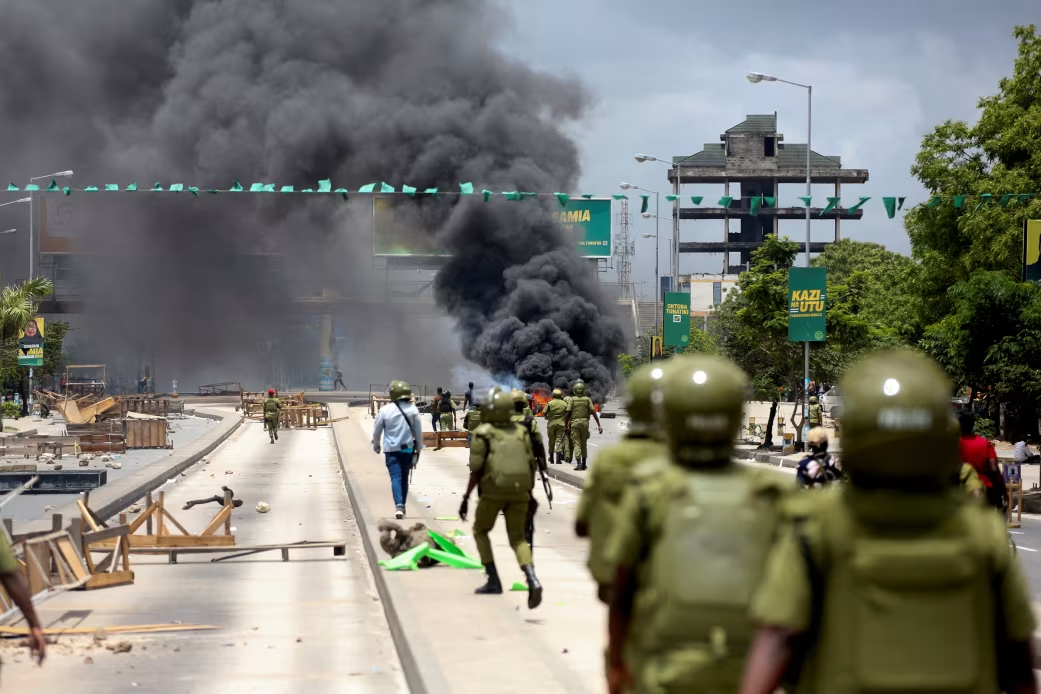
Tanzania, once hailed as a stable democracy in East Africa, is now facing its most serious political unrest in decades. The October 2025 elections, meant to reaffirm democratic legitimacy, instead exposed the fragility of the country’s institutions. Following a tightly controlled vote, President Samia Suluhu Hassan was declared the overwhelming winner, some constituencies reporting absurd margins of 100,000 votes to less than 100 for the opposition. But beyond the numbers, the scenes on the ground tell a different story: cities under curfew, internet blackouts, and live ammunition fired at unarmed civilians.

Witnesses in Dar es Salaam, Arusha, and Mbeya describe a climate of fear and chaos. Human rights organizations indicate that hundred have been killed in just a few days, as security forces cracked down on protestors contesting what they see as an empty ritual of democracy. Lawyers, journalists, and opposition figures have either been silenced or disappeared.

Democracy Without Oxygen

Like Cameroon and Côte d’Ivoire, Tanzania’s crisis is not merely electoral, it is structural. It reflects a pattern where regimes hold regular elections but hollow out the very foundations of democracy: accountability, pluralism, and citizen participation. The symptoms are familiar, youth unemployment, corruption, shrinking civic space, and the instrumentalization of state institutions for political survival. When people cannot breathe politically, repression becomes their air, and protest becomes their only language.

The government’s response, labeling demonstrators “criminals” and tightening its grip on digital communication, has only deepened the divide. Cutting the internet and silencing dissent does not restore order; it merely postpones reckoning. Tanzania’s young population, frustrated by joblessness and impunity, is no longer willing to watch in silence as its future is mortgaged to a small elite. As one activist put it, “There is no oxygen left, we can’t speak, we can’t tweet, we can’t hope.”

A Continental Warning

Tanzania’s turbulence is another call for Africa’s democratic institutions who still measure progress by the number of elections held rather than their integrity. Our continent is sliding into a dangerous normalization of managed democracy, where ballots replace bullets, but the outcomes are just as predetermined.

For us at the Open Society Foundations (OSF), guided by our unwavering commitment to promoting human rights, equity and justice across the world, this moment demands not just condemnation but deeper engagement, supporting those on the frontlines of civic courage, amplifying independent voices, and pressing for genuine institutional reforms that go beyond the façade of periodic voting. The crisis in Tanzania, like those in Cameroon and Côte d’Ivoire, reminds us of that Africa’s democratic project will not be saved by rituals, but by renewal, rooted in justice, inclusion, and accountability. When citizens risk their lives to make their voices heard, the world cannot afford to look away. What is happening in Tanzania today is not just a national crisis; it is a mirror held up to a continent standing once again at a democratic crossroads.
If you’d like to receive my articles automatically as soon as they’re published, simply follow this blog using the “Follow” button at the bottom left of this page or send me an email at: Desire.Assogbavi@Assodesire.com.
Democratic Rituals are Not Democratic Governance

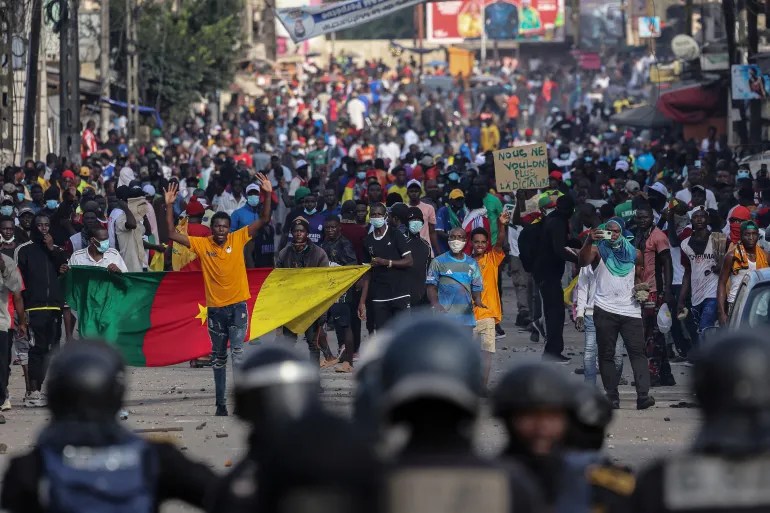
The “re-election” of the old long-standing leaders in Cameroon and Côte d’Ivoire indicate a sad reality for African democracy. At 92 years old, Paul Biya has “secured” an 8th term in office in Cameroon, extending a presidency that has spanned nearly half a century. In Côte d’Ivoire, constitutional maneuvering and the instrumentalization of judicial institutions have opened the door for Alassane Ouattara, 83-year-old, who has been in power since 2011 to seek and obtain a fourth term without real democratic competition. These two developments reflect a deeper question confronting the continent: Are we practicing democracy, or just staging it?

Africa is the youngest region in the world. Nearly 75% of its population is under 35: bold, connected, and impatient with political systems that do not evolve with them. For this generation, democracy is not just about ballots; it is about participation, accountability, and leadership that reflects their aspirations. But what is the message sent when elections lack credible competition, when power transitions are continually deferred and when institutions bend to protect incumbents rather than empower citizens? Elections become just a ritual without renewal.

Both Cameroon and Côte d’Ivoire demonstrate how institutions weaken when leaders become “indispensable”. Electoral bodies lose independence. Constitutional protections are eroded. Civic space narrows. Courts and legislatures become extensions of the executive, not checks against abuse.

This institutional decay has regional consequences. Across West and Central Africa, term-limit manipulation and democratic stagnation fuel public distrust, creating fertile ground for coups, unrest, and extremist recruiting. Without legitimacy, stability becomes fragile. What just happened in the 2 countries are warning siren for the democratic future of an entire continent.

Legitimacy matters for everything: investor confidence, regional peace, migration patterns, civic trust, youth mobilisation. When governments give the impression that the rules are written to preserve themselves, not to empower citizens, then the social contract is spoiled. Democracy is not judged by how often elections are held but by whether people believe their voices matter.

The African Union’s credibility rests on its ability to uphold the norms it has set: constitutionalism, peaceful transitions, and governments that derive authority from the people. Allowing exceptions undermines the whole project.

Yet despite these challenges, hope is alive and loud. Youth movements, the GenZ, citizen monitors, women’s coalitions, independent media, and reform champions are demanding something better: a democracy that delivers and evolves.

This moment calls for action from regional bodies, international partners, and especially civil society organizations committed to justice, and accountability.

More than ever, we must help:

  • Protect civic space and activists under pressure
  • Support electoral integrity and institutional reforms
  • Create pathways for youth participation in governance and public service
  • Strengthen regional solidarity so that democratic backsliding anywhere triggers collective response everywhere
  • Document human rights violations and support litigations

Democracy is not self-sustaining. It must be renewed with every generation. Cameroon and Côte d’Ivoire are wake-up calls to us.

If Africa’s future is to be defined by opportunity and dignity, then the answer to “Who decides?” must be clear: the people. Not the palace. Not the presidency. Not the past.

If you’d like to receive my articles automatically as soon as they’re published, simply follow this blog using the “Follow” button at the bottom left of this page or send me an email at: Desire.Assogbavi@Assodesire.com