My 10 Takeaways from the 2026 African Union Summit

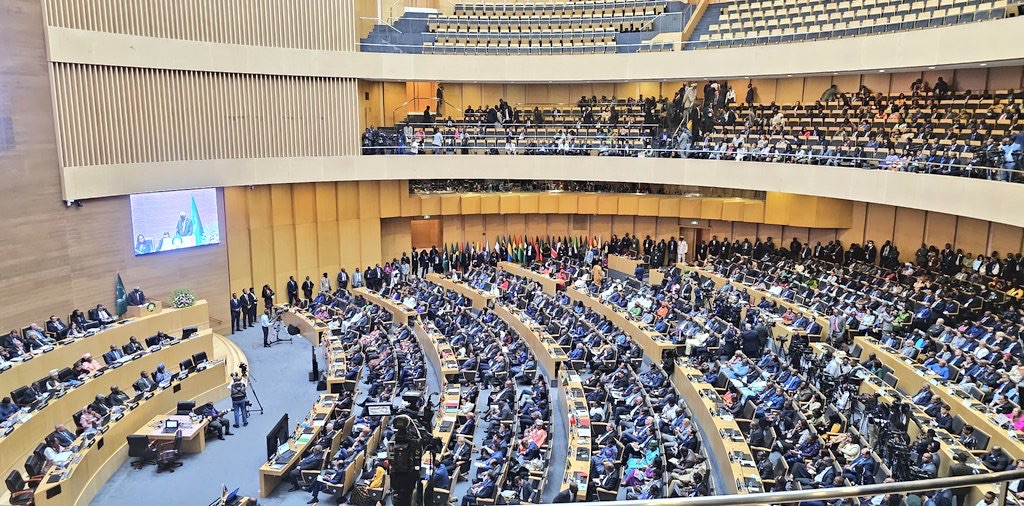
The 39th African Union Summit unfolded at a moment of uncomfortable truths for the continent. Inside the plenary hall and behind closed doors, African Leaders debated conflicts, institutional reform, financial sovereignty, critical minerals, artificial intelligence, and Africa’s place in a fractured global order. The language was ambitious. The tone was urgent.

In the corridors however, one of the most talked-about figures in Addis Ababa was not African. Giorgia Meloni, “guest of honor” arrived to co-host the second Italy-Africa Summit ahead of the AU Summit, and promote Italy’s “Mattei Plan”, framed as cooperation “between equals,” a non-predatory approach, and a strategy to tackle the root causes of migration.

Meanwhile, the continent confronts its own contradictions. Ten military coups since 2020. Suspensions followed by quiet reinstatements. Elections praised despite repression. Expressions of “deep concern” over Sudan, the Sahel, and eastern DRC, but limited enforcement muscle. Angola’s President, outgoing AU Chairperson, warned: “normalizing coup-makers who retake power through elections cannot become standard practice”. Leadership within the Union itself also shifts. The rotational Chair now passes to Burundi for 2026 under the leadership of President Évariste Ndayishimiye.

Can the AU strengthen conflict prevention while selectively enforcing its own rules?
Can it demand equal global partnership while tolerating democratic erosion at home?
Can it negotiate critical minerals, climate finance, and AI governance from a position of sovereignty while financing only a fraction of its own program budget?

In Addis Ababa, Africa was not short of ambition. The real question is whether Africa’s institutions are strong enough, and its current leadership bold and serious enough, to convert strategic importance into strategic power.

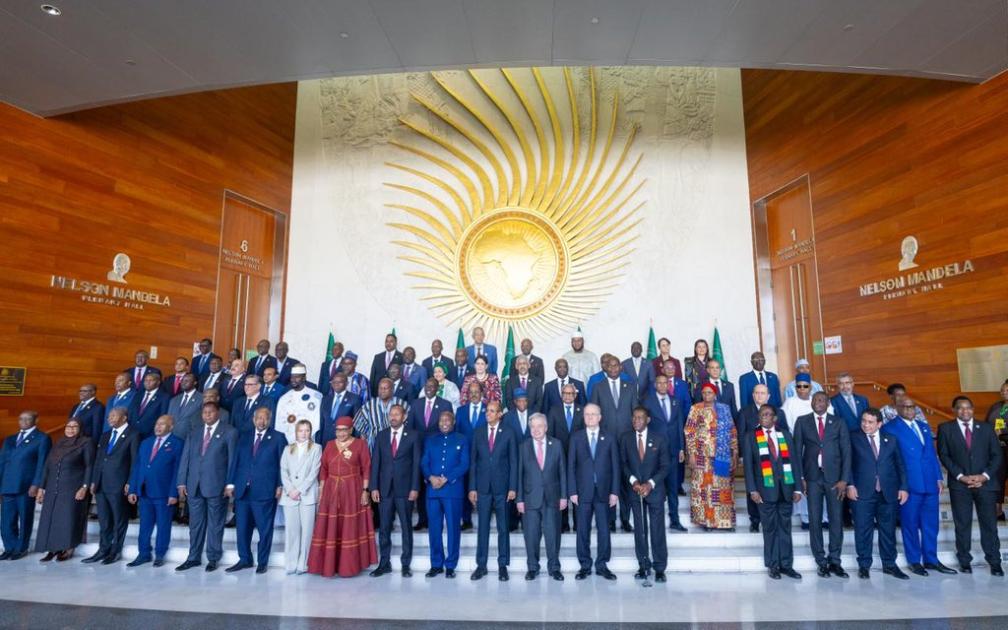
Pending the publication of the official decisions, here are my 10 takeaways from a Summit that revealed both Africa’s rising leverage and its persistent institutional fragility.
1. Conflict Prevention at the Center

The decision to convene an Extraordinary Summit on “Strengthening Mechanisms for Conflict Prevention and Resolution in Africa” in Luanda in 2026 signals recognition that Africa’s peace and security architecture needs urgent strengthening.

Importantly, the Summit emphasized that Luanda must deliver concrete, measurable, time-bound outcomes, not another declarative forum. The credibility of the AU now depends on operational follow-through.

2. Institutional Reform: From Diagnosis to Implementation

The reform agenda, championed most recently under the progress report presented by President William Ruto is entering a new phase.

The Summit mandated:

  • Harmonization of the African Governance Architecture (AGA) and the African Peace and Security Architecture (APSA).
  • Clearer early warning-early response mechanisms.
  • Legal clarification of AU–REC relations.
  • A strengthened support structure for the Panel of the Wise.

3. “Silencing the Guns” Needs Reinvention

With the flagship programme ending in 2030 while guns are shouting in our continent more than ever, the Summit acknowledged the need to review and adapt the AU Master Roadmap. This is an implicit admission: progress has been weak. A flexible, context-specific, adaptive approach will be required if the slogan is to translate into reality.

4. Financing the Union: unfinished business

The Summit reaffirmed the 0.2% import levy and long-standing commitments to finance the Union internally but here is the uncomfortable truth: Member States currently finance only 24% of the AU programme budget. The remaining is paid by partners.

The Summit discussed and considered

  • Expanding the Peace Fund from USD 400 million to USD 1 billion.
  • Convening an Extraordinary Session of Ministers of Foreign Affairs and Finance before November 2026.
  • Continue Advocating for predictable UN financing for AU-led peace operations.

Without financial sovereignty, institutional reform will stall. This remains the most decisive implementation test.

5. Africa’s Geopolitical Reset

The Summit directed the development of a Continental African Foreign Policy Framework rooted in Pan-Africanism, solidarity, and collective security.

This is a strategic move. In a fragmented global order, Africa needs to coordinate its external posture rather than react individually.
6. The G20: A Continental Strategic Platform

The Declaration on Africa’s Engagement with the G20 was one of the most politically significant outcomes.

The AU Summit:

  • Welcomed the outcomes of South Africa’s 2025 G20 Presidency under President Cyril Ramaphosa.
  • Established a Continental Coordination Mechanism on G20 Follow-Through.
  • Endorsed a Continental Framework on Reducing Inequality.
  • Defended South Africa’s full participation in G20 processes under the US Presidency.
  • Called on the United States, as incoming Presidency, to uphold inclusivity.

This was not symbolic. It was Africa collectively defending its seat at the table of global economic governance.

7. Critical Minerals Are Now Explicitly Strategic

The Summit reaffirmed that Africa’s critical minerals are strategic assets for structural transformation.

Leaders requested a Continental Critical Minerals Value Addition Framework focused on:

  • Regional value chains
  • Local beneficiation
  • Environmental, Social, and Governance standards
  • Fair benefit-sharing

This indicate a shift from extraction toward industrialization, at least at policy level.

8. Artificial Intelligence and Digital Infrastructure Are Security Issues

The AU welcomed the AI for Africa Initiative and requested development of an Africa AI and Digital Public Infrastructure Roadmap.

More strikingly, the Summit called for AI-based early warning systems to enhance risk assessment and prevention.

9. Historical Justice in Formal AU Record

The Assembly decided to qualify slavery, deportation and colonization as crimes against humanity and genocide against the peoples of Africa, committing to pursue international recognition. Ghana is planning to table a resolution at the UN General Assembly shortly.

This is politically significant. It anchors reparatory justice within AU formal doctrine and links history to contemporary global negotiations.

10. AU’s Efficiency now framed as a political necessity.

The Summit discussed:

  • Limiting its agenda to three strategic issues, each of these strategic issues shall not have more than two items at each Assembly session
  • Delegating all non-strategic or technical matters as well as operational responsibilities to the Executive Council, with further delegation to the Permanent Representatives’ Committee as appropriate
  • Ensuring that decisions are issued and circulated to Member States within a maximum of seven (10) days following the closure of meetings
  • Advancing restructuring of AU organs.
  • Pushing forward operationalization of the Court of Justice.
  • Accelerating work on division of labour between AU and RECs.

The Real Question Is Implementation

The 39th AU Summit did not lack ambition: Conflict prevention, financing, geopolitical positioning, industrialization, AI, global governance, historical justice, and institutional reform within one meeting.

The real test is not the adoption of the decisions/declarations. It is whether:

  • Financing commitments are met,
  • Peace and Security happen in the continent
  • Shared values are truly shared and observed
  • Reform timelines are respected,
  • Early warning triggers early action,
  • Continental positions are defended consistently in global spaces.

If implementation follows intent, this Summit may be remembered as an historical moment. If not, it risks joining a long list of well-drafted but weakly executed declarations.
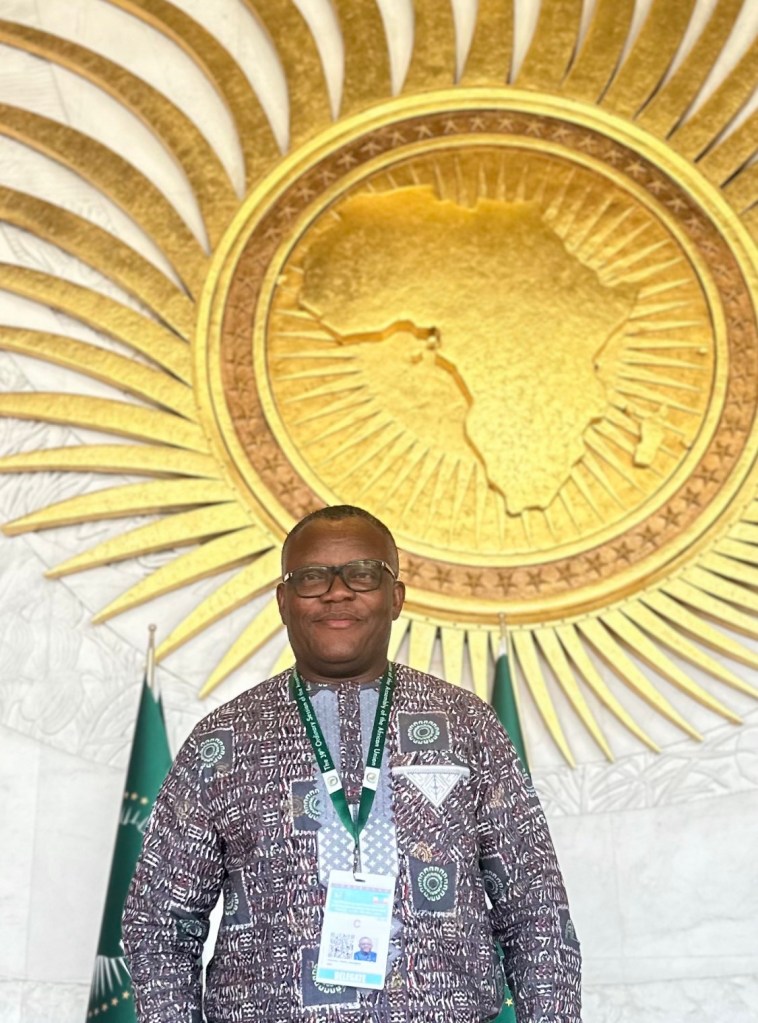
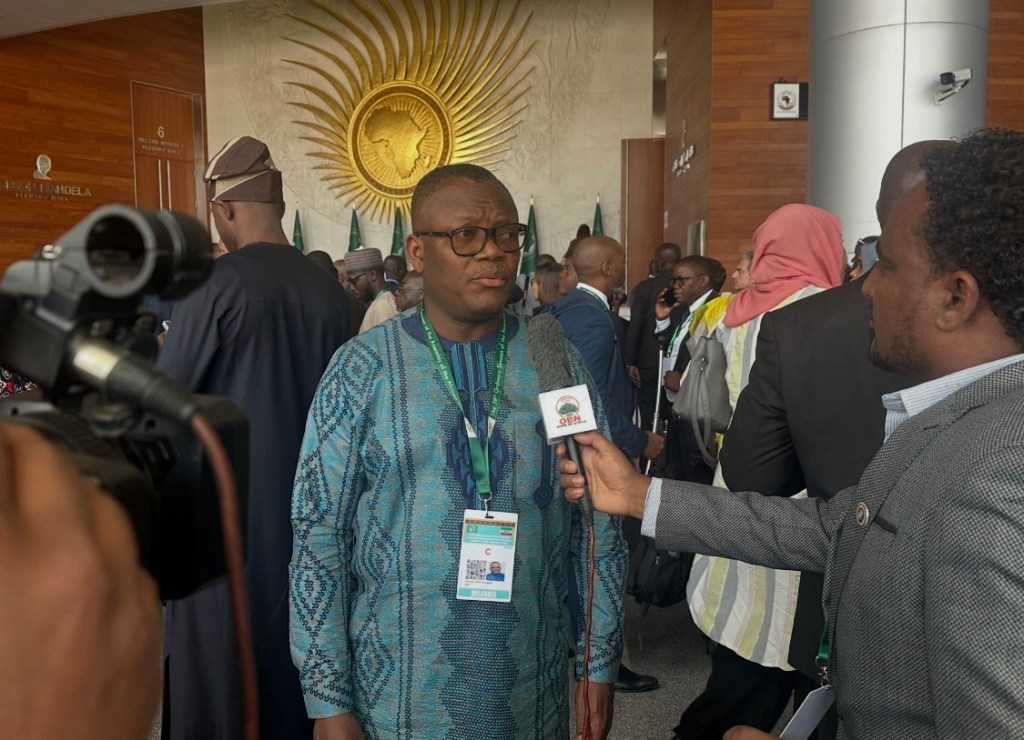
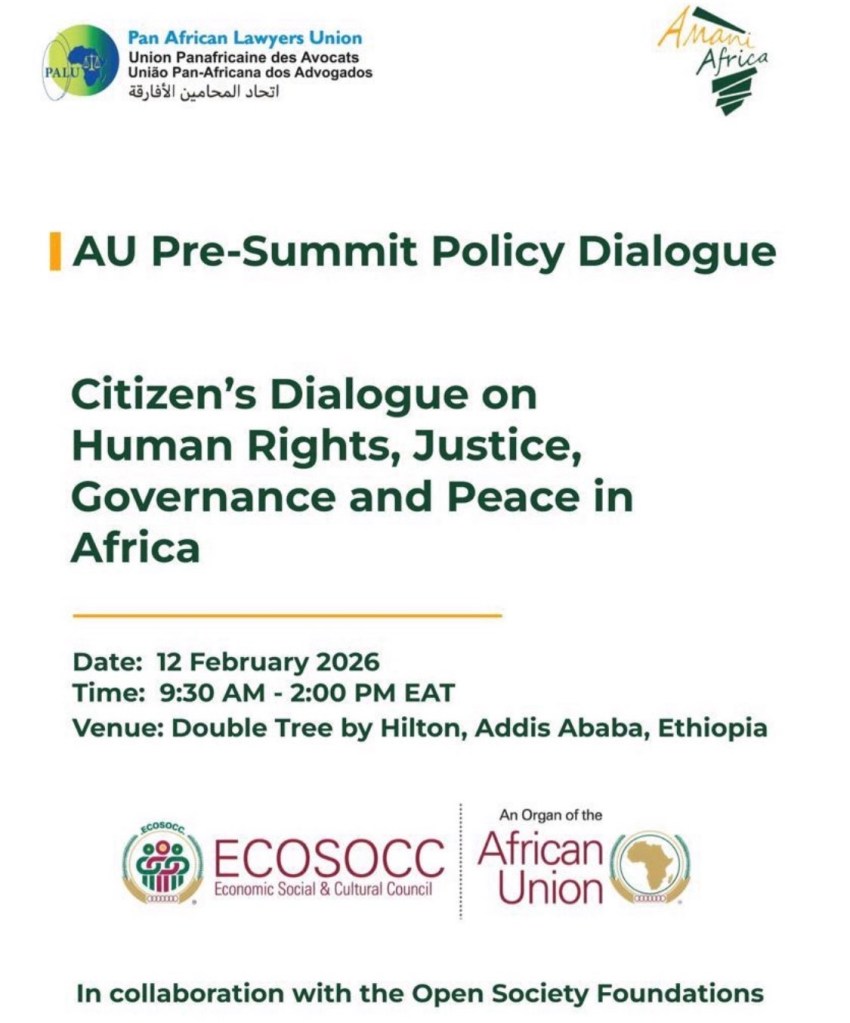
Memorandum to the 39th AU Summit on Human Rights, Justice, Governance and Peace in Africa

As African leaders convene for the 39th AU Summit in Addis Ababa, more than 80 delegates from across Global Africa, representing civil society organizations, youth movements, legal practitioners, policy experts, human rights defenders, academics etc. joined by many others online, have come together to deliver a clear and principled message. In a context marked by persistent human rights violations, democratic backsliding, shrinking civic space, protracted conflicts, and mounting debt distress, this memorandum calls on Heads of State to move beyond declarations and take concrete decisions to defend constitutional democracy, advance justice and accountability, protect civilians, empower youth, strengthen governance institutions, and ensure responsible stewardship of Africa’s natural resources. Africa cannot credibly demand justice globally while tolerating injustice at home.

MEMORANDUM

To: African Heads of State and Government

From: The Citizens’ Dialogue held in Addis Ababa on 12th February 2026

Date: 14 February 2026

Subject: Memorandum to the 39th AU Summit on Human Rights, Justice, Governance and Peace in Africa

Excellencies,

We, citizens from across the continent and the diaspora meeting in Addis Ababa on 12 February 2026, with the participation of many others online, congratulate you on convening the 39th Ordinary Session of the Assembly of the African Union at a defining moment for our continent.

Africa stands at a historic crossroads. The global order is fragmenting. Geopolitical competition is intensifying. Fiscal space is shrinking under mounting debt burdens. Armed conflicts continue to devastate lives from Sudan to the Sahel and Eastern DRC. Democratic norms are under strain, and civic space is narrowing across multiple member states.

Yet this moment also presents opportunity. Africa has secured a permanent seat in the G20. The African Union has launched a Decade of Reparations. The 2026 Theme of the Year, “Water as a Vital Resource for Life, Development and Sustainability,” recognizes the climate-development-security nexus at the heart of our future.

This AU Summit must therefore move beyond declarations. It must deliver decisions that restore credibility, protect sovereignty, and secure dignity for Africa’s people.

The Citizens’ Dialogue on Human Rights, Justice, Governance, and Peace respectfully submits the following urgent messages for your consideration:

1. Defend Constitutional Democracy and Reclaim Civic Space

  • Mandate consistent enforcement of AU democratic norms, including the African Charter on Democracy, Elections and Governance.
  • Strengthen the independence and operational capacity of the African Commission and African Court on Human and Peoples’ Rights.
  • Protect election observation, media freedom, and civic participation as pillars of stability, not threats to sovereignty.
  • Prioritize electoral governance reform, including independent supervision and financing of elections.
  • Institutionalize regular citizen dialogues and participation mechanisms, including support for innovative digital civic engagement.
  • Establish comprehensive transparency mechanisms covering electoral bodies, political parties, security institutions, and regulators.

2. Move the Reparation Agenda to Implementation

  • Establish a permanent AU Reparations Implementation Mechanism with clear mandates and reporting timelines.
  • Integrate debt justice, climate loss and damage, illicit financial flows, and restitution of cultural heritage into a unified continental reparative framework.
  • Deepen strategic alliances with the Caribbean Community (CARICOM), the Community of Latin American and Caribbean States (CELAC), and the broader Global South to build negotiating coalitions.

3. Confront Debt Distress as a Peace and Sovereignty Issue

  • Collectively push for meaningful reform of the global debt architecture and IMF quota system.
  • Strengthen regional financing mechanisms, development banks, and local currency settlement systems to reduce vulnerability to external shocks.
  • Advance implementation of the Mbeki Report on Illicit Financial Flows.

4. Place Civilian Protection and Accountability at the Center of Peace Efforts

  • Prioritize civilian protection and accountability mechanisms in all peace processes.
  • Harmonize AU, the Regional Economic Communities (RECs), and UN tracks to avoid fragmented diplomacy.
  • Ensure inclusive approaches incorporating local communities and civil society.
  • Establish measurable benchmarks, timelines, and performance indicators for peace interventions.

5. Address Youth Exclusion as a Security and Development Priority

  • Prioritize large-scale youth employment and entrepreneurship support.
  • Align education systems with labor market needs.
  • Support local enterprise and domestic private sector growth.
  • Recognize youth as partners in governance and transformation.

6. Confront Structural Drivers of Conflict, Including Rural Neglect

  • Increase investments in rural economies, infrastructure, and enterprise development.
  • Address unequal budget allocations that exclude rural populations.
  • Integrate rural communities into national and continental development strategies.
  • Promote inclusive development that reduces socio-economic inequalities.

7. Strengthen Governance of Critical Minerals and Natural Resources

  • Accelerate adoption and implementation of the Africa Mining Vision.
  • Address governance of critical minerals as both a conflict driver and a potential engine for shared prosperity.
  • Promote regional value chains and local beneficiation.
  • Ensure resource governance supports sustainable development.

8. Protect Africa’s Place in Global Governance

  • Adopt a clear AU solidarity position rejecting politicization of participation in global forums.
  • Strengthen AU coordination ahead of major global moments including G20, UN, and the Conference of the Parties to the United Nations Framework Convention on Climate Change (COPs) processes.
  • Accelerate reforms increasing Africa’s collective leverage on global financial rules and representation.

9. Restore Credibility of Governance through Peer Review and Accountability

  • Reinforce the African Peer Review Mechanism (APRM) as a serious governance instrument.
  • Ensure leadership and credibility standards across AU governance bodies.
  • Ensure transparency in resource allocation and conflict intervention funding.
  • Create stronger follow-through through public benchmarks and periodic progress reporting.

In conclusion, Excellencies,

This Summit is more than an annual convening. It is a test of Africa’s collective credibility.

Your decisions in Addis Ababa will determine whether Africa:

  • Speaks with unity in global governance,
  • Protect human rights at home and defends democratic legitimacy
  • Converts reparative justice into structural transformation,
  • And builds peace rooted in accountability and dignity.

We, citizens of this continent, stand ready to support reform-oriented institutions, civil society partners, and continental processes that strengthen Africa’s sovereignty, justice systems, and democratic future.

The moment demands courage, coherence, and continental solidarity.

Respectfully submitted.

Sommet de l’UA 2026: les Enjeux pour l’Afrique dans un Monde Fracturé

English version here.

Lorsque les chefs d’État et de gouvernement africains se réuniront à Addis-Abeba les 14 et 15 février 2026 pour la 39ᵉ session ordinaire de la Conférence de l’Union africaine, ils le feront à un moment d’une gravité politique exceptionnelle pour le continent et pour le système international.

Le Sommet se tient dans un contexte de fragmentation mondiale croissante, d’affaiblissement du multilatéralisme, de conflits en expansion, d’aggravation de la crise de la dette et de pressions climatiques accrues. Malgré le thème officiel de l’année consacré à l’eau, la paix et la sécurité devraient constituer le véritable centre de gravité de cette rencontre, tant les conflits persistants, l’instabilité régionale et la fragilité des transitions politiques continuent de dominer la réalité politique africaine.

À travers le continent, la régression démocratique et des droits humains, les élections contestées, la répression de la dissidence et les états d’urgence prolongés mettent à rude épreuve la crédibilité des institutions de gouvernance.

Dans le même temps, l’importance stratégique de l’Afrique, portée par les minéraux critiques, le poids démographique et l’intensification des rivalités géopolitiques, n’a jamais été aussi élevée, accentuant à la fois les pressions externes et les fragmentations internes.

Dans ce contexte, le Sommet de 2026 n’est pas une réunion de routine. Il constitue un test de l’autonomie et l’autodétermination politique collective de l’Afrique, de sa capacité à agir avec unité, et de la pertinence de l’Union africaine en tant que cadre de leadership continental.

Screenshot

L’eau Comme Pouvoir : Climat, Développement et Stabilité Politique

Le thème de l’UA pour 2026, « L’eau, ressource vitale pour la vie, le développement et la durabilité », reflète un choix politique délibéré. L’eau n’est plus abordée comme une question technique ou sectorielle ; elle est désormais reconnue comme un actif stratégique économique, social et sécuritaire.

À travers l’Afrique, le changement climatique se manifeste par des sécheresses prolongées, des inondations catastrophiques, une baisse de la productivité agricole, des tensions hydriques urbaines, une volatilité des prix alimentaires et une augmentation des risques sanitaires. La rareté de l’eau et sa mauvaise gouvernance contribuent déjà à des conflits locaux, à des déplacements forcés et à des tensions transfrontalières, tandis que l’abondance hydrique, lorsqu’elle est mal gérée, peut également alimenter les inégalités et l’accaparation par les élites.

La Commission de l’UA a présenté le thème 2026 comme orienté vers la mise en œuvre, ancré dans l’Agenda 2063, avec un accent particulier sur la sécurité de l’eau, l’adaptation climatique, ainsi que l’eau, l’assainissement et l’hygiène (WASH) en tant que questions de dignité, de santé publique et de légitimité de l’État.

Réparations : d’une Revendication Morale à un Projet politique Institutionnalisé

Parallèlement au thème de l’eau, le Sommet de 2026 fera progresser de manière décisive le thème 2025 de l’UA sur « La justice pour les Africains et les personnes d’ascendance africaine à travers les réparations ».

De manière cruciale, les chefs d’État examineront une étude juridique et politique majeure sur les implications de la qualification de la colonisation comme crime contre l’humanité, et de certains actes liés à l’esclavage, à la déportation et à la violence coloniale comme génocide contre les peuples africains.

Il s’agit d’un tournant historique : le passage d’une reconnaissance symbolique à un cadre juridique, à l’élaboration de normes et à une responsabilité institutionnelle en droit international.

L’Union africaine a déjà commencé à opérationnaliser cet agenda. Des mécanismes d’expertise et de référence juridique ont été mis en place et sont désormais fonctionnels, sous la coordination de la Commission de l’UA. Les partenariats avec la CARICOM, les Nations unies et la société civile se sont renforcés, tandis que le langage des réparations a, pour la première fois, été intégré dans des déclarations intercontinentales formelles.

En étendant l’agenda des réparations à une Décennie 2026-2035, l’Afrique affirme que la justice réparatrice n’est pas une diplomatie ponctuelle, mais un projet politique de long terme, reliant justice de la dette et flux financiers illicites, pertes et dommages climatiques, restitution culturelle et justice narrative, ainsi que la réforme de la gouvernance mondiale et des systèmes financiers.

Le véritable test de crédibilité réside désormais dans le suivi et la mise en œuvre : la capacité de l’UA à transformer l’exigence morale en diplomatie coordonnée, en mandats concrets et en résultats mesurables.

L’Afrique, le G20 et la Politique du Multilatéralisme Conditionnel

Le rôle croissant de l’Afrique dans la gouvernance mondiale sera également scruté de près. L’Assemblée recevra un briefing officiel sur les résultats de la présidence sud-africaine du G20 en 2025, un jalon symbolisant le leadership de l’Afrique dans le principal forum économique mondial.

Cependant, ces avancées font face à la controverse entourant la décision du président Trump de ne pas inviter l’Afrique du Sud au Sommet des dirigeants du G20 de 2026, soulevant de sérieuses inquiétudes quant à un multilatéralisme sélectif et politiquement conditionnel.

Cet épisode dépasse largement le cas sud-africain. Il constitue un test de la solidarité africaine et un signal d’alerte : si la participation africaine à la gouvernance mondiale devient conditionnée à des alignements politiques imposés par les puissances dominantes, alors la place de l’Afrique à la table mondiale demeure précaire.

La réponse de l’Union africaine, ou son silence, façonnera sa crédibilité collective, non seulement au sein du G20, mais aussi dans les débats plus larges sur la réforme du multilatéralisme.

Paix et Sécurité : le Centre de Gravité Politique du Sommet

La paix et la sécurité resteront le centre de gravité politique du Sommet. Les conflits en cours au Soudan, dans l’est de la République démocratique du Congo, au Sahel et en Libye continuent d’infliger des souffrances massives aux populations civiles, tout en révélant les limites des médiations fragmentées, des réponses militarisées et des solutions sécuritaires externalisées.

L’Assemblée examinera le rapport annuel du Conseil de paix et de sécurité (CPS), et une réunion du CPS au niveau des chefs d’État pendant la semaine du Sommet est probable, une reconnaissance implicite de la gravité du moment.

L’UA se trouve ici face à un dilemme ancien mais urgent : l’écart entre des cadres normatifs solides et une application faible et incohérente. Le véritable enjeu sera de savoir si l’Union peut promouvoir des solutions politiques africaines, privilégier la protection des civils et la redevabilité plutôt que de simples arrangements de stabilité, et soutenir des processus de paix inclusifs, plaçant les femmes, les jeunes et les communautés affectées au cœur des solutions.

L’accession du Président du Burundi à la présidence de l’Union africaine pour 2026 jouera un rôle déterminant dans l’orientation de ces débats. Les attentes sont fortes: le Président de l’UA devra non seulement agir comme bâtisseur de ponts entre régions et sensibilités politiques, mais aussi défendre et projeter la place déterminante de l’Afrique sur la scène internationale, affirmer les positions continentales, résister aux pressions extérieures et garantir que l’Afrique engage ses partenaires internationaux à partir d’une position d’unité et de confiance stratégique.

Le Président burundais Évariste Ndayishimiye prépare activement son mandat. Il inscrira certainement son mandat dans une logique de normalisation diplomatique, d’affirmation politique et d’engagement sur les dossiers sécuritaires majeurs du continent avec une attention particulière aux crises des Grands Lacs et du Sahel.  Fort de son expérience récente à la tête de la Communauté d’Afrique de l’Est et du COMESA, ainsi que son rôle actuel d’envoyé spécial de l’UA pour le Sahel, le Président aurait commencé à structurer une équipe dédiée à Addis-Abeba, appuyée par un dispositif interministériel à Bujumbura.

Conclusion

Le Sommet de 2026 constitue un moment charnière pour le projet continental africain. Il mettra à l’épreuve la capacité de l’Union africaine à répondre à des crises entremêlées : droits humains, recul démocratique, conflits armés, avec cohérence, unité et courage politique.

J’espère également que les dirigeants africains sauront saisir cette occasion comme un moment rare de réflexion stratégique lucide sur l’ouragan géopolitique qui bouleverse le monde, et sur ce qu’il exige collectivement de l’Afrique. L’érosion du multilatéralisme, l’application sélective du droit international, l’intensification des rivalités entre grandes puissances et la nouvelle course vers les ressources africaines ne sont pas des forces lointaines : elles réduisent déjà l’espace politique du continent et exacerbent ses divisions internes.

Ce Sommet offre l’opportunité non seulement de diagnostiquer ces mutations, mais aussi de s’accorder sur des positions communes, des lignes rouges et des stratégies collectives capables de renforcer la solidarité africaine, de protéger la souveraineté et d’accroître le levier politique du continent. Sans une telle coordination délibérée, les États continueront d’absorber seuls les chocs mondiaux, tandis que l’Afrique, dans son ensemble, risque d’être façonnée par des décisions prises ailleurs plutôt que d’agir comme une force cohérente dans un monde en turbulence.

En définitive, le Sommet ne devrait pas se limiter aux décisions et déclarations adoptées à huis clos. Les citoyens africains attendent de voir si la principale institution multilatérale du continent est capable de transformer l’ambition en action, la clarté morale en levier politique, et les principes en changements durables.