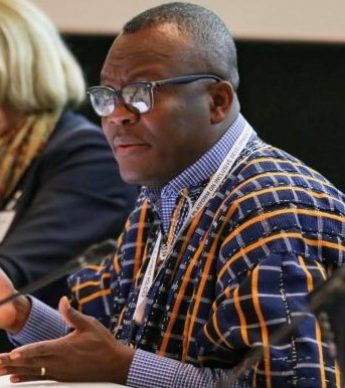
My Reflections Ahead of the First Africa-CELAC Forum
As I arrive in Bogota, Colombia to participate in the first High-Level Forum between the Community of Latin American and Caribbean States (CELAC) and the African Union, the atmosphere is charged with both urgency and possibilities. This gathering to be held from 18th -21st March 2026 is not simply another diplomatic event on an already crowded global calendar. It is a strategic moment, one that could help redefine how Global South organizes itself to navigate an increasingly fragmented international order.
For decades, Africa and Latin America have engaged the world largely through parallel struggles: debt crises, commodity dependence, structural inequalities, democratic pressures, and climate vulnerability. Today, these shared realities are converging into a common political consciousness, and into a growing recognition that cooperation across the Global South is no longer optional. It is becoming a geopolitical necessity.
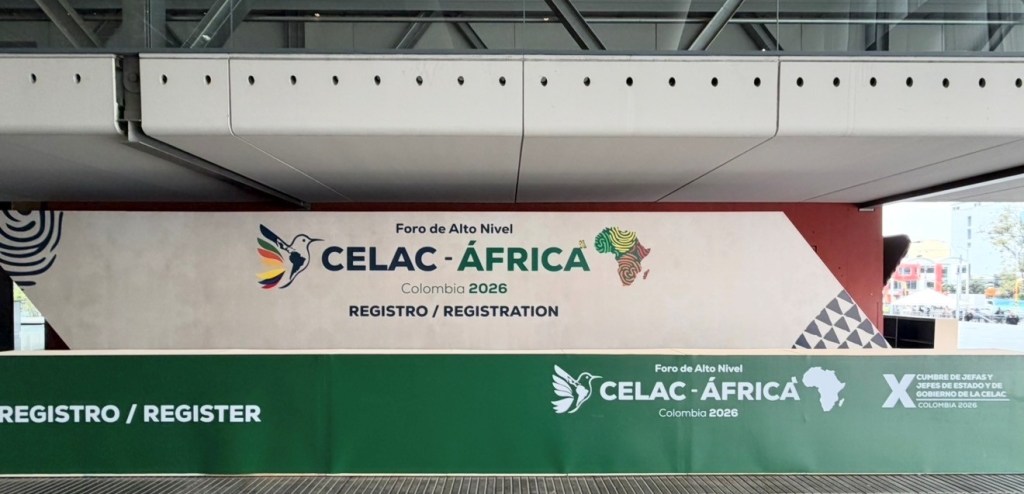
A Historic Convergence of Regions
Together, Africa (54 states) and Latin America and the Caribbean (33 states) represent nearly half of United Nations membership, close to 2 billion people, and a combined economic output approaching 10 trillion dollars. If structured and sustained, this inter-regional alignment could become one of the most consequential political and economic coalitions of the 21st century.
The Bogota Forum reflects an emerging understanding across both regions that the rules governing global finance, trade, climate action, and technological transformation are being renegotiated, often without sufficient representation from those most affected. This moment offers an opportunity to shift from fragmented national advocacy toward coordinated regional bargaining power.
As highlighted in the Forum’s preparatory discussions, ambition is not symbolic diplomacy but institutionalized cooperation mechanisms capable of shaping development outcomes and influencing global governance reforms.
Stopping Commodity Dependence to Embrace Economic Transformation
One of the most compelling imperatives for Africa-Latin America cooperation lies in economic transformation. Both regions remain heavily dependent on the export of raw materials, from critical minerals and agricultural commodities to fossil fuels. This structural pattern has constrained industrialization, limited job creation, and exposed economies to volatile global price cycles.
A coordinated approach to value-chain development, including industrial policy alignment, regional investment platforms, and knowledge exchange, could help shift this trajectory.
Latin America’s experience in sectors such as renewable energy and bioeconomy innovation offers lessons for African industrial strategies. At the same time, Africa’s demographic dynamism and expanding continental market under the African Continental Free Trade Area present new opportunities for South-South production partnerships.
By acting together, both regions can move from being price-takers in global markets to becoming rule-shapers in emerging sectors such as green minerals, climate technologies, and digital public infrastructure.
Debt, Climate Finance, and the Politics of Global Rules
Another central pillar of the Bogota dialogue is the urgent need to reform global development finance. Many African and Latin American countries now spend more on debt servicing than on health or education. Climate shocks are compounding fiscal vulnerabilities, even as climate finance flows remain insufficient and unevenly distributed.
In this context, Africa-CELAC cooperation can strengthen collective advocacy for reforms in multilateral development banks, fairer sovereign debt restructuring mechanisms, and expanded access to concessional climate finance. Joint diplomatic positioning could also help accelerate innovations such as regional credit rating agencies, local currency financing instruments, and blended finance platforms designed around development priorities rather than external conditionalities.
Reparative Justice and Historical Accountability
Perhaps one of the most transformative dimensions of Africa-Latin America engagement lies in the growing movement for reparative justice. Both regions carry the enduring legacies of colonial extraction, slavery, racial hierarchies, and unequal integration into the global economy. These historical injustices continue to shape present-day development trajectories.
Coordinated diplomatic efforts, including support for initiatives emerging from African Union member states to advance reparations discussions at the United Nations, could elevate the issue from moral aspiration to policy agenda.
Beyond financial compensation, reparative justice must be understood as encompassing technology transfer, fair trade systems, institutional reform, and the restoration of cultural and intellectual agency.
In Bogota, cultural diplomacy and people-centered engagement are playing an important role in grounding these discussions in lived experience rather than abstract geopolitical rhetoric.
People as the Bridge Between Regions
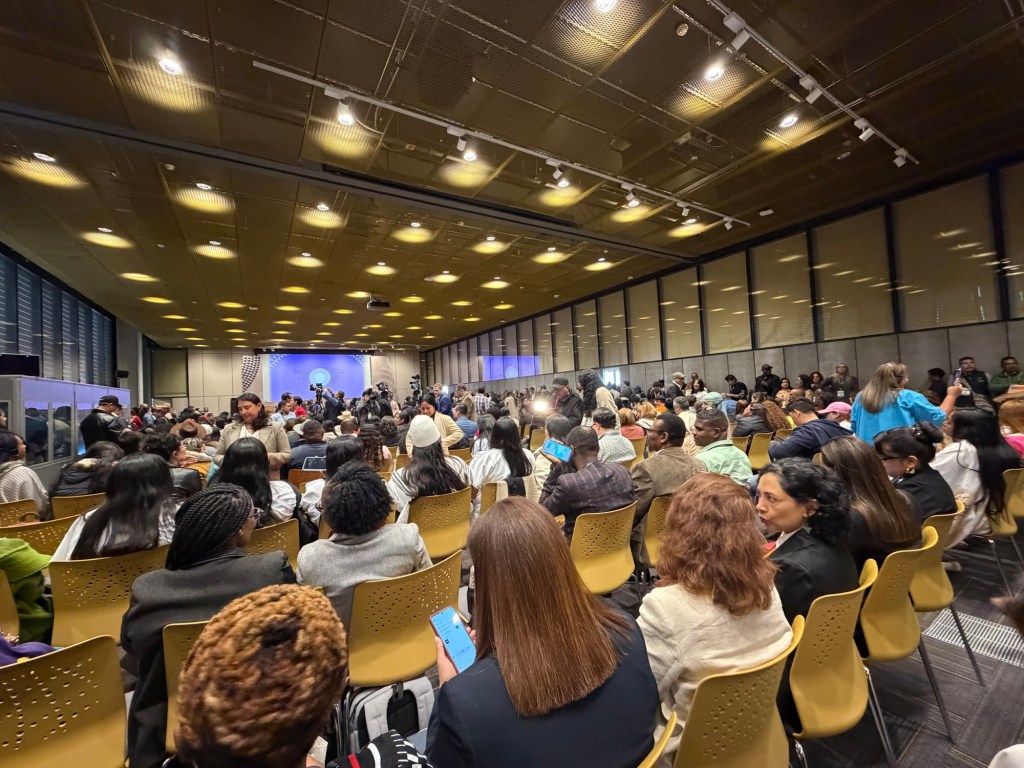
While governments drive formal cooperation frameworks, citizens and their formations and networks remain essential for sustaining momentum beyond summit declarations. Youth movements, research institutions, diaspora organizations, and community leaders are uniquely positioned to translate political commitments into social innovation and policy accountability.
Such engagements will be critical to building durable coalitions capable of navigating future crises, whether related to democratic governance, migration, food security, or digital transformation.
A Forward-Looking Agenda for Global South Cooperation
Looking ahead, the real test of the Bogota Forum will not be the eloquence of its final declaration but the strength of its follow-through. Institutionalizing Africa-CELAC cooperation will require:
- Establishing permanent inter-regional coordination mechanisms and regular ministerial dialogues.
- Developing joint investment platforms focused on industrialization, climate resilience, and technology partnerships.
- Aligning diplomatic strategies in multilateral negotiations on debt, trade, and global governance reform.
- Strengthening cultural and academic exchanges to deepen mutual understanding and shared identity across the Global South.
If these steps are pursued with ambition and political will, the partnership between Africa and Latin America could become a cornerstone of a more balanced and inclusive global order.
Bogota as a Starting Point, Not an Endpoint
Standing in Bogota at this crucial moment, one senses that history is quietly shifting. The world is entering an era marked by geopolitical competition, institutional uncertainty, and contested norms. In such a context, solidarity among regions that share common developmental challenges, and common aspirations, becomes both a strategic necessity and a moral imperative.
Africa and Latin America have the potential not only to cooperate but to co-create new pathways for prosperity, justice, peace and democratic resilience. The choices made here this week could help determine whether the Global South remains a collection of fragmented voices or emerges as a coherent force capable of shaping the future of global cooperation.
The journey has begun. The responsibility now is to ensure that Bogota becomes remembered not as a symbolic encounter, but as the moment when two regions decided to act together, with purpose, confidence, and a shared vision for a fairer world.
If you’d like to receive my articles automatically as soon as they’re published, simply follow this blog using the “Follow” button at the bottom left of this page or send me an email at: Desire.Assogbavi@Assodesire.com
 Assodesire