My Reflections Ahead of the First Africa-CELAC Forum
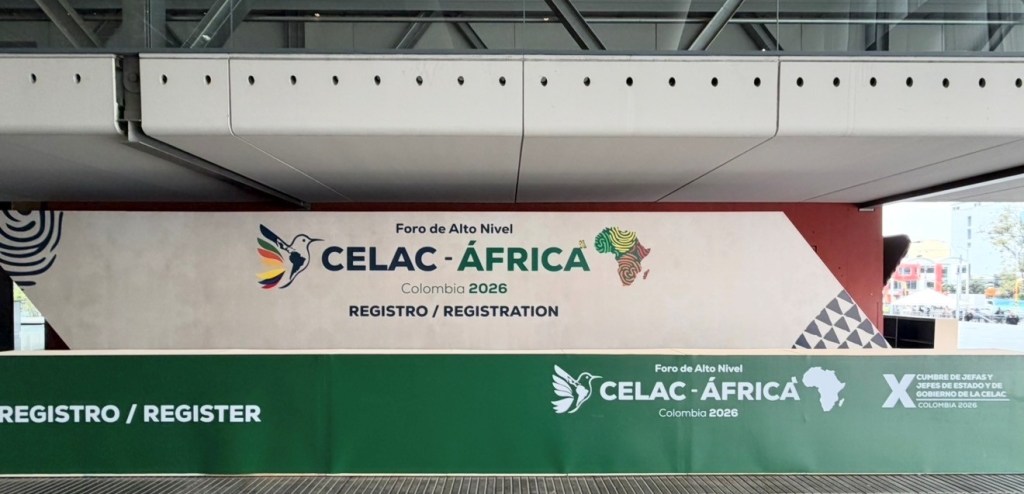
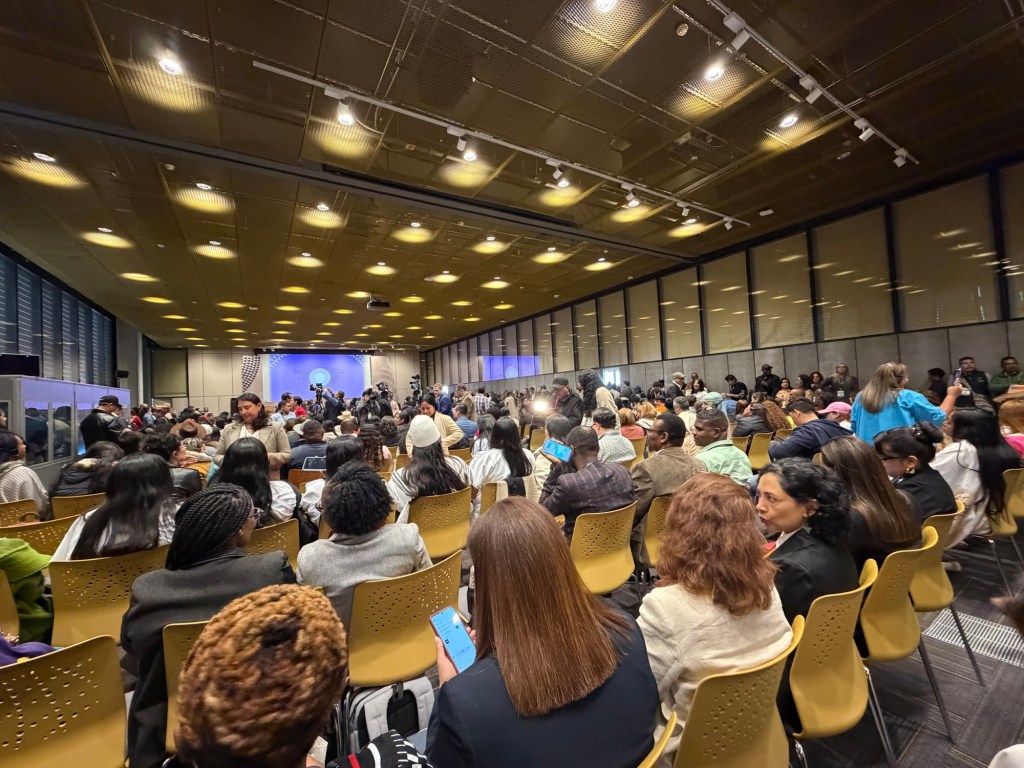
As I arrive in Bogota, Colombia to participate in the first High-Level Forum between the Community of Latin American and Caribbean States (CELAC) and the African Union, the atmosphere is charged with both urgency and possibilities. This gathering to be held from 18th -21st March 2026 is not simply another diplomatic event on an already crowded global calendar. It is a strategic moment, one that could help redefine how Global South organizes itself to navigate an increasingly fragmented international order.
For decades, Africa and Latin America have engaged the world largely through parallel struggles: debt crises, commodity dependence, structural inequalities, democratic pressures, and climate vulnerability. Today, these shared realities are converging into a common political consciousness, and into a growing recognition that cooperation across the Global South is no longer optional. It is becoming a geopolitical necessity.
A Historic Convergence of Regions
Together, Africa (54 states) and Latin America and the Caribbean (33 states) represent nearly half of United Nations membership, close to 2 billion people, and a combined economic output approaching 10 trillion dollars. If structured and sustained, this inter-regional alignment could become one of the most consequential political and economic coalitions of the 21st century.
The Bogota Forum reflects an emerging understanding across both regions that the rules governing global finance, trade, climate action, and technological transformation are being renegotiated, often without sufficient representation from those most affected. This moment offers an opportunity to shift from fragmented national advocacy toward coordinated regional bargaining power.
As highlighted in the Forum’s preparatory discussions, ambition is not symbolic diplomacy but institutionalized cooperation mechanisms capable of shaping development outcomes and influencing global governance reforms.
Stopping Commodity Dependence to Embrace Economic Transformation
One of the most compelling imperatives for Africa-Latin America cooperation lies in economic transformation. Both regions remain heavily dependent on the export of raw materials, from critical minerals and agricultural commodities to fossil fuels. This structural pattern has constrained industrialization, limited job creation, and exposed economies to volatile global price cycles.
A coordinated approach to value-chain development, including industrial policy alignment, regional investment platforms, and knowledge exchange, could help shift this trajectory.
Latin America’s experience in sectors such as renewable energy and bioeconomy innovation offers lessons for African industrial strategies. At the same time, Africa’s demographic dynamism and expanding continental market under the African Continental Free Trade Area present new opportunities for South-South production partnerships.
By acting together, both regions can move from being price-takers in global markets to becoming rule-shapers in emerging sectors such as green minerals, climate technologies, and digital public infrastructure.
Debt, Climate Finance, and the Politics of Global Rules
Another central pillar of the Bogota dialogue is the urgent need to reform global development finance. Many African and Latin American countries now spend more on debt servicing than on health or education. Climate shocks are compounding fiscal vulnerabilities, even as climate finance flows remain insufficient and unevenly distributed.
In this context, Africa-CELAC cooperation can strengthen collective advocacy for reforms in multilateral development banks, fairer sovereign debt restructuring mechanisms, and expanded access to concessional climate finance. Joint diplomatic positioning could also help accelerate innovations such as regional credit rating agencies, local currency financing instruments, and blended finance platforms designed around development priorities rather than external conditionalities.
Perhaps one of the most transformative dimensions of Africa-Latin America engagement lies in the growing movement for reparative justice. Both regions carry the enduring legacies of colonial extraction, slavery, racial hierarchies, and unequal integration into the global economy. These historical injustices continue to shape present-day development trajectories.
Coordinated diplomatic efforts, including support for initiatives emerging from African Union member states to advance reparations discussions at the United Nations, could elevate the issue from moral aspiration to policy agenda.
Beyond financial compensation, reparative justice must be understood as encompassing technology transfer, fair trade systems, institutional reform, and the restoration of cultural and intellectual agency.
In Bogota, cultural diplomacy and people-centered engagement are playing an important role in grounding these discussions in lived experience rather than abstract geopolitical rhetoric.
People as the Bridge Between Regions
While governments drive formal cooperation frameworks, citizens and their formations and networks remain essential for sustaining momentum beyond summit declarations. Youth movements, research institutions, diaspora organizations, and community leaders are uniquely positioned to translate political commitments into social innovation and policy accountability.
Such engagements will be critical to building durable coalitions capable of navigating future crises, whether related to democratic governance, migration, food security, or digital transformation.
A Forward-Looking Agenda for Global South Cooperation
Looking ahead, the real test of the Bogota Forum will not be the eloquence of its final declaration but the strength of its follow-through. Institutionalizing Africa-CELAC cooperation will require:
Establishing permanent inter-regional coordination mechanisms and regular ministerial dialogues.
Developing joint investment platforms focused on industrialization, climate resilience, and technology partnerships.
Aligning diplomatic strategies in multilateral negotiations on debt, trade, and global governance reform.
Strengthening cultural and academic exchanges to deepen mutual understanding and shared identity across the Global South.
If these steps are pursued with ambition and political will, the partnership between Africa and Latin America could become a cornerstone of a more balanced and inclusive global order.
Bogota as a Starting Point, Not an Endpoint
Standing in Bogota at this crucial moment, one senses that history is quietly shifting. The world is entering an era marked by geopolitical competition, institutional uncertainty, and contested norms. In such a context, solidarity among regions that share common developmental challenges, and common aspirations, becomes both a strategic necessity and a moral imperative.
Africa and Latin America have the potential not only to cooperate but to co-create new pathways for prosperity, justice, peace and democratic resilience. The choices made here this week could help determine whether the Global South remains a collection of fragmented voices or emerges as a coherent force capable of shaping the future of global cooperation.
The journey has begun. The responsibility now is to ensure that Bogota becomes remembered not as a symbolic encounter, but as the moment when two regions decided to act together, with purpose, confidence, and a shared vision for a fairer world.
If you’d like to receive my articles automatically as soon as they’re published, simply follow this blog using the “Follow” button at the bottom left of this page or send me an email at: Desire.Assogbavi@Assodesire.com
Why Africa Must Rethink Its Peace Architecture Now ?
Africa’s security landscape is changing faster than the frameworks and institutions designed to manage it. From the Sahel to the Horn and the Great Lakes, conflicts are becoming more interconnected, driven by governance deficits, geopolitical competition, and transnational threats that traditional responses struggle to address.
In this piece published by Amani Africa, I reflect on why the continent must rethink its peace and security architecture and how the upcoming AU Extraordinary Summit could become a turning point for rebuilding continental agency.
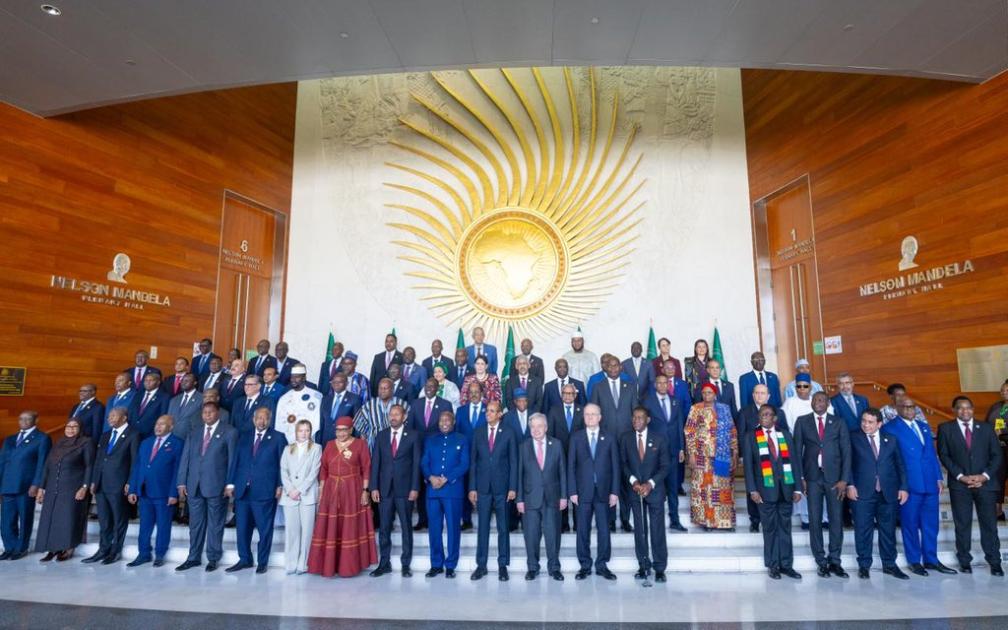
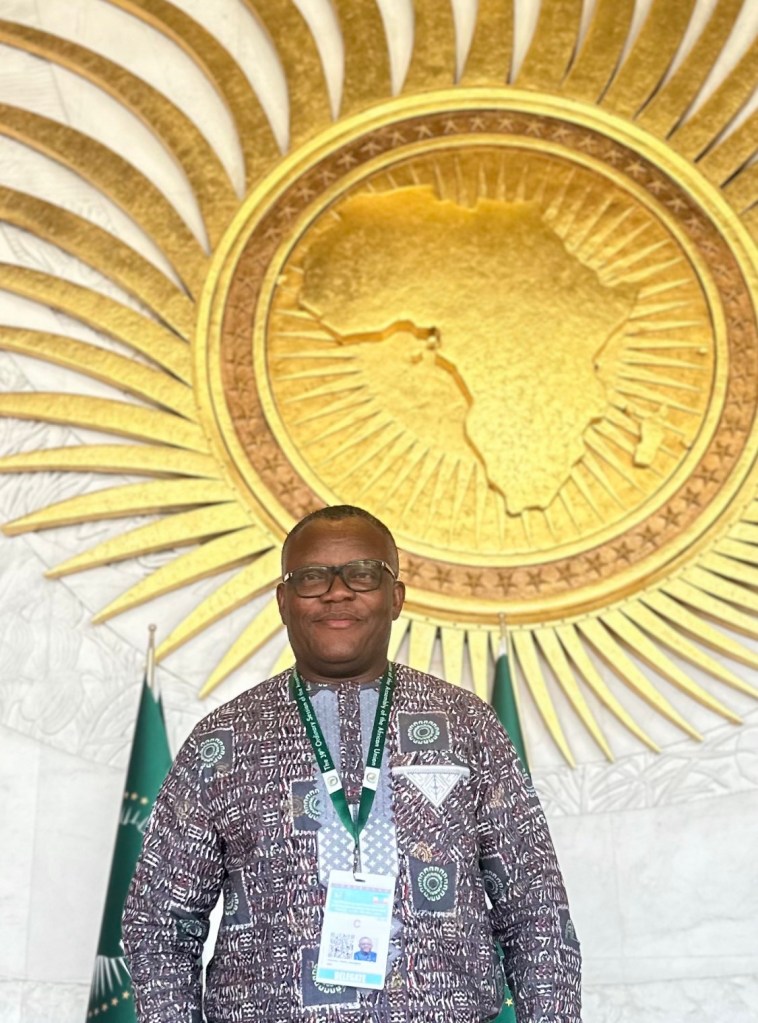
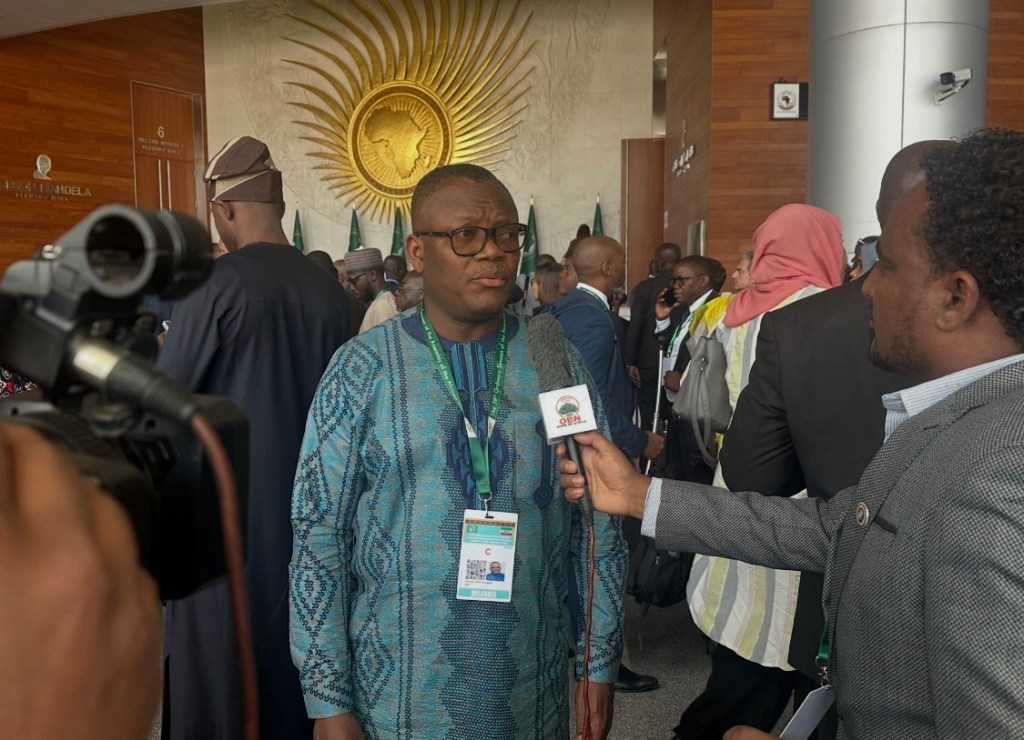
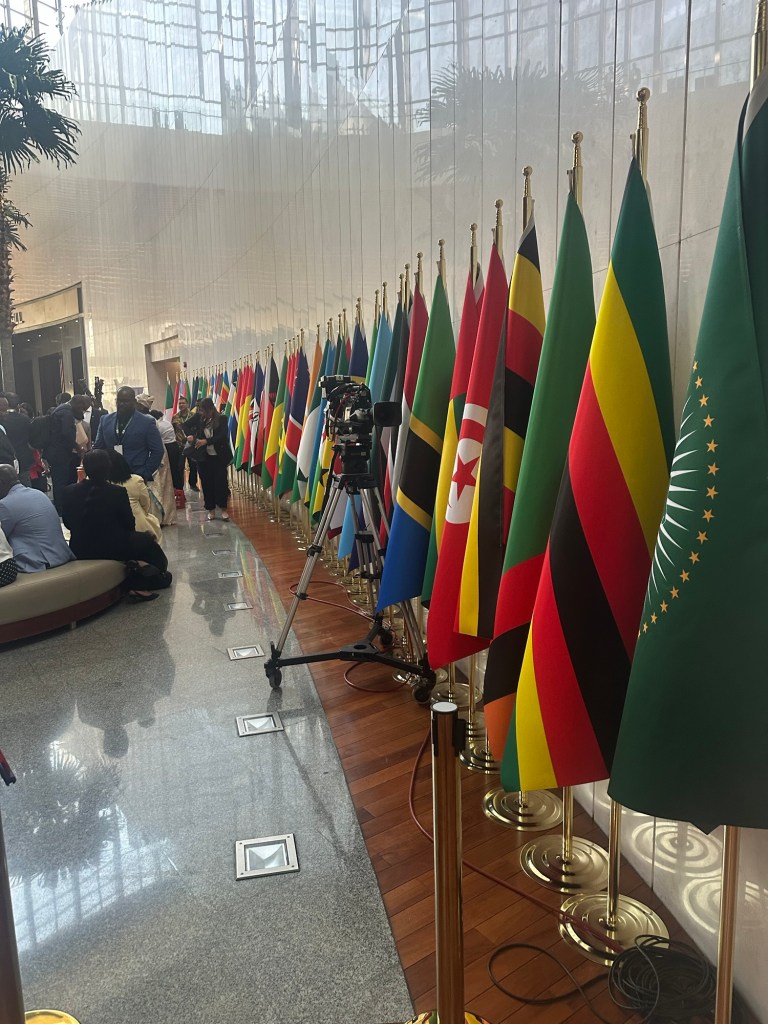
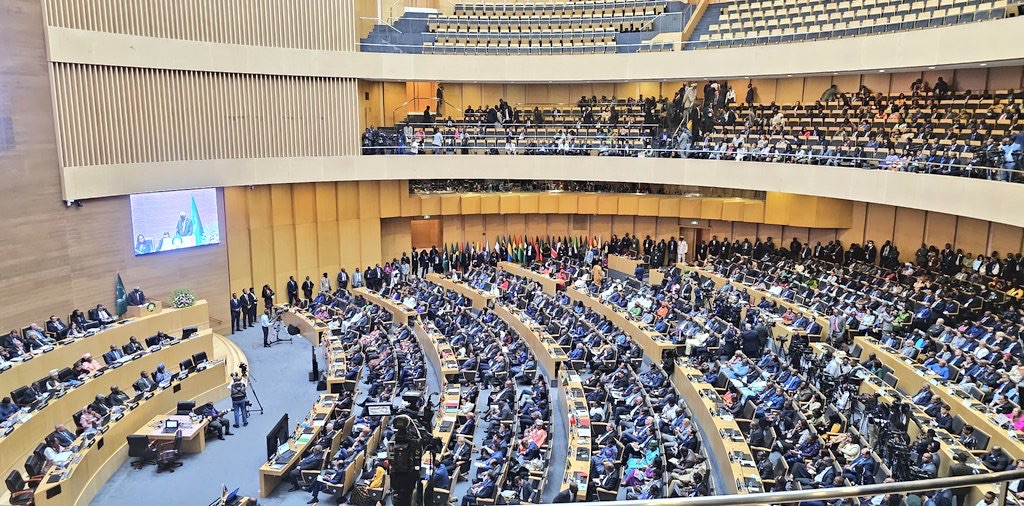
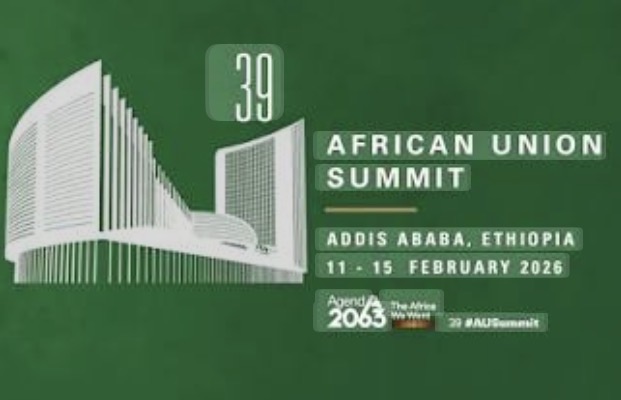
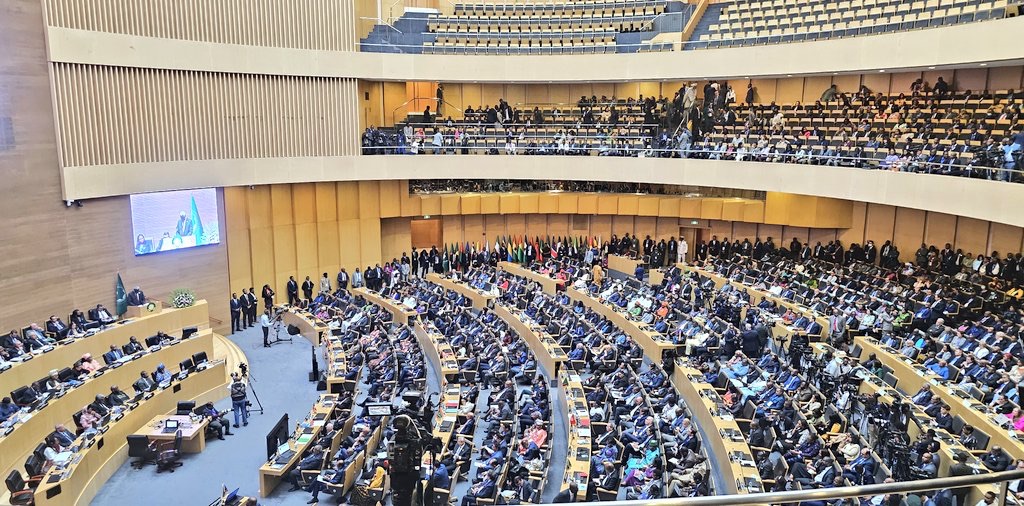
The 39th African Union Summit unfolded at a moment of uncomfortable truths for the continent. Inside the plenary hall and behind closed doors, African Leaders debated conflicts, institutional reform, financial sovereignty, critical minerals, artificial intelligence, and Africa’s place in a fractured global order. The language was ambitious. The tone was urgent.
In the corridors however, one of the most talked-about figures in Addis Ababa was not African. Giorgia Meloni, “guest of honor” arrived to co-host the second Italy-Africa Summit ahead of the AU Summit, and promote Italy’s “Mattei Plan”, framed as cooperation “between equals,” a non-predatory approach, and a strategy to tackle the root causes of migration.
Meanwhile, the continent confronts its own contradictions. Ten military coups since 2020. Suspensions followed by quiet reinstatements. Elections praised despite repression. Expressions of “deep concern” over Sudan, the Sahel, and eastern DRC, but limited enforcement muscle. Angola’s President, outgoing AU Chairperson, warned: “normalizing coup-makers who retake power through elections cannot become standard practice”.Leadership within the Union itself also shifts. The rotational Chair now passes to Burundi for 2026 under the leadership of President Évariste Ndayishimiye.
Can the AU strengthen conflict prevention while selectively enforcing its own rules? Can it demand equal global partnership while tolerating democratic erosion at home? Can it negotiate critical minerals, climate finance, and AI governance from a position of sovereignty while financing only a fraction of its own program budget?
In Addis Ababa, Africa was not short of ambition. The real question is whether Africa’s institutions are strong enough, and its current leadership bold and serious enough, to convert strategic importance into strategic power.
Pending the publication of the official decisions, here are my 10 takeaways from a Summit that revealed both Africa’s rising leverage and its persistent institutional fragility.
1. Conflict Prevention at the Center
The decision to convene an Extraordinary Summit on “Strengthening Mechanisms for Conflict Prevention and Resolution in Africa” in Luanda in 2026 signals recognition that Africa’s peace and security architecture needs urgent strengthening.
Importantly, the Summit emphasized that Luanda must deliver concrete, measurable, time-bound outcomes, not another declarative forum. The credibility of the AU now depends on operational follow-through.
2. Institutional Reform: From Diagnosis to Implementation
The reform agenda, championed most recently under the progress report presented by President William Ruto is entering a new phase.
The Summit mandated:
Harmonization of the African Governance Architecture (AGA) and the African Peace and Security Architecture (APSA).
Clearer early warning-early response mechanisms.
Legal clarification of AU–REC relations.
A strengthened support structure for the Panel of the Wise.
3. “Silencing the Guns” Needs Reinvention
With the flagship programme ending in 2030 while guns are shouting in our continent more than ever, the Summit acknowledged the need to review and adapt the AU Master Roadmap. This is an implicit admission: progress has been weak. A flexible, context-specific, adaptive approach will be required if the slogan is to translate into reality.
4. Financing the Union: unfinished business
The Summit reaffirmed the 0.2% import levy and long-standing commitments to finance the Union internally but here is the uncomfortable truth: Member States currently finance only 24% of the AU programme budget. The remaining is paid by partners.
The Summit discussed and considered
Expanding the Peace Fund from USD 400 million to USD 1 billion.
Convening an Extraordinary Session of Ministers of Foreign Affairs and Finance before November 2026.
Continue Advocating for predictable UN financing for AU-led peace operations.
Without financial sovereignty, institutional reform will stall. This remains the most decisive implementation test.
5. Africa’s Geopolitical Reset
The Summit directed the development of a Continental African Foreign Policy Framework rooted in Pan-Africanism, solidarity, and collective security.
This is a strategic move. In a fragmented global order, Africa needs to coordinate its external posture rather than react individually.
6. The G20: A Continental Strategic Platform
The Declaration on Africa’s Engagement with the G20 was one of the most politically significant outcomes.
The AU Summit:
Welcomed the outcomes of South Africa’s 2025 G20 Presidency under President Cyril Ramaphosa.
Established a Continental Coordination Mechanism on G20 Follow-Through.
Endorsed a Continental Framework on Reducing Inequality.
Defended South Africa’s full participation in G20 processes under the US Presidency.
Called on the United States, as incoming Presidency, to uphold inclusivity.
This was not symbolic. It was Africa collectively defending its seat at the table of global economic governance.
7. Critical Minerals Are Now Explicitly Strategic
The Summit reaffirmed that Africa’s critical minerals are strategic assets for structural transformation.
Leaders requested a Continental Critical Minerals Value Addition Framework focused on:
Regional value chains
Local beneficiation
Environmental, Social, and Governance standards
Fair benefit-sharing
This indicate a shift from extraction toward industrialization, at least at policy level.
8. Artificial Intelligence and Digital Infrastructure Are Security Issues
The AU welcomed the AI for Africa Initiative and requested development of an Africa AI and Digital Public Infrastructure Roadmap.
More strikingly, the Summit called for AI-based early warning systems to enhance risk assessment and prevention.
9. Historical Justice in Formal AU Record
The Assembly decided to qualify slavery, deportation and colonization as crimes against humanity and genocide against the peoples of Africa, committing to pursue international recognition. Ghana is planning to table a resolution at the UN General Assembly shortly.
This is politically significant. It anchors reparatory justice within AU formal doctrine and links history to contemporary global negotiations.
10. AU’s Efficiency now framed as a political necessity.
The Summit discussed:
Limiting its agenda to three strategic issues, each of these strategic issues shall not have more than two items at each Assembly session
Delegating all non-strategic or technical matters as well as operational responsibilities to the Executive Council, with further delegation to the Permanent Representatives’ Committee as appropriate
Ensuring that decisions are issued and circulated to Member States within a maximum of seven (10) days following the closure of meetings
Advancing restructuring of AU organs.
Pushing forward operationalization of the Court of Justice.
Accelerating work on division of labour between AU and RECs.
The Real Question Is Implementation
The 39th AU Summit did not lack ambition: Conflict prevention, financing, geopolitical positioning, industrialization, AI, global governance, historical justice, and institutional reform within one meeting.
The real test is not the adoption of the decisions/declarations. It is whether:
Financing commitments are met,
Peace and Security happen in the continent
Shared values are truly shared and observed
Reform timelines are respected,
Early warning triggers early action,
Continental positions are defended consistently in global spaces.
If implementation follows intent, this Summit may be remembered as an historical moment. If not, it risks joining a long list of well-drafted but weakly executed declarations.
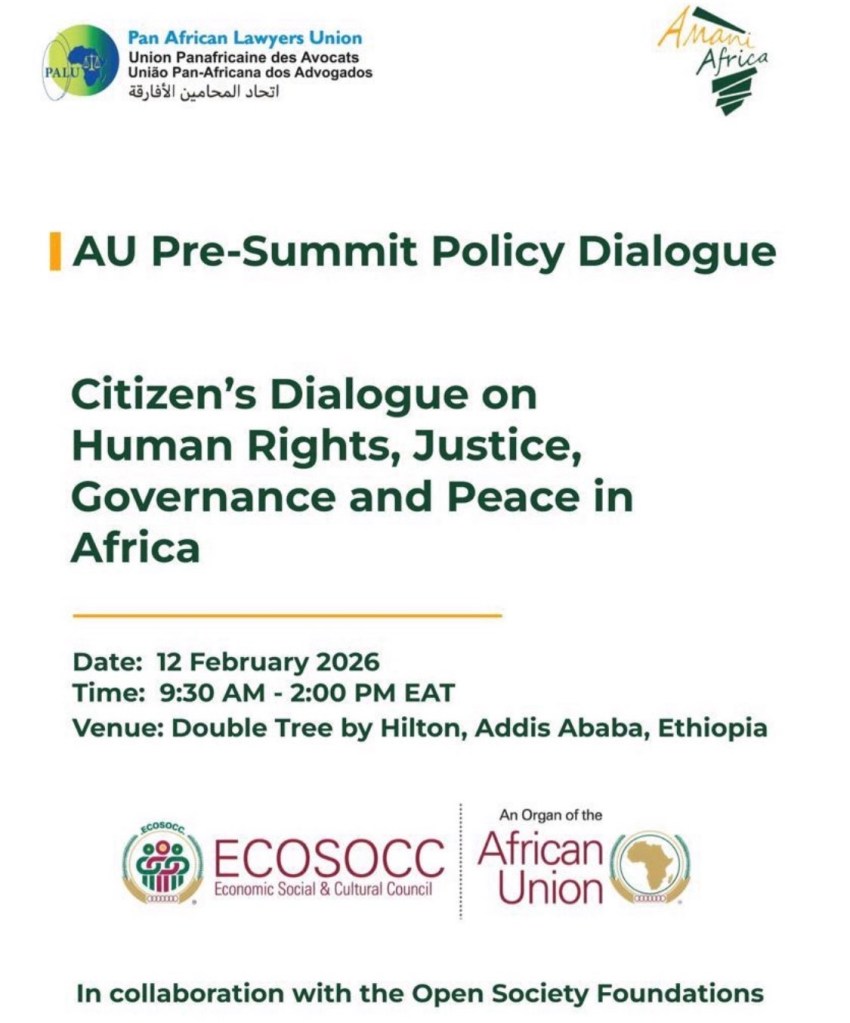
As African leaders convene for the 39th AU Summit in Addis Ababa, more than 80 delegates from across Global Africa, representing civil society organizations, youth movements, legal practitioners, policy experts, human rights defenders, academics etc. joined by many others online, have come together to deliver a clear and principled message. In a context marked by persistent human rights violations, democratic backsliding, shrinking civic space, protracted conflicts, and mounting debt distress, this memorandum calls on Heads of State to move beyond declarations and take concrete decisions to defend constitutional democracy, advance justice and accountability, protect civilians, empower youth, strengthen governance institutions, and ensure responsible stewardship of Africa’s natural resources. Africa cannot credibly demand justice globally while tolerating injustice at home.
MEMORANDUM
To: African Heads of State and Government
From: The Citizens’ Dialogue held in Addis Ababa on 12th February 2026
Date: 14 February 2026
Subject: Memorandum to the 39th AU Summit on Human Rights, Justice, Governance and Peace in Africa
Excellencies,
We, citizens from across the continent and the diaspora meeting in Addis Ababa on 12 February 2026, with the participation of many others online, congratulate you on convening the 39th Ordinary Session of the Assembly of the African Union at a defining moment for our continent.
Africa stands at a historic crossroads. The global order is fragmenting. Geopolitical competition is intensifying. Fiscal space is shrinking under mounting debt burdens. Armed conflicts continue to devastate lives from Sudan to the Sahel and Eastern DRC. Democratic norms are under strain, and civic space is narrowing across multiple member states.
Yet this moment also presents opportunity. Africa has secured a permanent seat in the G20. The African Union has launched a Decade of Reparations. The 2026 Theme of the Year, “Water as a Vital Resource for Life, Development and Sustainability,” recognizes the climate-development-security nexus at the heart of our future.
This AU Summit must therefore move beyond declarations. It must deliver decisions that restore credibility, protect sovereignty, and secure dignity for Africa’s people.
The Citizens’ Dialogue on Human Rights, Justice, Governance, and Peace respectfully submits the following urgent messages for your consideration:
1. Defend Constitutional Democracy and Reclaim Civic Space
Mandate consistent enforcement of AU democratic norms, including the African Charter on Democracy, Elections and Governance.
Strengthen the independence and operational capacity of the African Commission and African Court on Human and Peoples’ Rights.
Protect election observation, media freedom, and civic participation as pillars of stability, not threats to sovereignty.
Prioritize electoral governance reform, including independent supervision and financing of elections.
Institutionalize regular citizen dialogues and participation mechanisms, including support for innovative digital civic engagement.
Establish comprehensive transparency mechanisms covering electoral bodies, political parties, security institutions, and regulators.
2. Move the Reparation Agenda to Implementation
Establish a permanent AU Reparations Implementation Mechanism with clear mandates and reporting timelines.
Integrate debt justice, climate loss and damage, illicit financial flows, and restitution of cultural heritage into a unified continental reparative framework.
Deepen strategic alliances with the Caribbean Community (CARICOM), the Community of Latin American and Caribbean States (CELAC), and the broader Global South to build negotiating coalitions.
3. Confront Debt Distress as a Peace and Sovereignty Issue
Collectively push for meaningful reform of the global debt architecture and IMF quota system.
Strengthen regional financing mechanisms, development banks, and local currency settlement systems to reduce vulnerability to external shocks.
Advance implementation of the Mbeki Report on Illicit Financial Flows.
4. Place Civilian Protection and Accountability at the Center of Peace Efforts
Prioritize civilian protection and accountability mechanisms in all peace processes.
Harmonize AU, the Regional Economic Communities (RECs), and UN tracks to avoid fragmented diplomacy.
Ensure inclusive approaches incorporating local communities and civil society.
Establish measurable benchmarks, timelines, and performance indicators for peace interventions.
5. Address Youth Exclusion as a Security and Development Priority
Prioritize large-scale youth employment and entrepreneurship support.
Align education systems with labor market needs.
Support local enterprise and domestic private sector growth.
Recognize youth as partners in governance and transformation.
6. Confront Structural Drivers of Conflict, Including Rural Neglect
Increase investments in rural economies, infrastructure, and enterprise development.
Address unequal budget allocations that exclude rural populations.
Integrate rural communities into national and continental development strategies.
Promote inclusive development that reduces socio-economic inequalities.
7. Strengthen Governance of Critical Minerals and Natural Resources
Accelerate adoption and implementation of the Africa Mining Vision.
Address governance of critical minerals as both a conflict driver and a potential engine for shared prosperity.
Promote regional value chains and local beneficiation.
Adopt a clear AU solidarity position rejecting politicization of participation in global forums.
Strengthen AU coordination ahead of major global moments including G20, UN, and the Conference of the Parties to the United Nations Framework Convention on Climate Change (COPs) processes.
Accelerate reforms increasing Africa’s collective leverage on global financial rules and representation.
9. Restore Credibility of Governance through Peer Review and Accountability
Reinforce the African Peer Review Mechanism (APRM) as a serious governance instrument.
Ensure leadership and credibility standards across AU governance bodies.
Ensure transparency in resource allocation and conflict intervention funding.
Create stronger follow-through through public benchmarks and periodic progress reporting.
In conclusion, Excellencies,
This Summit is more than an annual convening. It is a test of Africa’s collective credibility.
Your decisions in Addis Ababa will determine whether Africa:
Speaks with unity in global governance,
Protect human rights at home and defends democratic legitimacy
Converts reparative justice into structural transformation,
And builds peace rooted in accountability and dignity.
We, citizens of this continent, stand ready to support reform-oriented institutions, civil society partners, and continental processes that strengthen Africa’s sovereignty, justice systems, and democratic future.
The moment demands courage, coherence, and continental solidarity.
Lorsque les chefs d’État et de gouvernement africains se réuniront à Addis-Abeba les 14 et 15 février 2026 pour la 39ᵉ session ordinaire de la Conférence de l’Union africaine, ils le feront à un moment d’une gravité politique exceptionnelle pour le continent et pour le système international.
Le Sommet se tient dans un contexte de fragmentation mondiale croissante, d’affaiblissement du multilatéralisme, de conflits en expansion, d’aggravation de la crise de la dette et de pressions climatiques accrues. Malgré le thème officiel de l’année consacré à l’eau, la paix et la sécurité devraient constituer le véritable centre de gravité de cette rencontre, tant les conflits persistants, l’instabilité régionale et la fragilité des transitions politiques continuent de dominer la réalité politique africaine.
À travers le continent, la régression démocratique et des droits humains, les élections contestées, la répression de la dissidence et les états d’urgence prolongés mettent à rude épreuve la crédibilité des institutions de gouvernance.
Dans le même temps, l’importance stratégique de l’Afrique, portée par les minéraux critiques, le poids démographique et l’intensification des rivalités géopolitiques, n’a jamais été aussi élevée, accentuant à la fois les pressions externes et les fragmentations internes.
Dans ce contexte, le Sommet de 2026 n’est pas une réunion de routine. Il constitue un test de l’autonomie et l’autodétermination politique collective de l’Afrique, de sa capacité à agir avec unité, et de la pertinence de l’Union africaine en tant que cadre de leadership continental.
Screenshot
L’eau Comme Pouvoir : Climat, Développement et Stabilité Politique
Le thème de l’UA pour 2026, « L’eau, ressource vitale pour la vie, le développement et la durabilité », reflète un choix politique délibéré. L’eau n’est plus abordée comme une question technique ou sectorielle ; elle est désormais reconnue comme un actif stratégique économique, social et sécuritaire.
À travers l’Afrique, le changement climatique se manifeste par des sécheresses prolongées, des inondations catastrophiques, une baisse de la productivité agricole, des tensions hydriques urbaines, une volatilité des prix alimentaires et une augmentation des risques sanitaires. La rareté de l’eau et sa mauvaise gouvernance contribuent déjà à des conflits locaux, à des déplacements forcés et à des tensions transfrontalières, tandis que l’abondance hydrique, lorsqu’elle est mal gérée, peut également alimenter les inégalités et l’accaparation par les élites.
La Commission de l’UA a présenté le thème 2026 comme orienté vers la mise en œuvre, ancré dans l’Agenda 2063, avec un accent particulier sur la sécurité de l’eau, l’adaptation climatique, ainsi que l’eau, l’assainissement et l’hygiène (WASH) en tant que questions de dignité, de santé publique et de légitimité de l’État.
Réparations : d’une Revendication Morale à un Projet politique Institutionnalisé
Parallèlement au thème de l’eau, le Sommet de 2026 fera progresser de manière décisive le thème 2025 de l’UA sur « La justice pour les Africains et les personnes d’ascendance africaine à travers les réparations ».
De manière cruciale, les chefs d’État examineront une étude juridique et politique majeure sur les implications de la qualification de la colonisation comme crime contre l’humanité, et de certains actes liés à l’esclavage, à la déportation et à la violence coloniale comme génocide contre les peuples africains.
Il s’agit d’un tournant historique : le passage d’une reconnaissance symbolique à un cadre juridique, à l’élaboration de normes et à une responsabilité institutionnelle en droit international.
L’Union africaine a déjà commencé à opérationnaliser cet agenda. Des mécanismes d’expertise et de référence juridique ont été mis en place et sont désormais fonctionnels, sous la coordination de la Commission de l’UA. Les partenariats avec la CARICOM, les Nations unies et la société civile se sont renforcés, tandis que le langage des réparations a, pour la première fois, été intégré dans des déclarations intercontinentales formelles.
En étendant l’agenda des réparations à une Décennie 2026-2035, l’Afrique affirme que la justice réparatrice n’est pas une diplomatie ponctuelle, mais un projet politique de long terme, reliant justice de la dette et flux financiers illicites, pertes et dommages climatiques, restitution culturelle et justice narrative, ainsi que la réforme de la gouvernance mondiale et des systèmes financiers.
Le véritable test de crédibilité réside désormais dans le suivi et la mise en œuvre : la capacité de l’UA à transformer l’exigence morale en diplomatie coordonnée, en mandats concrets et en résultats mesurables.
L’Afrique, le G20 et la Politique du Multilatéralisme Conditionnel
Le rôle croissant de l’Afrique dans la gouvernance mondiale sera également scruté de près. L’Assemblée recevra un briefing officiel sur les résultats de la présidence sud-africaine du G20 en 2025, un jalon symbolisant le leadership de l’Afrique dans le principal forum économique mondial.
Cependant, ces avancées font face à la controverse entourant la décision du président Trump de ne pas inviter l’Afrique du Sud au Sommet des dirigeants du G20 de 2026, soulevant de sérieuses inquiétudes quant à un multilatéralisme sélectif et politiquement conditionnel.
Cet épisode dépasse largement le cas sud-africain. Il constitue un test de la solidarité africaine et un signal d’alerte : si la participation africaine à la gouvernance mondiale devient conditionnée à des alignements politiques imposés par les puissances dominantes, alors la place de l’Afrique à la table mondiale demeure précaire.
La réponse de l’Union africaine, ou son silence, façonnera sa crédibilité collective, non seulement au sein du G20, mais aussi dans les débats plus larges sur la réforme du multilatéralisme.
Paix et Sécurité : le Centre de Gravité Politique du Sommet
La paix et la sécurité resteront le centre de gravité politique du Sommet. Les conflits en cours au Soudan, dans l’est de la République démocratique du Congo, au Sahel et en Libye continuent d’infliger des souffrances massives aux populations civiles, tout en révélant les limites des médiations fragmentées, des réponses militarisées et des solutions sécuritaires externalisées.
L’Assemblée examinera le rapport annuel du Conseil de paix et de sécurité (CPS), et une réunion du CPS au niveau des chefs d’État pendant la semaine du Sommet est probable, une reconnaissance implicite de la gravité du moment.
L’UA se trouve ici face à un dilemme ancien mais urgent : l’écart entre des cadres normatifs solides et une application faible et incohérente. Le véritable enjeu sera de savoir si l’Union peut promouvoir des solutions politiques africaines, privilégier la protection des civils et la redevabilité plutôt que de simples arrangements de stabilité, et soutenir des processus de paix inclusifs, plaçant les femmes, les jeunes et les communautés affectées au cœur des solutions.
L’accession du Président du Burundi à la présidence de l’Union africaine pour 2026 jouera un rôle déterminant dans l’orientation de ces débats. Les attentes sont fortes: le Président de l’UA devra non seulement agir comme bâtisseur de ponts entre régions et sensibilités politiques, mais aussi défendre et projeter la place déterminante de l’Afrique sur la scène internationale, affirmer les positions continentales, résister aux pressions extérieures et garantir que l’Afrique engage ses partenaires internationaux à partir d’une position d’unité et de confiance stratégique.
Le Président burundais Évariste Ndayishimiye prépare activement son mandat. Il inscrira certainement son mandat dans une logique de normalisation diplomatique, d’affirmation politique et d’engagement sur les dossiers sécuritaires majeurs du continent avec une attention particulière aux crises des Grands Lacs et du Sahel. Fort de son expérience récente à la tête de la Communauté d’Afrique de l’Est et du COMESA, ainsi que son rôle actuel d’envoyé spécial de l’UA pour le Sahel, le Président aurait commencé à structurer une équipe dédiée à Addis-Abeba, appuyée par un dispositif interministériel à Bujumbura.
Conclusion
Le Sommet de 2026 constitue un moment charnière pour le projet continental africain. Il mettra à l’épreuve la capacité de l’Union africaine à répondre à des crises entremêlées : droits humains, recul démocratique, conflits armés, avec cohérence, unité et courage politique.
J’espère également que les dirigeants africains sauront saisir cette occasion comme un moment rare de réflexion stratégique lucide sur l’ouragan géopolitique qui bouleverse le monde, et sur ce qu’il exige collectivement de l’Afrique. L’érosion du multilatéralisme, l’application sélective du droit international, l’intensification des rivalités entre grandes puissances et la nouvelle course vers les ressources africaines ne sont pas des forces lointaines : elles réduisent déjà l’espace politique du continent et exacerbent ses divisions internes.
Ce Sommet offre l’opportunité non seulement de diagnostiquer ces mutations, mais aussi de s’accorder sur des positions communes, des lignes rouges et des stratégies collectives capables de renforcer la solidarité africaine, de protéger la souveraineté et d’accroître le levier politique du continent. Sans une telle coordination délibérée, les États continueront d’absorber seuls les chocs mondiaux, tandis que l’Afrique, dans son ensemble, risque d’être façonnée par des décisions prises ailleurs plutôt que d’agir comme une force cohérente dans un monde en turbulence.
En définitive, le Sommet ne devrait pas se limiter aux décisions et déclarations adoptées à huis clos. Les citoyens africains attendent de voir si la principale institution multilatérale du continent est capable de transformer l’ambition en action, la clarté morale en levier politique, et les principes en changements durables.
When African Heads of State and Government convene in Addis Ababa on 14-15 February 2026 for the 39th Ordinary Session of the Assembly of the African Union, they will do so at a moment of exceptional political gravity for the continent and the international system.
The Summit comes against a backdrop of intensifying global fragmentation, shrinking multilateralism, escalating conflicts, deepening debt distress, and growing climate stress. Despite the official Theme of the Year on water, peace and security is likely to sit at the center of gravity of this gathering, as escalating conflicts, regional instability, and fragile political transitions continue to dominate Africa’s political reality.
Across Africa, democratic and Human Rights regression, contested elections, repression of dissent, and prolonged states of emergency are testing the credibility of governance institutions.
At the same time, Africa’s strategic importance, driven by critical minerals, demographic weight, and geopolitical competition has never been higher, increasing both external pressure and internal fragmentation.
In this context, the 2026 Summit is not just a routine gathering. It is a test of Africa’s collective political agency, its capacity to act with unity, and the relevance of the African Union as a forum for continental leadership.
Water as Power: Climate, Development, and Political Stability
The AU Theme of the Year 2026, “Water as a Vital Resource for Life, Development and Sustainability”, reflects a deliberate political choice. Water is no longer treated as a technical or sectoral issue; it is increasingly understood as a strategic economic, social, and security asset.
Across Africa, climate change is manifesting through prolonged droughts, catastrophic floods, declining agricultural productivity, urban water stress, food price volatility, and heightened public health risks. Water scarcity and mismanagement are already contributing to local conflicts, forced displacement, and cross-border tensions, while water abundance, when poorly governed, can also fuel inequality and elite capture.
The AU Commission has framed the 2026 theme as delivery-oriented, anchored in Agenda 2063, with a focus on water security, climate adaptation, WASH and sanitation as questions of dignity, public health, and state legitimacy.
Reparations: From Moral Claim to Institutionalized Political Project
Crucially, Heads of State will consider a landmark legal and political study examining the implications of defining colonization as a crime against humanity and characterizing certain acts of slavery, deportation, and colonial violence as genocide against African peoples.
This marks a historic shift from symbolic recognition to legal framing, norm-setting, and institutional responsibility under international law.
The AU has already taken some steps to operationalize this agenda. Dedicated expert and legal reference mechanisms have been established and are now functional, coordinated by the AU Commission through system-wide structures. Partnerships with CARICOM, the United Nations, and civil society have deepened, while reparations language has, for the first time, entered formal intercontinental declarations.
By extending the reparations agenda into a 2026-2035 Decade, Africa is signaling that reparatory justice is not an episodic diplomacy, but a long-term political project linking debt justice and illicit financial flows, climate loss and damage, cultural restitution and narrative justice, reform of global governance and financial systems.
The credibility test now lies in follow-through: whether the AU can translate moral authority into coordinated diplomacy, concrete mandates, and measurable outcomes.
Africa, the G20, and the Politics of Conditional Multilateralism
Africa’s growing role in global governance will also be under close scrutiny. The Assembly will receive a formal briefing on the outcomes of South Africa’s 2025 G20 Presidency, a milestone that symbolized Africa’s leadership into the world’s most powerful economic forum, the G20.
Yet this progress now faces controversy around President Trump’s decision not to invite South Africa to the 2026 G20 Leaders’ Summit., raising concerns about selective multilateralism and political conditionality.
This episode is bigger than South Africa. It is a test of African solidarity and a warning signal: if African participation in global governance is contingent on political alignment with powerful states, then Africa’s seat at the table remains precarious.
How the AU responds, or remains silent, will shape its collective credibility, not only within the G20 but across broader multilateral reform debates.
Peace and security: the Summit’s Political Gravity Center
Peace and security will remain the Summit’s political gravity center. Ongoing conflicts in Sudan, eastern Democratic Republic of Congo, the Sahel, and Libya continue to inflict devastating civilian harm while exposing the limits of fragmented mediation, militarized responses, and externalized security solutions.
The Assembly will consider the Peace and Security Council’s annual report, and a Heads-of-State-level PSC engagement during Summit week is likely, an acknowledgment of the severity of the moment.
Here, the AU confronts a familiar but urgent dilemma: the gap between strong normative frameworks and weak, inconsistent enforcement. The real test will be whether the AU can advance and African-led political solutions rather than outsourced mediation; civilian protection and accountability over narrow stability fixes; and an inclusive peace process that center women, youth, and affected communities.
The assumption of the AU Chairmanship by the Burundian’s President for 2026 will shape the tone of this engagement, with expectations that the Chair will not only act as a bridge-builder across regional and political divides, but also defend and project Africa’s collective agency on the global stage, asserting continental positions, resisting external pressure, and ensuring that Africa engages international partners from a position of unity and strategic confidence.
Burundian President Évariste Ndayishimiye is actively preparing for his term. His mandate will likely be anchored in a strategy of diplomatic normalization, political assertion, and engagement on the continent’s major security files, with particular attention to the crises in the Great Lakes region and the Sahel. Drawing on his recent experience as Chair of the East African Community and COMESA, as well as his current role as the AU’s Special Envoy for the Sahel, President Ndayishimiye is reported to have begun structuring a dedicated team in Addis Ababa, supported by an interministerial coordination mechanism in Bujumbura.
Conclusion
The 2026 Summitis an important moment for Africa’s continental project. It will test whether the African Union can effectively respond to intersecting crises human rights, democratic backsliding, armed conflict etc with coherence, unity, and political courage.
I also hope that African leaders will seize this Summit as a rare moment for frank, strategic reflection on the geopolitical hurricane reshaping the world, and on what it demands of Africa collectively. The erosion of multilateralism, the selective application of international law, intensifying great-power competition, and a renewed scramble for African resources are not distant forces; they are already constraining Africa’s policy space and exposing divisions across the continent. This gathering offers an opportunity not only to diagnose these shifts, but to agree on shared positions, red lines, and collective strategies that strengthen African solidarity, protect sovereignty, and enhance Africa’s leverage. Without such deliberate coordination, individual states will continue to absorb global shocks alone while the continent as a whole, risk being shaped by decisions made elsewhere rather than acting as a coherent force in a turbulent world.
Overall, the Summit should not be just about decisions and declarations adopted in closed sessions. African citizens are waiting to see whether the Africa’s premier multilateral institution can convert ambition into actions, moral clarity into leverage, and principles into durable political change.
Africa enters 2026 at a moment of dangerous convergence. Democratic retreat, prolonged wars, climate shocks, and unsustainable debt are colliding with a rapidly shifting global order. Power politics rather than rules define the new international order. At the same time, Africa is becoming ever more central to the world’s future. The continent hosts around 60% of the world’s best solar resources and a commanding share of the minerals essential to the global energy transition. Yet, the paradox endures: Africa is globally indispensable but remains politically and economically underpowered.
As part of my usual annual strategic analysis and forecast for Africa, I map seven interlinked pressure points: democracy and governance, conflict and security, human rights, debt and fiscal sovereignty, geopolitics, digital transformation, and the governance of natural resources, showing how each one amplifies the others.
My central message is that Africa’s trajectory will depend less on what the world does to it than on what Africans choose to do together. I then call for bold continental discipline, stronger regional and continental institutions, and a decisive shift from rhetorical unity to enforceable solidarity.
I finished with a calendar of key moments to watch in 2026, strategic dates, and decision points where Africa’s priorities will be tested.
The year ahead will not simply be another chapter in Africa’s long struggle with underdevelopment and governance. It will be a critical year, one that determines whether Africa continues to be shaped by external interests and domestic predation, or whether it begins to assert coordinated political, economic, and moral agency.
Africa is living through a struggle between two futures: one driven by force, impunity, and hollow rhetoric of sovereignty; the other built on collective intelligence, democratic substance, and broad social coalitions led by youth, women, citizens… The outcome is not predetermined, but 2026 and the years that follow will surely narrow the range of possibilities, hence the urgency for concrete and decisive actions on the following matters.
1. Democracy under siege: elections, coups, and the collapse of legitimacy: A continent moving away from democratic norms
By the end of 2025, more than half of African countries were classified as “not free” or only “partly free” by global democracy indices. Since 2010, at least 10 successful coups have taken place in Africa, and over 20 constitutions have been amended to weaken term limits. Civic space has closed sharply, with the work of journalists, activists, and opposition leaders increasingly criminalized.
In 2026, Africa faces over 20 national elections, many in contexts already marked by repression, insecurity, or economic crisis. Rather than renewing legitimacy, several of these elections risk deepening political alienation. In Uganda (January 2026), President Yoweri Museveni, in power since 1986, is expected to extend his rule amid intimidation of opposition and militarization of politics. In Ethiopia (June 2026): Elections will take place against a backdrop of unresolved conflicts in Tigray, Amhara, Oromia, and Somali regions, with millions displaced and the electoral authority facing credibility and logistical crises.
The danger is not only flawed elections but the normalization of democratic fraud, creating fertile ground for coups, insurgencies, and social explosions.
2. Conflict: symptoms of deeper governance failure
Sudan: a catastrophic war with global enablers
The war in Sudan, now entering its third year, represents one of the gravest humanitarian crises in the world, with 12+ million displaced, including 4 million refugees. 50% of the population is facing acute food insecurity; famine conditions exist in multiple regions. The estimated death toll exceeds 150,000. The current partition of Sudan, with the SAF based in Port Sudan and the RSF entrenched in Darfur, reflects the failure of African and international diplomacy to impose costs on war profiteers and external sponsors. In 2026, fighting is expected to intensify in Kordofan, with increased drone warfare and regional spillovers.
Eastern DRC: diplomacy without deterrence
In the Democratic Republic of the Congo, peace initiatives have failed to dismantle armed groups or address regional interference. Despite US and Qatari-backed talks and the December 2025 agreement in Washington, hostilities continue. More than 6 million people remain internally displaced in the DRC, the largest displacement crisis in Africa. As long as mineral wealth coexists with impunity, violence will remain economically rational.
The Sahel: A Security Crisis Turning Systemic.
The Sahel has become one of Africa’s most acute and rapidly deepening conflict theatres, where insurgency, state fragility, and humanitarian collapse intersect. As of late 2025, over 3.3 million people have been forced from their homeswithin the Central Sahel alone, and broader estimates place the total displaced, including refugees and internally displaced persons, at nearly 5.9 million, alongside roughly 2.2 million refugees hosted across neighboring countries. The human toll is compounded by economic collapse, food insecurity, and erosion of governance, making the Sahel both a security and humanitarian prioritythat, without decisive regional action and sustained investment in protection, risks becoming a chronic area of instability with cross-continental implications.
The key lesson on conflicts for 2026 is that Africa’s wars persist not for lack of mediation, but for lack of accountability, sanctions, and enforcement.
The future of human rights in Africa is at acute peril.
Across the continent, civic space is shrinking, journalists and human-rights defenders are criminalized, courts are captured, and emergency laws are normalized in the name of security and stability. Elections increasingly coexist with repression; conflicts persist alongside mass displacement and atrocity crimes; and digital surveillance is being weaponized to silence dissent.
This convergence risks scraping out the very idea of rights as universal, replacing it with selective protections and transactional tolerance. African states must collectively and visibly recommit to non-derogable rights by restoring judicial independence, protecting free media and digital freedoms, and ending impunity for violations through credible investigations and sanctions. Regional and continental institutions, especially the African Union and its human-rights architecture, must be empowered and resourced to enforce standards, not merely observe breaches, including by triggering consequences for constitutional manipulation and repression. Governments must also anchor security responses in human-rights law, recognizing that abuses fuel radicalization and instability rather than prevent them. Africa must place youth, women, and frontline defenders at the center of governance, not as risks to be managed but as guarantors of accountability. These steps are not optional: without a decisive course correction, the erosion of rights will undermine legitimacy, deepen conflict, and foreclose development; with it, Africa can rebuild trust, resilience, and a democratic future worthy of its people.
3. Debt, cost of capital, and the structural trap: Unfinished business
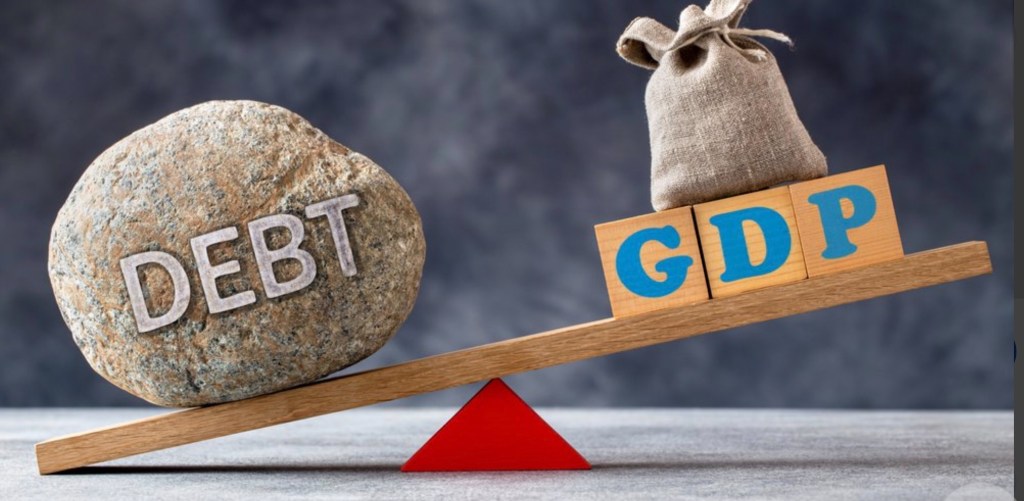
Africa’s debt crisis is often misdiagnosed. The problem is less about reckless borrowing and more about systemic financial discrimination. Average African sovereign borrowing costs are 2-4 times higher than those of advanced economies. In 2025, over 20 African countries spent more on debt servicing than on health or education. Climate-vulnerable African states pay an estimated USD 30-40 billion annually in excess interest due to risk premiums.
Without reform of credit ratings, liquidity access, and multilateral lending rules, Africa will remain locked in a cycle where growth fuels repayment, not development.
4. Geopolitics: leverage, coercion, and the test of African solidarity
The geopolitical landscape Africa faces in 2026 is no longer defined by multilateral rules, but by transactional power politics, selective enforcement of norms, and the normalization of coercive diplomacy. The United States, China, Russia, Gulf states, and emerging middle powers are competing openly for strategic advantage over minerals, votes in multilateral fora, military access, trade routes, and ideological alignment. In this environment, Africa is simultaneously courted and pressured, its strategic value rising even as respect for its sovereignty and collective voice remains uneven.
The controversy over the US’s decision not to invite South Africa to the G20 Leaders’ Summit in 2026, citing unfounded allegations that Pretoria persecutes its white Afrikaner minority, crystallizes this reality. Such an unprecedented and politically explosive move would signal a shift from diplomatic disagreement to institutional punishment, weaponizing summit invitations as tools of geopolitical discipline. Beyond South Africa, the implications would be continental: if a G20 member from Africa can be sidelined for pursuing independent domestic and foreign policies, then African participation in global governance becomes conditional, not guaranteed. This moment, therefore, represents a stress test for African unity and multilateral credibility. The African Union, alongside like-minded G20 members from the Global South and beyond, faces a defining choice: accept the fragmentation of global governance through silence, or assert collective solidarity by making clear that the exclusion of South Africa would carry political costs. Quiet diplomacy alone will not suffice. Coordinated pressure, including the credible threat of collective absence or downgraded participation by African states and allied G20 members, may be the only language that resonates in a world increasingly governed by power rather than principle.
For Africa, the stakes go beyond one summit. If the continent fails to respond collectively, it risks entrenching a precedent where African agency is tolerated only when compliant. Conversely, a firm, united stance would signal that Africa is no longer a passive participant in global forums, but a political actor capable of defending its members and shaping the rules of engagement. In a multipolar world drifting toward coercion, solidarity is not symbolism; it is strategy.
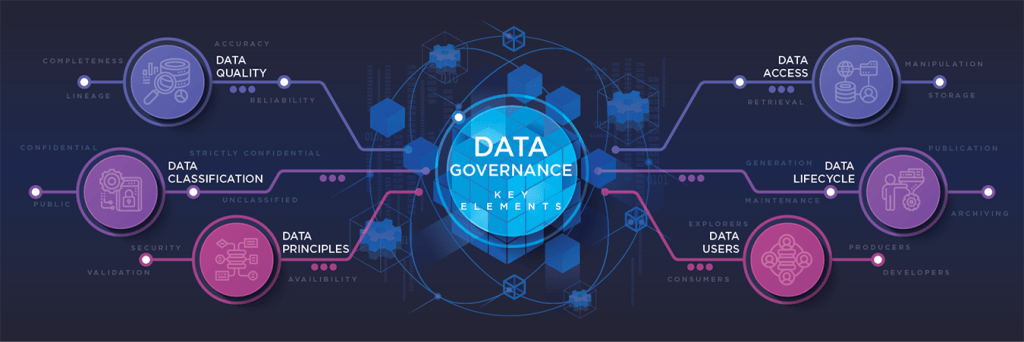
5. Digitalization and data governance
Digital infrastructure, trusted data systems, and frontier technologies are no longer optional enablers; they are the backbone of productivity, service delivery, security, and democratic accountability in the near future.
Africa has begun to make real, measurable strides in digitalization. Still, the pace and inclusivity of that progress remain uneven and urgently need acceleration if the continent is to compete effectively in the global digital economy. Across the continent, the digital economy’s contribution to GDP has risen sharply, from an estimated 1.1% in 2012 to about 5.2% by 2025, driven by expanding internet access, vibrant tech ecosystems, and improved policy frameworks. In North Africa, countries such as Egypt boast internet penetration rates exceeding 70%, supported by robust regulatory environments and rapidly expanding mobile broadband subscriptions. Meanwhile, outside North Africa, governments like Kenya have digitized hundreds of government services, reached millions, and transformed citizen engagement, while platforms like Rwanda’s Irembo, the country’s national digital government services platform, process millions of public transactions, exemplifying how digital public infrastructure can improve governance and service delivery.
Despite this progress, pervasive challenges persist; millions of Africa’s populations remain unconnected to mobile internet, with stark divides in digital usage and skills. Sub-Saharan internet penetration remains around half the global average, and affordability and digital skills gaps continue to exclude large segments, especially women, rural residents, and youth. Furthermore, Africa currently hosts less than 1% of global data-center capacity, even as demand for data services and cloud infrastructure surges, a gap that institutions like the World Bank are beginning to address with significant investments.
The imperative is clear: Africa must accelerate broadband expansion, close the mobile usage gap, and scale digital public infrastructure for identity, payments, health, and education while building robust data governance frameworks that protect rights and enable cross-border data flows. This requires bold continental coordination to ensure that digital transformation is inclusive, secure, and leverages the continent’s demographic dividend. Without decisive action on connectivity, data capacity, digital skills, and governance, Africa risks being relegated to the periphery of the global digital economy, even as the world increasingly runs on data, innovation, and networked services.
6. What must now be done is unambiguous and collective.
Africa must rebuild democratic substance; it must do so together, understanding that democratic backsliding in one country weakens the legitimacy and security of all. The continent must replace selective silence with active African solidarity, enforcing real political and economic consequences for coups, war crimes, constitutional manipulation, and repression, regardless of the country or the identity of those in power. This requires stronger, credible regional and continental institutions, an African Union, and regional economic communities that are empowered, adequately resourced, and willing to hold member states accountable, not merely issue communiqués.
Africa must act as one on global finance, coordinating positions on debt restructuring, correcting the structural bias that drives up the cost of capital, accelerating the creation of an African Credit Rating Agency, and negotiating as a bloc to prevent fragmentation and exploitation. Climate vulnerability must be transformed into collective leverage through unified African negotiating positions on adaptation finance, forest and nature-based revenues, and loss-and-damage mechanisms.
In 2026, Africa must act in disciplined solidarity to turn its critical minerals and natural resources into lasting power, not fleeting rents. The continent holds an extraordinary share of the inputs driving the global energy transition, cobalt, lithium, manganese, graphite, copper, platinum group metals, yet it too often captures the least value, absorbs the most environmental damage, and bears the political risk of extraction. Fragmented national deals and opaque contracts weaken Africa’s bargaining position and lock countries into dependence on raw exports. Working together through common standards, coordinated licensing and taxation, shared infrastructure corridors, and regional value chains, Africa can shift from price-taker to rule-shaper. This requires aligning mineral policy with industrial strategy, insisting on local beneficiation, technology transfer, skills development, and embedding strong environmental, social, and governance safeguards that protect communities and ecosystems.
Continental and regional institutions must enforce transparency and curb elite capture, while resource-rich and resource-poor countries alike cooperate to build integrated markets under the AfCFTA. In a world scrambling for secure supplies, Africa’s leverage will be realized not by competing against itself, but by negotiating as one, converting geological abundance into jobs, resilience, and sovereign choice for the decades ahead.
Africa must lead its own peace and security agenda with enforcement, not excuses, backing mediation with sanctions, accountability, and sustained post-conflict governance. In a world governed increasingly by force and transactional power, Africa’s future will depend on continental discipline, institutional courage, and solidarity anchored in accountability, not slogans, because without strong institutions that can hold leaders to account, African unity will remain a promise rather than a power.
If 2026 becomes the year Africa aligns its politics with its people, it could mark the beginning of a new cycle. If not, the continent risks remaining globally central yet politically marginal.
The future is still open, but it may not be for long.
7. Key Moments in 2026
African Union Ordinary Summit (39th AU Summit), Addis Ababa, Ethiopia: 14-15 February 2026:
Conference of African Ministers of Finance, Planning and Economic Development (CoM 2026): 28 March – 3 April 2026, Tangiers, Kingdom of Morocco
IMF & World Bank Spring Meetings 13-18 April 2026: Washington, D.C., United States
Africa Day: 25 May 2026: Celebrated continent-wide and across the diaspora
African Development Bank Group Annual Meetings 25-29 May 2026: Brazzaville, Republic of Congo
United Nations General Assembly (UNGA 81) 22-30 September 2026: New York City, United States
IMF & World Bank Annual Meetings: Early-Mid October 2026: Washington, D.C., United States
UN Climate Conference, COP 31: 9-20 November 2026:, Antalya, Türkiye,
G20 Leaders’ Summit (US Presidency), Late November 2026: Florida. United States
Taken together, these meetings form a continuous negotiation cycle, from African coordination (AU, UNECA, AfDB) to global power arenas (IMF/WB, UNGA, COP, BRICS, G20, FOCAC). Africa’s success in 2026 will not depend on attendance, but on discipline, unity, and institutional follow-through across this entire chain.
Aujourd’hui, je monte dans un train de Nairobi à Mombasa pour rejoindre mes collègues à notre retraite annuelle de stratégie.
En montant dans ce train, mon esprit remonte bien des années en arrière, au jour où j’ai quitté l’école au Togo et où l’on m’a encouragé à accepter un travail manuel à la compagnie nationale des chemins de fer, le Réseau des Chemins de Fer du Togo (CFT).
Après quelques mois, j’ai été admis à leur centre de formation et j’y ai obtenu une double qualification de Chef de train et de Facteur (Adjoint au Chef de Gare dans le jargon technique).
Le tout premier jour de mon premier poste d’affectation à Akodésséwa, quelque chose s’est réveillé au plus profond de moi. Je n’avais que 19 ans, plein d’énergie, plein d’espoir, plein d’ambition, et je me souviens m’être dit : « Qu’est-ce que je fais ici ? Est-ce vraiment ma voie ? »
Ce sentiment est devenu de plus en plus fort et limpide en moi. Au bout d’un an de service, j’ai pris l’une des décisions les plus difficiles et les plus importantes de ma vie : j’ai démissionné et je suis retourné à l’école, déterminé à réussir, quoi qu’il m’en coûte. Huit ans plus tard, j’ai terminé mon Master en droit international et sciences administratives.
Je n’ai jamais considéré le temps passé au Réseau des Chemins de Fer du Togo (CFT) comme du temps perdu. Ces rails m’ont appris la discipline, le sens des responsabilités, l’humilité et le courage de changer de voie quand ton âme te dit que tu es fait pour quelque chose de plus grand.
Aujourd’hui, alors que le train file vers Mombasa, j’emmène avec moi ce jeune de 19 ans, toujours plein d’énergie, d’espoir et d’ambition, simplement engagé dans un autre voyage : le combat pour les droits humains, l’équité et la justice.
Today I am boarding the train from Nairobi to Mombasa to join my colleagues for our annual strategy retreat. As I step onto this train, my mind travels back many years, to the day I dropped out of school in Togo and was encouraged to take a labor job with the national railway company, Chemin de Fer du Togo.
After a few months, I was admitted to their training center and earned a double certification as a train operator and Train station officer . On my very first day at my first duty station in Akodéasséwa, something stirred deep inside me. I was only 19, full of energy, full of hope, full of ambition, and I remember thinking: What am I doing here? Is this really my path?
That feeling grew stronger and clearer. After a year of service, I made one of the hardest and most important decisions of my life: I resigned and went back to school, determined to make it, whatever it took. 8 years later, I completed my Master’s degree in International Law and Administrative Science.
I have never considered the time I spent as a train operator and station officer a waste. Those rails taught me discipline, responsibility, humility and the courage to change tracks when your soul tells you that you are meant for something more. Today, as the train rolls towards Mombasa, I carry that young 19-year-old with me, still full of energy, hope and ambition, just on a different journey: fight for human rights, equity and justice.
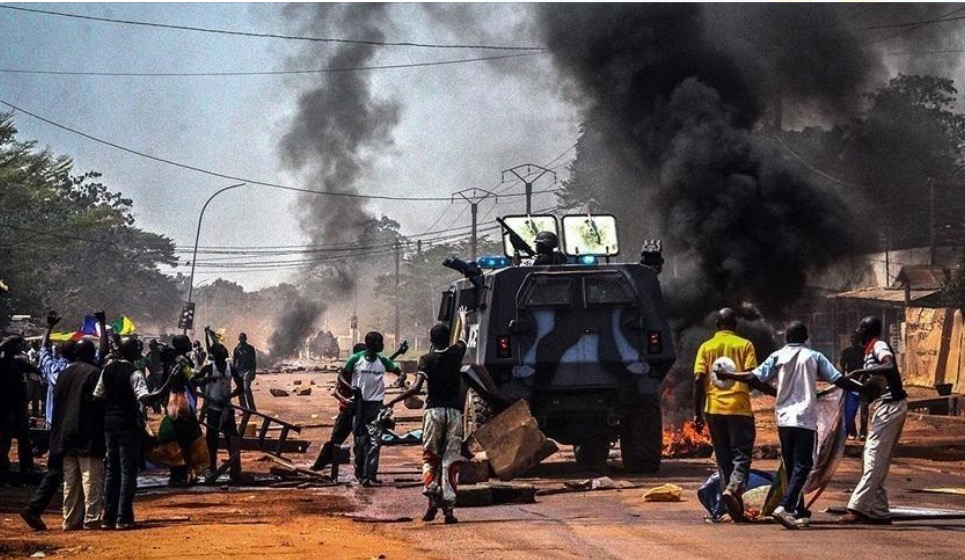
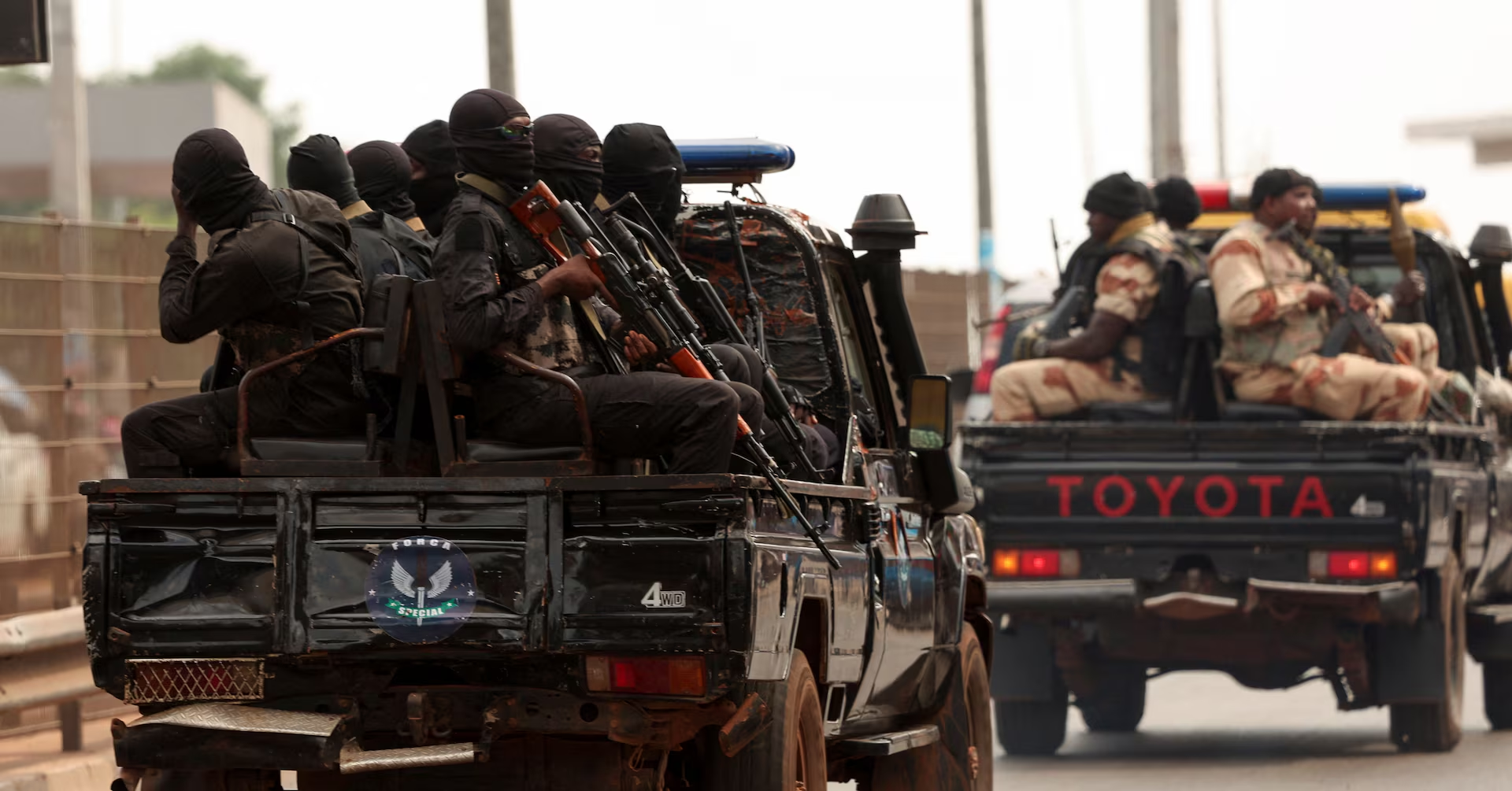
On 23 November 2025, the people of Guinea-Bissau queued for hours under the sun to choose their next president and parliament. Three days later, on 26 November, before the National Electoral Commission could publish the results, armed actors moved: soldiers surrounded key institutions, claimed “total control” of the country and halted the electoral process at gunpoint. On 27 November, the military high command installed Major-General Horta Inta-a Na Man as “transitional president” for a one-year period, while the deposed president, Umaro Sissoco Embaló, was escorted into exile. Call it a “staged coup”, a “self-coup” or a “corrective operation”, the label is irrelevant. What matters is the result: in the decisive hours after a national vote, the people’s verdict was hijacked at gunpoint.
By 29 November 2025, the African Union’s Peace and Security Council had suspended Guinea-Bissau from all AU activities, and ECOWAS had likewise condemned the takeover, suspended the country and demanded that the armed forces return to barracks and allow the announcement of the 23 November election results. This is not a minor constitutional hiccup. It is a direct attack on the fundamental right of citizens to choose and change their leaders, and a warning shot to every fragile democracy on the continent. If Guinea-Bissau’s coup, staged or “real”, is allowed to stand, it will become the new manual for incumbents and generals who want to cling to power while pretending to respect elections.
Africa simply cannot afford that. Not today, when we urgently need to focus on debt, jobs, climate, education and health, not on endless elite games in fatigues and suits. The African Union, ECOWAS and international partners must therefore draw a clear red line: this coup is illegal, illegitimate and intolerable. The 23 November election results must be published in full, an international investigation must expose the authors and sponsors, and sanctions must be so sweeping and personal that every potential putschist across the continent thinks twice before touching a ballot box or a constitution.
Here is my suggested roadmap in 7 points, that regional, continental and global institutions could act on urgently:
1. Staged or “real”, a coup is a coup, and it must not stand
Whether the events in Guinea-Bissau are labelled a “staged coup”, a “self-coup”, or a classic military takeover is a distraction. The bottom line is simple: armed actors intervened in the middle of an electoral process, blocked the announcement of results, dismantled constitutional institutions and installed a new authority by force. That is the textbook definition of an Unconstitutional Change of Government.
Africa, regional organizations and international partners must treat it as such: no recognition, no normalization, no excuses. Any government produced by this operation is born outside the constitution and should be treated accordingly.
Any attempt to “renegotiate” or massage the outcome in back rooms is not mediation; it is a continuation of the coup by other means. Democracy is not a menu you edit after seeing the numbers.
At most, there can be a very short, one-off exit window for the Guinean putschists: if, within a few days, they restore the elected authorities, allow the full publication of results, release detainees and return to their barracks, they can be considered for exemption from sanctions and prosecution. Beyond that narrow window, however, there should be no deals, no soft landing and no second chances.
2. We need an international investigation and real accountability
Guinea-Bissau cannot move forward on denial and amnesia. A time-bound, independent international commission of inquiry is essential to identify all those responsible:
the uniformed officers who appeared on camera;
the civilians who planned, financed or blessed the operation;
and any foreign actors who enabled it.
This commission should be mandated jointly by the AU, ECOWAS and the UN, with:
strong investigative powers and access to financial records;
protection for witnesses and whistle-blowers;
a clear path to justice, at national, regional or, if necessary, international level.
Impunity is the oxygen of every new putsch. That oxygen must be cut off.
3. Africa has anti-coup norms, let us enforce them
The problem is not the law; it is the double standards. In some crises, suspension and sanctions are immediate and robust. In others, political convenience and geopolitical interests dilute the response. That inconsistency is one of today’s biggest coup enablers.
When putschists see that some regimes manage to negotiate their way to recognition, they learn the lesson. Guinea-Bissau must be the case where Africa finally proves that the rules apply to everyone, no matter the rank, the rhetoric or the foreign friends.
4. Sanctions: Travel bans, asset freezes and no safe havens
If Africa wants to stop coups, sanctions must hurt the right people, not the population. That means:
Continent-wide travel bans on all coup leaders, their immediate families and key civilian sponsors – covering every AU and REC member state, with coordinated lists shared in real time. No shopping in Johannesburg, no medical trips in Tunis, no quiet conferences in Nairobi or Addis while citizens sit under military rule.
Global travel bans aligned with the AU position, extending to Europe, the Americas, the Middle East and Asia. Putschists must know that any airport can become a point of arrest, not a transit lounge.
Comprehensive asset freezes, targeting:
bank accounts, companies and properties held by coup leaders and their associates;
front companies and proxies used to hide wealth, including assets registered in the name of spouses, relatives, business partners or shell firms. Where necessary, beneficial-ownership investigations should be launched to expose these networks.
A business blacklist: firms, lobbyists and political consultants who knowingly facilitate or profit from coup-born regimes should also face sanctions and exclusion from public contracts and international financing.
These measures must be automatic and coordinated: once the AU and ECOWAS determine that an Unconstitutional Change of Government has occurred, a standard sanctions package should be triggered within days, not debated for months. No more ad hoc bargaining, no more selective outrage.
5. Declare coups a serious crime with no prescription
Africa must also send a clear legal message: a coup is not just a political event; it is a crime, and one that should carry no statute of limitations.
National laws, the AU legal framework and REC protocols should recognize the orchestration or support of an Unconstitutional Change of Government as a serious offense, comparable to high-level corruption or grave violations of constitutional order.
Those responsible should remain permanently liable to prosecution, even after they leave office or flee abroad. Time should not wash away the crime.
Amnesty deals that shield coup leaders from accountability should be strictly limited and subject to continental scrutiny; they must not become the default escape route.
By declaring coups a crime with no prescription, Africa would send a simple signal: even if you outlast this sanctions cycle, the knock on the door can still come in five, ten or twenty years. There will be no safe retirement for those who gain power by breaking the constitutional order.
6. This is about Africa’s economic and social future
Every coup, whether dressed up as “correction”, “transition” or “staged drama”, is a tax on Africa’s future. It scares away investment, deepens debt distress, fuels capital flight, weakens institutions and diverts energy from the real work such as creating jobs and decent livelihoods, reforming economies and fixing broken tax and debt systems, investing in health, education and climate resilience.
Guinea-Bissau is a fragile country that cannot afford yet another cycle of elite games between politicians, generals and traffickers. But the same is true across the continent.
The path forward is clear:
ECOWAS and the AU must maintain suspension of Guinea-Bissau and refuse to recognize coup-born authorities.
The election results must be published in full, with international support.
An independent international investigation must establish the truth and trigger tough, personal sanctions travel bans, asset freezes and legal proceedings.
The AU and RECs must update the definition of coups, make sanctions automatic, and treat coups as crimes with no statute of limitations.
At this moment, Africa can no longer tolerate coups, in khaki or in suits, while a whole generation waits for economic opportunity and social justice. Guinea-Bissau is not only a national crisis; it is a continental test.
If Africa stands firm here, together with its regional economic communities and global partners, it will send a powerful message: the age of playing games with the people’s will is over, and those who try will pay a permanent price.
7. Constitutional term-limit manipulation is also a coup
One of the most urgent debates Africa must stop dodging is this: when a leader changes the constitution to stay in power indefinitely, is that not also a coup? The African Charter on Democracy, Elections and Governance already gives us the answer. Article 23 is explicit that an Unconstitutional Change of Government includes any amendment or revision of the constitution or legal instruments that undermines the principles of democratic change of government.
In plain language, when incumbents abolish or reset term limits, rewrite electoral rules just before a vote, or redesign institutions so that alternation becomes impossible in practice, they are not “reforming” the system, they are seizing by legal means what generals seize by force of arms.
If we want citizens to take continental norms seriously, the African Union and Regional Economic Communities must say, clearly and publicly: unlimited term obtained by dismantling term limits is not more legitimate than a coup d’état, it is a constitutional coup. The same sanctions we demand for military putschists, suspension, travel bans, asset freezes and long-term political ineligibility, should also apply to leaders and coalitions that mutilate constitutions to rule for life. Otherwise, we send a disastrous message to African citizens: that the soldier who breaks the door with a gun is condemned, but the politician who quietly locks it from the inside is rewarded.
If you’d like to receive my articles automatically as soon as they’re published, simply follow this blog using the “Follow” button at the bottom left of this page or send me an email at: Desire.Assogbavi@Assodesire.com











 Assodesire