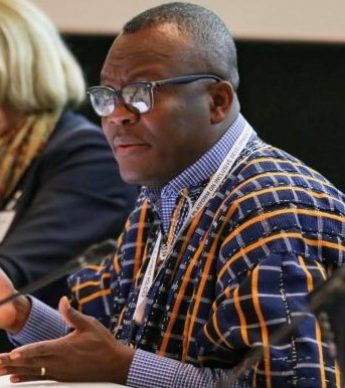
From Seville to Solutions: My 10 Key Takeaways from FFD4

When I was on my way to Seville, my daughter, a medical student and curious as ever, asked me, “What exactly are you going there for?”. I paused for a moment before answering: “I’m going to a global meeting called FFD4. It stands for Financing for Development. It may not sound exciting, but it’s actually about something very real, how countries decide to raise and spend money to make life better for people. It’s about ensuring there’s funding for hospitals, health care, schools, clean water, healthy food and the fight against climate change.” I told her that decisions made there could impact whether her future patients will have access to proper healthcare, or not. Because at the end of the day, FFD is about making global finance work for everyone, not just the privileged few.

I am not sure I will be able to fully simplify the outcomes of FFD4 but here are my 10 takeaways:

Despite challenges, including severely restricted space limiting the full participation of non-state actors, the conference marked a significant moment in development finance within a geopolitically shifting world.

1. Unity & Urgency Amid Global Tensions

FFD4 demonstrated a certain unity and urgency despite escalating global tensions, soaring debt burdens, and declining official development assistance (ODA). The resulting Compromiso de Sevilla (Seville Commitments), adopted on day-one of the conference reflects global consensus, though it could have been more robust and concrete.

2. Bridging the $4 Trillion SDG Financing Gap

To address the $4 trillion annual financing gap needed for the Sustainable Development Goals (SDGs), the Compromiso de Sevilla outlined three critical areas:

  • Catalyzing investment at scale: Mobilize and direct domestic, international, and private sector capital toward key sustainable development objectives
  • Tackling debt crises innovatively: Introduce innovative strategies for debt management, restructuring, and utilization to ensure debts contribute positively to developmental outcomes
  • Reforming international financial architecture for fairer governance: Promote greater inclusivity by amplifying the voices of developing countries within global financial governance systems

3. Over 130 Initiatives Launched

Under the Sevilla Platform for Action, more than 130 initiatives were launched, demonstrating a clear shift from commitments to concrete, actionable projects.

International Business Forum: Mobilizing Private Capital for Sustainable Development

Held in parallel with the main Conference, the International Business Forum brought together global business leaders who issued a powerful call to action to unlock private capital for sustainable development. Through a joint Communiqué released alongside the Sevilla Commitment, they outlined five priority areas for impact investment.

For the first time, major business groups and investor alliances coordinated their efforts through the newly formed FFD4 Business Steering Committee, signaling a clear and unified commitment from the private sector.

4. Innovative Debt Solutions

Several innovative debt-management initiatives emerged, including:

  • Debt Swaps for Development Hub: A platform that brings together countries, donors, development partners, and technical experts to coordinate, scale, and support debt-for-development swaps
  • Debt-for-Development Swap Programme: dedicating funds for debt conversion in Africa. It is a financial arrangement where a portion of a country’s external debt is cancelled or reduced, in exchange for the country agreeing to invest that money into development projects such as like education, health care, climate resilience, or infrastructure.
  • Debt Pause Clause Alliance: embedding crisis-response clauses into lending agreements. This will offer crisis-affected countries a tool to temporarily suspend debt repayments during shocks such as climate disasters or pandemics, enabling faster recovery and fiscal breathing space.
  • Borrowers’ Forum: A new mechanism aimed at helping debt-distressed countries coordinate action and amplify their voice in the global financial system was launched in Seville

5. Boosting Development-Focused Investments and Domestic Resource Mobilization

FFD4 introduced strategic initiatives to scale development-focused investments and strengthen domestic resource mobilization:

  • Coalition for Global Solidarity Levies: taxing premium-class flights and private jets to fund climate and development.
  • Domestic Resource Mobilization: A strong emphasis was placed on enhancing countries’ ability to raise and manage their own revenues and other domestic resources. This includes expanding tax bases, tackling illicit financial flows, and improving fiscal systems to reduce dependence on external aid and increase financial sovereignty
  • Blended Finance Platform: To reduce risk perception and attract more investment for impactful projects.
  • Local Currency Lending Initiatives: to help protect borrowers in developing countries by offering loans in their own currency, reducing risk and promoting economic stability.
  • Effective Taxation Initiative: targeting equitable taxation of high-net-worth individuals and companies.

6. Reforming Global Financial Governance

Reforming global financial governance is essential to address the structural inequalities that perpetuate poverty, debt, and underdevelopment in the Global South. Today’s institutions, such as the IMF, World Bank, and G20, were designed in a different era and no longer reflect the realities, voices, or aspirations of the majority world. Developing countries, particularly in Africa, Latin America, and parts of Asia, remain underrepresented in decision-making processes that directly shape their economic futures. This imbalance has resulted in unfair lending practices, inadequate crisis responses, and rigid fiscal policies that constrain development. A reformed system must be more inclusive, transparent, and accountable, anchored in the principles of equity and justice. This includes giving equal voice and vote to developing nations, establishing a permanent and representative UN tax body, and ensuring that debt resolution mechanisms prioritize human development over creditor interests. Reform is not only a moral imperative; it is a strategic necessity to build a more stable, sustainable, and cooperative global economy.

7. Pre-arranged Disaster Financing

A significant commitment was made to increase pre-arranged disaster financing from 2% to 20% by 2035, to ensure better preparedness and resilience. This will help having money ready in advance to respond quickly when a natural disaster like a flood, earthquake, drought, or cyclone strikes.

8. Roadmap for Accountability and Implementation

FFD4 established a detailed roadmap including:

  • Immediate setup of oversight structures.
  • Rapid operationalization of financing mechanisms.
  • Monitoring and transparent reporting.
  • Enhanced technical assistance and capacity building.
  • Annual progress reviews at global forums.

9. Climate Change: An Urgent Reality Check

The scorching temperatures above 40°C, in Seville, last week was a strong reminder of the pressing reality of climate change. It was a pressing warning about, the urgent need to prioritize climate finance within our development agendas.

10. Restricted Space for Civil Society and Non-State Actors
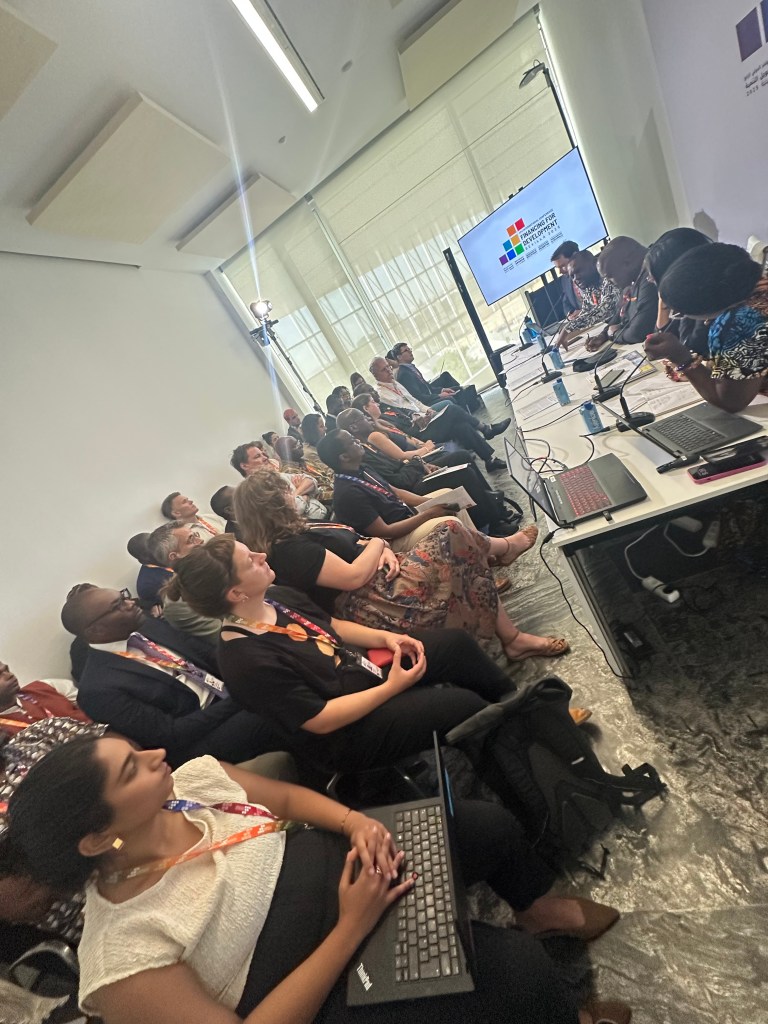
A significant shortcoming of FFD4 was the severe restriction on participation, especially affecting civil society actors, raising concerns about inclusivity and representation in global development dialogues.

Conclusion: From Commitment to Collective Action

FFD4 in Seville has set goals and launched critical initiatives. However, true success can only come from sustained collective resolve and dedicated implementation. Now, the real test begins; translating these commitments into impactful realities for people and our planet.

Next up: A deep dive into one of our key policy side events at FFD4 on Financing Development and the Geopolitics of Critical Minerals, so, watch this space!

If you’d like to receive my articles automatically as soon as they’re published, simply follow this blog using the “Follow” button at the bottom left of this page.


Critical Raw Materials and the Energy Transition: Navigating Bottlenecks & Promoting Equitable Solutions

On the sidelines of the 2025 World Bank/IMF Spring Meetings, Devex and Open Society Foundations (OSF) convened an essential dialogue on the theme “Critical Raw Materials (CRM) for Energy Transition: Bottlenecks and Civil Society Solutions.” The event underscored the complex intersection of geopolitics, equity, sustainability, and governance in the emerging global landscape shaped by critical minerals, fundamental to powering electric vehicles, renewable energy systems, and advanced technologies.

In his opening remarks, Pedro Abramovay, Vice President, Programs of Open Society Foundations, framed the urgent crossroads at which many countries find themselves: aspiring for democratic consolidation, sustainable development, and strengthened state institutions, yet facing significant political and economic headwinds. At such a moment, he argued, the role of civil society has never been more critical. Organizations working at the intersection of democracy, equality, and long-term development must not only hold institutions accountable but also contribute to building inclusive, resilient systems. Pedro underscored that this gathering, bringing together diverse actors committed to these values, offered a vital space to explore how civil society can lead and shape solutions to these complex challenges.

This dialogue gains even more relevance in the context of the accelerating global race for critical raw materials. As countries position themselves to harness these resources for energy transitions and economic recovery, civil society faces a dual responsibility: to ensure that the governance of these minerals reflects transparency, equity, and environmental responsibility, and to challenge extractive models that risk reinforcing inequalities.

Geopolitical Stakes and Emerging Dynamics

Brian Kagoro, Managing Director of Programs at OSF, emphasized the complex geopolitical game that underlies CRM dynamics. “This isn’t primarily about development or even the energy transition; it’s about militarization and geopolitical rivalry,” Brian explained. Indeed, the scramble for CRM is significantly driven by national security concerns, particularly between major global powers such as the US and China. Brian noted China’s dominance, controlling significant portions of lithium and cobalt processing, as a strategic challenge for the US and Europe, which seek to break such monopolies through alliances and domestic initiatives like the US Inflation Reduction Act and the EU Critical Raw Materials Act.

Equity and Sustainability at Risk

Suneeta Kaimal, CEO of the Natural Resource Governance Institute, highlighted how the global rush to secure CRMs risks repeating historical injustices associated with extractive industries. Suneeta stressed the potential “race to the bottom,” where lower governance standards could exacerbate environmental degradation, social exclusion, and economic inequalities. This issue is especially acute for low- and middle-income countries, rich in resources but at risk of falling into exploitative relationships and incurring environmental and social costs without fair economic returns.

Benjamin Garcia, Executive Director of Chile’s Espacio Público, discussed Chile’s experience, underscoring the need for context-specific policies to ensure community benefits from resource extraction. Benjamin highlighted Chile’s challenges in lithium extraction and governance, emphasizing the crucial role of civil society in advocating transparency, accountability, and meaningful community participation to avoid pitfalls seen in past resource booms.

Africa’s Critical Opportunity and Challenges

Africa, home to about 30% of the world’s CRM reserves, faces particular challenges and opportunities. African nations currently capture only a fraction of potential revenues due to minimal processing capabilities and limited value-chain integration. For example, Africa earns approximately USD 11-55 billion from raw CRM exports but could generate up to USD 658 billion annually by moving up the value chain. Brian emphasized the importance of regional collaboration among African nations to negotiate collectively, resist monopolistic pressures, and maximize development benefits.

However, Brian cautioned that resource-rich African nations risk perpetuating structural inequities and environmental harms unless supported by robust governance frameworks, strategic partnerships, and equitable policies that prioritize community inclusion, human rights, and environmental stewardship.

Ukraine’s Strategic Position

Olena Pavlenko, President of DiXi Group, highlighted its critical position due to significant CRM deposits essential for the EU’s green transition and defense needs. Olena noted Ukraine’s ongoing efforts to balance short-term economic benefits with long-term environmental risks, emphasizing the need for comprehensive national strategies and international cooperation, especially amidst its ongoing geopolitical conflict and reconstruction efforts.

The Crucial Role of Civil Society

A recurring theme was the indispensable role of civil society organizations in shaping a just and sustainable CRM landscape. CSOs, through advocacy, strategic litigation, transparency initiatives, and capacity-building, have emerged as key actors capable of holding governments and corporations accountable. Kaimal recounted the evolution of civil society’s role, from advocating transparency and accountability to now influencing policy implementation and monitoring project impacts closely.

In Chile, Benjamin shared successful examples of civil society campaigns leading to reforms corruption scandals involving lithium companies. Such examples underscore the potential of informed, empowered civil society to influence equitable resource governance significantly.

Pathways for Inclusive and Sustainable Solutions

Participants underscored several strategic pathways forward:

  1. Multilateral Cooperation and Global Governance: Participants emphasized the urgency of strengthening multilateral cooperation frameworks to address CRM supply chain vulnerabilities and geopolitical tensions. Brian Kagoro proposed forming a Global South Critical Minerals Council to enable collective bargaining power, equitable sharing of benefits, and balanced geopolitical negotiation.
  2. Local and Regional Value-Addition: Both Brian and Kaimal advocated realistic approaches to local value addition. Recognizing not all countries could achieve complete vertical integration (e.g., battery production), they suggested prioritizing feasible intermediate stages like mineral refining and precursor manufacturing, particularly through regional cooperation.
  3. Enhanced Transparency and Accountability: Participants agreed that robust transparency measures including mandatory disclosure of contracts, revenues, environmental impacts, and beneficial ownership, are essential for public accountability and equitable resource governance. OSF highlighted initiatives such as using blockchain for CRM traceability, particularly in the Democratic Republic of Congo.
  4. Environmental and Social Safeguards: Strong environmental stewardship and human rights compliance were identified as critical conditions for sustainable CRM development. This includes mandatory Human Rights and Environmental Impact Assessments, strict adherence to Free, Prior, and Informed Consent (FPIC) standards, and community-driven monitoring frameworks.
  5. Support for Artisanal and Small-Scale Mining (ASM): Recognizing the employment and livelihood significance of ASM, especially for women and youth. Participants called for formalizing ASM, investing in infrastructure and technical support, and integrating ASM more thoroughly into national and regional economies to maximize socio-economic benefits.

Conclusion: A Call to Collaborative Action The session concluded with a shared understanding that addressing the complexities of CRM governance requires coordinated global, regional, and local actions, backed by robust civil society engagement. As the world accelerates its energy transition, participants stressed that the CRM revolution must not perpetuate the historical injustices of resource exploitation but rather serve as a transformative opportunity for equitable and sustainable development. Civil society, governments, industries, and international organizations must collaboratively redefine the CRM landscape, ensuring it benefits not only global markets but also the communities and nations where these critical resources originate