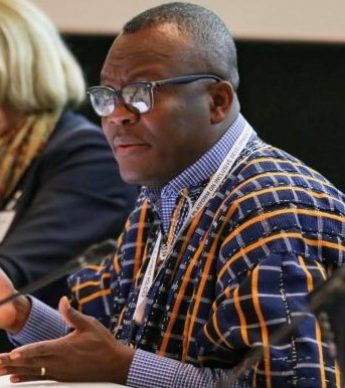
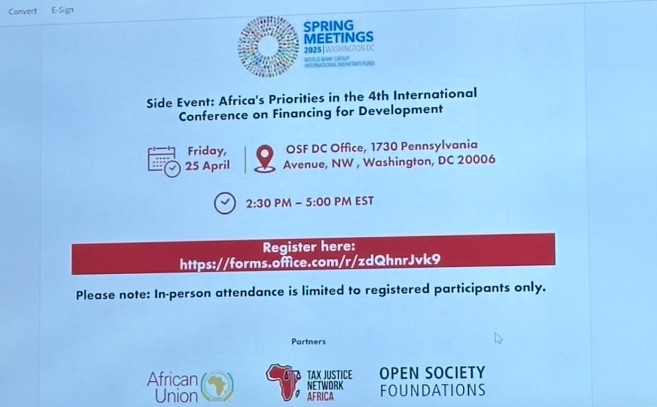
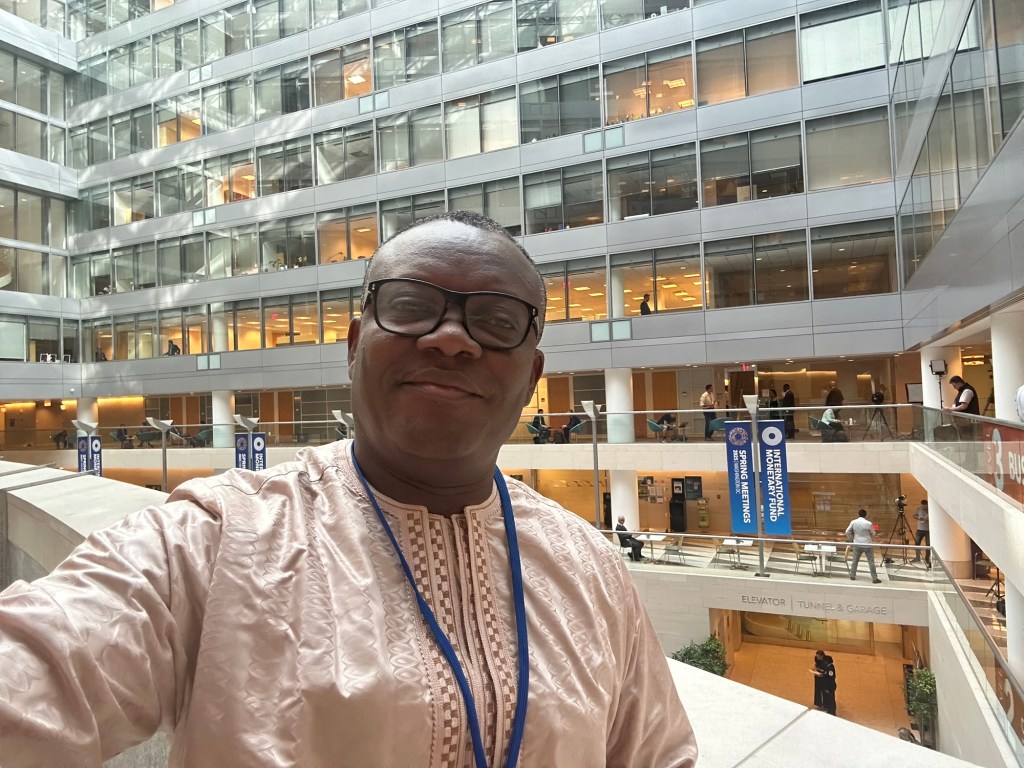
From different side discussions I participated in here in Washington DC on this subject matter, as we conclude the 2025 World Bank/IMF Spring Meetings, one message is abundantly clear: Africa must come prepared to the Fourth Financing for Development (FFD4) Conference in Seville. It should not be simply another global convening, FFD4 represents an unparalleled moment for the continent to redefine financial justice, assert its agency, and demand structural transformations within the global economic governance system.

The current global financial architecture is profoundly inequitable, marked by a historical bias that relegates African and other Global South countries to the periphery. Brian Kagoro, Managing Director for Programs at Open Society Foundations, rightly articulated that the present financial system was originally designed under assumptions of permanent inequality, with clear roles for “center” and “periphery.” This paradigm, no longer tenable, demands a complete reform, not cosmetic adjustments.
The Debt Crisis: Beyond Liquidity to Structural Reform
At the heart of Africa’s position for Seville, Spain must be the recognition that debt crises faced by African nations are not merely liquidity issues. Instead, they are deep-rooted structural and wealth crises resulting from systemic inequities. The Common Framework developed by the G20 has notably failed. Africa must champion a UN Framework Convention on Sovereign Debt, embedding principles of responsible lending, borrower rights, and genuine multilateral accountability mechanisms.

The Exclusion of African Voices in Debt Negotiations
Jason Braganza from AFRODAD stressed that the current debt restructuring approaches have failed Africa fundamentally. These processes, dominated by creditor institutions like the IMF, draw off vital public funds away from healthcare, education, and infrastructure into debt repayments. Seville must be the platform where Africa decisively argues for a debt resolution framework anchored in equity, transparency, and genuine partnership.
International Tax Cooperation: Reclaiming Democratic Space
Another critical dimension is international tax cooperation. Historically marginalized in global tax rule-making dominated by OECD countries, African states lose an estimated $89 billion annually through illicit financial flows and aggressive tax avoidance. Africa’s push for a UN Framework Convention on International Tax Cooperation represents not just an economic necessity but a reclaiming of democratic space and equitable representation in global economic governance.
The conclusions of the recent Summit of the Future reinforced this call by endorsing the establishment of a more inclusive, effective, and transparent global tax governance framework. Member States recognized the inadequacies of the current OECD-centered system and agreed to prioritize negotiations toward a United Nations Tax Convention. This shift offers Africa a vital opportunity to push for rules that ensure fair taxation of multinational corporations, address harmful tax competition, and guarantee that every country, regardless of size or economic power, has an equal seat at the decision-making table. For Africa, the road to Seville is not just about advocating for reform; it is about securing a transformative, legally binding mechanism that can reverse systemic revenue losses and reinforce the continent’s capacity for sustainable development.
Strengthening Domestic Resource Mobilization in Africa
Strengthening domestic resource mobilization (DRM) in Africa is a crucial pillar for building sustainable, self-reliant economies. African governments must invest in modernizing their tax systems to ensure efficiency, transparency, and the capacity to capture revenues from rapidly evolving sectors such as the digital economy. This includes implementing fair and progressive taxation, combating illicit financial flows, and strengthening regulatory frameworks that close loopholes exploited by multinational corporations. By improving domestic revenue collection, African countries can significantly reduce their dependence on external financing and debt, thereby reclaiming greater fiscal sovereignty to fund health, education, and infrastructure projects.
However, strengthening DRM cannot be confined to national reforms alone. Global financial rules must also evolve to support African countries’ efforts. As Mwila Mkosa from the Zambian mission to the UN emphasized, the international tax framework must be reformed to create an enabling environment for African states to effectively mobilize their domestic resources. This includes addressing harmful tax competition, reforming unfair global trade practices, and ensuring that African countries have an equitable voice in setting global financial and tax standards. At Seville, Africa must press for concrete commitments that bridge national reforms with international cooperation, ensuring that domestic resource mobilization becomes a genuine driver of inclusive and sustainable development
Rethinking Private Finance in Development
The upcoming FFD4 must critically address the role of private finance. The previous “billions to trillions” narrative, heavily reliant on private sector financing without adequate oversight, has proved largely illusory. Africa’s position should advocate for private finance to operate under robust governance frameworks that prioritize socio-economic transformation over narrow profit-driven outcomes.
Reimagining Multilateralism: Beyond the Status Quo

A consistent theme emerging from these discussions was the need to reimagine multilateralism, not to preserve a flawed status quo but to fundamentally redesign it. As Brian Kagoro aptly put it, “the world we want to save has not yet been born.” Africa must advocate for multilateral frameworks that genuinely reflect principles of equality, transparency, and mutual accountability.
We need concrete, Actionable Commitments at Seville
The outcomes from Seville must move beyond ambitious language to concrete, actionable commitments backed by accountability frameworks. Seville must differ from previous summits by producing commitments specific enough to allow for tangible monitoring and public accountability.
Africa stands at a crossroads. We have an opportunity at Seville to assert not only our needs but our rights, our right to fair participation, our right to equitable economic structures, and our right to control our developmental futures. The moment is ready for bold, strategic, and unified action. True reform is not merely about changing systems but about fundamentally shifting power dynamics. Africa’s call must be clear: reform of the global financial architecture is an urgent demand for justice, equity, and sustainable development. The stakes are high, the time for incremental adjustments is past, and the moment for profound, transformative change is now.

 Assodesire