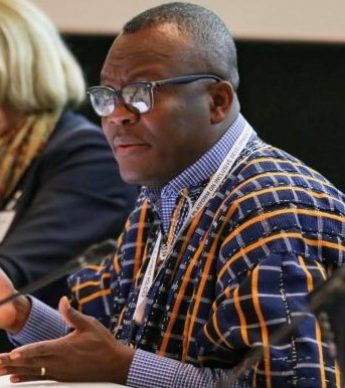
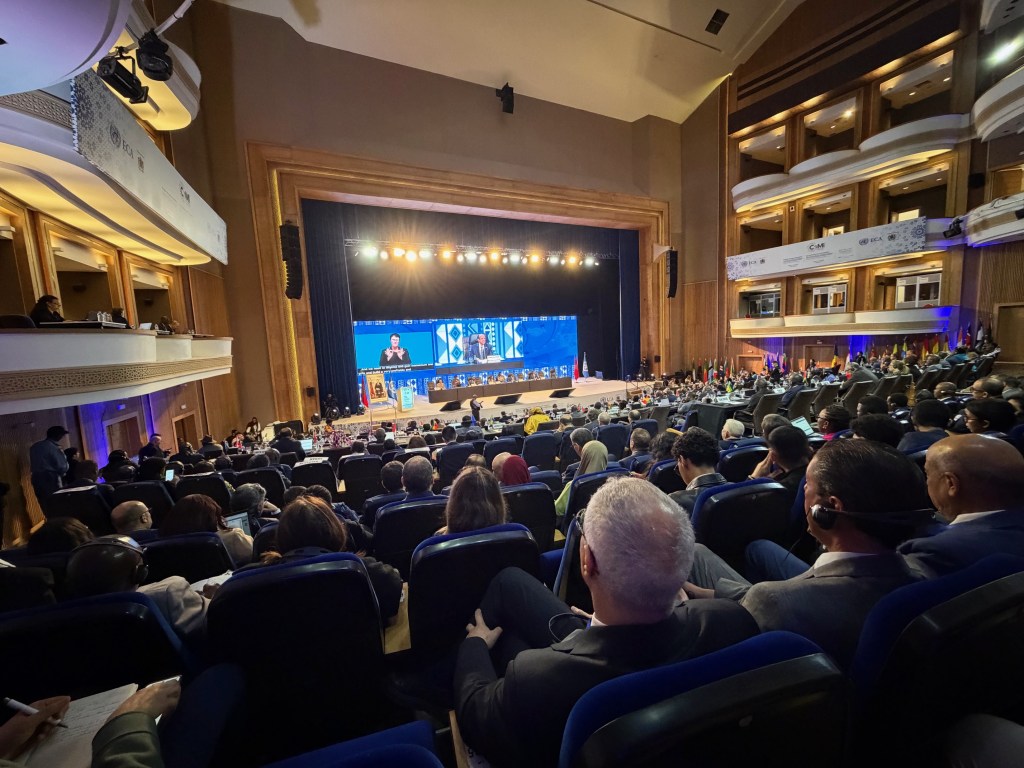
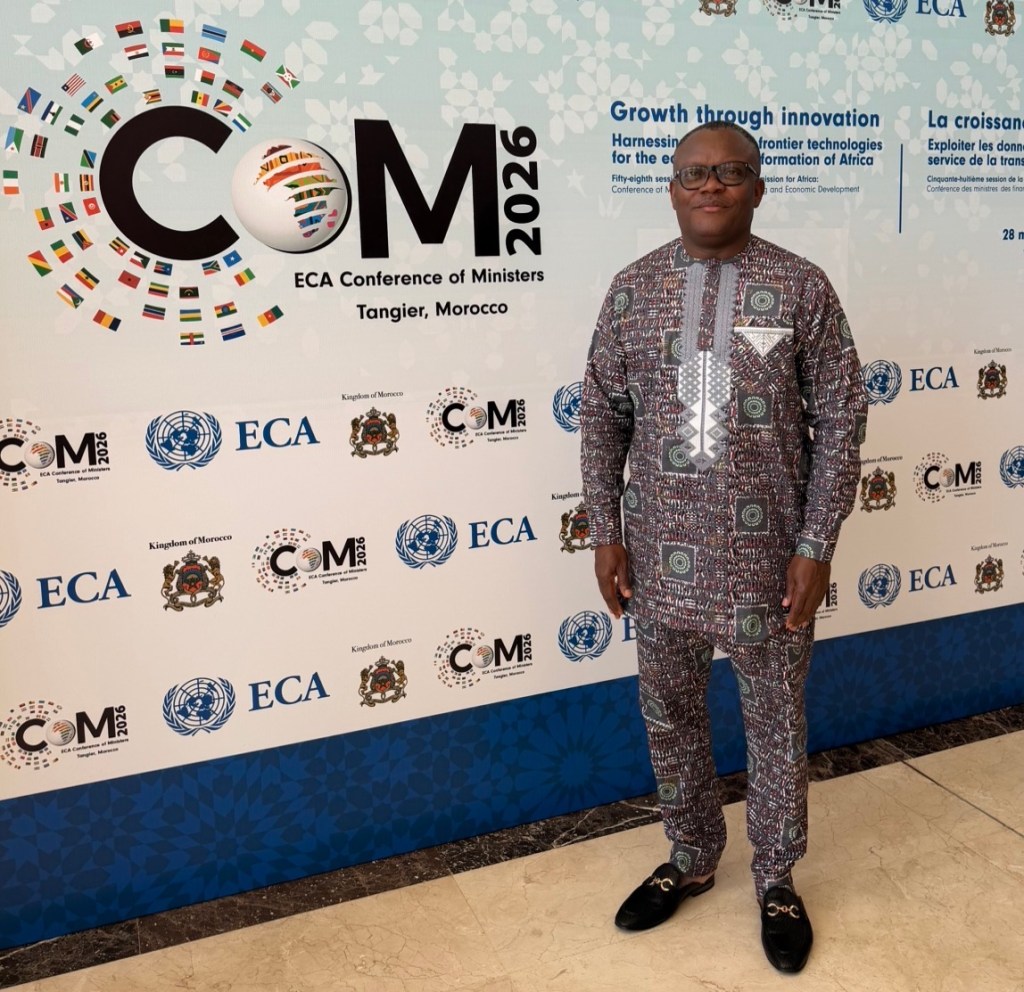
Last week, I had the opportunity to participate in the 2026 Session of the Conference of African Ministers of Finance, Planning and Economic Development (COM2026) in Tangier, Morocco. Convened under the theme “Growth through innovation: harnessing data and frontier technologies for the economic transformation of Africa,” the conference brought together ministers, central bank governors, African Union leadership, and key development partners at a moment of profound global uncertainty.
Why COM Matters More Than Ever
The Conference of African Ministers of Finance is not just another high-level meeting. It is one of the few spaces where Africa’s economic direction is collectively debated, negotiated, and articulated.
It is where:
- Narratives around resources, financing, and sovereignty take shape
- Policy priorities are aligned across countries
- The continent begins to speak, however imperfectly, with a more unified voice
For those of us working on economic justice, development finance, and governance, showing up in these spaces is not optional. It is essential.
A Clear Shift in Africa’s Economic Thinking
The adopted Ministerial Statement confirms what many of us have been sensing: Africa’s policy conversation is shifting, both in tone and ambition.
First, there is a strong embrace of innovation and technology-driven growth. From digital finance to artificial intelligence, the conversation is no longer about catching up, but about how to leap forward.
Second, there is a growing emphasis on digital and data sovereignty. Control over data, infrastructure, and digital ecosystems is increasingly seen as central to economic independence, not just efficiency.
Third and perhaps most importantly, there is renewed urgency around reforming the global financial architecture. African policymakers are increasingly vocal about the mismatch between global financial rules and the continent’s development needs.
From Extraction to Strategy: The Critical Minerals Moment
One of the most significant shifts is in how Africa is thinking about its natural resources, particularly critical minerals. For decades, the continent has exported raw materials with limited local value creation. That model is now being openly challenged.
Across discussions in Tangier, there was a clear and consistent message:
Africa must move from extraction to value addition, from supply to strategy.
This means:
- Building regional value chains under the African Continental Free Trade Area
- Investing in beneficiation and industrialization
- Using Africa’s resource endowment as negotiating power in a competitive global landscape
The political appetite for this shift is real. But ambition alone will not deliver results.
The Financing Question: The Constraint That Shapes Everything
If there was one issue that cut across every discussion, it was financing.
There is broad consensus that Africa’s transformation, whether in industrialization, digitalization, or climate transition, will not happen without:
- Expanded fiscal space
- Better management of debt vulnerabilities
- Greater transparency and efficiency in public spending
- Access to innovative and affordable financing mechanisms
In other words, the question is not just what Africa wants to do, but how it will finance it.
A Moment of Political Opportunity, And Risk
One of the most encouraging signal from Tangier was the rising political appetite for a more coordinated African voice.
There is increasing recognition that Africa’s leverage lies in:
- Its demographic weight
- Its resource endowment
- Its market potential
But turning this potential into real influence will require:
- Stronger coordination among African states
- Enhanced negotiation capacity
- Strategic use of platforms and partnerships
This is where the gap remains, and where the opportunity lies.
Corridor Diplomacy
Beyond the plenary sessions, some of the most important work happened in the corridors.
I had the opportunity to engage with several government delegations, including a direct exchange with H.E. Ndaba Gaolathe, Vice President of Botswana as well as delegations from Zambia, Ghana, Angola, Mozambique, Sierra Leone, and Guinea-Bissau.
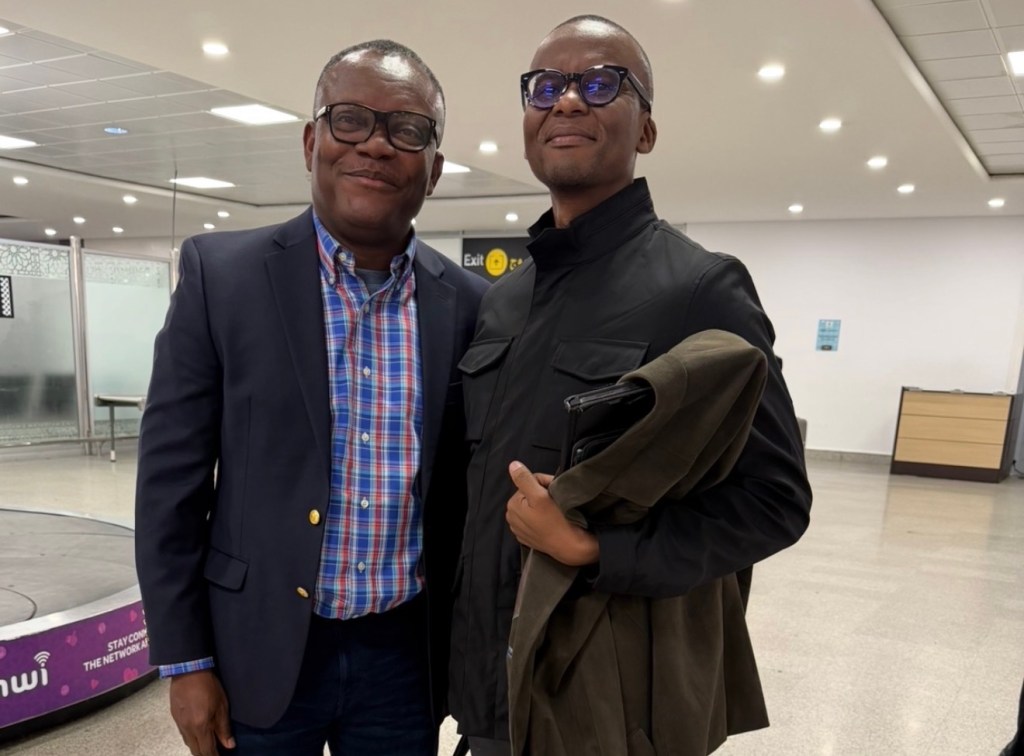
These conversations reinforced a shared reality: Countries are increasingly aware of the stakes, but are looking for tools, partnerships, and platforms to act more effectively.
I also engaged with the African Legal Support Facility, a key but often under-recognized actor. Their work, supporting African governments in negotiating contracts and managing debt, is critical, because ultimately, strategy is only as strong as the capacity to negotiate it.
From Tangier to Washington DC and Beyond
The conversations in Tangier do not end there. They are already shaping the next phase of engagement:
- The WB/IMF Spring Meetings in Washington DC, where we will convene a dialogue on Critical Mineral Diplomacy
- The AfDB Annual Meetings in Brazzaville, where financing and implementation will take center stage
These are not isolated events. They are part of a continuum.
Conclusion
What Tangier made clear to me is that Africa is at an inflection point. The continent has the resources, the ideas, and increasingly the political will. But the outcome will depend on something more difficult to build: Coordination. Capacity. Strategy.
Africa’s future will not be determined only by what it has, but by how it chooses to organize its power in a changing world, and on that journey, the role of institutions, partnerships, and convening spaces will matter more than ever.
 Assodesire