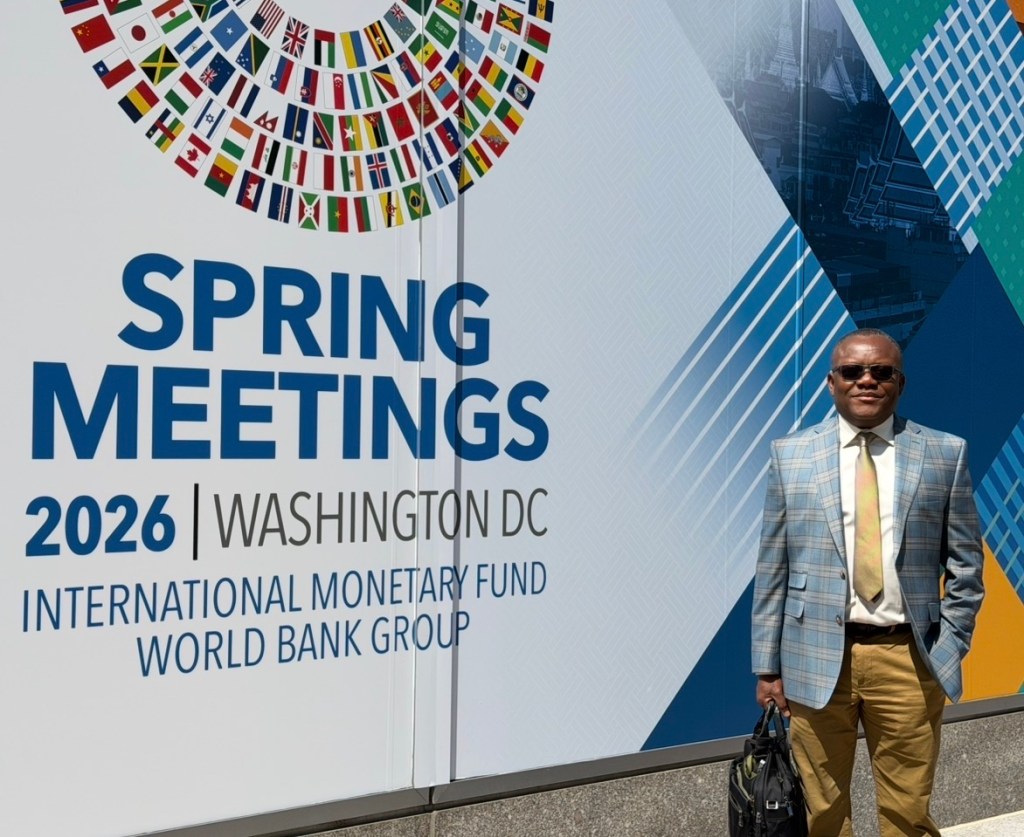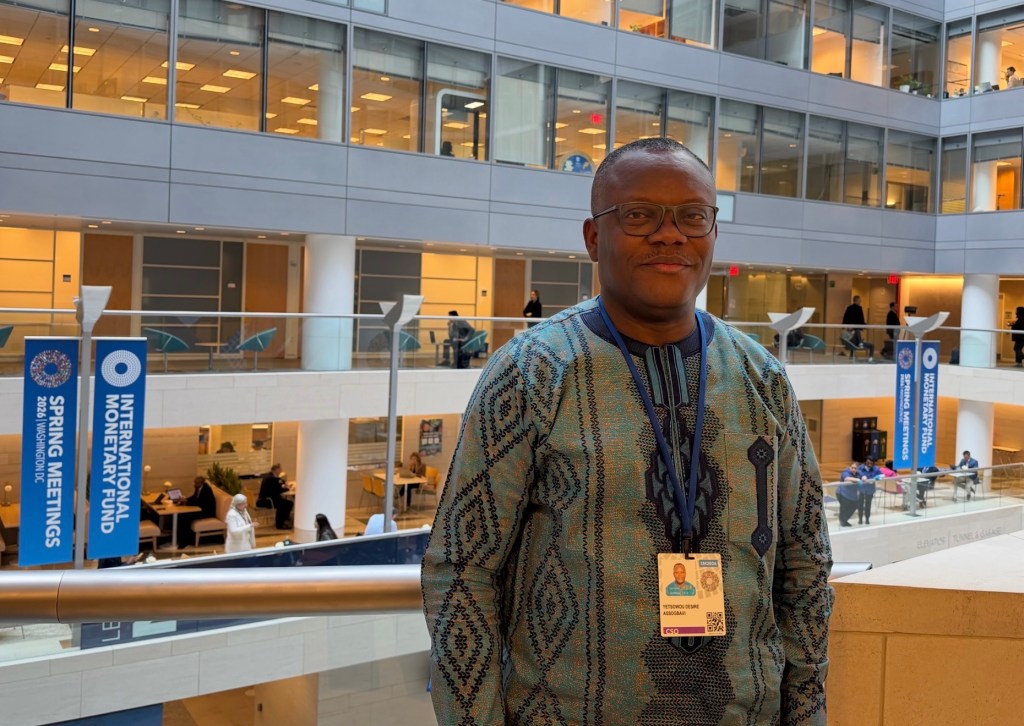
My 7 Takeaways from the IMF/World Bank Spring Gathering 2026

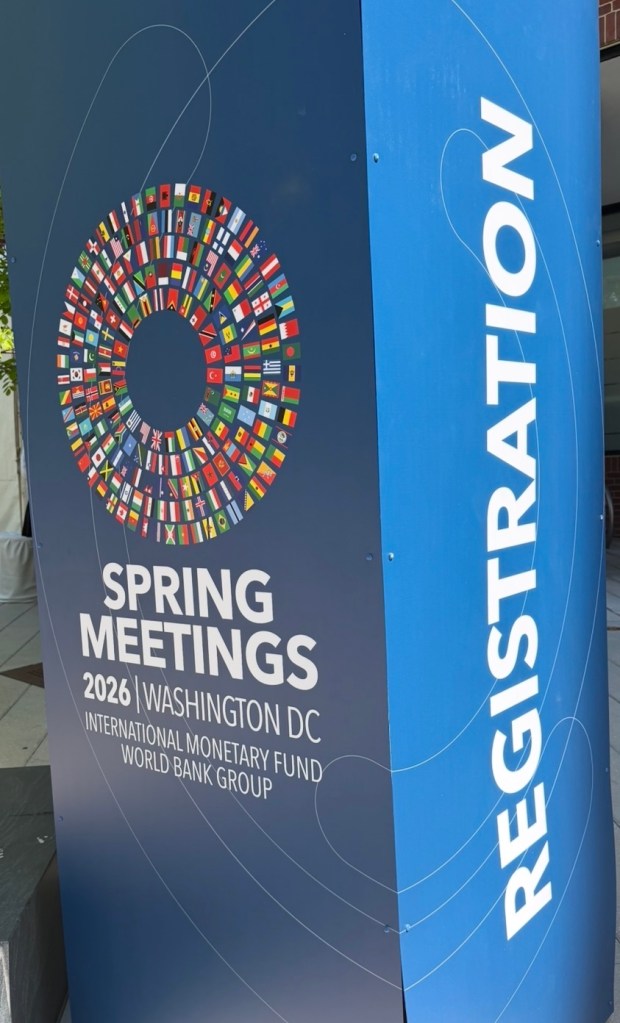
As my flight leaves Washington and turns towards Dakar, I find myself thinking about the strange contrast that defined last week’s Spring Meetings of the International Monetary Fund and the World Bank Group where thousands of participants from around the world: finance ministers, central bank governors, heads of international organizations, development banks, private sector leaders, civil society, think tanks and the media converge.

The world is changing faster than the institutions built to govern it. Wars, debt, inflation, climate shocks, shrinking aid budgets and the scramble for critical minerals are colliding at the same time. For countries in the Global South, and especially for Africa, this is no longer simply a difficult moment. It is a turning point that we cannot aboard to miss.

What follows are my 7 main takeaways from a week of meetings, conversations and strategy sessions in Washington DC.
1. The old global model is under unprecedented serious pressure

The 2026 Spring Meetings took place in a world absorbed by renewed instability. The conflict in the Middle East has pushed up oil and fertilizer prices. Global growth projections were revised downward. Developing countries arrived in Washington carrying the burden of successive crises: the pandemic, inflation, debt distress, food insecurity, climate disasters, and now a new energy shock. The message from many countries of the Global Majority was clear: “we are exhausted by living through one global crisis after another, while the international financial system continues to respond too slowly and too cautiously”.

For Africa, the numbers are particularly alarming. The continent is expected to grow by around 4.3 percent this year, faster than many other regions. But ordinary citizens don’t feel it that way in their everyday life. More than twenty African countries remain in or near debt distress. Public debt across the continent exceeds $1.1 trillion. Debt servicing is absorbing an ever-larger share of public revenues, while rising fuel and fertilizer prices are placing new pressure on already stretched budgets. So, the current system is not delivering for people!

2. Africa can no longer come to these meetings simply to ask for help

Perhaps the most important shift I have been observing was psychological: For too long, African delegations have come to the IMF and World Bank meetings primarily to seek support, plead for relief, or react to agendas shaped elsewhere. That mood is changing.

Across the meetings and interactions, I sensed a growing determination among African leaders, diplomats, civil society actors and thinkers that the continent must come to these gathering with a strategy of its own. The continent cannot continue to define itself only through its vulnerabilities, debt, poverty, conflict or climate shocks. Africa must increasingly define itself through its assets, its leverage and its vision, but most importantly start making concrete steps to govern domestic resources differently and to form synergy to act in solidarity because Africa has leverage. The continent sits at the center of the new global economy: critical minerals, energy transition, food systems, strategic shipping routes and the world’s youngest population. Africa must prepare to negotiate from a position of strength.

3. Critical minerals: an Opportunity and a Great Test for Africa

Much of my own week in Washington was spent contributing to convene and shape conversations around critical minerals.

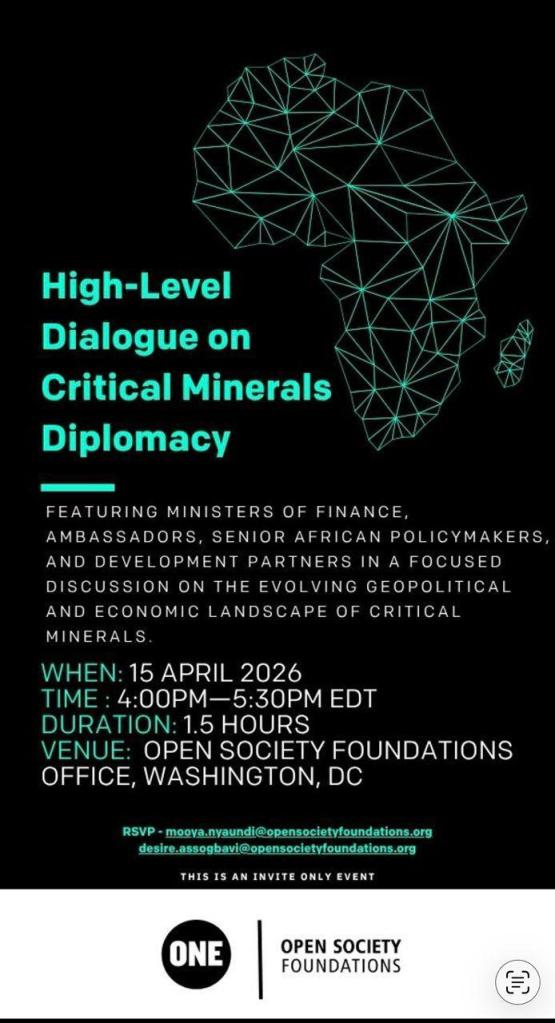
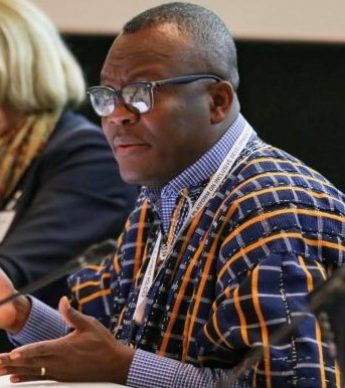
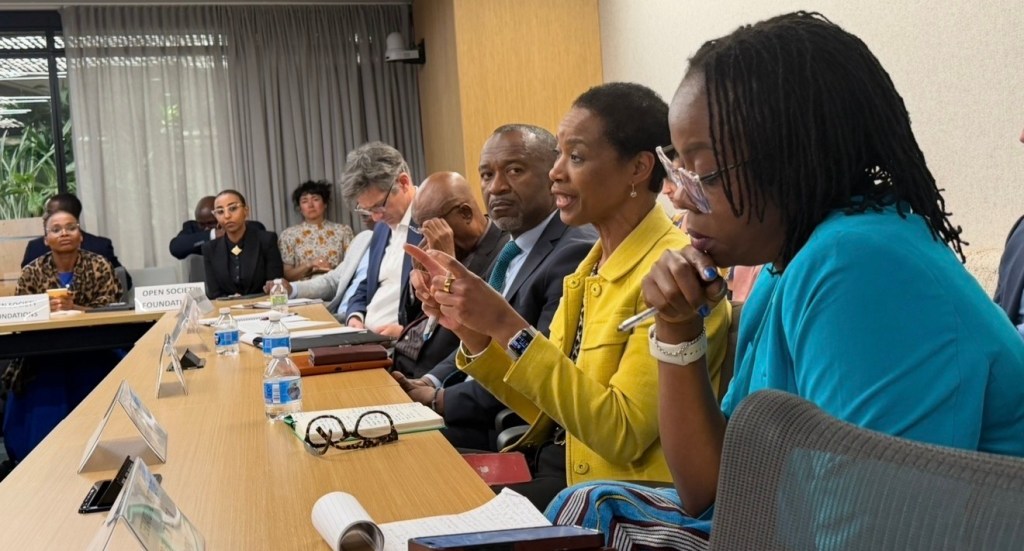
Together with colleagues from the Open Society Foundations and partners at the ONE Campaign we hosted a high-level strategic dialogue that brought together more than forty participants: African ambassadors, government officials, representatives of the African Union, private sector actors, think tanks and civil society. The central reality is unavoidable: the global economy is being reorganized around batteries, semiconductors, electric vehicles, renewable energy and digital technologies. All of these depend on minerals that Africa possesses in abundance.

Africa holds roughly 30 percent of the world’s mineral reserves, including large shares of cobalt, graphite, manganese, platinum and rare earths but the still export raw materials and import finished products. We continue to bear the environmental and social costs of extraction while others capture jobs, technology and wealth. My strongest takeaway is this: Africa must stop negotiating country by country. No individual state, however rich in minerals, can negotiate effectively against major powers and multinational corporations acting in a coordinated way. Africa needs a common continental position, anchored in the African Union’s Green Minerals Strategy and the still highly relevant African Mining Vision.

That should mean:

  • no export of raw minerals without a pathway toward local processing and value addition.
  • stronger regional cooperation around mineral corridors, infrastructure and industrial zones.
  • common tax, royalty and local content standards.
  • transparency and accountability in contracts.
  • and a firm insistence that the green transition must not become another chapter in Africa’s long history of extraction without development.

4. Debt and critical minerals are two sides of the same story

One of the strongest themes that emerged during the week was that critical minerals are not simply a mining issue. They are directly linked to debt, industrial policy, jobs, energy access and Africa’s place in global governance. A country that is desperate for foreign exchange because of debt has less power to negotiate a fair mineral contract. A government forced to spend a large share of its revenues servicing debt has less capacity to invest in roads, electricity, education, skills and processing industries. This is why debt reform and critical mineral diplomacy must be discussed together.

With a public debt now exceeding $1.1 trillion and an  annual external debt service approaching $90 billion, the continent receives only a small share of global climate finance, and more than half of that arrives in the form of more debt. Africa cannot industrialize, process its minerals, or compete in the global economy if it remains trapped in a cycle of debt and extraction. The fight for mineral sovereignty is therefore inseparable from the fight for debt justice.
5. The African Union has a bigger role to play than ever before

One of the most important conversations of the week was a strategic meeting we held with the Commissioner of the African Union responsible for Economic Development, Trade, Industry and Minerals. The discussion confirmed something that is becoming increasingly obvious: Africa can no longer rely only on individual governments to represent the continent’s interests in global economic discussions. We need stronger continental diplomacy. This is particularly important now that the African Union has a permanent seat in the G20. That is a historic achievement. But being in the room is not the same as shaping the outcome. It is time to turn presence into power.

6. Charity Starts from Home: Africa must take responsibility for its own development

It is easy, and often justified, to focus on what is wrong with the international system. African countries borrow at far higher interest rates than countries elsewhere. Climate finance is insufficient. Global institutions remain unequal. International rules continue to favor those who already hold power. But one of my strongest convictions coming out of Washington is that Africa must also be honest about its own responsibilities. No outside actor, whether the IMF, the World Bank, China, Europe, the Gulf states or the United States, will build Africa for Africans.

African governments must improve transparency and accountability, especially on debt and public finance. They must tackle corruption and illicit financial flows. They must invest more seriously in regional integration through the African Continental Free Trade Area. They must strengthen their capacity to negotiate contracts, design industrial policies and implement long-term strategies. Above all, we should stop behaving as if development can be outsourced. Development will come only if African countries make deliberate choices: to cooperate rather than compete against one another; to process and manufacture rather than merely extract; to invest in institutions, skills and technology; and to speak with greater unity in international forums.

7. Moving Forward…

As I leave Washington, tired but hopeful, I carry with me the memory of many conversations: in formal meetings, in the corridors, over hurried coffees and in late-night strategy sessions with colleagues and friends. Africa’s future will not be secured simply by attracting more aid or more loans. It will depend on changing the terms of engagement with the rest of the world. We must move from being a source of raw materials to becoming a center of production.

The continent must build refineries, battery industries, transport corridors, digital infrastructure, universities and technical institutes. It must create a new generation of negotiators, engineers, economists and public servants capable of shaping the future rather than merely reacting to it.

That will not happen overnight, but it can happen if we start implementing all those beautiful, well-thought-out policies and frameworks we have already adopted.

Looking ahead to the next chapters, from the G20 process to the next African Union Ministerial debates, from critical minerals diplomacy to the AfDB Annual Meetings later this year, I am convinced that Africa now faces a more demanding test than simple resilience.

The years ahead will require the continent to preserve macroeconomic credibility, maintain social legitimacy and build states and institutions capable not only of making promises, but of delivering results. Countries that succeed will not simply weather the turbulence of this new era; they will emerge stronger, more sovereign and more influential within it. Those that fail risk remaining trapped in the familiar cycle of crisis, adjustment and missed opportunity.

That, perhaps, is the deepest lesson of the 2026 Spring Meetings.

Prosperity in the years ahead will depend less on rhetoric and more on something far more difficult: a more serious state, a more disciplined policy framework, stronger regional cooperation and a much greater capacity to turn strategy into outcomes. In the end, that combination will matter far more than any slogan.
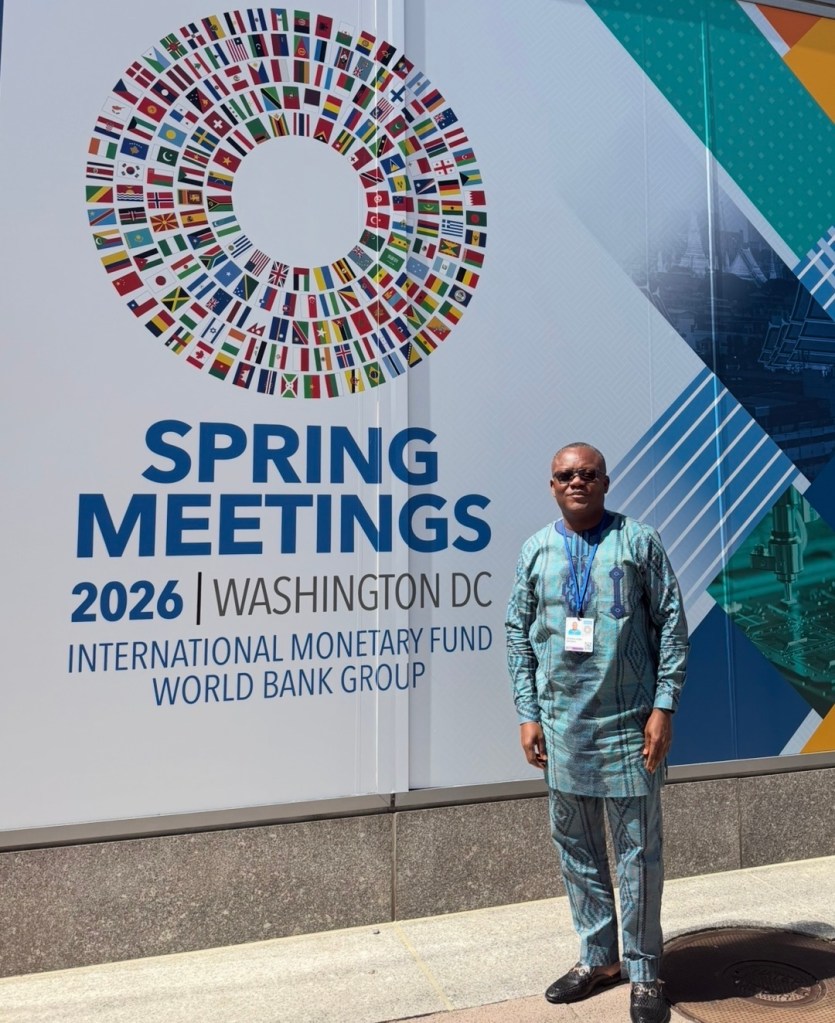
At the IMF-World Bank Spring Meetings, Africa Must Show Up Strategically

I am in Washington, D.C. this week alongside my OSF colleagues and partners to participate in the Spring Meetings of the International Monetary Fund and the World Bank Group.

Twice a year, this gathering brings together finance ministers, central bank governors, development institutions, and civil society. It is often described as technical, but these meetings are among the few global spaces where the rules of the international financial system are debated, and, in many ways, shaped.

What happens here determines how countries borrow, how they respond to crises, and whether governments can invest in their people. It influences whether schools are built, hospitals are funded, and jobs are created. In short: what is negotiated in Washington travels directly into everyday life across the Global South.

A World of Shocks and a System Under Stress

This year’s Spring Meetings are taking place under a unifying concern: how to manage volatility and strengthen resilience in a world of compounding shocks.

In her curtain raiser, IMF Managing Director Kristalina Georgieva described a global economy hit by a “large, global, and asymmetric supply shock”, a reminder that instability is no longer episodic, but structural.

The scale of disruption is significant:

  • Global oil supply was reduced by around 13%, with natural gaz flows down by 20%
  • Energy prices surged, with oil jumping from $72 to $120 per barrel at its peak
  • Up to 45 million more people risk falling into food insecurity, bringing the global total above 360 million

These shocks are transmitted through higher inflation, tighter financial conditions, and disrupted supply chains, affecting countries unevenly, depending on their exposure and policy space. The message from the IMF is clear: growth will slow, uncertainty will persist, and policy space will tighten.

Africa at the Intersection of Vulnerability and Opportunity

For Africa, these global dynamics are not abstract, they are immediate and constraining.

  • Public debt across the continent stands at roughly $1.1 trillion
  • More than 20 countries are in or near debt distress
  • Debt servicing absorbs around 15% of government revenues
  • Borrowing costs remain close to 10%, far higher than in advanced economies

At the same time:

  • Over 80% of countries globally are net oil importers, placing many African economies among the most exposed to energy shocks
  • Climate finance remains deeply insufficient, with Africa receiving only about 3% of global flows, much of it as debt

Yet Africa is not only vulnerable, it is central to the future of the global economy.

The continent holds critical minerals essential to the energy transition, represents a rapidly growing share of the global population, and is emerging as a key frontier for industrialization and innovation. This dual reality, high vulnerability and high strategic relevance, defines Africa’s position today.

Why These Meetings Matter More Than Ever

Institutions like the IMF and the World Bank Group shape global economic outcomes. They influence:

  • How debt crises are resolved, …or prolonged
  • The terms and conditions of financing
  • The fiscal space available to governments
  • The global response to development and climate challenges

At a time when the IMF itself projects a downgrade in global growth even under optimistic scenarios, these decisions carry even greater weight.

Africa Must Show Up Differently

In this context, showing up is not enough. Africa must show up strategically. This means engaging not only in formal sessions, but also in shaping the conversations that define outcomes.

Throughout the week, we are contributing to discussions on:

  • The future of multilateralism and industrial policy in a shifting geopolitical landscape
  • Managing volatility and rethinking capital flows in a fragmented global economy
  • Strengthening the voice of borrower countries in global financial governance

These are critical spaces where ideas evolve and coalitions form.

Critical Minerals: From Resource Wealth to Strategic Power

One of the most important conversations this week, and one I am directly engaged in is around critical mineral diplomacy.

Africa holds a significant share of the minerals that power the global energy transition, cobalt, lithium, manganese, and more. Yet historically, the continent has captured only a fraction of the value generated from its resources. To address this, we are convening a closed-door Policy Dialogue on Critical Mineral Diplomacy with African delegations on the margins of the Spring Meetings. This is not just another side event.

It is a strategic space to:

  • Align African positions ahead of global negotiations
  • Share insights on evolving partners’ industrial and supply chain strategies
  • Strengthening negotiating capacity to secure better deals
  • Advance a collective vision for value addition, industrialization, and sovereignty over resources

In a multipolar world, minerals are no longer just commodities, they are instruments of geopolitical leverage. The question is whether Africa will use them as such.

What Must Change

There will be no shortage of declarations this week. But the IMF’s message is unequivocal: the world has a fiscal space problem, and policy choices are becoming more constrained. In this context, incremental change will not suffice.

Three shifts are essential:

  • From slow and fragmented debt restructuring to predictable and fair solutions
  • From expensive capital to affordable, development-oriented financing
  • From fragmented national positions to coordinated African agency

A Moment for Agency

The global economy is being reshaped in real time. Energy systems are shifting. Financial conditions are tightening. Geopolitics is redefining trade and investment. Moments like this determine who sets the rules, and who lives with them.

Africa has resources, the demographic weight and the strategic relevance. What remains is coordinated action.

Redefining Africa’s Economic Future: Insights from The Ministerial Meeting in Tangier

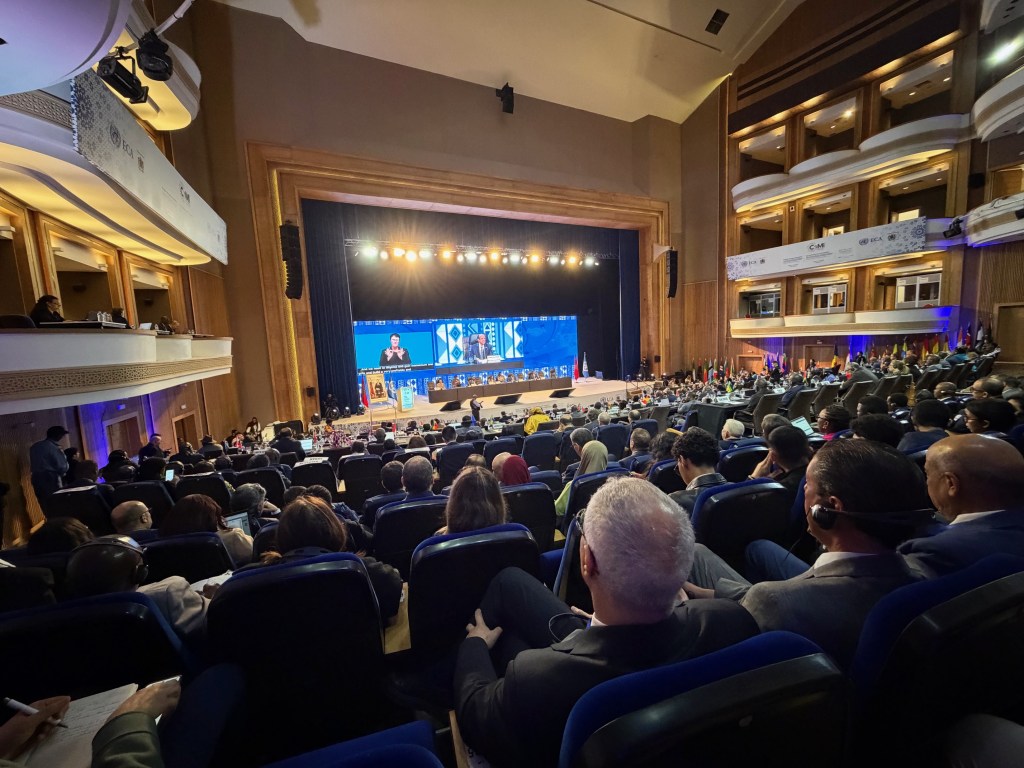
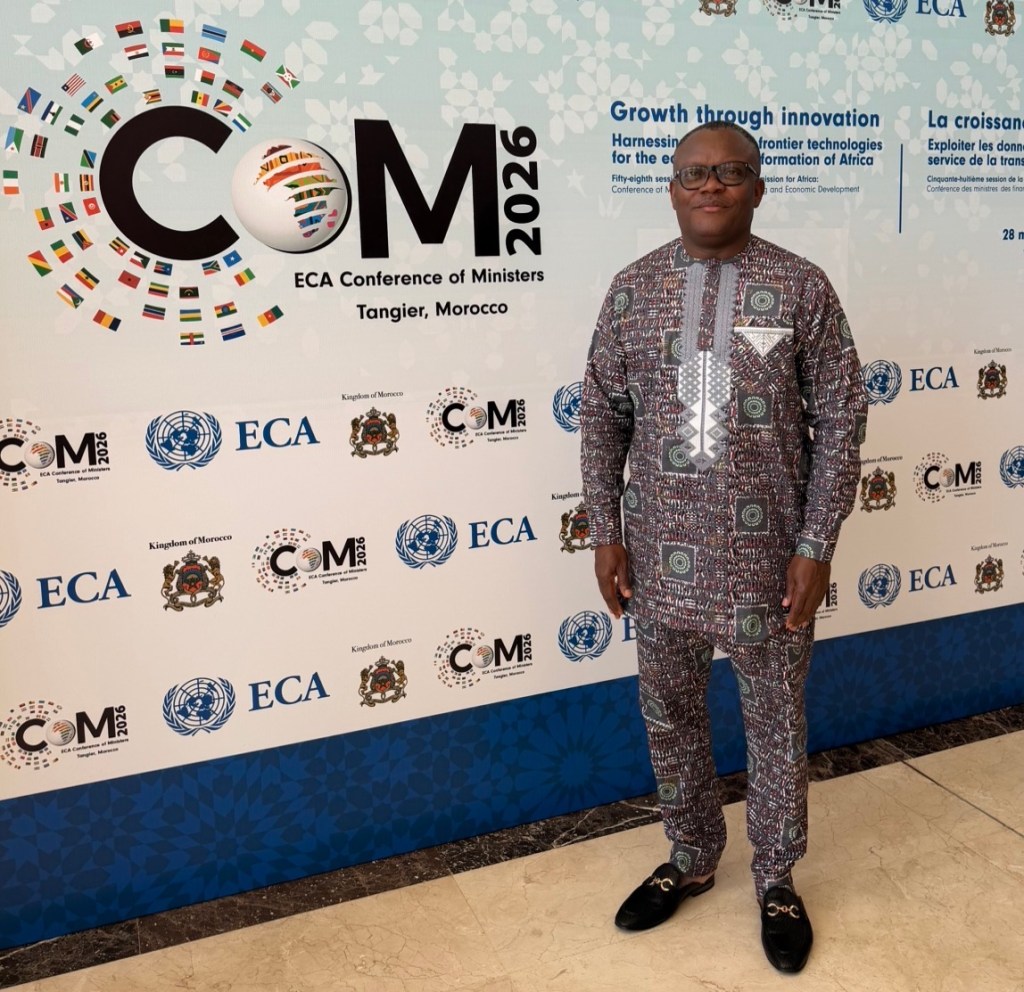
Last week, I had the opportunity to participate in the 2026 Session of the Conference of African Ministers of Finance, Planning and Economic Development (COM2026) in Tangier, Morocco. Convened under the theme “Growth through innovation: harnessing data and frontier technologies for the economic transformation of Africa,” the conference brought together ministers, central bank governors, African Union leadership, and key development partners at a moment of profound global uncertainty.

Why COM Matters More Than Ever

The Conference of African Ministers of Finance is not just another high-level meeting. It is one of the few spaces where Africa’s economic direction is collectively debated, negotiated, and articulated.

It is where:

  • Narratives around resources, financing, and sovereignty take shape
  • Policy priorities are aligned across countries
  • The continent begins to speak, however imperfectly, with a more unified voice

For those of us working on economic justice, development finance, and governance, showing up in these spaces is not optional. It is essential.

A Clear Shift in Africa’s Economic Thinking

The adopted Ministerial Statement confirms what many of us have been sensing: Africa’s policy conversation is shifting, both in tone and ambition.

First, there is a strong embrace of innovation and technology-driven growth. From digital finance to artificial intelligence, the conversation is no longer about catching up, but about how to leap forward.

Second, there is a growing emphasis on digital and data sovereignty. Control over data, infrastructure, and digital ecosystems is increasingly seen as central to economic independence, not just efficiency.

Third and perhaps most importantly, there is renewed urgency around reforming the global financial architecture. African policymakers are increasingly vocal about the mismatch between global financial rules and the continent’s development needs.

From Extraction to Strategy: The Critical Minerals Moment

One of the most significant shifts is in how Africa is thinking about its natural resources, particularly critical minerals. For decades, the continent has exported raw materials with limited local value creation. That model is now being openly challenged.

Across discussions in Tangier, there was a clear and consistent message:
Africa must move from extraction to value addition, from supply to strategy.

This means:

  • Building regional value chains under the African Continental Free Trade Area
  • Investing in beneficiation and industrialization
  • Using Africa’s resource endowment as negotiating power in a competitive global landscape

The political appetite for this shift is real. But ambition alone will not deliver results.

The Financing Question: The Constraint That Shapes Everything

If there was one issue that cut across every discussion, it was financing.

There is broad consensus that Africa’s transformation, whether in industrialization, digitalization, or climate transition, will not happen without:

  • Expanded fiscal space
  • Better management of debt vulnerabilities
  • Greater transparency and efficiency in public spending
  • Access to innovative and affordable financing mechanisms

In other words, the question is not just what Africa wants to do, but how it will finance it.

A Moment of Political Opportunity, And Risk

One of the most encouraging signal from Tangier was the rising political appetite for a more coordinated African voice.

There is increasing recognition that Africa’s leverage lies in:

  • Its demographic weight
  • Its resource endowment
  • Its market potential

But turning this potential into real influence will require:

  • Stronger coordination among African states
  • Enhanced negotiation capacity
  • Strategic use of platforms and partnerships

This is where the gap remains, and where the opportunity lies.

Corridor Diplomacy

Beyond the plenary sessions, some of the most important work happened in the corridors.

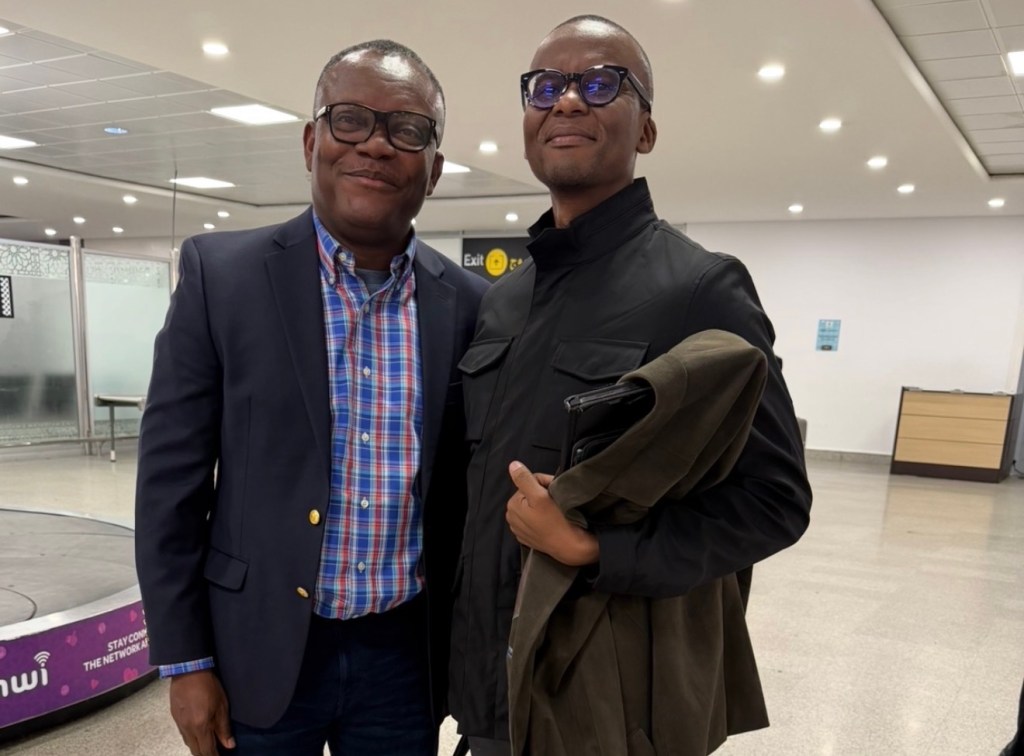
I had the opportunity to engage with several government delegations, including a direct exchange with H.E. Ndaba Gaolathe, Vice President of Botswana as well as delegations from Zambia, Ghana, Angola, Mozambique, Sierra Leone, and Guinea-Bissau.

With the Vice President of Botswana, H.E. Ndaba Gaolathe.

These conversations reinforced a shared reality: Countries are increasingly aware of the stakes, but are looking for tools, partnerships, and platforms to act more effectively.

I also engaged with the African Legal Support Facility, a key but often under-recognized actor. Their work, supporting African governments in negotiating contracts and managing debt, is critical, because ultimately, strategy is only as strong as the capacity to negotiate it.

From Tangier to Washington DC and Beyond

The conversations in Tangier do not end there. They are already shaping the next phase of engagement:

  • The WB/IMF Spring Meetings in Washington DC, where we will convene a dialogue on Critical Mineral Diplomacy
  • The AfDB Annual Meetings in Brazzaville, where financing and implementation will take center stage

These are not isolated events. They are part of a continuum.

Conclusion

What Tangier made clear to me is that Africa is at an inflection point. The continent has the resources, the ideas, and increasingly the political will. But the outcome will depend on something more difficult to build: Coordination. Capacity. Strategy.

Africa’s future will not be determined only by what it has, but by how it chooses to organize its power in a changing world, and on that journey, the role of institutions, partnerships, and convening spaces will matter more than ever.