Africa’s Critical Minerals: The G20 Must Choose Partnership Over Extraction

Across Africa’s vast land and ocean floors lie the minerals that will power the world’s green transition, digital revolution, and technological future. These minerals are not the margins of tomorrow’s economy, they are its spine. They determine who builds the cars, manufactures mobile phones, stores the energy, runs the servers, and controls the military and space technologies of the next century.

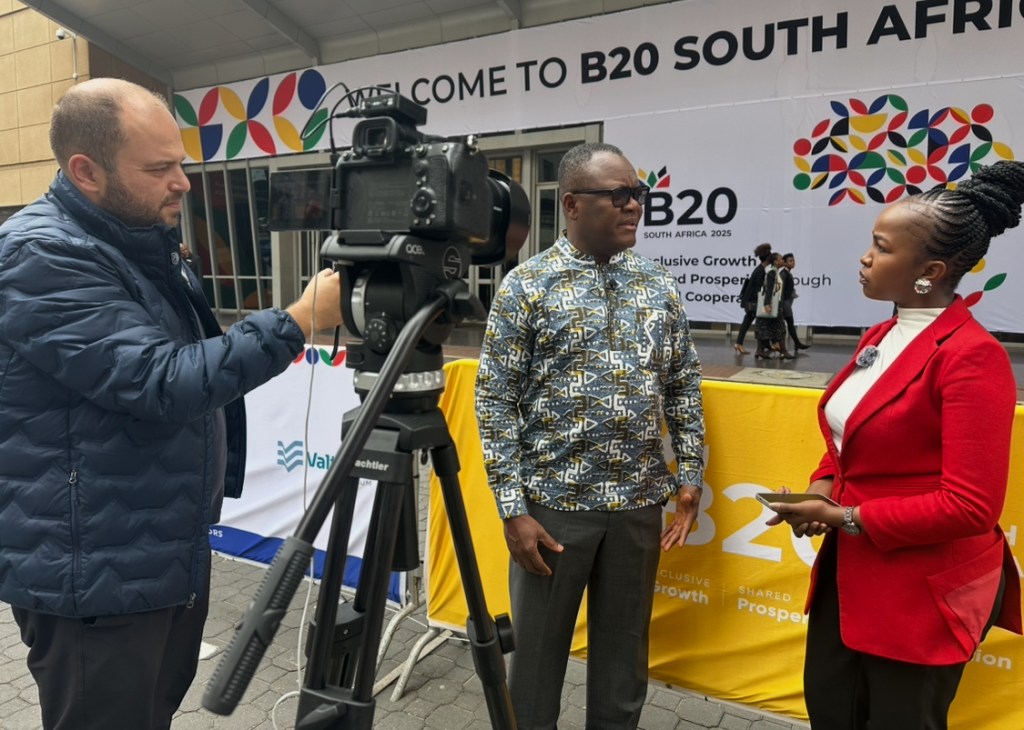
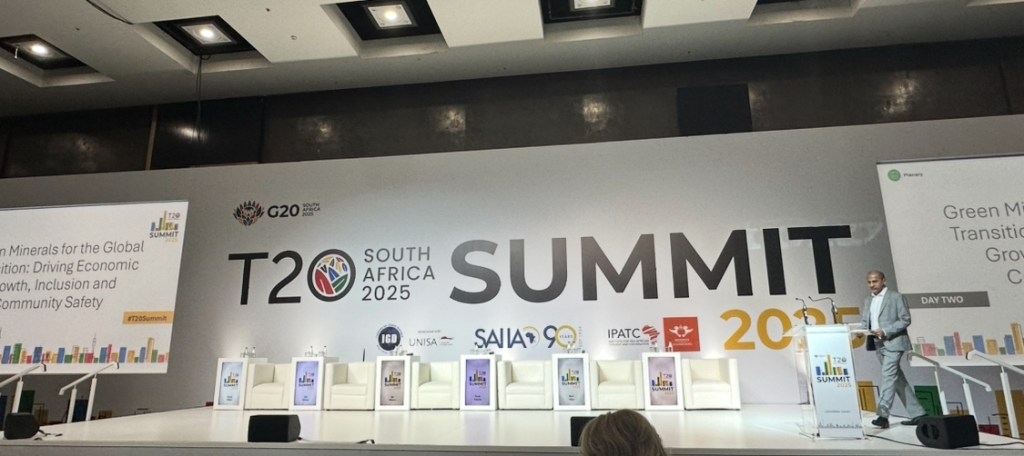
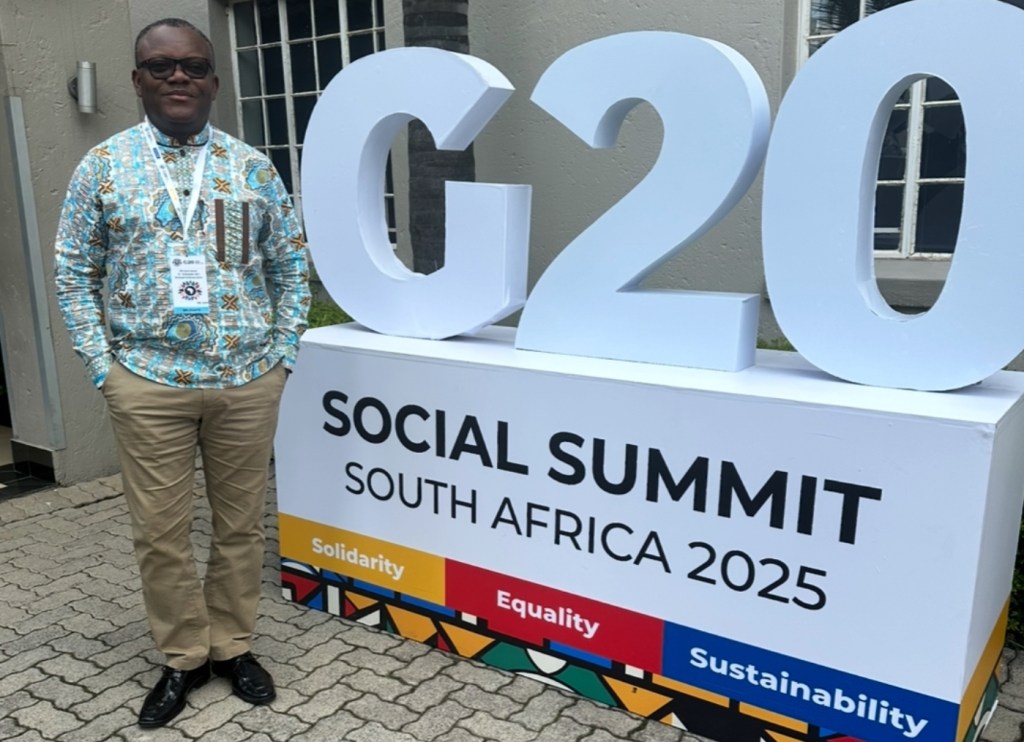
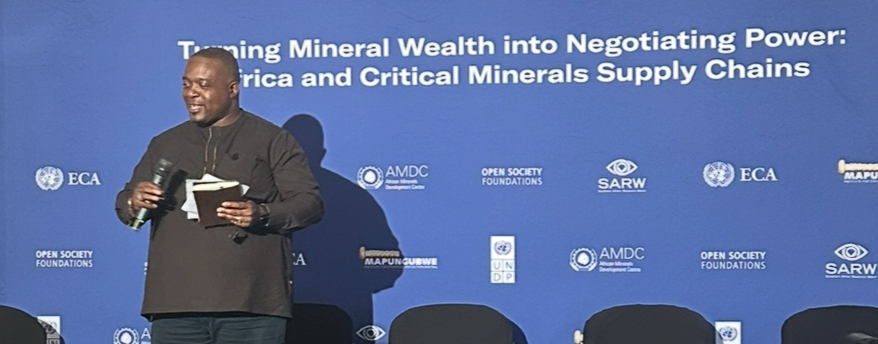
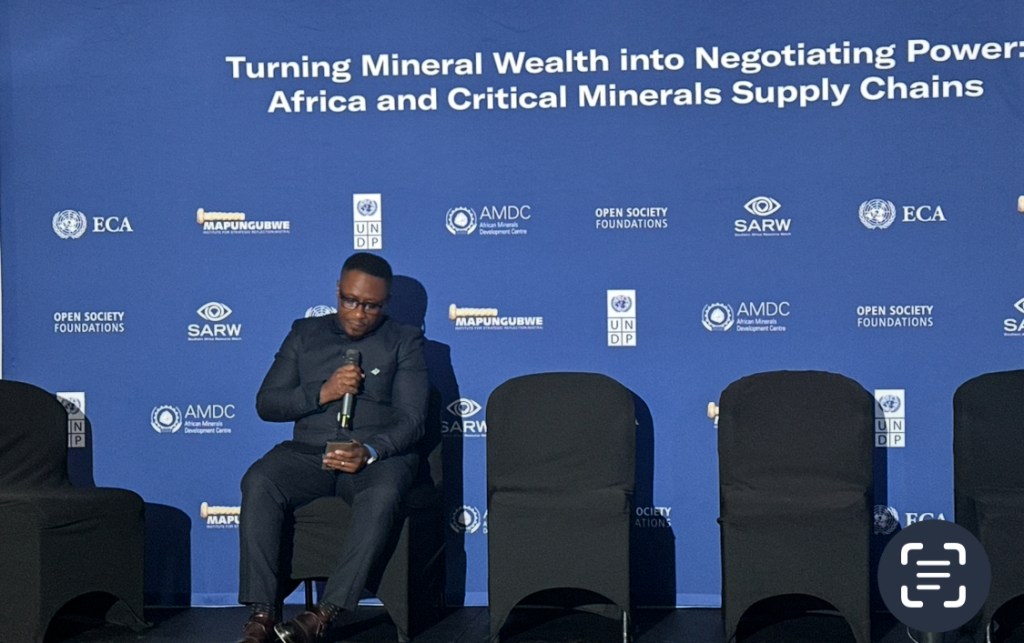
The Open Society Foundations and partners’ policy discussion today, in the margins of the G20 Summit in Johannesburg generated a solid roadmap! Here are my 7 takeaways:

Africa holds the ingredients of global power at a scale the world cannot ignore. Yet the question confronting the continent is not whether the world needs Africa. It is whether Africa is ready to lead, not follow; to bargain, not beg; to industrialize, not export raw; to become a rule-maker, not just a rule-taker.

As geopolitical tensions intensify, the United States, the European Union, China, and emerging powers are racing to secure long-term access to African minerals, using industrial policies, bilateral deals, and global pressure to reshape supply chains. Africa has become the epicenter of a new global scramble, one fought not with armies, but with subsidies, regulations, Environmental Social Governance standards (ESG), and strategic diplomacy.

This is Africa’s critical minerals moment, not just to be part of the global green transition, but to shape its terms, its industries, and its benefits. What Africa chooses to do now will decide if it becomes a leader in the new green economy, or remains just a place where others come to dig up raw materials.

1. A New Global Scramble, But This Time Africa Must Set the Terms

At the first G20 Summit ever held on to African soil, the continent finds itself at the center of the most consequential geopolitical realignment since the industrial revolution. The race for critical minerals, cobalt, lithium, nickel, graphite, rare earths, has triggered a new scramble, but this time powered by the urgency of the green transition and the anxieties of national security.

The old world is maneuvering aggressively.

  • The United States has unleashed the Inflation Reduction Act, industrial policy whose benefits flow mostly inward.
  • The European Union, facing Chinese dominance in battery and EV manufacturing, has erected its Critical Raw Materials Act; a shield for European industries.
  • China, already controlling 60% of refining and 80% of global battery manufacturing, continues to consolidate its strategic lead.

Meanwhile, Africa, home to 30% of global critical mineral reserves and 70% of the world’s cobalt, remains a marginal actor in the value chain, capturing less than 5% of the wealth generated by the minerals it exports.

2. The G20 in Johannesburg: A Mirror and a Moment

Africa must convert its mineral wealth into negotiating power, or others will convert it for us.

This moment is not just about minerals.
It is about power.
It is about narrative.
It is about agency.
It is about Africa refusing to be the “supplier of last resort” for a green economy built elsewhere.

3. Fragmented Countries Cannot Negotiate with United Continents

A recurring warning emerged from the panels: global powers have learned a tactical truth. It is easier to negotiate with Africa one country at a time, not as a continent.

This is how the “green colonialism” of the 21st century is unfolding: Isolate a government, offer a bilateral MoU, promise investments, small, quick, politically appealing, capture long-term mineral supply, secure value-addition on foreign soil.

This is why Europe’s Global Gateway, and the U.S. Mineral Security Partnership look generous on paper but are deeply strategic in practice. They secure raw materials, not African industrialization.

As one expert warned: “If you isolate Ghana, you get a lithium deal. If you isolate Zimbabwe, you get a cobalt deal. But if Africa stands together, the world must negotiate differently.”

Africa needs bargaining power, bargaining power requires unity, Unity requires political leadership.

4. Industrialization is Not a Smelter. It Is an entire Ecosystem.

One myth must die for Africa to rise: the myth that industrialization is about building a smelter and calling it transformation.

A smelter does not create an economy. It is energy-intensive, capital-heavy, low-employment, and often detached from local needs.

“Africa’s opportunity is not just in the rock. It is in the engineering, logistics, innovation, manufacturing and services around it.”

This is how future could look like:

  • battery precursors in Zambia-DRC,
  • graphite processing in Mozambique,
  • green steel in South Africa,
  • cathode manufacturing in Namibia,
  • electric motorcycle plants in Kenya,
  • solar panel assembly hubs in North Africa
  • and more…

Africa can no longer be told it “lacks markets.” Markets are built, not waited for.
China built its market. Europe built its market. Africa must now build its own.

5. Political Courage: The Missing Ingredient

Many African countries remain trapped by predictable political constraints:, negotiating contracts in secrecy, prioritizing royalties instead of jobs, allowing foreign companies to dictate standards, failing to invest in geological mapping, underfunding universities and technical faculties, ignoring artisanal miners, women, and local communities, and, treating industrial policy as an afterthought rather than a national mission

6. Communities Must Not Become Casualties of the Green Transition

The extractives history of Africa is written in: displaced communities,polluted rivers, gender based violence, corporate impunity, destroyed ecosystems, and broken promises.

The green transition risks repeating all of this, only faster. Communities must be co-owners of the future, not victims of it. This means:

  • Free, Prior and Informed Consent (FPIC) must be real, not cosmetic.
  • Women must benefit from mining, not be excluded from it.
  • Royalties must serve communities, not elites; 1% is unacceptable.
  • Environmental assessments must be public, enforceable, and community-driven.
  • Artisanal miners must be supported, not criminalized.

Africa cannot trade justice for development. There is no trade-off. Justice is development.

Our Foundations’ Resource Futures Programme (Opportunity) is clear about rights, transparency, communities, gender equity, and accountability. These are not peripheral; they are central to the industrial future Africa must build.

7. A Roadmap for African Power in the New Mineral Order

Here are what G20 leaders, especially South Africa and the African Union must champion:

An African Critical Minerals Alliance: A continent-wide coalition modeled on the “Lithium Triangle” of Latin America, focused on common standards, coordinated pricing, uniform beneficiation targets, and joint negotiation platforms.

A Pan-African Critical Minerals Fund: Capitalized by AfDB, Afreximbank, African sovereign funds, and diaspora financing to invest in geological mapping, refineries, industrial parks, battery corridors, and African-owned manufacturing ventures.

Continental Standards for Transparency and FPIC: No more secret deals. No more exploitation of communities. No more extractive colonialism wearing green clothing.

Regional Industrial Corridors: Scale is Africa’s currency. No single country can industrialize alone. DRC-Zambia Battery Corridor, Lobito Corridor, and new SADC/EAC/ECOWAS industrial zones must become the backbone of African manufacturing.

A Continental Electrification and Green Mobility Plan: Africa’s minerals must power African energy systems. No industrialization is possible without affordable, reliable energy.

Technology Transfer as a Non-Negotiable: Partnerships that do not share technology are not partnerships. They are extraction agreements.

The world cannot achieve a green transition without Africa, but Africa can fail to benefit from that transition if it hesitates, fragments, or negotiates poorly.

The world needs Africa. Africa must now decide what it needs from the world.

An Influencing Space!

A telling moment at our side event showed just how far our influence is beginning to reach. When a member state steps into a space we created, it is more than participation; it is recognition of our growing authority. This was clear when the representative of the Democratic Republic of Congo, a country central to the world’s cobalt supply, not only attended our critical minerals session but insisted on taking the floor. His intervention underscored a simple truth: the conversations we are driving are now shaping national positions, not just reflecting them.

If you’d like to receive my articles automatically as soon as they’re published, simply follow this blog using the “Follow” button at the bottom left of this page or send me an email at: Desire.Assogbavi@Assodesire.com

G20 Summit: When the World Comes to Africa

In a world divided by wars, inequality, and distrust, it is easy to forget that cooperation is still possible, and necessary. Yet in a few days, the world’s 20 largest economies will gather for the first time on African soil, when South Africa hosts the G20 Leaders’ Summit in Johannesburg.

As I prepare to join the Open Society Foundations’ Team to participate in the various policy influencing gatherings around this historical moment in our continent, I would like to share this article in 7 quick points on the fundamentals of G20, why does it matter and what is at stake at this particular meeting.

You can also read my article “The African Union at the G20, Now What?” published in 2023 when the continental body became a full member of the Group.

1. What Exactly Is the G20 and Why Does It Matter?

The Group of Twenty (G20) is not a formal organization with a treaty or a secretariat. It is a forum of major economies ; 19 countries plus the European Union, and, since 2023, the African Union as a permanent member. Together, these members account for around 85% of global GDP, 75% of trade, and two-thirds of the world’s population.

Created in the aftermath of the 1997 Asian financial crisis and elevated to leaders’ level during the 2008 global recession, the G20 was designed to prevent economic shocks and coordinate policies on trade, finance, and growth. But in recent years, its agenda has expanded to include climate change, digital transformation, health, debt, and inequality; the most crucial issues of our time.

The G20 has no binding power. Its strength lies in influence and direction-setting. When its leaders agree on principles, those tend to shape the policies of the World Bank, IMF, WTO, OECD, and multilateral development banks.

2. How Does the G20 Work?

The G20 runs on a rotating presidency system. Each host sets the annual theme, convenes meetings, and steers negotiations toward a Leaders’ Declaration at year’s end.

There are two main tracks:

  • The Finance Track, led by finance ministers and central bank governors, covers debt, taxation, global financial stability, and reform of multilateral banks.
  • The Sherpa Track, led by appointed national representatives shapes the political and developmental agenda: climate, trade, gender, health, digital, and more.

Around these formal meetings orbit the engagement groups: the B20 (business), T20 (think tanks), C20 (civil society), Y20 (youth), L20 (labour), and W20 (women). These forums allow business leaders, academics, activists, and youth voices to influence the official agenda.

3. The G20 Troika: Steering the Ship

At the helm of this sprawling system sits what’s known as the G20 Troika, a three-member steering mechanism composed of the past, current, and incoming presidencies. For 2025, that means Brazil, South Africa, and the United States.

The Troika ensures continuity and coherence, preventing the G20 from turning into a series of disconnected host-year projects. Under this configuration, Brazil’s developmental priorities, South Africa’s equality agenda, and America’s upcoming geopolitical stance are meant to align, though that is easier said than done.

This particular Troika is geopolitically fascinating: it brings together three continents and three contrasting worldviews, Latin America’s focus on social justice, Africa’s call for fairness, and America’s realist power politics. How they navigate their differences will determine whether the G20 remains a platform for cooperation or becomes another theatre of global rivalry.

4. What’s at Stake in South Africa’s 2025 G20

South Africa has chosen the theme “Solidarity, Equality, Sustainability.” It speaks directly to the heart of global tensions: how to make globalization fairer, how to finance development and climate justice, and how to ensure the voices of emerging economies are heard.

a) Reforming Global Finance

Pretoria wants to push for a new deal on development finance, faster and fairer debt treatment for developing countries, reforms to make multilateral development banks “better, bigger, and bolder,” and a recognition that economic stability cannot exist without climate resilience.

African and other Global South nations face unsustainable debt servicing costs. South Africa’s message is clear: the financial architecture built in the 20th century no longer serves the 21st.

b) Tackling Inequality

In August 2025, President Cyril Ramaphosa launched a G20 Taskforce on Global Inequality, chaired by Nobel laureate Joseph Stiglitz, to propose ways to close the wealth gap within and between nations. This is an important issue not just for Africa but globally,  a moral and economic imperative to ensure growth benefits all.

c) Africa’s Voice, Finally Heard

With the African Union now a full G20 member, the continent can finally speak for itself rather than being spoken for. Expect key side sessions on the African Continental Free Trade Area (AfCFTA), industrialization, critical minerals, climate adaptation, and food security, all framed within Agenda 2063, our continental business plan.

South Africa’s challenge will be to turn symbolism into influence: translating Africa’s presence into concrete outcomes on finance, trade, and representation.

5. The Side Conversations That Matter

Beyond the leaders’ sessions, Johannesburg will host a series of side summits and engagement meetings:

  • The B20 in Sandton will debate how to scale private investment into Africa’s green and digital economy.
  • The T20 and C20 will focus on knowledge and civic advocacy; from climate justice to digital governance.
  • A Social Summit is planned to bridge policy with lived realities, giving voice to labor unions, civil society, and youth groups.
  • And many more…

If managed well, these parallel tracks could make the 2025 summit the most inclusive G20 in history.

6. Geopolitics on the Horizon: The U.S. Presidency Awaits

As the summit closes, South Africa will hand the presidency baton to the United States, ushering in the 2026 cycle under President Donald Trump.

This transition is likely to reshape the tone and priorities of the G20. From his previous to his current term, Trump often dismissed multilateralism as “globalist bureaucracy,” withdrew the U.S. from major climate commitments, and clashed with African nations, including South Africa over trade, immigration, and political values.

If history is any guide, Washington’s return to the chair may turn the G20 toward hard transactionalism rather than solidarity. However, global realities have changed: the war in Ukraine, the emergence of several other economic powers, and the growing assertiveness of the Global South mean that no single power, not even the U.S. can dictate the agenda alone.

The South African presidency, in that sense, may become the bridge year that sets boundaries: asserting that Africa’s concerns including debt relief, equitable energy transition, and representation, are now central, not peripheral, to global decision-making.

7. The Difficult Conversations

Even as Johannesburg prepares to welcome the world, divisions remain:

  • Debt restructuring remains painfully slow under the G20’s Common Framework.
  • Climate commitments are uneven, with disagreements on phasing out fossil fuels.
  • Wars in Europe and the Middle East risk hijacking the declaration text.
  • Reform of international institutions, including the IMF and World Bank, remains politically charged.

South Africa’s diplomacy will be tested, balancing moral clarity with pragmatic coalition-building.

This G20 is historic not only because it is being held in Africa, but because it may redefine what leadership looks like in a fractured world.

For Africa, it is an assertion of agency. For South Africa, it is a chance to prove that dialogue across divides is still possible. For the G20, it is a reminder that solidarity and sustainability are not slogans, but survival strategies.

If Johannesburg 2025 can deliver even a modest consensus on fairer finance, inclusion, and global cooperation, it will mark the beginning of a new era; one where the Global South is not at the margins, but at the centre of shaping the future of global governance.

If you’d like to receive my articles automatically as soon as they’re published, simply follow this blog using the “Follow” button at the bottom left of this page or send me an email at: Desire.Assogbavi@Assodesire.com

Tanzania: The Ballot Box Becomes a Battlefield

When elections cease to be a moment of choice and become an instrument of control, democracy turns into theater and citizens, no longer believing in the script, start to write their own story in the streets. The unfolding crisis in Tanzania is another troubling chapter in Africa’s growing catalogue of democratic rituals without governance substance.

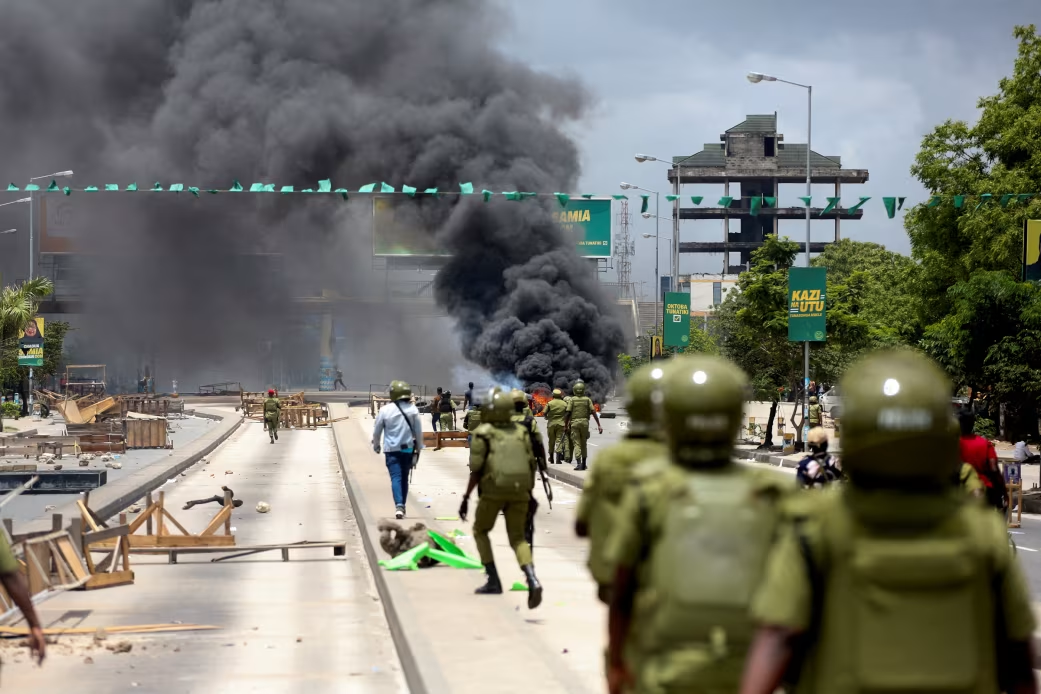
Tanzania, once hailed as a stable democracy in East Africa, is now facing its most serious political unrest in decades. The October 2025 elections, meant to reaffirm democratic legitimacy, instead exposed the fragility of the country’s institutions. Following a tightly controlled vote, President Samia Suluhu Hassan was declared the overwhelming winner, some constituencies reporting absurd margins of 100,000 votes to less than 100 for the opposition. But beyond the numbers, the scenes on the ground tell a different story: cities under curfew, internet blackouts, and live ammunition fired at unarmed civilians.

Witnesses in Dar es Salaam, Arusha, and Mbeya describe a climate of fear and chaos. Human rights organizations indicate that hundred have been killed in just a few days, as security forces cracked down on protestors contesting what they see as an empty ritual of democracy. Lawyers, journalists, and opposition figures have either been silenced or disappeared.

Democracy Without Oxygen

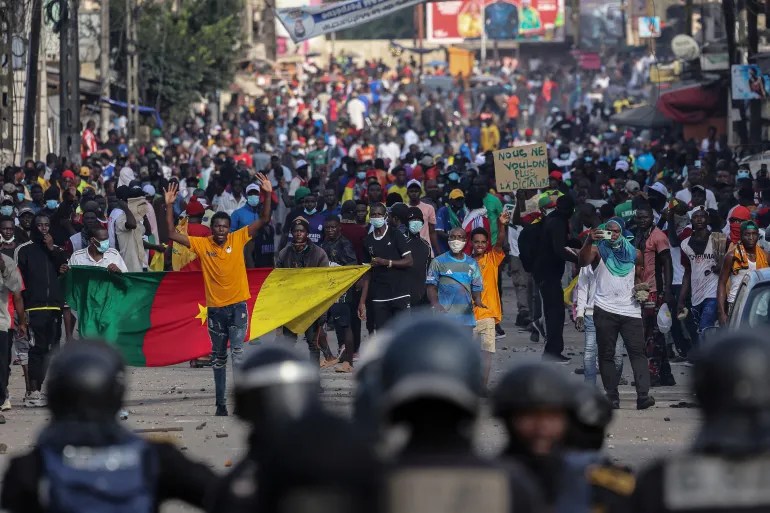
Like Cameroon and Côte d’Ivoire, Tanzania’s crisis is not merely electoral, it is structural. It reflects a pattern where regimes hold regular elections but hollow out the very foundations of democracy: accountability, pluralism, and citizen participation. The symptoms are familiar, youth unemployment, corruption, shrinking civic space, and the instrumentalization of state institutions for political survival. When people cannot breathe politically, repression becomes their air, and protest becomes their only language.

The government’s response, labeling demonstrators “criminals” and tightening its grip on digital communication, has only deepened the divide. Cutting the internet and silencing dissent does not restore order; it merely postpones reckoning. Tanzania’s young population, frustrated by joblessness and impunity, is no longer willing to watch in silence as its future is mortgaged to a small elite. As one activist put it, “There is no oxygen left, we can’t speak, we can’t tweet, we can’t hope.”

A Continental Warning

Tanzania’s turbulence is another call for Africa’s democratic institutions who still measure progress by the number of elections held rather than their integrity. Our continent is sliding into a dangerous normalization of managed democracy, where ballots replace bullets, but the outcomes are just as predetermined.

For us at the Open Society Foundations (OSF), guided by our unwavering commitment to promoting human rights, equity and justice across the world, this moment demands not just condemnation but deeper engagement, supporting those on the frontlines of civic courage, amplifying independent voices, and pressing for genuine institutional reforms that go beyond the façade of periodic voting. The crisis in Tanzania, like those in Cameroon and Côte d’Ivoire, reminds us of that Africa’s democratic project will not be saved by rituals, but by renewal, rooted in justice, inclusion, and accountability. When citizens risk their lives to make their voices heard, the world cannot afford to look away. What is happening in Tanzania today is not just a national crisis; it is a mirror held up to a continent standing once again at a democratic crossroads.

If you’d like to receive my articles automatically as soon as they’re published, simply follow this blog using the “Follow” button at the bottom left of this page or send me an email at: Desire.Assogbavi@Assodesire.com.

Democratic Rituals are Not Democratic Governance

The “re-election” of the old long-standing leaders in Cameroon and Côte d’Ivoire indicate a sad reality for African democracy. At 92 years old, Paul Biya has “secured” an 8th term in office in Cameroon, extending a presidency that has spanned nearly half a century. In Côte d’Ivoire, constitutional maneuvering and the instrumentalization of judicial institutions have opened the door for Alassane Ouattara, 83-year-old, who has been in power since 2011 to seek and obtain a fourth term without real democratic competition. These two developments reflect a deeper question confronting the continent: Are we practicing democracy, or just staging it?

Africa is the youngest region in the world. Nearly 75% of its population is under 35: bold, connected, and impatient with political systems that do not evolve with them. For this generation, democracy is not just about ballots; it is about participation, accountability, and leadership that reflects their aspirations. But what is the message sent when elections lack credible competition, when power transitions are continually deferred and when institutions bend to protect incumbents rather than empower citizens? Elections become just a ritual without renewal.

Both Cameroon and Côte d’Ivoire demonstrate how institutions weaken when leaders become “indispensable”. Electoral bodies lose independence. Constitutional protections are eroded. Civic space narrows. Courts and legislatures become extensions of the executive, not checks against abuse.

This institutional decay has regional consequences. Across West and Central Africa, term-limit manipulation and democratic stagnation fuel public distrust, creating fertile ground for coups, unrest, and extremist recruiting. Without legitimacy, stability becomes fragile. What just happened in the 2 countries are warning siren for the democratic future of an entire continent.

Legitimacy matters for everything: investor confidence, regional peace, migration patterns, civic trust, youth mobilisation. When governments give the impression that the rules are written to preserve themselves, not to empower citizens, then the social contract is spoiled. Democracy is not judged by how often elections are held but by whether people believe their voices matter.

The African Union’s credibility rests on its ability to uphold the norms it has set: constitutionalism, peaceful transitions, and governments that derive authority from the people. Allowing exceptions undermines the whole project.

Yet despite these challenges, hope is alive and loud. Youth movements, the GenZ, citizen monitors, women’s coalitions, independent media, and reform champions are demanding something better: a democracy that delivers and evolves.

This moment calls for action from regional bodies, international partners, and especially civil society organizations committed to justice, and accountability.

More than ever, we must help:

  • Protect civic space and activists under pressure
  • Support electoral integrity and institutional reforms
  • Create pathways for youth participation in governance and public service
  • Strengthen regional solidarity so that democratic backsliding anywhere triggers collective response everywhere
  • Document human rights violations and support litigations

Democracy is not self-sustaining. It must be renewed with every generation. Cameroon and Côte d’Ivoire are wake-up calls to us.

If Africa’s future is to be defined by opportunity and dignity, then the answer to “Who decides?” must be clear: the people. Not the palace. Not the presidency. Not the past.

If you’d like to receive my articles automatically as soon as they’re published, simply follow this blog using the “Follow” button at the bottom left of this page or send me an email at: Desire.Assogbavi@Assodesire.com
At the UN General Assembly, Africa Spoke with Power and Clarity…Now What?

As a Policy Advocacy and Development Professional I take UN General Assembly General Debate and leaders’ statements seriously. They set the tone for international negotiations for the year ahead, reveal countries and regional evolving positions, and provide a roadmap for advocacy at national, regional, continental and global levels. From the UNGA jamboree we also check if leaders follow through and walk the talk when they return home.

In New York, Africa spoke with power and clarity, yet the harder question remains: will our leaders play their part, walk the talk and turn eloquent speeches into action that truly improves the lives of 1.4 billion Africans? In this article I unpacked what Africa said at UNGA 80, exposed the gap between the world stage rhetoric and national delivery, and I outlined urgent steps needed to move from words to results.

The United Nations General Assembly (UNGA) is the world’s most inclusive forum of diplomacy. Each September, leaders from 193 countries, big and small, rich and poor, stand on the same platform to share their priorities and visions. Unlike the UN Security Council, where power is concentrated in the hands of a few, the General Assembly operates on equality: one country, one vote, one voice. This makes the annual General Debate both symbolic and strategic: it is the stage where the principles of multilateralism are reaffirmed and where the world’s collective challenges are debated.

For the Global Majority (The new preferred designation of the Global South) and especially Africa, the UNGA debate is particularly significant. It is where leaders demand recognition not just as beneficiaries of the international order but as co-architects of global solutions. Here, they push for reforms of global systems, highlight the continent’s development and peace priorities, and challenge global powers to treat Africa as a partner rather than a resource depot.

What Africa Said at UNGA 80

Despite diverse contexts, African voices at UNGA 80 were remarkably aligned around a set of shared priorities as follow:

a. Reform of Global Institutions

From President Ramaphosa of South Africa to President Ruto of Kenya and President Mahama of Ghana, African leaders demanded urgent reform of the UN Security Council and global financial institutions. The exclusion of Africa from permanent membership was described as “unacceptable, unfair, and grossly unjust.” Reform was not framed as charity for Africa but as essential to the UN’s legitimacy and survival.

b. Debt Justice and Financing for Development

Debt burdens and high borrowing costs were among the most pointed concerns. Leaders condemned the “Africa premium” in international finance, where countries on the continent pay exorbitantly to borrow. Ghana and Nigeria pressed for a reset of the global financial system, while several called for a sovereign debt restructuring framework and an African Credit Rating Agency. The main question is: should Africa’s scarce resources continue going to debt service, or to health, education, and climate resilience?

c. From Aid to Trade and Resource Sovereignty

The shift from aid dependency to trade and industrialization was a rallying cry. Rwanda urged a “transition from aid to trade.” Ghana declared “the future is African,” emphasizing resource sovereignty. Nigeria underscored that countries hosting critical minerals must benefit from local processing and value addition. Repeatedly delegations stressed that Africa’s minerals, energy, and youth must power development on the continent, not enrich external actors.

d. Climate Justice and Technology Equity

African countries spoke largely with one voice on climate injustice: the continent contributes the least to global emissions but suffers the most from floods, droughts, and displacement. They demanded predictable climate finance and operationalization of the Loss and Damage Fund. Technology was also on the agenda, with Nigeria insisting that AI must mean “Africa Included” and Namibia calling for global standards to regulate artificial intelligence.

e. Peace and Security

Conflicts and instability were raised consistently, from Sudan to the DRC to Gaza. Many delegations warned that peace cannot be achieved by force alone but through mediation and prevention. Uganda and Sierra Leone emphasized region-led stabilization and justice for survivors of violence. Many speakers insisted that selective outrage in international responses in terms of compassion for some crises but neglect of others, undermines global credibility.

Taken together, African leaders demanded equity, agency, and coherence in global governance. The unifying theme was that Africa does not seek charity; it seeks justice and partnership.

Now What? Strong Words, Weak Delivery?

After listening to Africa’s delegations at UNGA 80, one cannot deny that the speeches were powerful. African leaders spoke with confidence, demanding reforms, calling for debt justice, and insisting that Africa’s future must be written by Africans themselves. There was more agency in their tone than in previous years.

But here is the uncomfortable question: are these leaders truly doing their part to make life easier for the 1.4 billion Africans they represent?

It is one thing to speak eloquently in New York, but another to govern effectively. The paradox of African leadership is that our presidents often sound radical abroad but revert to business as usual at home. They demand reform of the international system, yet many preside over outdated, old school, undemocratic and unaccountable domestic systems. They call for justice on the world stage while maintaining injustice within their borders and this is the heart of the frustration voiced by many observers and citizens in the continent. We want to see bankable blueprints to transform minerals into wealth, youth into innovators, and land into food security.

Leadership is not about eloquence; it is about delivery. For Africa’s 1.4 billion people, true leadership should mean the following:

  • Transforming resources into wealth: Not just declaring sovereignty over critical minerals but leveraging strategic partnership and setting up serious regional coalition to build the refineries, plants, and industries that create jobs and capture value.
  • Reframing the narrative: Flipping the story from “aid dependency” to “investment opportunity” and from “poverty hotspot” to “geopolitical powerhouse.”
  • Implementing regional coherence: Ensuring that what is said at the UN feeds into AU, ECOWAS, SADC, EAC etc. decisions, and national policies. Empty speeches without policy follow-up and actions that change people’s life are a betrayal.
  • Centering people’s lives: Making health care, education, food security, and jobs the non-negotiable priorities of governance. Global advocacy must connect back to local realities.

We must be brutally honest: the mediocrity of leadership is Africa’s biggest obstacle today: No amount of aid or concessional loan can help the continent move ahead if governance system has not change. Yes, debt, and global injustice are real constraints, but corruption, weak governance, and lack of vision within Africa are equally to blame. Until African leaders take responsibility, the cycle of dependency will persist.

The voices at UNGA 80 were strong, probably stronger than before, but words are not enough. Africa must move from rhetoric to results, from pity politics to power politics, from dependency to agency.

The measure of leadership is not how passionately one speaks in New York, but how effectively one delivers at home. Until our presidents transform their declarations into bankable blueprints that change the lives of ordinary Africans, they will remain eloquent on the global stage but irrelevant in the lives of their people.

The world is at an inflection point, and Africa is central to its future. By 2050, a quarter of humanity will be African, and the continent’s critical minerals, renewable energy, and youthful population will shape the global economy. The question is whether Africa will arrive at that future as a rule-maker or remain sidelined as a rule-taker.

The answer lies in African leadership’s ability to walk the talk, to move from vision to responsibility.

The challenge before Africa’s leaders is simple but profound: stop begging, start leading.

If you’d like to receive my articles automatically as soon as they’re published, simply follow this blog using the “Follow” button at the bottom left of this page or send me an email at: Desire.Assogbavi@Assodesire.com

From Aid to Agency: Africa at a Crossroads in a Divided World

At Howard University in Washington DC, on 5th September 2025, leaders, scholars, and advocates gathered for the US-Africa Future Summit under a powerful theme: “From Aid to Agency.” It was a timely reminder that Africa’s role in shaping the global future is no longer a question of charity, but of power, choice, and responsibility.

I was asked three questions during the discussions, about Africa’s place in global scenarios, the readiness of our continental institutions, and the reforms required for Africa to have a real voice in global governance. The answers, I believe, point us toward the same conclusion: the continent stands at a crossroads. Here are my responses:

Africa Between Growth and Division

Looking ahead, Africa is caught between the promise of a Growth World and the perils of a Divided World.

On the one hand, Africa is home to the fastest-growing youth population in the world. The African Continental Free Trade Area (AfCFTA) offers a market of 1.4 billion people. Global demand for our critical minerals, lithium, cobalt, copper, is soaring, and with proper governance, could become the engine of industrialization and prosperity.

Yet growth is unfolding in a fractured geopolitical context. The U.S.- China rivalry, Europe’s Critical Raw Materials Act, and the expansion of BRICS+ all underscore the divided landscape. Too often, Africa is invited to Paris, Tokyo, Washington, or Beijing, not as one united actor but as a collection of fragmented voices bargaining piecemeal.

If left unchecked, this leads to dependent and unequal growth, a “Divided Growth World.” But if Africa harnesses its agency through deeper integration, stronger resource mobilization, and insistence on fair global rules, the continent can bend the arc toward a Sustainable World, where growth is not only about GDP, but about justice, equity, and peace.

Are the AU and RECs Fit for Purpose?

The African Union (AU) and Regional Economic Communities (RECs) hold the skeleton of Africa’s future. But the muscle is still missing.

Three weaknesses persist:

  • Fragmentation: Our RECs often move in competing directions, with overlapping memberships and little complementarity.
  • Weak implementation: Treaties are signed but rarely delivered. AfCFTA was launched in 2019, yet tariff reductions and the free movement of people remain stalled.
  • Dependency: With over 60% of AU programs still donor-funded, our priorities remain vulnerable to external agendas.

To unlock Africa’s full potential, three bold steps are essential:

  1. Financial independence: The AU’s 0.2% import levy, if consistently applied, could generate over $1 billion annually to fund Africa’s priorities without waiting for Brussels or Washington.
  2. Regional alignment: RECs must stop duplicating efforts and instead become engines of AfCFTA, industrialization, and peace.
  3. Political accountability: Institutions must have the courage to hold member states to democratic and peace commitments. Without this, instability festers, as seen in the Sahel.

The blueprint already exists, Agenda 2063, but without financial independence, coordinated implementation, and political courage, Africa risks sliding deeper into fragmentation.

UNSC Reform: Correcting Historical Injustice

No conversation on Africa’s agency is complete without addressing global governance. Today, Africa accounts for nearly 70% of the UN Security Council’s agenda but holds zero permanent seats. This mismatch is precisely what separates a Sustainable World, where Africa is a decision-maker, from a World at War, where decisions are made for Africa, not with Africa.

Reform must address four issues:

  1. Charter-level representation: The Ezulwini Formula demands two permanent seats and two additional elected seats for Africa, chosen by the AU. If the veto remains, parity requires it to extend to new members.
  2. Working methods: African issues dominate the UNSC, yet texts are drafted without African co-ownership. Institutionalizing co-penholdership for the A3 (African non-permanent members of the UN Security Council) or AU would bring legitimacy.
  3. Financing peace operations: Resolution 2719 (2023) opened the door to UN funding for AU peace operations. This must be operationalized to match the scale of threats on the continent.
  4. AU-A3 coordination: Africa must speak with one voice, not three competing ones, in New York’s chambers.

These reforms are not favors. They are overdue corrections to a system that demands African legitimacy but denies African leadership.

The Next 18 Months: Africa’s Window of Agency

We are already living in a Divided World, but the next 18 months will be decisive in determining whether Africa can tilt the balance toward sustainability. Four levers matter most:

  1. Integration that delivers: Move beyond declarations to action: accelerate tariff cuts, slash non-tariff barriers, digitize trade with cross-border payment systems, and activate customs single windows.
  2. Finance with sovereignty: Restructure debt transparently and quickly, scale local-currency lending through African DFIs, and close illicit financial flow loopholes that bleed our economies.
  3. Security compacts that match the threat: African-led responses must be adequately financed and politically backed.
  4. Critical minerals as an engine of development: The resources that fuel the global energy transition must power Africa’s industrialization, not another cycle of dependency.

The clock is ticking, but the choices are in Africa’s hands.

From Aid to Agency

The message of the US-Africa Future Summit was clear: The continent can no longer afford to be an agenda item. It must be an agenda setter.

Moving from aid to agency is not just a slogan; it is a survival strategy. With unity, financing independence, and political courage, Africa can seize this moment to shape a future that is not dictated by external powers but built by Africans for Africans, and for the world.

The crossroads are in front of us. Which path we take depends on the choices we make now !

ICC – Burkina Faso, Mali, and Niger announce today, their withdrawal from the Court: What does it really mean?

On 22 September 2025, the governments of Burkina Faso, Mali, and Niger simultaneously declared in Bamako, Niamey, and Ouagadougou their joint withdrawal from the International Criminal Court (ICC), with immediate effect effet.

But here’s the nuance often missed:
• Under the Rome Statute, a withdrawal takes one year from the date of official notification to the UN Secretary-General.
• Even then, withdrawal does not erase accountability:
• Crimes committed while States were Parties remain under ICC jurisdiction.
• Ongoing investigations or proceedings can continue.
• The UN Security Council can still refer new cases.
• And crucially, there is no statute of limitation for ICC crimes , no matter how much time passes, perpetrators can still be prosecuted.

This move is undeniably political, but procedurally it offers no immediate insulation from international justice. It also raises profound questions:
• What message does this send about the future of accountability in Sahel or other regions?
• How will regional bodies like the African Union respond to safeguard justice while addressing concerns about fairness in global institutions?
• Can the African Union’s mechanism help protect victims of atrocity crimes?

The conversation is bigger than these three countries. It is about the future of international justice.

Africa’s Critical Minerals Moment: Infrastructure, Sovereignty, and the Battle for the Future

At the Fourth Financing for Development (FFD4) Conference last month (July 2025) in Seville, Spain, the Open Society Foundations (OSF) and the International Institute for Environment and Development (IIED) brought together policymakers, experts, and civil society leaders to debate one of the defining questions of our time: whose energy transition is Africa’s critical minerals boom really serving?

As global powers from China to the EU and the United States compete to secure supplies of cobalt, lithium, and copper, Africa finds itself at the crossroads of a new geopolitical scramble. Projects such as the $1.6 billion Lobito Corridor, linking Angola, Zambia, and the Democratic Republic of Congo, are being touted as game-changers for development. Yet, as participants noted, the financing, design, and governance of such mega-projects raise uncomfortable questions: are they designed to serve African citizens and economies, or primarily to feed the energy transitions of others?

Moderated by Lindlyn Moma, Director of Strategic Impact at IIED, the discussion cut to the heart of Africa’s development dilemmas: who defines Africa’s critical minerals agenda, who benefits from it, and at what cost?

The conversation underscored three urgent realities.

1. The Infrastructure Mirage

From billion-dollar transport corridors to solar-powered grids, Africa’s infrastructure boom is being marketed as the key to unlocking mineral wealth. Yet, as Brian Kagoro, Managing Director of Programs at OSF, pointed out, the numbers don’t always add up: “A project worth $1.6 billion sounds impressive, but when compared to the revenues it generates, the figure is small substantively. What have we oversold and what have we undervalued?”

Participants reflected on recent developments such as Zambia’s newly launched Chinese-built solar grid. While such projects dominate headlines, the real question is whether they deliver sustainable returns or simply deepen dependency. Kagoro noted that infrastructure costs are soaring while social and environmental impacts remain largely ignored.

2. The Trap of Long-Term Deals

Critical minerals contracts, trade agreements, and investment treaties being signed today could lock African states into decades of dependency. Lorenzo Cotula, Head of Law, Economies and Justice at IIED, cautioned: “These agreements are long term, they’re difficult to get out of, and they will constrain options for governments 10 or 20 years from now, when circumstances may have completely changed.”

This is especially pressing as technologies for cobalt, lithium, and other minerals evolve quickly. Signing inflexible deals today risks leaving Africa locked into obsolete arrangements tomorrow. Short-term capital inflows must not mortgage Africa’s long-term sovereignty.

3. Who Owns the Vision?

China has a strategy for Africa, the Netherlands has a strategy for Africa, Canada, France, Spain, Italie etc. have strategies for Africa, but Africa has no strategy for anyone.

The African Mining Vision (AMV) remains aspirational rather than binding. Without a proper collective strategy, African states respond piecemeal to external initiatives, forfeiting leverage and reinforcing fragmentation. Trevor Simumba, a Zambian trade and investment policy expert stressed that unless countries like Zambia and the DRC coordinate their approaches, they will continue to negotiate from a position of weakness.

Beyond Extractivism

The panel challenged the assumption that building corridors and exporting raw minerals will automatically generate jobs and industrial linkages. Brian Kagoro reminded the audience that history proves otherwise: “We keep assuming that value addition will happen naturally. It doesn’t. We’ve seen decommissioned railways and unemployed workers left behind by past extractive booms.”

True transformation requires rethinking infrastructure and minerals policy as tools for industrialization, human rights, and ecological sustainability, not just extraction.

A Call for People-Centered Strategy

For Ketakandriana (“Ke”) Rafitoson, Executive Director of Publish What You Pay, the minerals agenda must be rooted in transparency and accountability: “Critical minerals governance cannot just be about contracts and corridors. Citizens need to be part of the conversation, because this is as much about rights and democracy as it is about economics.”

The panel agreed: critical minerals are Africa’s leverage in the global energy transition. But without participatory governance and regional coordination, that leverage risks being squandered.

Conclusion: The Road Ahead

The discussion reminded us that the fight over Africa’s minerals is also a fight over its future. If Africa fails to craft its own infrastructure and critical minerals strategy, others will continue to do it on its behalf. The stakes are generational: sovereignty, sustainability, and the ability to harness mineral wealth for people, not just for profits.

The message from Seville was unambiguous: Africa must move from being the object of global strategies to being the author of its own.

If you’d like to receive my articles automatically as soon as they’re published, simply follow this blog using the “Follow” button at the bottom left of this page or send me an email at Desire.Assogbavi@Assodesire.com

From Seville to Solutions: My 10 Key Takeaways from FFD4

When I was on my way to Seville, my daughter, a medical student and curious as ever, asked me, “What exactly are you going there for?”. I paused for a moment before answering: “I’m going to a global meeting called FFD4. It stands for Financing for Development. It may not sound exciting, but it’s actually about something very real, how countries decide to raise and spend money to make life better for people. It’s about ensuring there’s funding for hospitals, health care, schools, clean water, healthy food and the fight against climate change.” I told her that decisions made there could impact whether her future patients will have access to proper healthcare, or not. Because at the end of the day, FFD is about making global finance work for everyone, not just the privileged few.

I am not sure I will be able to fully simplify the outcomes of FFD4 but here are my 10 takeaways:

Despite challenges, including severely restricted space limiting the full participation of non-state actors, the conference marked a significant moment in development finance within a geopolitically shifting world.

1. Unity & Urgency Amid Global Tensions

FFD4 demonstrated a certain unity and urgency despite escalating global tensions, soaring debt burdens, and declining official development assistance (ODA). The resulting Compromiso de Sevilla (Seville Commitments), adopted on day-one of the conference reflects global consensus, though it could have been more robust and concrete.

2. Bridging the $4 Trillion SDG Financing Gap

To address the $4 trillion annual financing gap needed for the Sustainable Development Goals (SDGs), the Compromiso de Sevilla outlined three critical areas:

  • Catalyzing investment at scale: Mobilize and direct domestic, international, and private sector capital toward key sustainable development objectives
  • Tackling debt crises innovatively: Introduce innovative strategies for debt management, restructuring, and utilization to ensure debts contribute positively to developmental outcomes
  • Reforming international financial architecture for fairer governance: Promote greater inclusivity by amplifying the voices of developing countries within global financial governance systems

3. Over 130 Initiatives Launched

Under the Sevilla Platform for Action, more than 130 initiatives were launched, demonstrating a clear shift from commitments to concrete, actionable projects.

International Business Forum: Mobilizing Private Capital for Sustainable Development

Held in parallel with the main Conference, the International Business Forum brought together global business leaders who issued a powerful call to action to unlock private capital for sustainable development. Through a joint Communiqué released alongside the Sevilla Commitment, they outlined five priority areas for impact investment.

For the first time, major business groups and investor alliances coordinated their efforts through the newly formed FFD4 Business Steering Committee, signaling a clear and unified commitment from the private sector.

4. Innovative Debt Solutions

Several innovative debt-management initiatives emerged, including:

  • Debt Swaps for Development Hub: A platform that brings together countries, donors, development partners, and technical experts to coordinate, scale, and support debt-for-development swaps
  • Debt-for-Development Swap Programme: dedicating funds for debt conversion in Africa. It is a financial arrangement where a portion of a country’s external debt is cancelled or reduced, in exchange for the country agreeing to invest that money into development projects such as like education, health care, climate resilience, or infrastructure.
  • Debt Pause Clause Alliance: embedding crisis-response clauses into lending agreements. This will offer crisis-affected countries a tool to temporarily suspend debt repayments during shocks such as climate disasters or pandemics, enabling faster recovery and fiscal breathing space.
  • Borrowers’ Forum: A new mechanism aimed at helping debt-distressed countries coordinate action and amplify their voice in the global financial system was launched in Seville

5. Boosting Development-Focused Investments and Domestic Resource Mobilization

FFD4 introduced strategic initiatives to scale development-focused investments and strengthen domestic resource mobilization:

  • Coalition for Global Solidarity Levies: taxing premium-class flights and private jets to fund climate and development.
  • Domestic Resource Mobilization: A strong emphasis was placed on enhancing countries’ ability to raise and manage their own revenues and other domestic resources. This includes expanding tax bases, tackling illicit financial flows, and improving fiscal systems to reduce dependence on external aid and increase financial sovereignty
  • Blended Finance Platform: To reduce risk perception and attract more investment for impactful projects.
  • Local Currency Lending Initiatives: to help protect borrowers in developing countries by offering loans in their own currency, reducing risk and promoting economic stability.
  • Effective Taxation Initiative: targeting equitable taxation of high-net-worth individuals and companies.

6. Reforming Global Financial Governance

Reforming global financial governance is essential to address the structural inequalities that perpetuate poverty, debt, and underdevelopment in the Global South. Today’s institutions, such as the IMF, World Bank, and G20, were designed in a different era and no longer reflect the realities, voices, or aspirations of the majority world. Developing countries, particularly in Africa, Latin America, and parts of Asia, remain underrepresented in decision-making processes that directly shape their economic futures. This imbalance has resulted in unfair lending practices, inadequate crisis responses, and rigid fiscal policies that constrain development. A reformed system must be more inclusive, transparent, and accountable, anchored in the principles of equity and justice. This includes giving equal voice and vote to developing nations, establishing a permanent and representative UN tax body, and ensuring that debt resolution mechanisms prioritize human development over creditor interests. Reform is not only a moral imperative; it is a strategic necessity to build a more stable, sustainable, and cooperative global economy.

7. Pre-arranged Disaster Financing

A significant commitment was made to increase pre-arranged disaster financing from 2% to 20% by 2035, to ensure better preparedness and resilience. This will help having money ready in advance to respond quickly when a natural disaster like a flood, earthquake, drought, or cyclone strikes.

8. Roadmap for Accountability and Implementation

FFD4 established a detailed roadmap including:

  • Immediate setup of oversight structures.
  • Rapid operationalization of financing mechanisms.
  • Monitoring and transparent reporting.
  • Enhanced technical assistance and capacity building.
  • Annual progress reviews at global forums.

9. Climate Change: An Urgent Reality Check

The scorching temperatures above 40°C, in Seville, last week was a strong reminder of the pressing reality of climate change. It was a pressing warning about, the urgent need to prioritize climate finance within our development agendas.

10. Restricted Space for Civil Society and Non-State Actors

A significant shortcoming of FFD4 was the severe restriction on participation, especially affecting civil society actors, raising concerns about inclusivity and representation in global development dialogues.

Conclusion: From Commitment to Collective Action

FFD4 in Seville has set goals and launched critical initiatives. However, true success can only come from sustained collective resolve and dedicated implementation. Now, the real test begins; translating these commitments into impactful realities for people and our planet.

Next up: A deep dive into one of our key policy side events at FFD4 on Financing Development and the Geopolitics of Critical Minerals, so, watch this space!

If you’d like to receive my articles automatically as soon as they’re published, simply follow this blog using the “Follow” button at the bottom left of this page.

Highlights from AfDB Annual Meetings 2025

🌍 Highlights from AfDB Annual Meetings 2025 in Abidjan:
At the opening of the African Development Bank (AfDB) Annual Meetings in Abidjan, African leaders issued a strong call for continental capital mobilization and economic self-reliance.
Key points:
🔹 Urgency for Africa to rely less on external aid and instead harness its natural resources, youth potential, and domestic capital to drive inclusive development.
🔹 AfDB President Dr. Akinwumi Adesina Reflected on his 10-year tenure, highlighting over $100 billion invested and 565 million lives impacted through the Bank’s “High 5s” strategy (Power Africa, Feed Africa, Industrialize Africa, Integrate Africa, Improve quality of life).
🔹 African Leaders discussed the need for a new African financial architecture, advocating for reforms that prioritize the continent’s voice in global finance and promote homegrown solutions to development challenges.
🔹 A new AfDB President will be elected during these meetings, marking a transition in leadership at a crucial time for Africa’s economic future.
🟢 The overarching message: Africa must unlock its own capital, strengthen institutions, and build resilient economies from within.

African Development Bank’s (AfDB) 2025 African Economic Outlook report:
🌍 AfDB’s African Economic Outlook 2025: Resilience Amid Global Challenges
Despite global economic and political headwinds, Africa’s economy is projected to grow from 3.3% in 2024 to 3.9% in 2025, reaching 4.0% in 2026. This resilience is attributed to effective domestic reforms and improved macroeconomic management. (African Development Bank Group)
Key Highlights:
📈 Growth Leaders: 21 African countries are expected to achieve growth rates above 5% in 2025, with Ethiopia, Niger, Rwanda, and Senegal projected to exceed 7%.(African Development Bank Group)
🌍 Regional Performance:
East Africa: Leading with a projected growth of 5.9%, driven by resilience in Ethiopia, Rwanda, and Tanzania.
West Africa: Maintaining solid growth at 4.3%, bolstered by new oil and gas production in Senegal and Niger.
North Africa: Expected to register 3.6% growth.
Central Africa: Projected to slow to 3.2%.
Southern Africa: Anticipated to grow at 2.2%, with South Africa expected at 0.8%.(African Development Bank Group)
💰 Domestic Resource Mobilization: With appropriate policies, Africa could mobilize an additional $1.43 trillion in domestic resources from tax and non-tax revenue sources through efficiency gains alone.(African Development Bank Group)
⚠️ Challenges: Fifteen countries are experiencing double-digit inflation, and interest payments now consume 27.5% of government revenue across Africa, up from 19% in 2019.(African Development Bank Group)
The report underscores the importance of Africa looking inward to mobilize resources needed for its development in the coming years.
Full report: https://www.afdb.org/en/documents/african-economic-outlook-2025