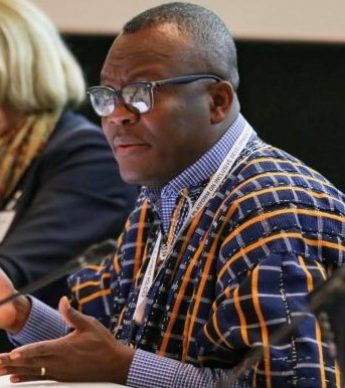
Much of my work at the Open Society Foundations is driven by a fundamental belief: that people must have a voice in the decisions that shape their lives, their communities, and their futures. It is a belief deeply embedded in our mission to advance human rights, equity, and justice across the world. Yet as I walked toward Wilhelmstraße 77 on a clear Berlin afternoon, that principle became profoundly personal. Standing on the ground where others once decided the fate of an entire continent without the presence, consent, or participation of its people, I was reminded why the struggle for voice, dignity, and self-determination remains as urgent today as ever.
The Global Solutions Summit 2026 had wrapped up in Berlin, a city that carries the weight of history in its cobblestones. While most participants headed back to their hotels or to the airport, I pulled up an address from my phone: Wilhelmstraße 77: I searched and found it in Berlin’s digital archives the day before.
I needed to go there…before I leave.
Berlin is a city that does not hide from its past. Around every corner, a plaque. On every pavement, you see small brass memorial stones embedded into the ground, each bearing the name of a victim of Nazi persecution. The city has developed an almost sacred relationship with accountability, with memory, with the discipline of not forgetting.
I walked past Cora-Berliner-Straße, a street named after a Jewish economist born in 1890, murdered in 1942. A small plaque on the sign tells you who she was. Berlin insists you know…
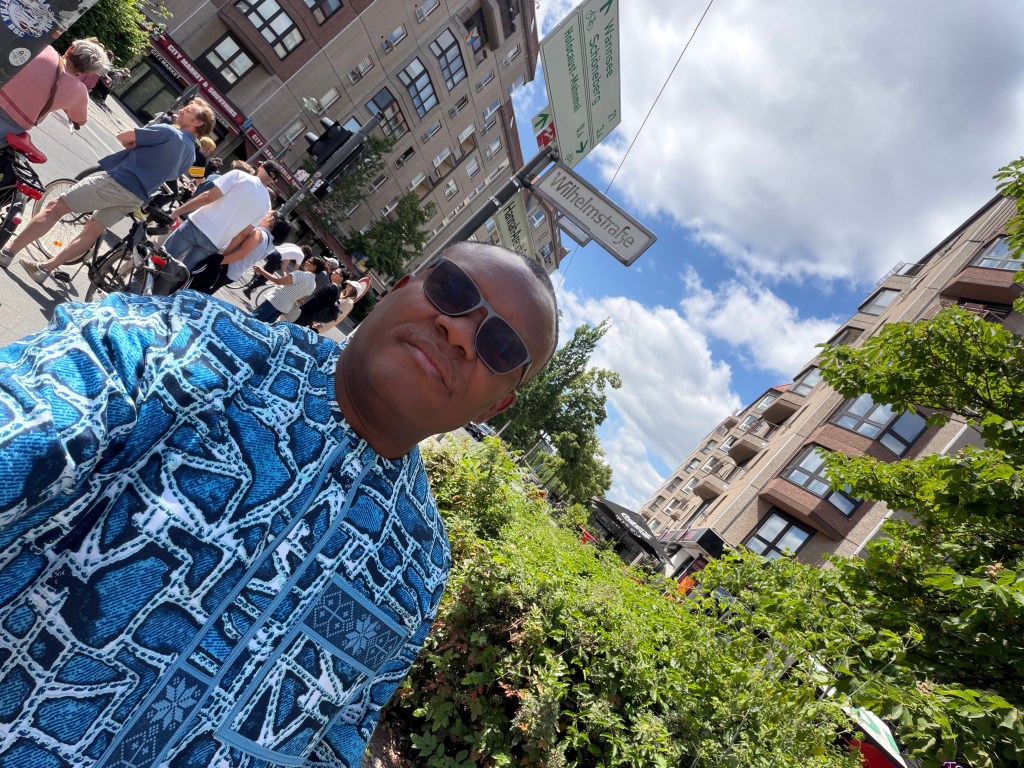
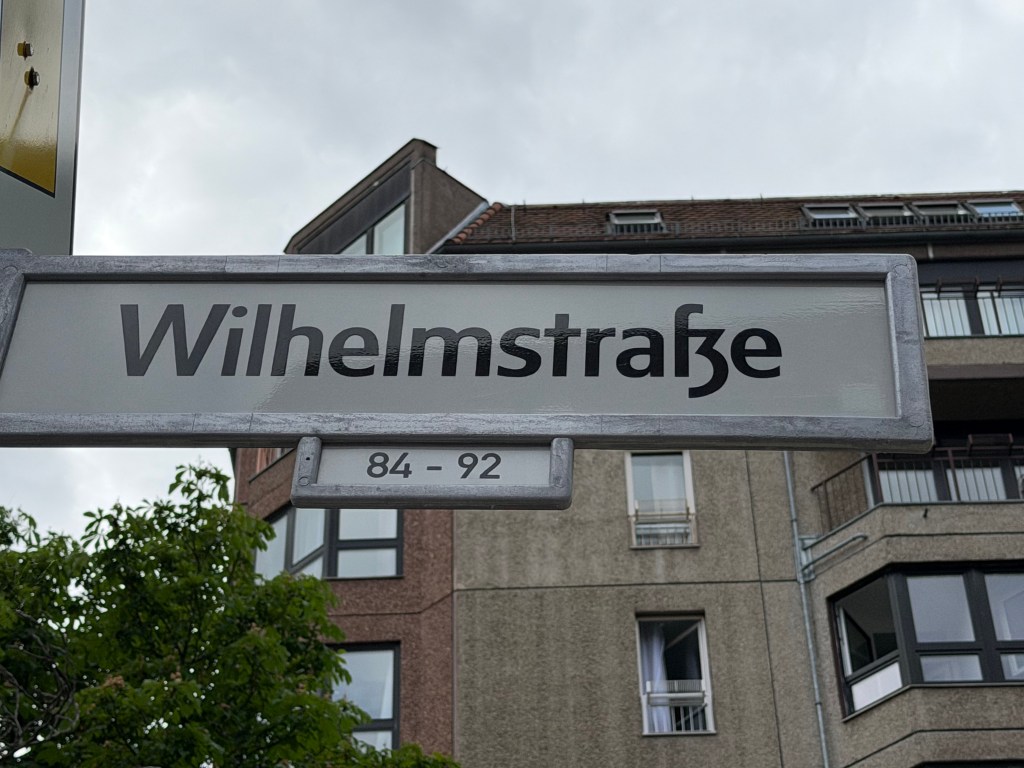
Then, I turned onto Wilhelmstraße… This place was once the nerve center of German state power. The Reich Bismarck’s Chancellery stood here. Decisions that changed the world were made on this street.
At number 77, in 1884, 14 nations gathered around a table and divided my continent… No African was in the room.
The Berlin Conference: The Original Scramble
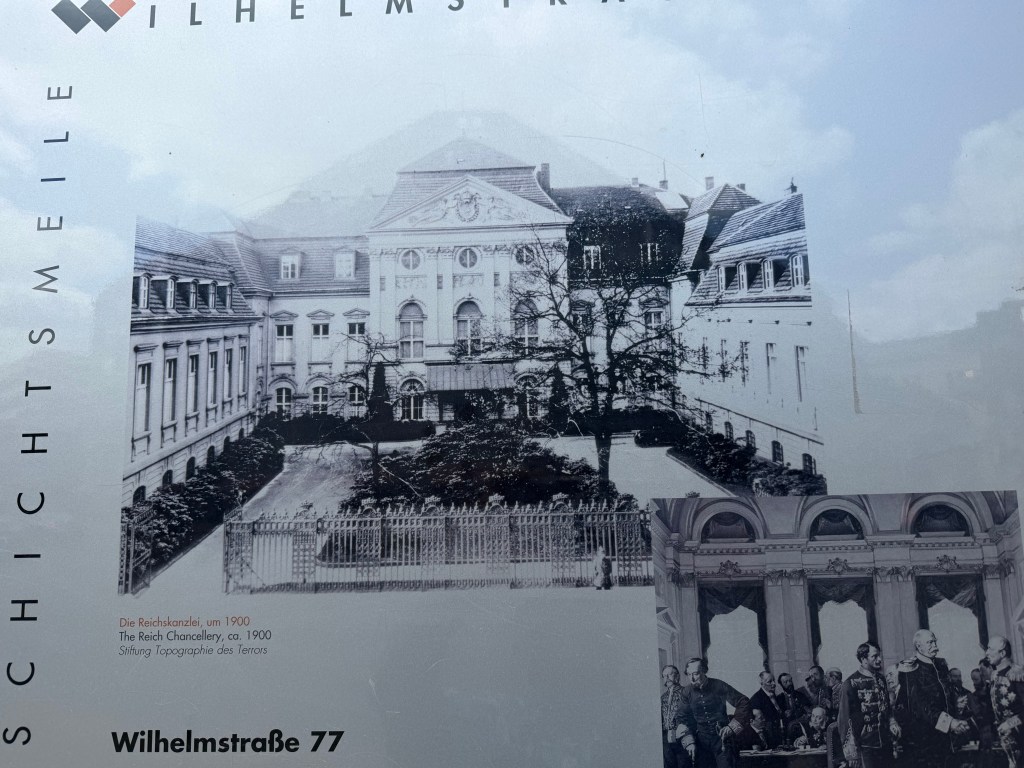
The building is gone now, damaged during the Second World War, later demolished. But I stood on that pavement, and I tried to feel it. The street today is unremarkable: apartment blocks, a few parked cars, coffee shops, but a historical marker shows a photograph: the grand courtyard, the ornate façade, the iron gates. Bismarck’s house of power.
In November 1884, German Chancelor von Bismarck convened what became known as the Berlin Conference here. Representatives came from fourteen nations: Austria-Hungary, Belgium, Denmark, France, Great Britain, Italy, the Netherlands, Portugal, Russia, Spain, Sweden-Norway, the Ottoman Empire, the United States, and of course, Germany.
Fourteen nations. Zero African.
Over the following three months, they drew lines across a continent they had never walked, through forests they had never entered, across rivers they had never crossed, dividing up kingdoms, splitting ethnic groups, separating families, all on paper, all with rulers and ink, all with the cold confidence of men who believed that the world was theirs to arrange as they pleased.
By the time the General Act of the Berlin Conference was signed in February 1885, the fate of an entire continent had been sealed. Within two decades, over 90% of Africa was under European colonial control.
Standing there, I felt something cold move through me.
2026: Standing at Another Crossroads
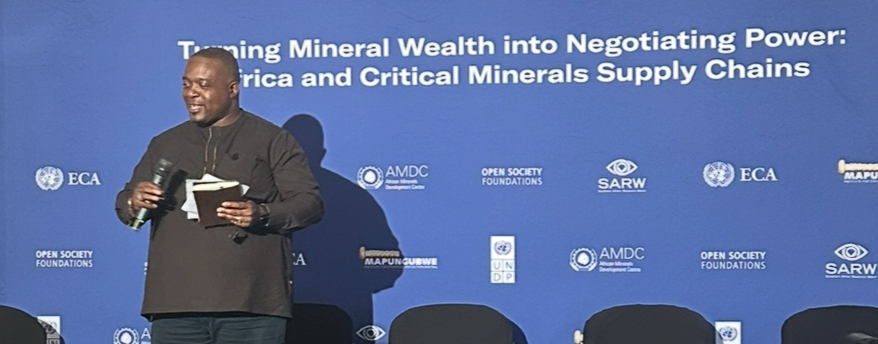
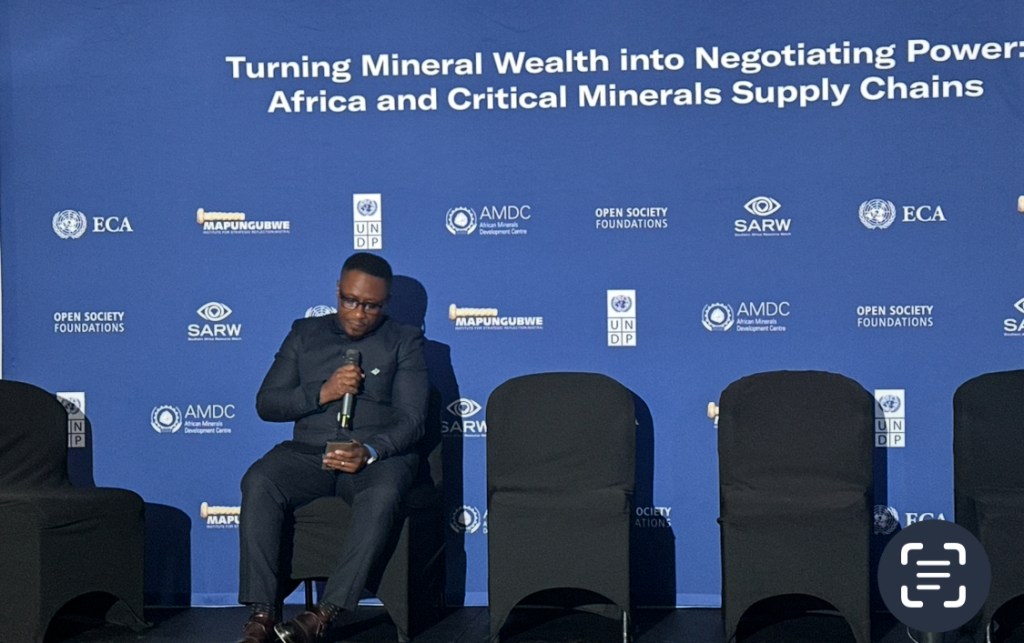
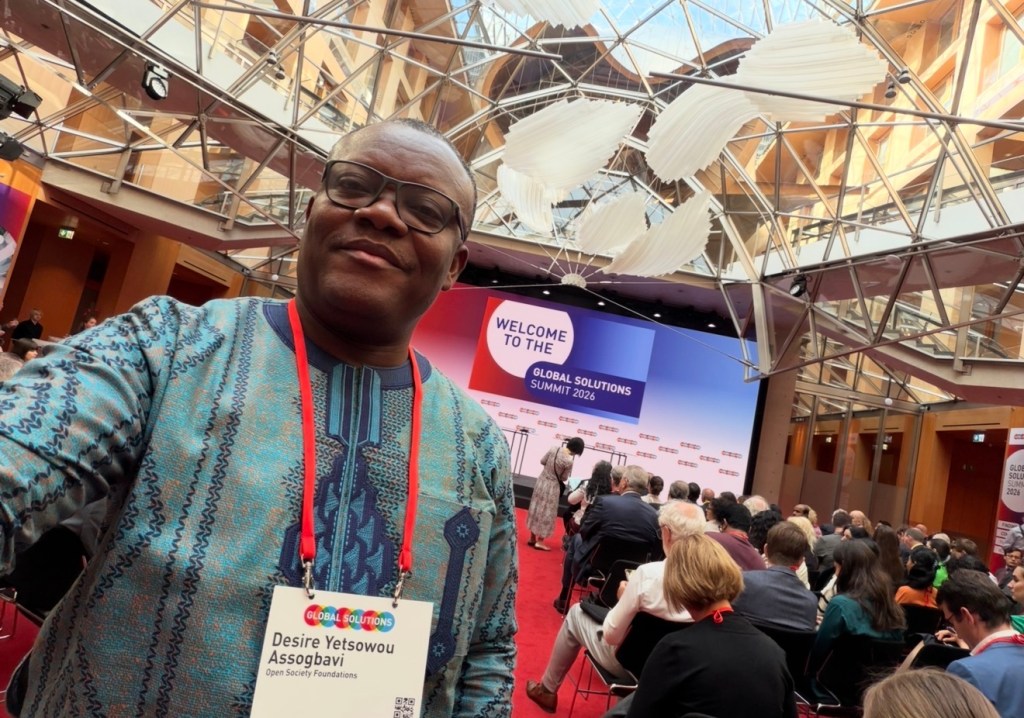
I had come to Berlin for the Global Solutions Summit. The conversations there were urgent and familiar: climate transition, green energy, critical minerals, technological infrastructure, the architecture of a new global economy.
And everywhere, behind the diplomatic language, financing frameworks, and partnership proposals, was Africa… because, and here is the extraordinary, irony of this historical moment: the resources the world desperately needs to power its energy transition, lithium, cobalt, manganese, graphite, rare earth elements, are disproportionately concentrated in Africa. The Democratic Republic of Congo alone holds an estimated 70% of the world’s cobalt. Africa sits on roughly 30% of the world’s mineral reserves. The continent receives more solar radiation than anywhere else on Earth. Its arable land represents the largest untapped agricultural resource on the planet.
The world needs Africa. Profoundly. Urgently. Structurally, and the new scramble has already begun.
You can see it in the rush of bilateral deals, the flurry of state visits, the new embassies, the infrastructure loans with attached conditions, the mining concessions signed in presidential palaces far from the communities whose land sits above the ore. You can see it in the language, partnership, cooperation, mutual benefit, language that is not always wrong, but that requires Africans to read very carefully, because we have heard reassuring language before… We know how that story ended.
What the African Union Has Already Said
But here is what is different in 2026 from 1884. And it matters enormously: Africa is not silent. Africa is not unrepresented. Africa is not without strategy.
The African Union’s Green Minerals Strategy, the frameworks being developed by regional blocs, ECOWAS, SADC, the EAC etc. represent something historically new: a continent actively, collectively, and with legal sophistication, defining the terms on which its resources will be developed and shared. The AU’s Agenda 2063 explicitly envisions African ownership of African value chains. There is growing insistence, from Dakar to Nairobi to Lusaka, Harare, Kinshasa, Conakry… that Africa must move beyond exporting raw materials to building the processing capacity, the battery manufacturing, the clean energy infrastructure that transforms natural endowment into generational wealth. This is not the language of 1884. This is the language of agency.
The Lesson of Wilhelmstraße 77
What happened at that address in 1884/85 was possible because Africa had no seat at the table. The men in that room did not need to negotiate with Africans, did not need to hear from Africans, did not need to consider what Africans wanted, because Africans were not present to want anything, as far as those men were concerned.
That was the architecture of the crime: exclusion first, exploitation second. Which is why the question of representation, real representation, not decorative consultation, is not a procedural nicety. It is the entire ball game. When African heads of state arrive at global summits and sit in rooms where the future of green finance, of carbon markets, of technology transfer is being decided, their presence should not be symbolism. It should be the structural correction of a 140-year-old wrong.
When the African Union gained permanent membership in the G20, it was not a diplomatic courtesy. It was a necessary repair to a broken architecture. But presence is only the beginning. Presence without power is theater. What Wilhelmstraße 77 demands of us is that we go further.
A Determination Carved in Stone
I took my photographs. I stood there longer than I needed to. I thought about the chiefs who never knew their kingdoms had been distributed like party favors. I thought about the languages that were broken, the trade routes that were severed, the political institutions that were dismantled, the generations that grew up inside borders that made no cultural, geographic, or human sense.
And then, I thought about what we owe those people. Not just in grief but in action.
We owe them a generation of African leaders, economists, lawyers, scientists, and engineers who arrive at every table, every single table, with a strategy, with unity, and with the absolute, non-negotiable insistence that this time, the terms will be different.
We owe them an Africa that processes its own lithium and bauxite. That manufactures its own solar panels. That builds its own semiconductor industry. That trains its own AI researchers. That writes its own trade agreements…
We owe them an African private sector with the capital and confidence to compete, not just to host.
We owe them an African public that understands that the new scramble will not arrive wearing colonial uniforms. It will arrive in business class, speaking the language of sustainability, bearing feasibility studies and impact assessments. It will be harder to recognize. It must be recognized anyway.
This Time, We Are in the Room
The building at Wilhelmstraße 77 is gone. But the lesson it teaches is permanent: when you are excluded from the decisions about your future, someone else will make those decisions for you, and they will not make them in your interest.
Africa does not need charity. Africa needs and increasingly demands genuine partnership: the kind that transfers technology, not just depletes resources; that builds local capacity, not just local resentment; that respects African sovereignty as an absolute, not as a negotiating position to be gradually eroded.
The world is at an inflection point. The need for energy transition is real, the timeline is urgent, and the minerals beneath African soil are not optional to that project. That gives Africa leverage it has not had in over a century. The question is whether African leaders, institutions, and citizens will exercise that leverage with the discipline, the solidarity, and the strategic clarity that this moment demands. Ultimately, this is the challenge at the heart of our work on Resource Futures in Africa: ensuring that Africa’s vast resource wealth becomes a foundation for justice, shared prosperity, democratic accountability, and sustainable development rather than another chapter in a long history of extraction without transformation.
I left Wilhelmstraße walking tall.
Not because the wounds of 1884 are healed. They are not. Not because the scramble has ended. It has not. But because this time, we know the game. This time, we have institutions. This time, we have lawyers, economists, negotiators and strategies.
This time, we have each other.
This time, we are in the room.
And we are not leaving.
If you’d like to receive my articles automatically as soon as they’re published, simply follow this blog using the “Follow” button at the bottom left of this page or send me an email at Desire.Assogbavi@Assodesire.com