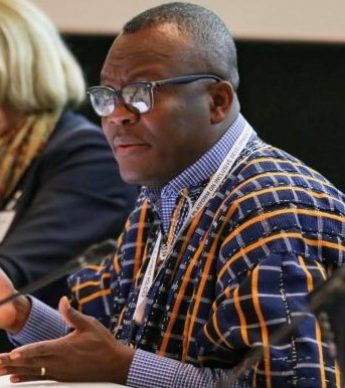
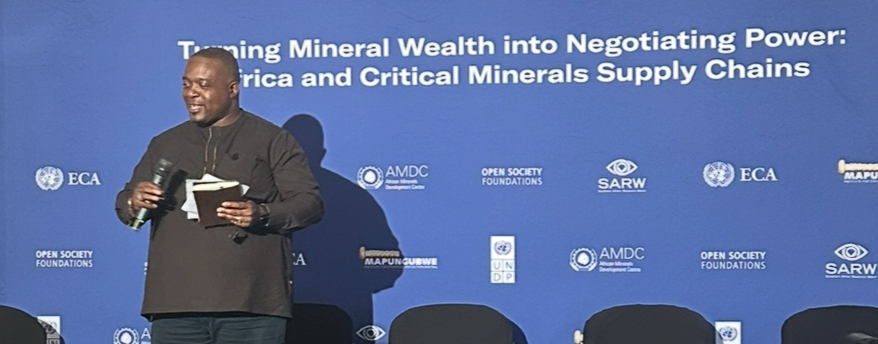
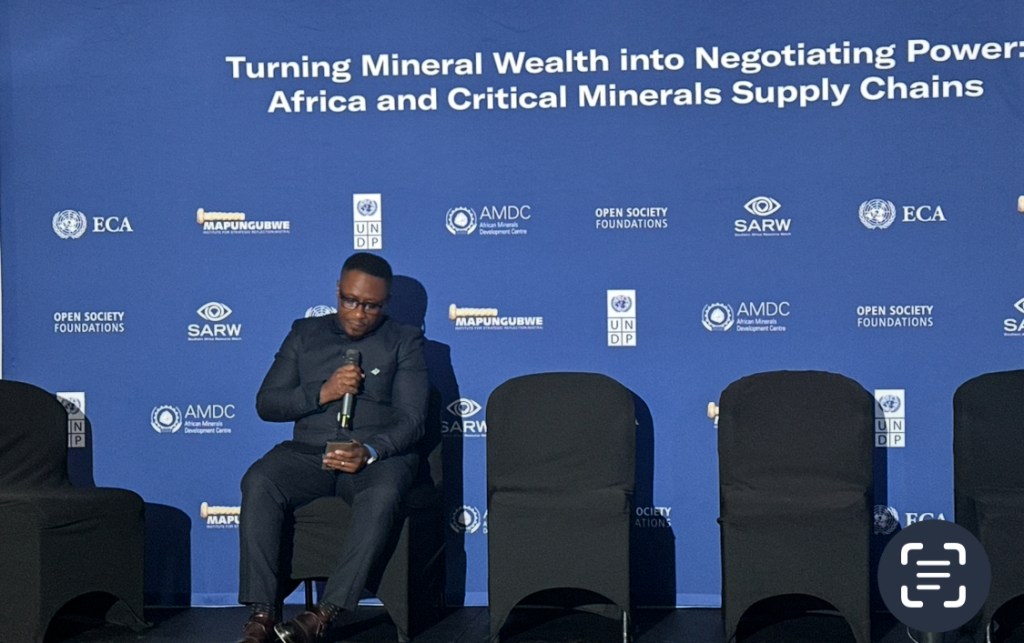
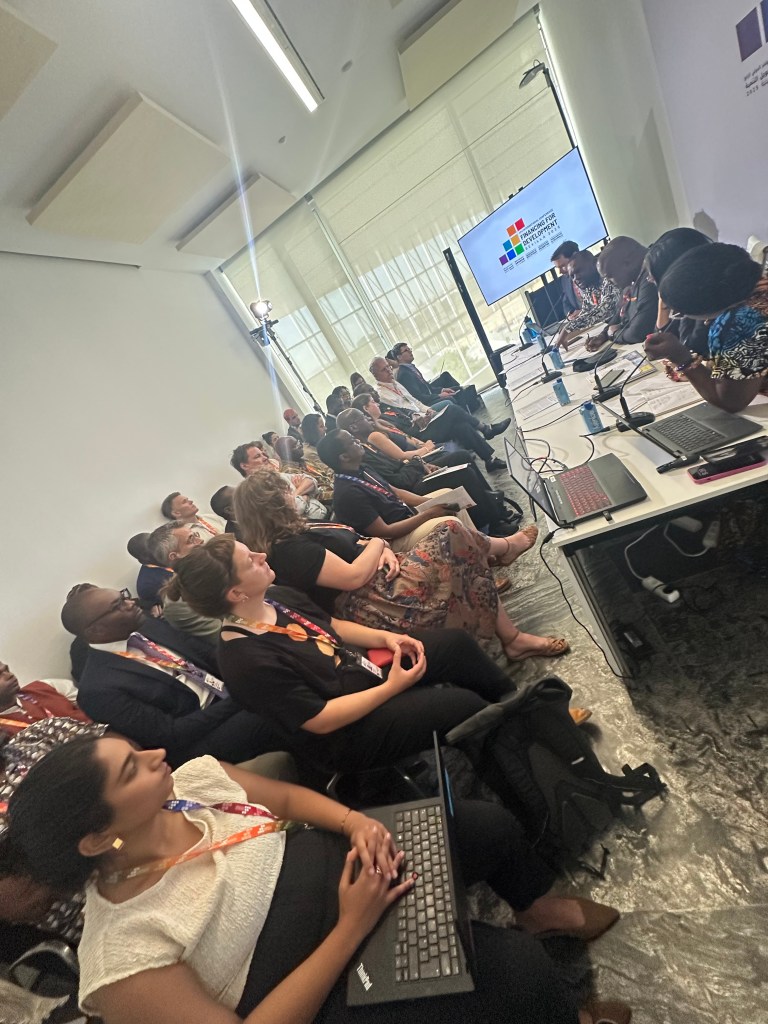
In Johannesburg, on 17 November 2025, as G20 delegates gather on African soil for a historic summit, a parallel gathering sent an even louder moral message: “Debt is Robbing Africa’s Future… The G20 Must Change the Game.”
Development experts, economists, civil society actors and multilateral partners came together around a simple but radical premise: Africa is not merely a continent in debt. It is a net creditor to the world, in climate, in stolen wealth, in undervalued labor and resources, and it is time the global financial system reflected that reality.
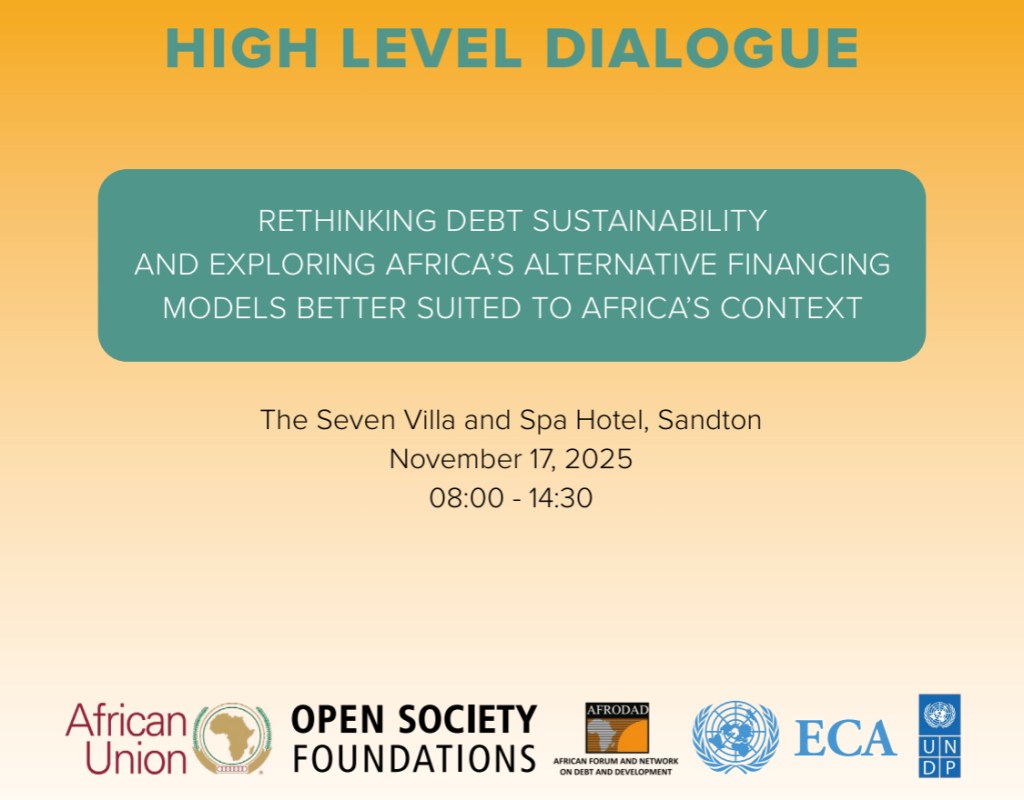
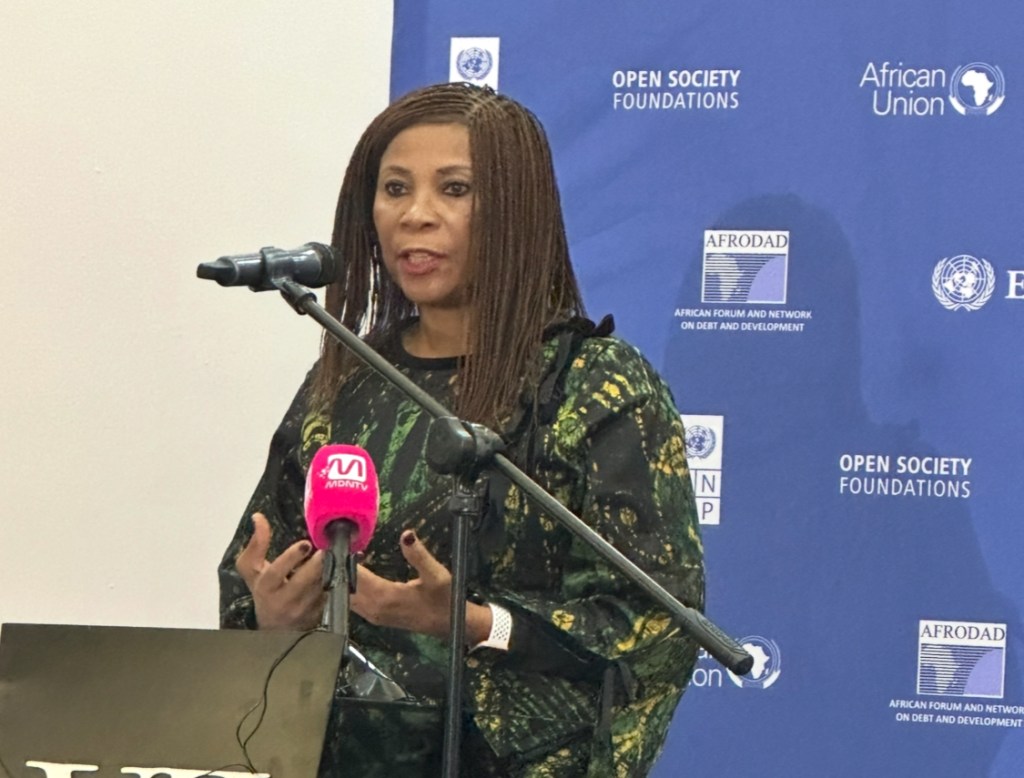
The high-level policy dialogue was co-hosted by the African Union Commission, UNDP, UNECA, AFRODAD and the Open Society Foundations, under the theme: “Rethinking Debt Sustainability and Exploring Alternative Financing Models Better Suited to Africa’s Context.”
The message was clear: the current system is morally indefensible, economically unsustainable and politically dangerous. The discussion did not stop at lament; it set out what must change, on the continent and in global forums, if Africa is to move from perpetual crisis management to structural transformation.
What follows are the core takeaways from that conversation.
Africa Spends More on Debt than on Hospitals and Classrooms
The headline numbers are alarming:
African external debt climbed from just over US$500 billion in 2020 to more than US$1 trillion by 2024. In 2024 alone, African countries spent about US$163 billion on debt service according to the AfDB. More than 25 African countries are already in debt distress or at high risk of it. African countries often borrow at interest rates around four times higher than those paid by advanced economies, despite sometimes similar or better fundamentals.
Behind these numbers lies a harsh reality: in many African countries, more money now goes to creditors than to health and education combined. Over half of the continent’s population lives in countries where teachers, nurses and social services are effectively competing with bondholders and banks – and too often losing.
At the same time, Africa is losing tens of billions every year through illicit financial flows and unfair trade, while carrying the costs of a climate crisis it did not cause. Taken together, the continent is effectively a net creditor to the world, in climate, in resources, and in stolen wealth, yet it is still treated as a perpetual debtor in the global financial system.
Structural Traps: Food, Fuel and the Manufacturing Deficit
Why does African debt keep returning in waves? Because three deep structural deficits keep feeding the debt trap:
- Food deficit: Africa now imports the bulk of its food, despite vast arable land and strong farming traditions. Colonial and post-colonial policies turned many African countries into exporters of cash crops, while basic staples are imported from elsewhere. Every ton of food produced domestically is future debt avoided, yet the continent remains over-exposed to volatile global food prices and exchange rates.
- Energy deficit: Even major oil producers export crude and import refined fuels at higher prices. In the green economy, the pattern risks being repeated: Africa exports critical minerals but struggles to mobilise finance and technology to build its own renewable energy infrastructure. Every kilowatt-hour generated domestically is imported fuel, and future borrowing, saved.
- Manufacturing and value-added deficit: African economies export low-value raw materials and import high-value finished products and sophisticated inputs. Local manufacturing depends heavily on imported machinery, technology and intermediates. This structure locks in trade deficits, weakens currencies, and fuels the need for constant external borrowing to plug balance-of-payments gaps.

The result is a vicious cycle: currency pressures and imported inflation push governments to subsidize food and fuel in the short term, while borrowing more hard currency in the medium term, which in turn deepens the next debt crisis. Debt is not just a number; it is the price Africa pays for a global economic model that keeps it at the bottom of the value chain.
There is no sustainable solution to Africa’s debt problem without structural transformation – in food systems, energy systems and industrial policy. Debt must be linked to a long-term plan to escape the role of raw-material supplier and become a driver of value-added production.
We Have Written It Down. Will Anyone Listen?
Africa is no longer speaking with a fragmented voice. In 2025, African finance ministers endorsed a Common African Position on Debt, anchored in an earlier AU decision in Lomé on debt. That position calls for fairer, faster, more transparent restructuring and a broader definition of sustainability that reflects climate, development and social needs, not only creditor comfort.

Africa arrives at the G20 with clear, unified asks:
1/ Reform of the G20 Common Framework
Faster, time-bound and transparent processes.
Automatic standstills on debt service during negotiations.
Fair burden-sharing among all creditors, including private bondholders.
Inclusion of debt-distressed middle-income African countries, not only low-income ones.
2/ Fairer global liquidity and borrowing costs
Reformed SDR allocations and quota formulas that recognise Africa’s real weight and needs.
Support for an African Credit Rating Agency to counter biased assessments and punitive risk premia.
3/ A new understanding of debt sustainability
Debt assessments that integrate development and climate needs, not just narrow debt ratios.
Recognition of Africa’s status as a net creditor in ecological and historical terms.
A shift from short-term crisis management towards long-term investment in structural transformation.
4/ Domestic responsibility with international fairness
Stronger domestic resource mobilisation, better governance and transparency.
Determined efforts to curb illicit financial flows.
A clear focus on using borrowed resources for productive, inclusive and climate-resilient investments.

Fixing the Architecture: From the IMF to the United Nations
The discussion moved from diagnosis to concrete reforms of the global debt architecture.
Many participants stressed that the current system, dominated by the IMF, the Paris Club and the G20 Common Framework, suffers from deep conflicts of interest. Institutions that lend, advise and judge at the same time cannot credibly act as neutral arbiters in sovereign debt workouts.
Key proposals included:
- A UN-led framework for sovereign debt resolution, built on principles of fairness, inclusiveness and transparency, where all countries have a voice and no single creditor bloc dominates.
- An African High-Level Panel on Debt, building on the legacy of the High-Level Panel on Illicit Financial Flows, to monitor implementation of AU decisions, coordinate African positions and maintain pressure for global reform.
- A re-imagined role for Special Drawing Rights (SDRs), with reformed quota formulas that better reflect the real size of African economies and their populations, and with SDRs channelled through African institutions such as the African Development Bank to support long-term investment rather than short-term firefighting.
- Creation of a Pan-African Commodity Stabilisation Fund. Many African economies are highly dependent on a small number of commodities. A continental stabilisation facility could pool risks across multiple countries and commodities, and provide automatic, rules-based support when prices drop below agreed thresholds. This would help countries avoid the sharp external shocks that drive them into crisis and default. Such a mechanism would complement other AU-driven initiatives, including proposals for an African financial stability mechanism and a debt monitoring framework.

Conclusion: From Robbed Futures to a Different Destiny
If debt is robbing Africa’s future, it is also stealing something less visible but equally vital: possibility. Every dollar wired to a creditor instead of a clinic is a child not vaccinated, a girl sent home from school, a community left in the dark. Every budget cut to social protection is a silent decision about whose life is expendable.
Africa is the youngest continent on earth, with the creativity, talent and energy to power a different global future. Yet its children are growing up under the shadow of debts they did not incur, to pay for a crisis they did not cause, through a system they did not design. That is not just inefficient. It is unjust.
The G20 summit in Johannesburg is more than a diplomatic milestone. It is a moral test. Will the world’s most powerful economies continue to treat Africa as a risk to be contained and a resource to be extracted? Or will they finally recognise it as a partner whose prosperity is essential to shared global stability?
Africa has done its part: it has analysed the problem, articulated common positions, and put concrete solutions on the table. The blueprint for change exists. What is missing is the political will to act on it.
Debt should not be a life sentence. With courage from African leaders, honesty from creditors, and solidarity from citizens across the globe, it can become a bridge, from vulnerability to resilience, from extraction to transformation.
We have written it down. We have said it, clearly and collectively: Debt is robbing Africa’s future. The G20 must change the game. The only open question now is whether those with power will choose to listen, and to act, before another generation is forced to pay the price.
If you’d like to receive my articles automatically as soon as they’re published, simply follow this blog using the “Follow” button at the bottom left of this page or send me an email at: Desire.Assogbavi@Assodesire.com













 Assodesire