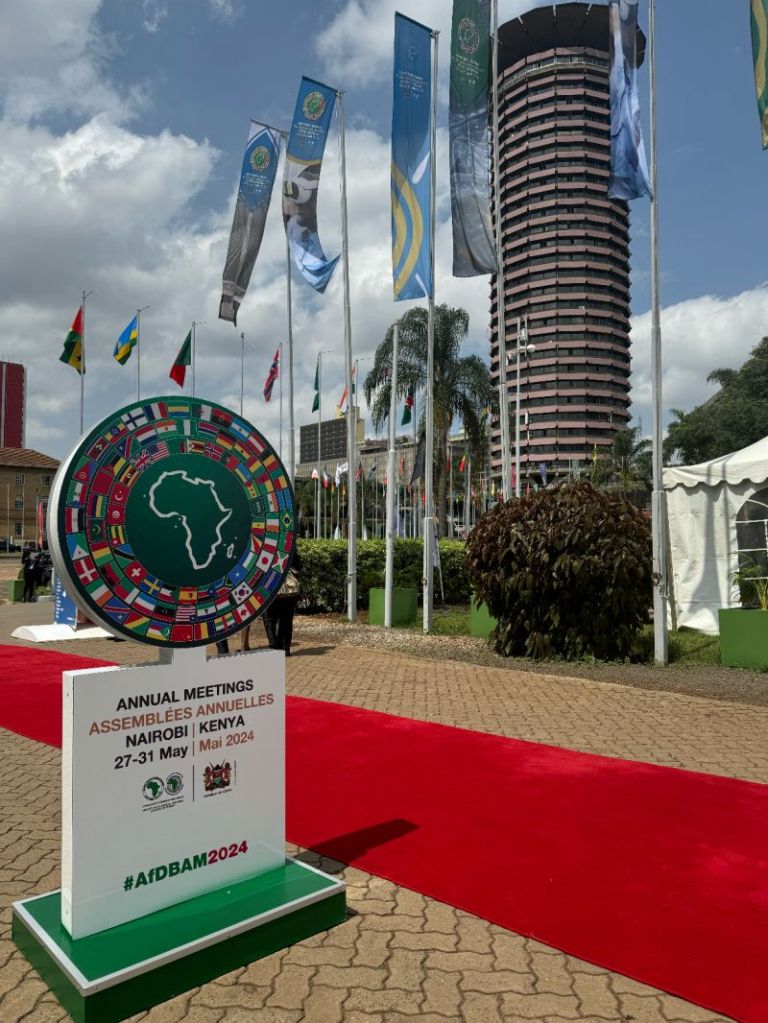
Approximately 5,000 delegates participated in the recently concluded 50th Annual Meetings of the African Development Bank (AfDB), held from May 27 to 31, 2024, in Nairobi, Kenya.
The Annual Meetings brought together the Bank Group’s governors representing 54 African countries and 27 non-African shareholders, as well as heads of state, researchers, experts, representatives of international bodies, the private sector, and civil society actors. They engaged in discussions and shared insights and strategies centered around the event’s theme, “Driving Africa’s Transformation: The Reform of the Global Financial Architecture.” The event garnered coverage from 200 media outlets.
Our Team from the ONE Campaign hosted a side event on the upcoming replenishment of the African Development Fund, the concessional window of the AfDB, which plays a critical role in providing financing and technical assistance to low-income countries in Africa.
Here are my 10 key takeaways from the Bank’s Annual Meetings:
Africa is at a pivotal juncture in its development path, facing a series of interconnected crises that threaten the progress achieved in recent decades. Addressing these challenges necessitates a comprehensive financial approach rooted in global solidarity to effectively meet urgent needs.
With a burgeoning population, abundant natural resources, and a youthful demographic, the continent boasts significant potential for economic growth and prosperity. However, unlocking this potential demands substantial financial investments and strategic planning
1- Domestic Resource Mobilization (DRM) is crucial for Africa’s development. Enhancing efforts to mobilize domestic resources, including addressing Illicit Financial Flows. Every year, more than $89 billion leaves the African continent as Illicit Financial Flows, according to the UNCTAD. These are movements of money and assets across borders that are illegal in source, transfer, or use. It includes illicit capital that is getting out of the continent, tax and commercial practices like wrong invoicing of trade shipments, and criminal activities such as illegal markets, corruption, or theft. In addition, African countries should prioritize modernizing their tax systems. Many African countries offer overly generous tax incentives that need reevaluation.
2- Reform: The international financial architecture needs urgent reforms to becomemore responsive, fairer, and resourceful. By the United Nations’ definition, the international financial architecture refers to the governance arrangements that safeguard the stability and function of the global monetary and financial systems. It has evolved over time, often in an ad hoc fashion, driven by the policy preferences of large economies (…).
The ecosystem of the International financial architecture that needs to be thoroughly reviewed includes but is not limited to:
The Banks: IMF, WB, Regional Development Banks, etc.
The Markets: capital markets, stock markets, etc.
Credit Rating Agencies
International Tax Regime
3- Increasing concessional financing is essential to addressing African nations’ ambitious goals and priorities and tackling global challenges. Multilateral Development Banks (MDBs) must intensify their efforts. The upcoming replenishment of the International Development Association (IDA) and the African Development Fund presents opportunities to bolster financial support.
4- Private Sector: Effective private sector engagement is vital to mobilize the trillions required for the Sustainable Development Goals (SDGs) and Africa’s Agenda 2063, the Africa we want. MDBs alone cannot bridge the financing gap.
5 – Value Addition: Emphasizing value addition over raw material exports is key to economic prosperity in Africa because exporting raw materials often leads to impoverishment. Exporting raw materials is a highway to poverty. Value Addition is a gateway to prosperity.
6- Credit Rating: The global financial rating system must be fairer. A fairer rating could save Africa $75 billion a year in debt payments. Credit ratings impact the development trajectories of African countries by defining the cost of development financing. They also influence how much development partners can support critical investments on the continent.
AfDB is committed to supporting the creation of an African credit rating agency, not to replace or compete with existing agencies but to provide an alternative approach that takes into account contexts and realities on the continent.
7- Natural Capital: Africa’s natural capital is undervalued in the current calculation of GDPs. The AfDB committed to support the reevaluation of African countries’ GDP by incorporating natural capital considerations
8- AfDB Capital: The AfDB Board of Governors approved $117 billion of callable capital, bringing the total Bank’s capital from $201 Billion to $318 Billion.
Kenya is the first mover in replenishing the Africa Development Fund in 2025, with a pledge of $20 million.
9- Obstacles: Conflicts and political instability significantly hinder Africa’s progress and investment attractiveness. The lack of security increases the level of risk perceived by investors. Addressing these challenges is crucial as the continent’s youthful population continues to outpace job opportunities, leading to migration in search of better prospects. Corruption is surely the other obstacle that the continent needs to fight by all means.
10- New strategy: The African Development Bank Group introduced its Ten-Year Strategy 2024–2033, which focuses on investing in Africa’s youth and promoting gender equality, climate resilience, stability in fragile states, and good governance.
To achieve these objectives, the bank will deploy the following operational priorities.
Light up and power Africa: Promote universal access to modern and affordable energy.
Feed Africa: Ensure food security through agricultural transformation.
Industrialize Africa: Catalyze manufacturing as a critical driver of job creation.
Integrate Africa: Foster regional integration and value chains for a more cohesive economy.
Improve the quality of life: Enhance living standards, particularly for women and youth.
Published on 19 February 2024. This blog will be updated as more information comes in.
Official decisions of the just-ended African Union Summit will not be available for several weeks as per the practice, but based on intel, comments by delegations, and corridors discussions, here are what seem to be the 7 key outcomes of the Summit held in Addis Ababa, Ethiopia, from the 14th – 18th February 2024.
The theme of the Summit and the year 2024 is: “Educate an African Fit for the 21st Century: Building Resilient Education Systems for Increased Access to Inclusive, lifelong, quality, and Relevant Learning in Africa.”
The Summit adopted a Road Map on the theme devoted to Education and called upon the African Union Commission, AUDA-NEPAD, Regional Economic Communities, United Nations organizations, Development Partners, Civil Society Organizations, the Youth, and all other stakeholders to continue strengthening their support to Member States by facilitating the implementation of the roadmap.
The following issues have actually dominated the discussions at the Summit:
1/Multilateralism &International Governance
Africa at the UN Security Council
The African Union reiteratedthat full representation of Africa in the reformed United Nations Security Council means:
i) Not less than two (02) Permanent seats with all the prerogatives and privileges of Permanent membership, including the right of veto.
ii) Five (05) Non-permanent seats.
iii) The African Union reserves the right to select its representatives for election to the UN Security Council to act in its name and on its behalf.
Proposed Modalities for the Participation of the African Union in the G20 and Preliminary Priorities
At the G20, AU aims to leverage Africa’s position in the world economy as well as contribute to meeting the emerging global challenges
Participation in the Leaders’ Summit:
The Chairperson of the African Union, assisted by the Chairperson of the African Union Commission, will represent the African Union (previously decided)
The Chairperson of the Commission to propose positions to the Assembly to be advanced as African Common positions in the G20 Leaders’ Summits.
The Chairperson of the African Union, assisted by the Chairperson of the Commission to debrief the Assembly on the outcomes of the G20 Leaders’ Summits at the February sessions of the Assembly each year.
Participation in Ministerial meetings
The Chairperson of the African Union Executive Council, assisted by the Chairperson of the Commission to represent the African Union in the G20 Meetings of the Ministers of Foreign Affairs.
The Chairpersons of the AU Specialized Technical Committees, assisted by the respective Commissioners, to lead African Delegations to G20 sectoral Ministerial Meetings
The Chairperson of the Specialized Technical Committees (STC) on Finance, Monetary Affairs, Economic Planning, and Integration, assisted by the Commissioner for Economic Development, Trade, Tourism, Industry, and Minerals to attend the meetings of the G20 Finance Ministers and Central Bank Governors, assisted by the respective Commissioner(s);
The Ministerial Representatives to the G20 to propose draft African common positions through the Specialized Technical Committees for consideration by the Executive Council before it is advanced in the G20 Ministerial meetings and Leaders’ Summits
Sherpa and Sous Sherpa
The Chairperson of the African Union to appoint a Sherpa. As the AU G20 contact point, the Sherpa shall coordinate with the Chairperson of the African Union Commission and the AU Member States on the positions to be advanced in the various G20 Ministerial, Task Forces and Working Group meetings to ensure that the African Union prepares common positions ahead of each G20 meeting and speaks with one voice in the G20 meetings;
The Chairperson of the Commission to appoint a Sous-Sherpa to: (a)Act as liaison between the Commission and the Chairperson of the Union; (b)Work with and Deputize the Sherpa; (c)Report to the Chairperson of the Union on G20 matters.
South Africa, the only current African permanent member of the G20, will share lessons of experience in the G20 with the African Union.
Africa’s preliminary priorities at the G20 will be as follows: the reform of the international financial architecture, debt restructuring, food security and agriculture, energy transition, trade and investments, improving Africa’s credit rating to boost investment, health, and vaccine manufacturing.
Financing AU participation in the G20
African Development Bank (AfDB) and the African Export-Import Bank (Afreximbank) pledged to provide initial financing for the participation of the African Union in the G20.
Delegation of Power: The Executive Council (Foreign Ministers) will deal with G20 issues on behalf of the Assembly during its July Ordinary Sessions of the Council and, when necessary, convene extraordinary sessions.
2/ Election of the new leadership of the AU Commission (February 2025)
The Summit discussed the principles of inter-and intra-regional rotation following the English Alphabetical order under the decision Ext/Assembly/AU/Dec.1(XI) adopted during the 11th Extraordinary Session in November 2018 on the institutional reform of the Union as well as Article 14 of the revised Statute of the Commission.
If this is implemented, candidacies should besubmitted based on a predictable inter-regional rotation with the allocation of specific portfolio(s) to regions as follows for the next election:
For example, considering the upcoming elections, if this principle is applied, we would have the following conditions for each position:
1. Chairperson of the AUC – Only the Eastern region may submit candidates.
2. Deputy Chairperson – Only the Northern region may submit candidates.
3. Agriculture, Rural Development, Blue Economy, and Sustainable Environment – Only the Southern region may submit candidates.
4. Economic Development, Trade, Industry, and Mining – Only the southern region may submit candidates.
5. Education, Science, Technology, and Innovation – Only the Western region may submit candidates.
6. Infrastructure and Energy – Only the Western region may submit candidates.
7. Political Affairs, Peace & Security – Only the Central region may submit candidates.
8. Health, Humanitarian Affairs, and Social Development – Only the Central region may submit candidates.
At this time, it is unclear whether the AU will go with this principle for the upcoming elections.
3/ Institutional Reform of the African Union: President Kagame steps down, and President Ruto takes over.
Frustrated by what most analysts call the “failure of the AU institutional reform” 6 years after the beginning of the process, President Paul Kagame decided to step down from championing the project. The Summit then appointed President William Ruto of Kenya as the new AU Champion on Institutional Reform. The remaining reform priorities are to be finalized by February 2025.
4/Peace and Security
The following situations have been discussed with no major decisions:
The tension between Ethiopia and Somalia, Sudan, South Sudan, Burkina Faso, Niger Mali, Gabon, Sierra Leonne, DRC-Rwanda, Central Africa Republic, Lac Chad Basin, and some thematic issues.
5/ The Theme of the year 2025 has been proposed to be: ‘‘Justice for Africans and People of African Descent Through Reparations’’.
The reparations for transatlantic enslavement, colonialism and apartheid, as a Flagship Issue and Project of the Union. The Commission is to submit a strategic framework document for the implementation of the Accra Proclamation on the same.
6/ Appointments
Chair of the African Union for 2024
Chairperson of the African Union for 2024: Mauritanian President Mohamed Ould Cheikh El Ghazouani. Angola is likely to take over in 2025.
Champion of the institutional reform of the AU: President William Ruto of Kenya
Leader in Advancing the Cause of Justice and Payment of Reparations to Africans, enhancing advocacy for a common position on reparations in Africa, and forging a common front for Africa and the Diaspora at the global level: President Nana Akufo-Addo of Ghana
Mr. Wamkele Mene of South Africa was reappointed as Secretary General of the AfCFTA Secretariat for another four years.
10 new members of the Peace and Security Council for a term of 2 years:
1. Democratic Republic of Congo, Central Africa region
2. Equatorial Guinea, Central Africa region
3. Tanzania, Eastern Africa region
4. Uganda, Eastern Africa region
5. Egypt, Northern Africa region
6. Angola, Southern Africa region
7. Botswana, Southern Africa region
8. Côte d’Ivoire, Western Africa region
9. Sierra Leone, Western Africa, region
10. The Gambia, Western Africa region
7/ Calendar
2025 Summit of the AU
Executive Council, 12th and 13th February 2025;
38th Ordinary Session of the Assembly, 15th and 16th February 2025
Special Summit to consider the post-Malabo CAADP implementation plan: November 2024
===========
Watch this space for more updates on Pan-African & African Union matters. Your comments and suggestions are welcome on this site or directly to my email address: desire.assogbavi@assodesire.com or assogbavi@me.com .
If you want to systematically receive my articles as soon as they are published, please follow this blog at the bottom left of this page.
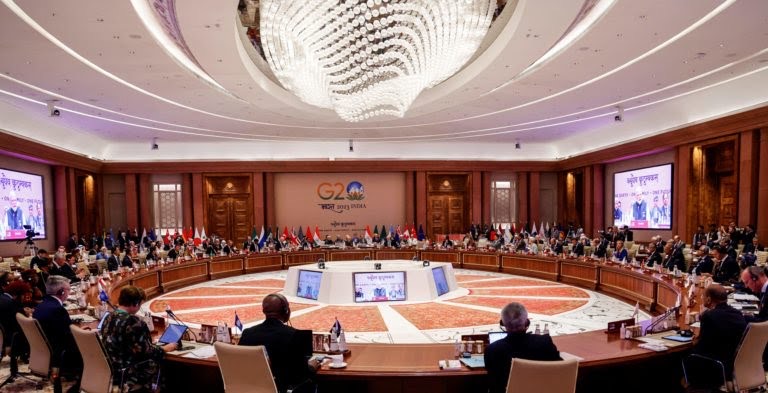
On 9 September 2023, I was having lunch with Professor Tim Murithi at Port Louis International Airport in Mauritius. We were returning from the inauguration meeting of the Brain Trust of African Union’s ECOSOCC, which both of us, along with other pan-African experts, have recently joined….then the news came out from the G20 Meeting happening in India: African Union, the premier continental organization consisting of all the 55 nations that make up Africa, has been admitted as a full member of the G20.
It is a great news, we both said… of course, we were expecting it to happen… My organization, the ONE Campaign, and other partners have been pushing for that over the last few years. Africa’s full membership will surely increase the continent’s visibility and influence on the global stage and provide a platform to advance the common interest of its people and the world.
African Union is now the second intergovernmental body, besides the European Union, to be a full permanent member of the G20 and the first body to join the group since it was formed in 1999. I am not sure if the body will be renamed G21, but the question I am trying to propose some answers to in this article is how the African Union would handle its participation in the Group of the major global economies and play a vital role in advancing the continent’s journey to inclusive and sustainable development to make it the Africa we want.
Later, in February 2024, the African Union Assembly finalized the modalities for the AU’s participation within the Group. As South Africa gears up to take the reins of the G20, African countries must seize this opportunity to drive forward the continental development agenda and advocate for a more just and equitable world. South Africa should leverage its position within the G20 to advocate for fairer global governance and combat economic inequality.
About the G20
The G20 defines itself as the premier forum for international economic cooperation. It plays an important role in shaping and strengthening global architecture and governance on all major international economic issues. G20 members account for about 85% of the global Gross Domestic Product (GDP), 75% of the global trade, and two-thirds of the world’s population. It has 19 countries and one international organization as follows: Argentina, Australia, Brazil, Canada, China, France, India, Indonesia, Italy, Japan, Germany, Korea (Republic), Mexico, Russia, Saudi Arabia, South Africa, Turkey, UK, USA and the European Union.
India held the G20 presidency from 1 December 2022 to 30 November 2023. Brazil currently holds the Presidency for 2024, and South Africa will have the Presidency for 2025.
Interestingly, three of the 20 largest economies in the world, including Spain, the Netherlands, and Switzerland, are not permanent members of the G20.
So far, the only African country in the G20 is South Africa.
The main objectives of the G20 are to shape and strengthen the global architecture and governance on major international economic issues, including trade, climate change, sustainable development, health, agriculture, energy, environment, tourism, and combating corruption, among others.
According to the Indian presidency, the specific objectives of the G20 are to:
• Promote policy coordination among its members and beyond to advance global economic stability and sustainable growth.
• Promote regulations that reduce risks and prevent future financial crises; and,
• Create a new international financial architecture.
It has been observed that every Presidency of the G20 identifies its priorities, beyond the specific objectives of the body.
To learn more about how the G20 works, click here.
(Photo by Ludovic MARIN / POOL / AFP) (Photo by LUDOVIC MARIN/POOL/AFP via Getty Images)
Africa at the Table, as part of the Solution to Global Issues
First, let us agree that the African Union is not joining the G20 to ask for more aid. The continent aims to contribute to resolving global issues on the table and to do business within a meaningful and mutually beneficial partnership. For this, Africa is bringing vital assets to the ingredients on the table.
Demography: Africa represents 1.4 billion people which is about 17% of the global population, most of which are young, intelligent, dynamic, and willing to take part in the development process. This population will rise to 25% by 2050. The continent has a vibrant workforce and is experiencing a surge in innovation and entrepreneurship, with startups and initiatives emerging in sectors ranging from technology to agriculture. By supporting and collaborating with African innovators, the global community can benefit from their transformative solutions.
Africa needs, however, to harness its demographic dividend by strategically investing in this youthful population in terms of health, education, skill development, and job creation.
Wealth and Natural Resources: Africa is one of the world’s richest geographical regions in terms of endowment with natural resources, with 60% of the world’s renewable energy assets and more than 30% of the minerals key to renewable and low-carbon technologies. Africa has the largest unused arable land, a heavy green energy potential, and other strategic critical materials. From its vast mineral deposits to fertile agricultural lands, the continent has much to offer. With proper management and sustainable practices, Africa’s resources can help address global challenges such as food security, water scarcity, and renewable energy.
Market Potential and Trade Area: The establishment of the Africa Continental Free Trade Area (AfCFTA), the world’s largest market of 55 nations and 1.4 billion people with the prospect of a continental customs and economic union, is obviously a great asset for the world economy and prosperity.
How could the African Union be prepared to contribute effectively to the G20?
Our continental body should address important issues as it prepares to join the G20. These include its representation in the group’s statutory meetings and various working groups, setting continental common policy positions or consensus on the G20’s agenda, and matters to be discussed.
African Union Representation in the G20
In February 2023, during its Heads of State annual Summit, the African Union decided that the current Chairperson, assisted by the Chairperson of the AU Commission, would represent the African Union in the G20 (Assembly/AU/Dec.845 – XXXVI).
However, being a full permanent member of the G20 goes beyond participating in the group’s statutory meetings. There is a need to explore options for how the African Union can be prepared at technical and political levels and constantly follow and participate in the various workstreams of the G20 for meaningful engagements.
How would the annual President of the Union coordinate with the team of the Chairperson of the AU Commission and the AU Development Agency (AUDA-NEPAD) in preparing and participating in the various thematic working groups of the G20 as a permanent member?
The African Union is not a supra-national body.
Unlike certain supranational aspects of the European Union, the African Union is still a purely intergovernmental body with no supranational authority. Member states maintain their sovereignty and decision-making power, and the AU acts as a forum for coordination, cooperation, and consultation among its member states.
Legally speaking, the AU does not have the ability to make binding decisions or enact laws that supersede national legislation without the consent of its member states. That is why the African Union’s membership and participation in the G20 may not be as simple as it looks compared to the European Union. More reflection is then needed on how best the continental body could contribute to this global platform.
Modalities for the Participation of the African Union in the G20 and Preliminary Priorities as decided by the Assembly of the AU in February 2024
At the G20, AU aims to leverage Africa’s position in the world economy as well as contribute to meeting the emerging global challenges
Participation in the Leaders’ Summit:
The Chairperson of the African Union, assisted by the Chairperson of the African Union Commission, will represent the African Union (previously decided)
The Chairperson of the Commission to propose positions to the Assembly to be advanced as African Common positions in the G20 Leaders’ Summits.
The Chairperson of the African Union, assisted by the Chairperson of the Commission to debrief the Assembly on the outcomes of the G20 Leaders’ Summits at the February sessions of the Assembly each year.
Participation in Ministerial meetings
The Chairperson of the African Union Executive Council, assisted by the Chairperson of the Commission to represent the African Union in the G20 Meetings of the Ministers of Foreign Affairs.
The Chairpersons of the AU Specialized Technical Committees, assisted by the respective Commissioners, to lead African Delegations to G20 sectoral Ministerial Meetings
The Chairperson of the Specialized Technical Committees (STC) on Finance, Monetary Affairs, Economic Planning, and Integration, assisted by the Commissioner for Economic Development, Trade, Tourism, Industry, and Minerals to attend the meetings of the G20 Finance Ministers and Central Bank Governors, assisted by the respective Commissioner(s);
The Ministerial Representatives to the G20 to propose draft African common positions through the Specialized Technical Committees for consideration by the Executive Council before it is advanced in the G20 Ministerial meetings and Leaders’ Summits
Sherpa and Sous Sherpa
The Chairperson of the African Union to appoint a Sherpa. As the AU G20 contact point, the Sherpa shall coordinate with the Chairperson of the African Union Commission and the AU Member States on the positions to be advanced in the various G20 Ministerial, Task Forces and Working Group meetings to ensure that the African Union prepares common positions ahead of each G20 meeting and speaks with one voice in the G20 meetings;
The Chairperson of the Commission to appoint a Sous-Sherpa to: (a)Act as liaison between the Commission and the Chairperson of the Union; (b)Work with and Deputize the Sherpa; (c)Report to the Chairperson of the Union on G20 matters.
South Africa, the only current African permanent member of the G20 and the upcoming Chair for 2025 will share lessons of experience in the G20 with the African Union.
Africa’s preliminary priorities at the G20 will be the reform of the international financial architecture, debt restructuring, food security and agriculture, energy transition, trade and investments, and improving Africa’s credit rating to boost investment, health, and vaccine manufacturing.
Financing AU participation in the G20
African Development Bank (AfDB) and the African Export-Import Bank (Afreximbank) pledged to provide initial financing for the participation of the African Union in the G20.
The Role of South Africa and Special Invitees
As a permanent member of the G20 since 1999, South Africa could support the AU in better understanding the G20 process and dynamics in the early years of the Union’s participation as a permanent member. Other AU members and institutions, such as Egypt, Mauritius, Nigeria, and the AUDA-NEPAD, have also been regularly invited. The continental body should take advantage of their experience and knowledge as well.
A Paramount Priority for the Continent: The Reform of the International Financial Architecture
The priority matter that the African Union can consider taking to the G20 table as soon as possible is the much-needed reform of current international financial institutions such as the World Bank and the International Monetary Fund.
The international financial institutions created in 1945 after the Second World War are no longer fit to deal with the current global multiple and interlinked crises. They are increasingly at odds with the reality and needs of the world today.
In addition, the existing architecture has been unable to support the mobilization of stable and long-term resources needed by the continent to achieve its development agendas, forcing most countries to turn to private capital markets with unfair interest rates. At the same time, the continent is robbed daily by Illicit Financial Flows amounting to nearly 90 billion USD per year.
Addressing this issue should be a top priority for the African Union as it begins the formal engagement with the G20, where international solidarity should prevail.
As South Africa gears up to take the reins of the G20, African countries must seize this opportunity to drive forward the continental development agenda and advocate for a more just and equitable world. South Africa should leverage its position within the G20 to advocate for fairer global governance and combat economic inequality.




 Assodesire