My Reflections Ahead of the First Africa-CELAC Forum
As I arrive in Bogota, Colombia to participate in the first High-Level Forum between the Community of Latin American and Caribbean States (CELAC) and the African Union, the atmosphere is charged with both urgency and possibilities. This gathering to be held from 18th -21st March 2026 is not simply another diplomatic event on an already crowded global calendar. It is a strategic moment, one that could help redefine how Global South organizes itself to navigate an increasingly fragmented international order.
For decades, Africa and Latin America have engaged the world largely through parallel struggles: debt crises, commodity dependence, structural inequalities, democratic pressures, and climate vulnerability. Today, these shared realities are converging into a common political consciousness, and into a growing recognition that cooperation across the Global South is no longer optional. It is becoming a geopolitical necessity.
A Historic Convergence of Regions
Together, Africa (54 states) and Latin America and the Caribbean (33 states) represent nearly half of United Nations membership, close to 2 billion people, and a combined economic output approaching 10 trillion dollars. If structured and sustained, this inter-regional alignment could become one of the most consequential political and economic coalitions of the 21st century.
The Bogota Forum reflects an emerging understanding across both regions that the rules governing global finance, trade, climate action, and technological transformation are being renegotiated, often without sufficient representation from those most affected. This moment offers an opportunity to shift from fragmented national advocacy toward coordinated regional bargaining power.
As highlighted in the Forum’s preparatory discussions, ambition is not symbolic diplomacy but institutionalized cooperation mechanisms capable of shaping development outcomes and influencing global governance reforms.
Stopping Commodity Dependence to Embrace Economic Transformation
One of the most compelling imperatives for Africa-Latin America cooperation lies in economic transformation. Both regions remain heavily dependent on the export of raw materials, from critical minerals and agricultural commodities to fossil fuels. This structural pattern has constrained industrialization, limited job creation, and exposed economies to volatile global price cycles.
A coordinated approach to value-chain development, including industrial policy alignment, regional investment platforms, and knowledge exchange, could help shift this trajectory.
Latin America’s experience in sectors such as renewable energy and bioeconomy innovation offers lessons for African industrial strategies. At the same time, Africa’s demographic dynamism and expanding continental market under the African Continental Free Trade Area present new opportunities for South-South production partnerships.
By acting together, both regions can move from being price-takers in global markets to becoming rule-shapers in emerging sectors such as green minerals, climate technologies, and digital public infrastructure.
Debt, Climate Finance, and the Politics of Global Rules
Another central pillar of the Bogota dialogue is the urgent need to reform global development finance. Many African and Latin American countries now spend more on debt servicing than on health or education. Climate shocks are compounding fiscal vulnerabilities, even as climate finance flows remain insufficient and unevenly distributed.
In this context, Africa-CELAC cooperation can strengthen collective advocacy for reforms in multilateral development banks, fairer sovereign debt restructuring mechanisms, and expanded access to concessional climate finance. Joint diplomatic positioning could also help accelerate innovations such as regional credit rating agencies, local currency financing instruments, and blended finance platforms designed around development priorities rather than external conditionalities.
Perhaps one of the most transformative dimensions of Africa-Latin America engagement lies in the growing movement for reparative justice. Both regions carry the enduring legacies of colonial extraction, slavery, racial hierarchies, and unequal integration into the global economy. These historical injustices continue to shape present-day development trajectories.
Coordinated diplomatic efforts, including support for initiatives emerging from African Union member states to advance reparations discussions at the United Nations, could elevate the issue from moral aspiration to policy agenda.
Beyond financial compensation, reparative justice must be understood as encompassing technology transfer, fair trade systems, institutional reform, and the restoration of cultural and intellectual agency.
In Bogota, cultural diplomacy and people-centered engagement are playing an important role in grounding these discussions in lived experience rather than abstract geopolitical rhetoric.
People as the Bridge Between Regions
While governments drive formal cooperation frameworks, citizens and their formations and networks remain essential for sustaining momentum beyond summit declarations. Youth movements, research institutions, diaspora organizations, and community leaders are uniquely positioned to translate political commitments into social innovation and policy accountability.
Such engagements will be critical to building durable coalitions capable of navigating future crises, whether related to democratic governance, migration, food security, or digital transformation.
A Forward-Looking Agenda for Global South Cooperation
Looking ahead, the real test of the Bogota Forum will not be the eloquence of its final declaration but the strength of its follow-through. Institutionalizing Africa-CELAC cooperation will require:
Establishing permanent inter-regional coordination mechanisms and regular ministerial dialogues.
Developing joint investment platforms focused on industrialization, climate resilience, and technology partnerships.
Aligning diplomatic strategies in multilateral negotiations on debt, trade, and global governance reform.
Strengthening cultural and academic exchanges to deepen mutual understanding and shared identity across the Global South.
If these steps are pursued with ambition and political will, the partnership between Africa and Latin America could become a cornerstone of a more balanced and inclusive global order.
Bogota as a Starting Point, Not an Endpoint
Standing in Bogota at this crucial moment, one senses that history is quietly shifting. The world is entering an era marked by geopolitical competition, institutional uncertainty, and contested norms. In such a context, solidarity among regions that share common developmental challenges, and common aspirations, becomes both a strategic necessity and a moral imperative.
Africa and Latin America have the potential not only to cooperate but to co-create new pathways for prosperity, justice, peace and democratic resilience. The choices made here this week could help determine whether the Global South remains a collection of fragmented voices or emerges as a coherent force capable of shaping the future of global cooperation.
The journey has begun. The responsibility now is to ensure that Bogota becomes remembered not as a symbolic encounter, but as the moment when two regions decided to act together, with purpose, confidence, and a shared vision for a fairer world.
If you’d like to receive my articles automatically as soon as they’re published, simply follow this blog using the “Follow” button at the bottom left of this page or send me an email at: Desire.Assogbavi@Assodesire.com
When African Heads of State and Government convene in Addis Ababa on 14-15 February 2026 for the 39th Ordinary Session of the Assembly of the African Union, they will do so at a moment of exceptional political gravity for the continent and the international system.
The Summit comes against a backdrop of intensifying global fragmentation, shrinking multilateralism, escalating conflicts, deepening debt distress, and growing climate stress. Despite the official Theme of the Year on water, peace and security is likely to sit at the center of gravity of this gathering, as escalating conflicts, regional instability, and fragile political transitions continue to dominate Africa’s political reality.
Across Africa, democratic and Human Rights regression, contested elections, repression of dissent, and prolonged states of emergency are testing the credibility of governance institutions.
At the same time, Africa’s strategic importance, driven by critical minerals, demographic weight, and geopolitical competition has never been higher, increasing both external pressure and internal fragmentation.
In this context, the 2026 Summit is not just a routine gathering. It is a test of Africa’s collective political agency, its capacity to act with unity, and the relevance of the African Union as a forum for continental leadership.
Water as Power: Climate, Development, and Political Stability
The AU Theme of the Year 2026, “Water as a Vital Resource for Life, Development and Sustainability”, reflects a deliberate political choice. Water is no longer treated as a technical or sectoral issue; it is increasingly understood as a strategic economic, social, and security asset.
Across Africa, climate change is manifesting through prolonged droughts, catastrophic floods, declining agricultural productivity, urban water stress, food price volatility, and heightened public health risks. Water scarcity and mismanagement are already contributing to local conflicts, forced displacement, and cross-border tensions, while water abundance, when poorly governed, can also fuel inequality and elite capture.
The AU Commission has framed the 2026 theme as delivery-oriented, anchored in Agenda 2063, with a focus on water security, climate adaptation, WASH and sanitation as questions of dignity, public health, and state legitimacy.
Reparations: From Moral Claim to Institutionalized Political Project
Crucially, Heads of State will consider a landmark legal and political study examining the implications of defining colonization as a crime against humanity and characterizing certain acts of slavery, deportation, and colonial violence as genocide against African peoples.
This marks a historic shift from symbolic recognition to legal framing, norm-setting, and institutional responsibility under international law.
The AU has already taken some steps to operationalize this agenda. Dedicated expert and legal reference mechanisms have been established and are now functional, coordinated by the AU Commission through system-wide structures. Partnerships with CARICOM, the United Nations, and civil society have deepened, while reparations language has, for the first time, entered formal intercontinental declarations.
By extending the reparations agenda into a 2026-2035 Decade, Africa is signaling that reparatory justice is not an episodic diplomacy, but a long-term political project linking debt justice and illicit financial flows, climate loss and damage, cultural restitution and narrative justice, reform of global governance and financial systems.
The credibility test now lies in follow-through: whether the AU can translate moral authority into coordinated diplomacy, concrete mandates, and measurable outcomes.
Africa, the G20, and the Politics of Conditional Multilateralism
Africa’s growing role in global governance will also be under close scrutiny. The Assembly will receive a formal briefing on the outcomes of South Africa’s 2025 G20 Presidency, a milestone that symbolized Africa’s leadership into the world’s most powerful economic forum, the G20.
Yet this progress now faces controversy around President Trump’s decision not to invite South Africa to the 2026 G20 Leaders’ Summit., raising concerns about selective multilateralism and political conditionality.
This episode is bigger than South Africa. It is a test of African solidarity and a warning signal: if African participation in global governance is contingent on political alignment with powerful states, then Africa’s seat at the table remains precarious.
How the AU responds, or remains silent, will shape its collective credibility, not only within the G20 but across broader multilateral reform debates.
Peace and security: the Summit’s Political Gravity Center
Peace and security will remain the Summit’s political gravity center. Ongoing conflicts in Sudan, eastern Democratic Republic of Congo, the Sahel, and Libya continue to inflict devastating civilian harm while exposing the limits of fragmented mediation, militarized responses, and externalized security solutions.
The Assembly will consider the Peace and Security Council’s annual report, and a Heads-of-State-level PSC engagement during Summit week is likely, an acknowledgment of the severity of the moment.
Here, the AU confronts a familiar but urgent dilemma: the gap between strong normative frameworks and weak, inconsistent enforcement. The real test will be whether the AU can advance and African-led political solutions rather than outsourced mediation; civilian protection and accountability over narrow stability fixes; and an inclusive peace process that center women, youth, and affected communities.
The assumption of the AU Chairmanship by the Burundian’s President for 2026 will shape the tone of this engagement, with expectations that the Chair will not only act as a bridge-builder across regional and political divides, but also defend and project Africa’s collective agency on the global stage, asserting continental positions, resisting external pressure, and ensuring that Africa engages international partners from a position of unity and strategic confidence.
Burundian President Évariste Ndayishimiye is actively preparing for his term. His mandate will likely be anchored in a strategy of diplomatic normalization, political assertion, and engagement on the continent’s major security files, with particular attention to the crises in the Great Lakes region and the Sahel. Drawing on his recent experience as Chair of the East African Community and COMESA, as well as his current role as the AU’s Special Envoy for the Sahel, President Ndayishimiye is reported to have begun structuring a dedicated team in Addis Ababa, supported by an interministerial coordination mechanism in Bujumbura.
Conclusion
The 2026 Summitis an important moment for Africa’s continental project. It will test whether the African Union can effectively respond to intersecting crises human rights, democratic backsliding, armed conflict etc with coherence, unity, and political courage.
I also hope that African leaders will seize this Summit as a rare moment for frank, strategic reflection on the geopolitical hurricane reshaping the world, and on what it demands of Africa collectively. The erosion of multilateralism, the selective application of international law, intensifying great-power competition, and a renewed scramble for African resources are not distant forces; they are already constraining Africa’s policy space and exposing divisions across the continent. This gathering offers an opportunity not only to diagnose these shifts, but to agree on shared positions, red lines, and collective strategies that strengthen African solidarity, protect sovereignty, and enhance Africa’s leverage. Without such deliberate coordination, individual states will continue to absorb global shocks alone while the continent as a whole, risk being shaped by decisions made elsewhere rather than acting as a coherent force in a turbulent world.
Overall, the Summit should not be just about decisions and declarations adopted in closed sessions. African citizens are waiting to see whether the Africa’s premier multilateral institution can convert ambition into actions, moral clarity into leverage, and principles into durable political change.
Africa enters 2026 at a moment of dangerous convergence. Democratic retreat, prolonged wars, climate shocks, and unsustainable debt are colliding with a rapidly shifting global order. Power politics rather than rules define the new international order. At the same time, Africa is becoming ever more central to the world’s future. The continent hosts around 60% of the world’s best solar resources and a commanding share of the minerals essential to the global energy transition. Yet, the paradox endures: Africa is globally indispensable but remains politically and economically underpowered.
As part of my usual annual strategic analysis and forecast for Africa, I map seven interlinked pressure points: democracy and governance, conflict and security, human rights, debt and fiscal sovereignty, geopolitics, digital transformation, and the governance of natural resources, showing how each one amplifies the others.
My central message is that Africa’s trajectory will depend less on what the world does to it than on what Africans choose to do together. I then call for bold continental discipline, stronger regional and continental institutions, and a decisive shift from rhetorical unity to enforceable solidarity.
I finished with a calendar of key moments to watch in 2026, strategic dates, and decision points where Africa’s priorities will be tested.
The year ahead will not simply be another chapter in Africa’s long struggle with underdevelopment and governance. It will be a critical year, one that determines whether Africa continues to be shaped by external interests and domestic predation, or whether it begins to assert coordinated political, economic, and moral agency.
Africa is living through a struggle between two futures: one driven by force, impunity, and hollow rhetoric of sovereignty; the other built on collective intelligence, democratic substance, and broad social coalitions led by youth, women, citizens… The outcome is not predetermined, but 2026 and the years that follow will surely narrow the range of possibilities, hence the urgency for concrete and decisive actions on the following matters.
1. Democracy under siege: elections, coups, and the collapse of legitimacy: A continent moving away from democratic norms
By the end of 2025, more than half of African countries were classified as “not free” or only “partly free” by global democracy indices. Since 2010, at least 10 successful coups have taken place in Africa, and over 20 constitutions have been amended to weaken term limits. Civic space has closed sharply, with the work of journalists, activists, and opposition leaders increasingly criminalized.
In 2026, Africa faces over 20 national elections, many in contexts already marked by repression, insecurity, or economic crisis. Rather than renewing legitimacy, several of these elections risk deepening political alienation. In Uganda (January 2026), President Yoweri Museveni, in power since 1986, is expected to extend his rule amid intimidation of opposition and militarization of politics. In Ethiopia (June 2026): Elections will take place against a backdrop of unresolved conflicts in Tigray, Amhara, Oromia, and Somali regions, with millions displaced and the electoral authority facing credibility and logistical crises.
The danger is not only flawed elections but the normalization of democratic fraud, creating fertile ground for coups, insurgencies, and social explosions.
2. Conflict: symptoms of deeper governance failure
Sudan: a catastrophic war with global enablers
The war in Sudan, now entering its third year, represents one of the gravest humanitarian crises in the world, with 12+ million displaced, including 4 million refugees. 50% of the population is facing acute food insecurity; famine conditions exist in multiple regions. The estimated death toll exceeds 150,000. The current partition of Sudan, with the SAF based in Port Sudan and the RSF entrenched in Darfur, reflects the failure of African and international diplomacy to impose costs on war profiteers and external sponsors. In 2026, fighting is expected to intensify in Kordofan, with increased drone warfare and regional spillovers.
Eastern DRC: diplomacy without deterrence
In the Democratic Republic of the Congo, peace initiatives have failed to dismantle armed groups or address regional interference. Despite US and Qatari-backed talks and the December 2025 agreement in Washington, hostilities continue. More than 6 million people remain internally displaced in the DRC, the largest displacement crisis in Africa. As long as mineral wealth coexists with impunity, violence will remain economically rational.
The Sahel: A Security Crisis Turning Systemic.
The Sahel has become one of Africa’s most acute and rapidly deepening conflict theatres, where insurgency, state fragility, and humanitarian collapse intersect. As of late 2025, over 3.3 million people have been forced from their homeswithin the Central Sahel alone, and broader estimates place the total displaced, including refugees and internally displaced persons, at nearly 5.9 million, alongside roughly 2.2 million refugees hosted across neighboring countries. The human toll is compounded by economic collapse, food insecurity, and erosion of governance, making the Sahel both a security and humanitarian prioritythat, without decisive regional action and sustained investment in protection, risks becoming a chronic area of instability with cross-continental implications.
The key lesson on conflicts for 2026 is that Africa’s wars persist not for lack of mediation, but for lack of accountability, sanctions, and enforcement.
The future of human rights in Africa is at acute peril.
Across the continent, civic space is shrinking, journalists and human-rights defenders are criminalized, courts are captured, and emergency laws are normalized in the name of security and stability. Elections increasingly coexist with repression; conflicts persist alongside mass displacement and atrocity crimes; and digital surveillance is being weaponized to silence dissent.
This convergence risks scraping out the very idea of rights as universal, replacing it with selective protections and transactional tolerance. African states must collectively and visibly recommit to non-derogable rights by restoring judicial independence, protecting free media and digital freedoms, and ending impunity for violations through credible investigations and sanctions. Regional and continental institutions, especially the African Union and its human-rights architecture, must be empowered and resourced to enforce standards, not merely observe breaches, including by triggering consequences for constitutional manipulation and repression. Governments must also anchor security responses in human-rights law, recognizing that abuses fuel radicalization and instability rather than prevent them. Africa must place youth, women, and frontline defenders at the center of governance, not as risks to be managed but as guarantors of accountability. These steps are not optional: without a decisive course correction, the erosion of rights will undermine legitimacy, deepen conflict, and foreclose development; with it, Africa can rebuild trust, resilience, and a democratic future worthy of its people.
3. Debt, cost of capital, and the structural trap: Unfinished business
Africa’s debt crisis is often misdiagnosed. The problem is less about reckless borrowing and more about systemic financial discrimination. Average African sovereign borrowing costs are 2-4 times higher than those of advanced economies. In 2025, over 20 African countries spent more on debt servicing than on health or education. Climate-vulnerable African states pay an estimated USD 30-40 billion annually in excess interest due to risk premiums.
Without reform of credit ratings, liquidity access, and multilateral lending rules, Africa will remain locked in a cycle where growth fuels repayment, not development.
4. Geopolitics: leverage, coercion, and the test of African solidarity
The geopolitical landscape Africa faces in 2026 is no longer defined by multilateral rules, but by transactional power politics, selective enforcement of norms, and the normalization of coercive diplomacy. The United States, China, Russia, Gulf states, and emerging middle powers are competing openly for strategic advantage over minerals, votes in multilateral fora, military access, trade routes, and ideological alignment. In this environment, Africa is simultaneously courted and pressured, its strategic value rising even as respect for its sovereignty and collective voice remains uneven.
The controversy over the US’s decision not to invite South Africa to the G20 Leaders’ Summit in 2026, citing unfounded allegations that Pretoria persecutes its white Afrikaner minority, crystallizes this reality. Such an unprecedented and politically explosive move would signal a shift from diplomatic disagreement to institutional punishment, weaponizing summit invitations as tools of geopolitical discipline. Beyond South Africa, the implications would be continental: if a G20 member from Africa can be sidelined for pursuing independent domestic and foreign policies, then African participation in global governance becomes conditional, not guaranteed. This moment, therefore, represents a stress test for African unity and multilateral credibility. The African Union, alongside like-minded G20 members from the Global South and beyond, faces a defining choice: accept the fragmentation of global governance through silence, or assert collective solidarity by making clear that the exclusion of South Africa would carry political costs. Quiet diplomacy alone will not suffice. Coordinated pressure, including the credible threat of collective absence or downgraded participation by African states and allied G20 members, may be the only language that resonates in a world increasingly governed by power rather than principle.
For Africa, the stakes go beyond one summit. If the continent fails to respond collectively, it risks entrenching a precedent where African agency is tolerated only when compliant. Conversely, a firm, united stance would signal that Africa is no longer a passive participant in global forums, but a political actor capable of defending its members and shaping the rules of engagement. In a multipolar world drifting toward coercion, solidarity is not symbolism; it is strategy.
5. Digitalization and data governance
Digital infrastructure, trusted data systems, and frontier technologies are no longer optional enablers; they are the backbone of productivity, service delivery, security, and democratic accountability in the near future.
Africa has begun to make real, measurable strides in digitalization. Still, the pace and inclusivity of that progress remain uneven and urgently need acceleration if the continent is to compete effectively in the global digital economy. Across the continent, the digital economy’s contribution to GDP has risen sharply, from an estimated 1.1% in 2012 to about 5.2% by 2025, driven by expanding internet access, vibrant tech ecosystems, and improved policy frameworks. In North Africa, countries such as Egypt boast internet penetration rates exceeding 70%, supported by robust regulatory environments and rapidly expanding mobile broadband subscriptions. Meanwhile, outside North Africa, governments like Kenya have digitized hundreds of government services, reached millions, and transformed citizen engagement, while platforms like Rwanda’s Irembo, the country’s national digital government services platform, process millions of public transactions, exemplifying how digital public infrastructure can improve governance and service delivery.
Despite this progress, pervasive challenges persist; millions of Africa’s populations remain unconnected to mobile internet, with stark divides in digital usage and skills. Sub-Saharan internet penetration remains around half the global average, and affordability and digital skills gaps continue to exclude large segments, especially women, rural residents, and youth. Furthermore, Africa currently hosts less than 1% of global data-center capacity, even as demand for data services and cloud infrastructure surges, a gap that institutions like the World Bank are beginning to address with significant investments.
The imperative is clear: Africa must accelerate broadband expansion, close the mobile usage gap, and scale digital public infrastructure for identity, payments, health, and education while building robust data governance frameworks that protect rights and enable cross-border data flows. This requires bold continental coordination to ensure that digital transformation is inclusive, secure, and leverages the continent’s demographic dividend. Without decisive action on connectivity, data capacity, digital skills, and governance, Africa risks being relegated to the periphery of the global digital economy, even as the world increasingly runs on data, innovation, and networked services.
6. What must now be done is unambiguous and collective.
Africa must rebuild democratic substance; it must do so together, understanding that democratic backsliding in one country weakens the legitimacy and security of all. The continent must replace selective silence with active African solidarity, enforcing real political and economic consequences for coups, war crimes, constitutional manipulation, and repression, regardless of the country or the identity of those in power. This requires stronger, credible regional and continental institutions, an African Union, and regional economic communities that are empowered, adequately resourced, and willing to hold member states accountable, not merely issue communiqués.
Africa must act as one on global finance, coordinating positions on debt restructuring, correcting the structural bias that drives up the cost of capital, accelerating the creation of an African Credit Rating Agency, and negotiating as a bloc to prevent fragmentation and exploitation. Climate vulnerability must be transformed into collective leverage through unified African negotiating positions on adaptation finance, forest and nature-based revenues, and loss-and-damage mechanisms.
In 2026, Africa must act in disciplined solidarity to turn its critical minerals and natural resources into lasting power, not fleeting rents. The continent holds an extraordinary share of the inputs driving the global energy transition, cobalt, lithium, manganese, graphite, copper, platinum group metals, yet it too often captures the least value, absorbs the most environmental damage, and bears the political risk of extraction. Fragmented national deals and opaque contracts weaken Africa’s bargaining position and lock countries into dependence on raw exports. Working together through common standards, coordinated licensing and taxation, shared infrastructure corridors, and regional value chains, Africa can shift from price-taker to rule-shaper. This requires aligning mineral policy with industrial strategy, insisting on local beneficiation, technology transfer, skills development, and embedding strong environmental, social, and governance safeguards that protect communities and ecosystems.
Continental and regional institutions must enforce transparency and curb elite capture, while resource-rich and resource-poor countries alike cooperate to build integrated markets under the AfCFTA. In a world scrambling for secure supplies, Africa’s leverage will be realized not by competing against itself, but by negotiating as one, converting geological abundance into jobs, resilience, and sovereign choice for the decades ahead.
Africa must lead its own peace and security agenda with enforcement, not excuses, backing mediation with sanctions, accountability, and sustained post-conflict governance. In a world governed increasingly by force and transactional power, Africa’s future will depend on continental discipline, institutional courage, and solidarity anchored in accountability, not slogans, because without strong institutions that can hold leaders to account, African unity will remain a promise rather than a power.
If 2026 becomes the year Africa aligns its politics with its people, it could mark the beginning of a new cycle. If not, the continent risks remaining globally central yet politically marginal.
The future is still open, but it may not be for long.
7. Key Moments in 2026
African Union Ordinary Summit (39th AU Summit), Addis Ababa, Ethiopia: 14-15 February 2026:
Conference of African Ministers of Finance, Planning and Economic Development (CoM 2026): 28 March – 3 April 2026, Tangiers, Kingdom of Morocco
IMF & World Bank Spring Meetings 13-18 April 2026: Washington, D.C., United States
Africa Day: 25 May 2026: Celebrated continent-wide and across the diaspora
African Development Bank Group Annual Meetings 25-29 May 2026: Brazzaville, Republic of Congo
United Nations General Assembly (UNGA 81) 22-30 September 2026: New York City, United States
IMF & World Bank Annual Meetings: Early-Mid October 2026: Washington, D.C., United States
UN Climate Conference, COP 31: 9-20 November 2026:, Antalya, Türkiye,
G20 Leaders’ Summit (US Presidency), Late November 2026: Florida. United States
Taken together, these meetings form a continuous negotiation cycle, from African coordination (AU, UNECA, AfDB) to global power arenas (IMF/WB, UNGA, COP, BRICS, G20, FOCAC). Africa’s success in 2026 will not depend on attendance, but on discipline, unity, and institutional follow-through across this entire chain.
On 23 November 2025, the people of Guinea-Bissau queued for hours under the sun to choose their next president and parliament. Three days later, on 26 November, before the National Electoral Commission could publish the results, armed actors moved: soldiers surrounded key institutions, claimed “total control” of the country and halted the electoral process at gunpoint. On 27 November, the military high command installed Major-General Horta Inta-a Na Man as “transitional president” for a one-year period, while the deposed president, Umaro Sissoco Embaló, was escorted into exile. Call it a “staged coup”, a “self-coup” or a “corrective operation”, the label is irrelevant. What matters is the result: in the decisive hours after a national vote, the people’s verdict was hijacked at gunpoint.
By 29 November 2025, the African Union’s Peace and Security Council had suspended Guinea-Bissau from all AU activities, and ECOWAS had likewise condemned the takeover, suspended the country and demanded that the armed forces return to barracks and allow the announcement of the 23 November election results. This is not a minor constitutional hiccup. It is a direct attack on the fundamental right of citizens to choose and change their leaders, and a warning shot to every fragile democracy on the continent. If Guinea-Bissau’s coup, staged or “real”, is allowed to stand, it will become the new manual for incumbents and generals who want to cling to power while pretending to respect elections.
Africa simply cannot afford that. Not today, when we urgently need to focus on debt, jobs, climate, education and health, not on endless elite games in fatigues and suits. The African Union, ECOWAS and international partners must therefore draw a clear red line: this coup is illegal, illegitimate and intolerable. The 23 November election results must be published in full, an international investigation must expose the authors and sponsors, and sanctions must be so sweeping and personal that every potential putschist across the continent thinks twice before touching a ballot box or a constitution.
Here is my suggested roadmap in 7 points, that regional, continental and global institutions could act on urgently:
1. Staged or “real”, a coup is a coup, and it must not stand
Whether the events in Guinea-Bissau are labelled a “staged coup”, a “self-coup”, or a classic military takeover is a distraction. The bottom line is simple: armed actors intervened in the middle of an electoral process, blocked the announcement of results, dismantled constitutional institutions and installed a new authority by force. That is the textbook definition of an Unconstitutional Change of Government.
Africa, regional organizations and international partners must treat it as such: no recognition, no normalization, no excuses. Any government produced by this operation is born outside the constitution and should be treated accordingly.
Any attempt to “renegotiate” or massage the outcome in back rooms is not mediation; it is a continuation of the coup by other means. Democracy is not a menu you edit after seeing the numbers.
At most, there can be a very short, one-off exit window for the Guinean putschists: if, within a few days, they restore the elected authorities, allow the full publication of results, release detainees and return to their barracks, they can be considered for exemption from sanctions and prosecution. Beyond that narrow window, however, there should be no deals, no soft landing and no second chances.
2. We need an international investigation and real accountability
Guinea-Bissau cannot move forward on denial and amnesia. A time-bound, independent international commission of inquiry is essential to identify all those responsible:
the uniformed officers who appeared on camera;
the civilians who planned, financed or blessed the operation;
and any foreign actors who enabled it.
This commission should be mandated jointly by the AU, ECOWAS and the UN, with:
strong investigative powers and access to financial records;
protection for witnesses and whistle-blowers;
a clear path to justice, at national, regional or, if necessary, international level.
Impunity is the oxygen of every new putsch. That oxygen must be cut off.
3. Africa has anti-coup norms, let us enforce them
The problem is not the law; it is the double standards. In some crises, suspension and sanctions are immediate and robust. In others, political convenience and geopolitical interests dilute the response. That inconsistency is one of today’s biggest coup enablers.
When putschists see that some regimes manage to negotiate their way to recognition, they learn the lesson. Guinea-Bissau must be the case where Africa finally proves that the rules apply to everyone, no matter the rank, the rhetoric or the foreign friends.
4. Sanctions: Travel bans, asset freezes and no safe havens
If Africa wants to stop coups, sanctions must hurt the right people, not the population. That means:
Continent-wide travel bans on all coup leaders, their immediate families and key civilian sponsors – covering every AU and REC member state, with coordinated lists shared in real time. No shopping in Johannesburg, no medical trips in Tunis, no quiet conferences in Nairobi or Addis while citizens sit under military rule.
Global travel bans aligned with the AU position, extending to Europe, the Americas, the Middle East and Asia. Putschists must know that any airport can become a point of arrest, not a transit lounge.
Comprehensive asset freezes, targeting:
bank accounts, companies and properties held by coup leaders and their associates;
front companies and proxies used to hide wealth, including assets registered in the name of spouses, relatives, business partners or shell firms. Where necessary, beneficial-ownership investigations should be launched to expose these networks.
A business blacklist: firms, lobbyists and political consultants who knowingly facilitate or profit from coup-born regimes should also face sanctions and exclusion from public contracts and international financing.
These measures must be automatic and coordinated: once the AU and ECOWAS determine that an Unconstitutional Change of Government has occurred, a standard sanctions package should be triggered within days, not debated for months. No more ad hoc bargaining, no more selective outrage.
5. Declare coups a serious crime with no prescription
Africa must also send a clear legal message: a coup is not just a political event; it is a crime, and one that should carry no statute of limitations.
National laws, the AU legal framework and REC protocols should recognize the orchestration or support of an Unconstitutional Change of Government as a serious offense, comparable to high-level corruption or grave violations of constitutional order.
Those responsible should remain permanently liable to prosecution, even after they leave office or flee abroad. Time should not wash away the crime.
Amnesty deals that shield coup leaders from accountability should be strictly limited and subject to continental scrutiny; they must not become the default escape route.
By declaring coups a crime with no prescription, Africa would send a simple signal: even if you outlast this sanctions cycle, the knock on the door can still come in five, ten or twenty years. There will be no safe retirement for those who gain power by breaking the constitutional order.
6. This is about Africa’s economic and social future
Every coup, whether dressed up as “correction”, “transition” or “staged drama”, is a tax on Africa’s future. It scares away investment, deepens debt distress, fuels capital flight, weakens institutions and diverts energy from the real work such as creating jobs and decent livelihoods, reforming economies and fixing broken tax and debt systems, investing in health, education and climate resilience.
Guinea-Bissau is a fragile country that cannot afford yet another cycle of elite games between politicians, generals and traffickers. But the same is true across the continent.
The path forward is clear:
ECOWAS and the AU must maintain suspension of Guinea-Bissau and refuse to recognize coup-born authorities.
The election results must be published in full, with international support.
An independent international investigation must establish the truth and trigger tough, personal sanctions travel bans, asset freezes and legal proceedings.
The AU and RECs must update the definition of coups, make sanctions automatic, and treat coups as crimes with no statute of limitations.
At this moment, Africa can no longer tolerate coups, in khaki or in suits, while a whole generation waits for economic opportunity and social justice. Guinea-Bissau is not only a national crisis; it is a continental test.
If Africa stands firm here, together with its regional economic communities and global partners, it will send a powerful message: the age of playing games with the people’s will is over, and those who try will pay a permanent price.
7. Constitutional term-limit manipulation is also a coup
One of the most urgent debates Africa must stop dodging is this: when a leader changes the constitution to stay in power indefinitely, is that not also a coup? The African Charter on Democracy, Elections and Governance already gives us the answer. Article 23 is explicit that an Unconstitutional Change of Government includes any amendment or revision of the constitution or legal instruments that undermines the principles of democratic change of government.
In plain language, when incumbents abolish or reset term limits, rewrite electoral rules just before a vote, or redesign institutions so that alternation becomes impossible in practice, they are not “reforming” the system, they are seizing by legal means what generals seize by force of arms.
If we want citizens to take continental norms seriously, the African Union and Regional Economic Communities must say, clearly and publicly: unlimited term obtained by dismantling term limits is not more legitimate than a coup d’état, it is a constitutional coup. The same sanctions we demand for military putschists, suspension, travel bans, asset freezes and long-term political ineligibility, should also apply to leaders and coalitions that mutilate constitutions to rule for life. Otherwise, we send a disastrous message to African citizens: that the soldier who breaks the door with a gun is condemned, but the politician who quietly locks it from the inside is rewarded.
If you’d like to receive my articles automatically as soon as they’re published, simply follow this blog using the “Follow” button at the bottom left of this page or send me an email at: Desire.Assogbavi@Assodesire.com
In Johannesburg, on 17 November 2025, as G20 delegates gather on African soil for a historic summit, a parallel gathering sent an even louder moral message: “Debt is Robbing Africa’s Future… The G20 Must Change the Game.”
Development experts, economists, civil society actors and multilateral partners came together around a simple but radical premise: Africa is not merely a continent in debt. It is a net creditor to the world, in climate, in stolen wealth, in undervalued labor and resources, and it is time the global financial system reflected that reality.
The high-level policy dialogue was co-hosted by the African Union Commission, UNDP, UNECA, AFRODAD and the Open Society Foundations, under the theme: “Rethinking Debt Sustainability and Exploring Alternative Financing Models Better Suited to Africa’s Context.”
The message was clear: the current system is morally indefensible, economically unsustainable and politically dangerous. The discussion did not stop at lament; it set out what must change, on the continent and in global forums, if Africa is to move from perpetual crisis management to structural transformation.
What follows are the core takeaways from that conversation.
Africa Spends More on Debt than on Hospitals and Classrooms
The headline numbers are alarming:
African external debt climbed from just over US$500 billion in 2020 to more than US$1 trillion by 2024. In 2024 alone, African countries spent about US$163 billion on debt service according to the AfDB. More than 25 African countries are already in debt distress or at high risk of it. African countries often borrow at interest rates around four times higher than those paid by advanced economies, despite sometimes similar or better fundamentals.
Behind these numbers lies a harsh reality: in many African countries, more money now goes to creditors than to health and education combined. Over half of the continent’s population lives in countries where teachers, nurses and social services are effectively competing with bondholders and banks – and too often losing.
At the same time, Africa is losing tens of billions every year through illicit financial flows and unfair trade, while carrying the costs of a climate crisis it did not cause. Taken together, the continent is effectively a net creditor to the world, in climate, in resources, and in stolen wealth, yet it is still treated as a perpetual debtor in the global financial system.
Structural Traps: Food, Fuel and the Manufacturing Deficit
Why does African debt keep returning in waves? Because three deep structural deficits keep feeding the debt trap:
Food deficit: Africa now imports the bulk of its food, despite vast arable land and strong farming traditions. Colonial and post-colonial policies turned many African countries into exporters of cash crops, while basic staples are imported from elsewhere. Every ton of food produced domestically is future debt avoided, yet the continent remains over-exposed to volatile global food prices and exchange rates.
Energy deficit: Even major oil producers export crude and import refined fuels at higher prices. In the green economy, the pattern risks being repeated: Africa exports critical minerals but struggles to mobilise finance and technology to build its own renewable energy infrastructure. Every kilowatt-hour generated domestically is imported fuel, and future borrowing, saved.
Manufacturing and value-added deficit: African economies export low-value raw materials and import high-value finished products and sophisticated inputs. Local manufacturing depends heavily on imported machinery, technology and intermediates. This structure locks in trade deficits, weakens currencies, and fuels the need for constant external borrowing to plug balance-of-payments gaps.
The result is a vicious cycle: currency pressures and imported inflation push governments to subsidize food and fuel in the short term, while borrowing more hard currency in the medium term, which in turn deepens the next debt crisis. Debt is not just a number; it is the price Africa pays for a global economic model that keeps it at the bottom of the value chain.
There is no sustainable solution to Africa’s debt problem without structural transformation – in food systems, energy systems and industrial policy. Debt must be linked to a long-term plan to escape the role of raw-material supplier and become a driver of value-added production.
We Have Written It Down. Will Anyone Listen?
Africa is no longer speaking with a fragmented voice. In 2025, African finance ministers endorsed a Common African Position on Debt, anchored in an earlier AU decision in Lomé on debt. That position calls for fairer, faster, more transparent restructuring and a broader definition of sustainability that reflects climate, development and social needs, not only creditor comfort.
Africa arrives at the G20 with clear, unified asks:
1/ Reform of the G20 Common Framework
Faster, time-bound and transparent processes.
Automatic standstills on debt service during negotiations.
Fair burden-sharing among all creditors, including private bondholders.
Inclusion of debt-distressed middle-income African countries, not only low-income ones.
2/ Fairer global liquidity and borrowing costs
Reformed SDR allocations and quota formulas that recognise Africa’s real weight and needs.
Support for an African Credit Rating Agency to counter biased assessments and punitive risk premia.
3/ A new understanding of debt sustainability
Debt assessments that integrate development and climate needs, not just narrow debt ratios.
Recognition of Africa’s status as a net creditor in ecological and historical terms.
A shift from short-term crisis management towards long-term investment in structural transformation.
4/ Domestic responsibility with international fairness
Stronger domestic resource mobilisation, better governance and transparency.
Determined efforts to curb illicit financial flows.
A clear focus on using borrowed resources for productive, inclusive and climate-resilient investments.
Fixing the Architecture: From the IMF to the United Nations
The discussion moved from diagnosis to concrete reforms of the global debt architecture.
Many participants stressed that the current system, dominated by the IMF, the Paris Club and the G20 Common Framework, suffers from deep conflicts of interest. Institutions that lend, advise and judge at the same time cannot credibly act as neutral arbiters in sovereign debt workouts.
Key proposals included:
A UN-led framework for sovereign debt resolution, built on principles of fairness, inclusiveness and transparency, where all countries have a voice and no single creditor bloc dominates.
An African High-Level Panel on Debt, building on the legacy of the High-Level Panel on Illicit Financial Flows, to monitor implementation of AU decisions, coordinate African positions and maintain pressure for global reform.
A re-imagined role for Special Drawing Rights (SDRs), with reformed quota formulas that better reflect the real size of African economies and their populations, and with SDRs channelled through African institutions such as the African Development Bank to support long-term investment rather than short-term firefighting.
Creation of a Pan-African Commodity Stabilisation Fund. Many African economies are highly dependent on a small number of commodities. A continental stabilisation facility could pool risks across multiple countries and commodities, and provide automatic, rules-based support when prices drop below agreed thresholds. This would help countries avoid the sharp external shocks that drive them into crisis and default. Such a mechanism would complement other AU-driven initiatives, including proposals for an African financial stability mechanism and a debt monitoring framework.
Conclusion: From Robbed Futures to a Different Destiny
If debt is robbing Africa’s future, it is also stealing something less visible but equally vital: possibility. Every dollar wired to a creditor instead of a clinic is a child not vaccinated, a girl sent home from school, a community left in the dark. Every budget cut to social protection is a silent decision about whose life is expendable.
Africa is the youngest continent on earth, with the creativity, talent and energy to power a different global future. Yet its children are growing up under the shadow of debts they did not incur, to pay for a crisis they did not cause, through a system they did not design. That is not just inefficient. It is unjust.
The G20 summit in Johannesburg is more than a diplomatic milestone. It is a moral test. Will the world’s most powerful economies continue to treat Africa as a risk to be contained and a resource to be extracted? Or will they finally recognise it as a partner whose prosperity is essential to shared global stability?
Africa has done its part: it has analysed the problem, articulated common positions, and put concrete solutions on the table. The blueprint for change exists. What is missing is the political will to act on it.
Debt should not be a life sentence. With courage from African leaders, honesty from creditors, and solidarity from citizens across the globe, it can become a bridge, from vulnerability to resilience, from extraction to transformation.
We have written it down. We have said it, clearly and collectively: Debt is robbing Africa’s future. The G20 must change the game. The only open question now is whether those with power will choose to listen, and to act, before another generation is forced to pay the price.
If you’d like to receive my articles automatically as soon as they’re published, simply follow this blog using the “Follow” button at the bottom left of this page or send me an email at: Desire.Assogbavi@Assodesire.com
Across Africa’s vast land and ocean floors lie the minerals that will power the world’s green transition, digital revolution, and technological future. These minerals are not the margins of tomorrow’s economy, they are its spine. They determine who builds the cars, manufactures mobile phones, stores the energy, runs the servers, and controls the military and space technologies of the next century.
The Open Society Foundations and partners’ policy discussion today, in the margins of the G20 Summit in Johannesburg generated a solid roadmap! Here are my 7 takeaways:
Africa holds the ingredients of global power at a scale the world cannot ignore. Yet the question confronting the continent is not whether the world needs Africa. It is whether Africa is ready to lead, not follow; to bargain, not beg; to industrialize, not export raw; to become a rule-maker, not just a rule-taker.
As geopolitical tensions intensify, the United States, the European Union, China, and emerging powers are racing to secure long-term access to African minerals, using industrial policies, bilateral deals, and global pressure to reshape supply chains. Africa has become the epicenter of a new global scramble, one fought not with armies, but with subsidies, regulations, Environmental Social Governance standards (ESG), and strategic diplomacy.
This is Africa’s critical minerals moment, not just to be part of the global green transition, but to shape its terms, its industries, and its benefits. What Africa chooses to do now will decide if it becomes a leader in the new green economy, or remains just a place where others come to dig up raw materials.
1. A New Global Scramble, But This Time Africa Must Set the Terms
At the first G20 Summit ever held on to African soil, the continent finds itself at the center of the most consequential geopolitical realignment since the industrial revolution. The race for critical minerals, cobalt, lithium, nickel, graphite, rare earths, has triggered a new scramble, but this time powered by the urgency of the green transition and the anxieties of national security.
The old world is maneuvering aggressively.
The United States has unleashed the Inflation Reduction Act, industrial policy whose benefits flow mostly inward.
The European Union, facing Chinese dominance in battery and EV manufacturing, has erected its Critical Raw Materials Act; a shield for European industries.
China, already controlling 60% of refining and 80% of global battery manufacturing, continues to consolidate its strategic lead.
Meanwhile, Africa, home to 30% of global critical mineral reserves and 70% of the world’s cobalt, remains a marginal actor in the value chain, capturing less than 5% of the wealth generated by the minerals it exports.
2. The G20 in Johannesburg: A Mirror and a Moment
Africa must convert its mineral wealth into negotiating power, or others will convert it for us.
This moment is not just about minerals. It is about power. It is about narrative. It is about agency. It is about Africa refusing to be the “supplier of last resort” for a green economy built elsewhere.
3. Fragmented Countries Cannot Negotiate with United Continents
A recurring warning emerged from the panels: global powers have learned a tactical truth. It is easier to negotiate with Africa one country at a time, not as a continent.
This is how the “green colonialism” of the 21st century is unfolding: Isolate a government, offer a bilateral MoU, promise investments, small, quick, politically appealing, capture long-term mineral supply, secure value-addition on foreign soil.
This is why Europe’s Global Gateway, and the U.S. Mineral Security Partnership look generous on paper but are deeply strategic in practice. They secure raw materials, not African industrialization.
As one expert warned: “If you isolate Ghana, you get a lithium deal. If you isolate Zimbabwe, you get a cobalt deal. But if Africa stands together, the world must negotiate differently.”
Africa needs bargaining power, bargaining power requires unity, Unity requires political leadership.
4. Industrialization is Not a Smelter. It Is an entire Ecosystem.
One myth must die for Africa to rise: the myth that industrialization is about building a smelter and calling it transformation.
A smelter does not create an economy. It is energy-intensive, capital-heavy, low-employment, and often detached from local needs.
“Africa’s opportunity is not just in the rock. It is in the engineering, logistics, innovation, manufacturing and services around it.”
This is how future could look like:
battery precursors in Zambia-DRC,
graphite processing in Mozambique,
green steel in South Africa,
cathode manufacturing in Namibia,
electric motorcycle plants in Kenya,
solar panel assembly hubs in North Africa
and more…
Africa can no longer be told it “lacks markets.” Markets are built, not waited for. China built its market. Europe built its market. Africa must now build its own.
5. Political Courage: The Missing Ingredient
Many African countries remain trapped by predictable political constraints:, negotiating contracts in secrecy, prioritizing royalties instead of jobs, allowing foreign companies to dictate standards, failing to invest in geological mapping, underfunding universities and technical faculties, ignoring artisanal miners, women, and local communities, and, treating industrial policy as an afterthought rather than a national mission
6. Communities Must Not Become Casualties of the Green Transition
The extractives history of Africa is written in: displaced communities,polluted rivers, gender based violence, corporate impunity, destroyed ecosystems, and broken promises.
The green transition risks repeating all of this, only faster. Communities must be co-owners of the future, not victims of it. This means:
Free, Prior and Informed Consent (FPIC) must be real, not cosmetic.
Women must benefit from mining, not be excluded from it.
Royalties must serve communities, not elites; 1% is unacceptable.
Environmental assessments must be public, enforceable, and community-driven.
Artisanal miners must be supported, not criminalized.
Africa cannot trade justice for development. There is no trade-off. Justice is development.
Our Foundations’Resource Futures Programme (Opportunity) is clear about rights, transparency, communities, gender equity, and accountability. These are not peripheral; they are central to the industrial future Africa must build.
7. A Roadmap for African Power in the New Mineral Order
Here are what G20 leaders, especially South Africa and the African Union must champion:
An African Critical Minerals Alliance: A continent-wide coalition modeled on the “Lithium Triangle” of Latin America, focused on common standards, coordinated pricing, uniform beneficiation targets, and joint negotiation platforms.
A Pan-African Critical Minerals Fund: Capitalized by AfDB, Afreximbank, African sovereign funds, and diaspora financing to invest in geological mapping, refineries, industrial parks, battery corridors, and African-owned manufacturing ventures.
Continental Standards for Transparency and FPIC: No more secret deals. No more exploitation of communities. No more extractive colonialism wearing green clothing.
Regional Industrial Corridors: Scale is Africa’s currency. No single country can industrialize alone. DRC-Zambia Battery Corridor, Lobito Corridor, and new SADC/EAC/ECOWAS industrial zones must become the backbone of African manufacturing.
A Continental Electrification and Green Mobility Plan: Africa’s minerals must power African energy systems. No industrialization is possible without affordable, reliable energy.
Technology Transfer as a Non-Negotiable: Partnerships that do not share technology are not partnerships. They are extraction agreements.
The world cannot achieve a green transition without Africa, but Africa can fail to benefit from that transition if it hesitates, fragments, or negotiates poorly.
The world needs Africa. Africa must now decide what it needs from the world.
An Influencing Space!
A telling moment at our side event showed just how far our influence is beginning to reach. When a member state steps into a space we created, it is more than participation; it is recognition of our growing authority. This was clear when the representative of the Democratic Republic of Congo, a country central to the world’s cobalt supply, not only attended our critical minerals session but insisted on taking the floor. His intervention underscored a simple truth: the conversations we are driving are now shaping national positions, not just reflecting them.
If you’d like to receive my articles automatically as soon as they’re published, simply follow this blog using the “Follow” button at the bottom left of this page or send me an email at: Desire.Assogbavi@Assodesire.com
The “re-election” of the old long-standing leaders in Cameroon and Côte d’Ivoire indicate a sad reality for African democracy. At 92 years old, Paul Biya has “secured” an 8th term in office in Cameroon, extending a presidency that has spanned nearly half a century. In Côte d’Ivoire, constitutional maneuvering and the instrumentalization of judicial institutions have opened the door for Alassane Ouattara, 83-year-old, who has been in power since 2011 to seek and obtain a fourth term without real democratic competition. These two developments reflect a deeper question confronting the continent: Are we practicing democracy, or just staging it?
Africa is the youngest region in the world. Nearly 75% of its population is under 35: bold, connected, and impatient with political systems that do not evolve with them. For this generation, democracy is not just about ballots; it is about participation, accountability, and leadership that reflects their aspirations. But what is the message sent when elections lack credible competition, when power transitions are continually deferred and when institutions bend to protect incumbents rather than empower citizens? Elections become just a ritual without renewal.
Both Cameroon and Côte d’Ivoire demonstrate how institutions weaken when leaders become “indispensable”. Electoral bodies lose independence. Constitutional protections are eroded. Civic space narrows. Courts and legislatures become extensions of the executive, not checks against abuse.
This institutional decay has regional consequences. Across West and Central Africa, term-limit manipulation and democratic stagnation fuel public distrust, creating fertile ground for coups, unrest, and extremist recruiting. Without legitimacy, stability becomes fragile. What just happened in the 2 countries are warning siren for the democratic future of an entire continent.
Legitimacy matters for everything: investor confidence, regional peace, migration patterns, civic trust, youth mobilisation. When governments give the impression that the rules are written to preserve themselves, not to empower citizens, then the social contract is spoiled. Democracy is not judged by how often elections are held but by whether people believe their voices matter.
The African Union’s credibility rests on its ability to uphold the norms it has set: constitutionalism, peaceful transitions, and governments that derive authority from the people. Allowing exceptions undermines the whole project.
Yet despite these challenges, hope is alive and loud. Youth movements, the GenZ, citizen monitors, women’s coalitions, independent media, and reform champions are demanding something better: a democracy that delivers and evolves.
This moment calls for action from regional bodies, international partners, and especially civil society organizations committed to justice, and accountability.
More than ever, we must help:
Protect civic space and activists under pressure
Support electoral integrity and institutional reforms
Create pathways for youth participation in governance and public service
Strengthen regional solidarity so that democratic backsliding anywhere triggers collective response everywhere
Document human rights violations and support litigations
Democracy is not self-sustaining. It must be renewed with every generation. Cameroon and Côte d’Ivoire are wake-up calls to us.
If Africa’s future is to be defined by opportunity and dignity, then the answer to “Who decides?” must be clear: the people. Not the palace. Not the presidency. Not the past.
If you’d like to receive my articles automatically as soon as they’re published, simply follow this blog using the “Follow” button at the bottom left of this page or send me an email at: Desire.Assogbavi@Assodesire.com
As a Policy Advocacy and Development Professional I take UN General Assembly General Debate and leaders’ statements seriously. They set the tone for international negotiations for the year ahead, reveal countries and regional evolving positions, and provide a roadmap for advocacy at national, regional, continental and global levels. From the UNGA jamboree we also check if leaders follow through and walk the talk when they return home.
In New York, Africa spoke with power and clarity, yet the harder question remains: will our leaders play their part, walk the talk and turn eloquent speeches into action that truly improves the lives of 1.4 billion Africans? In this article I unpacked what Africa said at UNGA 80, exposed the gap between the world stage rhetoric and national delivery, and I outlined urgent steps needed to move from words to results.
The United Nations General Assembly (UNGA) is the world’s most inclusive forum of diplomacy. Each September, leaders from 193 countries, big and small, rich and poor, stand on the same platform to share their priorities and visions. Unlike the UN Security Council, where power is concentrated in the hands of a few, the General Assembly operates on equality: one country, one vote, one voice. This makes the annual General Debate both symbolic and strategic: it is the stage where the principles of multilateralism are reaffirmed and where the world’s collective challenges are debated.
For the Global Majority (The new preferred designation of the Global South) and especially Africa, the UNGA debate is particularly significant. It is where leaders demand recognition not just as beneficiaries of the international order but as co-architects of global solutions. Here, they push for reforms of global systems, highlight the continent’s development and peace priorities, and challenge global powers to treat Africa as a partner rather than a resource depot.
What Africa Said at UNGA 80
Despite diverse contexts, African voices at UNGA 80 were remarkably aligned around a set of shared priorities as follow:
a. Reform of Global Institutions
From President Ramaphosa of South Africa to President Ruto of Kenya and President Mahama of Ghana, African leaders demanded urgent reform of the UN Security Council and global financial institutions. The exclusion of Africa from permanent membership was described as “unacceptable, unfair, and grossly unjust.” Reform was not framed as charity for Africa but as essential to the UN’s legitimacy and survival.
b. Debt Justice and Financing for Development
Debt burdens and high borrowing costs were among the most pointed concerns. Leaders condemned the “Africa premium” in international finance, where countries on the continent pay exorbitantly to borrow. Ghana and Nigeria pressed for a reset of the global financial system, while several called for a sovereign debt restructuring framework and an African Credit Rating Agency. The main question is: should Africa’s scarce resources continue going to debt service, or to health, education, and climate resilience?
c. From Aid to Trade and Resource Sovereignty
The shift from aid dependency to trade and industrialization was a rallying cry. Rwanda urged a “transition from aid to trade.” Ghana declared “the future is African,” emphasizing resource sovereignty. Nigeria underscored that countries hosting critical minerals must benefit from local processing and value addition. Repeatedly delegations stressed that Africa’s minerals, energy, and youth must power development on the continent, not enrich external actors.
d. Climate Justice and Technology Equity
African countries spoke largely with one voice on climate injustice: the continent contributes the least to global emissions but suffers the most from floods, droughts, and displacement. They demanded predictable climate finance and operationalization of the Loss and Damage Fund. Technology was also on the agenda, with Nigeria insisting that AI must mean “Africa Included” and Namibia calling for global standards to regulate artificial intelligence.
e. Peace and Security
Conflicts and instability were raised consistently, from Sudan to the DRC to Gaza. Many delegations warned that peace cannot be achieved by force alone but through mediation and prevention. Uganda and Sierra Leone emphasized region-led stabilization and justice for survivors of violence. Many speakers insisted that selective outrage in international responses in terms of compassion for some crises but neglect of others, undermines global credibility.
Taken together, African leaders demanded equity, agency, and coherence in global governance. The unifying theme was that Africa does not seek charity; it seeks justice and partnership.
Now What? Strong Words, Weak Delivery?
After listening to Africa’s delegations at UNGA 80, one cannot deny that the speeches were powerful. African leaders spoke with confidence, demanding reforms, calling for debt justice, and insisting that Africa’s future must be written by Africans themselves. There was more agency in their tone than in previous years.
But here is the uncomfortable question: are these leaders truly doing their part to make life easier for the 1.4 billion Africans they represent?
It is one thing to speak eloquently in New York, but another to govern effectively. The paradox of African leadership is that our presidents often sound radical abroad but revert to business as usual at home. They demand reform of the international system, yet many preside over outdated, old school, undemocratic and unaccountable domestic systems. They call for justice on the world stage while maintaining injustice within their borders and this is the heart of the frustration voiced by many observers and citizens in the continent. We want to see bankable blueprints to transform minerals into wealth, youth into innovators, and land into food security.
Leadership is not about eloquence; it is about delivery. For Africa’s 1.4 billion people, true leadership should mean the following:
Transforming resources into wealth: Not just declaring sovereignty over critical minerals but leveraging strategic partnership and setting up serious regional coalition to build the refineries, plants, and industries that create jobs and capture value.
Reframing the narrative: Flipping the story from “aid dependency” to “investment opportunity” and from “poverty hotspot” to “geopolitical powerhouse.”
Implementing regional coherence: Ensuring that what is said at the UN feeds into AU, ECOWAS, SADC, EAC etc. decisions, and national policies. Empty speeches without policy follow-up and actions that change people’s life are a betrayal.
Centering people’s lives: Making health care, education, food security, and jobs the non-negotiable priorities of governance. Global advocacy must connect back to local realities.
We must be brutally honest: the mediocrity of leadership is Africa’s biggest obstacle today: No amount of aid or concessional loan can help the continent move ahead if governance system has not change. Yes, debt, and global injustice are real constraints, but corruption, weak governance, and lack of vision within Africa are equally to blame. Until African leaders take responsibility, the cycle of dependency will persist.
The voices at UNGA 80 were strong, probably stronger than before, but words are not enough. Africa must move from rhetoric to results, from pity politics to power politics, from dependency to agency.
The measure of leadership is not how passionately one speaks in New York, but how effectively one delivers at home. Until our presidents transform their declarations into bankable blueprints that change the lives of ordinary Africans, they will remain eloquent on the global stage but irrelevant in the lives of their people.
The world is at an inflection point, and Africa is central to its future. By 2050, a quarter of humanity will be African, and the continent’s critical minerals, renewable energy, and youthful population will shape the global economy. The question is whether Africa will arrive at that future as a rule-maker or remain sidelined as a rule-taker.
The answer lies in African leadership’s ability to walk the talk, to move from vision to responsibility.
The challenge before Africa’s leaders is simple but profound: stop begging, start leading.
If you’d like to receive my articles automatically as soon as they’re published, simply follow this blog using the “Follow” button at the bottom left of this page or send me an email at: Desire.Assogbavi@Assodesire.com
At Howard University in Washington DC, on 5th September 2025, leaders, scholars, and advocates gathered for the US-Africa Future Summit under a powerful theme: “From Aid to Agency.” It was a timely reminder that Africa’s role in shaping the global future is no longer a question of charity, but of power, choice, and responsibility.
I was asked three questions during the discussions, about Africa’s place in global scenarios, the readiness of our continental institutions, and the reforms required for Africa to have a real voice in global governance. The answers, I believe, point us toward the same conclusion: the continent stands at a crossroads. Here are my responses:
Africa Between Growth and Division
Looking ahead, Africa is caught between the promise of a Growth World and the perils of a Divided World.
On the one hand, Africa is home to the fastest-growing youth population in the world. The African Continental Free Trade Area (AfCFTA) offers a market of 1.4 billion people. Global demand for our critical minerals, lithium, cobalt, copper, is soaring, and with proper governance, could become the engine of industrialization and prosperity.
Yet growth is unfolding in a fractured geopolitical context. The U.S.- China rivalry, Europe’s Critical Raw Materials Act, and the expansion of BRICS+ all underscore the divided landscape. Too often, Africa is invited to Paris, Tokyo, Washington, or Beijing, not as one united actor but as a collection of fragmented voices bargaining piecemeal.
If left unchecked, this leads to dependent and unequal growth, a “Divided Growth World.” But if Africa harnesses its agency through deeper integration, stronger resource mobilization, and insistence on fair global rules, the continent can bend the arc toward a Sustainable World, where growth is not only about GDP, but about justice, equity, and peace.
The African Union (AU) and Regional Economic Communities (RECs) hold the skeleton of Africa’s future. But the muscle is still missing.
Three weaknesses persist:
Fragmentation: Our RECs often move in competing directions, with overlapping memberships and little complementarity.
Weak implementation: Treaties are signed but rarely delivered. AfCFTA was launched in 2019, yet tariff reductions and the free movement of people remain stalled.
Dependency: With over 60% of AU programs still donor-funded, our priorities remain vulnerable to external agendas.
To unlock Africa’s full potential, three bold steps are essential:
Financial independence: The AU’s 0.2% import levy, if consistently applied, could generate over $1 billion annually to fund Africa’s priorities without waiting for Brussels or Washington.
Regional alignment: RECs must stop duplicating efforts and instead become engines of AfCFTA, industrialization, and peace.
Political accountability: Institutions must have the courage to hold member states to democratic and peace commitments. Without this, instability festers, as seen in the Sahel.
The blueprint already exists, Agenda 2063, but without financial independence, coordinated implementation, and political courage, Africa risks sliding deeper into fragmentation.
UNSC Reform: Correcting Historical Injustice
No conversation on Africa’s agency is complete without addressing global governance. Today, Africa accounts for nearly 70% of the UN Security Council’s agenda but holds zero permanent seats. This mismatch is precisely what separates a Sustainable World, where Africa is a decision-maker, from a World at War, where decisions are made for Africa, not with Africa.
Reform must address four issues:
Charter-level representation: The Ezulwini Formula demands two permanent seats and two additional elected seats for Africa, chosen by the AU. If the veto remains, parity requires it to extend to new members.
Working methods: African issues dominate the UNSC, yet texts are drafted without African co-ownership. Institutionalizing co-penholdership for the A3 (African non-permanent members of the UN Security Council) or AU would bring legitimacy.
Financing peace operations: Resolution 2719 (2023) opened the door to UN funding for AU peace operations. This must be operationalized to match the scale of threats on the continent.
AU-A3 coordination: Africa must speak with one voice, not three competing ones, in New York’s chambers.
These reforms are not favors. They are overdue corrections to a system that demands African legitimacy but denies African leadership.
The Next 18 Months: Africa’s Window of Agency
We are already living in a Divided World, but the next 18 months will be decisive in determining whether Africa can tilt the balance toward sustainability. Four levers matter most:
Integration that delivers: Move beyond declarations to action: accelerate tariff cuts, slash non-tariff barriers, digitize trade with cross-border payment systems, and activate customs single windows.
Finance with sovereignty: Restructure debt transparently and quickly, scale local-currency lending through African DFIs, and close illicit financial flow loopholes that bleed our economies.
Security compacts that match the threat: African-led responses must be adequately financed and politically backed.
The clock is ticking, but the choices are in Africa’s hands.
From Aid to Agency
The message of the US-Africa Future Summit was clear: The continent can no longer afford to be an agenda item. It must be an agenda setter.
Moving from aid to agency is not just a slogan; it is a survival strategy. With unity, financing independence, and political courage, Africa can seize this moment to shape a future that is not dictated by external powers but built by Africans for Africans, and for the world.
The crossroads are in front of us. Which path we take depends on the choices we make now !
At the Fourth Financing for Development (FFD4) Conference last month (July 2025) in Seville, Spain, the Open Society Foundations (OSF) and the International Institute for Environment and Development (IIED) brought together policymakers, experts, and civil society leaders to debate one of the defining questions of our time: whose energy transition is Africa’s critical minerals boom really serving?
As global powers from China to the EU and the United States compete to secure supplies of cobalt, lithium, and copper, Africa finds itself at the crossroads of a new geopolitical scramble. Projects such as the $1.6 billion Lobito Corridor, linking Angola, Zambia, and the Democratic Republic of Congo, are being touted as game-changers for development. Yet, as participants noted, the financing, design, and governance of such mega-projects raise uncomfortable questions: are they designed to serve African citizens and economies, or primarily to feed the energy transitions of others?
Moderated by Lindlyn Moma, Director of Strategic Impact at IIED, the discussion cut to the heart of Africa’s development dilemmas: who defines Africa’s critical minerals agenda, who benefits from it, and at what cost?
The conversation underscored three urgent realities.
1. The Infrastructure Mirage
From billion-dollar transport corridors to solar-powered grids, Africa’s infrastructure boom is being marketed as the key to unlocking mineral wealth. Yet, as Brian Kagoro, Managing Director of Programs at OSF, pointed out, the numbers don’t always add up: “A project worth $1.6 billion sounds impressive, but when compared to the revenues it generates, the figure is small substantively. What have we oversold and what have we undervalued?”
Participants reflected on recent developments such as Zambia’s newly launched Chinese-built solar grid. While such projects dominate headlines, the real question is whether they deliver sustainable returns or simply deepen dependency. Kagoro noted that infrastructure costs are soaring while social and environmental impacts remain largely ignored.
2. The Trap of Long-Term Deals
Critical minerals contracts, trade agreements, and investment treaties being signed today could lock African states into decades of dependency. Lorenzo Cotula, Head of Law, Economies and Justice at IIED, cautioned: “These agreements are long term, they’re difficult to get out of, and they will constrain options for governments 10 or 20 years from now, when circumstances may have completely changed.”
This is especially pressing as technologies for cobalt, lithium, and other minerals evolve quickly. Signing inflexible deals today risks leaving Africa locked into obsolete arrangements tomorrow. Short-term capital inflows must not mortgage Africa’s long-term sovereignty.
3. Who Owns the Vision?
China has a strategy for Africa, the Netherlands has a strategy for Africa, Canada, France, Spain, Italie etc. have strategies for Africa, but Africa has no strategy for anyone.
The African Mining Vision (AMV) remains aspirational rather than binding. Without a proper collective strategy, African states respond piecemeal to external initiatives, forfeiting leverage and reinforcing fragmentation. Trevor Simumba, a Zambian trade and investment policy expert stressed that unless countries like Zambia and the DRC coordinate their approaches, they will continue to negotiate from a position of weakness.
Beyond Extractivism
The panel challenged the assumption that building corridors and exporting raw minerals will automatically generate jobs and industrial linkages. Brian Kagoro reminded the audience that history proves otherwise: “We keep assuming that value addition will happen naturally. It doesn’t. We’ve seen decommissioned railways and unemployed workers left behind by past extractive booms.”
True transformation requires rethinking infrastructure and minerals policy as tools for industrialization, human rights, and ecological sustainability, not just extraction.
A Call for People-Centered Strategy
For Ketakandriana (“Ke”) Rafitoson, Executive Director of Publish What You Pay, the minerals agenda must be rooted in transparency and accountability: “Critical minerals governance cannot just be about contracts and corridors. Citizens need to be part of the conversation, because this is as much about rights and democracy as it is about economics.”
The panel agreed: critical minerals are Africa’s leverage in the global energy transition. But without participatory governance and regional coordination, that leverage risks being squandered.
Conclusion: The Road Ahead
The discussion reminded us that the fight over Africa’s minerals is also a fight over its future. If Africa fails to craft its own infrastructure and critical minerals strategy, others will continue to do it on its behalf. The stakes are generational: sovereignty, sustainability, and the ability to harness mineral wealth for people, not just for profits.
The message from Seville was unambiguous: Africa must move from being the object of global strategies to being the author of its own.
If you’d like to receive my articles automatically as soon as they’re published, simply follow this blog using the “Follow” button at the bottom left of this page or send me an email at Desire.Assogbavi@Assodesire.com
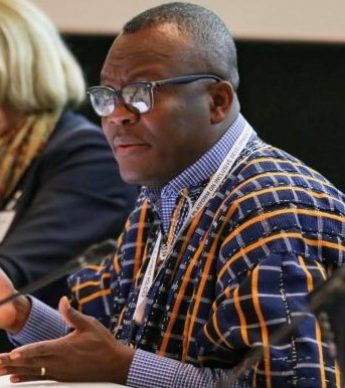
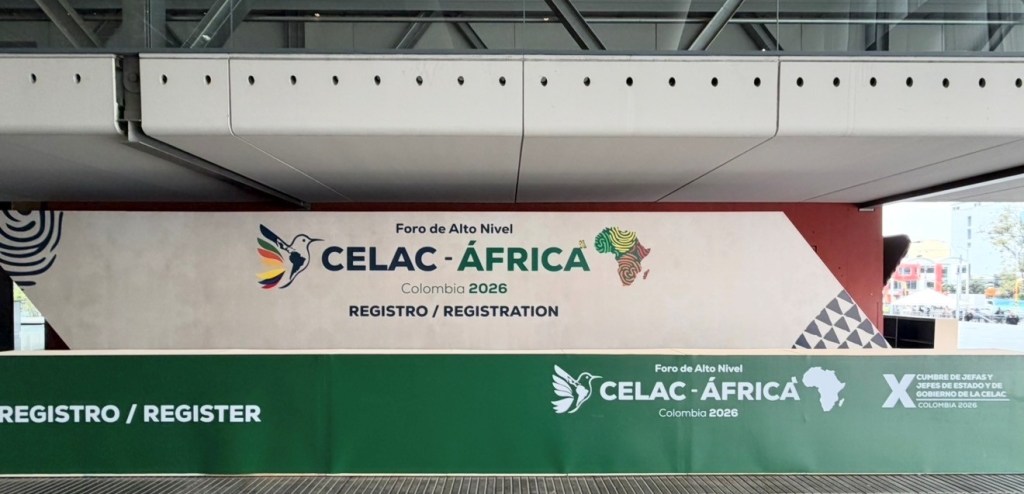
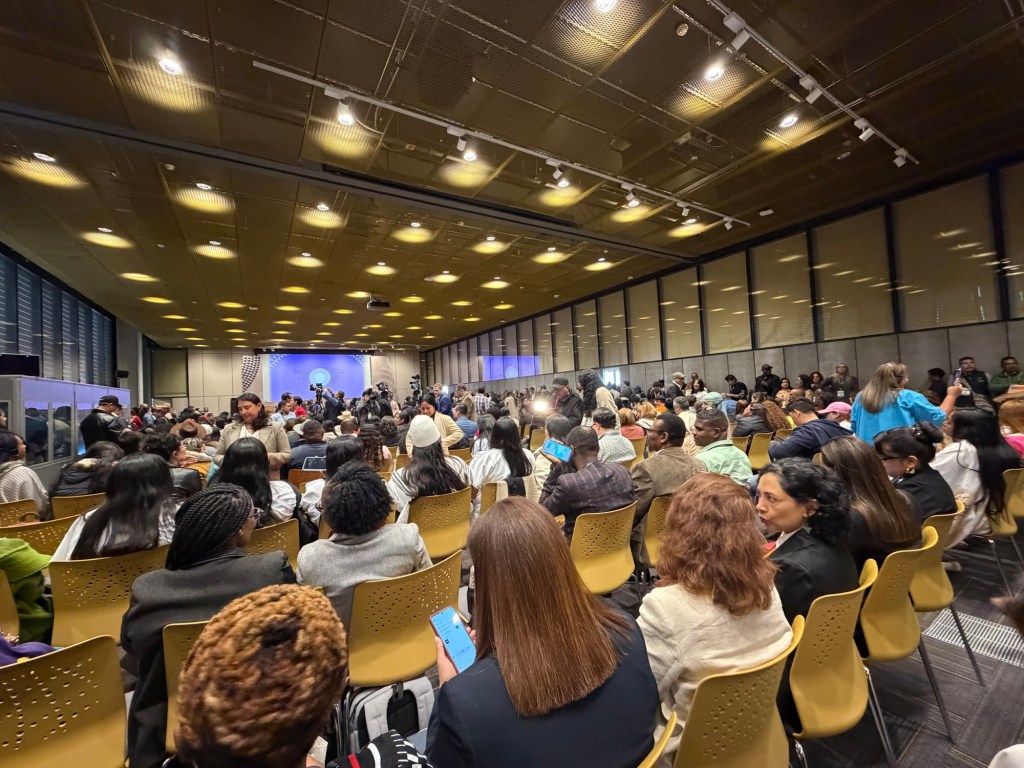
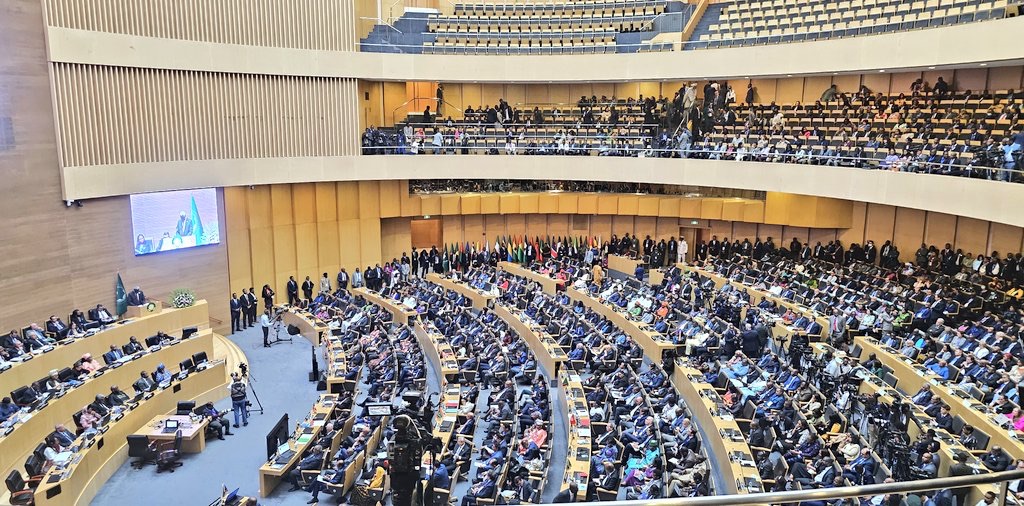
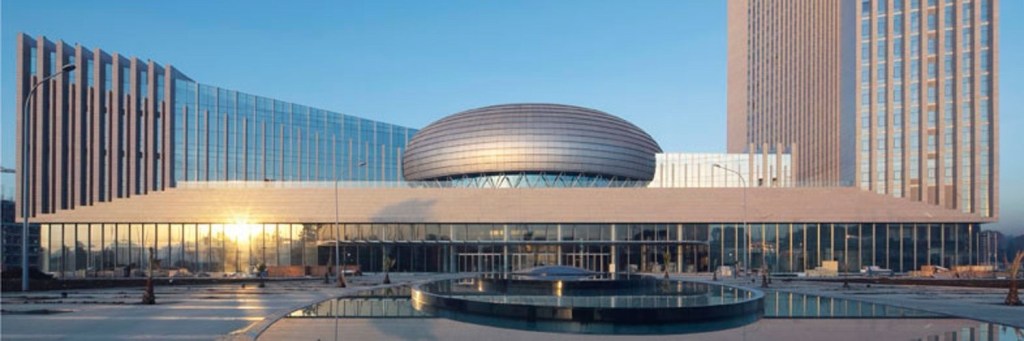
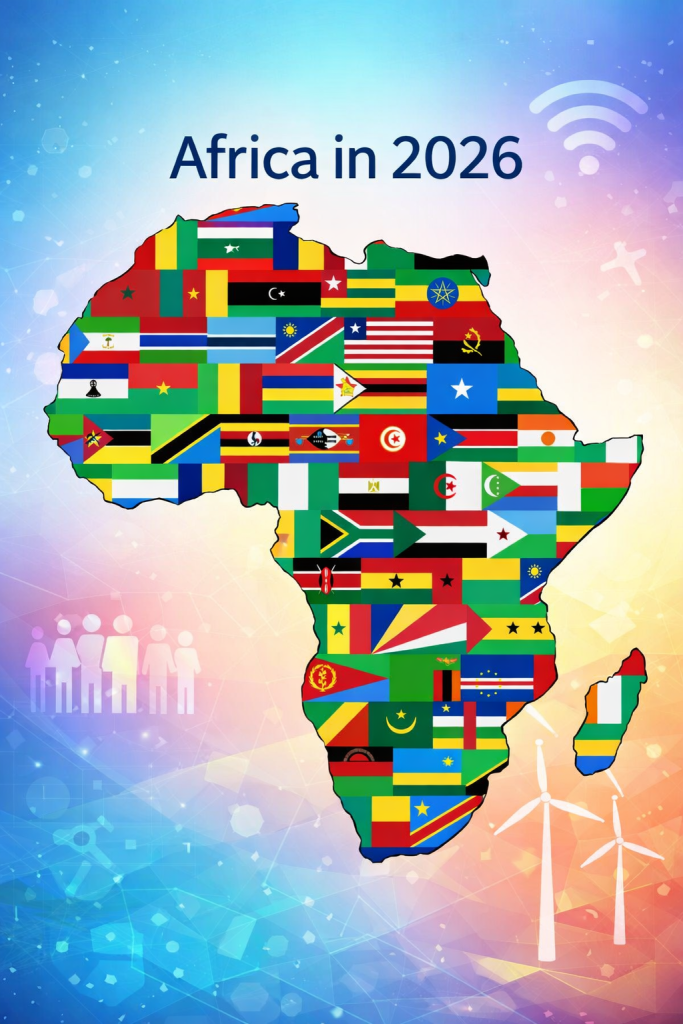
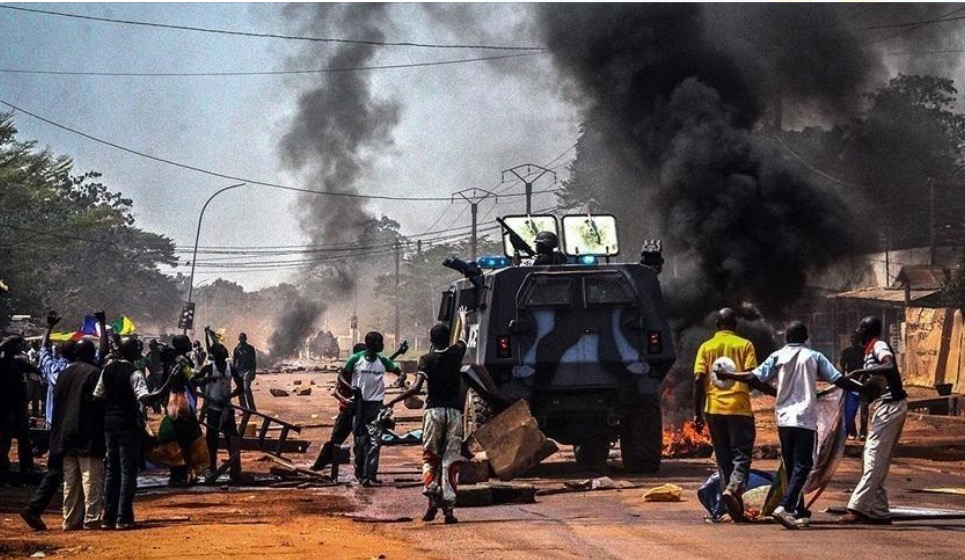
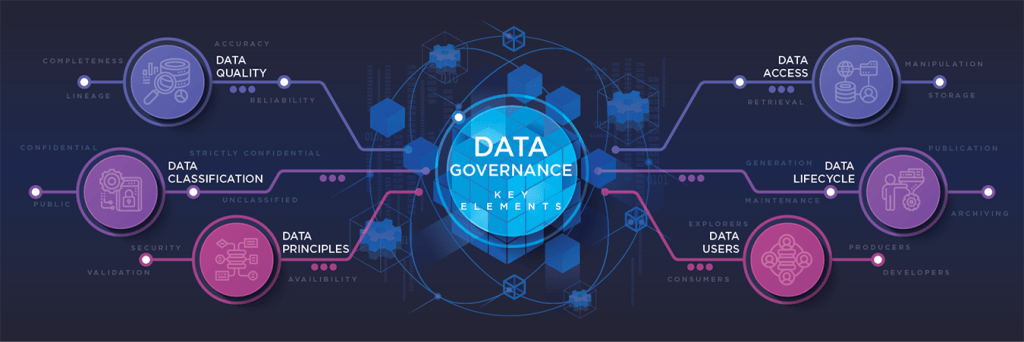


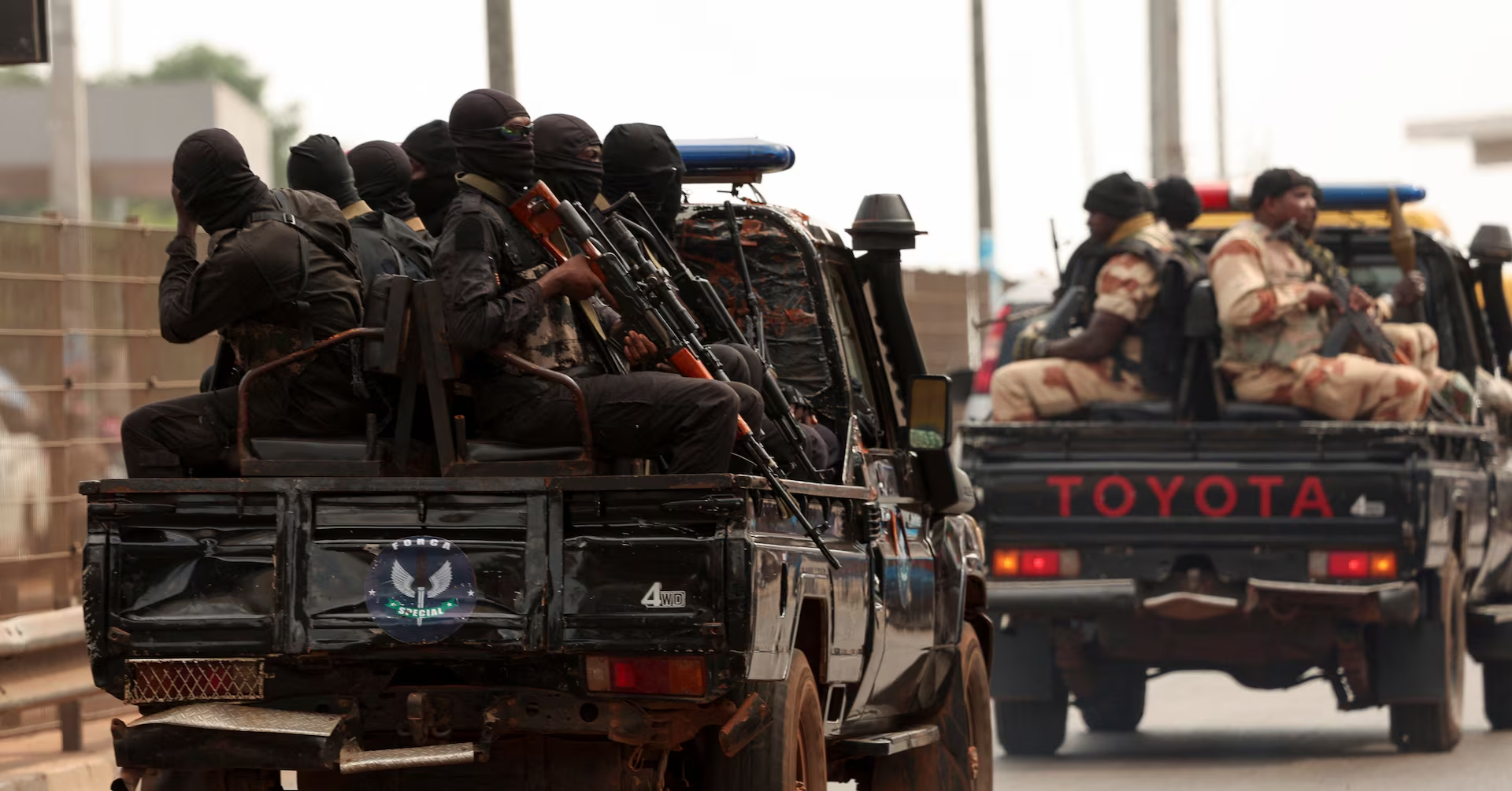

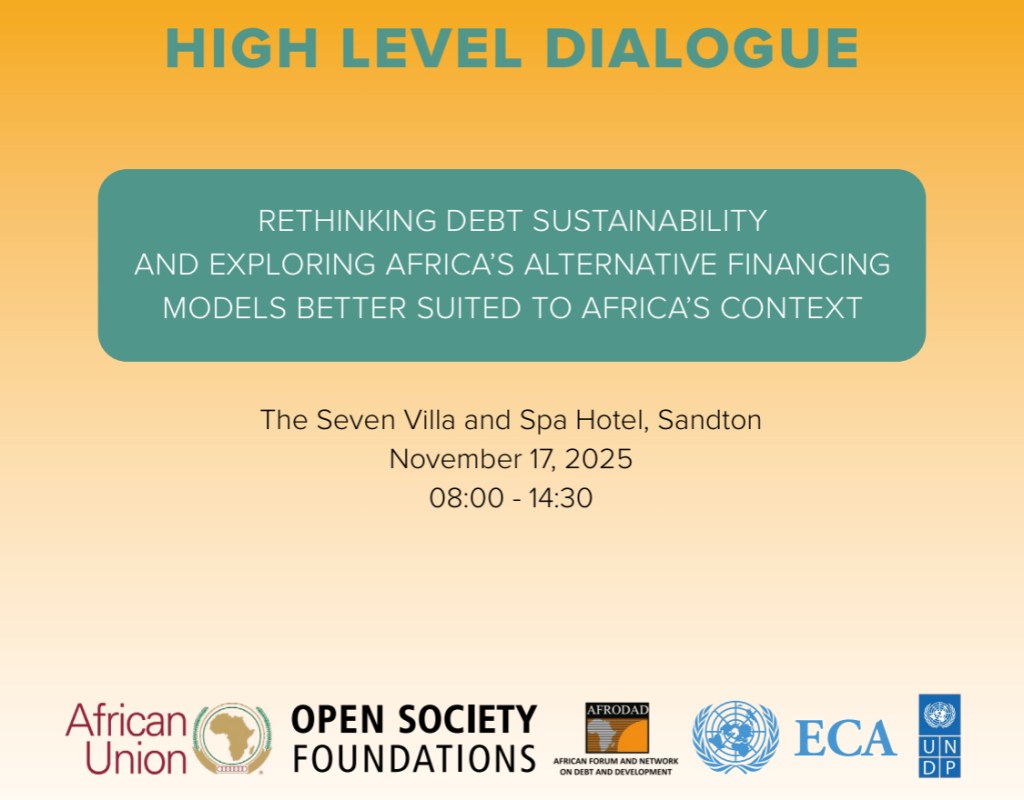
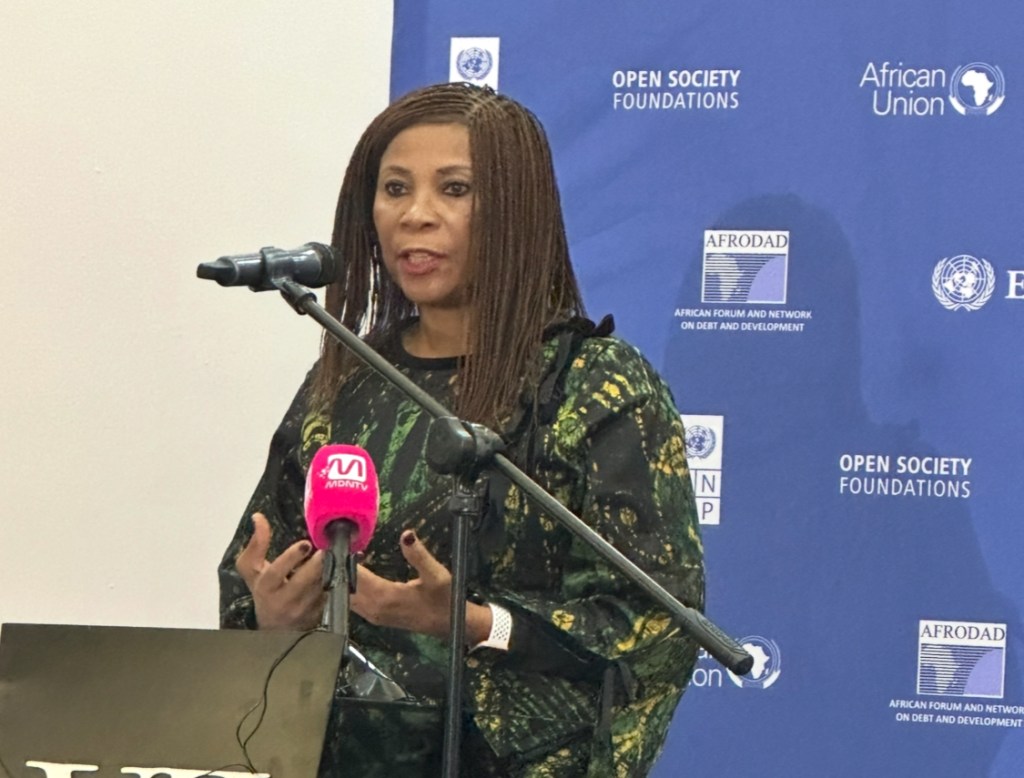




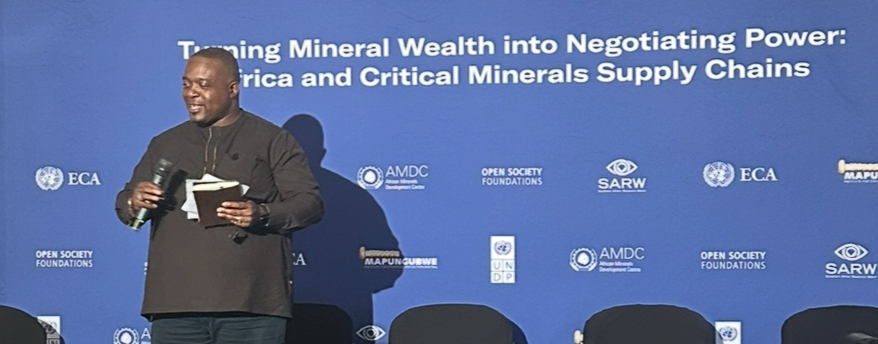
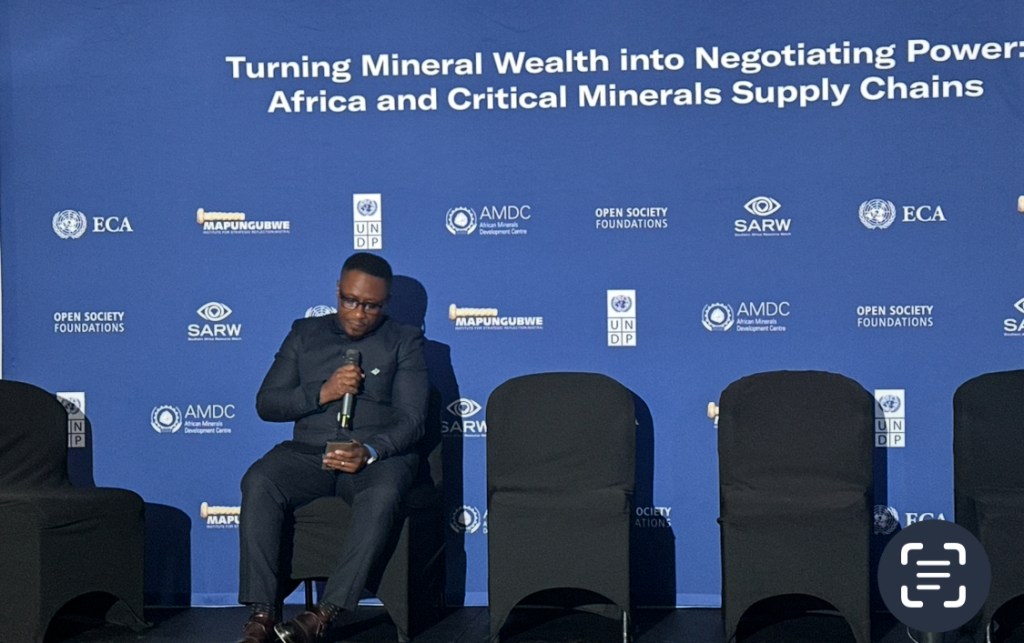

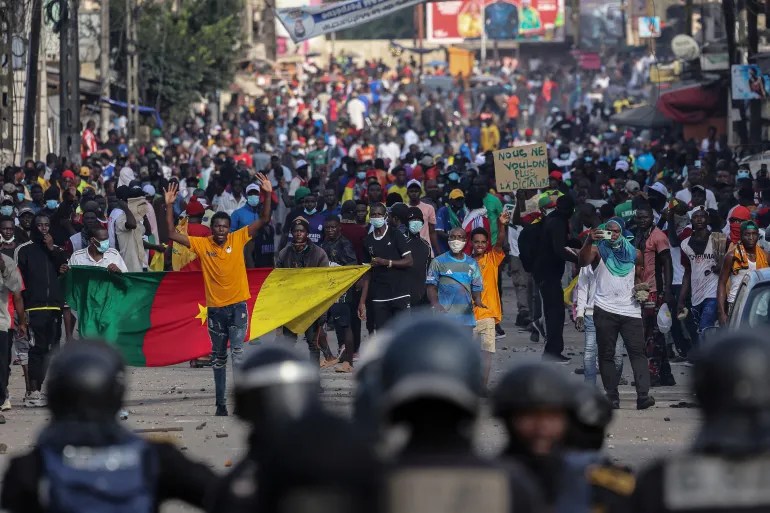
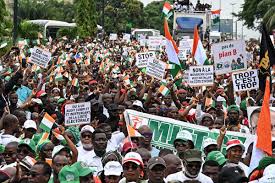




 Assodesire