Debt is Robbing Africa’s Future… The G20 Must Change the Game

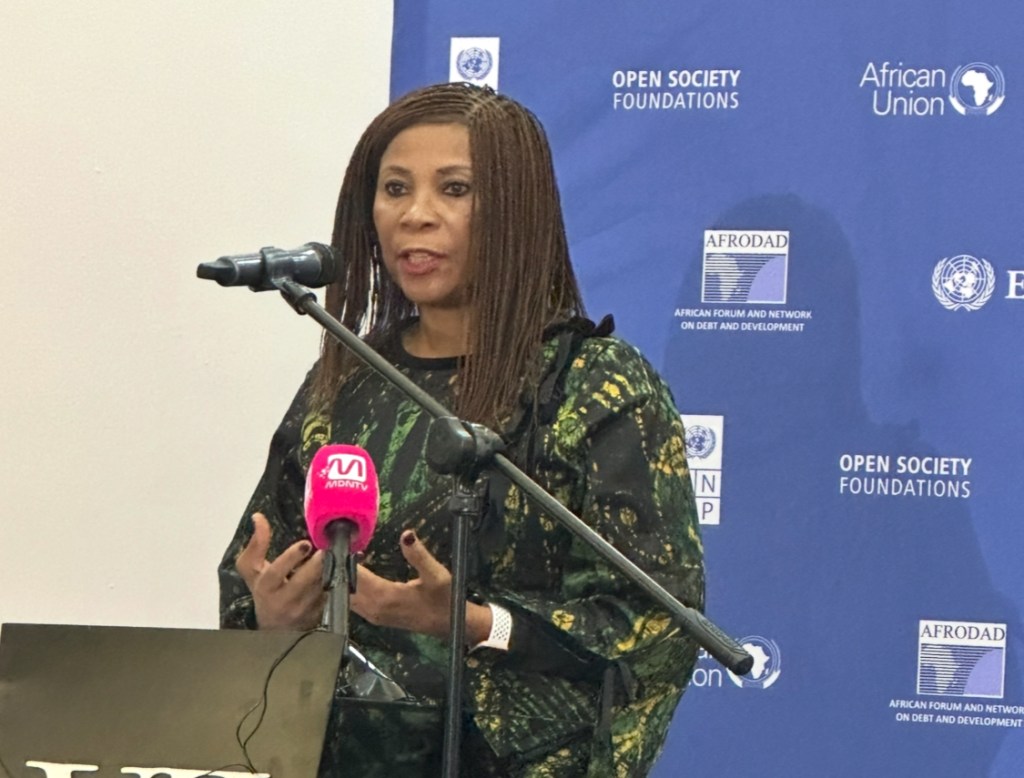
In Johannesburg, on 17 November 2025, as G20 delegates gather on African soil for a historic summit, a parallel gathering sent an even louder moral message: “Debt is Robbing Africa’s Future… The G20 Must Change the Game.”

Development experts, economists, civil society actors and multilateral partners came together around a simple but radical premise: Africa is not merely a continent in debt. It is a net creditor to the world, in climate, in stolen wealth, in undervalued labor and resources, and it is time the global financial system reflected that reality.

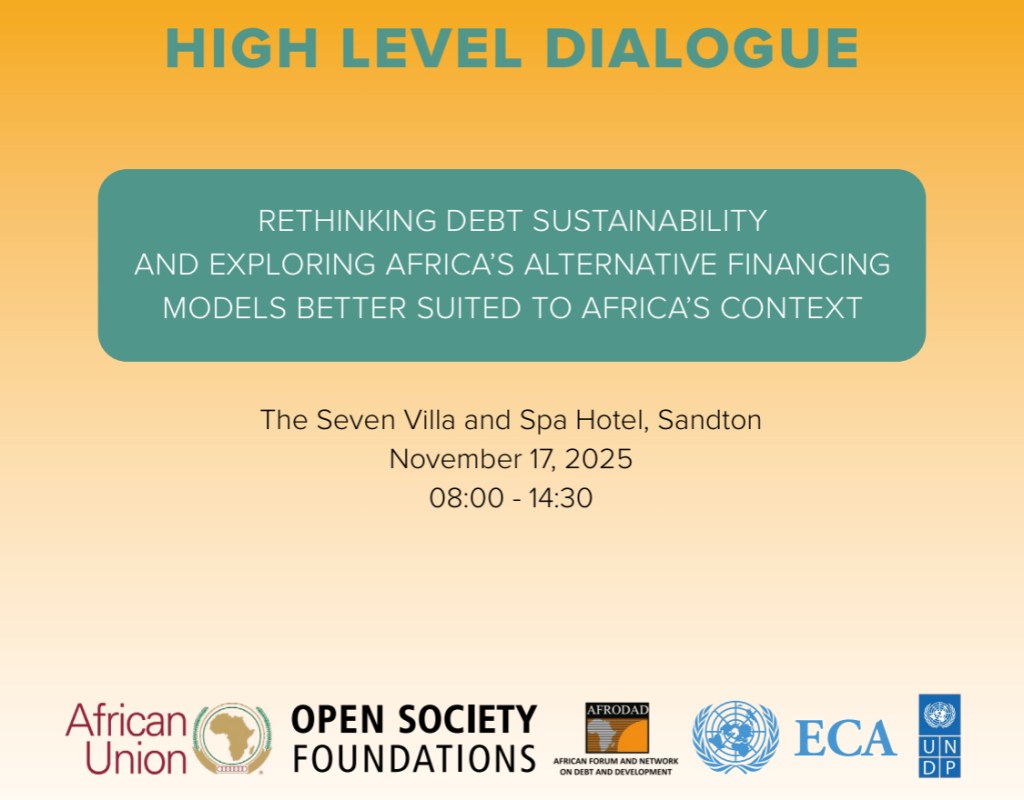
The high-level policy dialogue was co-hosted by the African Union Commission, UNDP, UNECA, AFRODAD and the Open Society Foundations, under the theme: “Rethinking Debt Sustainability and Exploring Alternative Financing Models Better Suited to Africa’s Context.”
The message was clear: the current system is morally indefensible, economically unsustainable and politically dangerous. The discussion did not stop at lament; it set out what must change, on the continent and in global forums, if Africa is to move from perpetual crisis management to structural transformation.

What follows are the core takeaways from that conversation.

Africa Spends More on Debt than on Hospitals and Classrooms

The headline numbers are alarming:

African external debt climbed from just over US$500 billion in 2020 to more than US$1 trillion by 2024. In 2024 alone, African countries spent about US$163 billion on debt service according to the AfDB. More than 25 African countries are already in debt distress or at high risk of it. African countries often borrow at interest rates around four times higher than those paid by advanced economies, despite sometimes similar or better fundamentals.

Behind these numbers lies a harsh reality: in many African countries, more money now goes to creditors than to health and education combined. Over half of the continent’s population lives in countries where teachers, nurses and social services are effectively competing with bondholders and banks – and too often losing.

At the same time, Africa is losing tens of billions every year through illicit financial flows and unfair trade, while carrying the costs of a climate crisis it did not cause. Taken together, the continent is effectively a net creditor to the world, in climate, in resources, and in stolen wealth, yet it is still treated as a perpetual debtor in the global financial system.
Structural Traps: Food, Fuel and the Manufacturing Deficit

Why does African debt keep returning in waves? Because three deep structural deficits keep feeding the debt trap:

  1. Food deficit: Africa now imports the bulk of its food, despite vast arable land and strong farming traditions. Colonial and post-colonial policies turned many African countries into exporters of cash crops, while basic staples are imported from elsewhere. Every ton of food produced domestically is future debt avoided, yet the continent remains over-exposed to volatile global food prices and exchange rates.
  2. Energy deficit: Even major oil producers export crude and import refined fuels at higher prices. In the green economy, the pattern risks being repeated: Africa exports critical minerals but struggles to mobilise finance and technology to build its own renewable energy infrastructure. Every kilowatt-hour generated domestically is imported fuel, and future borrowing, saved.
  3. Manufacturing and value-added deficit: African economies export low-value raw materials and import high-value finished products and sophisticated inputs. Local manufacturing depends heavily on imported machinery, technology and intermediates. This structure locks in trade deficits, weakens currencies, and fuels the need for constant external borrowing to plug balance-of-payments gaps.

The result is a vicious cycle: currency pressures and imported inflation push governments to subsidize food and fuel in the short term, while borrowing more hard currency in the medium term, which in turn deepens the next debt crisis. Debt is not just a number; it is the price Africa pays for a global economic model that keeps it at the bottom of the value chain.

There is no sustainable solution to Africa’s debt problem without structural transformation – in food systems, energy systems and industrial policy. Debt must be linked to a long-term plan to escape the role of raw-material supplier and become a driver of value-added production.

We Have Written It Down. Will Anyone Listen?

Africa is no longer speaking with a fragmented voice. In 2025, African finance ministers endorsed a Common African Position on Debt, anchored in an earlier AU decision in Lomé on debt. That position calls for fairer, faster, more transparent restructuring and a broader definition of sustainability that reflects climate, development and social needs, not only creditor comfort.

Africa arrives at the G20 with clear, unified asks:

1/ Reform of the G20 Common Framework

Faster, time-bound and transparent processes.

Automatic standstills on debt service during negotiations.

Fair burden-sharing among all creditors, including private bondholders.

Inclusion of debt-distressed middle-income African countries, not only low-income ones.

2/ Fairer global liquidity and borrowing costs

Reformed SDR allocations and quota formulas that recognise Africa’s real weight and needs.

Support for an African Credit Rating Agency to counter biased assessments and punitive risk premia.

3/ A new understanding of debt sustainability

Debt assessments that integrate development and climate needs, not just narrow debt ratios.

Recognition of Africa’s status as a net creditor in ecological and historical terms.

A shift from short-term crisis management towards long-term investment in structural transformation.

4/ Domestic responsibility with international fairness

Stronger domestic resource mobilisation, better governance and transparency.

Determined efforts to curb illicit financial flows.

A clear focus on using borrowed resources for productive, inclusive and climate-resilient investments.

Fixing the Architecture: From the IMF to the United Nations

The discussion moved from diagnosis to concrete reforms of the global debt architecture.

Many participants stressed that the current system, dominated by the IMF, the Paris Club and the G20 Common Framework, suffers from deep conflicts of interest. Institutions that lend, advise and judge at the same time cannot credibly act as neutral arbiters in sovereign debt workouts.

Key proposals included:

  • A UN-led framework for sovereign debt resolution, built on principles of fairness, inclusiveness and transparency, where all countries have a voice and no single creditor bloc dominates.
  • An African High-Level Panel on Debt, building on the legacy of the High-Level Panel on Illicit Financial Flows, to monitor implementation of AU decisions, coordinate African positions and maintain pressure for global reform.
  • A re-imagined role for Special Drawing Rights (SDRs), with reformed quota formulas that better reflect the real size of African economies and their populations, and with SDRs channelled through African institutions such as the African Development Bank to support long-term investment rather than short-term firefighting.
  • Creation of a Pan-African Commodity Stabilisation Fund. Many African economies are highly dependent on a small number of commodities. A continental stabilisation facility could pool risks across multiple countries and commodities, and provide automatic, rules-based support when prices drop below agreed thresholds. This would help countries avoid the sharp external shocks that drive them into crisis and default. Such a mechanism would complement other AU-driven initiatives, including proposals for an African financial stability mechanism and a debt monitoring framework.

Conclusion: From Robbed Futures to a Different Destiny

If debt is robbing Africa’s future, it is also stealing something less visible but equally vital: possibility. Every dollar wired to a creditor instead of a clinic is a child not vaccinated, a girl sent home from school, a community left in the dark. Every budget cut to social protection is a silent decision about whose life is expendable.

Africa is the youngest continent on earth, with the creativity, talent and energy to power a different global future. Yet its children are growing up under the shadow of debts they did not incur, to pay for a crisis they did not cause, through a system they did not design. That is not just inefficient. It is unjust.

The G20 summit in Johannesburg is more than a diplomatic milestone. It is a moral test. Will the world’s most powerful economies continue to treat Africa as a risk to be contained and a resource to be extracted? Or will they finally recognise it as a partner whose prosperity is essential to shared global stability?

Africa has done its part: it has analysed the problem, articulated common positions, and put concrete solutions on the table. The blueprint for change exists. What is missing is the political will to act on it.

Debt should not be a life sentence. With courage from African leaders, honesty from creditors, and solidarity from citizens across the globe, it can become a bridge, from vulnerability to resilience, from extraction to transformation.

We have written it down. We have said it, clearly and collectively: Debt is robbing Africa’s future. The G20 must change the game. The only open question now is whether those with power will choose to listen, and to act, before another generation is forced to pay the price.

If you’d like to receive my articles automatically as soon as they’re published, simply follow this blog using the “Follow” button at the bottom left of this page or send me an email at: Desire.Assogbavi@Assodesire.com

From Seville to Solutions: My 10 Key Takeaways from FFD4

When I was on my way to Seville, my daughter, a medical student and curious as ever, asked me, “What exactly are you going there for?”. I paused for a moment before answering: “I’m going to a global meeting called FFD4. It stands for Financing for Development. It may not sound exciting, but it’s actually about something very real, how countries decide to raise and spend money to make life better for people. It’s about ensuring there’s funding for hospitals, health care, schools, clean water, healthy food and the fight against climate change.” I told her that decisions made there could impact whether her future patients will have access to proper healthcare, or not. Because at the end of the day, FFD is about making global finance work for everyone, not just the privileged few.

I am not sure I will be able to fully simplify the outcomes of FFD4 but here are my 10 takeaways:

Despite challenges, including severely restricted space limiting the full participation of non-state actors, the conference marked a significant moment in development finance within a geopolitically shifting world.

1. Unity & Urgency Amid Global Tensions

FFD4 demonstrated a certain unity and urgency despite escalating global tensions, soaring debt burdens, and declining official development assistance (ODA). The resulting Compromiso de Sevilla (Seville Commitments), adopted on day-one of the conference reflects global consensus, though it could have been more robust and concrete.

2. Bridging the $4 Trillion SDG Financing Gap

To address the $4 trillion annual financing gap needed for the Sustainable Development Goals (SDGs), the Compromiso de Sevilla outlined three critical areas:

  • Catalyzing investment at scale: Mobilize and direct domestic, international, and private sector capital toward key sustainable development objectives
  • Tackling debt crises innovatively: Introduce innovative strategies for debt management, restructuring, and utilization to ensure debts contribute positively to developmental outcomes
  • Reforming international financial architecture for fairer governance: Promote greater inclusivity by amplifying the voices of developing countries within global financial governance systems

3. Over 130 Initiatives Launched

Under the Sevilla Platform for Action, more than 130 initiatives were launched, demonstrating a clear shift from commitments to concrete, actionable projects.

International Business Forum: Mobilizing Private Capital for Sustainable Development

Held in parallel with the main Conference, the International Business Forum brought together global business leaders who issued a powerful call to action to unlock private capital for sustainable development. Through a joint Communiqué released alongside the Sevilla Commitment, they outlined five priority areas for impact investment.

For the first time, major business groups and investor alliances coordinated their efforts through the newly formed FFD4 Business Steering Committee, signaling a clear and unified commitment from the private sector.

4. Innovative Debt Solutions

Several innovative debt-management initiatives emerged, including:

  • Debt Swaps for Development Hub: A platform that brings together countries, donors, development partners, and technical experts to coordinate, scale, and support debt-for-development swaps
  • Debt-for-Development Swap Programme: dedicating funds for debt conversion in Africa. It is a financial arrangement where a portion of a country’s external debt is cancelled or reduced, in exchange for the country agreeing to invest that money into development projects such as like education, health care, climate resilience, or infrastructure.
  • Debt Pause Clause Alliance: embedding crisis-response clauses into lending agreements. This will offer crisis-affected countries a tool to temporarily suspend debt repayments during shocks such as climate disasters or pandemics, enabling faster recovery and fiscal breathing space.
  • Borrowers’ Forum: A new mechanism aimed at helping debt-distressed countries coordinate action and amplify their voice in the global financial system was launched in Seville

5. Boosting Development-Focused Investments and Domestic Resource Mobilization

FFD4 introduced strategic initiatives to scale development-focused investments and strengthen domestic resource mobilization:

  • Coalition for Global Solidarity Levies: taxing premium-class flights and private jets to fund climate and development.
  • Domestic Resource Mobilization: A strong emphasis was placed on enhancing countries’ ability to raise and manage their own revenues and other domestic resources. This includes expanding tax bases, tackling illicit financial flows, and improving fiscal systems to reduce dependence on external aid and increase financial sovereignty
  • Blended Finance Platform: To reduce risk perception and attract more investment for impactful projects.
  • Local Currency Lending Initiatives: to help protect borrowers in developing countries by offering loans in their own currency, reducing risk and promoting economic stability.
  • Effective Taxation Initiative: targeting equitable taxation of high-net-worth individuals and companies.

6. Reforming Global Financial Governance

Reforming global financial governance is essential to address the structural inequalities that perpetuate poverty, debt, and underdevelopment in the Global South. Today’s institutions, such as the IMF, World Bank, and G20, were designed in a different era and no longer reflect the realities, voices, or aspirations of the majority world. Developing countries, particularly in Africa, Latin America, and parts of Asia, remain underrepresented in decision-making processes that directly shape their economic futures. This imbalance has resulted in unfair lending practices, inadequate crisis responses, and rigid fiscal policies that constrain development. A reformed system must be more inclusive, transparent, and accountable, anchored in the principles of equity and justice. This includes giving equal voice and vote to developing nations, establishing a permanent and representative UN tax body, and ensuring that debt resolution mechanisms prioritize human development over creditor interests. Reform is not only a moral imperative; it is a strategic necessity to build a more stable, sustainable, and cooperative global economy.

7. Pre-arranged Disaster Financing

A significant commitment was made to increase pre-arranged disaster financing from 2% to 20% by 2035, to ensure better preparedness and resilience. This will help having money ready in advance to respond quickly when a natural disaster like a flood, earthquake, drought, or cyclone strikes.

8. Roadmap for Accountability and Implementation

FFD4 established a detailed roadmap including:

  • Immediate setup of oversight structures.
  • Rapid operationalization of financing mechanisms.
  • Monitoring and transparent reporting.
  • Enhanced technical assistance and capacity building.
  • Annual progress reviews at global forums.

9. Climate Change: An Urgent Reality Check

The scorching temperatures above 40°C, in Seville, last week was a strong reminder of the pressing reality of climate change. It was a pressing warning about, the urgent need to prioritize climate finance within our development agendas.

10. Restricted Space for Civil Society and Non-State Actors

A significant shortcoming of FFD4 was the severe restriction on participation, especially affecting civil society actors, raising concerns about inclusivity and representation in global development dialogues.

Conclusion: From Commitment to Collective Action

FFD4 in Seville has set goals and launched critical initiatives. However, true success can only come from sustained collective resolve and dedicated implementation. Now, the real test begins; translating these commitments into impactful realities for people and our planet.

Next up: A deep dive into one of our key policy side events at FFD4 on Financing Development and the Geopolitics of Critical Minerals, so, watch this space!

If you’d like to receive my articles automatically as soon as they’re published, simply follow this blog using the “Follow” button at the bottom left of this page.

Will the 4th Financing for Development Gathering do Justice for Africa?

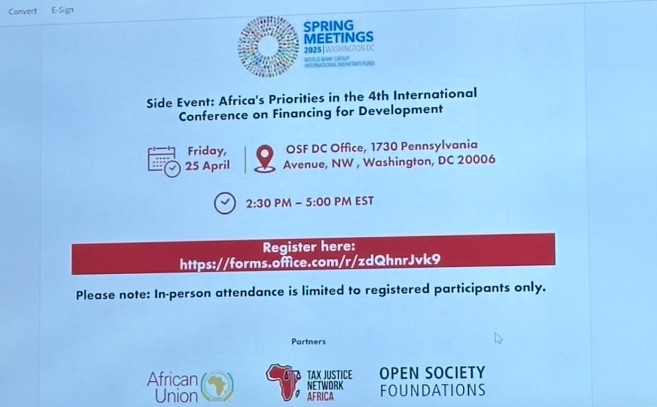
From different side discussions I participated in here in Washington DC on this subject matter, as we conclude the 2025 World Bank/IMF Spring Meetings, one message is abundantly clear: Africa must come prepared to the Fourth Financing for Development (FFD4) Conference in Seville. It should not be simply another global convening, FFD4 represents an unparalleled moment for the continent to redefine financial justice, assert its agency, and demand structural transformations within the global economic governance system.

The current global financial architecture is profoundly inequitable, marked by a historical bias that relegates African and other Global South countries to the periphery. Brian Kagoro, Managing Director for Programs at Open Society Foundations, rightly articulated that the present financial system was originally designed under assumptions of permanent inequality, with clear roles for “center” and “periphery.” This paradigm, no longer tenable, demands a complete reform, not cosmetic adjustments.

The Debt Crisis: Beyond Liquidity to Structural Reform

At the heart of Africa’s position for Seville, Spain must be the recognition that debt crises faced by African nations are not merely liquidity issues. Instead, they are deep-rooted structural and wealth crises resulting from systemic inequities. The Common Framework developed by the G20 has notably failed. Africa must champion a UN Framework Convention on Sovereign Debt, embedding principles of responsible lending, borrower rights, and genuine multilateral accountability mechanisms.

The Exclusion of African Voices in Debt Negotiations

Jason Braganza from AFRODAD stressed that the current debt restructuring approaches have failed Africa fundamentally. These processes, dominated by creditor institutions like the IMF, draw off vital public funds away from healthcare, education, and infrastructure into debt repayments. Seville must be the platform where Africa decisively argues for a debt resolution framework anchored in equity, transparency, and genuine partnership.

International Tax Cooperation: Reclaiming Democratic Space

Another critical dimension is international tax cooperation. Historically marginalized in global tax rule-making dominated by OECD countries, African states lose an estimated $89 billion annually through illicit financial flows and aggressive tax avoidance. Africa’s push for a UN Framework Convention on International Tax Cooperation represents not just an economic necessity but a reclaiming of democratic space and equitable representation in global economic governance.

The conclusions of the recent Summit of the Future reinforced this call by endorsing the establishment of a more inclusive, effective, and transparent global tax governance framework. Member States recognized the inadequacies of the current OECD-centered system and agreed to prioritize negotiations toward a United Nations Tax Convention. This shift offers Africa a vital opportunity to push for rules that ensure fair taxation of multinational corporations, address harmful tax competition, and guarantee that every country, regardless of size or economic power, has an equal seat at the decision-making table. For Africa, the road to Seville is not just about advocating for reform; it is about securing a transformative, legally binding mechanism that can reverse systemic revenue losses and reinforce the continent’s capacity for sustainable development.

Strengthening Domestic Resource Mobilization in Africa

Strengthening domestic resource mobilization (DRM) in Africa is a crucial pillar for building sustainable, self-reliant economies. African governments must invest in modernizing their tax systems to ensure efficiency, transparency, and the capacity to capture revenues from rapidly evolving sectors such as the digital economy. This includes implementing fair and progressive taxation, combating illicit financial flows, and strengthening regulatory frameworks that close loopholes exploited by multinational corporations. By improving domestic revenue collection, African countries can significantly reduce their dependence on external financing and debt, thereby reclaiming greater fiscal sovereignty to fund health, education, and infrastructure projects.

However, strengthening DRM cannot be confined to national reforms alone. Global financial rules must also evolve to support African countries’ efforts. As Mwila Mkosa from the Zambian mission to the UN emphasized, the international tax framework must be reformed to create an enabling environment for African states to effectively mobilize their domestic resources. This includes addressing harmful tax competition, reforming unfair global trade practices, and ensuring that African countries have an equitable voice in setting global financial and tax standards. At Seville, Africa must press for concrete commitments that bridge national reforms with international cooperation, ensuring that domestic resource mobilization becomes a genuine driver of inclusive and sustainable development

Rethinking Private Finance in Development

The upcoming FFD4 must critically address the role of private finance. The previous “billions to trillions” narrative, heavily reliant on private sector financing without adequate oversight, has proved largely illusory. Africa’s position should advocate for private finance to operate under robust governance frameworks that prioritize socio-economic transformation over narrow profit-driven outcomes.

Reimagining Multilateralism: Beyond the Status Quo

A consistent theme emerging from these discussions was the need to reimagine multilateralism, not to preserve a flawed status quo but to fundamentally redesign it. As Brian Kagoro aptly put it, “the world we want to save has not yet been born.” Africa must advocate for multilateral frameworks that genuinely reflect principles of equality, transparency, and mutual accountability.

We need concrete, Actionable Commitments at Seville

The outcomes from Seville must move beyond ambitious language to concrete, actionable commitments backed by accountability frameworks. Seville must differ from previous summits by producing commitments specific enough to allow for tangible monitoring and public accountability.

Africa stands at a crossroads. We have an opportunity at Seville to assert not only our needs but our rights, our right to fair participation, our right to equitable economic structures, and our right to control our developmental futures. The moment is ready for bold, strategic, and unified action. True reform is not merely about changing systems but about fundamentally shifting power dynamics. Africa’s call must be clear: reform of the global financial architecture is an urgent demand for justice, equity, and sustainable development. The stakes are high, the time for incremental adjustments is past, and the moment for profound, transformative change is now.