Le G20 en Afrique: Le Sommet de Johannesburg doit être un tournant pour le Continent

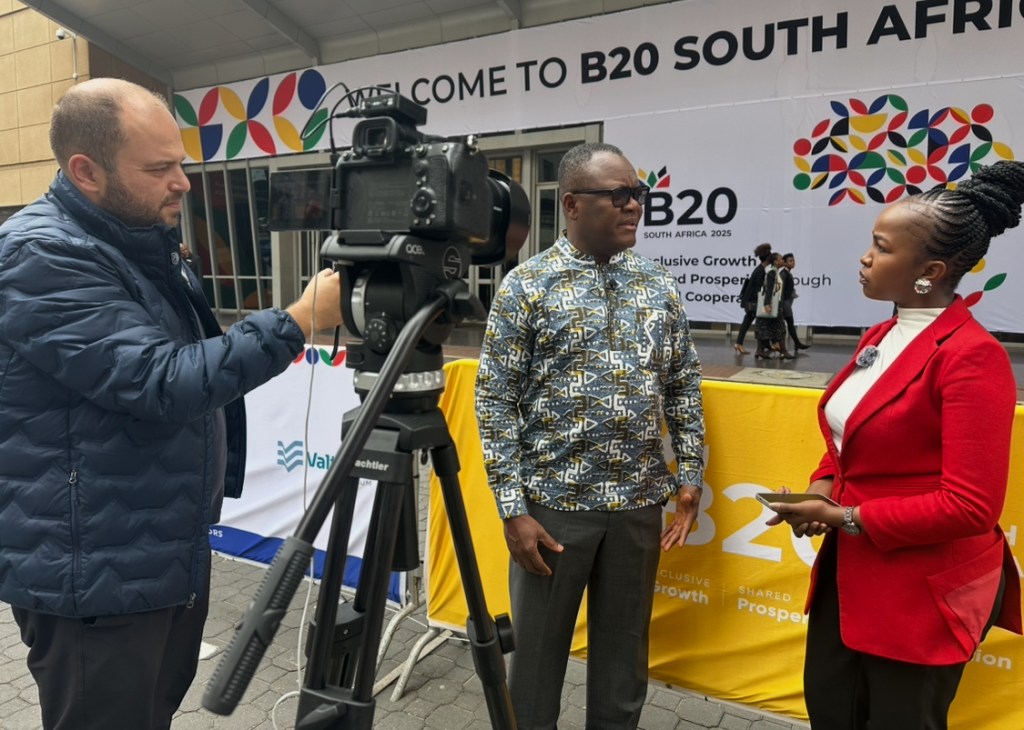
Cette semaine, le G20 se tient pour la première fois en Afrique. Les dirigeants du monde entier se réunissent à Johannesburg sous le slogan « Solidarité, Égalité, Durabilité », alors même que le sommet est éclipsé par le boycott du gouvernement américain et par les doutes croissants sur la capacité du multilatéralisme à produire encore des résultats concrets.

L’Afrique ne s’est pas battue pour obtenir un siège à la table du G20 afin de figurer dans une photo de famille de plus. Avec l’Union africaine désormais membre permanent du G20 et l’Afrique du Sud à la présidence, ce sommet est un test : la gouvernance mondiale est-elle enfin prête à refléter les réalités et les droits de 1,3 milliard d’Africains ?

Depuis trop longtemps, l’Afrique est traitée comme un problème à gérer plutôt que comme un partenaire à écouter. Pourtant, sur les grands enjeux de ce siècle, la dette, le climat et les minerais critiques, le continent n’est pas une victime passive. Il est, de fait, créditeur net du reste du monde: en matière de résilience climatique, de richesses volées ou illicitement transférées, de travail et de ressources sous-évalués. La vraie question à Johannesburg est simple: le monde va-t-il continuer à extraire de la valeur de l’avenir de l’Afrique, ou enfin investir dans cet avenir?
Payer pour hier au lieu de construire demain

L’Afrique est en première ligne d’une urgence mondiale en matière de dette. Dans de nombreux pays, le service de la dette dépasse désormais les dépenses publiques de santé, d’éducation ou d’adaptation au climat. Le service de la dette absorbe déjà une part énorme des recettes publiques et des revenus d’exportation. Au moins 30 pays africains dépensent davantage en paiements d’intérêts qu’en santé publique. Concrètement, cela signifie des enfants qui apprennent sous des abris de fortune faute de moyens pour construire des salles de classe ; des femmes qui marchent plus loin pour aller chercher de l’eau faute d’infrastructures ; des paysans qui perdent leurs récoltes faute d’investissements dans l’adaptation climatique.

Ce n’est pas de la « discipline budgétaire ». C’est un transfert de chances de vie des citoyens africains vers les créanciers mondiaux. Cela enferme les gouvernements dans la gestion des dettes d’hier au lieu d’investir dans les capacités de demain.

L’Afrique du Sud a eu raison de placer « la soutenabilité de la dette des pays à faible revenu » au cœur de son agenda pour le G20, aux côtés de la résilience face aux catastrophes, du financement d’une transition énergétique juste et de la mobilisation des minerais critiques pour une croissance inclusive. Mais les belles formules et les communiqués ne suffiront pas. L’Afrique a besoin de mesures concrètes, assorties d’échéances claires, qui transforment l’architecture de la finance mondiale, et pas seulement son discours.
Minerais critiques : du statut de carrière à celui de puissance

L’Afrique détient une part significative des réserves mondiales de nombreux minerais critiques qui sous-tendent les transitions verte et numérique : lithium, cobalt, manganèse, nickel, terres rares, entre autres. Pourtant, le continent ne capte qu’environ 5 % de la valeur créée par l’exportation de ces matières premières, alors qu’elles génèrent des milliards de dollars pour le reste du monde.

Une grande partie de cette valeur quitte encore le continent sous forme de minerai brut, pour revenir ensuite sous forme de batteries, de composants et de technologies, vendus à un prix multiplié. C’est le vieux schéma colonial, habillé de vert.

De plus en plus de gouvernements africains réagissent. Près de la moitié ont introduit une forme de restriction sur les exportations de produits non transformés, en recourant à des politiques telles que des interdictions d’exportation, des obligations de contenu local et des stratégies de valorisation pour sécuriser l’emploi, les capacités industrielles et l’apprentissage technologique sur le continent. Ce n’est pas du « nationalisme des ressources », c’est du bon sens.

Si l’Afrique continue d’exporter des matières premières et d’importer des produits finis, elle finance la prospérité des autres avec son propre futur. Le G20 ne peut pas parler de « transition énergétique juste » tout en s’attendant à ce que l’Afrique reste une simple carrière pour la croissance verte des autres. La course aux minerais critiques ne doit pas se transformer en nouvelle ruée vers l’Afrique.

Un sommet marqué par des absences, mais l’Afrique ne peut pas attendre

Le symbole est fort. Au moment même où le monde a désespérément besoin de davantage de coopération, les États-Unis ont choisi de boycotter purement et simplement le sommet. D’autres dirigeants ont réduit leur niveau de participation. Ces absences fragilisent l’image du rendez-vous de Johannesburg, mais elles n’en diminuent pas les enjeux pour l’Afrique.

Si celles et ceux qui ont conçu et profité du système actuel se retirent de leurs responsabilités, alors celles et ceux qui en ont payé le prix doivent avancer avec des solutions. C’est précisément pourquoi le statut de membre permanent de l’Union africaine au sein du G20 est essentiel : il confère une légitimité politique et une autorité morale pour exiger des changements plus ambitieux.
Ce que le G20 doit accomplir à Johannesburg

Pour que ce sommet soit à la hauteur de son hôte africain, les dirigeants du G20 devraient quitter Johannesburg après s’être mis d’accord sur au moins trois engagements concrets :

1. Créer un cadre de traitement de la dette équitable et prévisible 
Le G20 doit mandater la conception d’un mécanisme de traitement de la dette souveraine plus juste, plus transparent et limité dans le temps, incluant l’ensemble des créanciers : bilatéraux, multilatéraux et privés. Ce mécanisme doit permettre une restructuration complète là où elle est nécessaire et déclencher automatiquement un moratoire en cas de chocs majeurs, climatiques ou sanitaires. Le patchwork actuel de « cadres communs » ad hoc a échoué.

2. Adopter un « Pacte de Johannesburg » sur les minerais critiques et la valeur ajoutée 
Le sommet devrait reconnaître le droit des pays africains à recourir à des politiques industrielles – restrictions à l’exportation, règles de contenu local, stratégies de chaînes de valeur régionales – pour gravir l’échelle de la valeur minière. Le G20 devrait soutenir un « Fonds pour les minerais verts et la valeur ajoutée » dédié, afin de réduire les risques liés aux investissements dans le traitement, le raffinage et la fabrication en Afrique, en lien avec la Zone de libre-échange continentale africaine et la Vision africaine des mines. Chaque tonne extraite doit contribuer à bâtir des industries, des emplois et des capacités technologiques africaines.

3. Placer l’Union africaine au centre de la prise de décision du G20 
L’adhésion de l’UA doit se traduire par un réel pouvoir de définition de l’agenda, et pas seulement par un siège supplémentaire dans la salle. Les dirigeants devraient s’engager à une coprésidence formalisée de l’UA dans les groupes de travail clés sur la dette, le développement et le climat, appuyée par un mécanisme permanent de liaison UA-G20. L’UA doit être impliquée dès la conception de l’agenda jusqu’à la mise en œuvre et au suivi.

Ces propositions ne sont pas radicales. Elles constituent le minimum nécessaire pour aligner les décisions du G20 sur ses principes affichés de solidarité, d’égalité et de durabilité.
Passer du symbole au changement structurel

Johannesburg offre une convergence rare : l’Afrique accueille le principal forum économique mondial ; l’Union africaine y siège comme membre à part entière ; et la présidence met explicitement l’accent sur la justice en matière de dette, le financement climatique et les minerais critiques au service du développement. L’Histoire ne jugera pas ce sommet à l’aune de celles et ceux qui manquaient sur la photo de famille. Elle jugera si, sur le sol africain, les plus grandes économies du monde ont reconnu que la poursuite du « business as usual » n’est plus compatible avec la vie de 1,3 milliard d’Africains.

Si Johannesburg ne produit que des déclarations vagues et des promesses recyclées, le message adressé aux Africains sera clair : lorsque nous accueillons le monde, il vient pour le symbole, pas pour le fond. Mais si le sommet débouche sur de véritables engagements en matière de dette, de minerais et de justice climatique, il pourra marquer le début d’un nouveau contrat entre l’Afrique et le reste du monde, un contrat dans lequel les Africains ne sont pas seulement une ligne dans un communiqué, mais les auteurs de leur propre avenir économique.

L’Afrique apporte sa voix, sa vision et ses preuves à ce G20. La charge de la preuve repose désormais sur les dirigeants réunis à Johannesburg. Vont-ils continuer à traiter l’Afrique comme un fournisseur périphérique de matières premières et de paiements d’intérêts, ou comme un partenaire à part entière pour bâtir une économie mondiale plus juste ?

Ce qui se passera à Johannesburg cette semaine répondra à cette question – non seulement pour l’Afrique, mais aussi pour la crédibilité du G20 lui-même.

Si vous souhaitez recevoir automatiquement mes articles dès leur publication, il vous suffit de suivre ce blog en cliquant sur le bouton « Follow » en bas à gauche de cette page ou de m’envoyer un e-mail à l’adresse suivante : Desire.Assogbavi@Assodesire.com

Africa’s Critical Minerals: The G20 Must Choose Partnership Over Extraction

Across Africa’s vast land and ocean floors lie the minerals that will power the world’s green transition, digital revolution, and technological future. These minerals are not the margins of tomorrow’s economy, they are its spine. They determine who builds the cars, manufactures mobile phones, stores the energy, runs the servers, and controls the military and space technologies of the next century.

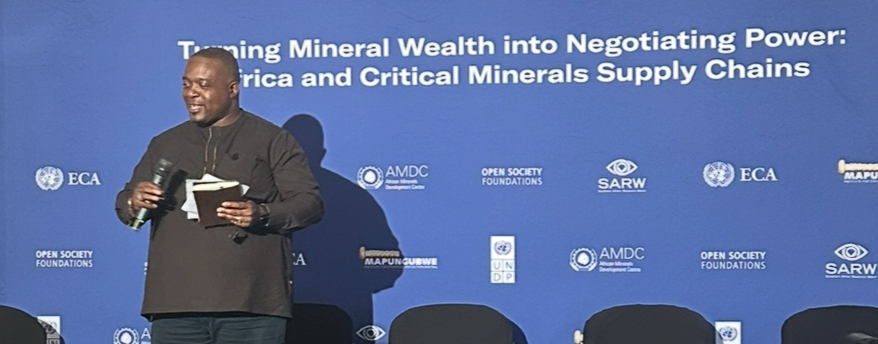
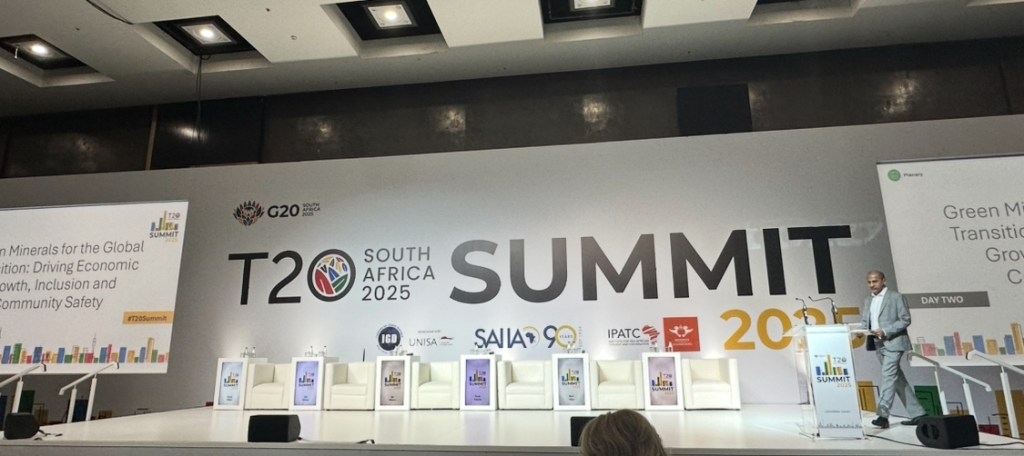
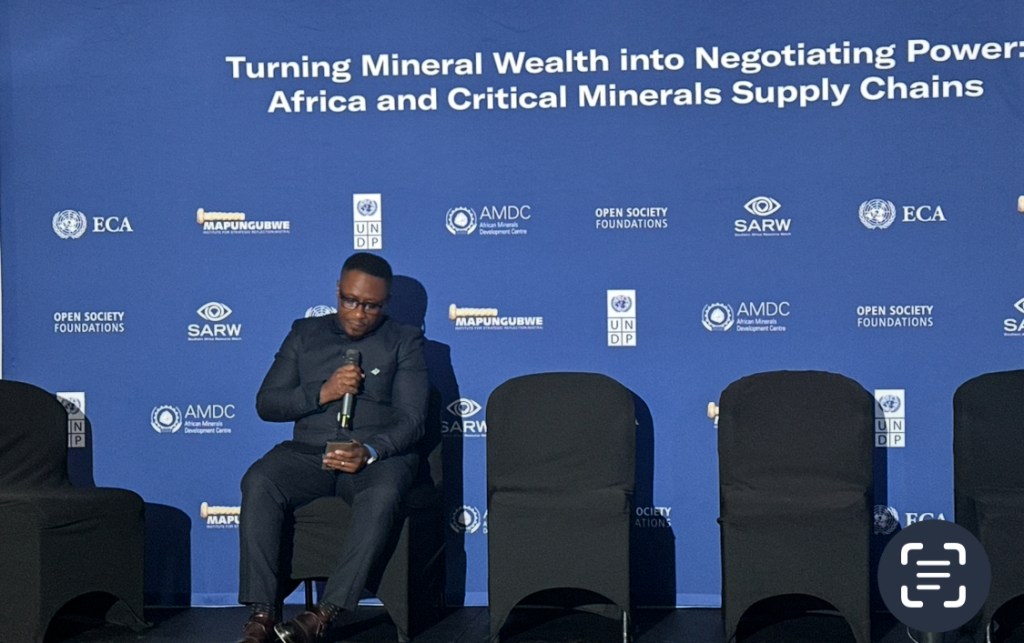
The Open Society Foundations and partners’ policy discussion today, in the margins of the G20 Summit in Johannesburg generated a solid roadmap! Here are my 7 takeaways:

Africa holds the ingredients of global power at a scale the world cannot ignore. Yet the question confronting the continent is not whether the world needs Africa. It is whether Africa is ready to lead, not follow; to bargain, not beg; to industrialize, not export raw; to become a rule-maker, not just a rule-taker.

As geopolitical tensions intensify, the United States, the European Union, China, and emerging powers are racing to secure long-term access to African minerals, using industrial policies, bilateral deals, and global pressure to reshape supply chains. Africa has become the epicenter of a new global scramble, one fought not with armies, but with subsidies, regulations, Environmental Social Governance standards (ESG), and strategic diplomacy.

This is Africa’s critical minerals moment, not just to be part of the global green transition, but to shape its terms, its industries, and its benefits. What Africa chooses to do now will decide if it becomes a leader in the new green economy, or remains just a place where others come to dig up raw materials.

1. A New Global Scramble, But This Time Africa Must Set the Terms

At the first G20 Summit ever held on to African soil, the continent finds itself at the center of the most consequential geopolitical realignment since the industrial revolution. The race for critical minerals, cobalt, lithium, nickel, graphite, rare earths, has triggered a new scramble, but this time powered by the urgency of the green transition and the anxieties of national security.

The old world is maneuvering aggressively.

  • The United States has unleashed the Inflation Reduction Act, industrial policy whose benefits flow mostly inward.
  • The European Union, facing Chinese dominance in battery and EV manufacturing, has erected its Critical Raw Materials Act; a shield for European industries.
  • China, already controlling 60% of refining and 80% of global battery manufacturing, continues to consolidate its strategic lead.

Meanwhile, Africa, home to 30% of global critical mineral reserves and 70% of the world’s cobalt, remains a marginal actor in the value chain, capturing less than 5% of the wealth generated by the minerals it exports.

2. The G20 in Johannesburg: A Mirror and a Moment

Africa must convert its mineral wealth into negotiating power, or others will convert it for us.

This moment is not just about minerals.
It is about power.
It is about narrative.
It is about agency.
It is about Africa refusing to be the “supplier of last resort” for a green economy built elsewhere.

3. Fragmented Countries Cannot Negotiate with United Continents

A recurring warning emerged from the panels: global powers have learned a tactical truth. It is easier to negotiate with Africa one country at a time, not as a continent.

This is how the “green colonialism” of the 21st century is unfolding: Isolate a government, offer a bilateral MoU, promise investments, small, quick, politically appealing, capture long-term mineral supply, secure value-addition on foreign soil.

This is why Europe’s Global Gateway, and the U.S. Mineral Security Partnership look generous on paper but are deeply strategic in practice. They secure raw materials, not African industrialization.

As one expert warned: “If you isolate Ghana, you get a lithium deal. If you isolate Zimbabwe, you get a cobalt deal. But if Africa stands together, the world must negotiate differently.”

Africa needs bargaining power, bargaining power requires unity, Unity requires political leadership.

4. Industrialization is Not a Smelter. It Is an entire Ecosystem.

One myth must die for Africa to rise: the myth that industrialization is about building a smelter and calling it transformation.

A smelter does not create an economy. It is energy-intensive, capital-heavy, low-employment, and often detached from local needs.

“Africa’s opportunity is not just in the rock. It is in the engineering, logistics, innovation, manufacturing and services around it.”

This is how future could look like:

  • battery precursors in Zambia-DRC,
  • graphite processing in Mozambique,
  • green steel in South Africa,
  • cathode manufacturing in Namibia,
  • electric motorcycle plants in Kenya,
  • solar panel assembly hubs in North Africa
  • and more…

Africa can no longer be told it “lacks markets.” Markets are built, not waited for.
China built its market. Europe built its market. Africa must now build its own.

5. Political Courage: The Missing Ingredient

Many African countries remain trapped by predictable political constraints:, negotiating contracts in secrecy, prioritizing royalties instead of jobs, allowing foreign companies to dictate standards, failing to invest in geological mapping, underfunding universities and technical faculties, ignoring artisanal miners, women, and local communities, and, treating industrial policy as an afterthought rather than a national mission

6. Communities Must Not Become Casualties of the Green Transition

The extractives history of Africa is written in: displaced communities,polluted rivers, gender based violence, corporate impunity, destroyed ecosystems, and broken promises.

The green transition risks repeating all of this, only faster. Communities must be co-owners of the future, not victims of it. This means:

  • Free, Prior and Informed Consent (FPIC) must be real, not cosmetic.
  • Women must benefit from mining, not be excluded from it.
  • Royalties must serve communities, not elites; 1% is unacceptable.
  • Environmental assessments must be public, enforceable, and community-driven.
  • Artisanal miners must be supported, not criminalized.

Africa cannot trade justice for development. There is no trade-off. Justice is development.

Our Foundations’ Resource Futures Programme (Opportunity) is clear about rights, transparency, communities, gender equity, and accountability. These are not peripheral; they are central to the industrial future Africa must build.

7. A Roadmap for African Power in the New Mineral Order

Here are what G20 leaders, especially South Africa and the African Union must champion:

An African Critical Minerals Alliance: A continent-wide coalition modeled on the “Lithium Triangle” of Latin America, focused on common standards, coordinated pricing, uniform beneficiation targets, and joint negotiation platforms.

A Pan-African Critical Minerals Fund: Capitalized by AfDB, Afreximbank, African sovereign funds, and diaspora financing to invest in geological mapping, refineries, industrial parks, battery corridors, and African-owned manufacturing ventures.

Continental Standards for Transparency and FPIC: No more secret deals. No more exploitation of communities. No more extractive colonialism wearing green clothing.

Regional Industrial Corridors: Scale is Africa’s currency. No single country can industrialize alone. DRC-Zambia Battery Corridor, Lobito Corridor, and new SADC/EAC/ECOWAS industrial zones must become the backbone of African manufacturing.

A Continental Electrification and Green Mobility Plan: Africa’s minerals must power African energy systems. No industrialization is possible without affordable, reliable energy.

Technology Transfer as a Non-Negotiable: Partnerships that do not share technology are not partnerships. They are extraction agreements.

The world cannot achieve a green transition without Africa, but Africa can fail to benefit from that transition if it hesitates, fragments, or negotiates poorly.

The world needs Africa. Africa must now decide what it needs from the world.

An Influencing Space!

A telling moment at our side event showed just how far our influence is beginning to reach. When a member state steps into a space we created, it is more than participation; it is recognition of our growing authority. This was clear when the representative of the Democratic Republic of Congo, a country central to the world’s cobalt supply, not only attended our critical minerals session but insisted on taking the floor. His intervention underscored a simple truth: the conversations we are driving are now shaping national positions, not just reflecting them.

If you’d like to receive my articles automatically as soon as they’re published, simply follow this blog using the “Follow” button at the bottom left of this page or send me an email at: Desire.Assogbavi@Assodesire.com
G20 Summit: When the World Comes to Africa

In a world divided by wars, inequality, and distrust, it is easy to forget that cooperation is still possible, and necessary. Yet in a few days, the world’s 20 largest economies will gather for the first time on African soil, when South Africa hosts the G20 Leaders’ Summit in Johannesburg.

As I prepare to join the Open Society Foundations’ Team to participate in the various policy influencing gatherings around this historical moment in our continent, I would like to share this article in 7 quick points on the fundamentals of G20, why does it matter and what is at stake at this particular meeting.

You can also read my article “The African Union at the G20, Now What?” published in 2023 when the continental body became a full member of the Group.

1. What Exactly Is the G20 and Why Does It Matter?

The Group of Twenty (G20) is not a formal organization with a treaty or a secretariat. It is a forum of major economies ; 19 countries plus the European Union, and, since 2023, the African Union as a permanent member. Together, these members account for around 85% of global GDP, 75% of trade, and two-thirds of the world’s population.

Created in the aftermath of the 1997 Asian financial crisis and elevated to leaders’ level during the 2008 global recession, the G20 was designed to prevent economic shocks and coordinate policies on trade, finance, and growth. But in recent years, its agenda has expanded to include climate change, digital transformation, health, debt, and inequality; the most crucial issues of our time.

The G20 has no binding power. Its strength lies in influence and direction-setting. When its leaders agree on principles, those tend to shape the policies of the World Bank, IMF, WTO, OECD, and multilateral development banks.

2. How Does the G20 Work?

The G20 runs on a rotating presidency system. Each host sets the annual theme, convenes meetings, and steers negotiations toward a Leaders’ Declaration at year’s end.

There are two main tracks:

  • The Finance Track, led by finance ministers and central bank governors, covers debt, taxation, global financial stability, and reform of multilateral banks.
  • The Sherpa Track, led by appointed national representatives shapes the political and developmental agenda: climate, trade, gender, health, digital, and more.

Around these formal meetings orbit the engagement groups: the B20 (business), T20 (think tanks), C20 (civil society), Y20 (youth), L20 (labour), and W20 (women). These forums allow business leaders, academics, activists, and youth voices to influence the official agenda.

3. The G20 Troika: Steering the Ship

At the helm of this sprawling system sits what’s known as the G20 Troika, a three-member steering mechanism composed of the past, current, and incoming presidencies. For 2025, that means Brazil, South Africa, and the United States.

The Troika ensures continuity and coherence, preventing the G20 from turning into a series of disconnected host-year projects. Under this configuration, Brazil’s developmental priorities, South Africa’s equality agenda, and America’s upcoming geopolitical stance are meant to align, though that is easier said than done.

This particular Troika is geopolitically fascinating: it brings together three continents and three contrasting worldviews, Latin America’s focus on social justice, Africa’s call for fairness, and America’s realist power politics. How they navigate their differences will determine whether the G20 remains a platform for cooperation or becomes another theatre of global rivalry.

4. What’s at Stake in South Africa’s 2025 G20

South Africa has chosen the theme “Solidarity, Equality, Sustainability.” It speaks directly to the heart of global tensions: how to make globalization fairer, how to finance development and climate justice, and how to ensure the voices of emerging economies are heard.

a) Reforming Global Finance

Pretoria wants to push for a new deal on development finance, faster and fairer debt treatment for developing countries, reforms to make multilateral development banks “better, bigger, and bolder,” and a recognition that economic stability cannot exist without climate resilience.

African and other Global South nations face unsustainable debt servicing costs. South Africa’s message is clear: the financial architecture built in the 20th century no longer serves the 21st.

b) Tackling Inequality

In August 2025, President Cyril Ramaphosa launched a G20 Taskforce on Global Inequality, chaired by Nobel laureate Joseph Stiglitz, to propose ways to close the wealth gap within and between nations. This is an important issue not just for Africa but globally,  a moral and economic imperative to ensure growth benefits all.

c) Africa’s Voice, Finally Heard

With the African Union now a full G20 member, the continent can finally speak for itself rather than being spoken for. Expect key side sessions on the African Continental Free Trade Area (AfCFTA), industrialization, critical minerals, climate adaptation, and food security, all framed within Agenda 2063, our continental business plan.

South Africa’s challenge will be to turn symbolism into influence: translating Africa’s presence into concrete outcomes on finance, trade, and representation.

5. The Side Conversations That Matter

Beyond the leaders’ sessions, Johannesburg will host a series of side summits and engagement meetings:

  • The B20 in Sandton will debate how to scale private investment into Africa’s green and digital economy.
  • The T20 and C20 will focus on knowledge and civic advocacy; from climate justice to digital governance.
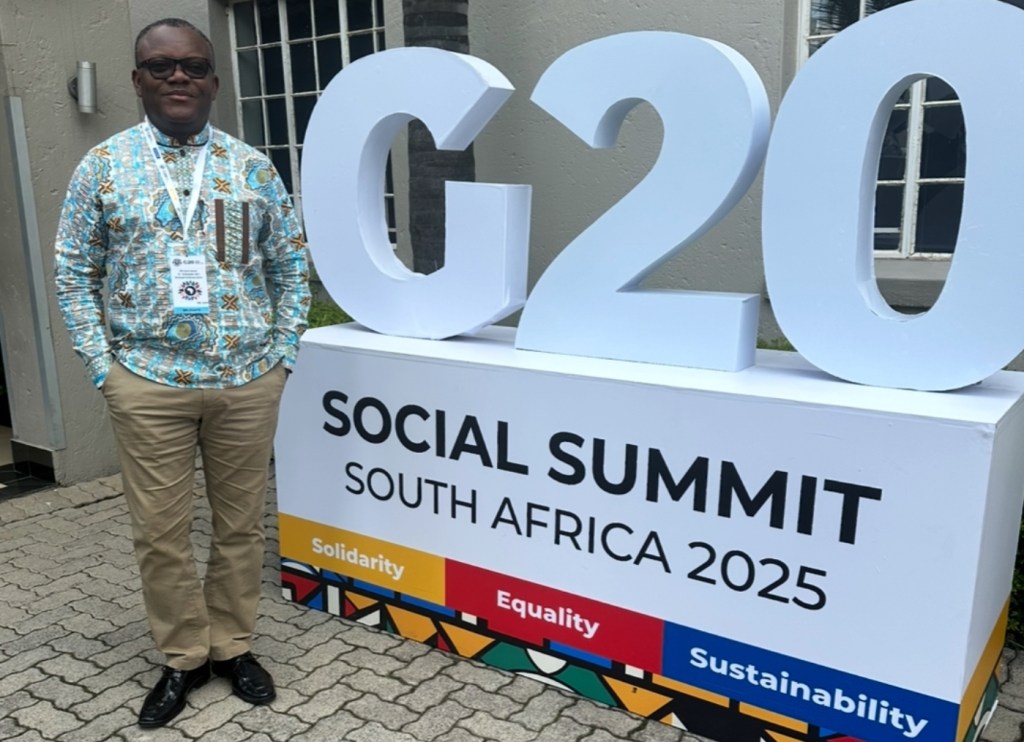
  • A Social Summit is planned to bridge policy with lived realities, giving voice to labor unions, civil society, and youth groups.
  • And many more…

If managed well, these parallel tracks could make the 2025 summit the most inclusive G20 in history.

6. Geopolitics on the Horizon: The U.S. Presidency Awaits

As the summit closes, South Africa will hand the presidency baton to the United States, ushering in the 2026 cycle under President Donald Trump.

This transition is likely to reshape the tone and priorities of the G20. From his previous to his current term, Trump often dismissed multilateralism as “globalist bureaucracy,” withdrew the U.S. from major climate commitments, and clashed with African nations, including South Africa over trade, immigration, and political values.

If history is any guide, Washington’s return to the chair may turn the G20 toward hard transactionalism rather than solidarity. However, global realities have changed: the war in Ukraine, the emergence of several other economic powers, and the growing assertiveness of the Global South mean that no single power, not even the U.S. can dictate the agenda alone.

The South African presidency, in that sense, may become the bridge year that sets boundaries: asserting that Africa’s concerns including debt relief, equitable energy transition, and representation, are now central, not peripheral, to global decision-making.

7. The Difficult Conversations

Even as Johannesburg prepares to welcome the world, divisions remain:

  • Debt restructuring remains painfully slow under the G20’s Common Framework.
  • Climate commitments are uneven, with disagreements on phasing out fossil fuels.
  • Wars in Europe and the Middle East risk hijacking the declaration text.
  • Reform of international institutions, including the IMF and World Bank, remains politically charged.

South Africa’s diplomacy will be tested, balancing moral clarity with pragmatic coalition-building.

This G20 is historic not only because it is being held in Africa, but because it may redefine what leadership looks like in a fractured world.

For Africa, it is an assertion of agency. For South Africa, it is a chance to prove that dialogue across divides is still possible. For the G20, it is a reminder that solidarity and sustainability are not slogans, but survival strategies.

If Johannesburg 2025 can deliver even a modest consensus on fairer finance, inclusion, and global cooperation, it will mark the beginning of a new era; one where the Global South is not at the margins, but at the centre of shaping the future of global governance.

If you’d like to receive my articles automatically as soon as they’re published, simply follow this blog using the “Follow” button at the bottom left of this page or send me an email at: Desire.Assogbavi@Assodesire.com

Outcomes of the African Union Summit in 7 Points

Published on 19 February 2024. This blog will be updated as more information comes in.

Official decisions of the just-ended African Union Summit will not be available for several weeks as per the practice, but based on intel, comments by delegations, and corridors discussions, here are what seem to be the 7 key outcomes of the Summit held in Addis Ababa, Ethiopia, from the 14th – 18th February 2024.

The theme of the Summit and the year 2024 is: “Educate an African Fit for the 21st Century: Building Resilient Education Systems for Increased Access to Inclusive, lifelong, quality, and Relevant Learning in Africa.”

The Summit adopted a Road Map on the theme devoted to Education and called upon the African Union Commission, AUDA-NEPAD, Regional Economic Communities, United Nations organizations, Development Partners, Civil Society Organizations, the Youth, and all other stakeholders to continue strengthening their support to Member States by facilitating the implementation of the roadmap.

The following issues have actually dominated the discussions at the Summit:

1/ Multilateralism & International Governance

Africa at the UN Security Council

The African Union reiterated that full representation of Africa in the reformed United Nations Security Council means:

  • i) Not less than two (02) Permanent seats with all the prerogatives and privileges of Permanent membership, including the right of veto.
  • ii) Five (05) Non-permanent seats.
  • iii) The African Union reserves the right to select its representatives for election to the UN Security Council to act in its name and on its behalf.

Proposed Modalities for the Participation of the African Union in the G20 and Preliminary Priorities

At the G20, AU aims to leverage Africa’s position in the world economy as well as contribute to meeting the emerging global challenges

Participation in the Leaders’ Summit:

  • The Chairperson of the African Union, assisted by the Chairperson of the African Union Commission, will represent the African Union (previously decided)
  • The Chairperson of the Commission to propose positions to the Assembly to be advanced as African Common positions in the G20 Leaders’ Summits.
  • The Chairperson of the African Union, assisted by the Chairperson of the Commission to debrief the Assembly on the outcomes of the G20 Leaders’ Summits at the February sessions of the Assembly each year.

Participation in Ministerial meetings

  • The Chairperson of the African Union Executive Council, assisted by the Chairperson of the Commission to represent the African Union in the G20 Meetings of the Ministers of Foreign Affairs.
  • The Chairpersons of the AU Specialized Technical Committees, assisted by the respective Commissioners, to lead African Delegations to G20 sectoral Ministerial Meetings
  • The Chairperson of the Specialized Technical Committees (STC) on Finance, Monetary Affairs, Economic Planning, and Integration, assisted by the Commissioner for Economic Development, Trade, Tourism, Industry, and Minerals to attend the meetings of the G20 Finance Ministers and Central Bank Governors, assisted by the respective Commissioner(s);
  • The Ministerial Representatives to the G20 to propose draft African common positions through the Specialized Technical Committees for consideration by the Executive Council before it is advanced in the G20 Ministerial meetings and Leaders’ Summits

Sherpa and Sous Sherpa

  • The Chairperson of the African Union to appoint a Sherpa. As the AU G20 contact point, the Sherpa shall coordinate with the Chairperson of the African Union Commission and the AU Member States on the positions to be advanced in the various G20 Ministerial, Task Forces and Working Group meetings to ensure that the African Union prepares common positions ahead of each G20 meeting and speaks with one voice in the G20 meetings;
  • The Chairperson of the Commission to appoint a Sous-Sherpa to: (a)Act as liaison between the Commission and the Chairperson of the Union; (b)Work with and Deputize the Sherpa; (c)Report to the Chairperson of the Union on G20 matters.

South Africa, the only current African permanent member of the G20, will share lessons of experience in the G20 with the African Union.

Africa’s preliminary priorities at the G20 will be as follows: the reform of the international financial architecture, debt restructuring, food security and agriculture, energy transition, trade and investments, improving Africa’s credit rating to boost investment, health, and vaccine manufacturing.

Financing AU participation in the G20

African Development Bank (AfDB) and the African Export-Import Bank (Afreximbank) pledged to provide initial financing for the participation of the African Union in the G20.

Delegation of Power: The Executive Council (Foreign Ministers) will deal with G20 issues on behalf of the Assembly during its July Ordinary Sessions of the Council and, when necessary, convene extraordinary sessions.

2/ Election of the new leadership of the AU Commission (February 2025)

The Summit discussed the principles of inter-and intra-regional rotation following the English Alphabetical order under the decision Ext/Assembly/AU/Dec.1(XI) adopted during the 11th Extraordinary Session in November 2018 on the institutional reform of the Union as well as Article 14 of the revised Statute of the Commission.

If this is implemented, candidacies should be submitted based on a predictable inter-regional rotation with the allocation of specific portfolio(s) to regions as follows for the next election:

For example, considering the upcoming elections, if this principle is applied, we would have the following conditions for each position:

1. Chairperson of the AUC – Only the Eastern region may submit candidates.

2. Deputy Chairperson – Only the Northern region may submit candidates.

3. Agriculture, Rural Development, Blue Economy, and Sustainable Environment – Only the Southern region may submit candidates.

4. Economic Development, Trade, Industry, and Mining – Only the southern region may submit candidates.

5. Education, Science, Technology, and Innovation – Only the Western region may submit candidates.

6. Infrastructure and Energy – Only the Western region may submit candidates.

7. Political Affairs, Peace & Security – Only the Central region may submit candidates.

8. Health, Humanitarian Affairs, and Social Development – Only the Central region may submit candidates.

At this time, it is unclear whether the AU will go with this principle for the upcoming elections.

3/ Institutional Reform of the African Union: President Kagame steps down, and President Ruto takes over.

Frustrated by what most analysts call the “failure of the AU institutional reform” 6 years after the beginning of the process, President Paul Kagame decided to step down from championing the project. The Summit then appointed President William Ruto of Kenya as the new AU Champion on Institutional Reform. The remaining reform priorities are to be finalized by February 2025.

4/Peace and Security

The following situations have been discussed with no major decisions:

The tension between Ethiopia and Somalia, Sudan, South Sudan, Burkina Faso, Niger Mali, Gabon, Sierra Leonne, DRC-Rwanda, Central Africa Republic, Lac Chad Basin, and some thematic issues.

5/ The Theme of the year 2025 has been proposed to be: ‘‘Justice for Africans and People of African Descent Through Reparations’’.

The reparations for transatlantic enslavement, colonialism and apartheid, as a Flagship Issue and Project of the Union. The Commission is to submit a strategic framework document for the implementation of the Accra Proclamation on the same.

6/ Appointments

Chair of the African Union for 2024
  • Chairperson of the African Union for 2024: Mauritanian President Mohamed Ould Cheikh El Ghazouani. Angola is likely to take over in 2025.
  • Champion of the institutional reform of the AU: President William Ruto of Kenya
  • Champion for local manufacturing of pharmaceutical and non-pharmaceutical products, President Ruto from Kenya
  • Leader in Advancing the Cause of Justice and Payment of Reparations to Africans, enhancing advocacy for a common position on reparations in Africa, and forging a common front for Africa and the Diaspora at the global level: President Nana Akufo-Addo of Ghana
  • Mr. Wamkele Mene of South Africa was reappointed as Secretary General of the AfCFTA Secretariat for another four years.

10 new members of the Peace and Security Council for a term of 2 years:

1. Democratic Republic of Congo, Central Africa region

2. Equatorial Guinea, Central Africa region

3. Tanzania, Eastern Africa region

4. Uganda, Eastern Africa region

5. Egypt, Northern Africa region

6. Angola, Southern Africa region

7. Botswana, Southern Africa region

8. Côte d’Ivoire, Western Africa region

9. Sierra Leone, Western Africa, region

10. The Gambia, Western Africa region

7/ Calendar

2025 Summit of the AU

  • Executive Council, 12th and 13th February 2025;
  • 38th Ordinary Session of the Assembly, 15th and 16th February 2025

Special Summit to consider the post-Malabo CAADP implementation plan: November 2024

===========

Watch this space for more updates on Pan-African & African Union matters. Your comments and suggestions are welcome on this site or directly to my email address: desire.assogbavi@assodesire.com  or assogbavi@me.com .

If you want to systematically receive my articles as soon as they are published, please follow this blog at the bottom left of this page.