Crise Politique en Gambie: les Scenarios des Prochains Jours

La version en Englais ici: https://assodesire.com/2017/01/17/political-crisis-in-the-gambia-scenarios-of-the-next-days/

Le 19 Janvier prochain le mandat présidentiel de Yahya Jammeh devrait prendre fin après sa défaite électorale qu’il a d’abord reconnue officiellement avant de changer d’avis quelques jours après. L’homme qui a pris le pouvoir par la force il y a 23 ans persiste dans son refus de transmettre le pouvoir à son rival Adama Barrow, vainqueur, présentement en “exile” au Sénégal. Jammey compte certainement sur son armée et surtout sur les nouveaux Généraux qu’il vient de fabriquer dans la précipitation… il compte peut-être aussi sur ses pouvoirs “magiques”.

Adama Barrow a maintenant le soutien de la communauté international y compris l’Union Africaine,  l’ONU et un nombre important de partenaires occidentaux.

La CEDEAO est déterminée à faire du cas Jammeh un précédent historique qui donnerait un signal fort  à L’Afrique que rien ne sera plus comme avant dans la région. Elle est soutenue par l’Union Africaine dans sa ligne dure: “Yahya doit quitter le pouvoir ou on le chasse par la force”.

Tout porte à croire que le dialogue préalable, amorcé par la CEDEAO n’a pas de chance d’aboutir avant le 19 Janvier 2017 date à laquelle  Jammey devra perdre la légitimité de son pouvoir.

Aux dernières nouvelles, le Maroc  a envoyé une mission de la dernière chance à Banjul pour convaincre Jammeh de quitter le pays.

Je vous propose quelques scénarios pour les prochains jours:

Scenario 1: Yahya Jammey Persiste…Au 19 Janvier, Yahya Jammey reste au pouvoir en Gambie et empêche la prestation de serment d’Adama Barrow défiant la CEDEAO. Soit Il s’appuie sur l’armée pour se maintenir au pouvoir, soit  l’armée reprend le pouvoir à la faveur de la vacance du pouvoir et le re-confie à son chef, Yahya Jammey. La purge continue dans l’armée et au sein de la classe politique, des medias des défenseurs des droits de l’homme et même dans la population civile.

La CEDEAO intervient militairement avec l’accord du Conseil de Sécurité des Nations Unies (Ceci n’est pas garanti eu égard à la tension politique et idéologique entre les membres permanents du Conseil) et le soutien politique de l’Union Africaine mais à cause du manque de moyens sophistiqués, l’intervention prend du temps pour se concrétiser et se réaliser.  Il y a beaucoup de pertes de vie humaines des deux côtés, des règlements de comptes ont lieu dans l’armée, dans la population civile et dans la classe politique. Dans sa méchanceté Jammeh ordonne l’exécution de ceux qui ne le soutiennent pas. C’est le plus grand risque lié à l’intervention militaire.

Yahya Jammeh réussi à s’enfuir ou est arrêté pour être jugé. Malgré  sa  résistance l’armée gambienne fini par capituler. Adama Barrow est installé au pouvoir mais on compte beaucoup de mort. Une victoire amère…

Scenario 2: L’armée gambienne lâche Jammeh: A l’instar de certains membres du gouvernement, l’armée gambienne lâche Jammeh en dernière minute et fait allégeance à   Adama Barrow. Il y a moins de dégâts… C’est le scénario que je souhaite le plus...  Un coup d’état contre Jammeh n’est pas à exclure non plus.

Scenario 3: Adama Barrow  prête serment dans une ambassade gambienne à l’extérieur du pays…, Il devient donc le Chef d’Etat légitime et a le pouvoir de solliciter l’intervention militaire de la CEDEAO sans passer par le Conseil de Sécurité… On a la même suite qu’au scénario 1…

Scenario 4: Yahya Jammey quitte le pays le 19 Janvier ou avant pour une destination connue ou inconnue…Adama Barrow, soutenu par la CEDEAO prête serment en Gambie et s’installe au pouvoir. Il y a toujours un risque sérieux de règlement de comptes et de chasse aux sorcières au sein de la population et de l’armée. Barrow doit jouer rapidement au rassembleur et menacer de juger ceux qui seront coupable d’attaques sur leurs concitoyens. Un grand pas est marqué vers la démocratie. La CEDEAO prend d’avantage d’autorité et de légitimité. On cherche Jammeh pour le juger…

Lequel des scenarios est le plus probable ?… Jugez-en vous-même et faite moi part de votre opinion sur mon blog.

Why is Africa’s Civil Society under Siege?

After years on the margins of the mainstream development agenda, addressing civic space is finally getting the attention it deserves. If the number of policy initiatives, conferences and campaigns is any indication, creating the conditions for democratic participation, citizen activism and effective civil society organisations (CSOs) is again a priority of several donors and agencies.
In large part the renewed emphasis on civic space reflects a worsening situation on the ground, especially across the African continent… Read here: ‪ http://oxfamblogs.org/fp2p/why-is-africas-civil-society-under-siege/#.WFJTocPTjhI.twitter‬  

Le «Retour» du Maroc à l’Union Africaine: Une Opportunité ou un Challenge?

Le Royaume du Maroc a présenté officiellement une demande d’adhésion à l’Acte Constitutif de l’Union Africaine pour «redevenir» membre de l’Union. La demande a également été remise au Président de la Commission de l’UA,  Dr Dlamini-Zuma par le conseiller du Roi Mohammed VI aux Affaires étrangères, Taieb Fassi Fihri, le 22 Septembre 2016, lors d’une réunion tenue en marge de la 71e session de l’Assemblée Générale des Nations Unies à New York.

S’il est géré de bonne foi et en respectant les principes de base de l’Union Africaine, le retour du Maroc à l’Union Africaine pourrait avoir de nombreuses répercussions positives pour l’UA et potentiellement faciliter la résolution du conflit du Sahara Occidental. Dans le cas contraire, cette évolution comporte tous les risques de dangereusement diviser l’Union Africaine.

J’aimerais partager ici mes opinions personnelles sur certaines des implications de ce «retour». Voir la version en Anglais de l’article ici: http://wp.me/p4ywYV-bh

En juin et juillet 2016, le Maroc a entrepris une campagne diplomatique en prélude au Sommet de l’Union Africaine. Des émissaires marocains ont visité le Sénégal, la Côte-d’Ivoire, la Zambie, le Cameroun, l’Ethiopie, l’Egypte, le Soudan, le Kenya et la Tunisie. Quelques jours avant le Sommet, le Président Paul Kagame du Rwanda, pays hôte du Sommet a eu une visite de deux jours au Maroc et a été décoré avec la plus haute distinction d’honneur du Maroc. De même, la Zambie a envoyé son ministre des Affaires étrangères à Casablanca où il a annoncé la décision de son pays d’annuler la reconnaissance de la  République Arabe Sahraouie Démocratique.

Au cours du Sommet de l’UA à Kigali, le Roi du Maroc a envoyé une lettre officielle au Président de l’Assemblée de l’Union Africaine indiquant que le Maroc souhaiterait revenir à l’UA. Le Président en exercice de l’UA, le  Tchadien Idriss Deby aurait refusé d’inscrire  ladite lettre à l’ordre du jour du Sommet. Au cours de la deuxième journée du Sommet, les délégués ont vu circulée une motion demandant la suspension de la République Arabe Sahraouie Démocratique de l’UA. La motion, qui aurait été approuvée par 28 États a été catalysée par le Président du Gabon Ali Bongo avec le soutien d’autres alliés tels que le président Macky Sall du Sénégal. La motion n’a cependant pas pu être présentée.

L’entrée du Maroc à l’Union Africaine Pourrait être Positif

Le Maroc, membre fondateur de l’Organisation de l’Unité Africaine (OUA) avait claquée la porte y a 32 ans suite à  l’admission de la RASD comme Etat membre de l’Union. Au cours des années 2000s, l’OUA a été transformée pour devenir l’Union Africaine avec un nouveau traité ; l’Acte Constitutif de l’Union et des objectifs renforcés. Sur le plan juridique, l’UA donc est une nouvelle organisation et tous ses 54 membres actuels ont souscris à ses visions et principes fondamentaux en ratifiant le nouvel Acte Constitutif. Pour le Maroc il s’agira donc d’une adhesion, pas d’un retour…

Je n’ai pas vu le contenu de la requête du Maroc mais une telle demande implique  forcement l’acceptation sans réserve par le Maroc des principes de base de l’organisation. Le Maroc devra alors cohabiter avec tous les membres de l’UA, y compris la RASD. Ceci ouvrerait aussi la porte à une résolution pacifique et acceptable du conflit du Sahara Occidental. L’UA pourra alors regagner de l’influence pour faciliter le processus.

Des Avantages en Matière de Paix et de Sécurité : L’entrée de Maroc dans l’Union Africaine pourra augmenter les chances d’une solution africaine aux crises dans la région du Maghreb, le Maroc étant un acteur majeur en matière de sécurité en Afrique du Nord et un leader dans la lutte contre l’extrémisme et le sécularisme islamique. L’Union du Maghreb Arabe (UMA) a été la Communauté Economique Régionale la moins fonctionnelle. L’engagement du Maroc ou de l’UMA dans les opérations de soutien à  la paix  de la Force africaine en attente pourrait augmenter sa capacité de façon significative. La lutte contre le terrorisme a été l’un des défis les plus importants pour lesquels le Maroc pourra être un allié sérieux  s’il devient membre de l’Union.

Un Gain Economique Majeur: la réussite économique du Maroc serait un sérieux atout pour le programme d’intégration économique de l’Union africaine et des programmes spécifiques tels que l’Agenda 2063.

Une avancée Historique: Le retour à L’Union Africaine d’un Etat clé de l’histoire du panafricanisme projetterait une image positive du continent.

pic-blog2

Un Retour «Forcé» du Maroc Pourrait Dangereusement Diviser l’Union Africaine

Dans une récente interview, le Président Macky Sall du Sénégal soutenant le retour du Maroc a déclaré: «Le Maroc a décidé de revenir et a demandé que la légalité constitutionnelle internationale soit respectée, conformément aux principes de l’ONU où le Sahara Occidental n’est pas représenté comme Etat indépendant ”, se référant ainsi à la récente tentative avortée de 28 pays pour suspendre la République Arabe Sahraouie Démocratique de l’UA par une motion. Le Président Hery Rajaonarimampianina de Madagascar a également  salué la décision du Maroc et a promis de tout faire pour que ce retour légitime se concretise dès le plus vite possible.

Le Maroc multiplie des actions en faveurs des Etats membres de l’Union à travers la création et le renforcement de liens diplomatiques et économiques. Le Maroc élargis son cercle traditionnel d’amis (Afrique de l’Ouest) à d’autres régions du continent notamment avec le renforcement récent des relations diplomatiques avec le Rwanda,  l’Ouganda et la Zambie. L’élargissement de ce cercle constitue à n’en pas douter une menace réelle  pour la RASD. L’Union Africaine prend normalement ses décisions par consensus mais il est peu probable d’avoir ce consensus sur la question de maintenir la  RASD ou non au sein de l’Union Africaine. Même une majorité simple sera difficile à obtenir dans la configuration actuelle.  D’ailleurs, il n’existe aujourd’hui aucun mécanisme permettant d’expulser un Etat  membre de l’Union Africaine en dehors du cas de suspension pour non-paiement de cotisations ou en cas de coup d’Etat.

Les Etats super-influents comme l’Afrique du Sud, l’Algérie et le Nigeria sont loin de laisser passer une motion d’expulsion ou de suspension de la  RASD  de l’Union Africaine. Même au pire des cas, une action dans ce sens remettra en cause le sacro-saint principe du droit à l’autodétermination, un des principes fondateurs de l’OUA. L’Union Africaine en sortirait profondément affaiblie et devisée.

Le Maroc pourrait également utiliser une stratégie différente qui serait de faire entrée soft dans l’Union Africaine en acceptant la position actuelle de l’organisation sur le Sahara Occidental, mais continuer la bataille contre la RASD au sein de l’Union avec le soutien des alliés. Cela me semble être le scénario le plus probable mais aussi le plus facile pour intégrer  l’Union … Mais le Maroc et ses alliés réussiront- ils à bouter la SADR dehors? Telle est la question…

Il est important de souligner ici que l’Afrique a beaucoup plus a gagner d’un règlement pacifique du conflit Sahraoui sur la base des principes fondateurs de l’Union Africaine, des droits fondamentaux de l’homme et du droit international.

“Year of Human Rights”: Recommendations to the AU Summit in Kigali

To give a true meaning to the “Year of Human Rights” The Kigali AU Summit should adopt the following measures: 1- On Civic Space: The Summit should decide a moratorium on all existing national laws…

Source: “Year of Human Rights”: Recommendations to the AU Summit in Kigali

Pre-AU Summit Multi-Stakeholders Debate: My Opening Remarks

” 2016: African Year of Human Rights”IMG_1885

Wednesday, 29th June, 2016 – Radisson Blu Hotel, Addis Ababa

 Excellencies, Ambassadors and Representatives of International Organizations,

Colleagues, Partners and Friends,

All protocols observed!

Ladies and Gentlemen, Welcome!

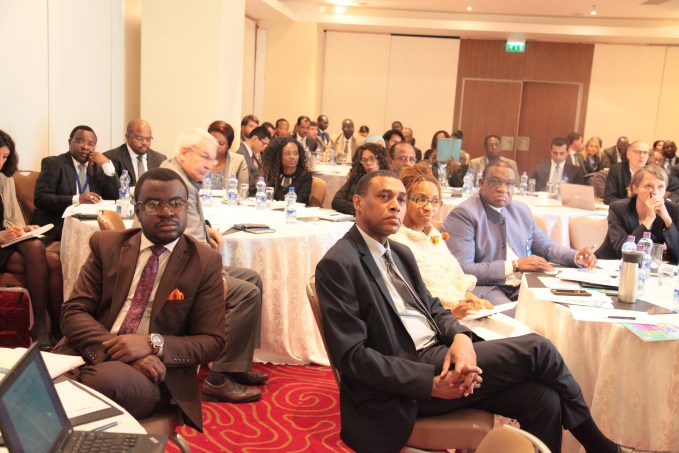
It’s an honor and a pleasure for me on behalf of Oxfam, to welcome you to this Multi-Stakeholder discussion ahead of the 27th Summit of the African Union.

Our expectation is that this platform will allow us to analyze various policy options, expectations and, implications of the upcoming Summit outcomes.

The upcoming Summit is going to an interesting one ….not only because of the main theme of the year —- Human Rights with special focus on the rights of women … but also with regard to the other crucial issues on the agenda for the future of our continent and our Union.

Interestingly, 2016 is being marked by a serious decline on fundamental human rights in Africa with numerous violations of basic civil and political rights and a denial of the African Union “shared values” by a number of member states…. And the Summit itself being held far from the citizens, the right holders.

In Kigali, Heads of State and Government will have an interactive discussion, and… a solemn declaration will adopted on the theme as usual…

As a citizen of this continent, I have several questions, which I believe, are also shared by many other fellow citizens.

  • What shall we expect from Kigali?
  • Would this Summit come up with a strong and credible solution for the numerous HR violations in our continents? Torture to death of political leaders, harassment of opponents, denial of free and fair elections etc…
  • Would this Summit resolve the issue of financial dependency of the African Union from external partners? Would the African Union continue turning to partners to collect 70% of its budget?
  • Would the African passport ever get in the hand of ordinary citizens to allow them to move freely within the continent? Or, is it made only for leaders who, in fact do not need it?
  • What is the way forward to hold high ranked criminal accountable in Africa, now that the ICC is declared “non gratta” in our land while we still do not any functioning mechanism to hold accountable those who are freely killing our innocent people?
  • Who will champion discussions on electoral frauds and violence as well as unlimited presidential terms issues, knowing that if these issues are not resolved, violent conflicts will continue being our daily bread and our development plans including the Agendas 2063 /2030 will remain just “beautiful papers”.
  • Can we really convince the citizens of Burundi, South Sudan, DRC, Sudan, Western Sahara etc… that this is their Year of Human Rights?
  • How do we establish a credibility of the AU in terms of the implementation of its decisions?
  • What is the solution for our +5 Million refugees and +20 Million IDPs

Of course there are a few positive developments in our continent but looking to our challenges… we are rather on a slippery slope

Finally; Will the AUC election happened? Will the long overdue restructuring of the AUC Commission finally adopted to fit with the implementation of Agenda 2063

Ladies and gentlemen, we have a lot to chew and to digest today. Let’s make it freely and honestly…

This debate will be under Chatham House Rules in order to allow free expression…

I would like to thank sincerely our panelists and the Chair who accepted to join us despite their busy schedule at this moment: Ambassador of Ghana H.E.  Albert Yankey, Madame Jennifer Chiriga Chief of Staff of the African Union Commission Dr. George Mukundi from the African Governance Architecture, AU Commission, Comrade Don Deya from the Pan Africa Lawyers Union,  and Brenda Mofya from Oxfam International: Thank you for coming….

Thank you all for your attention; I wish us a good debate…

IMG_1926


The Controversial Closing of the AU Summits to Citizens/Observers

Observers including citizens and their formations as well as non-African countries and other bodies are not invited to the upcoming Summit of the African Union  to be held in Kigali, Rwanda next mo…

Source: The Controversial Closing of the AU Summits to Citizens/Observers

Shrinking Civic Space in Africa

Sharing my presentation on “Shrinking Civic Space in Africa”, given at a seminar on the “Challenges of the Rule of Law in Africa” hosted by International IDEA in Pretoria, South Africa 12-13 April 2016.

You can read it here: https://issuu.com/assogbavi/docs/shrinking_civic_space_-_desire_asso/1

The African Union Summit in 10 Questions

Dear Friends: I am re-posting this blog from last year. You may also want to read my blog on the issues on the agenda of the  upcoming 26th AU Summit (24 -31 Jan 2016): https://assodesire.wordpress.com/2016/01/07/hot-issues-on-the-au-summit-agenda/

The African Union Summit in 10 Questions

The African Union Ordinary Summit is the gathering of all key policy organs of the African union. Two ordinary Summits are held every year and each Summit consists of three 2-day meetings that always take place in the same sequence. Usually, there are 1 or 2 days breaks between these meetings. The Permanent Representatives Committee (all ambassadors representing their countries to the AU) meets first, followed by the Executive Council (Ministers of Foreign Affairs) and then the Assembly of Heads of State and Government.

When are the AU Summits Organized?

As a rule, the January Summit takes place at the AU headquarters in Addis Ababa, Ethiopia. The June – July Summit is held in a different Member State each year. The AU can also convene extraordinary Summits at the request of the Chairperson or a Member State with approval by a two-thirds majority of the Member States.

Who Participates in the AU Summit?

The AU Summit gathers up to 4,000 delegates, observers and media from the 54 African Countries, AU organs, partners countries, UN Agencies, other International Organizations and NGOs

How to Obtain Accreditation to the AU Summit?

Accreditation to a summit is a separate process from obtaining observer status with the AU. It is not necessary to have observer status to be accredited to a summit. Accreditation starts three months before a summit. If the summit is taking place elsewhere than Addis Ababa, the host government will usually establish a separate website with protocol information and application forms. This information is normally also posted on the AU website. There are different types of accreditations:

Delegate – Governments of Member States

Observer – NGOs, non-African governments, UN agencies

Staff – Host government, AU Commission and other AU organs

Media – national and international press

Special Guest

Security etc.

Civil society organisations wishing to obtain accreditation to a summit should request accreditation from CIDO (CIDO@africa-union.org) at least 3 months in advance of the Summit. Other AU Directorates and Departments may also forward the names of selected partner organisations to be accredited as observers. The Office of the Chairperson of the AU Commission, where CIDO is located, draws up the final invitation list. Two types of badges are required for the summits. One is a security badge bearing your photograph. The other type (conference badge) indicates the meetings which you can attend. Normally only 2 of the later are given per organization. The Security badge allows access to all open area where you can meet delegates for interactions.

What does Observer Status Mean at the AU Summit?

Observer status at a summit does not give speaking rights, or even the right to attend more than the opening and closing ceremonies of the Executive Council and Assembly sessions but productive lobbying and advocacy can be done in the corridors of the meeting venues and at the parallel side meetings. However, the AU Commission mentions on the invitation letters that observers can be authorized to participate in working sessions of the Council dealing with agenda items of which the AU Commission considers that they are concern.

The PRC and Executive Council meetings may be more productive to engage than the Assembly of Heads of State meetings.

 How Decisions are taken at the AU Summit?

Decisions of the African Union Executive Council and Assembly are normally the result of work done months before each summit by the Commission and other organs, and in decision-making processes within individual member states. The majority of proposals presented to the Assembly have already been largely agreed before they are tabled at a summit. Documents adopted by the Assembly usually start life as a policy proposal from one of the AU Commission’s departments, from another AU organ or from a Member State. These proposals are debated in an experts’ meeting, whose members are nominated by Member States, and then in a meeting called for the relevant Ministers from Member States to approve or amend the experts’ proposals. With the exception of decisions with implications for the budget which are then considered by the PRC, the final documents from the ministerial meeting will go directly to the Executive Council and/or Assembly for adoption.

A group composed of 15 AU member states, supported by the AU Commission, form the Drafting Committee. On the basis of the various reports and recommendations from policy organs and AU members and the AU Commission, the drafting committee prepares decisions for the Executive Council and Assembly normally prior to the Summit. This draft is of course deeply debated and can be widely differ from the actual decision adopted. Reaching consensus, which is the preferred method of the AU, is not always easy; as some Member States attempt to influence the process in order to safeguard their national interests.

Are there any influencing opportunities at the AU Summit for Non State Actors?

Normally, there is very little room to catalyse deep policy changes at the Summit level only. Engagement must start from the birth of the process described above. However influence may happen on current or on-going issues or issues on which countries have failed to reach strong consensus during the process. The AU Summit presents also important opportunities for networking for further engagements and for media work to raise and draw policy makers’ attention on important and current issues. It is also a unique opportunity for organizations, donors and other personalities operating on a wide range of issues from the whole continent and elsewhere to be at the same place at the same time. Non-State actors can hold policy influencing side events during the AU Summit and have their delegates present at the AU Commission, UNECA and in various hotels where official delegates stay. A number of pre-summit consultations are held by CSOs including women groups. ECOSOCC and CIDO are also supposed to hold a CSOs pre-summit event but this has not been consistent in recent years.

What is the criteria for CSOs Accreditation at the Summit?

Access to AU meetings is not automatic. It is based on rules and procedures of the AU. Due to space constraint, the AU Commission makes choices based on the timing of application, role envisaged in the Summit, activities related to the themes of the Summit, history of association and institutional relation with the AU etc. So, not all applicants are accredited. Over the last few years, the number of CSOs invited has been increasing.

 Which Other Meetings are Held during the Summit?

 Other AU organs also hold official side meetings during summits, such as:

– The Peace and Security Council

– The African Peer Review Forum/Mechanism

– The NEPAD Heads of State and Government Implementation

– Sub – Committee etc.

How is Media Work Organized at the AU Summit?

The AU Commission always set up a high-tech press centre offering 24-hour internet facilities, daily press briefings, and press kits. NGOs can also request to use briefing rooms of the Commission to hold their press events. The Department of Information and Communication of the Commission helps to invite the Medias to all press events held at the Commission. Press events are an excellent way to reach policy makers during the Summit.

2015 in review

The WordPress.com stats helper monkeys prepared a 2015 annual report for this blog.

Here’s an excerpt:

A New York City subway train holds 1,200 people. This blog was viewed about 4,100 times in 2015. If it were a NYC subway train, it would take about 3 trips to carry that many people.

Click here to see the complete report.