Active Citizenship for an Effective Development Process in Africa

This is the summary of a paper I presented today 1st September 2021 at the University of Johannesburg, South Africa, during the conference on “Good governance, participatory democracy, and social justice: Civil society as an agent of change and innovation in Africa”

Good morning, Ladies and Gentlemen

My main point for the 10 minutes I have, is to demonstrate how citizens’ participation in governance, which includes accountability from power holders, could make a big difference, and shorten our journey to development, reduces corruption, and obviously reduce inequality and poverty.

I will quickly look at it from a national angle to regional and continental perspectives and I will conclude with a few recommendations on how we can remove obstacles to active citizens’ participation.  

The realization of an integrated, peaceful, and economically developed Africa needs the full involvement of all segments of our society. It cannot be left in the hands of the only politicians holding office.

The conduct of national, regional, and pan African affairs should make room, both institutionally and informally for the participation of citizens as individual and their formations, in groups.

Our continental Agenda 2063 itself, recognizes that people’s ownership and mobilization are crucial,… as critical enablers to concretize Africa’s aspirations. So, for a prosperous and democratic society, the state, and a well-organized civil society should be seen as the two sides of the same coin. They complement each other. Civil society must be seen as a reservoir of social capital, capable of contributing into all aspects of national, regional and continental development.

The evidence is clear. We have seen it ! Citizens’ engagement with their leaders improves the delivery of inclusive, accessible, and responsive public service. These include the provision of healthcare, safe water, quality education and decent jobs etc…. Today, looking at the challenges that our continent is facing, supporting democratic accountability and participation towards, a people-driven development has never been more urgent.

If we exclude or limit citizens from policy development, we will experience poor political and policy accountability mechanisms. Poor accountability leads to service failure, abandoned projects, waste, institutional inefficiencies and, will further exacerbate poverty…. That is why, my organization, the ONE campaign focuses its entire actions on citizens participation, active citizenship!!!

We identify recruit, train, mobilize and provide platforms for grassroots campaigners and their formations, to engage with political leaders and policymakers in order to catalyse change.

The influence of civil society in national and continental policy making does not diminish the relevance of governmental or inter-governmental processes, rather, citizens’ actions enhance and inform it.

If we look at the area of human security, for example, because of their immersion within the society, civil society organizations have vocation, and the ability to contribute to peace building initiatives and social cohesion.

In conflict affected area, Civil Society has shown its capacity to organise the collection, analysis, and evaluation of first-hand information, allowing the identification of the sources of potential tensions as well as emerging conflicts.

While traditional conflicts were well understood by diplomats and specialists in political science, addressing adequately new conflicts, requires much more on-the-ground understanding, new skills of social and cultural analysis, the active involvement of communities and their leaders, links to vulnerable groups, and new ways of working. Most of the time, civil society organisations have unique capacities in all those areas.

At national level

Unfortunately, we have been facing a reality in which, too many countries on the continent, have adopted and continue to adopt national legislations reducing civic space. There are increased control and undue restrictions on the formation and the activities of CSOs.

Some governments perceive CSOs as economic saboteurs, inciters of violence, or, an extension of political opposition parties or even, agents of foreign interest.

The reality is that since 2012, new restrictive CSOs laws have been adopted in more than 30 countries in Africa. Limited civic space, restricts the ability of citizens to participate in public life, and speak truth to power. This constrains one of society’s primary tools to prevent political capture of the state and its resources.

Of course, promoting civic space does not tacitly imply that civil society should be unregulated and free from government oversight. We are not saying that. On the contrary, reasonable regulation is legitimate, necessary and can enhance effectiveness and accountability in the sector. Yet regulations must not be overly burdensome, driven by political motives, and design to shot down independent voices.

Africa has a proud history of civic activism.  social movements and activists were a vital component of most independence struggles, and, civil society was a driving force behind state formation and state building.

This should continue as we face new challenge. Unfortunately, CSOs are under threat!!! Especially at national level.

At Regional Level

Civil society and coalitions that are targeting regional and pan African institutions have an important role to play as a complement and a backup to national groups. They are less exposed to risks compared to national CSOs and in many cases they can really contribute, influence and pressurize member states through regional and continental bodies on regional policy issues.

While this is important, we know that, the actual implementation of decisions happens at country level, Fundamental changes in people’s life happens at national level so we should mobilize, and regroup to stand strongly against any shrinking or even shifting of civic space in our countries.   

It is then important that the African Union and the Regional Economic Communities step in, this unfortunate trend.

So, what can we do?

At continental and regional levels, we do have a strong normative framework!

The entire transformation of the OAU to the AU is justified by the importance of citizens’ participation. Other Regional bodies such as ECOWAS, SADC, EAC etc, give ways legally to CSOs participation and constitutions of many member states recognize that organized civil society is a legitimate and authentic expression of fundamental human rights…. But then, laws being made on political consideration come to mess things up…

A few suggestions:

  1. We need to first, push for a moratorium of restrictive CSO law in Africa, and bring the debate to a regional and pan Africa levels….
  2. A few progressive member states should table the issue in the regional debate then take it to continental discussion: South Africa, Botswana, Senegal, Zambia, Nigeria etc… could play a leading role. There are reasons to do so…. We cannot reach the Africa we want, the Africa that is described in the Agenda 2063…. We can’t get there without a genuine citizens participation…  
  3. I know there have been a number of analysis of existing restrictive laws but I believe we need an independent continental taskforce to be commissioned by the AU to look at the situation, review laws and regulations that affect civil society organizations and make a report to the Assembly of Union for a progressive decision.
  4. CSOs on their side need to regroup on this matter and organize…. Not agonize.
  5. I really want to believe that this gathering, the CSO Conference constitute the beginning of a continental revolution to save Civic Space…

I thank you !!!
L’Union Africaine Suspend le Soudan: Quelles en sont les Conséquences ?

English version here 

En réponse à la répression sanglante le Lundi 3 Juin 2019, du sit-in des manifestants civils soudanais,  qui exigent des  militaires au pouvoir depuis la chute d’Omar Bashir , un gouvernement civil et démocratique, le Conseil de Paix et de Sécurité (CPS) de l’Union Africaine a sorti ses muscles.

La 854eme Session du Conseil  a décidé, «conformément aux instruments pertinents de l’Union Africaine, en particulier l’Acte Constitutif de l’Union, le Protocole relatif à la création du Conseil de Paix et de Sécurité et la Charte Africaine de la Démocratie, des Elections et de la Gouvernance, de suspendre, avec effet immédiat, la participation de la République du Soudan à toutes les activités de l’UA, jusqu’à la mise en place effective d’une Autorité de transition sous conduite civile, seule voie à même de permettre au Soudan de sortir de la crise actuelle». C’est une décision sans appel, claire et non équivoque qui suscite quand même quelques questions juridiques, politiques et de clarification. Je vais en aborder quelques-unes dans ce blog.

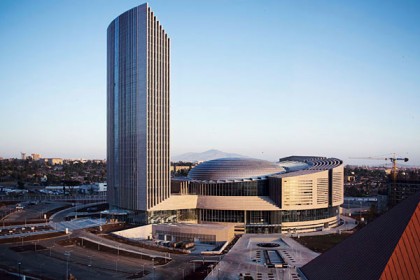
AfricanUnionHeadquarters

Je rappelle que les affirmations de ce blog sont purement personnelles et n’engagent pas mes employeurs actuel ou passés.

 Quelles sont les implications directes de la suspension d’un Etat membre des Activités de l’Union Africaine ?

Les textes évoqués par le Conseil de Paix et de Sécurité dans ses différentes sessions  sur la situation au Soudan n’ont pas donnés tous les détails  sur les conséquences d’une suspension d’un état membre.

Sur le plan politique Il faut reconnaitre que la suspension du  Soudan affaiblit la légitimité internationale, déjà fragile du Conseil militaire de transition au pouvoir. L’Union Africaine a un poids politique incontestable dont la décision influencerait certainement des partenaires  internationaux du Soudan.  Aucun régime politique ne voudrait être dans une situation de suspension d’une organisation de 55 états membres, la plus importante institution pan Africaine sur le continent. En outre, les violations odieuses des droits de l’homme qui ont conduit à cette suspension, notamment le viol présumé de femmes et de filles, ont rendu la situation encore plus sombre. Les Nations Unies ont également condamné le recours excessif à la force par les forces de sécurité à l’encontre de civils et ont appelé à une enquête indépendante.

Dans la pratique la suspension d’un état aux activités de l’Union implique que les représentants dudit état  ne seront plus invités  aux activités des organes de l’Union jusqu’à la levée de la suspension. Ils perdent naturellement  leurs droits de vote. L’état en question ne pourra pas non plus abriter de réunions des organes de l’Union. Tous les organes et programmes sont concernés.  Ses représentants élus dans les comités et groupes de travail n’y auront plus accès comme membres.  Il n’est cependant pas clair si les représentants de l’état suspendu peuvent être  autorisés  à siéger dans les séances non-fermées  comme observateurs et sans droit de vote. A mon avis si la séance admet des observateurs (non-états membres de l’UA), un représentant d’un état suspendu devrait pouvoir y assister sans avoir droit à la parole et au vote. Il faut quand-même préciser que la suspension d’un état des activités de l’Union n’arrête pas  l’appartenance de cet état  à l’Union Africaine. En conséquence l’état suspendu doit continuer d’honorer ses obligations vis-à-vis de l’Union telles que les cotisations au budget de l’Union. D’ailleurs c’est dans cet esprit que l’Union Africaine continuera d’accompagner le processus de normalisation en collaboration avec la Communauté économique régionale géographiquement concernée. Dans le cas d’espèce, c’est l’IGAD (Intergovernmental Authority on Development) dont fait partie le Djibouti, l’Erythrée, l’Ethiopie, le Kenya, la Somalie, le Soudan, le Sud Soudan et  l’Ouganda.

Quels en sont les effets sur les citoyens de l’état suspendu ?  La Déclaration de Lomé de Juillet 2000 sur les changements inconstitutionnels de gouvernement suggère qu’il  faut veiller à ce que les citoyens ordinaires du pays concerné ne souffrent pas de manière disproportionnée du fait de l’application de sanctions aux tenants du pouvoir. Néanmoins dans la pratique l’impact de la suspension sur les citoyens est inévitable surtout si la suspension dure dans le temps.  Par exemple la Centrafrique avait été suspendue pendant trois ans, mais j’imagine que ce qui importe le plus ici pour les citoyens soudanais c’est le soutien politique et moral que représente la décision du Conseil par rapport à leur droit légitime à l’avènement d’un état démocratique.  Le Conseil a notamment réaffirmé « la solidarité continue de l’Union Africaine avec le peuple soudanais dans ses aspirations à un cadre constitutionnel et à des institutions pouvant permettre à leur pays de connaitre des avancées dans ses efforts sur la voie de la transformation démocratique »

Pourquoi la suspension du Soudan n’as pas été automatique aussitôt après le coup d’Etat comme dans d’autres cas dans le passé ?

Le Conseil de Paix et de Sécurité semble utiliser ce mécanisme au cas par cas  pour plusieurs raisons. La plus importante est que  le mécanisme de la Déclaration de Lomé et les autres instruments cités par le Conseil  avaient été rédigés dans un contexte de coups d’état classiques ou on ne connaissait pas tellement de soulèvements  populaires et les révolutions de la rue qui ont lieu de nos jours. Il est aussi vrai que l’espace démocratique s’est largement étendu en Afrique…  Il y a donc un problème de caractérisation des faits face à la  situation du Soudan aujourd’hui, mais aussi à celle de l’Egypte par le passé, de l’Algérie, du Zimbabwe etc. Il importe que l’Union Africaine se penche sur la définition du cadre d’intervention en cas de soulèvement populaire. Dans le cas du Soudan par exemple, le Conseil a  visiblement tenté de donner une chance aux militaires pour parvenir rapidement à un accord avec les civils, mais les évènements sanglants de cette semaine et l’absence de progrès dans les discussions ont fait changer la donne.

ETHIOPIA-ADDIS ABABA-18TH AU SUMMIT

Au-delà de la suspension du Soudan… le jeu des alliances avec ou sans l’Afrique.

D’aucuns se demandent si la suspension du Soudan des activités de l’Union Africaine est suffisante pour  faire courber les militaires au pouvoir.  Il faut déjà reconnaitre que le langage et la position du Conseil dans le cas soudanais est l’un des plus fermes de l’histoire. En plus, le Conseil menace qu’au cas où les militaires ne transféreront pas sans plus tarder, le pouvoir à une Autorité de transition sous conduite civile, le Conseil imposera automatiquement des mesures punitives aux personnes et entités faisant obstacle à la mise en place de l’Autorité de transition sous conduite civile. A l’ère où tout se mondialise y compris la justice et la redevabilité surtout en matière de droits de l’homme  personne ne veut prendre le risque  de faire face à ces éventualités.

Cependant, la tâche ne semble pas être si simple  dans une situation ou d’autres alliés du Soudan dans le continent et en dehors du continent  ne semblent pas aller dans la même direction que l’Union Africaine.  Il n’est donc pas étonnant de voir que dans son Communiqué, le Conseil de Paix et de Sécurité dans un langage fort a souligné, « la primauté des initiatives entreprises par les pays africains dans la recherche d’une solution durable à la crise au Soudan et a réitéré  son appel à tous les partenaires pour qu’ils soutiennent les efforts de l’UA et de l’IGAD et s’abstiennent de toute action susceptible de compromettre les initiatives entreprises par l’Afrique ».

Même si le Conseil de Sécurité des Nations Unies n’a pas pu s’entendre sur un texte commun et la conduite à tenir, une grande partie de la communauté internationale semble être alignée sur la position de l’Union Africaine. L’Union Africaine a en effet du potentiel et un poids politique assez important à ne pas négliger pour résolution du problème soudanais et bien d’autres sur le continent.

J’ai espoir que la raison prévaudra entre les parties prenantes soudanaises.  L’Afrique que nous voulons en dépens.

Si vous voulez continuer de recevoir mes blogs, abonnez-vous gratuitement   au bas à gauche de cette page.

Vos commentaires sont aussi les bienvenus sur ce site ou directement sur mon adresse email : assogbavi@me.com

African Union Suspended Sudan: What are the Consequences?

La version en Francais ici

In response to the bloody removal on Monday 3rd June, of the sit-in of Sudanese civilian protesters who are demanding a democratic government to the military in power since the fall of Omar Bashir, the African Union Peace and Security Council has pulled out its muscles yesterday 6 June 2019.

The 854th Session of the Council decided, “in line with the relevant AU instruments, in particular the AU Constitutive Act, the Protocol Relating to the Establishment of the Peace and Security Council of the African Union and the African Charter on Democracy, Elections and Governance, to suspend, with immediate effect, the participation of the Republic of Sudan in all AU activities until the effective establishment of a civilian-led Transitional Authority, as the only way to allow the Sudan to exit from its current crisis”. This decision is clear and unambiguous but it raises some legal,  political and practical questions. I will address some of them in this blog.

AfricanUnionHeadquarters

Please note that affirmations of this blog are purely personal and do not engage my current or past employers.

What are the direct implications of the suspension of a Member State from the activities of the African Union?

The instruments referred to by the Peace and Security Council (PSC) in its various sessions on the situation in Sudan have not given full details of the consequences of a suspension of a member state.

Political significance: It should be recognized that the suspension of Sudan weakens the already fragile international legitimacy of the ruling Transition Military Council. The African Union has an undeniable political weight and its decision will certainly influence international partners of Sudan. No political regime would enjoy to be in a situation of suspension from an organization of 55 member states, the most important Pan African institution on the continent. In addition, the heinous violation of human rights that led to this suspension, including alleged widespread rape of women and girls, made the picture even darker. The United Nations has also strongly condemned the violence and the use of excessive force by the security forces on civilians, and called for an independent investigation.

In practice the suspension of a state from the affairs of the Union implies that representatives of that State will no longer be invited to the activities of the organs of the Union until the lifting of the suspension. They naturally lose their voting rights. Nor can the State in question host meetings of the organs of the Union. All AU bodies and programs are concerned. Elected representatives of the suspended state in the various AU committees and working groups will no longer have access to them as members. It is unclear, however, whether suspended state officials may be allowed to sit in an open session as observers and without the right to vote. In my opinion, if the meeting admits observers (non-member states of the AU), a representative of the suspended state should be able to attend the meeting without the right to speak and to vote. However, it is necessary to specify that the suspension of a state of the activities of the Union does not stop the membership of the said state to the African Union. As a result, the suspended state must continue to honor its obligations to the Union, such as contributions to the Union budget. Moreover, it is in that spirit that the African Union will continue to support the normalization process in collaboration with the Regional Economic Community geographically concerned. In this case, it is IGAD (Intergovernmental Authority on Development) which includes Djibouti, Eritrea, Ethiopia, Kenya, Somalia, Sudan, South Sudan and Uganda.

What are the effects on citizens ?

The Lomé Declaration of July 2000 suggests that care must be taken to ensure that ordinary citizens of the affected country do not suffer disproportionately from the imposition of sanctions on those in power. Nevertheless in practice the impact of the suspension on the citizens is inevitable especially if the suspension lasts long. For example, the Central African Republic had been suspended for three years, but I can imagine that what is most important here for Sudanese citizens today is the political and moral support that the PSC decision represents for their legitimate right for a democratic state. In particular, the Council reaffirmed “the solidarity of the African Union with the Sudanese in their aspirations to constitutional order that will enable them to make progress in its efforts towards the democratic transformation of the country”.

ETHIOPIA-ADDIS ABABA-18TH AU SUMMIT

Why was Sudan’s suspension not automatic immediately after the coup as in other cases in the past?

The Peace and Security Council seems to use this mechanism on a case-by-case basis for several reasons. The most important is that, the mechanism of the Lomé Declaration and the other instruments cited by the Council had been drafted in the context of classic coups. Popular uprisings and street revolutions where not envisaged at that time. It is also true that nowadays the democratic space has spread widely in Africa so strong and persistent popular movements could not be ignored anymore … There is therefore a problem of characterization of the situation in Sudan today, but also that of Egypt a few years back, in Algeria, Zimbabwe etc. It is important for the African Union to look at defining the framework for action in the event of popular uprisings. In the case of Sudan, for example, the Council apparently tried to give the military a chance to reach an agreement with the civilians quickly, but the bloody events of this week and the lack of progress in the discussions had changed the situation.

Beyond the suspension of Sudan from AU activities and the game of alliances

Some question whether the suspension of Sudan from the activities of the African Union is sufficient to bend the ruling Transition Military Council. We should recognize that, already the language and position of the PSC is one of the firmest in history. In addition, the PSC threatens that, should the Transition Military Council fail to hand-over power to a civilian-led Transitional Authority, the PSC shall, without any further delay, automatically impose punitive measures on individuals and entities obstructing the establishment of the civilian-led Transitional Authority. There is also a move towards investigating the massive human rights violations. In a world where everything is globalizing, including justice and accountability, especially in the area of ​​human rights, no one wants to take the risk of facing these eventualities.

However, this does not seem to be so simple in a situation where other Sudanese allies within and outside the continent do not seem to be moving in the same direction as the African Union. It is therefore not surprising that in its Communiqué, the Peace and Security Council stressed “the primacy of African-led initiatives in the search for a lasting solution to the crisis in Sudan; and reiterated its call to all partners to support AU and IGAD efforts and refrain from any action that could undermine African-led initiatives”.

Even though the United Nations Security Council has not been able to agree on a common text and what to do, a large part of the international community seems to be aligned with the position of the African Union. The African Union has the potential and a significant political weight, to help solve the Sudanese problem and many others in the continent.

I hope that reason will prevail between the Sudanese stakeholders. We need that for the Africa we want.

If you want to continue receiving my blogs, follow this blog at the bottom left of this page.

Your comments are also welcome on this site or directly on my email address: assogbavi@me.com

Reforming AU’s ECOSOCC: We Should Get it Right…

Friends;

The Executive Council of the African Union (Ministers of Foreign Affairs) has ordered an in-depth audit exercise on the functioning  of ECOSOCC (Economic Social and Cultural Council of the African Union) since its inception. This exercise is expected to provide appropriate recommendations on ways and means to revamp the operations of the organ that is supposed to ensure Civil Society contribution within the African Union policy making process.

Invited by the African Union Commission, I have had the opportunity to address the group of experts launching this process on 30th October 2017 in Seychelles. In my presentation, after making some preliminary remarks on the importance of citizens’ participation in the AU decision making process, I have looked at practices in similar bodies in other institutions around the world, before making key recommendations on what needs to be changed to make ECOSOCC effective and efficient.

Here is my presentation

Please feel free to drop your comments on this blog or to assogbavi@me.com

The Failure of AU Commission Election : Lessons and Perspectives

The “failure” of the election of the African Union Commission Leadership is actually a positive development on my personal view for at least the two following reasons:

  1. Africa has much better to offer other than the 3 candidates on the list of the chairpersonship. I do not necessary mean they are not qualified at all but we do have better in stock.
  2. Two of the candidates were pushed ahead by two of the most brutal dictators in our continent who, by their governing styles are in a total denial of the African Union “shared values”. Electing their candidates to drive the AUC and its progressive programs and values including the Agenda 2063 will be really embarrassing for our Union. I know candidates do not represent their individual country and we must look at qualifications rather than political belonging/backing. However, in real life the influence of the country of origin of the Chair cannot be denied. I have seen it. Also, everybody knows that the presidents always allocated state money and resources to their candidates for campaign. It is not naive!!! On the other hand, it is about the image of our continent trying hard to embrace democracy and respect of human rights in order to move quickly towards sustainable development. We cannot let people sent by those who are in open denial of our values to manage the affairs of the Union. Dictators have been chosen as Chair of the yearly presidency of the African Union (and I hate it strongly!) but we all know that the role is not executive and has few practical impacts. It is however unacceptable to have an “agent” of a dictator to represent and lead the AU Commission, the engine of our Union for 4 years or more.

Solidarity in the Regional Blocs

The outcomes of the election have confirmed the strong solidarity within some of the regional blocs: ECOWAS and SADC.

ECOWAS made it clear and official that they want the elections to the postponed even though they have a candidate for the Deputy Chairperson seat.  I have no doubt that they have unanimously observed that position during the vote by abstaining.

SADC apparently has shown regional solidarity in supporting their candidates: the Botswana Minister of Foreign Affairs who came first in the vote. I am not sure what happened in the central and North Africa. Those 2 regions have been relatively weak in terms of solidarity. So, no big surprise even though some of them may have obviously joined the abstention group.

What is next?

The Assembly has decided to extend the mandate of Madame Dlamini-Zuma until the next elections and to reopen the candidacy for current and new applicants. Those are political decisions as the current rules of procedures are not clear about reopening the list but Rule 42 suggests that the Deputy Chairperson takes over in case of election failure . In 2012, new candidates were not allowed to apply after the deadlock Zuma/Ping.

There is now an opportunity to review the rules/procedures of the elections before January 2017. This is absolutely urgent, otherwise we may have another deadlock if falling regions want to revenge… I would be in favor of a simple majority instead of 2/3 if 2 candidates remain on the list without gathering the required 2/3 votes.

See my recent presentation on the AUC election including the list of candidates here: https://drive.google.com/file/d/0B2bKBoYxtnhlS3BIdGI2Yl9Ya00/view?usp=sharing

I am also in favor of a non-renewable longer term for the AUC Leadership as well as other necessary structural reforms I hope to write about those later.

Now the road is paved for Jakaya Kikwete, Donald Kaberuka, Thao Mkeki or Carlos Lopes to come in…. Who knows?


“Year of Human Rights”: Recommendations to the AU Summit in Kigali

To give a true meaning to the “Year of Human Rights” The Kigali AU Summit should adopt the following measures:

Desire1

1- On Civic Space: The Summit should decide a moratorium on all existing national laws that restrict CSOs’ operations and call for the revision of those laws before the end of the year in accordance to universal rights to freedom of peaceful assembly and of association. Since 2012, at least 29 restrictive laws  on civic space have been introduced in African countries.

2- All AU Members should commit to ratify the  African Court of Human and People’s Rights Protocol before the end of 2016. on  As of December 2015 only 29 out of the 54 AU members were Parties to the Protocol seventeen years after its adoption.

3- All AU Members  should accept the competence of the African Court of Human and People’s  Rights to receive cases from individuals and NGOs before the end of the year.  As of December 2016 only 7 countries have done so.

4- Kigali Summit should demand the immediate release of all political prisoners, stop intimidations and cases against political leaders  in all AU Members states and call for investigations on the recent cases of torture to death in Gambia, force disappearance and other gross HR violations in the continent.

5- The Kigali Summit should decide on concrete sanctions applicable to countries that do not comply to the HR Courts  decisions and the list of those countries should be published  regularly.

6- The African Passport in preparation for the Summit must be issued to  a number of ordinary citizens of the continent… not just to heads of state as currently planned.

7- Because of the high risk that constitutional amendments present now on  peace and security in Africa, the Kigali Summit should decide a moratorium on those changes aiming  to prolong presidential terms until a serious discussion happens and decisions  made at continental level in this.  Not doing it will be like jeopardizing the realisation of our Agenda 2063, “the Africa we want” and a denial of our shared values.

8- On the rights of women: all member states  should show case of  the concrete national policy and practice changes (with figures)  that they have operated since the adoption of the AU Women Rights Protocol and the Solemn Declaration on Gender Mainstreaming.

The African Union Summit in Rwanda: Which Human Rights?

The 27th Summit of the Heads of State of the African Union will be held in Kigali, Rwanda from 10 -18 July 2016 under the theme: “African Year of Human Rights with Specific focus on the Rights of Women”. The African Union Commission decided not to invite observers (Non-African countries, Non-State Actors and other) to this summit. I would like to share the following personal reflections on the Summit:

Issues likely to dominate the AU Summit

Which Human Rights? The year 2016 has been declared as the “African Year of Human Rights with Specific focus on Women’s Rights”.  Officially, this theme is premised on the realisation that 2016 marks a watershed in the continent’s efforts to promote and protect human rights and provides an opportunity to take stock of the gains made over the years by the human rights bodies within the continent.

Interestingly 2016 is being marked by a serious decline on fundamental human rights in Africa with numerous violations of basic political rights and a denial of the African Union “shared values” by a number of leaders, most of whom have been clinging to power for decades by all means including changing the supreme law of the land… the constitution.

In Kigali, Heads of State and Government will have an interactive discussion following a presentation on the theme by the African Union Commission and a decision or a solemn declaration/commitment may be be adopted on the theme as usual.

am not sure what an additional decision or declaration on Human Rights will be for… while in Gambia politicians and activists are being tortured to death and in Uganda  political opposition leaders and candidates  jailed before, during and after the elections… and this did not prevent regional and continental “observers” to declare  the elections free and fair….

After  failing to send troops to protect innocent civilians, can the heads of state really convince Burundians that this is their “Year of Human Rights” ?

If  our leaders are really serious about the “Year of Human Rights” they should consider  the  concrete suggestions below while making their decisions.  The upcoming Summit is also an opportunity for progressive, like-minded and pro-democracy and pro-” AU’s shared values” leaders to break the silence against old school dictators who are  only pulling our continent backward.

Elections of the AU Commission Leadership: The “hottest” business of the Summit is the election of the AU Commission Cabinet. The 10 cabinet members of the AU Commission including the Chairperson, the Deputy Chairperson and 8 Commissioners will be elected/re-elected in Kigali if everything goes well. The current Chairperson Dr. Nkosazana Dlamini-Zuma, who has only served one 4-year term (from 2012) is re-eligible but she is not contesting (officially) for another term.  The Deputy Chairperson, Erastus Mwencha and two other commissioners (Infrastructure and Energy, Rural Economy and Agriculture), having been elected twice (in 2008 and 2012) are not eligible for re-election.  The other six commissioners (Political Affairs, Peace and Security, Social Affairs, Trade and Industry,  Economic Affairs and Human Resources Science and Technology), who have only served one term are eligible for re-election. However except the Commissioner for Political Affairs and the Commissioner for Human Resources, Science and Technology, these have all put forward their candidature.

Some analysts think that, even if the election happens, it is unlikely for any of the current candidates for the Chairpersonship to gather the 2/3 votes from Member States,  needed to be elected. So, there is an eventuality for a postponement of the elections. Some countries/regions are  pushing for the postponement of the election and the  re-opening of the applications to new candidates.

Peace and Security: The summit is expected to discuss the on-going conflicts in the continent. The Peace and Security Council will also meet at Heads of State level. The Summit will normally adopt an omnibus decision on the state of peace and security in the continent. The following burning and unresolved situations will be discussed: Burundi, South Sudan, Sudan, DRC, Somalia, CAR, Western Sahara, Mali etc. Emerging threats to peace and security, such as maritime security and terrorism are also likely to be discussed.

Constitutionalism, Governance, Electoral Fraud/Violence & Unlimited Presidential Terms: It is not sure who will champion discussions on electoral frauds and violence as well as unlimited presidential terms issues in Kigali, but it is now in the common knowledge that if these issues are not resolved soon in Africa, more violent conflicts will emerge and our development plans including the Agendas 2063 /2030 will remain just “beautiful papers” with no prospect for realisation. It is expected that some progressive leaders will table these issues for discussion.

One African Passport/Free Movement: As part of the 10-year implementation plan of the agenda 2063, the AU is making efforts to create a single African passport for travel across the continent. Such a passport will presented to the heads of states in Kigali. In an attempt to promote free movement of people, related decisions are expected to happen during the Kigali summit. There is already a plan to adopt a protocol on free movement in Africa in 2018.  A few countries including Rwanda, Ghana and Namibia have issued “visa on arrival” policies for African passport holders. More countries must do so in the mean time.

African Agenda 2063: The AU’s Agenda 2063 has been adopted by African Heads of State and Government as the Continent’s new long-term vision for the next 50 years. Priority programmes and projects of the Agenda include: An Integrated High Speed Train Network, the Continental Free Trade Area, the African Passport and Free Movement of people, Unification of African Air Space, the Grand Inga Dam Project etc.  The 10-year implementation plan is having hard time to show concrete steps 3 years after the adoption of the Agenda while basic conditions for a true development move are getting worse in the continent.

Other issues: A number of other issues including the illicit financial flows out of Africa, the alternative sources of funding of the AU, the restructuring of the African Union Commission, the ICC etc. will also be on the agenda of the Kigali Summit. Find out more in the coming weeks on www.assodesire.com

Calendar of the Summit

  • From 10 to 12 July 2016: Ordinary Session of the Permanent Representatives’ Committee (Ambassadors)
  • From 13 to 15 July 2016: Ordinary Session of the Executive Council (Ministers of Foreign Affairs)
  • From 17 and 18 July 2016: Ordinary Session of the Assembly (Heads of State and Government)

Closing of the mid-year Summits to observers

In January 2015, the Assembly of the Union directed the Commission to make proposals on the streamlining of the AU Summits and the working methods of the Union in order to accelerate the implementation of the Agenda 2063. In June 2015, the Commission proposed a set of recommendations to the Assembly including a proposal that only one summit be open to partners and that only partners (observers accredited to the AU/with MOUs with AU) with business related to the theme of the Summit be invited to the AU Summit. The Assembly then decided among other things to “continue with 2 summits which should be streamlined with one Summit focusing on policy issues with participation of partners (…) and the other Summit focusing on the implementation of decisions”. The decision did not precise which of the 2 Summits will be open and which will be closed but given the practice of the last 2 years, it is looking like the January Summit will be open and the June/July summit closed.

The AU Commission is not inviting observers to the Kigali Summit. So, CSOs, non-African countries and other observers are not invited and their side events may not be allowed within and around the summit premises. This move is being strongly contested by the civil society and is seen as part of the whole strategy of governments to shrink civic space. (See my blog on this issue here: https://assodesire.com/2016/06/06/the-controversial-closing-of-the-au-summits-to-citizensobservers/ )

To give a true meaning to the “Year of Human Rights” The Kigali Summit should adopt the following decisions/ Commitments

1- On Civic Space: The Summit should decide a moratorium on all existing national laws that restrict CSOs’ operations and call for the revision of those laws before the end of the year in accordance to universal rights to freedom of peaceful assembly and of association. Since 2012, at least 29 restrictive laws  on civic space have been introduced in African countries.

2- All AU Members should commit to ratify the  African Court of Human and People’s Rights Protocol before the end of 2016. on  As of December 2015 only 29 out of the 54 AU members were Parties to the Protocol seventeen years after its adoption.

3- All AU Members  should accept the competence of the African Court of Human and People’s  Rights to receive cases from individuals and NGOs before the end of the year.  As of December 2016 only 7 countries have done so.

4- Kigali Summit should demand the immediate release of all political prisoners, stop intimidations and cases against political leaders  in all AU Members states and call for investigations on the recent cases of torture to death in Gambia, force disappearance and other gross HR violations in the continent.

5- The Kigali Summit should decide on concrete sanctions applicable to countries that do not comply to the HR Courts  decisions and the list of those countries should be published  regularly.

6- The African Passport in preparation for the Summit must be issued to  a number of ordinary citizens of the continent… not just to heads of state as currently planned.

7- Because of the high risk that constitutional amendments present now on  peace and security in Africa, the Kigali Summit should decide a moratorium on those changes aiming  to prolong presidential terms until a serious discussion happens and decisions  made at continental level in this.  Not doing it will be like jeopardizing the realisation of our Agenda 2063, “the Africa we want” and a denial of our shared values.

8- On the rights of women: all member states  should show case of  the concrete national policy and practice changes (with figures)  that they have operated since the adoption of the AU Women Rights Protocol and the Solemn Declaration on Gender Mainstreaming.

The Controversial Closing of the AU Summit to Citizens/Observers

Observers including citizens and their formations as well as non-African countries and other bodies are not invited to the upcoming Summit of the African Union  to be held in Kigali, Rwanda next month. This move is being strongly contested by the civil society and is seen as part of the whole strategy of governments to shrink civic space.

I am sharing the following personal reflections on the issue:

In January 2015, the Assembly of the Union directed the Commission to make proposals on the streamlining of the AU Summits and the working methods of the Union in order to accelerate the implementation of the Agenda 2063. In June 2015, the Commission proposed a set of recommendations to the Assembly including a proposal that only one summit be open to partners and that only partners (observers accredited to the AU/with MOUs with AU) with business related to the theme of the Summit be invited to the AU Summits. The Assembly then decided among other things to “continue with two summits every year which should be streamlined with one Summit focusing on policy issues with participation of partners (…) and the other Summit focusing on the implementation of decisions”. The decision did not precise which of the 2 Summits will be open and which will be closed but given the practice of the last 2 years, it is looking like the January Summit will be open and the June/July summit closed.

While the African Union Commission and its various departments are being more and more open to civil society’s participation in between  Summits, namely during experts and ministerial policy gatherings, closing the AU Summit space to African citizens as observers is a challenge to a key mission of the Union which is to build “an integrated, prosperous and peaceful Africa, driven by its own citizens and representing a dynamic force in the global arena.” The AU Summit is a unique a symbolic opportunity for informal yet important interactions between the people and power holders.

Some country representatives argued that the closure of the July Summit is mostly due to the disturbance caused by development partners around the summit… puling delegates to side/bilateral meetings while policy discussions were going on… but this is not a good reason to close the summit to everybody else including citizens and their formations. Delegates must be more disciplined and accountable in managing their own schedule during the Summit.

The Agenda 2063 itself recognised that people’s ownership and mobilisation is needed as one of the critical enablers to concretise the seven aspirations of the 50-year business plan of our continent.

Today, civic space is being terribly challenged in a growing number of countries in our continent. Since 2012, at least 29 restrictive laws  on civic space have been introduced in African countries. Unless this trend of massive shrinking of citizens’ space is stopped, and closed space reopened, I am afraid the road to 2063’s aspirations will be longer than planned.

 I will post another blog on this issue this week on www.assodesire.com including tips for civil society to deal with such a situation.


Oxfam at the African Union: How Change Happened in 2015/16

I am pleased to present you, attached, our 2015/16 overview: a summary of the key outcomes and impacts of our work from January 2015 to March 2016. It can also be read online here: https://issuu.com/85991/docs/2016_review_final/1

Last year, our team worked closely with over 100 national and regional NGOs and coalitions OI-AU Annual Review 2015/16 to engage with and contribute in various decision-making processes of the African Union. Our partners and staff participated in more than 20 gatherings of AU policy organs, and met with AU Permanent Representatives and officials of the African Union Commission and other organs. Over 10,000 African citizens regularly received our “AU Weekly” bulletin and other daily alerts on policy issues and activities of the African Union Commission.

In collaboration with the AU’s Directorate of Information and Communication and other partners, we trained over 100 citizens, NGO leaders and media practitioners from the 5 geographical regions of Africa on Understanding and engaging the African Union. Throughout the year, we supported the work of the peace and security organs of the AU, linking policy makers with citizens and affected populations from the 35 African countries where Oxfam operates. Highlights included our work on Central African Republic, Liberia, Sierra Leone, and South Sudan. We worked with the Peace and Security Council to ensure that community voices were heard in the discussions at the PSC. Our experts were invited to serve as resource persons at several PSC sessions.

We were part of the 3rd UN Conference on Financing for Development in July advocating for a truly visionary financing framework to both bolster inclusive growth and tackle poverty across the developing world.

We launched an unprecedented Africa-China Dialogue Platform, a multi-stakeholders forum aiming to encourage and facilitate a permanent and constructive engagement and dialogue of citizens, policy makers, researchers and other stakeholders on the growing partnership between Africa and China.

Looking ahead, we will remain focused on addressing inequality and the injustice of poverty in communities affected by crises, food shortages, lack of educational opportunities, gender inequality, and lack of accessible health care. Our collective power to tackle these issues is remarkable. We are also committed to ensuring that civic space is open and available for citizens and affected populations to make their voices heard.

I would like to express my sincere gratitude to Oxfam colleagues in Addis Ababa and around the world as well as our volunteers who contributed to these achievements. I also thank the African Union leadership and departments of the African Union Commission, the embassies, and civil society partner organisations for their collaboration and support. Finally, I would like to thank our host, the Government of Ethiopia and in particular the Ministry of Foreign Affairs and the Department of Immigration for their consistent support.

Warm Regards

 **************

 DÉSIRÉ ASSOGBAVI (Mr) | Resident Representative & Head of Office

 Oxfam International Liaison Office to the African Union

 TK Building 2 – 6th Floor, Bole Airport Area | Addis-Ababa, Ethiopia | GMT+3

 Tel.: +251 11661 1601 | Mobile: +251 911 20 83 32 | Fax: +251 11 661 2795

 E-mail: Desire.Assogbavi@oxfaminternational.org | Alt e-mail: assodesire@yahoo.com

 www.oxfam.org | http://www.twitter.com/oxfam | Skype: assodesir

 l Personal twitter: @assodesire I Personal Blog: assodesire.com

Shrinking Civic Space in Africa

Sharing my presentation on “Shrinking Civic Space in Africa”, given at a seminar on the “Challenges of the Rule of Law in Africa” hosted by International IDEA in Pretoria, South Africa 12-13 April 2016.

You can read it here: https://issuu.com/assogbavi/docs/shrinking_civic_space_-_desire_asso/1