Across Africa’s vast land and ocean floors lie the minerals that will power the world’s green transition, digital revolution, and technological future. These minerals are not the margins of tomorrow’s economy, they are its spine. They determine who builds the cars, manufactures mobile phones, stores the energy, runs the servers, and controls the military and space technologies of the next century.
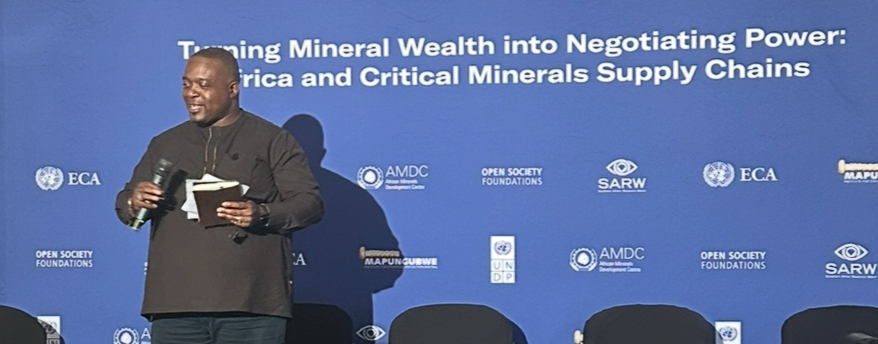
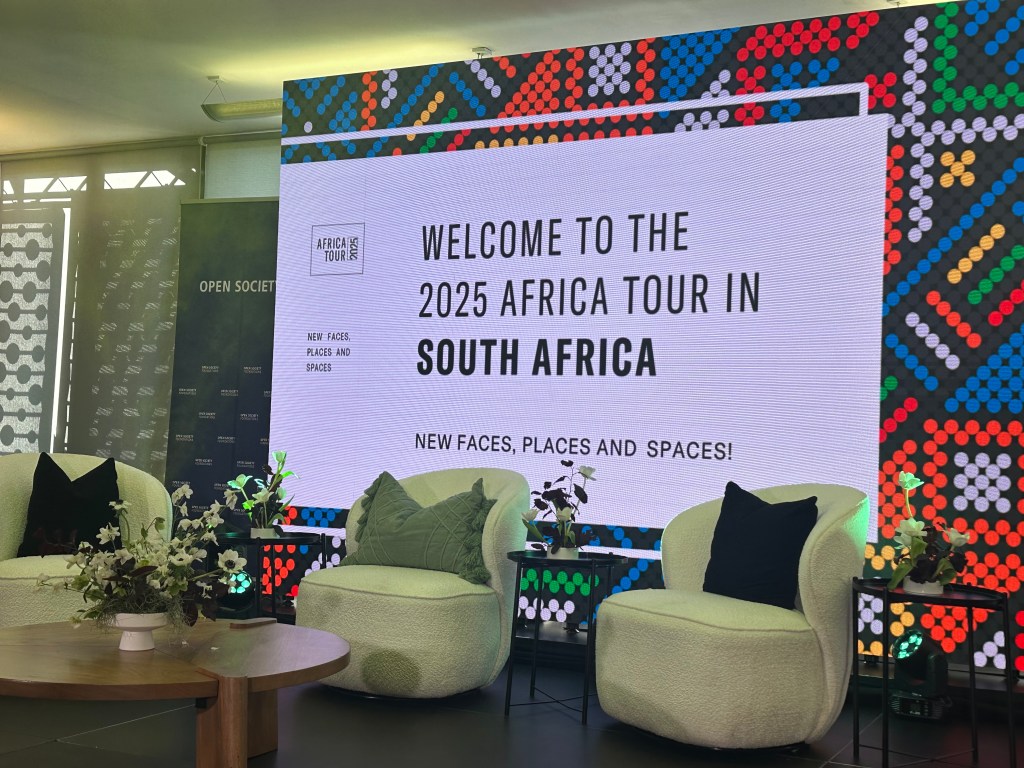
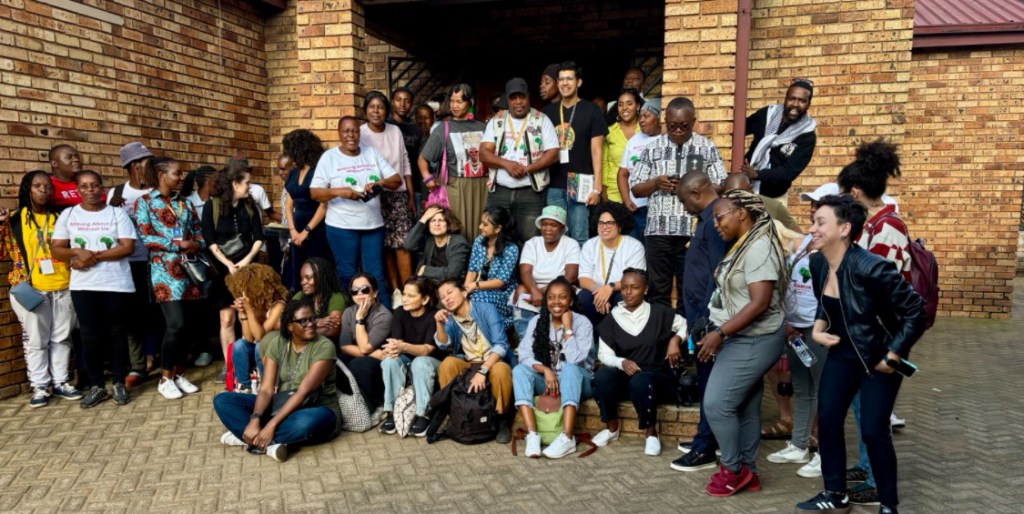
The Open Society Foundations and partners’ policy discussion today, in the margins of the G20 Summit in Johannesburg generated a solid roadmap! Here are my 7 takeaways:

Africa holds the ingredients of global power at a scale the world cannot ignore. Yet the question confronting the continent is not whether the world needs Africa. It is whether Africa is ready to lead, not follow; to bargain, not beg; to industrialize, not export raw; to become a rule-maker, not just a rule-taker.
As geopolitical tensions intensify, the United States, the European Union, China, and emerging powers are racing to secure long-term access to African minerals, using industrial policies, bilateral deals, and global pressure to reshape supply chains. Africa has become the epicenter of a new global scramble, one fought not with armies, but with subsidies, regulations, Environmental Social Governance standards (ESG), and strategic diplomacy.
This is Africa’s critical minerals moment, not just to be part of the global green transition, but to shape its terms, its industries, and its benefits. What Africa chooses to do now will decide if it becomes a leader in the new green economy, or remains just a place where others come to dig up raw materials.

1. A New Global Scramble, But This Time Africa Must Set the Terms
At the first G20 Summit ever held on to African soil, the continent finds itself at the center of the most consequential geopolitical realignment since the industrial revolution. The race for critical minerals, cobalt, lithium, nickel, graphite, rare earths, has triggered a new scramble, but this time powered by the urgency of the green transition and the anxieties of national security.
The old world is maneuvering aggressively.
- The United States has unleashed the Inflation Reduction Act, industrial policy whose benefits flow mostly inward.
- The European Union, facing Chinese dominance in battery and EV manufacturing, has erected its Critical Raw Materials Act; a shield for European industries.
- China, already controlling 60% of refining and 80% of global battery manufacturing, continues to consolidate its strategic lead.
Meanwhile, Africa, home to 30% of global critical mineral reserves and 70% of the world’s cobalt, remains a marginal actor in the value chain, capturing less than 5% of the wealth generated by the minerals it exports.
2. The G20 in Johannesburg: A Mirror and a Moment
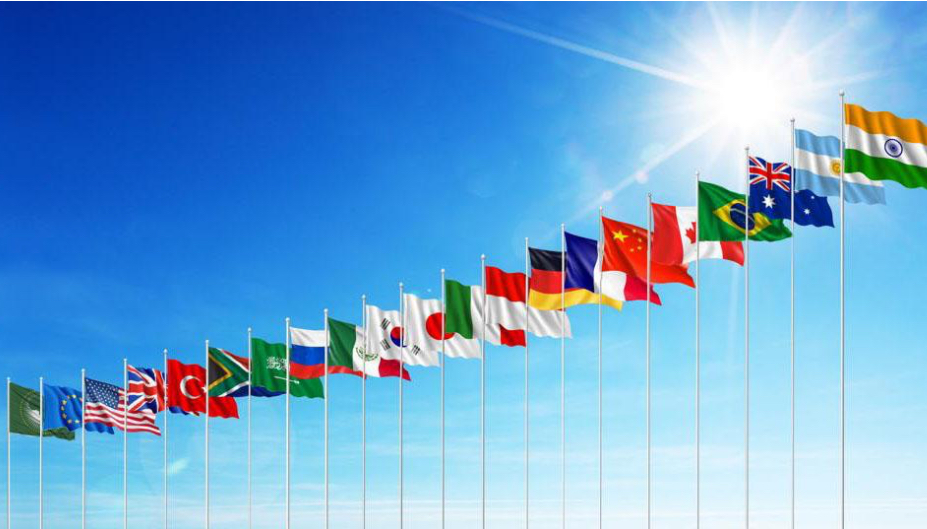
Africa must convert its mineral wealth into negotiating power, or others will convert it for us.
This moment is not just about minerals.
It is about power.
It is about narrative.
It is about agency.
It is about Africa refusing to be the “supplier of last resort” for a green economy built elsewhere.
3. Fragmented Countries Cannot Negotiate with United Continents
A recurring warning emerged from the panels: global powers have learned a tactical truth. It is easier to negotiate with Africa one country at a time, not as a continent.
This is how the “green colonialism” of the 21st century is unfolding: Isolate a government, offer a bilateral MoU, promise investments, small, quick, politically appealing, capture long-term mineral supply, secure value-addition on foreign soil.
This is why Europe’s Global Gateway, and the U.S. Mineral Security Partnership look generous on paper but are deeply strategic in practice. They secure raw materials, not African industrialization.
As one expert warned: “If you isolate Ghana, you get a lithium deal. If you isolate Zimbabwe, you get a cobalt deal. But if Africa stands together, the world must negotiate differently.”
Africa needs bargaining power, bargaining power requires unity, Unity requires political leadership.
4. Industrialization is Not a Smelter. It Is an entire Ecosystem.
One myth must die for Africa to rise: the myth that industrialization is about building a smelter and calling it transformation.
A smelter does not create an economy. It is energy-intensive, capital-heavy, low-employment, and often detached from local needs.
“Africa’s opportunity is not just in the rock. It is in the engineering, logistics, innovation, manufacturing and services around it.”
This is how future could look like:
- battery precursors in Zambia-DRC,
- graphite processing in Mozambique,
- green steel in South Africa,
- cathode manufacturing in Namibia,
- electric motorcycle plants in Kenya,
- solar panel assembly hubs in North Africa
- and more…
Africa can no longer be told it “lacks markets.” Markets are built, not waited for.
China built its market. Europe built its market. Africa must now build its own.

5. Political Courage: The Missing Ingredient
Many African countries remain trapped by predictable political constraints:, negotiating contracts in secrecy, prioritizing royalties instead of jobs, allowing foreign companies to dictate standards, failing to invest in geological mapping, underfunding universities and technical faculties, ignoring artisanal miners, women, and local communities, and, treating industrial policy as an afterthought rather than a national mission
6. Communities Must Not Become Casualties of the Green Transition
The extractives history of Africa is written in: displaced communities,polluted rivers, gender based violence, corporate impunity, destroyed ecosystems, and broken promises.
The green transition risks repeating all of this, only faster. Communities must be co-owners of the future, not victims of it. This means:
- Free, Prior and Informed Consent (FPIC) must be real, not cosmetic.
- Women must benefit from mining, not be excluded from it.
- Royalties must serve communities, not elites; 1% is unacceptable.
- Environmental assessments must be public, enforceable, and community-driven.
- Artisanal miners must be supported, not criminalized.
Africa cannot trade justice for development. There is no trade-off. Justice is development.
Our Foundations’ Resource Futures Programme (Opportunity) is clear about rights, transparency, communities, gender equity, and accountability. These are not peripheral; they are central to the industrial future Africa must build.

7. A Roadmap for African Power in the New Mineral Order
Here are what G20 leaders, especially South Africa and the African Union must champion:
An African Critical Minerals Alliance: A continent-wide coalition modeled on the “Lithium Triangle” of Latin America, focused on common standards, coordinated pricing, uniform beneficiation targets, and joint negotiation platforms.
A Pan-African Critical Minerals Fund: Capitalized by AfDB, Afreximbank, African sovereign funds, and diaspora financing to invest in geological mapping, refineries, industrial parks, battery corridors, and African-owned manufacturing ventures.
Continental Standards for Transparency and FPIC: No more secret deals. No more exploitation of communities. No more extractive colonialism wearing green clothing.
Regional Industrial Corridors: Scale is Africa’s currency. No single country can industrialize alone. DRC-Zambia Battery Corridor, Lobito Corridor, and new SADC/EAC/ECOWAS industrial zones must become the backbone of African manufacturing.
A Continental Electrification and Green Mobility Plan: Africa’s minerals must power African energy systems. No industrialization is possible without affordable, reliable energy.
Technology Transfer as a Non-Negotiable: Partnerships that do not share technology are not partnerships. They are extraction agreements.
The world cannot achieve a green transition without Africa, but Africa can fail to benefit from that transition if it hesitates, fragments, or negotiates poorly.
The world needs Africa. Africa must now decide what it needs from the world.
An Influencing Space!
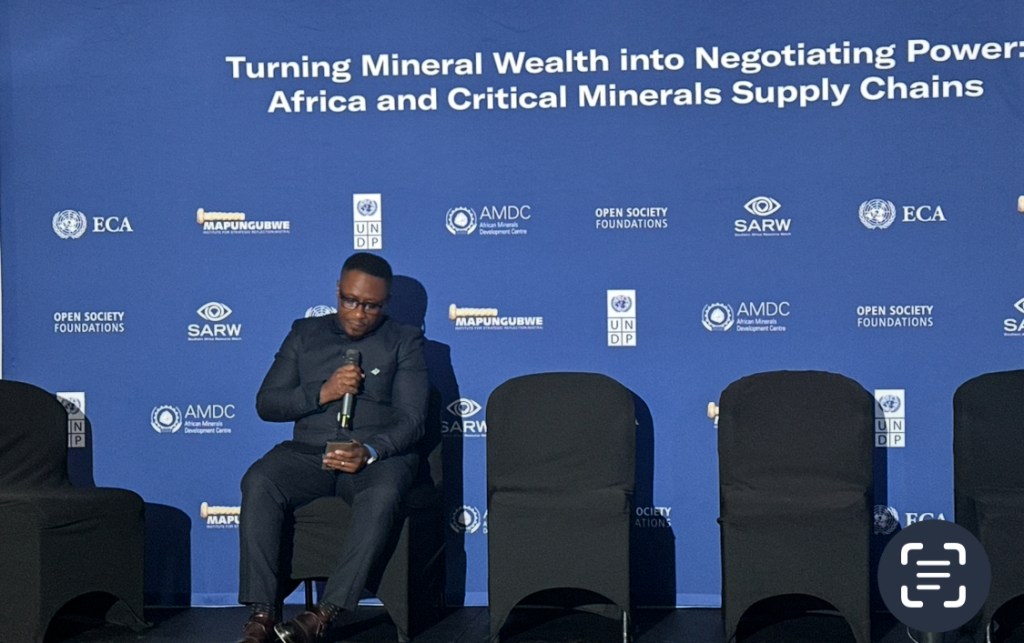
A telling moment at our side event showed just how far our influence is beginning to reach. When a member state steps into a space we created, it is more than participation; it is recognition of our growing authority. This was clear when the representative of the Democratic Republic of Congo, a country central to the world’s cobalt supply, not only attended our critical minerals session but insisted on taking the floor. His intervention underscored a simple truth: the conversations we are driving are now shaping national positions, not just reflecting them.
If you’d like to receive my articles automatically as soon as they’re published, simply follow this blog using the “Follow” button at the bottom left of this page or send me an email at: Desire.Assogbavi@Assodesire.com








 Assodesire