Silencing the Guns in Africa by 2020: How Can we get there?

Dear Friends;

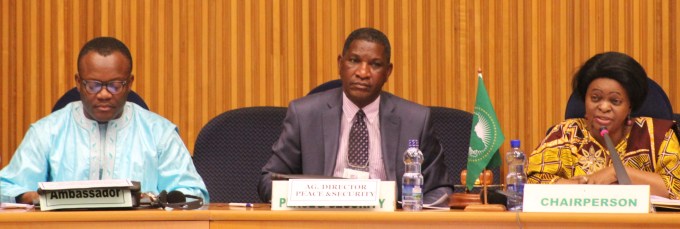
Invited by the Chair of the Peace and Security Council of the African Union, I have had the opportunity today, to address the Council, to share my analysis and contributions on the implementation of the AU Master Road-map on Practical Steps to Silencing the Guns in Africa by 2020.

The Master Roadmap rightly and comprehensively identified the challenges that our continent is facing in terms of conflicts. It also proposed pertinent and useful steps and mechanisms to silence the guns. However, the Roadmap seems to be generic in its approach. It needs to set targeted priorities for ongoing active & intense conflicts with benchmarks & time-frames, while keeping  eyes open on volatile areas & potential or at-risk situations.

Pic blog

After looking at the various sources of conflicts in Africa my presentation proposed:

  • Complementary contributions on priority actions
  • Some additional modalities for mobilizing & actions
  • Some important additional steps and missing elements in the Roadmap

The Council, further in their close session,  followed a number of my proposals including the setting up of a panel of imminent personalities to monitor the Roadmap for silencing the guns by 2020.  This includes assessing regularly the state of  democracy,  human rights and rule of law in Africa. The Council called on the Heads of State to set up such a panel. The Council has also agreed to call AU Member States for the universalization of the Arms Trade Treaty among other decisions.

Get the PSC Statement here

You can download my presentation to the Council here

If you have trouble in downloading it, drop me a line on assogbavi@me.com; I will send you the file.

pic...2

African Union Summit – July 2017: What to Expect?

Friends;

As usual, I would like to share with you the following preliminary notes and analysis on the upcoming 29th Ordinary Summit of the AU policy organs being held in Addis Ababa, Ethiopia as follows:

  • Permanent Representative Committee (Ambassadors): 27 – 28 June 2017
  • Executive Council (Ministers of Foreign Affairs): 30 June – 1st July 2017
  • Assembly of the Union (Heads of State and Government): 3-4 July 2017

In addition, several statutory meetings of various AU organs and parallel events are scheduled. The official agenda of the Summit is not yet publicly available. This Summit will be the first to be organized by the new leadership of the AU Commission.

With or without observers?

It is unclear if the corridors of the Summit will be open for observers during the sessions. The Assembly has already decided in January 2017 under Kagame’s Report that “external parties shall only be invited to AU Summits on an exceptional basis and for a specific purpose determined by the interests of the African Union”. The question here is to know if African citizens’ formations/CSOs are also considered as “external parties” knowing that the AU claims to be a people driven organization.

Permanent/Resident Representatives of Non-African States and International Organizations will likely be invited for the official opening and closing ceremonies of the Assembly and the Executive Council. The Media is normally invited.

Key strategic issues likely to be on the Agenda of the Summit: (Youth, AU reform, Peace and Security, AU Funding, Election of two remaining Commissioners, Agenda 2063 10-year implementation plan and Continental Trade Area …)

1/ Youth (Theme of the year): “Harnessing the demographic dividend through investments in the Youth”

A presentation and a presidential debate of more than 2 hours to be led by President Idriss Deby (Chad) is planned on the 3rd July. The youth are unlikely to be invited to this debate on the “Roadmap on harnessing the demographic dividend through investments in the Youth” developed by the AU Commission … It was agreed that such a roadmap should be domesticated and implemented by each member state. A couple of countries have in fact, already done a national launch.  The Roadmap has the following pillars: 1- Employment and Entrepreneurship, 2- Education and Skill Development, 3- Health and Wellbeing, 4- Governance and Youth Empowerment.

A presidential solemn declaration on the youth may be adopted following the debate.

Burkina Faso has proposed for consideration an African Decade for Technical, Professional, Entrepreneurial and Employment Training in Africa (2017-2027)

2/ Institutional Reform of the African Union

President Paul Kagame (Rwanda) is expected to present a report on the implementation of his proposed reform plan for the AU, adopted by the Assembly in January this year. A decision will be taken on what has been done and what remains to be done.

Building on his success back home, President Kagame is intensifying the pressure to put the continental body on tract for effectiveness and efficiency to meet the on-going challenges that our continent is facing and to implement the ambitious Agenda 2063.

3/ Peace and Security

The Chairperson of the AU Commission is expected to provide a report on the state of peace and security in Africa with recommendations for the Assembly. Highlights will likely include South Sudan, CAR, Somalia, DRC, Mali etc… as well as emerging security threats such as cybercrime and trending threats such as maritime security and piracy, terrorist, fundamentalism and religious extremism etc.

Since he took over the chairmanship of the Commission in March this year, Chadian diplomat Moussa Faki Mahamat has clearly shown through his movements that peace and security is among his top priorities.  In fact, “silencing the guns in Africa” has been his top message while campaigning to win his position.  In just a few months, Moussa has already visited Africa’s major hotspots. A report on the implementation of the master roadmap of practical steps to silencing the guns in Africa by 2020 will then be considered by the Summit.

Silencing the guns by 2020?

Last year the African Union prepared a Master Roadmap of Practical Steps to Silence the Guns in Africa by 2020. It is a well elaborated document with the correct analysis of the situation … but then what is next? Let’s face it: Are we really moving towards silencing the guns in the next 3 years ? if so, what are we doing collectively and individually in our various capacity to get there? Can we silence the guns without ensuring democratic governance, decent and true elections, responsible and fair management of our natural resources? Can we break the vicious circle of conflicts without insuring justice and accountability for the heinous crimes being committed on our people by our people? …Alternation on power is one of the problems that we need to resolve collectively without further delay . There is an imperative in all societies to renew political leadership from time to time through credible elections.  Since we are still struggling to ensure credible elections in Africa, alternation in power must be tabled and courageously discussed and adopted.

Beside the already burning conflict zones, I am worried about the silence and/or inaction of the continent on several potential and on-going risky situations such as  Zambia, DRC, Cameroon, Zimbabwe etc.) where unacceptable pressures are being made on independent media, civil society and political opposition. Without abiding to our shared values contained in the various policies standards and treaties that we have adopted, I am afraid “silencing the guns” will remain a beautiful slogan!

We know the guns are mostly carried by desperate and vulnerable youth who, most of the time, have nothing else to lose. They are in Somalia, South Sudan, Darfur, CAR, DRC, Nigeria, Mali etc… They are in many other countries, they are trained and graduated  but without job… some of them are choosing  to leave the continent at any cost… In 2017 alone, more than 1,500 young Africans have perished in the Mediterranean Sea and many other died of thirst in the Sahara Desert, while trying to reach Europe.

Efforts made by the chairperson of the Commission on this issue must be matched by member states’ political will to guarantee democracy and rule of law and if most of the political regimes in our continent continue failing on democracy and rule of law, the road to peace and security, prerequisite for our development agenda will be long, very long…

A contribution to the ways forward: We need to imagine courageous tools and make bold steps to change the paradigms… the Master Roadmap of Practical Steps to Silence the Guns in Africa by 2020 has very useful ideas… but how do we ”force” the power holders to make these happen? We all know the main root causes of our conflicts… So the 1st step for silencing the guns  is an environment of democracy, respect of the human rights and the rules of law and a decent and inclusive management of national wealth aiming at reducing inequality…  But again how do we monitor this and ensure it is happening?   I am imagining, an  independent High Level Task Force on democracy, rule of law, human rights and good governance to be appointed by the Assembly of the Union  in order to systematically track the implementation by member states, of democracy, rule of law and human rights and equality/inclusivity standards contained in our various instruments, especially their relation with fragility and conflicts in different countries in the continent. The Task Force shall be able to make public without any condition, its Report of the state of democracy rule of law and human rights in Africa… so it will become clear to all of us which regimes are undermining our common aspirations.  The said Task Force shall obviously work with and build on the existing mechanisms (APRM, AGA, APSA, Panel of the Wise…) What I wish to see here is a Task Force that is directly accountable to African people without the obstruction of the leadership… This may bring a heavier pressure them… Please share your views and comments on this…

We must stop praising the evil doing among ourselves,  but rather start exposing and sanctioning them in line with our shared values. A lot must be done at country  then regional levels… (see recent example from ECOWAS in The Gambia), then the AU Commission and other organs shall support… We all have a role to play in this… our people must stand up, like recently in Burkina Faso, and say a big NO to bad and irresponsible leadership, make sure that their votes are counted and their money are properly used, not stollen. The elite class has a big responsibility in sensitizing and mobilizing other  for the good cause…

4/ Budget and Funding of the Union

According to the current projections, in 2018, the African Union will need about 800 Million USD for its operations ($154M), programmes ($296M) and peace support ($350M). The approved 2017 budget amounts 782 Million USD.

 It is unlikely that AU Member states meet this year, their commitment made in 2015/2016 to cover 100% of AU operational budget, 75% of programme budget and 25% of peace support operation budget.

So far AU Member States have been paying less than 30% of the overall budget of the Union. More than 70% is paid by external partners.

Uncertainty on the source of funding of the Union: Donald Kaberuka, the High Representative for the AU Peace Fund is expected to provide an updated report on the implementation of the new funding strategy adopted by the Union in July 2016 in Kigali, by which 0.2 % levy on eligible imports should be collected from each member state to fund the AU. According to on-going technical discussions in closed doors, a number of AU member states are dragging their feet on coming up with domestic legislation to implement the Kigali Decision, evoking different excuses including those relating to the WTO rules… I have 2 questions on this: 1- Where were our member states’ technical experts on international trade at the time this  decision was discussed?… 2 – Is it not the mechanism ECOWAS has been using for years? What is different here? Please share your views/comments below…

It is however encouraging to know that some member states (Rwanda, Kenya, Ghana etc) have been moving in the right direction by taking legislative national measures to implement the 0.2% commitment.

5/ Election of 2 Commissioners

In January, the Assembly elected the Chairperson and the Deputy Chairperson and appointed 6 Commissioners elected by the Executive Council out of 8 portfolios. The remaining following 2 Commissioners will be elected during the upcoming Summit.

  • Commissioner for Human Resources, Science and Technology
  • Commissioner for Economic Affairs.

According to the gender and geographical representation policies of the AU, the 2 commissioners should be 1 male from the Eastern Region 1 female from the Central Region.

At the closure of the deadline, the AUC received the following application from the Deans of the regions:

Candidates for the post of Commissioner for Human Resources Science and Technology:

  1. Sarah Mbi Enow ANYANG AGBOR from Cameroon, Female, Central Africa Region
  2. Dr. John Patrick KABAYO from Uganda, Male, East Africa Region

Candidates for the post of Commissioner for Economic Affairs

  1. Hon. Yacin Elmi BOUH from Djibouti, Male East Africa region
  2. Newaye Christos GEBRE-AB from Ethiopia, Male, East Africa Region
  3. Victor HARISON from Madagascar, Male, East Africa Region
  4. Marthe Chantal Ndjepang MBAJON from Cameroon, Female, Central Africa Region

For the election of Commissioners, the statutes of the AU Commission imposes a pre-selection process at the regional level. Each region shall nominate 2 candidates for each portfolio. The nomination process shall be based on modalities to be determined by the region.

6/ Agenda 2063 : First 10-year implementation plan

A progress report on the implementation of the Agenda 2063 will be presented to the Summit. An African Economic Platform has been held for the first time this year with the aim to discuss cross-cutting issues that affect Africa’s economies and ways of which opportunities and options from these could be harnessed to ensure continental transformation. The other progress made is the domestication of the agenda into national planning frameworks done by several member states, the process on the Continental Free Trade Area and the African Commodities Strategy as well several discussions held with traditional and new partners. We should not however forget the fact that the realization of the Agenda 2063 is conditioned by a peaceful environment within the continent.

On the implementation of decisions: Less than 15% of African Union decisions are actually implemented and the upcoming summit will make more decisions… It is important to insist on the urgent need to change the rules of the game and to do things differently in terms of realizing the promises made through   agreed policy frameworks and standards. If our leaders cannot implement their own decisions, why are they continuing meeting to take more decisions? Up to 5,000 delegates or more attend the AU summit 2 times every year to take an average of 40 decisions per summit. In between summits, hundreds of other policy meetings are held in different capitals. The average cost of a full member states meeting is between 300,000 – 1Milion USD… Some Specialized Technical Committees meetings cost up to 1.5 Million USD. At the end, if only less than 15% the  decisions made are implemented… how can we make it to 2063?

This article will be updated regularly until the Summit startsLast update: 9 June.

=======

Get more targeted updates & analysis on  African Politics from my twitter account : https://twitter.com/Assodesire and feel free to send me your comments, suggestions & questions by email to:  assogbavi@me.com or directly on this blog below.


The International Criminal Court or the African Union: Who can Ensure Justice for African Victims?

La version en Français ici

I spent several years of my professional career working on human rights and justice first as the Founder and Chairperson of Juris-Club, then as Commissioner at the National Commission of Human Rights following my election by the Parliament of Togo, then as Outreach Liaison for Africa at the Global Coalition for the International Criminal Court in New York among others … The conflict between the African Union and the ICC therefore interests me in several respects but especially as African and a human rights lawyer; therefore I would like to share here some personal reflections on the different episodes of the serial “ICC versus the African Union”.

The International Criminal Court: The Basics

The creation of the International Criminal Court is an important step in mankind’s efforts to make our world more just. The court was established by an international law treaty “The Rome Treaty” adopted in 1998 and entered into force in 2002. The ICC covers only the most serious crimes, including genocide, war crimes, crimes against humanity and the crime of aggression, and this, only when States are unable or unwilling to judge these crimes themselves. The Court may be seized by a State Party, the Prosecutor and the United Nations Security Council. The Statute of the Court applies equally to all, without any distinction based on official capacity. In particular, official capacity as a Head of State or Government, a member of a Government or parliament, an elected representative or a government official shall in no case exempt a person from criminal responsibility under the ICC Statute (…): Article 27.

The Place of Africa in the ICC

Africa is the geographical bloc the most represented in the ICC. 124 countries are currently Parties to the Statute of the International Criminal Court: Africa: 34, Asia and the Pacific: 19, Eastern Europe: 18, Latin America and the Caribbean: 28, Western Europe and others: 25. The judges of the Court are equally from all regions of the world. Out of the 18 judges of the court 4 are Africans: Kenya (vice-president), Nigeria, DRC, and Botswana. Moreover, the prosecutor of the Court is Gambian.

Is the ICC targeting Africa or African leaders only?

To date, the ICC has opened investigations in 9 countries, out of which 8 are in Africa: Uganda, DRC, Sudan, CAR, Kenya, Libya, Cote d’Ivoire and Mali. This clearly demonstrates that the ICC operates primarily in Africa and it is true that today Africa is not the only continent where crimes of the ICC jurisdiction are committed… But did you know how and why this concentration of the ICC on Africa happened?

First, it was Ugandan President Yoweri Museveni who the first referred the situation in the Northern Uganda to the ICC in January 2004 against his opponent Joseph Kony and the Lord’s Resistance Army; a brutal armed group. Then it was the Government of DRC under President Joseph Kabila who referred the situation in the country to the ICC. This was followed by the Governments of Central Africa Republic (CAR) and Mali, who themselves referred the situation of their  countries to the ICC. In 2003, before even formally ratifying the ICC treaty, the government of Laurent Gbagbo had officially recognized the jurisdiction of the Court over its country, Cote d’Ivoire.

In short, the governments of 4 of the 8 African countries under investigation have themselves referred these cases to the ICC (Uganda, DRC, CAR, and Mali). The prosecutor of the ICC opened investigations on her own initiative in 2 countries with their full cooperation (Kenya, Cote d’Ivoire) and the UN Security Council had seized the court in two cases (Sudan and Libya).

It is therefore obvious from this observation that African leaders went to the ICC first (mostly against their opponents) and not the other way round  … but why? …Why are they against the ICC today?

Do African leaders understand the ICC differently?

In 2004, President Museveni seized the ICC against his opponent Joseph Kony and the Lord’s Resistance Army … But during the investigations there were indications that Uganda’s National Army may have also committed crimes under the jurisdiction of the ICC, and therefore may be liable to be tried by the ICC with an eventual involvement of President Museveni himself…. ‘No way!!!’ said President Museveni … the ICC suddenly became his enemy….Frankly, once you call the ICC to investigate a situation in your country  you can’t  dictate them which crime to look at and which to close their eye on in the same situation…This is simply an instrumentalisation of the Court.

In 2003, even before formally ratifying the ICC treaty, Côte d’Ivoire government of Laurent Gbagbo had officially recognized the jurisdiction of the ICC … Laurent Gbabo was likely targeting his political enemies … but the power has changed camp so far… It was therefore President Allassane Ouatarra who delivered Gbagbo to the ICC on the basis of the same special recognition signed by Gbagbo himself.

In 2004, President Joseph Kabila used the ICC to get rid of some embarrassing alleged criminals, but he was also delighted to see his political challengers Jean Pierre Bemba carried away by the ICC in a case linked to the CAR.

In 2004, the Government of Francois Bozize lodged a case with the ICC against war crimes and crimes against humanity allegedly committed in the context of the violence in CAR between 2002 and 2003.

But why does not the ICC take care of the others?

Despite the above, this question is worth asking. I personally support on-going ICC investigations in Africa because innocent Africans have been massacred by Africans with the support and the blessing of other Africans regardless of whether they are Heads of State, Vice-President or otherwise. Their official functions do not confer on them the right to massacre citizens. Indeed, the status of the ICC does not recognize the official status of anybody … this is the innovative and progressive aspect of the court, in favour of the victims.

Why is the ICC delaying to take concrete actions in favour of Iraqi, Palestinian, Syrian, and Afghani … victims? (Even if some of those countries are currently under preliminary investigation)… The answers to this question are unfortunately not as “just” as one would like: Because these countries are not party to the ICC Statute, or because one or several powerful countries endowed with veto power in the UN Security Council would certainly oppose it for unfair reasons that we all know… In fact, only 2 of the 5 permanent members of the UN Security Council are parties to the ICC: France and the United Kingdom.

Many unanswered questions on the ICC: Why does the ICC always go for the defeated rather than the victors who are also guilty of crimes such as in Côte d’Ivoire and maybe in the CAR and the DRC? Why is it that only the United Nations Security Council has the power to refer cases to the Court and even to temporarily stop investigations of the Court while this Council is the most unequal and the least representative institution in our world? Why do they oppose the UN General Assembly exercising the same power?

These questions and many others obviously weaken the credibility of the ICC but … who is responsible for it and who must correct it?

A Collective Withdrawal from the ICC by African Countries?

The ICC has problems, it is true, but I do not think that these problems justify the entire war launched against the Court by the African Union. Atrocities are actually committed, Africans are massacred by other Africans and there is no functional mechanism to date in Africa to punish the perpetrators of these international crimes and to do justice to the victims. With regard to Africa, the ICC is therefore the only functional judicial mechanism on this day to try these crimes.

The so-called “mass withdrawal strategy” of the AU is rather a document that indicates the grievances and demands of the African Union on the ICC and its functioning in particular the fact that the court targets only African leaders, the issue of immunity of the Heads of State and the request of the African Union to suspend the cases against Sudanese and Kenyan leaders. This document adopted by the last AU Summit also includes a study of national procedures for an eventual individual withdrawal of member states from the Court. “Collective withdrawal” from a treaty is an incorrect language. It does not exist in international law. The African Union may just be using it as an instrument of political pressure to catalyse changes in the ICC.

Is not the ICC a common heritage that should help us to create a more just world? All nations, including African nations and their stakeholders, must work together to improve the ICC. Abandoning it or leaving it should not be an option … and I am pleased that a number of African countries have entered reservations on the “mass withdrawal strategy” during the AU Summit discussions. I have just learned that Gambia, which had previously announced its withdrawal from the ICC, has changed its mind. The government has just informed the United Nations that Gambia remains a state party to the ICC Treaty. Good news !

A mass withdrawal of African countries from the ICC would be a shame, a terrible contempt for African victims and an encouragement for criminals and their supporters… I know it will not happen. In fact 17 AU member states rejected the strategy… This is a terrible failure for the minority that initiated it.

The African Court of Human and Peoples’ Rights: An African Solution?

The slogan “African Solutions for African Problems” is beautiful but it will only convince me under two conditions: 1/the bill of the African solution must also be paid by  Africa (I recall that Africa did not pay the bill of  Hissen Habré trial) and 2/ universal human rights and justice standards must be applied because human rights and  justice principles have no nationality or regional identity. They are simply and unequivocally universal.

Having said this, the body that ensures justice does not matter if justice is fair and equitable. But the reality is that the African Court of Human Rights today has only a “promise” of criminal jurisdiction. This means that the court has no jurisdiction over international crimes at this time and I do not see any political will from our countries to make it happen any time soon. Almost 20 years after the adoption of the Protocol that established the African Court of Human and Peoples’ Rights (with no criminal jurisdiction) only 30 African States out of 54 ratified it. Moreover the amended protocol giving criminal jurisdiction to the Court has not been ratified by any African state, 2 years after its adoption in Malabo. The worst is that the Malabo Protocol ensured immunity for heads of state during their tenures. I consider this provision as an “authorization to kill” while on power and an “encouragement” to cling on power forever in order  to be protected against prosecutions…  The observation is clear: Withdrawing from the ICC before an African court is able to judge and punish serious and heinous crimes is simply guarantying impunity and abandoning the victims. This is against the spirit of the Constitutive Act of our African Union.

I also invite you  to read my interviews on the ICC  with Radio France Internationale and Le Monde Newspaper on the following links:

http://www.rfi.fr/afrique/20170209-cour-penale-internationale-union-africaine-liaisons-ambigues-retrait-collectif

http://www.lemonde.fr/afrique/article/2017/02/03/l-afrique-veut-elle-vraiment-en-finir-avec-la-cour-penale-internationale_5074120_3212.html

Your comments are welcome on the blog or by email: assogbavi@me.com

La Cour Pénale Internationale ou l’Union Africaine : Qui Peut Rendre Justice aux Victimes Africaines ?

English version here

J’ai passé plusieurs années de ma carrière professionnelle à travailler sur les droits de l’homme et la justice d’abord en tant que fondateur et président du Juris-Club, puis  Membre de la Commission Nationale des Droits de l’Homme du Togo à la suite de mon élection par l’Assemblée Nationale du Togo et ensuite comme Officier de Liaison pour l’Afrique de la Coalition pour la Cour Pénale Internationale  à New York entre autre…Le conflit entre l’Union Africaine et la Cour pénale internationale (CPI) m’interpelle donc à plusieurs égards mais surtout en tant qu’Africain épris de justice.

Je vous propose dans les lignes qui suivent des réflexions personnelles sur les différents épisodes du feuilleton « CPI contre Union Africaine ».

L’Essentiel de la Cour Pénale Internationale (CPI)

La création de la Cour Pénale Internationale est un pas important dans les efforts déployés par l’humanité pour rendre notre monde plus juste. La cour a été créée par un traité de droit international « Le Traité de Rome » adopté en 1998 et entré en vigueur  en 2002. La CPI ne vise que les crimes les plus graves notamment le génocide, les crimes de guerres, les crimes contre l’humanité, et le crime d’agression et ce, seulement lorsque les Etats ne sont pas en mesure ou n’ont pas la volonté de juger ces crimes eux même. La Cour peut être saisie par un état partie, le procureur et le Conseil de Sécurité des Nations Unies. Le Statut de la Cour s’applique à tous de manière égale, sans aucune distinction fondée sur la qualité officielle. En particulier la qualité de chef d’État ou de gouvernement, de membre d’un gouvernement ou d’un parlement, de représentant élu ou d’agent d’un État, n’exonère en aucun cas de la responsabilité pénale au regard du Statut (…) : Article 27.

La Place de l’Afrique dans la CPI

L’Afrique est le bloc géographique le plus représenté à la CPI. 124 pays sont présentement États Parties au Statut de la Cour pénale internationale : Afrique : 34, Asie et Pacifiques : 19, Europe Orientale : 18, Amérique Latine et Caraïbes : 28, Europe Occidentale et autres : 25. Les juges de la cour proviennent équitablement de toutes les régions du monde. Des 18 juges de la cour 4 sont Africains : Kenya (vice-présidente), Nigeria, RDC, Botswana. Par ailleurs, la procureure de la cour est Gambienne.

La CPI vise-t-elle particulièrement l’Afrique ou les Leaders Africains ?

A ce jour la CPI a ouvert des enquêtes dans 9 pays dont 8 en Afrique : Ouganda, RDC, Soudan, RCA, Kenya, Libye, Cote d’Ivoire, Mali.  Ceci démontre clairement que la CPI opère essentiellement en Afrique et il est vrai qu’aujourd’hui l’Afrique n’est pas le seul continent ou les crimes relevant de la compétence de la CPI sont commis mais saviez- vous comment et pourquoi est-on arrivé à cette concentration des activités de la CPI en Afrique ?

D’abord c’est le Président Ougandais Yoweri Museveni  qui a été le premier Chef d’Etat à saisir la CPI de la situation au Nord de l’Ouganda en Janvier 2004 contre son opposant Joseph Kony et l’Armée de Résistance du Seigneur, un groupe armé particulièrement violent et responsable d’atrocités. Ensuite c’est le gouvernement de la RDC sous le Président Joseph Kabila qui a saisi la CPI de la situation dans son pays. S’en sont suivi les gouvernements de la République Centrafricaine, et du Mali qui ont eux aussi saisi la cour. En 2003, avant même de ratifier formellement le traité de la CPI le gouvernement de Laurent Gbagbo avait officiellement reconnu  la compétence de la CPI sur la Cote d’Ivoire.

En bref, les gouvernements de 4 des 8 pays africains sous enquête ont eux-mêmes saisi la CPI (Ouganda, RDC, RCA, Mali). La procureure de la cour a ouvert des enquêtes de sa propre initiative dans 2 pays avec la pleine coopération de leurs gouvernements (Kenya, Cote d’Ivoire) et le Conseil de Sécurité des Nations Unis avait saisi la cour dans 2  autres cas (Soudan et   Libye).

Il est donc évident eu égard à ce constat   que ce sont les leaders Africains qui sont allés vers la CPI et non pas le contraire… mais pourquoi ? Et pourquoi sont – ils contre la Cour aujourd’hui ?

Les Leaders Africains avaient-ils compris la CPI autrement ?

En 2004, le Président Museveni avait saisi la CPI contre son opposant Joseph Kony et  l’Armée de Résistance du Seigneur… Mais au cours des enquêtes il y eu des indices selon lesquelles l’Armée régulière de l’Ouganda (UPDF) aurait aussi commis des crimes relevant de la compétence de la Cour, et donc susceptible d’être jugés par la CPI avec une possibilité d’implication du Président Museveni lui-même…. Pas question !!! selon le president  Museveni… la CPI devient du coup son ennemi juré ….Franchement, une fois que vous appelez la CPI pour enquêter sur une situation dans votre pays, vous ne pouvez pas lui dicter quels crimes regarder et sur quels crimes fermer les yeux dans la même situation … Ceci serait  une instrumentation pure et simple de la Cour.

En 2003, si, avant même de ratifier formellement le traité de la CPI, le gouvernement de Laurent Gbagbo avait officiellement reconnu  la compétence de la Cour sur la Cote d’Ivoire, Laurent Gbabo visait vraisemblablement ses ennemis politiques… mais le pouvoir avait changé de camp par la suite; c’était donc le Président Allassane Ouatarra qui livra Laurent Gbagbo à la CPI sur la base de la même reconnaissance spéciale signée par Mr. Gbagbo lui-même.

En 2004, Joseph Kabila s’est servi de la CPI pour se débarrasser de certains criminels de guerres présumés et gênants mais il s’était certainement aussi réjoui de voir son challenger politique Jean Pierre Bemba, emporté par la CPI dans une affaire liée à la RCA.

En 2004 le Gouvernement de Francois Bozize avait saisi la CPI contre  des crimes de guerre et crimes contre l’humanité qui auraient été commis dans le contexte des violences en République Centrafricaine entre 2002 et 2003.

Il n’y a donc que le cas du Soudan et dans une certaine mesure,  celui de la Libye qui ont échappé au contrôle du pays en question. La CPI vise-t-elle l’Afrique ou les leaders Africains ? Jugez-en vous-même !

Mais pourquoi la CPI ne s’occupe-t-elle pas des autres ?

Malgré ce qui précède, cette question vaut la peine d’être posée. Je soutiens personnellement toutes les enquêtes de la cour en Afrique car des innocents africains  ont été effectivement massacrés par des africains sous des ordres et avec le soutien d’autres Africains peu importe  si les présumés  coupables sont Chefs d’Etat, Vice-Président ou autre. Leurs fonctions officielles ne leur confèrent pas le droit de tuer ou de faire massacrer les citoyens. D’ailleurs le statut de la CPI ne reconnait pas la qualité officielle de qui que ce soit… c’est cela même le coté innovateur  de la CPI et ce, en faveur des victimes.

Pourquoi la CPI tarde à agir concrètement en faveur des victimes Irakiennes, Palestiniennes, Syriennes, Afghanes… ? (Même si certains de ces pays sont présentement sous enquête préliminaires)… les réponses ne sont malheureusement pas aussi « justes » qu’on le souhaiterait : Parce que ces pays ne sont pas parties au statut de la CPI, ou encore parce qu’un ou plusieurs pays puissants dotés du droit de veto au Conseil de Sécurité s’y opposeraient certainement pour des raisons injustes que nous connaissons tous… En effet seuls 2 des 5 membres permanents du Conseil de Sécurité des Nations Unies sont parties à la CPI : la France et le Royaume Uni.

Beaucoup de Questions sans Réponses : Pourquoi la CPI ne s’attaque le plus souvent qu’aux vaincus et non pas aux vainqueurs qui seraient aussi coupables de crimes comme en côte d’Ivoire  et peut être en RCA et en RDC ?  Pourquoi c’est au Conseil de Sécurité des Nations Unies seulement qu’il est donné  le droit de référer des cas à la Cour  et même de différer des enquêtes de la Cour  alors que ce Conseil est l’institution la plus injuste et la moins représentative de notre monde ? Pourquoi s’oppose-t-on à ce que l’Assemblée Générale des Nations  Unies exerce ce même pouvoir ?

Ces  questions et bien d’autres affaiblissent évidement la crédibilité de la CPI mais… qui en est responsable et qui doit et la corriger ?

Un Retrait Collectif de la CPI par l’Afrique ?

La CPI a des problèmes, il est vrai, mais je ne pense pas que ces problèmes  justifient toute la guerre déclenchée contre la Cour par l’Union Africaine. Des atrocités sont effectivement commises, des Africains sont massacrés  en masse par d’autres Africains et il n’existe aucun mécanisme fonctionnel à ce jour pour punir les coupables de ces crimes internationaux et rendre justice aux victimes. En ce qui concerne l’Afrique, la CPI est donc le seul mécanisme juridictionnel fonctionnel en ce jour pour connaitre de ces crimes…

Comme son nom ne l’indique pas, la « stratégie de retrait collectif » de l’Union Africaine est plutôt un document qui énumère les griefs et revendications de l’Union Africaine contre la CPI et son fonctionnement  notamment le fait que la Cour ne cible que les leaders Africains, la question de l’immunité des Chefs d’Etat et la demande de l’Union Africaine, adressée au Conseil de Sécurité  de suspendre les poursuites contre les dirigeants Soudanais et Kenyans. Le document, adopté par le dernier Sommet de l’Union comporte aussi une étude des procédures nationales  de retrait individuel éventuel d’Etats membres de l’UA.  Le «retrait collectif» d’un traité est un abus de langage. Il n’existe pas en droit international. L’Union Africaine l’utilise peut être comme un instrument de pression politique pour catalyser des changements à la CPI…

Mais la CPI n’est-elle pas un patrimoine commun qui doit nous aider à créer un monde plus juste ? Toutes les nations y compris africaines et leurs composantes ne doivent-elles pas œuvrer ensemble pour l’améliorer ? L’abandonner ou la quitter ne doit pas être une option… et je me réjouis du fait que 16 pays Africains aient émis des réserves sur le texte lors des débats au cours du dernier Sommet.

Je viens même d’apprendre que la Gambie qui avait précédemment annoncé son retrait de la CPI a changé d’avis. Le gouvernement vient d’informer les Nations Unies que la Gambie reste bel et bien état partie au Statut de la CPI. Bonne nouvelle !

Un retrait en grand nombre des pays Africains de la CPI serait une honte, un mépris terrible pour les victimes Africaines et un encouragement pour les bourreaux et potentiel bourreaux…   je sais que cela n’arrivera pas.

La Cour Africaine des Droits de l’Homme et des Peuples : Une Solution Africaine ?

Le Slogan « Solutions Africaine aux Problèmes Africains » est bien beau mais il ne me convainc qu’a deux conditions : La facture de la solution africaine doit être aussi payée  par l’Afrique (je rappelle  que l’Afrique n’avait pas payé la facture du procès de Hissen Habré) et les normes universelles des droits de l’homme et de justice doivent être appliquées car les droits de l’homme et les principes de justice n’ont pas de nationalité ou d’identité régionale . Ils sont simplement universels.

Ceci étant dit, l’organe qui rend la justice importe peu si cette justice est juste et équitable mais la réalité est que la Cour Africaine des Droits de l’Homme n’a en ce jour qu’une « promesse » de compétence pénale. Ce qui veut dire qu’elle ne peut pas connaitre des crimes internationaux  en ce moment et je ne vois aucune volonté politique de la part de nos états de le concrétiser bientôt. Presque 20 ans après l’adoption du Protocol de la Cour Africaine des Droits de l’Homme et des Peuples (sans compétence pénale)  seuls 30 Etats Africains sur 54 l’on ratifié. Par ailleurs le protocole amendé  donnant compétence pénale à  la Cour n’a été ratifié en ce jour par aucun état africain, 2 ans après son adoption à Malabo. Le constat est donc clair : Se retirer de la CPI avant qu’une cour Africaine soit capable de juger et punir les crimes graves c’est tout simplement garantir l’impunité et mépriser les victimes. Ce qui est encore navrant est que le Protocole de Malabo consacre l’immunité des chefs d’état dans l’exercice de leur fonction, même pour des crimes internationaux. Je considère cela non seulement comme « un permis de tuer » sans soucis d’être inquiété  mais aussi une incitation pour les dictateurs de s’accrocher indéfiniment au pouvoir. Ceci est aussi contraire à l’Acte Constitutif de notre Union Africaine.

Je vous invite aussi à lire mes interviews sur Radio France Internationale  et le journal Le Monde sur le même sujet à partir des liens suivants :

http://www.rfi.fr/afrique/20170209-cour-penale-internationale-union-africaine-liaisons-ambigues-retrait-collectif

http://www.lemonde.fr/afrique/article/2017/02/03/l-afrique-veut-elle-vraiment-en-finir-avec-la-cour-penale-internationale_5074120_3212.html

Vos commentaires sont les bienvenus sur le blog ou par email : assogbavi@me.com

Gambia: Is the Swearing in of the President-Elect Legal?

See the French version here: https://assodesire.com/2017/01/19/gambie-la-prestation-de-serment-du-president-elu-est-elle-legale/

The new Gambian President Adama Barrow has just been sworn-in in an extraordinary circumstances. The ceremony took place at the Embassy of the Gambia in Senegal because of the refusal of the outgoing President Yahya Jammeh to leave power. Is it a legal act? I am sharing  my personal opinions on the issue:

The legitimacy of the President comes essentially from his election by the people of Gambia who hold the national sovereignty exercised through elections. The majority of the Gambians have thus entrusted this sovereignty to the President by the elections that took place in December 2016.

The swearing in (or the taking of oath) is a statutory declaration of the President-Elect made before a judge or an oath officer during a public ceremony to formalize the President’s installation. What is important in the swearing in is the formula, provided for by law and read by the President. The oath is a promise announced in a ceremonious and public manner, insisting on the sacred and unswerving character of the words spoken with the affirmation of a divine bearing. It has to be done in front of a judge, a lawyer or a commissioner of oath. The place of the oath therefore has no bearing on its legal value. In fact, the constitution of the Gambia remains silent on the place where the taking of the oath should happen. It only referred to a “prescribed oath”.

Why was it important that President-elect Adama Barrow takes an oath on the 19th January?

If President-elect Barrow has not taken the oath on this date there would be a power vacuum in the Gambia and anything could happen…including the army re-taking power. In addition, now that he has taken the oath, he becomes the legitimate president of Gambia and can now request a military intervention of ECOWAS to re-establish order in the Gambia including kicking the outgoing president out by all means without having the approval of the UN Security Council.

Is an embassy part of the national territory?

Contrary to popular belief, the embassy is not part of the national territory of the sending state. The Vienna Convention of 1961 on Diplomatic Relations does not provide for the extraterritoriality of embassies. However the mission is normally considered as a property and symbol of the state and the authorities of the sending state have absolute control over what is happening inside the embassy. Its inviolability is thus guaranteed by the Convention. For example, agents of the host country are prohibited from entering in, except with the consent of the head of the mission, and must “take all appropriate measures to prevent invasion of the premises of the mission”. Some countries even consider that their own national law and regulations apply inside their embassies.

In conclusion, the swearing in of President elect Adama Barrow took place on Senegal’s  territory but it retains all its legal value.

Read my anticipated scenarios for Gambia’s next? here: https://assodesire.com/2017/01/17/political-crisis-in-the-gambia-scenarios-of-the-next-days/

Gambie: La Prestation de Serment du Président-élu est-elle légale?

Voir la version en Anglais ici: https://assodesire.com/2017/01/19/gambia-is-the-swearing-in-of-the-president-elect-legal/

Le nouveau Président Gambien Adama Barrow vient de prêter serment. Fait rare, la cérémonie a eu lieu à l’ambassade de la Gambie au Sénégal  à cause du refus du président  sortant  Yahya Jammeh de quitter le pouvoir. Est-ce un acte légal ? J’aimerais  partager ici mon opinion sur la question.

La légitimité du Président vient essentiellement de son élection par le peuple Gambien qui détient la souveraineté nationale  exercée  par les élections.  La majorité du peuple Gambien a donc confié cette souverainement au président par les élections qui ont eu lieu en Décembre 2016.

La  prestation de serment est une déclaration solennelle du Président élu faite devant un juge, un officier public ou un commissaire à l’assermentation au cours d’une cérémonie publique destinée à officialiser  l’installation du Président. Ce qui est important dans la prestation du serment est la formule, prévue par la loi et lue par le président.  Le serment est une promesse annoncée de manière cérémonieuse et publique en insistant sur le caractère sacré et indéfectible des paroles prononcées avec l’affirmation d’une portée divine. Le lieu du serment n’as donc aucune incidence sur sa valeur juridique. D’ailleurs la constitution de la Gambie est restée muette sur le lieu de la prestation de serment du president.

Pourquoi était-il important que le président élu Adama Barrow prête serment le 19 janvier?

Si le président élu Barrow n’a pas prêté serment  à cette date, il y aurait un vide constitutionnel en Gambie et tout pourra arriver … y compris l’éventualité que  l’armée reprenne le pouvoir. En outre, maintenant qu’il a prêté serment, il devient le président  légitime et peut demander une intervention militaire de la CEDEAO pour rétablir l’ordre en Gambie, y compris bouter le président sortant  dehors par tous les moyens sans l’aval du Conseil de Sécurité des Nations Unies.

Une ambassade fait-elle partie du territoire national ?

Contrairement à la croyance populaire l’ambassade ne fait pas partie du territoire national de l’Etat d’envoi. La Convention de Vienne de 1961 sur les relations diplomatiques ne prévoit pas l’extraterritorialité des ambassades. Cependant la mission est considérée comme une propriété  et un symbole de l’Etat et les autorités de l’Etat d’envoi ont un contrôle absolu sur ce qui se passe à l’intérieur de l’ambassade.   Son inviolabilité est donc garantie par la Convention. Par exemple les agents du pays hôte ont interdiction d’y “pénétrer, sauf avec le consentement du chef de la mission”, et doivent “prendre toutes les mesures appropriées afin d’empêcher que les locaux de la mission ne soient envahis”.

Certains pays considèrent même que c’est leur loi nationale qui s’applique au sein de leurs ambassades. Ceci pourra aussi dépendre des pratiques de l’Etat d’accueil puisque le droit international est resté muet là-dessus.

En conclusion, la prestation de serment d’Adama Barrow a bien eu lieu au Sénégal mais elle garde toute sa valeur juridique.

Vos commentaires sont les bienvenues.

Lire mes previsions de scenarios pour la crise Gambienne ici: https://assodesire.com/2017/01/17/crise-politique-en-gambie-les-scenarios-des-prochains-jours/

Political Crisis in The Gambia: Scenarios of the Next Days

French version here: https://assodesire.com/2017/01/17/crise-politique-en-gambie-les-scenarios-des-prochains-jours/

On the 19th January 2017 the presidential term of Yahya Jammeh should end after his electoral defeat that he officially recognized before changing his mind a few days later. The man who took power by force 23 years ago persists in his refusal to hand it over to his rival Adama Barrow, the winner of the elections, and currently in “exile” in Senegal. Jammeh certainly counts on his army and especially on the new Generals that he has just made in the rush … He may also be counting on his “magic” powers.

Adama Barrow now has the support of the international community including the African Union, the UN and a significant number of Western partners.

ECOWAS is determined to make the Jammeh case a historic precedent that would give a strong signal to Africa that nothing will be the same in the region going forward. ECOWAS is supported by the African Union in its hard line: “Yahya must leave power or be driven out by force.”

All the indicators are showing that the prior dialogue initiated by ECOWAS is unlikely to succeed before 19th January 2017 when Jammeh will have no constitutional legitimacy.

Morroco is now  trying hardly to persuade Jammeh and his family to leave Banjul as soon as possible. A special mission sent by King Mohamed VI is currently in Banjul.

I am sharing possible scenarios for the next few days:

Scenario 1: Yahya Jammeh persists… On 19th January, Yahya Jammeh remains on power in the Gambia and prevents the swearing in of Adama Barrow to happen, defying ECOWAS. Either he relies on the army to remain in power, or the army re-seizes the power, taking the power vacuum as an excuse and re-entrusts it to its leader, Yahya Jammeh. The killings and forced disappearance continue in the army and within the political class, the media, human rights defenders and even among the civilian population.

ECOWAS intervenes militarily with the green light of the UN Security Council (this is not guaranteed in view of the current political and ideological tension between permanent members of the Council) and the political support of the African Union. Because of the lack of sophisticated equipment and other means such as intelligence, intervention takes time to materialize. There is a big loss of human life on both sides, and there is division and retaliation in the armed forces, within civilian populations as well as in the political class. In his wickedness Jammeh  orders the execution/killing of those who do not support him and creates chaos… this is the biggest risk of an military intervention.

Yahya Jammeh manages to escape or is arrested to be tried. Despite his resistance the Gambian army ended up capitulating. Adama Barrow takes power but there is a lot of death. A bitter victory…

Scenario 2: The Gambian army drops Jammeh: Like some of the members of Jammeh’s government, the Gambian army drops Jammeh close to the deadline and pledges allegiance to Adama Barrow. There is less damage … This is my most preferred scenario… A coup d’etat against Jammeh is not to be excluded either.

Scenario 3: Adama Barrow swears in at Gambian Embassy outside the country: In this case, he becomes the legitimate Head of State and has the power to solicit the military intervention of ECOWAS  without going through the UN Security Council … then we have some of the outcomes of Scenario 1…

Scenario 4: Yahya Jammeh leaves the country by the 19th January for a known or unknown destination…Adama Barrow, supported by ECOWAS, is inaugurated in Gambia and takes office. There is still a serious risk of revenge and witch-hunting among the population and the army. In this case Barrow has the responsibility to strongly call for unity and threaten to prosecute those who will be guilty of attacks on their fellow citizens. A big step is marked towards democracy. ECOWAS takes more authority and legitimacy. People are looking for Jammeh to prosecute him…

Which scenario is most likely to happen? … Share your opinion with me on the blog.


Crise Politique en Gambie: les Scenarios des Prochains Jours

La version en Englais ici: https://assodesire.com/2017/01/17/political-crisis-in-the-gambia-scenarios-of-the-next-days/

Le 19 Janvier prochain le mandat présidentiel de Yahya Jammeh devrait prendre fin après sa défaite électorale qu’il a d’abord reconnue officiellement avant de changer d’avis quelques jours après. L’homme qui a pris le pouvoir par la force il y a 23 ans persiste dans son refus de transmettre le pouvoir à son rival Adama Barrow, vainqueur, présentement en “exile” au Sénégal. Jammey compte certainement sur son armée et surtout sur les nouveaux Généraux qu’il vient de fabriquer dans la précipitation… il compte peut-être aussi sur ses pouvoirs “magiques”.

Adama Barrow a maintenant le soutien de la communauté international y compris l’Union Africaine,  l’ONU et un nombre important de partenaires occidentaux.

La CEDEAO est déterminée à faire du cas Jammeh un précédent historique qui donnerait un signal fort  à L’Afrique que rien ne sera plus comme avant dans la région. Elle est soutenue par l’Union Africaine dans sa ligne dure: “Yahya doit quitter le pouvoir ou on le chasse par la force”.

Tout porte à croire que le dialogue préalable, amorcé par la CEDEAO n’a pas de chance d’aboutir avant le 19 Janvier 2017 date à laquelle  Jammey devra perdre la légitimité de son pouvoir.

Aux dernières nouvelles, le Maroc  a envoyé une mission de la dernière chance à Banjul pour convaincre Jammeh de quitter le pays.

Je vous propose quelques scénarios pour les prochains jours:

Scenario 1: Yahya Jammey Persiste…Au 19 Janvier, Yahya Jammey reste au pouvoir en Gambie et empêche la prestation de serment d’Adama Barrow défiant la CEDEAO. Soit Il s’appuie sur l’armée pour se maintenir au pouvoir, soit  l’armée reprend le pouvoir à la faveur de la vacance du pouvoir et le re-confie à son chef, Yahya Jammey. La purge continue dans l’armée et au sein de la classe politique, des medias des défenseurs des droits de l’homme et même dans la population civile.

La CEDEAO intervient militairement avec l’accord du Conseil de Sécurité des Nations Unies (Ceci n’est pas garanti eu égard à la tension politique et idéologique entre les membres permanents du Conseil) et le soutien politique de l’Union Africaine mais à cause du manque de moyens sophistiqués, l’intervention prend du temps pour se concrétiser et se réaliser.  Il y a beaucoup de pertes de vie humaines des deux côtés, des règlements de comptes ont lieu dans l’armée, dans la population civile et dans la classe politique. Dans sa méchanceté Jammeh ordonne l’exécution de ceux qui ne le soutiennent pas. C’est le plus grand risque lié à l’intervention militaire.

Yahya Jammeh réussi à s’enfuir ou est arrêté pour être jugé. Malgré  sa  résistance l’armée gambienne fini par capituler. Adama Barrow est installé au pouvoir mais on compte beaucoup de mort. Une victoire amère…

Scenario 2: L’armée gambienne lâche Jammeh: A l’instar de certains membres du gouvernement, l’armée gambienne lâche Jammeh en dernière minute et fait allégeance à   Adama Barrow. Il y a moins de dégâts… C’est le scénario que je souhaite le plus...  Un coup d’état contre Jammeh n’est pas à exclure non plus.

Scenario 3: Adama Barrow  prête serment dans une ambassade gambienne à l’extérieur du pays…, Il devient donc le Chef d’Etat légitime et a le pouvoir de solliciter l’intervention militaire de la CEDEAO sans passer par le Conseil de Sécurité… On a la même suite qu’au scénario 1…

Scenario 4: Yahya Jammey quitte le pays le 19 Janvier ou avant pour une destination connue ou inconnue…Adama Barrow, soutenu par la CEDEAO prête serment en Gambie et s’installe au pouvoir. Il y a toujours un risque sérieux de règlement de comptes et de chasse aux sorcières au sein de la population et de l’armée. Barrow doit jouer rapidement au rassembleur et menacer de juger ceux qui seront coupable d’attaques sur leurs concitoyens. Un grand pas est marqué vers la démocratie. La CEDEAO prend d’avantage d’autorité et de légitimité. On cherche Jammeh pour le juger…

Lequel des scenarios est le plus probable ?… Jugez-en vous-même et faite moi part de votre opinion sur mon blog.

Why is Africa’s Civil Society under Siege?

After years on the margins of the mainstream development agenda, addressing civic space is finally getting the attention it deserves. If the number of policy initiatives, conferences and campaigns is any indication, creating the conditions for democratic participation, citizen activism and effective civil society organisations (CSOs) is again a priority of several donors and agencies.
In large part the renewed emphasis on civic space reflects a worsening situation on the ground, especially across the African continent… Read here: ‪ http://oxfamblogs.org/fp2p/why-is-africas-civil-society-under-siege/#.WFJTocPTjhI.twitter‬  

Le «Retour» du Maroc à l’Union Africaine: Une Opportunité ou un Challenge?

Le Royaume du Maroc a présenté officiellement une demande d’adhésion à l’Acte Constitutif de l’Union Africaine pour «redevenir» membre de l’Union. La demande a également été remise au Président de la Commission de l’UA,  Dr Dlamini-Zuma par le conseiller du Roi Mohammed VI aux Affaires étrangères, Taieb Fassi Fihri, le 22 Septembre 2016, lors d’une réunion tenue en marge de la 71e session de l’Assemblée Générale des Nations Unies à New York.

S’il est géré de bonne foi et en respectant les principes de base de l’Union Africaine, le retour du Maroc à l’Union Africaine pourrait avoir de nombreuses répercussions positives pour l’UA et potentiellement faciliter la résolution du conflit du Sahara Occidental. Dans le cas contraire, cette évolution comporte tous les risques de dangereusement diviser l’Union Africaine.

J’aimerais partager ici mes opinions personnelles sur certaines des implications de ce «retour». Voir la version en Anglais de l’article ici: http://wp.me/p4ywYV-bh

En juin et juillet 2016, le Maroc a entrepris une campagne diplomatique en prélude au Sommet de l’Union Africaine. Des émissaires marocains ont visité le Sénégal, la Côte-d’Ivoire, la Zambie, le Cameroun, l’Ethiopie, l’Egypte, le Soudan, le Kenya et la Tunisie. Quelques jours avant le Sommet, le Président Paul Kagame du Rwanda, pays hôte du Sommet a eu une visite de deux jours au Maroc et a été décoré avec la plus haute distinction d’honneur du Maroc. De même, la Zambie a envoyé son ministre des Affaires étrangères à Casablanca où il a annoncé la décision de son pays d’annuler la reconnaissance de la  République Arabe Sahraouie Démocratique.

Au cours du Sommet de l’UA à Kigali, le Roi du Maroc a envoyé une lettre officielle au Président de l’Assemblée de l’Union Africaine indiquant que le Maroc souhaiterait revenir à l’UA. Le Président en exercice de l’UA, le  Tchadien Idriss Deby aurait refusé d’inscrire  ladite lettre à l’ordre du jour du Sommet. Au cours de la deuxième journée du Sommet, les délégués ont vu circulée une motion demandant la suspension de la République Arabe Sahraouie Démocratique de l’UA. La motion, qui aurait été approuvée par 28 États a été catalysée par le Président du Gabon Ali Bongo avec le soutien d’autres alliés tels que le président Macky Sall du Sénégal. La motion n’a cependant pas pu être présentée.

L’entrée du Maroc à l’Union Africaine Pourrait être Positif

Le Maroc, membre fondateur de l’Organisation de l’Unité Africaine (OUA) avait claquée la porte y a 32 ans suite à  l’admission de la RASD comme Etat membre de l’Union. Au cours des années 2000s, l’OUA a été transformée pour devenir l’Union Africaine avec un nouveau traité ; l’Acte Constitutif de l’Union et des objectifs renforcés. Sur le plan juridique, l’UA donc est une nouvelle organisation et tous ses 54 membres actuels ont souscris à ses visions et principes fondamentaux en ratifiant le nouvel Acte Constitutif. Pour le Maroc il s’agira donc d’une adhesion, pas d’un retour…

Je n’ai pas vu le contenu de la requête du Maroc mais une telle demande implique  forcement l’acceptation sans réserve par le Maroc des principes de base de l’organisation. Le Maroc devra alors cohabiter avec tous les membres de l’UA, y compris la RASD. Ceci ouvrerait aussi la porte à une résolution pacifique et acceptable du conflit du Sahara Occidental. L’UA pourra alors regagner de l’influence pour faciliter le processus.

Des Avantages en Matière de Paix et de Sécurité : L’entrée de Maroc dans l’Union Africaine pourra augmenter les chances d’une solution africaine aux crises dans la région du Maghreb, le Maroc étant un acteur majeur en matière de sécurité en Afrique du Nord et un leader dans la lutte contre l’extrémisme et le sécularisme islamique. L’Union du Maghreb Arabe (UMA) a été la Communauté Economique Régionale la moins fonctionnelle. L’engagement du Maroc ou de l’UMA dans les opérations de soutien à  la paix  de la Force africaine en attente pourrait augmenter sa capacité de façon significative. La lutte contre le terrorisme a été l’un des défis les plus importants pour lesquels le Maroc pourra être un allié sérieux  s’il devient membre de l’Union.

Un Gain Economique Majeur: la réussite économique du Maroc serait un sérieux atout pour le programme d’intégration économique de l’Union africaine et des programmes spécifiques tels que l’Agenda 2063.

Une avancée Historique: Le retour à L’Union Africaine d’un Etat clé de l’histoire du panafricanisme projetterait une image positive du continent.

pic-blog2

Un Retour «Forcé» du Maroc Pourrait Dangereusement Diviser l’Union Africaine

Dans une récente interview, le Président Macky Sall du Sénégal soutenant le retour du Maroc a déclaré: «Le Maroc a décidé de revenir et a demandé que la légalité constitutionnelle internationale soit respectée, conformément aux principes de l’ONU où le Sahara Occidental n’est pas représenté comme Etat indépendant ”, se référant ainsi à la récente tentative avortée de 28 pays pour suspendre la République Arabe Sahraouie Démocratique de l’UA par une motion. Le Président Hery Rajaonarimampianina de Madagascar a également  salué la décision du Maroc et a promis de tout faire pour que ce retour légitime se concretise dès le plus vite possible.

Le Maroc multiplie des actions en faveurs des Etats membres de l’Union à travers la création et le renforcement de liens diplomatiques et économiques. Le Maroc élargis son cercle traditionnel d’amis (Afrique de l’Ouest) à d’autres régions du continent notamment avec le renforcement récent des relations diplomatiques avec le Rwanda,  l’Ouganda et la Zambie. L’élargissement de ce cercle constitue à n’en pas douter une menace réelle  pour la RASD. L’Union Africaine prend normalement ses décisions par consensus mais il est peu probable d’avoir ce consensus sur la question de maintenir la  RASD ou non au sein de l’Union Africaine. Même une majorité simple sera difficile à obtenir dans la configuration actuelle.  D’ailleurs, il n’existe aujourd’hui aucun mécanisme permettant d’expulser un Etat  membre de l’Union Africaine en dehors du cas de suspension pour non-paiement de cotisations ou en cas de coup d’Etat.

Les Etats super-influents comme l’Afrique du Sud, l’Algérie et le Nigeria sont loin de laisser passer une motion d’expulsion ou de suspension de la  RASD  de l’Union Africaine. Même au pire des cas, une action dans ce sens remettra en cause le sacro-saint principe du droit à l’autodétermination, un des principes fondateurs de l’OUA. L’Union Africaine en sortirait profondément affaiblie et devisée.

Le Maroc pourrait également utiliser une stratégie différente qui serait de faire entrée soft dans l’Union Africaine en acceptant la position actuelle de l’organisation sur le Sahara Occidental, mais continuer la bataille contre la RASD au sein de l’Union avec le soutien des alliés. Cela me semble être le scénario le plus probable mais aussi le plus facile pour intégrer  l’Union … Mais le Maroc et ses alliés réussiront- ils à bouter la SADR dehors? Telle est la question…

Il est important de souligner ici que l’Afrique a beaucoup plus a gagner d’un règlement pacifique du conflit Sahraoui sur la base des principes fondateurs de l’Union Africaine, des droits fondamentaux de l’homme et du droit international.