The International Criminal Court or the African Union: Who can Ensure Justice for African Victims?

La version en Français ici

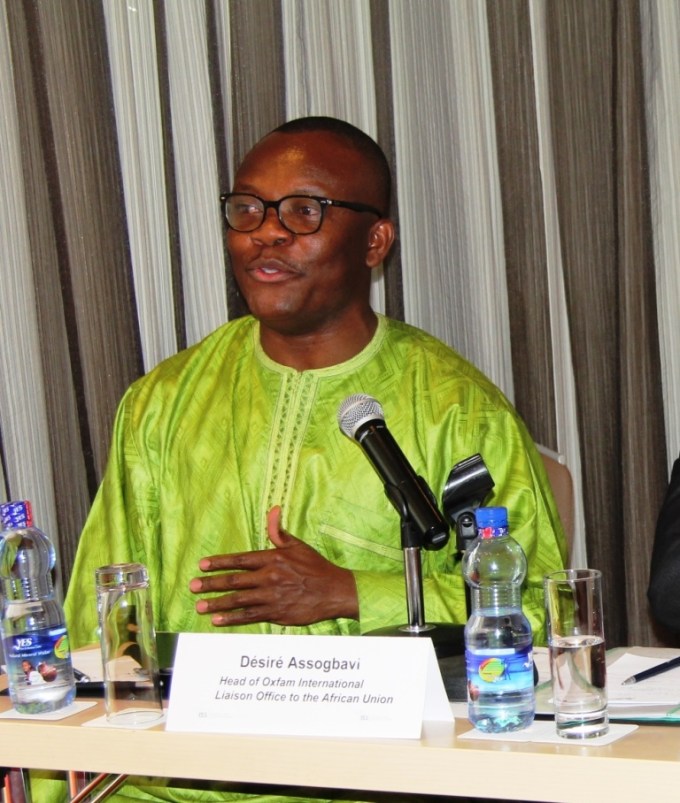
I spent several years of my professional career working on human rights and justice first as the Founder and Chairperson of Juris-Club, then as Commissioner at the National Commission of Human Rights following my election by the Parliament of Togo, then as Outreach Liaison for Africa at the Global Coalition for the International Criminal Court in New York among others … The conflict between the African Union and the ICC therefore interests me in several respects but especially as African and a human rights lawyer; therefore I would like to share here some personal reflections on the different episodes of the serial “ICC versus the African Union”.

The International Criminal Court: The Basics

The creation of the International Criminal Court is an important step in mankind’s efforts to make our world more just. The court was established by an international law treaty “The Rome Treaty” adopted in 1998 and entered into force in 2002. The ICC covers only the most serious crimes, including genocide, war crimes, crimes against humanity and the crime of aggression, and this, only when States are unable or unwilling to judge these crimes themselves. The Court may be seized by a State Party, the Prosecutor and the United Nations Security Council. The Statute of the Court applies equally to all, without any distinction based on official capacity. In particular, official capacity as a Head of State or Government, a member of a Government or parliament, an elected representative or a government official shall in no case exempt a person from criminal responsibility under the ICC Statute (…): Article 27.

The Place of Africa in the ICC

Africa is the geographical bloc the most represented in the ICC. 124 countries are currently Parties to the Statute of the International Criminal Court: Africa: 34, Asia and the Pacific: 19, Eastern Europe: 18, Latin America and the Caribbean: 28, Western Europe and others: 25. The judges of the Court are equally from all regions of the world. Out of the 18 judges of the court 4 are Africans: Kenya (vice-president), Nigeria, DRC, and Botswana. Moreover, the prosecutor of the Court is Gambian.

Is the ICC targeting Africa or African leaders only?

To date, the ICC has opened investigations in 9 countries, out of which 8 are in Africa: Uganda, DRC, Sudan, CAR, Kenya, Libya, Cote d’Ivoire and Mali. This clearly demonstrates that the ICC operates primarily in Africa and it is true that today Africa is not the only continent where crimes of the ICC jurisdiction are committed… But did you know how and why this concentration of the ICC on Africa happened?

First, it was Ugandan President Yoweri Museveni who the first referred the situation in the Northern Uganda to the ICC in January 2004 against his opponent Joseph Kony and the Lord’s Resistance Army; a brutal armed group. Then it was the Government of DRC under President Joseph Kabila who referred the situation in the country to the ICC. This was followed by the Governments of Central Africa Republic (CAR) and Mali, who themselves referred the situation of their  countries to the ICC. In 2003, before even formally ratifying the ICC treaty, the government of Laurent Gbagbo had officially recognized the jurisdiction of the Court over its country, Cote d’Ivoire.

In short, the governments of 4 of the 8 African countries under investigation have themselves referred these cases to the ICC (Uganda, DRC, CAR, and Mali). The prosecutor of the ICC opened investigations on her own initiative in 2 countries with their full cooperation (Kenya, Cote d’Ivoire) and the UN Security Council had seized the court in two cases (Sudan and Libya).

It is therefore obvious from this observation that African leaders went to the ICC first (mostly against their opponents) and not the other way round  … but why? …Why are they against the ICC today?

Do African leaders understand the ICC differently?

In 2004, President Museveni seized the ICC against his opponent Joseph Kony and the Lord’s Resistance Army … But during the investigations there were indications that Uganda’s National Army may have also committed crimes under the jurisdiction of the ICC, and therefore may be liable to be tried by the ICC with an eventual involvement of President Museveni himself…. ‘No way!!!’ said President Museveni … the ICC suddenly became his enemy….Frankly, once you call the ICC to investigate a situation in your country  you can’t  dictate them which crime to look at and which to close their eye on in the same situation…This is simply an instrumentalisation of the Court.

In 2003, even before formally ratifying the ICC treaty, Côte d’Ivoire government of Laurent Gbagbo had officially recognized the jurisdiction of the ICC … Laurent Gbabo was likely targeting his political enemies … but the power has changed camp so far… It was therefore President Allassane Ouatarra who delivered Gbagbo to the ICC on the basis of the same special recognition signed by Gbagbo himself.

In 2004, President Joseph Kabila used the ICC to get rid of some embarrassing alleged criminals, but he was also delighted to see his political challengers Jean Pierre Bemba carried away by the ICC in a case linked to the CAR.

In 2004, the Government of Francois Bozize lodged a case with the ICC against war crimes and crimes against humanity allegedly committed in the context of the violence in CAR between 2002 and 2003.

But why does not the ICC take care of the others?

Despite the above, this question is worth asking. I personally support on-going ICC investigations in Africa because innocent Africans have been massacred by Africans with the support and the blessing of other Africans regardless of whether they are Heads of State, Vice-President or otherwise. Their official functions do not confer on them the right to massacre citizens. Indeed, the status of the ICC does not recognize the official status of anybody … this is the innovative and progressive aspect of the court, in favour of the victims.

Why is the ICC delaying to take concrete actions in favour of Iraqi, Palestinian, Syrian, and Afghani … victims? (Even if some of those countries are currently under preliminary investigation)… The answers to this question are unfortunately not as “just” as one would like: Because these countries are not party to the ICC Statute, or because one or several powerful countries endowed with veto power in the UN Security Council would certainly oppose it for unfair reasons that we all know… In fact, only 2 of the 5 permanent members of the UN Security Council are parties to the ICC: France and the United Kingdom.

Many unanswered questions on the ICC: Why does the ICC always go for the defeated rather than the victors who are also guilty of crimes such as in Côte d’Ivoire and maybe in the CAR and the DRC? Why is it that only the United Nations Security Council has the power to refer cases to the Court and even to temporarily stop investigations of the Court while this Council is the most unequal and the least representative institution in our world? Why do they oppose the UN General Assembly exercising the same power?

These questions and many others obviously weaken the credibility of the ICC but … who is responsible for it and who must correct it?

A Collective Withdrawal from the ICC by African Countries?

The ICC has problems, it is true, but I do not think that these problems justify the entire war launched against the Court by the African Union. Atrocities are actually committed, Africans are massacred by other Africans and there is no functional mechanism to date in Africa to punish the perpetrators of these international crimes and to do justice to the victims. With regard to Africa, the ICC is therefore the only functional judicial mechanism on this day to try these crimes.

The so-called “mass withdrawal strategy” of the AU is rather a document that indicates the grievances and demands of the African Union on the ICC and its functioning in particular the fact that the court targets only African leaders, the issue of immunity of the Heads of State and the request of the African Union to suspend the cases against Sudanese and Kenyan leaders. This document adopted by the last AU Summit also includes a study of national procedures for an eventual individual withdrawal of member states from the Court. “Collective withdrawal” from a treaty is an incorrect language. It does not exist in international law. The African Union may just be using it as an instrument of political pressure to catalyse changes in the ICC.

Is not the ICC a common heritage that should help us to create a more just world? All nations, including African nations and their stakeholders, must work together to improve the ICC. Abandoning it or leaving it should not be an option … and I am pleased that a number of African countries have entered reservations on the “mass withdrawal strategy” during the AU Summit discussions. I have just learned that Gambia, which had previously announced its withdrawal from the ICC, has changed its mind. The government has just informed the United Nations that Gambia remains a state party to the ICC Treaty. Good news !

A mass withdrawal of African countries from the ICC would be a shame, a terrible contempt for African victims and an encouragement for criminals and their supporters… I know it will not happen. In fact 17 AU member states rejected the strategy… This is a terrible failure for the minority that initiated it.

The African Court of Human and Peoples’ Rights: An African Solution?

The slogan “African Solutions for African Problems” is beautiful but it will only convince me under two conditions: 1/the bill of the African solution must also be paid by  Africa (I recall that Africa did not pay the bill of  Hissen Habré trial) and 2/ universal human rights and justice standards must be applied because human rights and  justice principles have no nationality or regional identity. They are simply and unequivocally universal.

Having said this, the body that ensures justice does not matter if justice is fair and equitable. But the reality is that the African Court of Human Rights today has only a “promise” of criminal jurisdiction. This means that the court has no jurisdiction over international crimes at this time and I do not see any political will from our countries to make it happen any time soon. Almost 20 years after the adoption of the Protocol that established the African Court of Human and Peoples’ Rights (with no criminal jurisdiction) only 30 African States out of 54 ratified it. Moreover the amended protocol giving criminal jurisdiction to the Court has not been ratified by any African state, 2 years after its adoption in Malabo. The worst is that the Malabo Protocol ensured immunity for heads of state during their tenures. I consider this provision as an “authorization to kill” while on power and an “encouragement” to cling on power forever in order  to be protected against prosecutions…  The observation is clear: Withdrawing from the ICC before an African court is able to judge and punish serious and heinous crimes is simply guarantying impunity and abandoning the victims. This is against the spirit of the Constitutive Act of our African Union.

I also invite you  to read my interviews on the ICC  with Radio France Internationale and Le Monde Newspaper on the following links:

http://www.rfi.fr/afrique/20170209-cour-penale-internationale-union-africaine-liaisons-ambigues-retrait-collectif

http://www.lemonde.fr/afrique/article/2017/02/03/l-afrique-veut-elle-vraiment-en-finir-avec-la-cour-penale-internationale_5074120_3212.html

Your comments are welcome on the blog or by email: assogbavi@me.com

La Cour Pénale Internationale ou l’Union Africaine : Qui Peut Rendre Justice aux Victimes Africaines ?

English version here

J’ai passé plusieurs années de ma carrière professionnelle à travailler sur les droits de l’homme et la justice d’abord en tant que fondateur et président du Juris-Club, puis  Membre de la Commission Nationale des Droits de l’Homme du Togo à la suite de mon élection par l’Assemblée Nationale du Togo et ensuite comme Officier de Liaison pour l’Afrique de la Coalition pour la Cour Pénale Internationale  à New York entre autre…Le conflit entre l’Union Africaine et la Cour pénale internationale (CPI) m’interpelle donc à plusieurs égards mais surtout en tant qu’Africain épris de justice.

Je vous propose dans les lignes qui suivent des réflexions personnelles sur les différents épisodes du feuilleton « CPI contre Union Africaine ».

L’Essentiel de la Cour Pénale Internationale (CPI)

La création de la Cour Pénale Internationale est un pas important dans les efforts déployés par l’humanité pour rendre notre monde plus juste. La cour a été créée par un traité de droit international « Le Traité de Rome » adopté en 1998 et entré en vigueur  en 2002. La CPI ne vise que les crimes les plus graves notamment le génocide, les crimes de guerres, les crimes contre l’humanité, et le crime d’agression et ce, seulement lorsque les Etats ne sont pas en mesure ou n’ont pas la volonté de juger ces crimes eux même. La Cour peut être saisie par un état partie, le procureur et le Conseil de Sécurité des Nations Unies. Le Statut de la Cour s’applique à tous de manière égale, sans aucune distinction fondée sur la qualité officielle. En particulier la qualité de chef d’État ou de gouvernement, de membre d’un gouvernement ou d’un parlement, de représentant élu ou d’agent d’un État, n’exonère en aucun cas de la responsabilité pénale au regard du Statut (…) : Article 27.

La Place de l’Afrique dans la CPI

L’Afrique est le bloc géographique le plus représenté à la CPI. 124 pays sont présentement États Parties au Statut de la Cour pénale internationale : Afrique : 34, Asie et Pacifiques : 19, Europe Orientale : 18, Amérique Latine et Caraïbes : 28, Europe Occidentale et autres : 25. Les juges de la cour proviennent équitablement de toutes les régions du monde. Des 18 juges de la cour 4 sont Africains : Kenya (vice-présidente), Nigeria, RDC, Botswana. Par ailleurs, la procureure de la cour est Gambienne.

La CPI vise-t-elle particulièrement l’Afrique ou les Leaders Africains ?

A ce jour la CPI a ouvert des enquêtes dans 9 pays dont 8 en Afrique : Ouganda, RDC, Soudan, RCA, Kenya, Libye, Cote d’Ivoire, Mali.  Ceci démontre clairement que la CPI opère essentiellement en Afrique et il est vrai qu’aujourd’hui l’Afrique n’est pas le seul continent ou les crimes relevant de la compétence de la CPI sont commis mais saviez- vous comment et pourquoi est-on arrivé à cette concentration des activités de la CPI en Afrique ?

D’abord c’est le Président Ougandais Yoweri Museveni  qui a été le premier Chef d’Etat à saisir la CPI de la situation au Nord de l’Ouganda en Janvier 2004 contre son opposant Joseph Kony et l’Armée de Résistance du Seigneur, un groupe armé particulièrement violent et responsable d’atrocités. Ensuite c’est le gouvernement de la RDC sous le Président Joseph Kabila qui a saisi la CPI de la situation dans son pays. S’en sont suivi les gouvernements de la République Centrafricaine, et du Mali qui ont eux aussi saisi la cour. En 2003, avant même de ratifier formellement le traité de la CPI le gouvernement de Laurent Gbagbo avait officiellement reconnu  la compétence de la CPI sur la Cote d’Ivoire.

En bref, les gouvernements de 4 des 8 pays africains sous enquête ont eux-mêmes saisi la CPI (Ouganda, RDC, RCA, Mali). La procureure de la cour a ouvert des enquêtes de sa propre initiative dans 2 pays avec la pleine coopération de leurs gouvernements (Kenya, Cote d’Ivoire) et le Conseil de Sécurité des Nations Unis avait saisi la cour dans 2  autres cas (Soudan et   Libye).

Il est donc évident eu égard à ce constat   que ce sont les leaders Africains qui sont allés vers la CPI et non pas le contraire… mais pourquoi ? Et pourquoi sont – ils contre la Cour aujourd’hui ?

Les Leaders Africains avaient-ils compris la CPI autrement ?

En 2004, le Président Museveni avait saisi la CPI contre son opposant Joseph Kony et  l’Armée de Résistance du Seigneur… Mais au cours des enquêtes il y eu des indices selon lesquelles l’Armée régulière de l’Ouganda (UPDF) aurait aussi commis des crimes relevant de la compétence de la Cour, et donc susceptible d’être jugés par la CPI avec une possibilité d’implication du Président Museveni lui-même…. Pas question !!! selon le president  Museveni… la CPI devient du coup son ennemi juré ….Franchement, une fois que vous appelez la CPI pour enquêter sur une situation dans votre pays, vous ne pouvez pas lui dicter quels crimes regarder et sur quels crimes fermer les yeux dans la même situation … Ceci serait  une instrumentation pure et simple de la Cour.

En 2003, si, avant même de ratifier formellement le traité de la CPI, le gouvernement de Laurent Gbagbo avait officiellement reconnu  la compétence de la Cour sur la Cote d’Ivoire, Laurent Gbabo visait vraisemblablement ses ennemis politiques… mais le pouvoir avait changé de camp par la suite; c’était donc le Président Allassane Ouatarra qui livra Laurent Gbagbo à la CPI sur la base de la même reconnaissance spéciale signée par Mr. Gbagbo lui-même.

En 2004, Joseph Kabila s’est servi de la CPI pour se débarrasser de certains criminels de guerres présumés et gênants mais il s’était certainement aussi réjoui de voir son challenger politique Jean Pierre Bemba, emporté par la CPI dans une affaire liée à la RCA.

En 2004 le Gouvernement de Francois Bozize avait saisi la CPI contre  des crimes de guerre et crimes contre l’humanité qui auraient été commis dans le contexte des violences en République Centrafricaine entre 2002 et 2003.

Il n’y a donc que le cas du Soudan et dans une certaine mesure,  celui de la Libye qui ont échappé au contrôle du pays en question. La CPI vise-t-elle l’Afrique ou les leaders Africains ? Jugez-en vous-même !

Mais pourquoi la CPI ne s’occupe-t-elle pas des autres ?

Malgré ce qui précède, cette question vaut la peine d’être posée. Je soutiens personnellement toutes les enquêtes de la cour en Afrique car des innocents africains  ont été effectivement massacrés par des africains sous des ordres et avec le soutien d’autres Africains peu importe  si les présumés  coupables sont Chefs d’Etat, Vice-Président ou autre. Leurs fonctions officielles ne leur confèrent pas le droit de tuer ou de faire massacrer les citoyens. D’ailleurs le statut de la CPI ne reconnait pas la qualité officielle de qui que ce soit… c’est cela même le coté innovateur  de la CPI et ce, en faveur des victimes.

Pourquoi la CPI tarde à agir concrètement en faveur des victimes Irakiennes, Palestiniennes, Syriennes, Afghanes… ? (Même si certains de ces pays sont présentement sous enquête préliminaires)… les réponses ne sont malheureusement pas aussi « justes » qu’on le souhaiterait : Parce que ces pays ne sont pas parties au statut de la CPI, ou encore parce qu’un ou plusieurs pays puissants dotés du droit de veto au Conseil de Sécurité s’y opposeraient certainement pour des raisons injustes que nous connaissons tous… En effet seuls 2 des 5 membres permanents du Conseil de Sécurité des Nations Unies sont parties à la CPI : la France et le Royaume Uni.

Beaucoup de Questions sans Réponses : Pourquoi la CPI ne s’attaque le plus souvent qu’aux vaincus et non pas aux vainqueurs qui seraient aussi coupables de crimes comme en côte d’Ivoire  et peut être en RCA et en RDC ?  Pourquoi c’est au Conseil de Sécurité des Nations Unies seulement qu’il est donné  le droit de référer des cas à la Cour  et même de différer des enquêtes de la Cour  alors que ce Conseil est l’institution la plus injuste et la moins représentative de notre monde ? Pourquoi s’oppose-t-on à ce que l’Assemblée Générale des Nations  Unies exerce ce même pouvoir ?

Ces  questions et bien d’autres affaiblissent évidement la crédibilité de la CPI mais… qui en est responsable et qui doit et la corriger ?

Un Retrait Collectif de la CPI par l’Afrique ?

La CPI a des problèmes, il est vrai, mais je ne pense pas que ces problèmes  justifient toute la guerre déclenchée contre la Cour par l’Union Africaine. Des atrocités sont effectivement commises, des Africains sont massacrés  en masse par d’autres Africains et il n’existe aucun mécanisme fonctionnel à ce jour pour punir les coupables de ces crimes internationaux et rendre justice aux victimes. En ce qui concerne l’Afrique, la CPI est donc le seul mécanisme juridictionnel fonctionnel en ce jour pour connaitre de ces crimes…

Comme son nom ne l’indique pas, la « stratégie de retrait collectif » de l’Union Africaine est plutôt un document qui énumère les griefs et revendications de l’Union Africaine contre la CPI et son fonctionnement  notamment le fait que la Cour ne cible que les leaders Africains, la question de l’immunité des Chefs d’Etat et la demande de l’Union Africaine, adressée au Conseil de Sécurité  de suspendre les poursuites contre les dirigeants Soudanais et Kenyans. Le document, adopté par le dernier Sommet de l’Union comporte aussi une étude des procédures nationales  de retrait individuel éventuel d’Etats membres de l’UA.  Le «retrait collectif» d’un traité est un abus de langage. Il n’existe pas en droit international. L’Union Africaine l’utilise peut être comme un instrument de pression politique pour catalyser des changements à la CPI…

Mais la CPI n’est-elle pas un patrimoine commun qui doit nous aider à créer un monde plus juste ? Toutes les nations y compris africaines et leurs composantes ne doivent-elles pas œuvrer ensemble pour l’améliorer ? L’abandonner ou la quitter ne doit pas être une option… et je me réjouis du fait que 16 pays Africains aient émis des réserves sur le texte lors des débats au cours du dernier Sommet.

Je viens même d’apprendre que la Gambie qui avait précédemment annoncé son retrait de la CPI a changé d’avis. Le gouvernement vient d’informer les Nations Unies que la Gambie reste bel et bien état partie au Statut de la CPI. Bonne nouvelle !

Un retrait en grand nombre des pays Africains de la CPI serait une honte, un mépris terrible pour les victimes Africaines et un encouragement pour les bourreaux et potentiel bourreaux…   je sais que cela n’arrivera pas.

La Cour Africaine des Droits de l’Homme et des Peuples : Une Solution Africaine ?

Le Slogan « Solutions Africaine aux Problèmes Africains » est bien beau mais il ne me convainc qu’a deux conditions : La facture de la solution africaine doit être aussi payée  par l’Afrique (je rappelle  que l’Afrique n’avait pas payé la facture du procès de Hissen Habré) et les normes universelles des droits de l’homme et de justice doivent être appliquées car les droits de l’homme et les principes de justice n’ont pas de nationalité ou d’identité régionale . Ils sont simplement universels.

Ceci étant dit, l’organe qui rend la justice importe peu si cette justice est juste et équitable mais la réalité est que la Cour Africaine des Droits de l’Homme n’a en ce jour qu’une « promesse » de compétence pénale. Ce qui veut dire qu’elle ne peut pas connaitre des crimes internationaux  en ce moment et je ne vois aucune volonté politique de la part de nos états de le concrétiser bientôt. Presque 20 ans après l’adoption du Protocol de la Cour Africaine des Droits de l’Homme et des Peuples (sans compétence pénale)  seuls 30 Etats Africains sur 54 l’on ratifié. Par ailleurs le protocole amendé  donnant compétence pénale à  la Cour n’a été ratifié en ce jour par aucun état africain, 2 ans après son adoption à Malabo. Le constat est donc clair : Se retirer de la CPI avant qu’une cour Africaine soit capable de juger et punir les crimes graves c’est tout simplement garantir l’impunité et mépriser les victimes. Ce qui est encore navrant est que le Protocole de Malabo consacre l’immunité des chefs d’état dans l’exercice de leur fonction, même pour des crimes internationaux. Je considère cela non seulement comme « un permis de tuer » sans soucis d’être inquiété  mais aussi une incitation pour les dictateurs de s’accrocher indéfiniment au pouvoir. Ceci est aussi contraire à l’Acte Constitutif de notre Union Africaine.

Je vous invite aussi à lire mes interviews sur Radio France Internationale  et le journal Le Monde sur le même sujet à partir des liens suivants :

http://www.rfi.fr/afrique/20170209-cour-penale-internationale-union-africaine-liaisons-ambigues-retrait-collectif

http://www.lemonde.fr/afrique/article/2017/02/03/l-afrique-veut-elle-vraiment-en-finir-avec-la-cour-penale-internationale_5074120_3212.html

Vos commentaires sont les bienvenus sur le blog ou par email : assogbavi@me.com

Key Decisions of the AU Summit

(Non-official Summary)

The 28th African Union (AU) summit held in Addis Ababa on 30-31st January was a historical one given the landmark decisions adopted, including the admission of Morocco into the Union and a deep reform of the continental body.  The summit also renewed the leadership of the AUC and took steps towards financial independence  of the Union. Albeit the lack of strong country/context related decisions on Peace and Security issues, the Assembly adopted the Master Plan towards Silencing the Guns by 2020. Finally, the summit adopted the so called ‘collective withdrawal strategy’, a misnomer of a document which provides member states with  a roadmap for eventual individual withdrawal from the ICC in case AU’s claims and proposals regarding the court and some of its  on-going operations are not taken in consideration.

INSTITUTIONAL REFORM

The Summit;

    • Took note of the recommendations for the proposed reforms to further strengthen the African Union, in the following five areas: a) Focus on key priorities with continental scope; b) Realign African Union institutions in order to deliver against those priorities; c) Connect the African Union to its citizens; d) Manage the business of the African Union efficiently and effectively at both the political and operational levels; e) Finance the African Union sustainably and with the full ownership of the Member States.
    • Decided to adopt the recommendations in the Report as amended by Member States during the Retreat’s deliberations (see below)
    • Mandated President Paul Kagame, in his capacity as the lead on the institutional reform of the Union, in collaboration with President Idriss Deby Itno, of Chad in his capacity as the outgoing Chairperson and President Alpha Conde, of the Republic of Guinea in his capacity as the current Chairperson, to supervise the implementation process;
    • The Incoming Commission elected at the January 2017 Summit shall put in place a Reform Implementation Unit at the AU Commission, within the Bureau of the Chairperson, responsible for the day-to-day coordination and implementation of this decision;
    • The Incoming Commission shall also make recommendations on a mechanism to ensure that legally binding decisions and commitments are implemented by Member States;
    • President Paul Kagame shall report at each Ordinary Session of the Assembly on progress made with the implementation of this decision.

Focus on key priorities with continental scope:

i) The African Union should focus on a fewer number of priority areas, which are by nature continental in scope, such as political affairs, peace and security, economic integration (including the Continental Free Trade Area), and Africa’s global representation and voice;

ii) There should be a clear division of labour and effective collaboration between the African Union, the Regional Economic Communities (RECs), the Regional Mechanisms (RMs), the Member States, and other continental institutions, in line with the principle of subsidiarity.

Realigning African Union institutions in order to deliver against those priorities

i) The Commission should initiate, without delay, a professional audit of bureaucratic bottlenecks and inefficiencies that impede service delivery and the recommendations therein;

ii) The Commission’s structures should be re-evaluated to ensure that they have the right size and capabilities to deliver on the agreed priorities;

iii) The Commission’s senior leadership team should be lean and performance-oriented;

iv) NEPAD should be fully integrated into the Commission as the African Union’s development agency, aligned with the agreed priorities and underpinned by an enhanced results-monitoring framework;

v) The African Peer Review Mechanism (APRM) should be strengthened to track implementation and oversee monitoring and evaluation in key governance areas of the continent;

vi) The roles and functions of the African Union judicial organs and the Pan-African Parliament should be reviewed and clarified, and their progress to date assessed;

vii) The Peace and Security Council (PSC) should be reformed to ensure that it meets the ambition foreseen in its Protocol, by strengthening its working methods and its role in conflict prevention and crisis management;

viii) The Permanent Representatives Committee’s (PRC) Rules of Procedures should be reviewed and be in line with the mandate provided for in the Constitutive Act of the African Union. The PRC should facilitate communication between the African Union and national capitals, and act as an advisory body to the Executive Council, and not as a supervisory body of the Commission.

Connecting the African Union to its citizens

i) The Commission should establish women and youth quotas across its institutions and identify appropriate ways and means to ensure the private sector’s participation;

ii) The Commission should establish an African Youth Corps, as well as develop programs to facilitate cultural and sports exchange among Member States;

iii) Member States should make the African passport available to all eligible citizens as quickly as possible, in line with the Assembly decision Assembly/AU/Dec.607 (XXVII) adopted in Kigali, Rwanda in July 2016

iv) The Commission should identify and provide a set of new capabilities or ‘assets’ in the form of common continent-wide public goods and services valued by Member States and citizens. Such services could include the provision of neutral arbitration and competition services, or a common technical platform for the data and analysis needed to assess Africa’s progress toward its development goals;

v) Member States should engage their Parliaments and citizens, including civil society, on the African Union reform process.

Managing the business of the African Union efficiently and Effectively, at both political and operational levels

Political management of the Union

i) The African Union Assembly shall handle an agenda of no more than three (3) strategic items at each Summit, in line with the Me’kelle Ministerial Retreat recommendations. Other appropriate business should be delegated to the Executive Council

ii) The Assembly shall hold one Ordinary Summit per year, and shall hold extraordinary sessions as the need arise

iii) In place of the June/July Summit, the Bureau of the African Union Assembly should hold a coordination meeting with Regional Economic Communities, with the participation of the Chairpersons of the Regional Economic Communities, the AU Commission and Regional Mechanisms. Ahead of this meeting, the AU Commission shall play a more active coordination and harmonisation role with the Regional Economic Communities, in line with the Abuja Treaty;

iv) External parties shall only be invited to Summits on an exceptional basis and for a specific purpose determined by in the interests of the African Union;

v) Partnership Summits convened by external parties should be reviewed with a view to providing an effective framework for African Union Africa should be represented by the Troika, namely the current, incoming and outgoing Chairpersons of the African Union, the Chairperson of the AU Commission, and the Chairpersons of the Regional Economic Communities;

vi) To ensure continuity and effective implementation of Assembly decisions, a troika arrangement between the outgoing, the current, and the incoming African Union Chairpersons should be established. In this regard, the incoming chairperson shall be selected one year in advance;

vii) Heads of State shall be represented at Summits by officials not lower than the level of Vice President, Prime Minister or equivalent;

viii) The current sanctions mechanism should be strengthened and enforced. This would include consideration of making participation in the African Union deliberations contingent on adherence to Summit decisions.

Operational management of the Union 

i) The election of the Chairperson of the AU Commission should be enhanced by a robust, merit-based, and transparent selection process;

ii) The Deputy Chairperson and Commissioners should be competitively recruited in line with best practice and appointed by the Chairperson of the Commission, to whom they should be directly accountable, taking into account gender and regional diversity, amongst other relevant considerations;

iii) The Deputy Chairperson role should be reframed to be responsible for the efficient and effective functioning of the Commission’s administration;

iv) The title of Chairperson and Deputy Chairperson may also be reconsidered;

v) A fundamental review of the structure and staffing needs of the organisation, as well as conditions of service, should be undertaken to ensure alignment with agreed priority areas.

INTERNATIONAL CRIMINAL COURT (ICC)

The Summit;

  • Adopted the ICC Withdrawal Strategy and called on member states to consider implementing its recommendations… But  many countries entered reservations to the text.
  • Requested the Group of African States Parties in New York in collaboration with AU Commission to actively participate in the deliberations of the Working Group on Amendments to ensure that African proposals are adequately considered and addressed;

ADMISSION OF MOROCCO

The Summit;

  • Welcomed the request from the Kingdom of Morocco as it provides the opportunity to reunite the African community of states around the Pan-African core values of the Founders of solidarity, unity, freedom and equality, in accordance with the Principles and Objectives of the Constitutive Act. This will strengthen the ability of the African Union to find African solutions to African problems;
  • Decided to admit the Kingdom of Morocco as a new Member State of the African Union in conformity with Article 9(c) and Article 29 of the Constitutive Act of the African Union;
  • Requested  Morocco to deposit their instrument of accession to the Constitutive Act of the African Union.

WESTERN SAHARA

The Summit;

  • Noted with deep concerns the continued impasse in the search for a solution to the conflict in and underlined the urgent need for renewed international efforts to facilitate an early resolution of the conflict. In this respect, the Assembly called again to the UN General Assembly to determine a date for the holding of the self-determination referendum for the people of Western Sahara and protect the integrity of the Western Sahara as a non-self-governing territory from any act which may undermine it.
  • Urged the UN Security Council to fully assume its responsibilities in restoring the full functionality of United Nations Mission for the Referendum in Western Sahara (MINURSO), as it is indispensable for overseeing the ceasefire and organizing the self-determination referendum in Western Sahara, as well as in addressing the issues of the respect of human rights and the illegal exploration and exploitation of the Territory’s natural resources, particularly in line with the important judgment of the Court of Justice of the European Union issued on 21 December 2016, on the arrangement between the EU and Morocco signed in 2012, on the mutual liberalization of the trade in agricultural and fishing products.

PEACE & SECURITY

 The Summit;

    • Emphasized the need for all AU Member States, in particular the PSC, to give more focus on conflict prevention, early warning and early response, in order to prevent, for future, occurrence of full blown conflicts in the continent.
    • Endorsed the African Union Master Roadmap of Practical Steps to Silence the Guns in Africa by year 2020, as a guideline for Africa’s efforts to this end.
    • Directed the PSC to establish a monitoring and evaluation mechanism on the basis of which the Assembly will periodically review progress in the implementation of the Master Roadmap;

FINANCING THE AFRICAN UNION

The Summit; 

i) The Committee of Ten Finance Ministers should assume responsibility for oversight of the African Union budget and Reserve Fund and develop a set of ‘golden rules’, establishing clear financial management and accountability principles;

ii) After funding of the budget of the African Union and the Peace Fund, the  balance of the proceeds of the 0.2% AU levy on eligible imports, the Committee of Ten Finance Ministers should look into placing surplus in a Reserve Fund for continental priorities as decided by the Assembly;

iv) The current scale of contributions should be revised based on the principles of ability to pay, solidarity, and equitable burden-sharing, to avoid risk concentration.

ELECTION AT THE LEADERSHIP OF THE UNION –

AU Chairperson for 2017: H.E. President Alpha Conde – Guinea

AU Learders elected 2017.jpg

Credit photo and draft decisions: African Union Commission

Gambie: La Prestation de Serment du Président-élu est-elle légale?

Voir la version en Anglais ici: https://assodesire.com/2017/01/19/gambia-is-the-swearing-in-of-the-president-elect-legal/

Le nouveau Président Gambien Adama Barrow vient de prêter serment. Fait rare, la cérémonie a eu lieu à l’ambassade de la Gambie au Sénégal  à cause du refus du président  sortant  Yahya Jammeh de quitter le pouvoir. Est-ce un acte légal ? J’aimerais  partager ici mon opinion sur la question.

La légitimité du Président vient essentiellement de son élection par le peuple Gambien qui détient la souveraineté nationale  exercée  par les élections.  La majorité du peuple Gambien a donc confié cette souverainement au président par les élections qui ont eu lieu en Décembre 2016.

La  prestation de serment est une déclaration solennelle du Président élu faite devant un juge, un officier public ou un commissaire à l’assermentation au cours d’une cérémonie publique destinée à officialiser  l’installation du Président. Ce qui est important dans la prestation du serment est la formule, prévue par la loi et lue par le président.  Le serment est une promesse annoncée de manière cérémonieuse et publique en insistant sur le caractère sacré et indéfectible des paroles prononcées avec l’affirmation d’une portée divine. Le lieu du serment n’as donc aucune incidence sur sa valeur juridique. D’ailleurs la constitution de la Gambie est restée muette sur le lieu de la prestation de serment du president.

Pourquoi était-il important que le président élu Adama Barrow prête serment le 19 janvier?

Si le président élu Barrow n’a pas prêté serment  à cette date, il y aurait un vide constitutionnel en Gambie et tout pourra arriver … y compris l’éventualité que  l’armée reprenne le pouvoir. En outre, maintenant qu’il a prêté serment, il devient le président  légitime et peut demander une intervention militaire de la CEDEAO pour rétablir l’ordre en Gambie, y compris bouter le président sortant  dehors par tous les moyens sans l’aval du Conseil de Sécurité des Nations Unies.

Une ambassade fait-elle partie du territoire national ?

Contrairement à la croyance populaire l’ambassade ne fait pas partie du territoire national de l’Etat d’envoi. La Convention de Vienne de 1961 sur les relations diplomatiques ne prévoit pas l’extraterritorialité des ambassades. Cependant la mission est considérée comme une propriété  et un symbole de l’Etat et les autorités de l’Etat d’envoi ont un contrôle absolu sur ce qui se passe à l’intérieur de l’ambassade.   Son inviolabilité est donc garantie par la Convention. Par exemple les agents du pays hôte ont interdiction d’y “pénétrer, sauf avec le consentement du chef de la mission”, et doivent “prendre toutes les mesures appropriées afin d’empêcher que les locaux de la mission ne soient envahis”.

Certains pays considèrent même que c’est leur loi nationale qui s’applique au sein de leurs ambassades. Ceci pourra aussi dépendre des pratiques de l’Etat d’accueil puisque le droit international est resté muet là-dessus.

En conclusion, la prestation de serment d’Adama Barrow a bien eu lieu au Sénégal mais elle garde toute sa valeur juridique.

Vos commentaires sont les bienvenues.

Lire mes previsions de scenarios pour la crise Gambienne ici: https://assodesire.com/2017/01/17/crise-politique-en-gambie-les-scenarios-des-prochains-jours/

Le «Retour» du Maroc à l’Union Africaine: Une Opportunité ou un Challenge?

Le Royaume du Maroc a présenté officiellement une demande d’adhésion à l’Acte Constitutif de l’Union Africaine pour «redevenir» membre de l’Union. La demande a également été remise au Président de la Commission de l’UA,  Dr Dlamini-Zuma par le conseiller du Roi Mohammed VI aux Affaires étrangères, Taieb Fassi Fihri, le 22 Septembre 2016, lors d’une réunion tenue en marge de la 71e session de l’Assemblée Générale des Nations Unies à New York.

S’il est géré de bonne foi et en respectant les principes de base de l’Union Africaine, le retour du Maroc à l’Union Africaine pourrait avoir de nombreuses répercussions positives pour l’UA et potentiellement faciliter la résolution du conflit du Sahara Occidental. Dans le cas contraire, cette évolution comporte tous les risques de dangereusement diviser l’Union Africaine.

J’aimerais partager ici mes opinions personnelles sur certaines des implications de ce «retour». Voir la version en Anglais de l’article ici: http://wp.me/p4ywYV-bh

En juin et juillet 2016, le Maroc a entrepris une campagne diplomatique en prélude au Sommet de l’Union Africaine. Des émissaires marocains ont visité le Sénégal, la Côte-d’Ivoire, la Zambie, le Cameroun, l’Ethiopie, l’Egypte, le Soudan, le Kenya et la Tunisie. Quelques jours avant le Sommet, le Président Paul Kagame du Rwanda, pays hôte du Sommet a eu une visite de deux jours au Maroc et a été décoré avec la plus haute distinction d’honneur du Maroc. De même, la Zambie a envoyé son ministre des Affaires étrangères à Casablanca où il a annoncé la décision de son pays d’annuler la reconnaissance de la  République Arabe Sahraouie Démocratique.

Au cours du Sommet de l’UA à Kigali, le Roi du Maroc a envoyé une lettre officielle au Président de l’Assemblée de l’Union Africaine indiquant que le Maroc souhaiterait revenir à l’UA. Le Président en exercice de l’UA, le  Tchadien Idriss Deby aurait refusé d’inscrire  ladite lettre à l’ordre du jour du Sommet. Au cours de la deuxième journée du Sommet, les délégués ont vu circulée une motion demandant la suspension de la République Arabe Sahraouie Démocratique de l’UA. La motion, qui aurait été approuvée par 28 États a été catalysée par le Président du Gabon Ali Bongo avec le soutien d’autres alliés tels que le président Macky Sall du Sénégal. La motion n’a cependant pas pu être présentée.

L’entrée du Maroc à l’Union Africaine Pourrait être Positif

Le Maroc, membre fondateur de l’Organisation de l’Unité Africaine (OUA) avait claquée la porte y a 32 ans suite à  l’admission de la RASD comme Etat membre de l’Union. Au cours des années 2000s, l’OUA a été transformée pour devenir l’Union Africaine avec un nouveau traité ; l’Acte Constitutif de l’Union et des objectifs renforcés. Sur le plan juridique, l’UA donc est une nouvelle organisation et tous ses 54 membres actuels ont souscris à ses visions et principes fondamentaux en ratifiant le nouvel Acte Constitutif. Pour le Maroc il s’agira donc d’une adhesion, pas d’un retour…

Je n’ai pas vu le contenu de la requête du Maroc mais une telle demande implique  forcement l’acceptation sans réserve par le Maroc des principes de base de l’organisation. Le Maroc devra alors cohabiter avec tous les membres de l’UA, y compris la RASD. Ceci ouvrerait aussi la porte à une résolution pacifique et acceptable du conflit du Sahara Occidental. L’UA pourra alors regagner de l’influence pour faciliter le processus.

Des Avantages en Matière de Paix et de Sécurité : L’entrée de Maroc dans l’Union Africaine pourra augmenter les chances d’une solution africaine aux crises dans la région du Maghreb, le Maroc étant un acteur majeur en matière de sécurité en Afrique du Nord et un leader dans la lutte contre l’extrémisme et le sécularisme islamique. L’Union du Maghreb Arabe (UMA) a été la Communauté Economique Régionale la moins fonctionnelle. L’engagement du Maroc ou de l’UMA dans les opérations de soutien à  la paix  de la Force africaine en attente pourrait augmenter sa capacité de façon significative. La lutte contre le terrorisme a été l’un des défis les plus importants pour lesquels le Maroc pourra être un allié sérieux  s’il devient membre de l’Union.

Un Gain Economique Majeur: la réussite économique du Maroc serait un sérieux atout pour le programme d’intégration économique de l’Union africaine et des programmes spécifiques tels que l’Agenda 2063.

Une avancée Historique: Le retour à L’Union Africaine d’un Etat clé de l’histoire du panafricanisme projetterait une image positive du continent.

pic-blog2

Un Retour «Forcé» du Maroc Pourrait Dangereusement Diviser l’Union Africaine

Dans une récente interview, le Président Macky Sall du Sénégal soutenant le retour du Maroc a déclaré: «Le Maroc a décidé de revenir et a demandé que la légalité constitutionnelle internationale soit respectée, conformément aux principes de l’ONU où le Sahara Occidental n’est pas représenté comme Etat indépendant ”, se référant ainsi à la récente tentative avortée de 28 pays pour suspendre la République Arabe Sahraouie Démocratique de l’UA par une motion. Le Président Hery Rajaonarimampianina de Madagascar a également  salué la décision du Maroc et a promis de tout faire pour que ce retour légitime se concretise dès le plus vite possible.

Le Maroc multiplie des actions en faveurs des Etats membres de l’Union à travers la création et le renforcement de liens diplomatiques et économiques. Le Maroc élargis son cercle traditionnel d’amis (Afrique de l’Ouest) à d’autres régions du continent notamment avec le renforcement récent des relations diplomatiques avec le Rwanda,  l’Ouganda et la Zambie. L’élargissement de ce cercle constitue à n’en pas douter une menace réelle  pour la RASD. L’Union Africaine prend normalement ses décisions par consensus mais il est peu probable d’avoir ce consensus sur la question de maintenir la  RASD ou non au sein de l’Union Africaine. Même une majorité simple sera difficile à obtenir dans la configuration actuelle.  D’ailleurs, il n’existe aujourd’hui aucun mécanisme permettant d’expulser un Etat  membre de l’Union Africaine en dehors du cas de suspension pour non-paiement de cotisations ou en cas de coup d’Etat.

Les Etats super-influents comme l’Afrique du Sud, l’Algérie et le Nigeria sont loin de laisser passer une motion d’expulsion ou de suspension de la  RASD  de l’Union Africaine. Même au pire des cas, une action dans ce sens remettra en cause le sacro-saint principe du droit à l’autodétermination, un des principes fondateurs de l’OUA. L’Union Africaine en sortirait profondément affaiblie et devisée.

Le Maroc pourrait également utiliser une stratégie différente qui serait de faire entrée soft dans l’Union Africaine en acceptant la position actuelle de l’organisation sur le Sahara Occidental, mais continuer la bataille contre la RASD au sein de l’Union avec le soutien des alliés. Cela me semble être le scénario le plus probable mais aussi le plus facile pour intégrer  l’Union … Mais le Maroc et ses alliés réussiront- ils à bouter la SADR dehors? Telle est la question…

Il est important de souligner ici que l’Afrique a beaucoup plus a gagner d’un règlement pacifique du conflit Sahraoui sur la base des principes fondateurs de l’Union Africaine, des droits fondamentaux de l’homme et du droit international.

Morocco’s “Return” to the African Union: Opportunity or Challenge?

The Kingdom of Morocco officially submitted a request to accede to the African Union Constitutive Act and become a Member of the Union. The letter was also handed over to the Chairperson of the AUC, Dr. Dlamini-Zuma through the adviser to the King Mohammed VI on Foreign Affairs of the Kingdom of Morocco, H.E. Taieb Fassi Fihri, on 22 September 2016, at a meeting held on the margins of the 71st Session of the United Nations General Assembly (UNGA).

If it is managed in good faith and the respect of African Union basic principles, Morocco’s return to the African Union could have numerous positive implications for the AU and potentially bring about the long awaited for “resolve” to Western Sahara conflict. If not, this development has every risk of dangerously dividing the Union.

Here are my personal views on some of the implications of this development:

See the French version of the article here: http://wp.me/p4ywYV-bx

In June and July 2016 Morocco undertook Pre-AU-Summit Campaign through Moroccan envoy Salaheddine Mezouar who visited Senegal, Ivory Coast, Zambia, Cameroon Ethiopia, Egypt, Sudan and Tunisia and from 15 July, Morocco sent Special Envoy Taieb Fassi Fihri to Kenya. Preceding the AU Summit, President Paul Kagame of the host nation Rwanda held a two-day visit to Morocco and was decorated Morocco’s highest national award of honour. Equally,  Zambia sent its Minister of Foreign Affairs to Casablanca where he announced the country’s decision to “de-recognise” Sahrawi Arab Democratic Republic (SADR).

During the AU Summit in Kigali in July 2016 the King of Morocco sent an official letter to the Chairperson of the Assembly  the African Union indicating Morocco wishes to return to the AU. The Chadian Chairperson of the AU Idriss Deby reportedly refused to table the letter at the Summit. During the second day of the Summit, delegates saw a motion calling for the suspension of the Sahrawi Arab Democratic Republic from the AU. The motion, allegedly endorsed by 28 states was catalyzed by the President of Gabon Ali Bongo alongside other strong allies such as President Macky Sall of Senegal. The motion however failed to be presented.

Morocco’s return for the African Union could be a positive development

Morocco, a founding member of the Organization of African Unity (OAU) left OAU 32 years ago over the admission of SADR and the subsequent refusal to expel  SADR from the Union.  In the year 2000, the OAU has been transformed to the African Union with a new Constitutive Act and enhanced objectives. So, legally talking, the AU is a new organization and all its current 54 members have subscribed to its visions and principles.

I have not seen the contents of Morocco’s application for membership to the AU but such a request to “return” to the AU should naturally entail an unconditional acceptance of the basic principles of the organization. Morocco will then have to cohabit with all members of the AU, including the SADR. This also brings the hope of a peaceful and acceptable resolution to the Western Sahara Conflict. The AU will then regain full leverage to facilitate the process.

Gains on Peace and Security:  African solution or approach to crisis in the Maghreb region would be greatly enhanced by cooperation with Morocco a major security actor  in North Africa and a lead in countering violent extremism and management of secularism. The Arab Maghreb Union (AMU) has been the least functional Regional Economic Community (REC) the strength, Military engagement of the AMU in Peace Support Operations and the African Standby Force could increase significantly. Countering Terrorism has been the most prominent challenge with which Morocco can also assist if it becomes a member of the Union.

Economic Gains: Morocco’s economic success would be a serious asset for the African Union’s economic integration agenda and specific programmes such as Agenda 2063.

Historical Win: The return of one of the leading Pan African States in the history of Africa and a founding member of OAU will project an excellent image of the continent.morroco-pic1

A “Forced” return of Morocco could dangerously split the African Union

In a recent interview, President Macky Sall of Senegal, in full support of Morocco’s move declared: “Morocco has decided to come back and has requested that international constitutional legality be respected in accordance with the UN where the Western Sahara is not represented as an independent state’’, referring to the recent failed attempt of 28 countries to kick the Sahrawi Arab Democratic Republic out of the AU by a motion. President Hery Rajaonarimampianina of Madagascar also ‘welcomed’ Morocco’s decision and promises that he will ‘work to ensure that this legitimate return be effective as soon as possible.’

Morocco is building relationships and depositing favors with member states through creating and strengthening diplomatic and economic ties. Morocco’s traditional stronghold in West Africa is expanding with recent allies in Rwanda, Uganda and Zambia. With this warm welcome and increased support, Morocco will be able to garner within the Union, so, the standing of Western Sahara could be increasingly threatened.

In any case, there is currently no mechanism within AU policies and regulations to expel a member state from the Union except the cases of suspension for non-payment of contributions or for unconstitutional change of government. The AU normally makes its decisions based on consensus which is unlikely to be the case for this particular question on whether SADR should be kept in the AU or not.  Even a majority vote would be difficult to attain on this. In this case, the political decision making process of the AU would be strained and split on the question of Western Sahara.

The “expulsion” or “suspension” of SADR is unlikely to succeed within the current geopolitical framework of the African Union. Powerful members such as South Africa, Nigeria,  Algeria, Ethiopia etc would surely stand against such a move. Any forced attempt to expel SADR by whatever mean legal or political could dangerously split the African Union.  If this were to happen, in the worst case scenario the AU, as an organization which inherited the decolonization agenda, would violate one of its sacred principles of the right of people for self-determination. This would terribly weaken the organization’s standing.

Morocco may also use a different strategy which is to softly land in the African Union by accepting its current stand and position on Western Sahara but then continue the battle against the SADR from within the Union with the support of allies. This seems to me as the most likely scenario that Morocco may use and the easiest to get accepted in the African Union… But would Morocco and its allies succeed to push SADR out? That is the question…

It is important to stress here that Africa will rather gain from a peaceful resolution of the Western Sahara conflict based on the founding principles of the African Union, fundamental Human Rights and the international law.

Questions, Comments? email me: assodesir@gmail.com

The Failure of AU Commission Election : Lessons and Perspectives

The “failure” of the election of the African Union Commission Leadership is actually a positive development on my personal view for at least the two following reasons:

  1. Africa has much better to offer other than the 3 candidates on the list of the chairpersonship. I do not necessary mean they are not qualified at all but we do have better in stock.
  2. Two of the candidates were pushed ahead by two of the most brutal dictators in our continent who, by their governing styles are in a total denial of the African Union “shared values”. Electing their candidates to drive the AUC and its progressive programs and values including the Agenda 2063 will be really embarrassing for our Union. I know candidates do not represent their individual country and we must look at qualifications rather than political belonging/backing. However, in real life the influence of the country of origin of the Chair cannot be denied. I have seen it. Also, everybody knows that the presidents always allocated state money and resources to their candidates for campaign. It is not naive!!! On the other hand, it is about the image of our continent trying hard to embrace democracy and respect of human rights in order to move quickly towards sustainable development. We cannot let people sent by those who are in open denial of our values to manage the affairs of the Union. Dictators have been chosen as Chair of the yearly presidency of the African Union (and I hate it strongly!) but we all know that the role is not executive and has few practical impacts. It is however unacceptable to have an “agent” of a dictator to represent and lead the AU Commission, the engine of our Union for 4 years or more.

Solidarity in the Regional Blocs

The outcomes of the election have confirmed the strong solidarity within some of the regional blocs: ECOWAS and SADC.

ECOWAS made it clear and official that they want the elections to the postponed even though they have a candidate for the Deputy Chairperson seat.  I have no doubt that they have unanimously observed that position during the vote by abstaining.

SADC apparently has shown regional solidarity in supporting their candidates: the Botswana Minister of Foreign Affairs who came first in the vote. I am not sure what happened in the central and North Africa. Those 2 regions have been relatively weak in terms of solidarity. So, no big surprise even though some of them may have obviously joined the abstention group.

What is next?

The Assembly has decided to extend the mandate of Madame Dlamini-Zuma until the next elections and to reopen the candidacy for current and new applicants. Those are political decisions as the current rules of procedures are not clear about reopening the list but Rule 42 suggests that the Deputy Chairperson takes over in case of election failure . In 2012, new candidates were not allowed to apply after the deadlock Zuma/Ping.

There is now an opportunity to review the rules/procedures of the elections before January 2017. This is absolutely urgent, otherwise we may have another deadlock if falling regions want to revenge… I would be in favor of a simple majority instead of 2/3 if 2 candidates remain on the list without gathering the required 2/3 votes.

See my recent presentation on the AUC election including the list of candidates here: https://drive.google.com/file/d/0B2bKBoYxtnhlS3BIdGI2Yl9Ya00/view?usp=sharing

I am also in favor of a non-renewable longer term for the AUC Leadership as well as other necessary structural reforms I hope to write about those later.

Now the road is paved for Jakaya Kikwete, Donald Kaberuka, Thao Mkeki or Carlos Lopes to come in…. Who knows?


Financing the African Union: Would the Kigali Decision make our AU an African Organization?

The African Union has just taken another decision on how to finance the continental body and its activities in order to make it a truly independent Pan African organization.

In fact, if the laws governing civil society organizations in many African countries are to be applied to the African Union, then our Union will be qualified as a “Foreign Organization” in Africa because more than 70% of its budget is paid by foreign partners while the 54 African countries only pay all together less than 30%. For example the 2017 budget adopted by the Kigali Heads of State Summit is $782 Million of which foreign donors  are expected to pay $576 Million while African countries will only pay $205 Million.

0.2 % levy on eligible imports to fund the AU

Yesterday 16 July 2016, the Heads of State of the African Union informally decided to allow a collection of 0.2% levy from “eligible” imports from all member states to fund the African Union and its programmes.

While I think this is a courageous move, it is important to precise that this is not the first attempt to resolve the shameful financial dependency of our Union.

What happened to previous proposals on alternative funding?

In 2014, President Obasanjo and the UNECA suggested the following proposals to the African Union:

  • $2 hospitality levy per hotel stay
  • $10 airfare levy on international flights originating in or out of Africa
  • $0.005 SMS Levy (UNECA)

If implemented, those proposals would have brought all together at least $ 2.3 Billion annually to the African Union. Pushed by African tourism-dependent countries, Heads of State rejected the proposal last year. The Assembly simply decided an increase of the contributions of members to meet the new funding targets, leaving it up to countries themselves to choose any of the proposed ideas. Everyone including member states themself knew at that time that the decision was just a way of putting the proposal off.

They have however decided to cover AU expenses as follow:

100 % of the operating budget

75 % of the programme budget

25 % of the peace support operations budget

All to be phased within five years starting from 2016 and a new scale of contribution has been adopted…. But how the same countries paying less than 30% of the AU budget can suddenly multiply their contributions?

Donald Kaberuka’s Formula

The adoption of the Agenda 2063 and its 10 years implementation plan, coupled by an apparent donors fatigue forced the AU to deepen the discussion on the alternative funding of the AU. Dr. Donald Kaberuka has then been called to help as the AU’s High Representative for the Peace Fund… Here we are with a new proposal of 0.2 %  levy on eligible imports.

According to estimates, if implemented this new proposal may bring up to $1.2 Billion yearly to the AU. The details of the new proposal are not yet available. The devil may be hiding within those details.  For example which imports will be “eligible”?, By which mechanisms the money will be collected and who will manage it?, Would the current AU structure and ways of working handle such mechanism and this amount of money? For it to be effective, the formula must provide for a direct collection at the source by/for the African Union.

In any case, let’s say this is a good move. ECOWAS successfully uses a similar mechanism through the Community Levy System (o.5% of imports) but not without difficulties. My only problem is that more than 80% of the African Union decisions are not implemented, so, the citizen that I am will not believe it just because it was adopted by the AU. I need to see concrete signs of implementation.

Follow my blog www.assodesire.com for further analysis on this issue in the coming days.

“Year of Human Rights”: Recommendations to the AU Summit in Kigali

To give a true meaning to the “Year of Human Rights” The Kigali AU Summit should adopt the following measures:

Desire1

1- On Civic Space: The Summit should decide a moratorium on all existing national laws that restrict CSOs’ operations and call for the revision of those laws before the end of the year in accordance to universal rights to freedom of peaceful assembly and of association. Since 2012, at least 29 restrictive laws  on civic space have been introduced in African countries.

2- All AU Members should commit to ratify the  African Court of Human and People’s Rights Protocol before the end of 2016. on  As of December 2015 only 29 out of the 54 AU members were Parties to the Protocol seventeen years after its adoption.

3- All AU Members  should accept the competence of the African Court of Human and People’s  Rights to receive cases from individuals and NGOs before the end of the year.  As of December 2016 only 7 countries have done so.

4- Kigali Summit should demand the immediate release of all political prisoners, stop intimidations and cases against political leaders  in all AU Members states and call for investigations on the recent cases of torture to death in Gambia, force disappearance and other gross HR violations in the continent.

5- The Kigali Summit should decide on concrete sanctions applicable to countries that do not comply to the HR Courts  decisions and the list of those countries should be published  regularly.

6- The African Passport in preparation for the Summit must be issued to  a number of ordinary citizens of the continent… not just to heads of state as currently planned.

7- Because of the high risk that constitutional amendments present now on  peace and security in Africa, the Kigali Summit should decide a moratorium on those changes aiming  to prolong presidential terms until a serious discussion happens and decisions  made at continental level in this.  Not doing it will be like jeopardizing the realisation of our Agenda 2063, “the Africa we want” and a denial of our shared values.

8- On the rights of women: all member states  should show case of  the concrete national policy and practice changes (with figures)  that they have operated since the adoption of the AU Women Rights Protocol and the Solemn Declaration on Gender Mainstreaming.

The African Union Summit in Rwanda: Which Human Rights?

The 27th Summit of the Heads of State of the African Union will be held in Kigali, Rwanda from 10 -18 July 2016 under the theme: “African Year of Human Rights with Specific focus on the Rights of Women”. The African Union Commission decided not to invite observers (Non-African countries, Non-State Actors and other) to this summit. I would like to share the following personal reflections on the Summit:

Issues likely to dominate the AU Summit

Which Human Rights? The year 2016 has been declared as the “African Year of Human Rights with Specific focus on Women’s Rights”.  Officially, this theme is premised on the realisation that 2016 marks a watershed in the continent’s efforts to promote and protect human rights and provides an opportunity to take stock of the gains made over the years by the human rights bodies within the continent.

Interestingly 2016 is being marked by a serious decline on fundamental human rights in Africa with numerous violations of basic political rights and a denial of the African Union “shared values” by a number of leaders, most of whom have been clinging to power for decades by all means including changing the supreme law of the land… the constitution.

In Kigali, Heads of State and Government will have an interactive discussion following a presentation on the theme by the African Union Commission and a decision or a solemn declaration/commitment may be be adopted on the theme as usual.

am not sure what an additional decision or declaration on Human Rights will be for… while in Gambia politicians and activists are being tortured to death and in Uganda  political opposition leaders and candidates  jailed before, during and after the elections… and this did not prevent regional and continental “observers” to declare  the elections free and fair….

After  failing to send troops to protect innocent civilians, can the heads of state really convince Burundians that this is their “Year of Human Rights” ?

If  our leaders are really serious about the “Year of Human Rights” they should consider  the  concrete suggestions below while making their decisions.  The upcoming Summit is also an opportunity for progressive, like-minded and pro-democracy and pro-” AU’s shared values” leaders to break the silence against old school dictators who are  only pulling our continent backward.

Elections of the AU Commission Leadership: The “hottest” business of the Summit is the election of the AU Commission Cabinet. The 10 cabinet members of the AU Commission including the Chairperson, the Deputy Chairperson and 8 Commissioners will be elected/re-elected in Kigali if everything goes well. The current Chairperson Dr. Nkosazana Dlamini-Zuma, who has only served one 4-year term (from 2012) is re-eligible but she is not contesting (officially) for another term.  The Deputy Chairperson, Erastus Mwencha and two other commissioners (Infrastructure and Energy, Rural Economy and Agriculture), having been elected twice (in 2008 and 2012) are not eligible for re-election.  The other six commissioners (Political Affairs, Peace and Security, Social Affairs, Trade and Industry,  Economic Affairs and Human Resources Science and Technology), who have only served one term are eligible for re-election. However except the Commissioner for Political Affairs and the Commissioner for Human Resources, Science and Technology, these have all put forward their candidature.

Some analysts think that, even if the election happens, it is unlikely for any of the current candidates for the Chairpersonship to gather the 2/3 votes from Member States,  needed to be elected. So, there is an eventuality for a postponement of the elections. Some countries/regions are  pushing for the postponement of the election and the  re-opening of the applications to new candidates.

Peace and Security: The summit is expected to discuss the on-going conflicts in the continent. The Peace and Security Council will also meet at Heads of State level. The Summit will normally adopt an omnibus decision on the state of peace and security in the continent. The following burning and unresolved situations will be discussed: Burundi, South Sudan, Sudan, DRC, Somalia, CAR, Western Sahara, Mali etc. Emerging threats to peace and security, such as maritime security and terrorism are also likely to be discussed.

Constitutionalism, Governance, Electoral Fraud/Violence & Unlimited Presidential Terms: It is not sure who will champion discussions on electoral frauds and violence as well as unlimited presidential terms issues in Kigali, but it is now in the common knowledge that if these issues are not resolved soon in Africa, more violent conflicts will emerge and our development plans including the Agendas 2063 /2030 will remain just “beautiful papers” with no prospect for realisation. It is expected that some progressive leaders will table these issues for discussion.

One African Passport/Free Movement: As part of the 10-year implementation plan of the agenda 2063, the AU is making efforts to create a single African passport for travel across the continent. Such a passport will presented to the heads of states in Kigali. In an attempt to promote free movement of people, related decisions are expected to happen during the Kigali summit. There is already a plan to adopt a protocol on free movement in Africa in 2018.  A few countries including Rwanda, Ghana and Namibia have issued “visa on arrival” policies for African passport holders. More countries must do so in the mean time.

African Agenda 2063: The AU’s Agenda 2063 has been adopted by African Heads of State and Government as the Continent’s new long-term vision for the next 50 years. Priority programmes and projects of the Agenda include: An Integrated High Speed Train Network, the Continental Free Trade Area, the African Passport and Free Movement of people, Unification of African Air Space, the Grand Inga Dam Project etc.  The 10-year implementation plan is having hard time to show concrete steps 3 years after the adoption of the Agenda while basic conditions for a true development move are getting worse in the continent.

Other issues: A number of other issues including the illicit financial flows out of Africa, the alternative sources of funding of the AU, the restructuring of the African Union Commission, the ICC etc. will also be on the agenda of the Kigali Summit. Find out more in the coming weeks on www.assodesire.com

Calendar of the Summit

  • From 10 to 12 July 2016: Ordinary Session of the Permanent Representatives’ Committee (Ambassadors)
  • From 13 to 15 July 2016: Ordinary Session of the Executive Council (Ministers of Foreign Affairs)
  • From 17 and 18 July 2016: Ordinary Session of the Assembly (Heads of State and Government)

Closing of the mid-year Summits to observers

In January 2015, the Assembly of the Union directed the Commission to make proposals on the streamlining of the AU Summits and the working methods of the Union in order to accelerate the implementation of the Agenda 2063. In June 2015, the Commission proposed a set of recommendations to the Assembly including a proposal that only one summit be open to partners and that only partners (observers accredited to the AU/with MOUs with AU) with business related to the theme of the Summit be invited to the AU Summit. The Assembly then decided among other things to “continue with 2 summits which should be streamlined with one Summit focusing on policy issues with participation of partners (…) and the other Summit focusing on the implementation of decisions”. The decision did not precise which of the 2 Summits will be open and which will be closed but given the practice of the last 2 years, it is looking like the January Summit will be open and the June/July summit closed.

The AU Commission is not inviting observers to the Kigali Summit. So, CSOs, non-African countries and other observers are not invited and their side events may not be allowed within and around the summit premises. This move is being strongly contested by the civil society and is seen as part of the whole strategy of governments to shrink civic space. (See my blog on this issue here: https://assodesire.com/2016/06/06/the-controversial-closing-of-the-au-summits-to-citizensobservers/ )

To give a true meaning to the “Year of Human Rights” The Kigali Summit should adopt the following decisions/ Commitments

1- On Civic Space: The Summit should decide a moratorium on all existing national laws that restrict CSOs’ operations and call for the revision of those laws before the end of the year in accordance to universal rights to freedom of peaceful assembly and of association. Since 2012, at least 29 restrictive laws  on civic space have been introduced in African countries.

2- All AU Members should commit to ratify the  African Court of Human and People’s Rights Protocol before the end of 2016. on  As of December 2015 only 29 out of the 54 AU members were Parties to the Protocol seventeen years after its adoption.

3- All AU Members  should accept the competence of the African Court of Human and People’s  Rights to receive cases from individuals and NGOs before the end of the year.  As of December 2016 only 7 countries have done so.

4- Kigali Summit should demand the immediate release of all political prisoners, stop intimidations and cases against political leaders  in all AU Members states and call for investigations on the recent cases of torture to death in Gambia, force disappearance and other gross HR violations in the continent.

5- The Kigali Summit should decide on concrete sanctions applicable to countries that do not comply to the HR Courts  decisions and the list of those countries should be published  regularly.

6- The African Passport in preparation for the Summit must be issued to  a number of ordinary citizens of the continent… not just to heads of state as currently planned.

7- Because of the high risk that constitutional amendments present now on  peace and security in Africa, the Kigali Summit should decide a moratorium on those changes aiming  to prolong presidential terms until a serious discussion happens and decisions  made at continental level in this.  Not doing it will be like jeopardizing the realisation of our Agenda 2063, “the Africa we want” and a denial of our shared values.

8- On the rights of women: all member states  should show case of  the concrete national policy and practice changes (with figures)  that they have operated since the adoption of the AU Women Rights Protocol and the Solemn Declaration on Gender Mainstreaming.