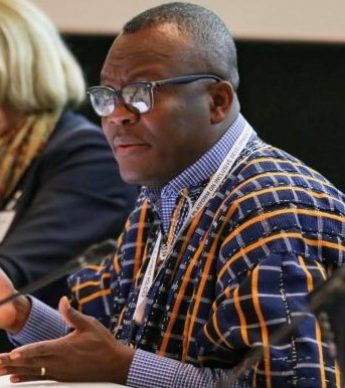
Sharing my presentation on the Elections at the African Union Leadership during a multi-stockholders debate on the AU Summit: http://www.slideshare.net/DesireAssogbavi/auc-election-desires-presentation-29-june-2016
Pre-AU Summit Multi-Stakeholders Debate: My Opening Remarks
” 2016: African Year of Human Rights”
Wednesday, 29th June, 2016 – Radisson Blu Hotel, Addis Ababa
Excellencies, Ambassadors and Representatives of International Organizations,
Colleagues, Partners and Friends,
All protocols observed!
Ladies and Gentlemen, Welcome!
It’s an honor and a pleasure for me on behalf of Oxfam, to welcome you to this Multi-Stakeholder discussion ahead of the 27th Summit of the African Union.
Our expectation is that this platform will allow us to analyze various policy options, expectations and, implications of the upcoming Summit outcomes.
The upcoming Summit is going to an interesting one ….not only because of the main theme of the year —- Human Rights with special focus on the rights of women … but also with regard to the other crucial issues on the agenda for the future of our continent and our Union.
Interestingly, 2016 is being marked by a serious decline on fundamental human rights in Africa with numerous violations of basic civil and political rights and a denial of the African Union “shared values” by a number of member states…. And the Summit itself being held far from the citizens, the right holders.
In Kigali, Heads of State and Government will have an interactive discussion, and… a solemn declaration will adopted on the theme as usual…
As a citizen of this continent, I have several questions, which I believe, are also shared by many other fellow citizens.
- What shall we expect from Kigali?
- Would this Summit come up with a strong and credible solution for the numerous HR violations in our continents? Torture to death of political leaders, harassment of opponents, denial of free and fair elections etc…
- Would this Summit resolve the issue of financial dependency of the African Union from external partners? Would the African Union continue turning to partners to collect 70% of its budget?
- Would the African passport ever get in the hand of ordinary citizens to allow them to move freely within the continent? Or, is it made only for leaders who, in fact do not need it?
- What is the way forward to hold high ranked criminal accountable in Africa, now that the ICC is declared “non gratta” in our land while we still do not any functioning mechanism to hold accountable those who are freely killing our innocent people?
- Who will champion discussions on electoral frauds and violence as well as unlimited presidential terms issues, knowing that if these issues are not resolved, violent conflicts will continue being our daily bread and our development plans including the Agendas 2063 /2030 will remain just “beautiful papers”.
- Can we really convince the citizens of Burundi, South Sudan, DRC, Sudan, Western Sahara etc… that this is their Year of Human Rights?
- How do we establish a credibility of the AU in terms of the implementation of its decisions?
- What is the solution for our +5 Million refugees and +20 Million IDPs
Of course there are a few positive developments in our continent but looking to our challenges… we are rather on a slippery slope
Finally; Will the AUC election happened? Will the long overdue restructuring of the AUC Commission finally adopted to fit with the implementation of Agenda 2063
Ladies and gentlemen, we have a lot to chew and to digest today. Let’s make it freely and honestly…
This debate will be under Chatham House Rules in order to allow free expression…
I would like to thank sincerely our panelists and the Chair who accepted to join us despite their busy schedule at this moment: Ambassador of Ghana H.E. Albert Yankey, Madame Jennifer Chiriga Chief of Staff of the African Union Commission Dr. George Mukundi from the African Governance Architecture, AU Commission, Comrade Don Deya from the Pan Africa Lawyers Union, and Brenda Mofya from Oxfam International: Thank you for coming….
Thank you all for your attention; I wish us a good debate…
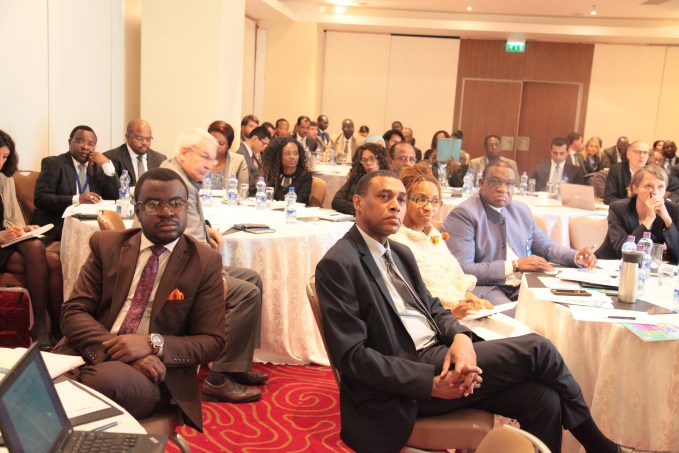
The African Union Summit in Rwanda: Which Human Rights?
The 27th Summit of the Heads of State of the African Union will be held in Kigali, Rwanda from 10 -18 July 2016 under the theme: “African Year of Human Rights with Specific focus on the Rights of Women”. The African Union Commission decided not to invite observers (Non-African countries, Non-State Actors and other) to this summit. I would like to share the following personal reflections on the Summit:
Issues likely to dominate the AU Summit
Which Human Rights? The year 2016 has been declared as the “African Year of Human Rights with Specific focus on Women’s Rights”. Officially, this theme is premised on the realisation that 2016 marks a watershed in the continent’s efforts to promote and protect human rights and provides an opportunity to take stock of the gains made over the years by the human rights bodies within the continent.
Interestingly 2016 is being marked by a serious decline on fundamental human rights in Africa with numerous violations of basic political rights and a denial of the African Union “shared values” by a number of leaders, most of whom have been clinging to power for decades by all means including changing the supreme law of the land… the constitution.
In Kigali, Heads of State and Government will have an interactive discussion following a presentation on the theme by the African Union Commission and a decision or a solemn declaration/commitment may be be adopted on the theme as usual.
I am not sure what an additional decision or declaration on Human Rights will be for… while in Gambia politicians and activists are being tortured to death and in Uganda political opposition leaders and candidates jailed before, during and after the elections… and this did not prevent regional and continental “observers” to declare the elections free and fair….
After failing to send troops to protect innocent civilians, can the heads of state really convince Burundians that this is their “Year of Human Rights” ?
If our leaders are really serious about the “Year of Human Rights” they should consider the concrete suggestions below while making their decisions. The upcoming Summit is also an opportunity for progressive, like-minded and pro-democracy and pro-” AU’s shared values” leaders to break the silence against old school dictators who are only pulling our continent backward.
Elections of the AU Commission Leadership: The “hottest” business of the Summit is the election of the AU Commission Cabinet. The 10 cabinet members of the AU Commission including the Chairperson, the Deputy Chairperson and 8 Commissioners will be elected/re-elected in Kigali if everything goes well. The current Chairperson Dr. Nkosazana Dlamini-Zuma, who has only served one 4-year term (from 2012) is re-eligible but she is not contesting (officially) for another term. The Deputy Chairperson, Erastus Mwencha and two other commissioners (Infrastructure and Energy, Rural Economy and Agriculture), having been elected twice (in 2008 and 2012) are not eligible for re-election. The other six commissioners (Political Affairs, Peace and Security, Social Affairs, Trade and Industry, Economic Affairs and Human Resources Science and Technology), who have only served one term are eligible for re-election. However except the Commissioner for Political Affairs and the Commissioner for Human Resources, Science and Technology, these have all put forward their candidature.
Some analysts think that, even if the election happens, it is unlikely for any of the current candidates for the Chairpersonship to gather the 2/3 votes from Member States, needed to be elected. So, there is an eventuality for a postponement of the elections. Some countries/regions are pushing for the postponement of the election and the re-opening of the applications to new candidates.
Peace and Security: The summit is expected to discuss the on-going conflicts in the continent. The Peace and Security Council will also meet at Heads of State level. The Summit will normally adopt an omnibus decision on the state of peace and security in the continent. The following burning and unresolved situations will be discussed: Burundi, South Sudan, Sudan, DRC, Somalia, CAR, Western Sahara, Mali etc. Emerging threats to peace and security, such as maritime security and terrorism are also likely to be discussed.
Constitutionalism, Governance, Electoral Fraud/Violence & Unlimited Presidential Terms: It is not sure who will champion discussions on electoral frauds and violence as well as unlimited presidential terms issues in Kigali, but it is now in the common knowledge that if these issues are not resolved soon in Africa, more violent conflicts will emerge and our development plans including the Agendas 2063 /2030 will remain just “beautiful papers” with no prospect for realisation. It is expected that some progressive leaders will table these issues for discussion.
One African Passport/Free Movement: As part of the 10-year implementation plan of the agenda 2063, the AU is making efforts to create a single African passport for travel across the continent. Such a passport will presented to the heads of states in Kigali. In an attempt to promote free movement of people, related decisions are expected to happen during the Kigali summit. There is already a plan to adopt a protocol on free movement in Africa in 2018. A few countries including Rwanda, Ghana and Namibia have issued “visa on arrival” policies for African passport holders. More countries must do so in the mean time.
African Agenda 2063: The AU’s Agenda 2063 has been adopted by African Heads of State and Government as the Continent’s new long-term vision for the next 50 years. Priority programmes and projects of the Agenda include: An Integrated High Speed Train Network, the Continental Free Trade Area, the African Passport and Free Movement of people, Unification of African Air Space, the Grand Inga Dam Project etc. The 10-year implementation plan is having hard time to show concrete steps 3 years after the adoption of the Agenda while basic conditions for a true development move are getting worse in the continent.
Other issues: A number of other issues including the illicit financial flows out of Africa, the alternative sources of funding of the AU, the restructuring of the African Union Commission, the ICC etc. will also be on the agenda of the Kigali Summit. Find out more in the coming weeks on www.assodesire.com
Calendar of the Summit
- From 10 to 12 July 2016: Ordinary Session of the Permanent Representatives’ Committee (Ambassadors)
- From 13 to 15 July 2016: Ordinary Session of the Executive Council (Ministers of Foreign Affairs)
- From 17 and 18 July 2016: Ordinary Session of the Assembly (Heads of State and Government)
Closing of the mid-year Summits to observers
In January 2015, the Assembly of the Union directed the Commission to make proposals on the streamlining of the AU Summits and the working methods of the Union in order to accelerate the implementation of the Agenda 2063. In June 2015, the Commission proposed a set of recommendations to the Assembly including a proposal that only one summit be open to partners and that only partners (observers accredited to the AU/with MOUs with AU) with business related to the theme of the Summit be invited to the AU Summit. The Assembly then decided among other things to “continue with 2 summits which should be streamlined with one Summit focusing on policy issues with participation of partners (…) and the other Summit focusing on the implementation of decisions”. The decision did not precise which of the 2 Summits will be open and which will be closed but given the practice of the last 2 years, it is looking like the January Summit will be open and the June/July summit closed.
The AU Commission is not inviting observers to the Kigali Summit. So, CSOs, non-African countries and other observers are not invited and their side events may not be allowed within and around the summit premises. This move is being strongly contested by the civil society and is seen as part of the whole strategy of governments to shrink civic space. (See my blog on this issue here: https://assodesire.com/2016/06/06/the-controversial-closing-of-the-au-summits-to-citizensobservers/ )
To give a true meaning to the “Year of Human Rights” The Kigali Summit should adopt the following decisions/ Commitments
1- On Civic Space: The Summit should decide a moratorium on all existing national laws that restrict CSOs’ operations and call for the revision of those laws before the end of the year in accordance to universal rights to freedom of peaceful assembly and of association. Since 2012, at least 29 restrictive laws on civic space have been introduced in African countries.
2- All AU Members should commit to ratify the African Court of Human and People’s Rights Protocol before the end of 2016. on As of December 2015 only 29 out of the 54 AU members were Parties to the Protocol seventeen years after its adoption.
3- All AU Members should accept the competence of the African Court of Human and People’s Rights to receive cases from individuals and NGOs before the end of the year. As of December 2016 only 7 countries have done so.
4- Kigali Summit should demand the immediate release of all political prisoners, stop intimidations and cases against political leaders in all AU Members states and call for investigations on the recent cases of torture to death in Gambia, force disappearance and other gross HR violations in the continent.
5- The Kigali Summit should decide on concrete sanctions applicable to countries that do not comply to the HR Courts decisions and the list of those countries should be published regularly.
6- The African Passport in preparation for the Summit must be issued to a number of ordinary citizens of the continent… not just to heads of state as currently planned.
7- Because of the high risk that constitutional amendments present now on peace and security in Africa, the Kigali Summit should decide a moratorium on those changes aiming to prolong presidential terms until a serious discussion happens and decisions made at continental level in this. Not doing it will be like jeopardizing the realisation of our Agenda 2063, “the Africa we want” and a denial of our shared values.
8- On the rights of women: all member states should show case of the concrete national policy and practice changes (with figures) that they have operated since the adoption of the AU Women Rights Protocol and the Solemn Declaration on Gender Mainstreaming.
The Controversial Closing of the AU Summits to Citizens/Observers
Observers including citizens and their formations as well as non-African countries and other bodies are not invited to the upcoming Summit of the African Union to be held in Kigali, Rwanda next mo…
Source: The Controversial Closing of the AU Summits to Citizens/Observers
The Controversial Closing of the AU Summit to Citizens/Observers
Observers including citizens and their formations as well as non-African countries and other bodies are not invited to the upcoming Summit of the African Union to be held in Kigali, Rwanda next month. This move is being strongly contested by the civil society and is seen as part of the whole strategy of governments to shrink civic space.
I am sharing the following personal reflections on the issue:
In January 2015, the Assembly of the Union directed the Commission to make proposals on the streamlining of the AU Summits and the working methods of the Union in order to accelerate the implementation of the Agenda 2063. In June 2015, the Commission proposed a set of recommendations to the Assembly including a proposal that only one summit be open to partners and that only partners (observers accredited to the AU/with MOUs with AU) with business related to the theme of the Summit be invited to the AU Summits. The Assembly then decided among other things to “continue with two summits every year which should be streamlined with one Summit focusing on policy issues with participation of partners (…) and the other Summit focusing on the implementation of decisions”. The decision did not precise which of the 2 Summits will be open and which will be closed but given the practice of the last 2 years, it is looking like the January Summit will be open and the June/July summit closed.
While the African Union Commission and its various departments are being more and more open to civil society’s participation in between Summits, namely during experts and ministerial policy gatherings, closing the AU Summit space to African citizens as observers is a challenge to a key mission of the Union which is to build “an integrated, prosperous and peaceful Africa, driven by its own citizens and representing a dynamic force in the global arena.” The AU Summit is a unique a symbolic opportunity for informal yet important interactions between the people and power holders.
Some country representatives argued that the closure of the July Summit is mostly due to the disturbance caused by development partners around the summit… puling delegates to side/bilateral meetings while policy discussions were going on… but this is not a good reason to close the summit to everybody else including citizens and their formations. Delegates must be more disciplined and accountable in managing their own schedule during the Summit.
The Agenda 2063 itself recognised that people’s ownership and mobilisation is needed as one of the critical enablers to concretise the seven aspirations of the 50-year business plan of our continent.
Today, civic space is being terribly challenged in a growing number of countries in our continent. Since 2012, at least 29 restrictive laws on civic space have been introduced in African countries. Unless this trend of massive shrinking of citizens’ space is stopped, and closed space reopened, I am afraid the road to 2063’s aspirations will be longer than planned.
I will post another blog on this issue this week on www.assodesire.com including tips for civil society to deal with such a situation.
Oxfam at the African Union: How Change Happened in 2015/16
I am pleased to present you, attached, our 2015/16 overview: a summary of the key outcomes and impacts of our work from January 2015 to March 2016. It can also be read online here: https://issuu.com/85991/docs/2016_review_final/1
Last year, our team worked closely with over 100 national and regional NGOs and coalitions OI-AU Annual Review 2015/16 to engage with and contribute in various decision-making processes of the African Union. Our partners and staff participated in more than 20 gatherings of AU policy organs, and met with AU Permanent Representatives and officials of the African Union Commission and other organs. Over 10,000 African citizens regularly received our “AU Weekly” bulletin and other daily alerts on policy issues and activities of the African Union Commission.
In collaboration with the AU’s Directorate of Information and Communication and other partners, we trained over 100 citizens, NGO leaders and media practitioners from the 5 geographical regions of Africa on Understanding and engaging the African Union. Throughout the year, we supported the work of the peace and security organs of the AU, linking policy makers with citizens and affected populations from the 35 African countries where Oxfam operates. Highlights included our work on Central African Republic, Liberia, Sierra Leone, and South Sudan. We worked with the Peace and Security Council to ensure that community voices were heard in the discussions at the PSC. Our experts were invited to serve as resource persons at several PSC sessions.
We were part of the 3rd UN Conference on Financing for Development in July advocating for a truly visionary financing framework to both bolster inclusive growth and tackle poverty across the developing world.
We launched an unprecedented Africa-China Dialogue Platform, a multi-stakeholders forum aiming to encourage and facilitate a permanent and constructive engagement and dialogue of citizens, policy makers, researchers and other stakeholders on the growing partnership between Africa and China.
Looking ahead, we will remain focused on addressing inequality and the injustice of poverty in communities affected by crises, food shortages, lack of educational opportunities, gender inequality, and lack of accessible health care. Our collective power to tackle these issues is remarkable. We are also committed to ensuring that civic space is open and available for citizens and affected populations to make their voices heard.
I would like to express my sincere gratitude to Oxfam colleagues in Addis Ababa and around the world as well as our volunteers who contributed to these achievements. I also thank the African Union leadership and departments of the African Union Commission, the embassies, and civil society partner organisations for their collaboration and support. Finally, I would like to thank our host, the Government of Ethiopia and in particular the Ministry of Foreign Affairs and the Department of Immigration for their consistent support.
Warm Regards
**************
DÉSIRÉ ASSOGBAVI (Mr) | Resident Representative & Head of Office
Oxfam International Liaison Office to the African Union
TK Building 2 – 6th Floor, Bole Airport Area | Addis-Ababa, Ethiopia | GMT+3
Tel.: +251 11661 1601 | Mobile: +251 911 20 83 32 | Fax: +251 11 661 2795
E-mail: Desire.Assogbavi@oxfaminternational.org | Alt e-mail: assodesire@yahoo.com
www.oxfam.org | http://www.twitter.com/oxfam | Skype: assodesir
l Personal twitter: @assodesire I Personal Blog: assodesire.com
WESTERN SAHARA: “40 FACES, 40 YEARS – A LIFETIME IN EXILE” – African Union Headquarters, 25th April 2016: My Opening Remarks
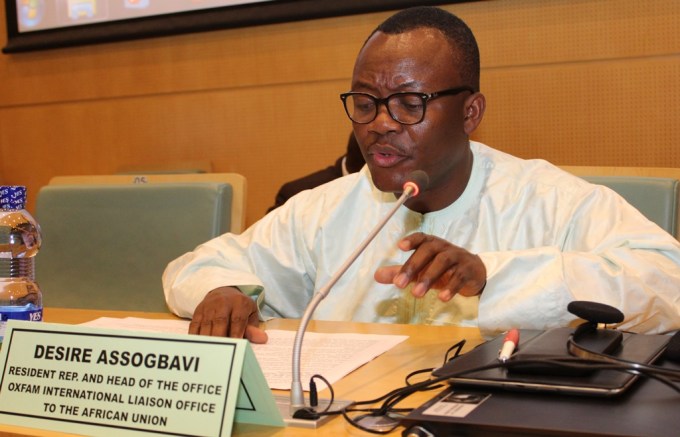
Your Excellency Dr. Aisha Laraba Abdullahi, Commissioner for Political Affairs of the African Union
Your Excellency Amb. Yilma Tadesse, Senior Representative of the AU to MINURSO
Ambassadors, Directors and representatives of International Organizations,
Ms. Umetha Hamdi, and Mr. Mahmud Mohamed, from the Western Sahara Refugee Camp
Colleagues & Friends, Ladies and Gentlemen, All protocol observed…. Good Morning and Thank you for joining us !
Oxfam Liaison Office to the African Union is delighted to co-host this event on the Sahrawi refugee crisis with the African Union Commission.
I would like to explicitly thank the Bureau of the Chairperson, the Department of Political Affairs and the Peace and Security Department for this fruitful cooperation and support.
This photo exhibition, and the seminar with the participation of Sahrawi from the refugee’s camps – comes at a crucial time.
60 million people in the world are displaced today from their home. Many of them are forced to flee because of conflict or despair. Among them are the Sahrawi refugees, who have been displaced for forty years.
Ladies and Gentlemen;
As a humanitarian and development organisation present in 90 countries around the world including 38 in Africa, Oxfam works together with local partners, to fight poverty and related injustice.
When doing so, we base ourselves on the international legal framework and we are mindful to bring out the voices and wishes of the concerned communities — The Sahrawi refugees are no exception.
The Sahrawi refugee crisis is old, complex and it reminds the international community, and particularly Africa, of a painful colonial history. But, the Sahrawi situation is virtually unknown in the world, or, worse — ignored. This must change.
Oxfam has been working with partners to deliver humanitarian assistance to Sahrawi refugees since 1975. We are committed to sharing more information and we are working to make this humanitarian crisis more visible, showing the dire conditions in which refugees have been living for 40 years. We work to ensure that more diplomats, analysts and journalists can visit the refugee camps to see first-hand, the situation and, most importantly, hear from refugees themselves—as we all will do today.
This photo exhibition is part of our attempt to shed light on people that have never experienced anything other than life as a refugee. These 40 men and women live in the heart of the Sahara desert, in a remote and harsh environment. The Sahrawi refugees remain heavily dependent on humanitarian aid and still, there is no prospect that this will change any time soon.
We are planning to bring this exhibition to many cities on different continents in order to address the absence of knowledge on this crisis.
Chers Amis,
Deux choses sont importantes pour Oxfam:
D’abord, nous devons subvenir pleinement aux besoins des réfugiés sahraouis. Les besoins de base sont encore loin d’être couverts, en partie, à cause de l’environnement particulièrement sévère, et à cause d’un manque de sources de financement pour la crise.
Après 40 ans, les donateurs devraient également tenir compte des aspirations des réfugiés, en particulier les jeunes. Se limiter à expédier de l’aide est inacceptable. Nous devrions aider la population à se prendre en charge, a être capables de renforcer leur communauté et, construire leur vie d’une manière définitive et en dehors des camps de réfugiés.
Ceci me conduit à mon deuxième point: les causes profondes de la crise doivent être embrassées et traitées par la communauté internationale. Les réfugiés sahraouis doivent avoir la possibilité de vivre avec dignité et de construire leur vie en dehors des camps.
Ce conflit doit être réglé par voie de négociations pacifiques en vue de trouver une solution politique juste, durable et mutuellement acceptable, qui permette l’autodétermination du peuple du Sahara Occidental.
Ce mois d’avril est un moment important dans le contexte du Sahara occidental, en particulier au niveau de l’ONU. Les principaux acteurs doivent être conscients du cadre juridique international et se rappeler des promesses faites au peuple du Sahara Occidental.
Mesdames et Messieurs,
L’Organisation de l’Unité Africaine, le prédécesseur de l’Union Africaine, a joué un rôle important dans le cadre des accords qui ont été conclus au début des années 90, y compris l’accord de cessez-le feu et un référendum.
Les événements récents qui menacent l’espoir d’une résolution négociée, risquent non seulement de régénérer la violence et des souffrances humaines inutiles, mais aussi de compliquer davantage la recherche d’une solution durable, mutuellement acceptable, conformément au droit international.
Nous sommes à la croisée des chemins en ce qui concerne la crise des réfugiés sahraouis. La communauté internationale doit se mettre ensemble et travailler à trouver des compromis.
Laisser un problème de côté ne va jamais le résoudre —, bien au contraire, il s’aggravera avec toutes les conséquences imaginables.
Oxfam espère continuer à travailler avec l’Union Africaine et d’autres acteurs dans la recherche d’une solution à cette crise.
Que ces 40 visages de 40 personnes vivant dans une situation humanitaire catastrophique, et qui luttent pour prendre le contrôle de leur vie —- soient une source de motivation pour nous tous, pour les décideurs et les détenteurs du pouvoir partout…
La pauvreté à laquelle ce peuple est confrontée, et l’impact humain plus large de cette crise est une injustice qui n’a que trop duré.`
Je vous remercie pour votre attention.
Shrinking Civic Space in Africa
Sharing my presentation on “Shrinking Civic Space in Africa”, given at a seminar on the “Challenges of the Rule of Law in Africa” hosted by International IDEA in Pretoria, South Africa 12-13 April 2016.
You can read it here: https://issuu.com/assogbavi/docs/shrinking_civic_space_-_desire_asso/1
The African Union Summit in 10 Questions
Dear Friends: I am re-posting this blog from last year. You may also want to read my blog on the issues on the agenda of the upcoming 26th AU Summit (24 -31 Jan 2016): https://assodesire.wordpress.com/2016/01/07/hot-issues-on-the-au-summit-agenda/
The African Union Summit in 10 Questions
The African Union Ordinary Summit is the gathering of all key policy organs of the African union. Two ordinary Summits are held every year and each Summit consists of three 2-day meetings that always take place in the same sequence. Usually, there are 1 or 2 days breaks between these meetings. The Permanent Representatives Committee (all ambassadors representing their countries to the AU) meets first, followed by the Executive Council (Ministers of Foreign Affairs) and then the Assembly of Heads of State and Government.
When are the AU Summits Organized?
As a rule, the January Summit takes place at the AU headquarters in Addis Ababa, Ethiopia. The June – July Summit is held in a different Member State each year. The AU can also convene extraordinary Summits at the request of the Chairperson or a Member State with approval by a two-thirds majority of the Member States.
Who Participates in the AU Summit?
The AU Summit gathers up to 4,000 delegates, observers and media from the 54 African Countries, AU organs, partners countries, UN Agencies, other International Organizations and NGOs
How to Obtain Accreditation to the AU Summit?
Accreditation to a summit is a separate process from obtaining observer status with the AU. It is not necessary to have observer status to be accredited to a summit. Accreditation starts three months before a summit. If the summit is taking place elsewhere than Addis Ababa, the host government will usually establish a separate website with protocol information and application forms. This information is normally also posted on the AU website. There are different types of accreditations:
Delegate – Governments of Member States
Observer – NGOs, non-African governments, UN agencies
Staff – Host government, AU Commission and other AU organs
Media – national and international press
Special Guest
Security etc.
Civil society organisations wishing to obtain accreditation to a summit should request accreditation from CIDO (CIDO@africa-union.org) at least 3 months in advance of the Summit. Other AU Directorates and Departments may also forward the names of selected partner organisations to be accredited as observers. The Office of the Chairperson of the AU Commission, where CIDO is located, draws up the final invitation list. Two types of badges are required for the summits. One is a security badge bearing your photograph. The other type (conference badge) indicates the meetings which you can attend. Normally only 2 of the later are given per organization. The Security badge allows access to all open area where you can meet delegates for interactions.
What does Observer Status Mean at the AU Summit?
Observer status at a summit does not give speaking rights, or even the right to attend more than the opening and closing ceremonies of the Executive Council and Assembly sessions but productive lobbying and advocacy can be done in the corridors of the meeting venues and at the parallel side meetings. However, the AU Commission mentions on the invitation letters that observers can be authorized to participate in working sessions of the Council dealing with agenda items of which the AU Commission considers that they are concern.
The PRC and Executive Council meetings may be more productive to engage than the Assembly of Heads of State meetings.
How Decisions are taken at the AU Summit?
Decisions of the African Union Executive Council and Assembly are normally the result of work done months before each summit by the Commission and other organs, and in decision-making processes within individual member states. The majority of proposals presented to the Assembly have already been largely agreed before they are tabled at a summit. Documents adopted by the Assembly usually start life as a policy proposal from one of the AU Commission’s departments, from another AU organ or from a Member State. These proposals are debated in an experts’ meeting, whose members are nominated by Member States, and then in a meeting called for the relevant Ministers from Member States to approve or amend the experts’ proposals. With the exception of decisions with implications for the budget which are then considered by the PRC, the final documents from the ministerial meeting will go directly to the Executive Council and/or Assembly for adoption.
A group composed of 15 AU member states, supported by the AU Commission, form the Drafting Committee. On the basis of the various reports and recommendations from policy organs and AU members and the AU Commission, the drafting committee prepares decisions for the Executive Council and Assembly normally prior to the Summit. This draft is of course deeply debated and can be widely differ from the actual decision adopted. Reaching consensus, which is the preferred method of the AU, is not always easy; as some Member States attempt to influence the process in order to safeguard their national interests.
Are there any influencing opportunities at the AU Summit for Non State Actors?
Normally, there is very little room to catalyse deep policy changes at the Summit level only. Engagement must start from the birth of the process described above. However influence may happen on current or on-going issues or issues on which countries have failed to reach strong consensus during the process. The AU Summit presents also important opportunities for networking for further engagements and for media work to raise and draw policy makers’ attention on important and current issues. It is also a unique opportunity for organizations, donors and other personalities operating on a wide range of issues from the whole continent and elsewhere to be at the same place at the same time. Non-State actors can hold policy influencing side events during the AU Summit and have their delegates present at the AU Commission, UNECA and in various hotels where official delegates stay. A number of pre-summit consultations are held by CSOs including women groups. ECOSOCC and CIDO are also supposed to hold a CSOs pre-summit event but this has not been consistent in recent years.
What is the criteria for CSOs Accreditation at the Summit?
Access to AU meetings is not automatic. It is based on rules and procedures of the AU. Due to space constraint, the AU Commission makes choices based on the timing of application, role envisaged in the Summit, activities related to the themes of the Summit, history of association and institutional relation with the AU etc. So, not all applicants are accredited. Over the last few years, the number of CSOs invited has been increasing.
Which Other Meetings are Held during the Summit?
Other AU organs also hold official side meetings during summits, such as:
– The Peace and Security Council
– The African Peer Review Forum/Mechanism
– The NEPAD Heads of State and Government Implementation
– Sub – Committee etc.
How is Media Work Organized at the AU Summit?
The AU Commission always set up a high-tech press centre offering 24-hour internet facilities, daily press briefings, and press kits. NGOs can also request to use briefing rooms of the Commission to hold their press events. The Department of Information and Communication of the Commission helps to invite the Medias to all press events held at the Commission. Press events are an excellent way to reach policy makers during the Summit.
Hot Issues on the AU Summit Agenda
26th Ordinary Summit of Heads of State of the African Union
Addis Ababa, 24th – 31st January 2016
This update – 7th January 2016
Background
The year 2016 has been declared by the Assembly of the African Union as the “African Year of Human Rights with Specific focus on Women’s Rights”. Both bi-annual Summits of the AU will be organised around this theme. According to the AU, the theme is premised on the realisation that 2016 marks watershed in the continent’s efforts to promote and protect human rights, also taking stock of the gains that have been made over the years by continental human rights bodies. It marks the 35th Anniversary since the adoption African Charter on Human and People’s rights; 29th Anniversary of the operationalization of the African Union Commission on Human Rights, 13 years of the adoption of the Protocol to the African Charter on Human and Peoples’ Rights on the Rights of Women in Africa (Maputo Protocol) and the 10th Anniversary of the operationalization of the African Court on Human and Peoples’ Rights.
African leaders have endorsed human rights in national, regional, continental and international instruments. However, the effective implementation of key AU Human rights and governance instruments, including the African Charter on Human and Peoples’ Rights, the African Charter on Election and Democracy and Good Governance by the majority of member states is still lacking. Upholding of human and women’s rights remains an indispensable pillar for good governance, viable democratic society and sustainable development.
There is enough indication across the continent that the most violent conflicts are a result of violations of human rights or perpetration of injustice. The holding of elections, have also failed to address governance deficits.
The AU’ 2016 theme therefore provides an opportunity for African leaders and citizens to assess the implementation of instruments, operationalization of the African Governance Architecture and other mechanisms, as well as the involvement of civil society.
The Chairmanship of the Union
From Mugabe to Idriss Deby?- The controversial tenure of President Robert Mugabe as AU Chairperson will end in January, with a possibility of his successor being the Chadian Idriss Deby , (Central Africa) according to rumours about a consensus within the region.
Elections of the AUC – The term of office of the current African Union Commission (AUC) is ending and new elections are scheduled for the June/July 2016 Summit. It is not clear yet if the current AUC Chairperson, Dr. Dlamini Zuma, will be seeking re-election. Some rumours are indicating that she will not. However, current Deputy Chairperson, and two other commissioners second mandate ends and are not eligible for re-elections, while the remaining six commissioners can still contest. The other burning issue about this election is the necessary review of the rules of procedures of the policy organs in order to avoid the complications observed 4 years ago during the election of the Chairperson. The upcoming summit creates avenue for political bargaining of the elections.
It is however very important that the leadership of the AU Commission is chosen on the basis of competency and experience if we want to see effectiveness in the realisation of its mandate.
Burundi Conflict – The on-going conflict in Burundi will surely be heavily discussed formally and informally at the highest level during the Summit especially given the decision of the Peace and Security Council to authorise the deployment of troops to protect civilians in Burundi; a decision that the Government of Burundi has challenged and rejected. Would the Assembly of the Union use the article 4h of the AU Constitutive Act and decide a deployment of troops without the consent of Burundi? Would Burundian army fight AU troops in Burundi while at the same time Burundian’s troop are fighting on AU side to maintain peace in other African conflict affected countries? Or would the heads of state decide to give a chance to a re-energized mediation first and/or would they try to find a different/consensus solution that ensure the protection of innocent civilians? What role for the UN in this? The UNSC is yet to formally endorse the PSC decision. It is not clear why this has been delayed until now…
The other element will be the expected full report of the African Commission on Human and People’s Rights following their “investigation” in Burundi. Would this report be published or hidden?
Overhaul of the Peace and Security Council (PSC) – Major change in the composition of the PSC is expected as the mandate of all current 15 members expires. This is the 2nd time in the life of the PSC that both the two and three year terms at ending at the same time.
Non-State Actors/Observers’ Space: The good news is that the African Union Commission has issued invitations to observers including CSOs, non-African countries and inter-governmental organizations. Civil Society organizations are planning also to host a People’s Summit, a Citizens’ Continental Conference prior to the Summit to discuss issues on the agenda and formulate recommendations to delegations. (Contact: info@ccpau.org).
Understanding the African Union – Annual Training: Oxfam International Liaison Office to the African Union and the Directorate of Information and Communication of the African Union Commission will host their usual joint annual training for citizens and media practitioners titled “Understanding and Engaging the African Union”: http://au.int/en/newsevents/19540/pre-summit-aucoxfam-workshop-%E2%80%9Cunderstanding-african-union%E2%80%9D-structures-and-decision (Contact: addisababa@oxfaminternational.org)
Working Methods of the Union: In accordance to previous decisions to improve working methods of the Union, the Agenda of the Assembly will likely be simplified and time for speeches likely be reduced.
The theme of the year will be symbolically launched during the January Summit and deeply discussed during the June/July Summit. However, a number of related activities will be organised throughout the year with the AU planning to launch and conduct publications, dialogue forums and a continental conference on human rights in Africa which is expected to adopt a 10 year Action Plan on the promotion and protection of human rights on the continent to be submitted to the January 2017 Summit for adoption.
The January 2016 Summit is expected to discuss various other issues. The Summit will be, as usual organised in 3 steps:
– The Permanent Representatives Committee, PRC (Ambassadors): 21-23 January
– The Executive Council (Ministers of Foreign Affairs): 27-28 January
– The Assembly of the AU (Heads of State and Government) 30-31 January
A number of other parallel/side meetings will also normally be held by states and non-state actors. See an unofficial calendar here: http://issuu.com/assogbavi/docs/unofficial_calendar_of_au_summit_ev
What else will be discussed in the Summit?
Beside the official launch of the theme of the Summit “African Year of Human Rights with specific focus on Women’s Right”, no major decision is expected to be taken on this issue. The following other issues are expected to be discussed:
Alternative Source of Financing the African Union: The Assembly decided during its 25th ordinary session in south Africa to implement its decision (assembly/AU/Dec.561(XXIV) on alternative sources of funding where member states enhances ownership of the budget of the union by financing 100% of operating budget, 75% of programs and 25% of peace and security budget effective January 2016 to be phased incrementally over a five year period. A follow up discussion may happen during this summit on the level of implementation and agreement on the scale of assessment to implement the financing from member states.
I would be really surprised if this decision is implemented any time soon by AU member states with the current situation. Currently more than 70% of the overall budget of the AU is paid by external partners and the collection of the 30% or less from the 54 members of the Union is a real challenge. In 2015 for example less that 60% of the assessed contribution of the year has been paid. More than 30 member states are currently indebted to the African Union with the current scale of assessment, let alone an increased scale…
Peace and Security: The Summit will review the state of peace and security on the continent and will adopt an omnibus decision on each situation. Hotspots include Burundi, South Sudan, Sudan, DRC, Somalia, CAR, Western Sahara and Mali. It is also expected that terrorism including the situations in Nigeria and Kenya will come up.
Implementation of AU Decisions: An independent study has shown a few years ago that less than 10% of the decisions taken by the African Union are fully implemented. This situation is even getting worse and is seriously affecting the credibility of the African Union. The summit would have to take this issue seriously. The AU Commission will prepare a report on the current situation to be discussed by the Summit.
International Criminal Court: During the July 2015 Summit in South Africa, the Assembly directed the AUC Commission to ensure that the AU is added as An amicus curiae (friend of the Court) to on-going cases of African Leaders at the ICC. The Assembly is expected to hear progress on implementation of previous decisions on ICC and adopt a declaration on the same.
Common African Position on the World Humanitarian Summit: The Assembly is expected to adopt the common position of the African Union on Humanitarian Effectiveness to be submitted to the World Humanitarian Summit (WHS) scheduled for Istanbul, Turkey in May 2016. The Common position was developed through a consultative process in all five regions of the African Union and is aimed at ensuring that Africa’s participation in the WSH is both united and effective.
Illicit Financial Flow and exploitation of mineral resources of Africa: Illicit outflow from Africa are estimated for about $ 50-60 billion per year. This represents about 1 billion leaving the continent every week mainly through extractive industries, tax evasion and trade mispricing. This issue should be definitely linked the financing for the development of the continent which will bring solution to the numerous other problems that we are facing.
Migration : The 2016 January summit, is expected to deliberate on migration within the continent and will further discuss the issue of freedom of movement of persons and services, as well as the need to have one Africa passport – envisioning ‘Schengen Approach’ and development of a Protocol on Free Movement of Persons. Migration has been making its way gradually towards the top of the continental and international affairs agenda. During the recent European Union (EU) – Africa Summit in Valletta in November 2015 the AU and EU identified five priority areas for future cooperation. While Africa stressed more on the need to address the root causes of mobility, the European Union concentrated on issues around returning, readmission and reintegration.
African Union Agenda 2063: Agenda 2063 has been adopted at the African Union Summit by African Heads of State and Government as the Continent’s new long-term vision for the next 50 years. An ambitious 10-years implementation plan has been adopted in South Africa in July including an Integrated High Speed Train Network, the Continental Free Trade Area, the African Passport and Free Movement of people, Unification of African Air Space, the Grand Inga Dam Project etc. The Implementation of the 10-years plan will be discussed in the summit. Also report is expected from member states with respect to domestication of the Agenda 2063.
 Assodesire