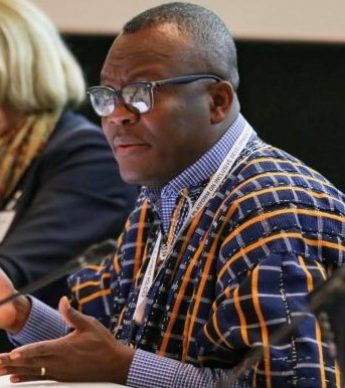
The Pact for the Future; the Role of Africa

On the road to the upcoming Summit of the Future #SOTF, which will be held in September this year at the United Nations in New York, I was asked to share my thoughts about the role of Africa in the “Pact for the Future” that will be discussed and hopefully adopted at the said global Summit.

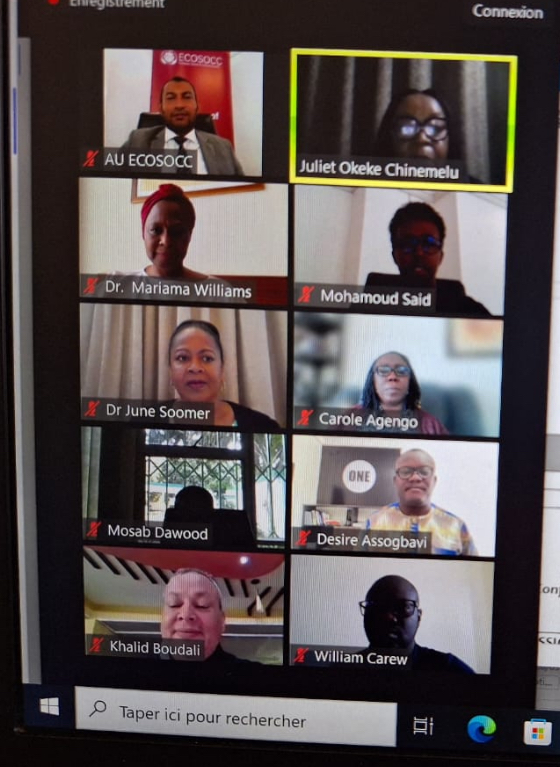
The discussion, hosted by the African Union’s ECOSOCC, happened virtually today.

After studying the 20-page zero draft of the Pact for the Future, with its 148 paragraphs, I can say that it is a comprehensive and well-elaborated document. I strongly recommend you read it fully. As it is a zero draft, it is open for input from various stakeholders before the September summit.

From financing sustainable development to international peace and security to science, technology, innovation, and digital cooperation, from the needed improvement of global governance to the urgent reform of the international financial institutions for better and increased resources, the draft of the Pact for the Future seems to be a completed memorandum to fix our world, save People, and save the Planet!

The question I have to answer now is, what should be Africa’s role in all of these?

Here are my 3 key ideas:

1/ First, Africa should have better representation at the Table.

This is critical for a meaningful contribution of the continent, in resolving the global issues mentioned in the draft of the Pact for the Future. Africa continues to be underrepresented in key international institutions and decision-making processes. This lack of representation not only hinders Africa’s ability to shape global policies actively but also perpetuates a cycle of inequality and imbalance in international relations. Africa can indeed play an impactful role in global affairs and can make significant contributions to addressing pressing global issues. Whether it is within international financial institutions such as the World Bank and the International Monetary Fund or at the UN Security Council, a fairer representation is essential to making things right!

Elevating Africa in global governance is not just a matter of fairness or justice; it should be seen as a strategic imperative for building a more stable, prosperous, and sustainable world for all. By giving space to Africa’s diverse voices and experiences, we can create a more inclusive and equitable global order that reflects the richness and diversity of our planet.

2/ We need to shift the current perspective on Africa’s role. The Continent should be seen as an important part of the solution, not just a warehouse or a reservoir of natural resources.

The continent is bringing demography & human resources. Africa represents 1.4 billion people, which is about 17% of the global population. Most of them are young, intelligent, dynamic, and willing to participate in the development process. This population will rise to 25% by 2050. The continent has a vibrant workforce and is experiencing a surge in innovation and entrepreneurship. By supporting and collaborating with African innovators, the global community can benefit from their transformative solutions.

In addition, Africa would bring wealth and natural resources. Africa is one of the world’s richest geographical regions in terms of its endowment with natural resources, with 60% of the world’s renewable energy assets and more than 30% of the minerals key to renewable and low-carbon technologies. Africa has the largest unused arable land, a heavy green energy potential, and other strategic, critical materials. From its vast mineral deposits to its fertile agricultural lands, the continent has much to offer. With proper management and sustainable practices, Africa’s resources can help address global challenges such as food security, water scarcity, and renewable energy.

One of the key global issues that Africa would greatly help address is climate change. Besides mitigating the impact of climate change, Africa also would contribute significantly to global efforts to reduce greenhouse gas emissions.

3/ My 3rd & last point is more about looking inward…Charity needs to start at Home

It would not be enough for the continent to sit at the table; Africa needs to clean its own house and ensure that, we resolve some of the problems that are in our capacity to fix.

We know them:

  • We call them shared values, and we adopted them at the AU, ECOWAS, SADC, EAC, etc
  • We call them accountability, peer review
  • We call them good governance, the rule of law;
  • We name them solidarity, fair sharing of national resources, and diversity management.

If we work seriously on them, Africa will be more apt/ready to play a meaningful role in the pact.

I would like to conclude by wondering if the simple discussion and adoption of the Pact for the Future will lead us to the promised land…

Whether at the UN, the African Union or the RECs… If only half of the various texts we have adopted have been implemented, I am sure we would have been at a different level…

So, what needs to be different now?

This is a question that you all can propose answers to, during the discussions.

What about a robust accountability mechanism for the realization of these commitments of the Pact for the future?

What could be the form of such a mechanism?

I thank you for your attention!

Outcomes of the African Union Summit in 7 Points

Published on 19 February 2024. This blog will be updated as more information comes in.

Official decisions of the just-ended African Union Summit will not be available for several weeks as per the practice, but based on intel, comments by delegations, and corridors discussions, here are what seem to be the 7 key outcomes of the Summit held in Addis Ababa, Ethiopia, from the 14th – 18th February 2024.

The theme of the Summit and the year 2024 is: “Educate an African Fit for the 21st Century: Building Resilient Education Systems for Increased Access to Inclusive, lifelong, quality, and Relevant Learning in Africa.”

The Summit adopted a Road Map on the theme devoted to Education and called upon the African Union Commission, AUDA-NEPAD, Regional Economic Communities, United Nations organizations, Development Partners, Civil Society Organizations, the Youth, and all other stakeholders to continue strengthening their support to Member States by facilitating the implementation of the roadmap.

The following issues have actually dominated the discussions at the Summit:

1/ Multilateralism & International Governance

Africa at the UN Security Council

The African Union reiterated that full representation of Africa in the reformed United Nations Security Council means:

  • i) Not less than two (02) Permanent seats with all the prerogatives and privileges of Permanent membership, including the right of veto.
  • ii) Five (05) Non-permanent seats.
  • iii) The African Union reserves the right to select its representatives for election to the UN Security Council to act in its name and on its behalf.

Proposed Modalities for the Participation of the African Union in the G20 and Preliminary Priorities

At the G20, AU aims to leverage Africa’s position in the world economy as well as contribute to meeting the emerging global challenges

Participation in the Leaders’ Summit:

  • The Chairperson of the African Union, assisted by the Chairperson of the African Union Commission, will represent the African Union (previously decided)
  • The Chairperson of the Commission to propose positions to the Assembly to be advanced as African Common positions in the G20 Leaders’ Summits.
  • The Chairperson of the African Union, assisted by the Chairperson of the Commission to debrief the Assembly on the outcomes of the G20 Leaders’ Summits at the February sessions of the Assembly each year.

Participation in Ministerial meetings

  • The Chairperson of the African Union Executive Council, assisted by the Chairperson of the Commission to represent the African Union in the G20 Meetings of the Ministers of Foreign Affairs.
  • The Chairpersons of the AU Specialized Technical Committees, assisted by the respective Commissioners, to lead African Delegations to G20 sectoral Ministerial Meetings
  • The Chairperson of the Specialized Technical Committees (STC) on Finance, Monetary Affairs, Economic Planning, and Integration, assisted by the Commissioner for Economic Development, Trade, Tourism, Industry, and Minerals to attend the meetings of the G20 Finance Ministers and Central Bank Governors, assisted by the respective Commissioner(s);
  • The Ministerial Representatives to the G20 to propose draft African common positions through the Specialized Technical Committees for consideration by the Executive Council before it is advanced in the G20 Ministerial meetings and Leaders’ Summits

Sherpa and Sous Sherpa

  • The Chairperson of the African Union to appoint a Sherpa. As the AU G20 contact point, the Sherpa shall coordinate with the Chairperson of the African Union Commission and the AU Member States on the positions to be advanced in the various G20 Ministerial, Task Forces and Working Group meetings to ensure that the African Union prepares common positions ahead of each G20 meeting and speaks with one voice in the G20 meetings;
  • The Chairperson of the Commission to appoint a Sous-Sherpa to: (a)Act as liaison between the Commission and the Chairperson of the Union; (b)Work with and Deputize the Sherpa; (c)Report to the Chairperson of the Union on G20 matters.

South Africa, the only current African permanent member of the G20, will share lessons of experience in the G20 with the African Union.

Africa’s preliminary priorities at the G20 will be as follows: the reform of the international financial architecture, debt restructuring, food security and agriculture, energy transition, trade and investments, improving Africa’s credit rating to boost investment, health, and vaccine manufacturing.

Financing AU participation in the G20

African Development Bank (AfDB) and the African Export-Import Bank (Afreximbank) pledged to provide initial financing for the participation of the African Union in the G20.

Delegation of Power: The Executive Council (Foreign Ministers) will deal with G20 issues on behalf of the Assembly during its July Ordinary Sessions of the Council and, when necessary, convene extraordinary sessions.

2/ Election of the new leadership of the AU Commission (February 2025)

The Summit discussed the principles of inter-and intra-regional rotation following the English Alphabetical order under the decision Ext/Assembly/AU/Dec.1(XI) adopted during the 11th Extraordinary Session in November 2018 on the institutional reform of the Union as well as Article 14 of the revised Statute of the Commission.

If this is implemented, candidacies should be submitted based on a predictable inter-regional rotation with the allocation of specific portfolio(s) to regions as follows for the next election:

For example, considering the upcoming elections, if this principle is applied, we would have the following conditions for each position:

1. Chairperson of the AUC – Only the Eastern region may submit candidates.

2. Deputy Chairperson – Only the Northern region may submit candidates.

3. Agriculture, Rural Development, Blue Economy, and Sustainable Environment – Only the Southern region may submit candidates.

4. Economic Development, Trade, Industry, and Mining – Only the southern region may submit candidates.

5. Education, Science, Technology, and Innovation – Only the Western region may submit candidates.

6. Infrastructure and Energy – Only the Western region may submit candidates.

7. Political Affairs, Peace & Security – Only the Central region may submit candidates.

8. Health, Humanitarian Affairs, and Social Development – Only the Central region may submit candidates.

At this time, it is unclear whether the AU will go with this principle for the upcoming elections.

3/ Institutional Reform of the African Union: President Kagame steps down, and President Ruto takes over.

Frustrated by what most analysts call the “failure of the AU institutional reform” 6 years after the beginning of the process, President Paul Kagame decided to step down from championing the project. The Summit then appointed President William Ruto of Kenya as the new AU Champion on Institutional Reform. The remaining reform priorities are to be finalized by February 2025.

4/Peace and Security

The following situations have been discussed with no major decisions:

The tension between Ethiopia and Somalia, Sudan, South Sudan, Burkina Faso, Niger Mali, Gabon, Sierra Leonne, DRC-Rwanda, Central Africa Republic, Lac Chad Basin, and some thematic issues.

5/ The Theme of the year 2025 has been proposed to be: ‘‘Justice for Africans and People of African Descent Through Reparations’’.

The reparations for transatlantic enslavement, colonialism and apartheid, as a Flagship Issue and Project of the Union. The Commission is to submit a strategic framework document for the implementation of the Accra Proclamation on the same.

6/ Appointments

Chair of the African Union for 2024
  • Chairperson of the African Union for 2024: Mauritanian President Mohamed Ould Cheikh El Ghazouani. Angola is likely to take over in 2025.
  • Champion of the institutional reform of the AU: President William Ruto of Kenya
  • Champion for local manufacturing of pharmaceutical and non-pharmaceutical products, President Ruto from Kenya
  • Leader in Advancing the Cause of Justice and Payment of Reparations to Africans, enhancing advocacy for a common position on reparations in Africa, and forging a common front for Africa and the Diaspora at the global level: President Nana Akufo-Addo of Ghana
  • Mr. Wamkele Mene of South Africa was reappointed as Secretary General of the AfCFTA Secretariat for another four years.

10 new members of the Peace and Security Council for a term of 2 years:

1. Democratic Republic of Congo, Central Africa region

2. Equatorial Guinea, Central Africa region

3. Tanzania, Eastern Africa region

4. Uganda, Eastern Africa region

5. Egypt, Northern Africa region

6. Angola, Southern Africa region

7. Botswana, Southern Africa region

8. Côte d’Ivoire, Western Africa region

9. Sierra Leone, Western Africa, region

10. The Gambia, Western Africa region

7/ Calendar

2025 Summit of the AU

  • Executive Council, 12th and 13th February 2025;
  • 38th Ordinary Session of the Assembly, 15th and 16th February 2025

Special Summit to consider the post-Malabo CAADP implementation plan: November 2024

===========

Watch this space for more updates on Pan-African & African Union matters. Your comments and suggestions are welcome on this site or directly to my email address: desire.assogbavi@assodesire.com  or assogbavi@me.com .

If you want to systematically receive my articles as soon as they are published, please follow this blog at the bottom left of this page.

The Reform of the African Union and Citizens’ Participation

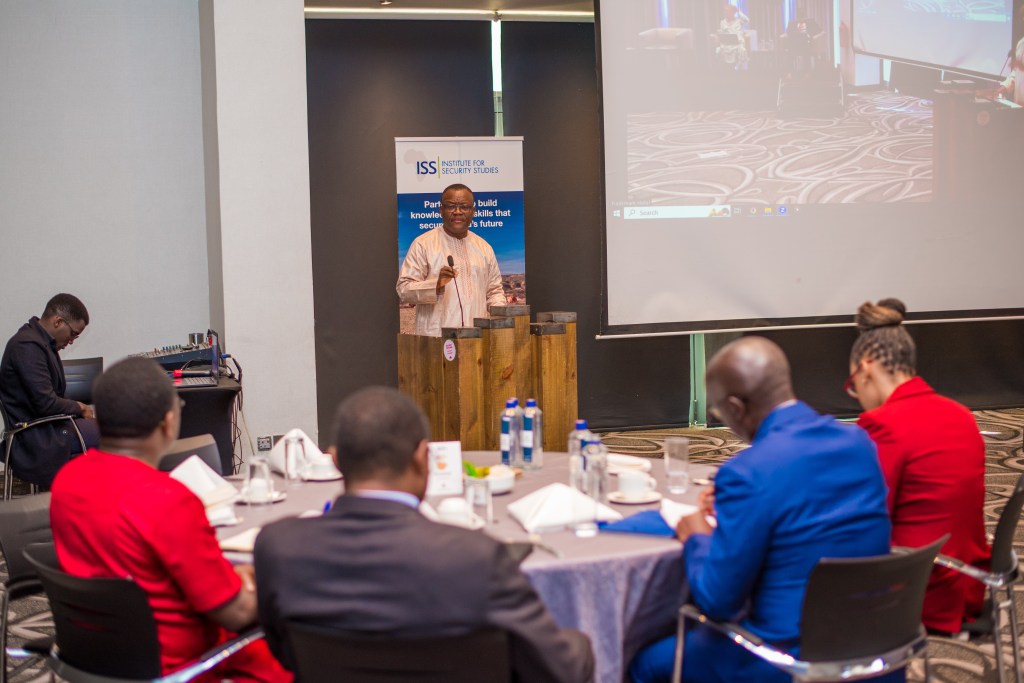
This is the summary of a presentation I made at the seminar on the African Union Reform co-hosted by the Institute for Security Studies and the Government of Kenya in the margins of the African Union Mid-Year Coordination meeting with the Regional Economic Communities in Nairobi, Kenya, on 13th July 2023.

The fundamental reason for the transformation of the Organization of Afrian Unity (OAU) to the African Union (AU) in the years 2000s is to ensure that the continental body becomes a people-centered institution as opposed to what was known as a club of Heads of State.

One of the seven aspirations of the AU’s Agenda 2063 (aspiration # 6, precisely) is “to build an Africa whose development is people-driven and relies on the potential of African people, especially its women and youth.”

The inclusive economic development that Africa aspires to achieve requires a vibrant civil society, making the necessary contribution to continental efforts through participatory engagements in decision-making.

Active citizens are a fundamental prerequisite for an effective African Union.

At the country level, we know that Citizens’ engagement with their leaders improves the delivery of inclusive, accessible, and responsive public services, such as the provision of healthcare, safe water, quality education, decent jobs, etc.

Because of its closeness to the day-to-day life of the communities, Civil Society has an identity that is distinct from States. In conflict situations, civil society has the vocation to contribute to peace-building initiatives.

Civil society has shown its capacity to organize the collection, analysis, and evaluation of first-hand information, allowing the identification of the sources of potential tensions as well as emerging conflicts.

The characteristics of security issues the African Union addresses today radically differ from those of the previous decades. Today’s conflicts appear to be more complex than ever, and their nature obliges us to change how they resolve them.

While “Traditional” conflicts were well understood by diplomats and specialists in political science, addressing new conflicts adequately requires much more on-the-ground knowledge, new social and cultural analysis skills, the active involvement of communities and their leaders, links to vulnerable groups, and new ways of working.  Civil society organizations, most of the time, have unique capacities in those areas.

In the face of the many challenges Africa currently faces, boosting a people-driven development process has never been more urgent. It is the only means for sustainable development and change, which can only happen when African citizens are informed, empowered, and enabled to influence policies and practices and utilize improved mechanisms to hold leaders accountable.

The AU Agenda 2063 recognizes that people’s ownership, support, and mobilization are critical enablers to concretizing Africa’s aspirations.

So, for a prosperous and democratic society, state actors and a well-organized civil society should be seen as the two sides of the same coin because they complement each other.

Civil society is a reservoir of goodwill needed to accelerate national, regional, and continental development.

With all these realities in mind, the ongoing institutional reform of the AU, especially the review of the organs, should deliberately ensure that the new African Union and its organs give adequate space and resources for citizens’ participation at 3 levels:

  • Policymaking
  • Policy implementation
  • Accountability

We know that the African Union has created organs and mechanisms to encourage the contributions of citizens and their formations.

These include but are not limited to the following:

1/ ECOSOCC: The Economic Social and Cultural Council, an organ of the Union

2/ CIDO: The Citizens and Diaspora Organizations division of the AU Commission

3/ Provisions and frameworks organizing the contribution of citizens, their formations, and affected populations within the peace and security and governance frameworks of the Union.

Such provisions and frameworks include the Livingston Formula, the Maseru Conclusion, the African Governance Architecture, and the African Peace and Security Architecture.

4/ A mechanism for the participation of CSOs in the work of the Africa Commission for Human and Peoples’ Rights.

5/ A mechanism for the interaction of child-focus organizations with the African Committee of Experts on the Rights and Welfare of the Child (ACERWC),

6/ The Pan Africa Parliament also aims to provide a platform for people’s representatives from the various member states to contribute to the African Union’s work. 

But, over the years, with all that I mentioned, Citizens’ space and participation have not been consistent. It remains informal, ad-hoc, and definitely not at the expected level recommended by the Constitutive Act of the AU.

Here are just a few examples,

1/ It has been difficult for CSOs in African Union Member States to know exactly what it takes to provide input to continental policy debate and get accreditation to do so.

2/ The yearly calendar of policy gatherings of the various organs of the AU is nowhere to be found unless you have a friend within the conference department or a member state representative, or embassy staff.

3/ Physical access to the premises of the AU Commission has been inconsistent and a challenge to CSOs, representatives, and even for those who have established Liaison offices to the Union or have signed an MoU with the Commission.

4/ …and overall observers’ access to AU Summit has been increasingly restricted

I am conscious of the fact that not all existing CSOs’ representatives can be invited to all meetings, but there should be a transparent procedure known by all…

You will agree with me in the conditions I have just described that it is impossible to tap into and take full advantage of the immense resource that CSOs offer for the Africa we want…

However, there are good reasons for us to believe that change and improvement of the current situation are possible and even on the way.

Today’s gathering for this policy debate, co-hosted by ISS and the Government of Kenya, is an example of the necessary interaction between states and non-state actors.

Early this week, hundreds of citizens of the continent and the diaspora gathered under the hospices of ECOSOCC, supported by the Government of Kenya, for policy discussions on various thematic as well as a Citizens’ Forum on Democracy and Digital Governance. I recommend that the Kenya delegation take the outcomes of these discussions to the AU policy space in Addis Ababa and champion them.

ECOSOCC’s New Approach

A critical positive trend that we are also witnessing is the new approach being taken by ECOSOCC with its new leadership over the last few years.

Such a progressive approach is visibly taking the organ back to its originally intended purpose, as a platform for African Civil Society Organizations, in all their variety to contribute to the shaping of the African we want, and no more as a gatekeeper or a filter for CSOs participation in the AU affairs, as it used to be the case since ECOSOCC has been launched.

This trend, already being appreciated by member states and the CSOs community within the continent, should be supported and institutionalized to be consistent and sustainable.

We also know that a harmonized mechanism for granting consultative and observer status to CSOs in Africa is being prepared to be submitted to the African Union policy organs for adoption soon.

This excellent move will clarify what it takes for a CSO to have a formal relationship with the African Union for interactions, participation, exchange, and knowledge transfer.

With a harmonized Mechanism, the AU, through ECOSOCC, could have and maintain a comprehensive database of CSOs from across the continent and the Diaspora working on the various programs and thematic of the AU. This will facilitate invitations and consultations to contribute to programs or to provide technical advice on the thematic areas CSOs are specialized in.

For this particular process, I would like to submit that such a centralized, general mechanism be as liberal as possible and that thematic departments and organs of the AU be the ones to define specific considerations or a set of rules that may govern their regular interactions with CSOs operating in their specific fields.

I would also like to submit that such a harmonized mechanism recognizes and makes room for the necessary flexibility that characterizes the nature of civil society, especially regarding humanitarian intervention, peacebuilding, and human security.

I would like to conclude my overall contribution by saying that only a reformed African Union that makes meaningful space for citizens’ participation and an agreed accountability mechanism can take us to the 2063 promised land.

I thank you.

La Zone de Libre-Échange Continentale Africaine: Quelles Opportunités d’Emploi pour la Jeunesse?

Chers lecteurs,

Je partage avec vous ici, mon exposé introductif du Dialogue intergénérationnel que nous avions organisé à l’occasion de la Journée de l’Afrique 2023, qui a marqué le 60eme anniversaire de la création de l’organisation de l’Unité Africaine (OUA) en 1963, transformée plus tard pour devenir l’Union Africaine (UA).

Dakar, Sénégal le 27 mai 2023.

Distingués invités,

Chers Champions de ONE,

Mesdames et Messieurs,

Au nom de ONE Campaign et ses partenaires co-organisateurs de cet évènement, je vous remercie d’avoir choisi de vous joindre à ce débat de la journée de l’Afrique 2023 qui marque le 60eme anniversaire de la création de l’Organisation de l’Unité Africaine (OUA), transformée en Union Africaine (UA).

ONE est un mouvement mondial, faisant campagne et du plaidoyer pour mettre fin à l’extrême pauvreté et aux maladies évitables, en particulier en Afrique.

Nous croyons que la lutte contre la pauvreté n’est pas une question de charité mais de justice et d’égalité.

Qu’il s’agisse de faire pression sur les dirigeants politiques dans les grandes capitales du monde ou, former les jeunes à la citoyenneté responsable, ou encore pour autonomiser les petits exploitants agricoles, ONE fait pression sur les gouvernements pour qu’ils en fassent davantage pour plus de justice sociale.

Les plus de 7 millions de membres, activistes et supporteurs de ONE sont essentiels à ce travail. Ils viennent de tous les horizons. Ce sont des artistes et des militants, des chefs religieux et des chefs d’entreprise, des étudiants, des scientifiques et des citoyens ordinaires.

Ils agissent jour après jour organisant, mobilisant, éduquant et plaidant pour que les populations aient la chance non seulement de survivre, mais aussi de prospérer.

Nos équipes sont à Washington D.C., New York, Ottawa, Londres, Johannesburg, Abuja, Bruxelles, Berlin, Paris, Addis Abeba, Nairobi et bien sûr Dakar.

Nous sommes apolitiques et non partisans.

Mesdames et Messieurs, La rencontre d’aujourd’hui se situe dans le cadre de la Journée de l’Afrique, qui a été célébrée le 25 mai. C’est en effet le 25 mai 1963, il y a donc 60 ans, que l’Organisation de l’Unité Africaine a été créée à Addis Abeba en Éthiopie.

L’OUA a été fondée par les 32 pays qui étaient alors indépendants. Plus tard, les 23 autres nations ont progressivement rejoint le club.

L’OUA était un engagement sans précédent avec pour aspiration la libération politique totale de l’Afrique du colonialisme, l’unité et la solidarité entre ses peuples.

Alors que les principaux objectifs de l’OUA étaient de débarrasser le continent des derniers vestiges de la colonisation et de l’apartheid ainsi que de promouvoir l’unité et la solidarité entre les États africains, la nouvelle Union africaine créée en 2002, vise “une Afrique intégrée, prospère et pacifique, conduite par ses citoyens et représentant une force dynamique sur la scène mondiale“.

La transformation de l’OUA en UA a créé l’espoir pour une plus grande unité et solidarité des pays africains et entre les peuples africains. La volonté de construire une institution centrée sur les citoyens est la principale caractéristique distinctive entre l’Union africaine et l’ancienne Organisation de l’unité africaine, qui était exclusivement axée sur les États.

La journée de l’Afrique devrait être un jour où nous racontons l’histoire de notre continent à nos jeunes générations, l’histoire de nos gloires passées mais aussi les fondements d’un avenir plus radieux.

La Journée de l’Afrique doit aussi être une journée de réengagement envers nos Valeurs Partagées et nos Agendas communs : l’Agenda 2063 de l’UA et l’Agenda 2030 des Nations Unies pour Développement Durable.

L’UA a adopté un ensemble de valeurs partagées centrées sur la démocratie et la bonne gouvernance, l’État de droit et les droits de l’homme, la paix et la sécurité, ainsi que le développement et l’intégration du continent.

La Journée de l’Afrique doit être une journée d’une solidarité africaine renouvelée. Elle doit nous rappeler qu’une partie importante de notre continent est encore, malheureusement dévastée par les conflits injustifiables.

Elle doit nous rappeler que 15 millions de jeunes Africains viennent chaque année sur le marché de l’emploi mais que seulement environ 3 millions d’emplois formels sont créés.

Cette journée doit donc renforcer notre détermination à lutter contre l’extrême pauvreté et toutes les formes d’inégalités et de discriminations en Afrique.

Depuis sa création, l’Union africaine a élevé la barre normative des ambitions de développement socio-économique et démocratique du continent. Mais l’adoption de normes, de traités, de cadres politiques ne suffit pas à elle seule, pour nous mener vers « l’Afrique que nous voulons ». Nous devons tenir nos promesses en mettant effectivement en œuvre ces instruments et en nous tenant régulièrement mutuellement responsables. Il est temps de combler le fossé entre les promesses et la réalité quotidienne de la plupart des citoyens.

On estime à environ 25000 les jeunes Africains qui sont morts ou portés disparus en Mer Méditerranée en tentant de fuir notre continent entre 2014 et 2023. Beaucoup d’autres sont morts dans le désert du Sahara avant même d’atteindre la mer. Pourquoi quittent-ils le continent ?

34 des 54 pays africains sont étiquetés comme « pays les moins avancés », alors que dans le même temps, environ 90 milliards de dollars sortent illégalement du continent par le biais de flux financiers illicites (FFI) selon le rapport Thabo Mbeki.

L’Afrique possèderait plus de 90 % des ressources mondiales en chrome, 85 % de sa platine, 70 % de sa tantalite, 68 % de son cobalt, 54 % de son or, ainsi que d’importantes réserves de pétrole et de gaz. Le continent abrite également des gisements d’uranium, de manganèse, de diamant, de phosphate et de bauxite en très grandes quantités. Il a du bois et d’autres ressources forestières ajoutées à ses vastes terres arables pour l’agriculture.

Aujourd’hui, notre débat tournera autour de la Zone de Libre Échange Continentale Africaine (ZLECAf), et les opportunités qu’elle présente pour la jeunesse en matière d’employabilité.

La ZLECAf, née officiellement en janvier 2021 vise :

  • L’élimination progressive des tarifs douaniers et des barrières non tarifaires ;
  • L’amélioration de la coopération dans le domaine des obstacles techniques au commerce et des mesures sanitaires et phytosanitaires ;
  • Le développement des chaines de valeurs aux niveaux régional et continental
  • Le renforcement des traits du développement et l’industrialisation de l’Afrique.

54 des 55 États membres de l’Union Africaine ont signé l’accord de la ZLECAf.

46 pays l’ont ratifié mais, a ce jour, seuls 4 États ont ratifié le traité sur la libre circulation des personnes et des biens.

La Zone de libre-échange continentale africaine (ZLECAf) pourrait permettre aux pays africains de faire sortir de l’extrême pauvreté 30 millions d’habitants.

L’Afrique pourra enregistrer 450 milliards de dollars de revenu d’ici à 2035, soit une augmentation de 7%.

La mise en œuvre de la ZLECAF permettrait de mener à bien les réformes de fond nécessaires pour stimuler la croissance à long terme dans les pays africains.

Est-ce trop beau pour être vrai ?

Mesdames et messieurs, distingués invités, chers panelistes,

Ce projet est-il trop beau pour être vrai comme se le demandent déjà certains de nos compatriotes Africains ?

Ont-ils des raisons d’y croire ou d’en douter?

Que doivent faire les dirigeants africains pour relever ce défi ?

Avons-nous déjà ce que nous allons échanger au moment où la plupart de nos échanges tournent autour des matières premières et s’effectuent avec le monde extérieur?

Que faire des barrières non tarifaires auxquelles nous faisons face présentement en Afrique ? Les mesures non tarifaires coûteuses, les lacunes en matière d’infrastructures, d’informations sur le marché etc?

Et si les droits de douanes tombent complètement, qu’adviendra-t-il aux petits pays face à ceux qui ont déjà une industrialisation relativement avancée ?

Pourquoi nos pays trainent -ils le pas pour ratifier le traité sur la libre circulation des personnes et des biens, qui fait partie du paquet des accords devant faciliter la mise en œuvre de la ZLECAF ?

Chers panélistes,

Ce sont là juste quelques questions pour anticiper sur le menu du jour.

Sur ce, je nous souhaite un bon débat !

Je vous remercie pour votre attention…

Bonne Journée de l’Afrique et que Dieu bénisse notre continent !!!

African Union Summit – July 2017: What to Expect?

Friends;

As usual, I would like to share with you the following preliminary notes and analysis on the upcoming 29th Ordinary Summit of the AU policy organs being held in Addis Ababa, Ethiopia as follows:

  • Permanent Representative Committee (Ambassadors): 27 – 28 June 2017
  • Executive Council (Ministers of Foreign Affairs): 30 June – 1st July 2017
  • Assembly of the Union (Heads of State and Government): 3-4 July 2017

In addition, several statutory meetings of various AU organs and parallel events are scheduled. The official agenda of the Summit is not yet publicly available. This Summit will be the first to be organized by the new leadership of the AU Commission.

With or without observers?

It is unclear if the corridors of the Summit will be open for observers during the sessions. The Assembly has already decided in January 2017 under Kagame’s Report that “external parties shall only be invited to AU Summits on an exceptional basis and for a specific purpose determined by the interests of the African Union”. The question here is to know if African citizens’ formations/CSOs are also considered as “external parties” knowing that the AU claims to be a people driven organization.

Permanent/Resident Representatives of Non-African States and International Organizations will likely be invited for the official opening and closing ceremonies of the Assembly and the Executive Council. The Media is normally invited.

Key strategic issues likely to be on the Agenda of the Summit: (Youth, AU reform, Peace and Security, AU Funding, Election of two remaining Commissioners, Agenda 2063 10-year implementation plan and Continental Trade Area …)

1/ Youth (Theme of the year): “Harnessing the demographic dividend through investments in the Youth”

A presentation and a presidential debate of more than 2 hours to be led by President Idriss Deby (Chad) is planned on the 3rd July. The youth are unlikely to be invited to this debate on the “Roadmap on harnessing the demographic dividend through investments in the Youth” developed by the AU Commission … It was agreed that such a roadmap should be domesticated and implemented by each member state. A couple of countries have in fact, already done a national launch.  The Roadmap has the following pillars: 1- Employment and Entrepreneurship, 2- Education and Skill Development, 3- Health and Wellbeing, 4- Governance and Youth Empowerment.

A presidential solemn declaration on the youth may be adopted following the debate.

Burkina Faso has proposed for consideration an African Decade for Technical, Professional, Entrepreneurial and Employment Training in Africa (2017-2027)

2/ Institutional Reform of the African Union

President Paul Kagame (Rwanda) is expected to present a report on the implementation of his proposed reform plan for the AU, adopted by the Assembly in January this year. A decision will be taken on what has been done and what remains to be done.

Building on his success back home, President Kagame is intensifying the pressure to put the continental body on tract for effectiveness and efficiency to meet the on-going challenges that our continent is facing and to implement the ambitious Agenda 2063.

3/ Peace and Security

The Chairperson of the AU Commission is expected to provide a report on the state of peace and security in Africa with recommendations for the Assembly. Highlights will likely include South Sudan, CAR, Somalia, DRC, Mali etc… as well as emerging security threats such as cybercrime and trending threats such as maritime security and piracy, terrorist, fundamentalism and religious extremism etc.

Since he took over the chairmanship of the Commission in March this year, Chadian diplomat Moussa Faki Mahamat has clearly shown through his movements that peace and security is among his top priorities.  In fact, “silencing the guns in Africa” has been his top message while campaigning to win his position.  In just a few months, Moussa has already visited Africa’s major hotspots. A report on the implementation of the master roadmap of practical steps to silencing the guns in Africa by 2020 will then be considered by the Summit.

Silencing the guns by 2020?

Last year the African Union prepared a Master Roadmap of Practical Steps to Silence the Guns in Africa by 2020. It is a well elaborated document with the correct analysis of the situation … but then what is next? Let’s face it: Are we really moving towards silencing the guns in the next 3 years ? if so, what are we doing collectively and individually in our various capacity to get there? Can we silence the guns without ensuring democratic governance, decent and true elections, responsible and fair management of our natural resources? Can we break the vicious circle of conflicts without insuring justice and accountability for the heinous crimes being committed on our people by our people? …Alternation on power is one of the problems that we need to resolve collectively without further delay . There is an imperative in all societies to renew political leadership from time to time through credible elections.  Since we are still struggling to ensure credible elections in Africa, alternation in power must be tabled and courageously discussed and adopted.

Beside the already burning conflict zones, I am worried about the silence and/or inaction of the continent on several potential and on-going risky situations such as  Zambia, DRC, Cameroon, Zimbabwe etc.) where unacceptable pressures are being made on independent media, civil society and political opposition. Without abiding to our shared values contained in the various policies standards and treaties that we have adopted, I am afraid “silencing the guns” will remain a beautiful slogan!

We know the guns are mostly carried by desperate and vulnerable youth who, most of the time, have nothing else to lose. They are in Somalia, South Sudan, Darfur, CAR, DRC, Nigeria, Mali etc… They are in many other countries, they are trained and graduated  but without job… some of them are choosing  to leave the continent at any cost… In 2017 alone, more than 1,500 young Africans have perished in the Mediterranean Sea and many other died of thirst in the Sahara Desert, while trying to reach Europe.

Efforts made by the chairperson of the Commission on this issue must be matched by member states’ political will to guarantee democracy and rule of law and if most of the political regimes in our continent continue failing on democracy and rule of law, the road to peace and security, prerequisite for our development agenda will be long, very long…

A contribution to the ways forward: We need to imagine courageous tools and make bold steps to change the paradigms… the Master Roadmap of Practical Steps to Silence the Guns in Africa by 2020 has very useful ideas… but how do we ”force” the power holders to make these happen? We all know the main root causes of our conflicts… So the 1st step for silencing the guns  is an environment of democracy, respect of the human rights and the rules of law and a decent and inclusive management of national wealth aiming at reducing inequality…  But again how do we monitor this and ensure it is happening?   I am imagining, an  independent High Level Task Force on democracy, rule of law, human rights and good governance to be appointed by the Assembly of the Union  in order to systematically track the implementation by member states, of democracy, rule of law and human rights and equality/inclusivity standards contained in our various instruments, especially their relation with fragility and conflicts in different countries in the continent. The Task Force shall be able to make public without any condition, its Report of the state of democracy rule of law and human rights in Africa… so it will become clear to all of us which regimes are undermining our common aspirations.  The said Task Force shall obviously work with and build on the existing mechanisms (APRM, AGA, APSA, Panel of the Wise…) What I wish to see here is a Task Force that is directly accountable to African people without the obstruction of the leadership… This may bring a heavier pressure them… Please share your views and comments on this…

We must stop praising the evil doing among ourselves,  but rather start exposing and sanctioning them in line with our shared values. A lot must be done at country  then regional levels… (see recent example from ECOWAS in The Gambia), then the AU Commission and other organs shall support… We all have a role to play in this… our people must stand up, like recently in Burkina Faso, and say a big NO to bad and irresponsible leadership, make sure that their votes are counted and their money are properly used, not stollen. The elite class has a big responsibility in sensitizing and mobilizing other  for the good cause…

4/ Budget and Funding of the Union

According to the current projections, in 2018, the African Union will need about 800 Million USD for its operations ($154M), programmes ($296M) and peace support ($350M). The approved 2017 budget amounts 782 Million USD.

 It is unlikely that AU Member states meet this year, their commitment made in 2015/2016 to cover 100% of AU operational budget, 75% of programme budget and 25% of peace support operation budget.

So far AU Member States have been paying less than 30% of the overall budget of the Union. More than 70% is paid by external partners.

Uncertainty on the source of funding of the Union: Donald Kaberuka, the High Representative for the AU Peace Fund is expected to provide an updated report on the implementation of the new funding strategy adopted by the Union in July 2016 in Kigali, by which 0.2 % levy on eligible imports should be collected from each member state to fund the AU. According to on-going technical discussions in closed doors, a number of AU member states are dragging their feet on coming up with domestic legislation to implement the Kigali Decision, evoking different excuses including those relating to the WTO rules… I have 2 questions on this: 1- Where were our member states’ technical experts on international trade at the time this  decision was discussed?… 2 – Is it not the mechanism ECOWAS has been using for years? What is different here? Please share your views/comments below…

It is however encouraging to know that some member states (Rwanda, Kenya, Ghana etc) have been moving in the right direction by taking legislative national measures to implement the 0.2% commitment.

5/ Election of 2 Commissioners

In January, the Assembly elected the Chairperson and the Deputy Chairperson and appointed 6 Commissioners elected by the Executive Council out of 8 portfolios. The remaining following 2 Commissioners will be elected during the upcoming Summit.

  • Commissioner for Human Resources, Science and Technology
  • Commissioner for Economic Affairs.

According to the gender and geographical representation policies of the AU, the 2 commissioners should be 1 male from the Eastern Region 1 female from the Central Region.

At the closure of the deadline, the AUC received the following application from the Deans of the regions:

Candidates for the post of Commissioner for Human Resources Science and Technology:

  1. Sarah Mbi Enow ANYANG AGBOR from Cameroon, Female, Central Africa Region
  2. Dr. John Patrick KABAYO from Uganda, Male, East Africa Region

Candidates for the post of Commissioner for Economic Affairs

  1. Hon. Yacin Elmi BOUH from Djibouti, Male East Africa region
  2. Newaye Christos GEBRE-AB from Ethiopia, Male, East Africa Region
  3. Victor HARISON from Madagascar, Male, East Africa Region
  4. Marthe Chantal Ndjepang MBAJON from Cameroon, Female, Central Africa Region

For the election of Commissioners, the statutes of the AU Commission imposes a pre-selection process at the regional level. Each region shall nominate 2 candidates for each portfolio. The nomination process shall be based on modalities to be determined by the region.

6/ Agenda 2063 : First 10-year implementation plan

A progress report on the implementation of the Agenda 2063 will be presented to the Summit. An African Economic Platform has been held for the first time this year with the aim to discuss cross-cutting issues that affect Africa’s economies and ways of which opportunities and options from these could be harnessed to ensure continental transformation. The other progress made is the domestication of the agenda into national planning frameworks done by several member states, the process on the Continental Free Trade Area and the African Commodities Strategy as well several discussions held with traditional and new partners. We should not however forget the fact that the realization of the Agenda 2063 is conditioned by a peaceful environment within the continent.

On the implementation of decisions: Less than 15% of African Union decisions are actually implemented and the upcoming summit will make more decisions… It is important to insist on the urgent need to change the rules of the game and to do things differently in terms of realizing the promises made through   agreed policy frameworks and standards. If our leaders cannot implement their own decisions, why are they continuing meeting to take more decisions? Up to 5,000 delegates or more attend the AU summit 2 times every year to take an average of 40 decisions per summit. In between summits, hundreds of other policy meetings are held in different capitals. The average cost of a full member states meeting is between 300,000 – 1Milion USD… Some Specialized Technical Committees meetings cost up to 1.5 Million USD. At the end, if only less than 15% the  decisions made are implemented… how can we make it to 2063?

This article will be updated regularly until the Summit startsLast update: 9 June.

=======

Get more targeted updates & analysis on  African Politics from my twitter account : https://twitter.com/Assodesire and feel free to send me your comments, suggestions & questions by email to:  assogbavi@me.com or directly on this blog below.


Citizens’ Participation in African Union Decision Making Process: Some Reflections

Recent developments at the African Union especially the launch of Agenda 2063 – The Africa We Want –  is a landmark step towards the realisation of “an integrated, prosperous and peaceful Africa, driven by its own citizens and representing a dynamic force in the global arena.” The Agenda itself recognises that people’s ownership and mobilisation is needed as one of the critical enablers to concretise the seven aspirations of what we can call the business plan of Africa. This must be true both at country, regional and continental level. Civic space is being terribly challenged in a growing number of countries on our continent. At the African Union level, CSOs/Citizens’ institutional space is clearly recognised in the founding documents of the AU (constitutive Act) as well as in other policies and instruments of the Union has been growing significantly in recent years but it is still not properly structured. Engagement is still informal in most cases.

Citizens/CSOs influencing space at the African Union must include two main set of targets: 1/AU Member States and 2/ African Union organs including the AU Commission (AUC) but also other organs based outside of Addis Ababa.  In addition, influencing and participation must be built on the decision making process of the African Union starting from policy proposals, the Permanent Representatives deliberations, Experts meetings, Ministerial meetings until the final adoption by the Summit or other organs of the Union. An efficient influencing strategy must include issue-based power analysis, countries’ geopolitical positions, and engaging specific departments of the AUC etc. without forgetting external actors’ influence.  Efficient influencing strategy must also take in consideration the annual calendar of events of the AUC normally adopted in January every year (now discussed in the June/July Summit). We should not also forget the fact that the African Union is looking for expertise and alternative analysis on particular issues. CSOs aiming to contribute must seek specialization and grassroots based perspectives that only CSOs have in most cases.

Decisions of the African Union Executive Council and Assembly are normally the result of work done months before each summit by the Commission and other organs, and in decision-making processes within individual member states. The majority of proposals presented to the Assembly at the Summit have already been largely agreed before they are tabled. Some of the reports on the Summit agenda are even adopted without any further discussions.

Documents adopted by the Assembly usually start life as a policy proposal from one of the AU Commission’s departments, from another AU organ or from a Member State. These proposals are debated in an experts’ meeting, whose members are nominated by Member States, and then in a meeting called for the relevant Ministers from Member States to approve or amend the experts’ proposals. With the exception of decisions with implications for the budget which are then considered by the PRC, the final documents from the ministerial meeting will go directly to the Executive Council and the Assembly for adoption.

desire2

Engaging with Experts and Ministerial Policy debate: Over the last 5 years or so, non-state actors’ engagement of the various steps of the AU Decision making process has been easier than ever, even though it remained informal and unstructured. Most of the departments of the AUC have been systematically inviting non-state actors to policy debates including experts and ministerial meetings. NGOs are even allowed to take the floor during those meetings and share their reports. Organizations that have shown interest in particular issues have normally had a chance to be part of policy discussions at experts and ministerial level as long as they keep contact with policy/desk officers at the AUC or other organs. In 2014/15 for example, my organization Oxfam and a number of its partners, African CSOs and other actors  have had numerous direct engagements with Experts and Minsters in charge of health, peace and security, humanitarian, rural economy and agriculture, economic affairs, trade and industries, human rights, gender etc. In many cases such engagement include participation in formal meetings, side meetings hosted by NGOs and well attended by policy makers including Ministers, Ambassadors, Commissioners and desk officer of the AUC. It is important to insist on the fact that, with very few exceptions, policy influence can only happen at ambassador, expert and ministerial meetings level. At the AU summit, most positions would have already been cooked and a good number of ministerial reports are no more open for discussion before adoption.

AU Summit, a networking opportunity: Normally, there is very little room to catalyze deep policy changes at the Summit level only. Engagement must start from the birth of the process described above. However influence on burning current or on-going issues are best done during the AU Summit. Also, issues on which countries have failed to reach strong consensus during the normal policy process come back to the Summit. The AU Summit equally presents an important opportunity for networking for further engagements and for media work to raise and draw policy makers’ attention on important and current issues. It is also an unique opportunity for organizations, donors and other personalities operating on a wide range of issues from the whole continent and elsewhere to be at the same place at the same time. Non-State actors can hold policy influencing side events during the AU Summit and have delegations to attend. A number of pre-summit consultations are held by CSOs including women groups. ECOSOCC and CIDO are also supposed to hold CSOs pre-summit events but this has not been consistent in recent years.

Observers (CSOs) Accreditation to the AU Summit: Non-state actors’ access to AU Summit has not been properly structured so far and it is difficult to know the actual criteria used by the AUC to identify CSOs to be invited. Organizations working with specific departments at the AUC can forward their applications to those departments. The Citizens and Diaspora Directorate normally post a call for application on the AU website 3 months before the Summit. I am not sure this has been systematic though.

Due to space constraint, the AU Commission makes choices likely based on the timing of application, role envisaged in the Summit, activities related to the themes of the Summit, history of the organization requesting accreditation and institutional relation with the African Union organs etc. CSOs intending to participate in the Summit must first of all apply formally and this needs to be done at least 3 months before the Summit. NGOs having a MoU with the African Union are normally systematically invited to the Summit even though it is not always the case. It is always advisable to make a request ahead of every summit if you wish to be invited.

The current trend since January 2013 is that January Summits seem to be more open to observers (CSOs & Non-African Countries, Int. Gov. Organizations etc.) while access to the mid-year summits are more and more restricted. Speculations indicate that Ambassadors complain about the disturbances at Summit meetings by partners (donors) who host multiple bi-lateral meetings with member state delegations while formal summit policy meetings are running. I have personally witnessed situations where Heads of State and their Ministers of foreign affairs and at times the Ambassadors leave Summit meetings in order to meet with partners. A formal decision is likely to be taken on this issue during the 25th Summit in South Africa in June 2015.

CSOs must not be restricted because of the disturbance caused by partners during the Summits. The AU Summit is an unique strategic and symbolic space where citizens and their formations have a chance to interact with high level policy makers in the corridors, during official opening and closing ceremonies and social events. CSOs also use it for media work including press briefings interview and other media programme.

It is well understood that CSOs do not attend close debates of policy makers during the Summit however the AU Commission itself recognises that Observers including CSOs “are entitled to attend the working sessions of the Executive Council dealing with agenda item of which the AU Commission considers that they are concerned I am not aware of any case where CSOs have used this provision always included in the AU invitation letters to Summits.

As a way forwards: while African CSOs must stand against any closure  or shrinking of the AU Summit space (an unique and legitimate continental policy and networking space for African citizens) we should effectively organize ourselves to engage on a consistent and continued basis, the most influential policy spaces of the African Union which are the experts and ministerial meetings as well as engagement of the Addis Ababa based Permanent Representatives, various AU organs/ desks etc. Access to those spaces is more and more open.

To read more on this issue, get our AU Compendium here: https://www.oxfam.org/en/research/african-union-compendium

Note: Views in this blog are absolutely personal.


How to Finance Africa Sustainable Development Post 2015?

Public Debate – Towards the Third Financing for Development Conference in July 2015 – Tuesday 19 May 2015 from 14:00  @ African Union Commission Headquarter

My Opening Remarks

**********

Excellency, Ladies and Gentlemen, all protocol observed,

Thank you for joining this public debate co-hosted by the African Union Commission’s Department for Economic Affairs and Oxfam Liaison Office to the African Union

The Third International Conference on Financing for Development (FfD) will take place on 13-16 July 2015, in Addis Ababa, Ethiopia.

We expected the conference to be held at the highest possible political level, including Heads of State or Government, relevant ministers – ministers for finance, foreign affairs and development cooperation – and other special representatives.

This conference will set the scene for governments’ efforts to mobilize development finance to achieve the Sustainable Development Goals (SDGs) set for the period 2016 – 2030.

Decisions of the  FfD must be bold, visionary, and lead to transformative change if today we are to create universal equitable and sustainable prosperity within planetary boundaries, and fulfil international human rights obligations for future generations.

FFD must build on the foundations of the previous FfD in 2002 in Mexico which is “to eradicate poverty, achieve sustained economic growth and promote sustainable development as we advance to a fully inclusive and equitable global economic system.”

The Third FFD Meeting will be then crucial to ending extreme poverty and tackling inequality everywhere. The conference will also lay the foundation for an agreement in September in New York on the new sustainable development goals, and for a binding climate-change agreement in December in Paris

The Financing for Development process come at a critical time, and must deliver on a number of issues for other crucial global agreements to bear fruit.

This conference will be the 3rd to be organized. The last one happened in Monterrey in Mexico in 2002.

The Addis Ababa event will have a different dimension compare to the previous FFD in Monterrey

  • Monterrey took place after agreement had been reached on the MDGs, while Addis will happen before formal the adoptions of the Sustainable Development Goals
  • Monterrey was focused on a government-to-government agreement but a larger number of stakeholders will be involved in Addis Ababa, including businesses, academics, civil society, scientists, and local authorities.

The conference should unlock finance from many different sources, including but not exclusively aid, to implement the upcoming Sustainable Development Goals.

Addis Ababa meeting will take place in the context of a slow global growth, in a world being devastated by conflicts and facing serious natural disasters and climate issues.

Agreements should have significant consequences for successful implementation of the SDGs at national, regional and global level.

Recommendations should be clearly actionable, with next steps in implementation that are easy to understand, easy to confirm and easy to tract.

There are other previous commitments already made which have not yet been met. There is a need for renewed efforts to meet these commitments; such commitments include meeting the target to provide 0.7% of Gross National Income in Official Development Assistance (ODA).

Given the high expectations placed on the FFD3 and the need to deliver tangible results, it is expected that the Addis Ababa Agreement mobilize international action around specific initiatives focusing on education, health, smallholder agriculture and nutrition, infrastructure etc.

The global scene and challenges have changed since the setting up of the MDGs.

We now have more scientific knowledge about climate change, rapidly growing tax evasion, unsustainable debt burdens, and the impact of trade agreements on domestic resource mobilization in developing countries.

Least Developed Countries (LDCs) have faced many of the greatest challenges in making progress toward the MDGs.

With limited trade and financial links to the rest of the world, LDCs have not gained substantial benefits from globalization, yet they are bearing many of the costs of global progress, such as climate change.

Since the FfD3 process began, lines seem to be drawn, between the global South and the global North.

The Group of 77 and China (G77) the African Group, the Least Developed Countries, Brazil, India, and other states and blocs consistently defend the right to development.

Developed countries including the European Union, the United Kingdom, the United States, Japan and others assert that all countries have to take responsibility.

FFD must result in finding resources for the upcoming SDGs: This must include both financial resources, non-financial measures including technology transfer and capacity building, as well as international systemic issues of finance, trade, tax etc.

Ladies and Gentlemen,

Radical change is needed in the development finance architecture to make it fair and just…

For every $1 dollar developing countries gain from development partners, they lose around $2 dollars (especially in illicit financial flows and debt repayments).

Aid figures are minimized by outflows from corporate tax dodging and illicit flows, lending to developed countries, and profits to private investors.

To rebalance the terms of international financing, to ensure developing countries get their just and fair share, courageous decisions must be taken in Addis Ababa.

As a priority, governments must create a system that ensures multinational companies pay tax where the economic activity takes place and limit discretionary tax incentives so that the hundreds of billions in potential tax revenue credit governments’ budgets.  


A Few Questions to Ourselves:

How are we going to deal with Domestic Public Finance?

Are we seeing it as Primary source of development, or complement to aid?

How do we mobilize it, How do we manage it properly?

How do we ensure accountability and transparency on the use of our national resources in order to finance our development?

Who has the responsibility to track and stop Illicit Financial Flows?

What about those assets illegally taken from Africa mostly through practices of tax evasion, trade and services mispricing as well as transfer pricing abuses by transnational corporations?

How do we deal with the lost of  $50-$60 billion a year in illicit financial outflows from Africa. An amount that is more or less equal to the total foreign direct investment (FDI) and more than the total Development Assistance that the continent receives annually?

How do we respond to Domestic and International Private Business and Finance, being promoted by western partners?

Are the current rules of International Trade favourable for Sustainable Development?

Ladies and Gentlemen, these are some of the questions on the table…

Make sure your opinion and your voice are heard in this debate.

The outcome of this discussion will be compiled in a report to be widely disseminated.

How should Africa’s development be financed?

Colleagues & Friends: You are all invited tomorrow to join us physically of virtually on twitter. Please share this advisory widely!

*** Media advisory for Tuesday, May 19 2015***

How should Africa’s development be financed?

Grand Debate will build consensus on African priorities before FfD3

WHAT: Oxfam and the African Union, as part of the Fridays of the AU Commission regular meeting schedule, invite media to a public discussion on what should be African priorities at the UN Third Conference on Financing for Development (FfD3) scheduled less than eight weeks from now in Addis Ababa.

Discussants will include diplomatic representatives from AU member states and other continents, AUC, Pan-African institutions such as UNECA, African Development Bank (AfDB), Pan-African Parliament and Regional Economic Communities (RECs), multi-lateral and donor agencies, African civil society organizations (CSOs), international non-governmental organizations (INGOs), academia, and community-based organizations.

The July FfD3 negotiations by member states must define innovative ways of mobilizing resources to drive development while addressing extreme poverty, inequality and underdevelopment – the framework to finance the post-2015 sustainable development goals (SDGs). Proposals may include domestic resource mobilization and tax reform, new commitments to Official Development Assistance (ODA), global changes for debt and macroeconomic policies, climate change financing, the role of private sector finance in development, and monitoring mechanisms to ensure commitments are met.

Oxfam is organizing this event to encourage the mobilization of all constituencies towards FfD3.

WHO: Speakers who will be available to meet with and answer questions from the media are:

  • Mr. Charles Akelyira: Chief Executive Officer, the Savannah Accelerated Development Authority & Commissioner: Ghana National Development Planning CommissionFormer Director of the United Nations Millennium Campaign for Africa
  • AUC Representative, presenting the results from the FFD African Regional Consultation 2015
  • Dr. Vanessa Inko-Dokubo, Oxfam Pan Africa Policy Advisor on Extractive Industries
  • Dr. Réné Kouassi, Director of Economic Affairs, African Union Commission
  • Mr. Desire Assogbavi, Head of Office, Oxfam International Liaison Office to the African Union (Moderator)

These speakers may be available at other times for interviews. Please contact us to arrange

WHEN: Tuesday, May 19, 2015 14:00 – 18:00 pm

WHERE: AU Commission Headquarters, New Builing, Addis Ababa http://ea.au.int/en/sites/default/files/announcement%20EN%20final_rev1.pdf

Please ask questions during the Debate online using #FFDdebate and follow @assodesire, @Oxfam_AU, @palabanapalms, @Octavio_diogo

Media Contact: Sue Rooks sue.rooks@oxfaminternational.org +1 917 224 0834