When I was on my way to Seville, my daughter, a medical student and curious as ever, asked me, “What exactly are you going there for?”. I paused for a moment before answering: “I’m going to a global meeting called FFD4. It stands for Financing for Development. It may not sound exciting, but it’s actually about something very real, how countries decide to raise and spend money to make life better for people. It’s about ensuring there’s funding for hospitals, health care, schools, clean water, healthy food and the fight against climate change.” I told her that decisions made there could impact whether her future patients will have access to proper healthcare, or not. Because at the end of the day, FFD is about making global finance work for everyone, not just the privileged few.
I am not sure I will be able to fully simplify the outcomes of FFD4 but here are my 10 takeaways:
Despite challenges, including severely restricted space limiting the full participation of non-state actors, the conference marked a significant moment in development finance within a geopolitically shifting world.
1. Unity & Urgency Amid Global Tensions
FFD4 demonstrated a certain unity and urgency despite escalating global tensions, soaring debt burdens, and declining official development assistance (ODA). The resulting Compromiso de Sevilla(Seville Commitments), adopted on day-one of the conference reflects global consensus, though it could have been more robust and concrete.
2. Bridging the $4 Trillion SDG Financing Gap
To address the $4 trillion annual financing gap needed for the Sustainable Development Goals (SDGs), the Compromiso de Sevilla outlined three critical areas:
Catalyzing investment at scale: Mobilize and direct domestic, international, and private sector capital toward key sustainable development objectives
Tackling debt crises innovatively: Introduce innovative strategies for debt management, restructuring, and utilization to ensure debts contribute positively to developmental outcomes
Reforming international financial architecture for fairer governance: Promote greater inclusivity by amplifying the voices of developing countries within global financial governance systems
3. Over 130 Initiatives Launched
Under the Sevilla Platform for Action, more than 130 initiatives were launched, demonstrating a clear shift from commitments to concrete, actionable projects.
International Business Forum: Mobilizing Private Capital for Sustainable Development
Held in parallel with the main Conference, the International Business Forum brought together global business leaders who issued a powerful call to action to unlock private capital for sustainable development. Through a joint Communiqué released alongside the Sevilla Commitment, they outlined five priority areas for impact investment.
For the first time, major business groups and investor alliances coordinated their efforts through the newly formed FFD4 Business Steering Committee, signaling a clear and unified commitment from the private sector.
4. Innovative Debt Solutions
Several innovative debt-management initiatives emerged, including:
Debt Swaps for Development Hub: A platform that brings together countries, donors, development partners, and technical experts to coordinate, scale, and support debt-for-development swaps
Debt-for-Development Swap Programme: dedicating funds for debt conversion in Africa. It is a financial arrangement where a portion of a country’s external debt is cancelled or reduced, in exchange for the country agreeing to invest that money into development projects such as like education, health care, climate resilience, or infrastructure.
Debt Pause Clause Alliance: embedding crisis-response clauses into lending agreements. This will offer crisis-affected countries a tool to temporarily suspend debt repayments during shocks such as climate disasters or pandemics, enabling faster recovery and fiscal breathing space.
Borrowers’ Forum: A new mechanism aimed at helping debt-distressed countries coordinate action and amplify their voice in the global financial system was launched in Seville
5. Boosting Development-Focused Investments and Domestic Resource Mobilization
FFD4 introduced strategic initiatives to scale development-focused investments and strengthen domestic resource mobilization:
Coalition for Global Solidarity Levies: taxing premium-class flights and private jets to fund climate and development.
Domestic Resource Mobilization: A strong emphasis was placed on enhancing countries’ ability to raise and manage their own revenues and other domestic resources. This includes expanding tax bases, tackling illicit financial flows, and improving fiscal systems to reduce dependence on external aid and increase financial sovereignty
Blended Finance Platform: To reduce risk perception and attract more investment for impactful projects.
Local Currency Lending Initiatives: to help protect borrowers in developing countries by offering loans in their own currency, reducing risk and promoting economic stability.
Effective Taxation Initiative: targeting equitable taxation of high-net-worth individuals and companies.
6. Reforming Global Financial Governance
Reforming global financial governance is essential to address the structural inequalities that perpetuate poverty, debt, and underdevelopment in the Global South. Today’s institutions, such as the IMF, World Bank, and G20, were designed in a different era and no longer reflect the realities, voices, or aspirations of the majority world. Developing countries, particularly in Africa, Latin America, and parts of Asia, remain underrepresented in decision-making processes that directly shape their economic futures. This imbalance has resulted in unfair lending practices, inadequate crisis responses, and rigid fiscal policies that constrain development. A reformed system must be more inclusive, transparent, and accountable, anchored in the principles of equity and justice. This includes giving equal voice and vote to developing nations, establishing a permanent and representative UN tax body, and ensuring that debt resolution mechanisms prioritize human development over creditor interests. Reform is not only a moral imperative; it is a strategic necessity to build a more stable, sustainable, and cooperative global economy.
7. Pre-arranged Disaster Financing
A significant commitment was made to increase pre-arranged disaster financing from 2% to 20% by 2035, to ensure better preparedness and resilience. This will help having money ready in advance to respond quickly when a natural disaster like a flood, earthquake, drought, or cyclone strikes.
8. Roadmap for Accountability and Implementation
FFD4 established a detailed roadmap including:
Immediate setup of oversight structures.
Rapid operationalization of financing mechanisms.
Monitoring and transparent reporting.
Enhanced technical assistance and capacity building.
Annual progress reviews at global forums.
9. Climate Change: An Urgent Reality Check
The scorching temperatures above 40°C, in Seville, last week was a strong reminder of the pressing reality of climate change. It was a pressing warning about, the urgent need to prioritize climate finance within our development agendas.
10. Restricted Space for Civil Society and Non-State Actors
A significant shortcoming of FFD4 was the severe restriction on participation, especially affecting civil society actors, raising concerns about inclusivity and representation in global development dialogues.
Conclusion: From Commitment to Collective Action
FFD4 in Seville has set goals and launched critical initiatives. However, true success can only come from sustained collective resolve and dedicated implementation. Now, the real test begins; translating these commitments into impactful realities for people and our planet.
Next up: A deep dive into one of our key policy side events at FFD4 on Financing Development and the Geopolitics of Critical Minerals, so, watch this space!
If you’d like to receive my articles automatically as soon as they’re published, simply follow this blog using the “Follow” button at the bottom left of this page.
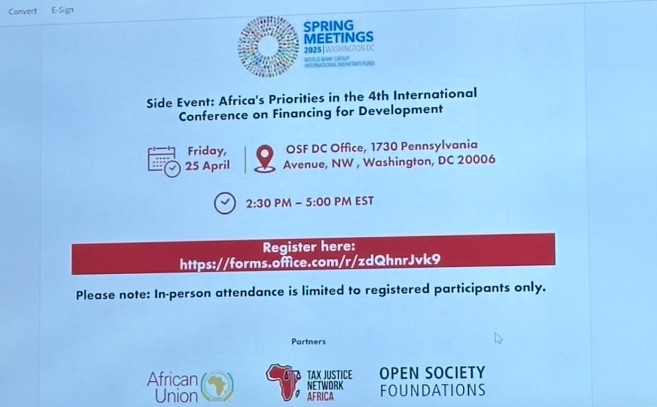
From different side discussions I participated in here in Washington DC on this subject matter, as we conclude the 2025 World Bank/IMF Spring Meetings, one message is abundantly clear: Africa must come prepared to the Fourth Financing for Development (FFD4) Conference in Seville. It should not be simply another global convening, FFD4 represents an unparalleled moment for the continent to redefine financial justice, assert its agency, and demand structural transformations within the global economic governance system.
The current global financial architecture is profoundly inequitable, marked by a historical bias that relegates African and other Global South countries to the periphery. Brian Kagoro, Managing Director for Programs at Open Society Foundations, rightly articulated that the present financial system was originally designed under assumptions of permanent inequality, with clear roles for “center” and “periphery.” This paradigm, no longer tenable, demands a complete reform, not cosmetic adjustments.
The Debt Crisis: Beyond Liquidity to Structural Reform
At the heart of Africa’s position for Seville, Spain must be the recognition that debt crises faced by African nations are not merely liquidity issues. Instead, they are deep-rooted structural and wealth crises resulting from systemic inequities. The Common Framework developed by the G20 has notably failed. Africa must champion a UN Framework Convention on Sovereign Debt, embedding principles of responsible lending, borrower rights, and genuine multilateral accountability mechanisms.
The Exclusion of African Voices in Debt Negotiations
Jason Braganza from AFRODAD stressed that the current debt restructuring approaches have failed Africa fundamentally. These processes, dominated by creditor institutions like the IMF, draw off vital public funds away from healthcare, education, and infrastructure into debt repayments. Seville must be the platform where Africa decisively argues for a debt resolution framework anchored in equity, transparency, and genuine partnership.
International Tax Cooperation: Reclaiming Democratic Space
Another critical dimension is international tax cooperation. Historically marginalized in global tax rule-making dominated by OECD countries, African states lose an estimated $89 billion annually through illicit financial flows and aggressive tax avoidance. Africa’s push for a UN Framework Convention on International Tax Cooperation represents not just an economic necessity but a reclaiming of democratic space and equitable representation in global economic governance.
The conclusions of the recent Summit of the Future reinforced this call by endorsing the establishment of a more inclusive, effective, and transparent global tax governance framework. Member States recognized the inadequacies of the current OECD-centered system and agreed to prioritize negotiations toward a United Nations Tax Convention. This shift offers Africa a vital opportunity to push for rules that ensure fair taxation of multinational corporations, address harmful tax competition, and guarantee that every country, regardless of size or economic power, has an equal seat at the decision-making table. For Africa, the road to Seville is not just about advocating for reform; it is about securing a transformative, legally binding mechanism that can reverse systemic revenue losses and reinforce the continent’s capacity for sustainable development.
Strengthening Domestic Resource Mobilization in Africa
Strengthening domestic resource mobilization (DRM) in Africa is a crucial pillar for building sustainable, self-reliant economies. African governments must invest in modernizing their tax systems to ensure efficiency, transparency, and the capacity to capture revenues from rapidly evolving sectors such as the digital economy. This includes implementing fair and progressive taxation, combating illicit financial flows, and strengthening regulatory frameworks that close loopholes exploited by multinational corporations. By improving domestic revenue collection, African countries can significantly reduce their dependence on external financing and debt, thereby reclaiming greater fiscal sovereignty to fund health, education, and infrastructure projects.
However, strengthening DRM cannot be confined to national reforms alone. Global financial rules must also evolve to support African countries’ efforts. As Mwila Mkosa from the Zambian mission to the UN emphasized, the international tax framework must be reformed to create an enabling environment for African states to effectively mobilize their domestic resources. This includes addressing harmful tax competition, reforming unfair global trade practices, and ensuring that African countries have an equitable voice in setting global financial and tax standards. At Seville, Africa must press for concrete commitments that bridge national reforms with international cooperation, ensuring that domestic resource mobilization becomes a genuine driver of inclusive and sustainable development
Rethinking Private Finance in Development
The upcoming FFD4 must critically address the role of private finance. The previous “billions to trillions” narrative, heavily reliant on private sector financing without adequate oversight, has proved largely illusory. Africa’s position should advocate for private finance to operate under robust governance frameworks that prioritize socio-economic transformation over narrow profit-driven outcomes.
Reimagining Multilateralism: Beyond the Status Quo
A consistent theme emerging from these discussions was the need to reimagine multilateralism, not to preserve a flawed status quo but to fundamentally redesign it. As Brian Kagoro aptly put it, “the world we want to save has not yet been born.” Africa must advocate for multilateral frameworks that genuinely reflect principles of equality, transparency, and mutual accountability.
We need concrete, Actionable Commitments at Seville
The outcomes from Seville must move beyond ambitious language to concrete, actionable commitments backed by accountability frameworks. Seville must differ from previous summits by producing commitments specific enough to allow for tangible monitoring and public accountability.
Africa stands at a crossroads. We have an opportunity at Seville to assert not only our needs but our rights, our right to fair participation, our right to equitable economic structures, and our right to control our developmental futures. The moment is ready for bold, strategic, and unified action. True reform is not merely about changing systems but about fundamentally shifting power dynamics. Africa’s call must be clear: reform of the global financial architecture is an urgent demand for justice, equity, and sustainable development. The stakes are high, the time for incremental adjustments is past, and the moment for profound, transformative change is now.
My 7-Point Forecasts and Analysis of the Continent’s Political, Social, and Economic Landscapes.
We have just entered 2025! As we move into the mid-2020s, several indicators suggest that Africa is on the verge of a transformative era, provided the continent is effectively managed and stakeholders make the right choices. However, the year 2025—and likely the years to follow—also presents a range of challenges and uncertainties.
As I always do at the beginning of each year, I would like to share some reflections on the major opportunities and challenges our continent, its people, and institutions may face in 2025 and beyond. I will also share key upcoming/influencing moments to prepare for.
Inequality, conflicts and insecurity, youth and unemployment, migration, debt, development financing, electoral democracy, civic space, free movement of people, China, the BRICS, the new Trump presidency, etc. will occupy the policy and political debates and the daily life of Africans. Africans will expect much from the African Union with its new leadership and its so-called improved structure for a faster implementation of the Agenda 2063. Still, the regional economic communities will have increased responsibilities as they continue their difficult discussion on their scope of intervention, subsidiarity, and complementarity with the continental body.
With its 54 countries (55 AU member states) rich in diversity, culture, and resources, the continent will be playing an increasingly pivotal role in the global landscape.
Politically, Africa will continue witnessing waves of movements and civic engagements, mostly by young people demanding reforms, accountability, better governance, and better life conditions. In many countries, leaders will continue struggling to navigate pressing domestic demands and international pressures.
Socially, with a population expected to reach 1.5 billion in 2025, the youth bulge presents both opportunities and challenges. Employment will be a critical area of focus as young people demand opportunities to fulfill their potential. Additionally, issues related to social justice and human rights will continue to resonate.
Economically, Africa will need to speed on capitalizing on its immense potential to drive growth and innovation. The continent is rich in the most needed natural resources today. The deployment of the African Continental Free Trade Area (AfCFTA) represents a significant step towards economic integration and collaboration. 2025 may bring more progress in implementing the AfCFTA as African nations understand the importance of diversifying their economies and reducing dependency on external markets.
In 2025, African countries will enhance green mineral processing fueled by the aspirations to maximize the benefits of the extractive industries and leverage robust renewable energy resources. Mineral-rich countries will seek new partnerships to advance their value-addition objectives. This trend needs to be supported.
Given the ongoing global geopolitical trends, African countries will likely enhance their positions and secure more representation in global platforms, with the South African presidency of the G20, the African Union’s full membership of the group, as well as the inclusion of Ethiopia and Egypt in the BRICS.
Tensions between France and Francophone African countries that started with Mali, Niger, and Burkina Faso will likely escalate as more francophone countries reassess their historical ties with the former colonial power. As global power dynamics evolve, many Francophone African countries are increasingly looking toward new partners beyond France, including China, Russia, and other emerging economies seeking alternative pathways for development, trade, and security, leading to a gradual disillusionment with France as the primary partner.
Pressed by various actors, South Africa’s G20 Presidency launched a Cost of Capital Commission to investigate factors hindering low- and middle-income countries from accessing affordable capital. South Africa’s presidency presents a unique opportunity to enhance the continent’s development priorities on the global stage. The debt crisis in developing countries has escalated to critical levels. In Africa, public debt soared by 240% between 2008 and 2022, resulting in many nations allocating more resources to debt interest payments than to healthcare. This scenario hampers their capacity to invest in sustainable development and climate resilience.
By examining the trends, challenges, and opportunities that lie ahead, my aim in sharing these analyses at the beginning of the years has always been to provide a roadmap for policymakers, CSOs, philanthropies, businesses, and other stakeholders to navigate the complexities of Africa’s evolving landscape.
1/ Economic Growth, Inequality, and Poverty
Despite some economic growth and impressive resilience, Africa’s structural transformation will likely still be inconsistent in 2025.
According to the African Development Bank, growth in Africa is expected to increase only to around 4.3 percent in 2025. But given that economic growth does not automatically and immediately impact poverty reduction, the continent’s most challenging task is to ensure that the products of growth are distributed fairly and that they are no longer used to widen the gap between rich and poor, knowing that this is an important source of conflict.
Africa now has good reasons to invest in modernized agriculture, encourage and sustain productivity, and, of course, increase cultivable lands. This will have the threefold advantage of meeting the food needs of our people, creating jobs, and diversifying the economy. It will also promote regional trade among African countries, taking all the advantages from the AfCFTA.
Funding challenges will remain as African governments continue to face financing shortages, high borrowing costs, and looming debt repayments. To adapt to these challenges, in addition to the urgent need to reform the Global Financial Architecture, African countries should deploy internal structural reforms to diversify funding sources and their economies. The fight against illicit financial flows (IFF) should be intensified, as progress here will catalyze more fiscal space for governments.
Trade/AGOA: As the African Growth and Opportunity Act (AGOA) approaches its expiration in September 2025, the uncertainty regarding its renewal presents significant challenges for investment in key sectors like textiles, agriculture, and the automotive industry. AGOA has played a crucial role in facilitating trade and economic development between the United States and eligible sub-Saharan African countries by providing duty-free access to U.S. markets for a range of goods. However, as negotiations around its renewal progress, it is essential for the continent to secure a better deal. So, should AGOA renewal be placed on the agenda, the African side should advocate for a comprehensive review and enhancement of the agreement to ensure its effectiveness in the current landscape, particularly in light of the establishment of the African Continental Free Trade Area (AfCFTA). Here are key elements to consider:
Alignment of Trade Policy, including harmonizing regulations and standards across the participating countries to facilitate smoother trade flows between U.S. and African markets
Regional Value Chains to promote the development of regional value chains in Africa, allowing countries to collaborate on producing goods that meet AGOA requirements while leveraging the strengths and resources of multiple countries within the AfCFTA framework.
Specific Support for SMEs and Startups: Both AGOA and AfCFTA seek to foster inclusive economic growth, and reforms could include dedicated support for small and medium-sized enterprises (SMEs). Creating programs that assist SMEs in meeting export standards and accessing financing would bolster their capabilities to participate in global trade.
Trade Facilitation Initiatives: Integrating trade facilitation measures from AfCFTA into AGOA can streamline customs procedures and reduce trade barriers. This could include the adoption of technology in customs operations and cross-border trade facilitation measures that are consistent with AfCFTA protocols. Revisions to AGOA could also encourage partnerships between U.S. firms and African businesses participating in AfCFTA. Such collaborations can drive investment, innovation, and technology transfer, ultimately benefiting both economies.
2/ African Union Theme of 2025: “Justice for Africans and People of African Descent Through Reparations”
Reparations, encompassing reparatory justice for historical crimes and mass atrocities committed against Africans and people of African descent, have consistently been integral to the full decolonization process advocated by the then Organization of African Unity (OAU) and now the African Union (AU) since its establishment in 1963. Over the past three decades, the African Union has made numerous decisions and supported initiatives aimed at championing justice and advocating for reparations to Africans. It has also focused on the restitution of cultural artifacts, relics, and heritage that were pillaged during colonization and enslavement, working toward returning these items to the African countries from which they were taken. The Assembly of the Union decided that the theme of the Year for 2025 will be ‘‘Justice for Africans and People of African Descent Through Reparations.’’. Leaders have also designated the reparations for transatlantic enslavement, colonialism, and apartheid as a Flagship Issue and Project of the Union.
To enhance advocacy for an African common position on reparations and forge a united front on reparations for Global Africa, President Nana Akufo-Addo of Ghana was appointed as the African Union Leader on Advancing the Cause of Justice and Payment of Reparations to Africans. This appointment may be transferred to the new president of Ghana, John Mahama.
The upcoming AU Summit in February 2025 will likely adopt a roadmap for implementing the theme on the continent and in the diaspora.
3/ Human Rights, Governance and Electoral Democracy: Unfinished Business
Liberties and freedoms, civic and democratic space, justice, and the protection of civilians are still in trouble on the continent, mostly because regional and continental institutions remain silent.
Africa must also find a way out of the vicious circle of election credibility and the needed political alternation in power. Without this, our continent will continue its progressive descent into hell, thus undermining any prospect of economic development.
Change at the helm of power is a crucial aspect of the democratic game, particularly in contexts where institutions remain weak, and the electoral system is susceptible to manipulation. We need to keep discussing the issue of limiting presidential terms, as this is often the only effective way to remove leaders who persistently cling to power in the context of flawed elections. Currently, only a handful of African countries exemplify this democratic principle, including Ghana, Senegal, Botswana, and South Africa.
4/The African Union: A New Start?
The current leadership of the African Union Commission will be largely renewed during the February 2025 Summit. The current Chairperson, Moussa Faki from Chad, the Deputy Chairperson, Dr. Monique Nsanzabaganwa from Rwanda, and most of the commissioners should hand over power to newly elected officials for a four-year term.
In addition, Angolan President João Lourenço is likely to be appointed Chairperson of the AU for 2025 to replace the Mauritanian Mohamed Ould Ghazouani.
Angolan diplomacy, historically engaged in resolving continental conflicts, particularly in the Central African Republic and the Great Lakes region, has a golden opportunity to impact the continent.
President João Lourenço has several advantages. First, his role as a mediator between the Democratic Republic of Congo and Rwanda, to help end the conflict between the two neighboring countries provides him with experience and credibility. Second, his ability to maintain good relations with global powers—such as the United States, China, Russia, and the European Union—as well as with regional leaders, including India, Brazil, and South Africa, is essential for ensuring that Africa is given a greater presence in international forums.
5/ Peace and Security:
Peace and security remain a serious prerequisite for the continent’s development and progress and the well-being of its people.
Africa has not made enough progress in this area in recent years. In many cases, such as in Sudan, our institutions have not acted seriously on early warning signs that were quite visible. What our regional institutions need are courage and the political will to cut with old methods. For example, the leadership of the African Union Commission must be able to speak out loudly whenever national leaders are violating our shared values and challenge them. That is why we need strong and audible leaders at the AU Commission.
The current state of conflict on the African continent is marked by complex and interlinked dynamics. Major conflict situations are interconnected with sub-national issues across the five geographical regions, resulting in conflicts that are either spreading into new areas, involving an increasing number of actors, witnessing a rise in fatalities, or deteriorating overall due to the escalation of their root causes.
Regional crises will continue impeding development efforts. Wars, armed conflicts, and extreme weather conditions have forced millions to flee their homes.
As reported by the Internal Displacement Monitoring Centre (IDMC), approximately 35 million Africans were living as refugees or displaced persons within their own countries at the end of 2024.
Additionally, the convergence of global megatrends such as climate change, energy transition, and migration intensifies the already intricate conflict landscape in Africa. Climate change poses a significant threat to the continent, manifesting in rising temperatures, altered weather patterns, and environmental degradation. These challenges jeopardize agricultural productivity and food security while exacerbating existing regional vulnerabilities.
The ongoing shift toward cleaner and more sustainable energy sources offers both potential benefits and challenges for Africa. While this transition can help reduce carbon emissions and combat climate change, it necessitates considerable investment and infrastructure development. The lack of reliable energy access further deepens inequalities and can lead to social unrest.
At present, each region of Africa faces a distinct combination of these challenges, greatly influencing the continent’s conflict-related security landscape in unique ways.
Major Conflicts & Risky Situations to Watch Closely in Africa
In 2025, Africa will still have to manage the following hot spots:
Sudan: Sudan continues to face internal conflicts and political instability. I hoped that Sudan’s civil war would come to an end in 2024. Unfortunately, international mediation efforts have not succeeded. With ongoing support from foreign backers, the Sudanese Armed Forces (SAF) and the Rapid Support Forces (RSF) have resumed intense fighting in Khartoum, Al Jazirah State, and around Al Fashir in Darfur. In December, the Sudanese government accused Chad of having authorized the firing of Emirati drones from its soil and towards Sudan. The army, which is fighting the rebels of the Rapid Support Forces (RSF) of Mohamed Hamdan Daglo, known as Hemetti, now believes that N’Djamena is, through an alliance with the United Arab Emirates, directly engaged against it in the civil war, and in particular in the Darfur region. Looking ahead to 2025, international mediation efforts will advance little unless the current stalemate is resolved.
Sahel Region: Over the last decade, the region has been shaken by extremist uprisings and military coups. Three Sahelian nations, Mali, Niger, and Burkina Faso, are now ruled by military leaders who have taken power by force on the pledge of providing more security to citizens. The Security crisis is complex, and the situation is worsening with record numbers of attacks and civilians killed both by Islamic fighters and government forces.
Ethiopia: Ethiopia has been grappling with various conflicts, notably the conflict in the Tigray region, where fighting between the Tigray People’s Liberation Front (TPLF) and government forces has led to a humanitarian crisis, including mass displacement and reports of human rights abuses. Ethnic tensions and unresolved grievances in other parts of the country also contribute to the ongoing conflict.
DRC: The Democratic Republic of Congo’s complex and long-standing conflict situation is a pending concern for the continent’s stability. Various armed conflicts, including clashes between rebel groups, inter-communal violence, and attacks by armed militias, have plagued the country. The conflicts are often fueled by competition over natural resources, such as minerals, leading to violence and instability in the region. The eastern part of the DRC, particularly in the provinces of Kivu, continues to be a hotspot for violence in the fight between the government and the Rwanda-backed rebel group M23. This is leading to widespread casualty and displacement of civilians, human rights abuses, and a humanitarian crisis.
Ethiopia and Egypt: Their relationship has been strained since 2011 when Ethiopia started building and filling the Great Ethiopian Renaissance Dam on the Blue Nile, a project that Egypt sees as a significant risk to its water and food security. The situation worsened further as Egypt strengthened its relationship with Ethiopia’s competitor, Somalia. In addition to sending troops, weaponry, and ammunition to Somalia, Egypt plans to conduct joint military exercises with the country. Egypt’s warming relationship with Somalia has raised concerns in Addis Ababa, as Ethiopia disagrees with Mogadishu over a maritime agreement that Ethiopia recently reached with Somaliland.
Silencing the Guns by 2030: Beyond the Slogan: Unfortunately, this campaign, with an initial deadline set for 2020 and then moved to 2030, remains a slogan without serious action to realize it by tackling the root causes of the conflicts.
Efforts to silence the guns must extend beyond rhetoric; it is essential to significantly enhance the capacity of African institutions to proactively prevent conflicts in a more comprehensive and timely manner rather than relying solely on reactive conflict resolution strategies.
Conflicts across the continent emerge from various structural vulnerabilities, including environmental challenges, competition for access to and the illegal extraction of natural resources, social unrest driven by poor and unaccountable governance, the proliferation of illicit small arms and light weapons, and the rise of religious radicalization.
6/Prioritizing Socioeconomic Development Over Military Solutions
Achieving sustainable peace in Africa necessitates addressing the root causes of conflicts, which are frequently tied to poverty, inequality, limited access to education, and social injustices. By prioritizing socio-economic development rather than military solutions, African countries can create a foundation for enduring peace and prosperity for their citizens. It is essential to invest in sectors capable of driving economic growth and generating opportunities for the youth. The continent can establish an environment conducive to long-term stability and prosperity by directing resources toward these areas and implementing supportive policies.
Agriculture, the backbone of many African economies, offers significant potential for stimulating economic growth and creating employment opportunities for young people. With its vast arable land and an expanding population, Africa can harness agriculture to enhance food security, increase job prospects, and foster sustainable development. By investing in modern farming techniques, expanding market access, and supporting smallholder farmers, the continent can unlock the full potential of its agricultural sector and empower youth in rural communities.
Adding Value to Africa’s Strategic Critical Mineral Resources
Many conflicts on the continent are driven by the exploitation of natural resources. Therefore, African nations must prioritize taking control of and adding value to these vital resources. The strategic minerals in Africa—such as gold, diamonds, cobalt, platinum, and rare earth elements—are crucial for modern industries, including technology, green energy, and infrastructure. However, the extraction and trade of these resources have frequently been plagued by corruption and exploitation, resulting in instability and human suffering in various regions. African countries must assert their sovereignty over their mineral resources to disrupt this cycle of conflict and foster sustainable peace. By establishing transparent and accountable governance systems, countries can prevent the illicit exploitation of their minerals and ensure equitable distribution of benefits among their citizens. This approach will not only address the root causes of conflicts but also promote economic development and social advancement.
Pan-African institutions must work together to enhance understanding of the challenges within the mining sector and align with the African Mining Vision (AMV) objectives. Accelerating research and data collection to identify the key obstacles hindering the implementation of the AMV is also important. The continent must invest in building the capacity of stakeholders in the mining sector to tackle these challenges effectively and encourage collaboration among industry participants, government agencies, and civil society to develop innovative solutions for sustainable mining growth.
National governments should be empowered to implement policies encouraging value addition to mineral and agricultural products.
7/Africa and the Rest of the World
Africa has everything to gain by continuing to diversify its economic partners. The spectacular positioning of China and other new partners in Africa has openly changed the balance of power with traditional partners and reoriented the African economy and development process. But the continent must keep its eyes wide open. Africa’s partnerships (old and new) must contribute to the realization of our agendas 2030 and 2063, and we must ensure that social, human rights and equity standards are absolutely respected in the pursuit of these partnerships. Non-state actors have a major watchdog role to play here.
I do not anticipate a significant emphasis on Africa policy from the incoming Trump administration. However, the United States cannot afford to overlook Africa, as the continent is at a critical juncture that presents numerous opportunities for both economic and diplomatic engagement. With a population approaching 1.5 billion and an economy that has shown resilience amid global challenges, Africa is emerging as a key player on the world stage.
Key Moments in 2025 (This section will be updated as new events are planned)
African Union Summit & election of new AU leadership: 12-16 February 2025
50th Anniversary of ECOWAS: The Economic Community of West African States will celebrate its fiftieth anniversary in May 2025, at a moment when three founding members—Mali, Burkina Faso, and Niger—announced their withdrawal from the organization in January 2023. They have declared their decision to be irrevocable, despite attempts at mediation, and have subsequently established a new entity known as the Alliance of Sahel States (AES). Their official withdrawal from ECOWAS is set to take effect on January 29, 2025, in accordance with the organization’s regulations. The 50th anniversary of ECOWAS offers an opportunity to rethink and improve the mandates and working methods of the subregional body.
The 4th International Conference on Financing for Development will be held in Seville, Spain, from 30 June to 3 July 2025. The conference will address new and emerging issues and the urgent need to fully implement the Sustainable Development Goals and support reform of the international financial architecture.
Elections: Unlike 2024, 2025 is expected to be more stable, with fewer major elections, mostly in Cameroon, Côte d’Ivoire, and Tanzania, along with the promised end of transition in Gabon and Guinea. Here is the election calendar for 2025 by EISA. Further analysis of Africa’s upcoming elections can be found here.
Artificial Intelligence Summit in Kigali: On April 3 and 4, 2025, Rwanda will host the first Global AI Summit in Africa in Kigali. This event is organized by the Centre for the Fourth Industrial Revolution in Rwanda and the World Economic Forum. With the belief that AI could contribute $2.9 trillion to the African economy by 2030, the summit aims to explore economic opportunities for the African workforce. It will bring together global leaders, government ministers, CEOs, civil society representatives, startups, investors, and international organizations to shape Africa’s role in the global AI economy.
COP, Women’s Rights: 2025 will also mark the 10th anniversary of the COP21 Paris Agreement on Climate Change and the Sustainable Development Goals and the 30th anniversary of the Beijing Declaration and Platform for Action on Women’s Rights.
On 10 June 2024, I participated in the Spring Meeting of the Paris Peace Forum hosted by the prestigious Mohamed VI University in Benguerir, Morocco, under the theme “Fair Transition,” with highlights on 1/ climate and development, 2/ agriculture and nutrition, 4/ energy and transition minerals, and 4/ global health. The Forum has brought together governments, universities, research bodies, civil society, and the private sector.
In addition to participating in the general plenary discussions, I spoke alongside global heavyweight experts, politicians, academics, and practitioners at the launch of a new initiative called the Agricultural Transition Lab for African Solution (ATLAS).
ATLAS will advocate for a globally shared vision of a sustainable African agricultural transformation based on a better understanding of African needs, breaking away from North and South divides, and seeing agriculture and climate as partners rather than adversaries.
Here are my key takeaways from various sessions, group discussions, and bilateral engagements during the very packed day of the forum:
A green energy transition that meets the needs of developing countries and is paired with imperatives of poverty reduction.
The transition towards cleaner and more renewable energy sources should balance the well-being of the planet and the development and prosperity of poor people who contribute the least to environmental degradation. To tap into the existing abundant source of green energy, there is a need for heavy global solidarity. International partnerships and cooperation are essential in supporting Africa’s energy transition. By sharing knowledge and expertise, mobilizing financial resources, and fostering technology transfer, the global community can help accelerate the shift towards a more sustainable energy future for all.
Agriculture, food and nutrition
Agriculture and nutrition are indispensable prerequisites for Africa’s development journey.
African food security is key in the face of a rapidly growing population and the ever-growing threat of climate change: 60% of Africans face food insecurity, 61% of the African population lives on wages below $2/day, and 2/3 of arable land is at risk of desertification. There is an imperative to transform Africa’s agricultural sector into a dynamic, modern, and sustainable engine of growth. Agriculture remains the backbone of many African economies, employing a significant portion of the population and contributing substantially to GDP.
Investing in Africa’s agriculture should go beyond just increasing crop yields; it also entails fostering a holistic approach to food security/sovereignty and nutrition. As Africa seeks to chart a course towards sustainable development, it is imperative that agriculture and nutrition remain central to the continent’s agenda. From empowering smallholder farmers and agribusinesses to scaling up nutrition interventions and promoting dietary diversity, the possibilities for transformative change are vast and promising for the continent.
From extractives to wealth creation in Africa
African countries should move from exporting mineral resources to prioritizing value addition and industrialization to capture more of the value from these resources. Africa can boost job creation, foster innovation, and drive economic growth by processing raw materials locally and developing higher value-adding industries. This shift towards industrialization is integral to promoting sustainable development and reducing Africa’s traditional role as a mere supplier of raw materials.
Adding value to natural resources in Africa has the potential to promote entrepreneurship and support small and medium-sized enterprises as engines of economic growth. African governments and development partners should boost initiatives to provide financing, training, and mentorship to entrepreneurs, enabling them to create innovative businesses that contribute to job creation and economic prosperity.
Africa needs to plan a phase-out of ODA.
It is undeniable that Official Development Assistance (ODA) has been instrumental in catalyzing progress. Aid flows have facilitated the building of schools and hospitals, the provision of clean water and sanitation, and the implementation of crucial social welfare programs. However, there are compelling reasons for African nations to consider planning a phase-out of aid dependency.
In the face of ongoing global development, there is growing consensus among experts that a shift towards self-reliance and sustainable development is paramount for Africa’s long-term growth and prosperity. Aid trap will cause the continent to miss out on the numerous existing opportunities to take off. Aid is becoming more and more unpredictable and subject to geopolitical agendas, making it an unreliable and unsustainable source of funding for development projects. This will hinder long-term planning and result in fragmented and short-term solutions that fail to address the root causes of poverty and underdevelopment in Africa.
Phasing out from aid can foster accountability and good governance. When governments are not solely reliant on external donors for funding, they are encouraged to be more transparent and responsive to their citizens’ needs. This shift can lead to more efficient and effective resource use, reducing the risk of corruption and mismanagement that often plague aid-funded projects. Transitioning towards self-reliance can stimulate domestic innovation and entrepreneurship as countries are forced to find locally-driven solutions to their development challenges. This can lead to the creation of sustainable businesses and industries that generate jobs and economic growth, ultimately reducing poverty and improving livelihoods.
Public Debate – Towards the Third Financing for Development Conference in July 2015 – Tuesday 19 May 2015 from 14:00 @ African Union Commission Headquarter
My Opening Remarks
**********
Excellency, Ladies and Gentlemen, all protocol observed,
Thank you for joining this public debate co-hosted by the African Union Commission’s Department for Economic Affairs and Oxfam Liaison Office to the African Union
The Third International Conference on Financing for Development (FfD) will take place on 13-16 July 2015, in Addis Ababa, Ethiopia.
We expected the conference to be held at the highest possible political level, including Heads of State or Government, relevant ministers – ministers for finance, foreign affairs and development cooperation – and other special representatives.
This conference will set the scene for governments’ efforts to mobilize development finance to achieve the Sustainable Development Goals (SDGs) set for the period 2016 – 2030.
Decisions of the FfD must be bold, visionary, and lead to transformative change if today we are to create universal equitable and sustainable prosperity within planetary boundaries, and fulfil international human rights obligations for future generations.
FFD must build on the foundations of the previous FfD in 2002 in Mexico which is “to eradicate poverty, achieve sustained economic growth and promote sustainable development as we advance to a fully inclusive and equitable global economic system.”
The Third FFD Meeting will be then crucial to ending extreme poverty and tackling inequality everywhere. The conference will also lay the foundation for an agreement in September in New York on the new sustainable development goals, and for a binding climate-change agreement in December in Paris
The Financing for Development process come at a critical time, and must deliver on a number of issues for other crucial global agreements to bear fruit.
This conference will be the 3rd to be organized. The last one happened in Monterrey in Mexico in 2002.
The Addis Ababa event will have a different dimension compare to the previous FFD in Monterrey
Monterrey took place after agreement had been reached on the MDGs, while Addis will happen before formal the adoptions of the Sustainable Development Goals
Monterrey was focused on a government-to-government agreement but a larger number of stakeholders will be involved in Addis Ababa, including businesses, academics, civil society, scientists, and local authorities.
The conference should unlock finance from many different sources, including but not exclusively aid, to implement the upcoming Sustainable Development Goals.
Addis Ababa meeting will take place in the context of a slow global growth, in a world being devastated by conflicts and facing serious natural disasters and climate issues.
Agreements should have significant consequences for successful implementation of the SDGs at national, regional and global level.
Recommendations should be clearly actionable, with next steps in implementation that are easy to understand, easy to confirm and easy to tract.
There are other previous commitments already made which have not yet been met. There is a need for renewed efforts to meet these commitments; such commitments include meeting the target to provide 0.7% of Gross National Income in Official Development Assistance (ODA).
Given the high expectations placed on the FFD3 and the need to deliver tangible results, it is expected that the Addis Ababa Agreement mobilize international action around specific initiatives focusing on education, health, smallholder agriculture and nutrition, infrastructure etc.
The global scene and challenges have changed since the setting up of the MDGs.
We now have more scientific knowledge about climate change, rapidly growing tax evasion, unsustainable debt burdens, and the impact of trade agreements on domestic resource mobilization in developing countries.
Least Developed Countries (LDCs) have faced many of the greatest challenges in making progress toward the MDGs.
With limited trade and financial links to the rest of the world, LDCs have not gained substantial benefits from globalization, yet they are bearing many of the costs of global progress, such as climate change.
Since the FfD3 process began, lines seem to be drawn, between the global South and the global North.
The Group of 77 andChina (G77) the African Group, the LeastDeveloped Countries, Brazil, India, and other states and blocs consistently defend the right to development.
Developed countries including the European Union, the UnitedKingdom, the United States, Japan and others assert that all countries have to take responsibility.
FFD must result in finding resources for the upcoming SDGs: This must include both financial resources, non-financial measures including technology transfer and capacity building, as well as international systemic issues of finance, trade, tax etc.
Ladies and Gentlemen,
Radical change is needed in the development finance architecture to make it fair and just…
For every $1 dollar developing countries gain from development partners, they lose around $2 dollars (especially in illicit financial flows and debt repayments).
Aid figures are minimized by outflows from corporate tax dodging and illicit flows, lending to developed countries, and profits to private investors.
To rebalance the terms of international financing, to ensure developing countries get their just and fair share, courageous decisions must be taken in Addis Ababa.
As a priority, governments must create a system that ensures multinational companies pay tax where the economic activity takes place and limit discretionary tax incentives so that the hundreds of billions in potential tax revenue credit governments’ budgets.
A Few Questions to Ourselves:
How are we going to deal with Domestic Public Finance?
Are we seeing it as Primary source of development, or complement to aid?
How do we mobilize it, How do we manage it properly?
How do we ensure accountability and transparency on the use of our national resources in order to finance our development?
Who has the responsibility to track and stop Illicit Financial Flows?
What about those assets illegally taken from Africa mostly through practices of tax evasion, trade and services mispricing as well as transfer pricing abuses by transnational corporations?
How do we deal with the lost of $50-$60 billion a year in illicit financial outflows from Africa. An amount that is more or less equal to the total foreign direct investment (FDI) and more than the total Development Assistance that the continent receives annually?
How do we respond to Domestic and International Private Business and Finance, being promoted by western partners?
Are the current rules of International Trade favourable for Sustainable Development?
Ladies and Gentlemen, these are some of the questions on the table…
Make sure your opinion and your voice are heard in this debate.
The outcome of this discussion will be compiled in a report to be widely disseminated.
Colleagues & Friends: You are all invited tomorrow to join us physically of virtually on twitter. Please share this advisory widely!
*** Media advisory for Tuesday, May 19 2015***
How should Africa’s development be financed?
Grand Debate will build consensus on African priorities before FfD3
WHAT: Oxfam and the African Union, as part of the Fridays of the AU Commission regular meeting schedule, invite media to a public discussion on what should be African priorities at the UN Third Conference on Financing for Development (FfD3) scheduled less than eight weeks from now in Addis Ababa.
Discussants will include diplomatic representatives from AU member states and other continents, AUC, Pan-African institutions such as UNECA, African Development Bank (AfDB), Pan-African Parliament and Regional Economic Communities (RECs), multi-lateral and donor agencies, African civil society organizations (CSOs), international non-governmental organizations (INGOs), academia, and community-based organizations.
The July FfD3 negotiations by member states must define innovative ways of mobilizing resources to drive development while addressing extreme poverty, inequality and underdevelopment – the framework to finance the post-2015 sustainable development goals (SDGs). Proposals may include domestic resource mobilization and tax reform, new commitments to Official Development Assistance (ODA), global changes for debt and macroeconomic policies, climate change financing, the role of private sector finance in development, and monitoring mechanisms to ensure commitments are met.
Oxfam is organizing this event to encourage the mobilization of all constituencies towards FfD3.
WHO:Speakers who will be available to meet with and answer questions from the media are:
Mr. Charles Akelyira: Chief Executive Officer, the Savannah Accelerated Development Authority & Commissioner: Ghana National Development Planning CommissionFormer Director of the United Nations Millennium Campaign for Africa
AUC Representative, presenting the results from the FFD African Regional Consultation 2015
Dr. Vanessa Inko-Dokubo, Oxfam Pan Africa Policy Advisor on Extractive Industries
Dr. Réné Kouassi, Director of Economic Affairs, African Union Commission
Mr. Desire Assogbavi, Head of Office, Oxfam International Liaison Office to the African Union (Moderator)
These speakers may be available at other times for interviews. Please contact us to arrange








 Assodesire