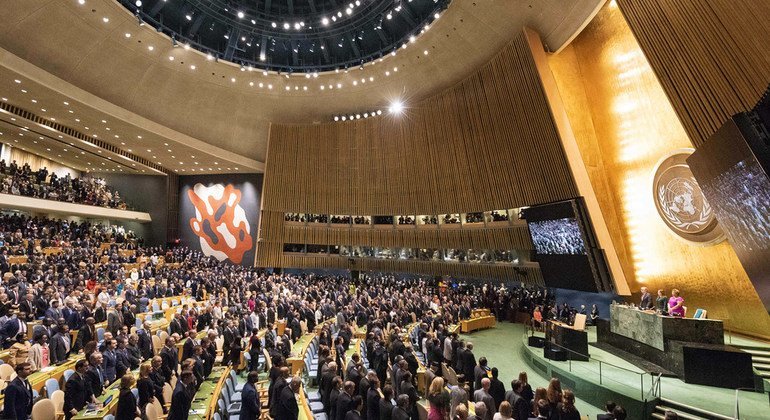
As a policy advocacy and development professional, I take the general debate of the UN General Assembly (UNGA) and the statements leaders make there seriously, for practical reasons. These speeches set the tone for the year ahead. They shape the direction of the Assembly’s own work over the coming months, in its committees, its negotiations and the resolutions it adopts. They also carry into the other big moments on the calendar, from the financing talks at the IMF and World Bank to Security Council reform, the climate COP and the AU Summit and beyond. They show how countries and regions are shifting their positions, and they give advocates a roadmap at every level (national, regional, continental and global) of what governments have told the world they want and intend to do. They also give us a receipt. A promise made at the podium in New York can be checked back home: in the budget, in the mining contract, in how the police treat protesters. The gap between what leaders say at the UN and what they do in their capitals is where much of our advocacy work lives.
So why focus on Africa in this article? Because Africa’s statements barely made the international headlines. Reuters’ six big takeaways from UNGA week were led by Iran, then Ukraine, with AI, Venezuela and Sudan close behind. Those are fair editorial choices; wars command attention. But as Africa Briefing argued, the larger story was how closely the African interventions fitted together. Security Council seats, borrowing costs, mineral value chains, climate finance, reparations and AI governance all came back to one question: who writes the rules? That story deserves a fuller telling than a wire service roundup can give it.
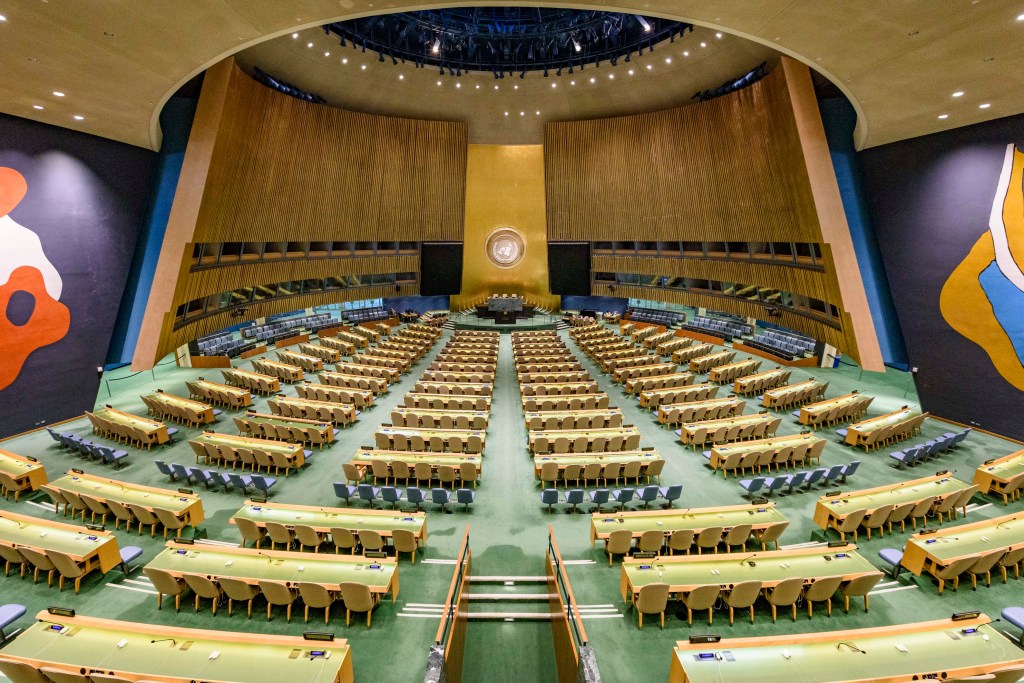
Before the session opened, I argued that it would test three things at once: whether power is really shifting, whether rights can survive being defunded, and whether multilateralism can still deliver. The general debate ran from 22 to 26 September and closed on 28 September. Every African delegation that wanted the podium has now had it. Here is what they said, what they avoided, and what it means for those of us who will hold them to it.
António Guterres set the tone in his last opening address as Secretary-General. He argued that the crises of the past decade are really one story about power: who has it, who is denied it, how it is used and how it is changing. African leaders picked up that thread and pulled hard.
One demand, many accents
Kenya’s William Ruto delivered the line of the session. Every nation has one vote in the Assembly, he said, yet five hold permanent power over war and peace that the other 188 do not. Africa’s 54 member states, more than a quarter of the membership, have no permanent seat: “Permanently discussed, yet permanently excluded.”
Nigeria’s statement, delivered by Vice President Kashim Shettima on President Tinubu’s behalf, demanded at least two permanent African seats with the veto for as long as it exists, plus five non-permanent seats.
Ethiopia’s President Taye Atske-Selassie renewed the call too, arguing that Africa has waited too long for equitable representation.
Senegal’s Bassirou Diomaye Faye said the time for observation had passed and the time for urgency and action had come, citing the Ezulwini Consensus, and announced Senegal’s bid for a non-permanent seat in 2032-2033. Even the Sahel confederation, which has broken with ECOWAS and much of the Western-led order, reaffirmed its support for Ezulwini and the Sirte Declaration.
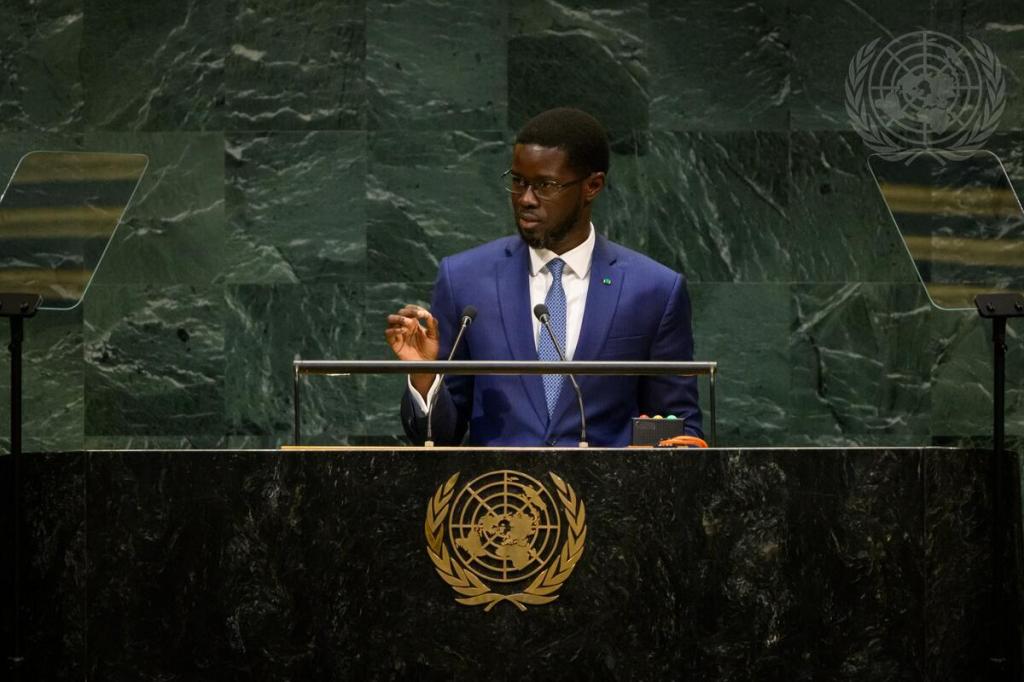
South Africa’s Foreign Minister Ronald Lamola brought the number that should embarrass the Council most: over the past decade, 70% of Security Council resolutions have concerned conflicts on the African continent. We are the Council’s main business, and we have no permanent say in it.
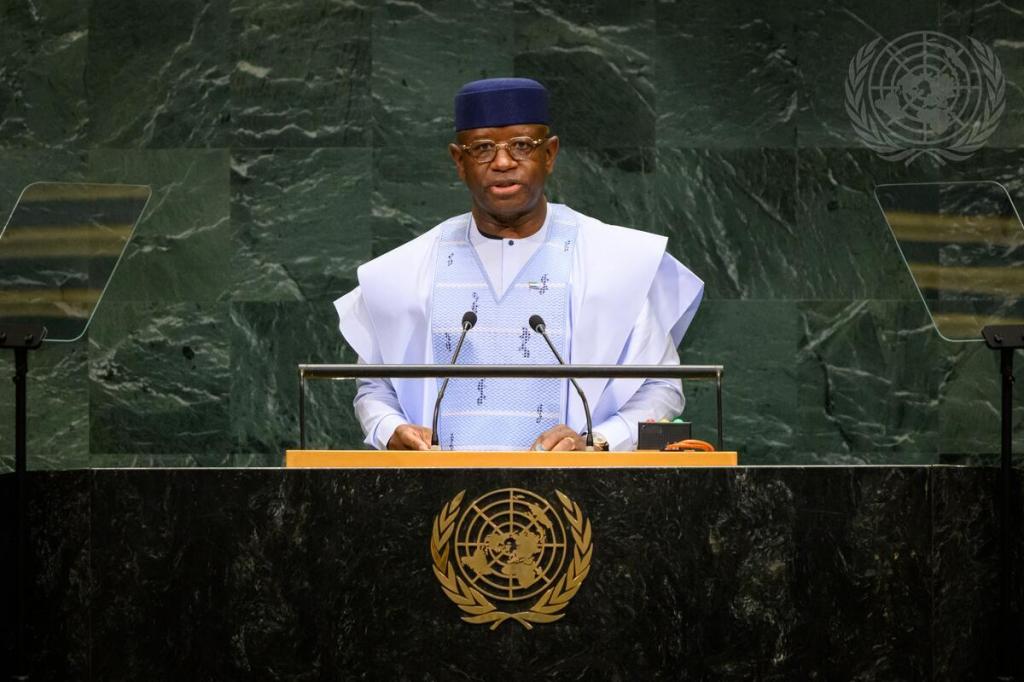
None of this demand is new. What was new came from Sierra Leone’s Julius Maada Bio, who coordinates the AU’s Committee of Ten on reform. He said years of negotiations without results have tested the credibility of the process, and that member states should have a consolidated model before this session ends, as promised in the Pact for the Future. That is a deadline, and deadlines can be tracked. Bio also gave us the most useful sentence of the debate: “Representation becomes meaningful when it changes decisions and improves lives.”
Let’s be honest about the obstacles, though. Any change to permanent membership needs a Charter amendment ratified by two-thirds of member states, including all five permanent members. And the AU has still not decided which African countries would take the proposed seats, while Nigeria, Egypt and South Africa are all eyeing the role.
Money: the price of prejudice
Ruto noted that global public debt hit a record $102 trillion in 2024, and that 46 developing countries now spend more on interest than on classrooms and medicine. He argued that markets should charge for risk rather than prejudice, while also acknowledging that sound debt management and accountability at home are part of the answer.
Lamola framed the dilemma starkly. African governments, he said, must choose “whether to meet the needs of their citizens or satisfy the expectations of creditors.” In the last year alone, African countries spent roughly as much on debt service as it would take to close the continent’s infrastructure financing gap. South Africa backed a Borrowers’ Club to counterbalance creditors, along with more debt transparency and closer scrutiny of credit rating agencies.
Faye tied all of this to an anniversary I flagged in my first piece. Forty years after the Declaration on the Right to Development, he said, we know what is needed: deep reform of the financial architecture, sustainable debt treatment, fair global taxation, better access to concessional finance, and implementation of the Sevilla commitment and the Pact for the Future. He did not mention the draft covenant on the right to development, which has sat unadopted since 2023. That remains the missing piece.
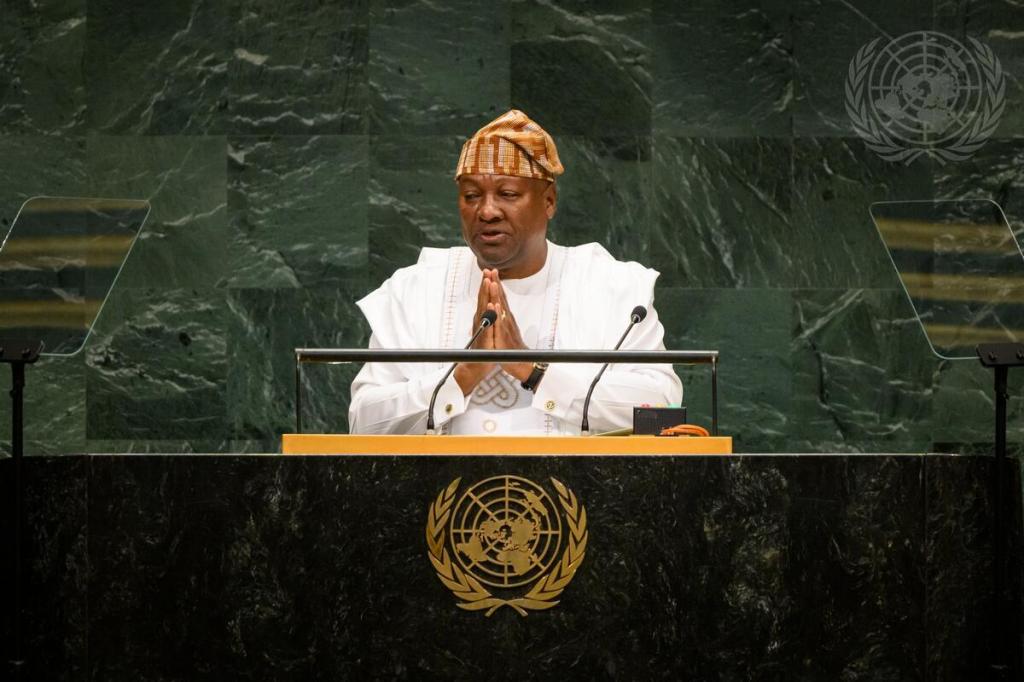
Ghana’s Mahama linked climate to debt, arguing that countries with little responsibility for emissions should not have to borrow to recover from their effects, and calling for grants that do not create new debt.
Minerals: “process at home” becomes a continental refrain
The sharpest shift this year was on critical minerals. Leaders who agree on little else agreed here.
Sierra Leone’s Julius Maada Bio warned that the green transition must not reproduce the extractive terms of the past and called for processing at source and technology transfer. Mahama said Africa would not be a passive arena for a new scramble for resources, and Mnangagwa (Zimbabwe) argued that minerals should be beneficiated at source. Lamola reminded the Assembly that Africa holds the world’s largest reserves of critical minerals and insisted the continent must help write the rules on artificial intelligence.
Botswana’s Duma Boko made the same point about technology, saying developing countries need a real voice in setting the standards and safeguards for emerging technologies. Even the Sahel states promised more local transformation of their raw materials.
The strongest intervention came from the country where minerals and war are the same story. The DRC’s Prime Minister Judith Suminwa said: “We cannot build a decarbonized economy through blood-stained minerals.” She added that the DRC no longer wants to be “the basement of the world’s economy”, and rejects a model in which producer countries dig while processing, research and profits happen elsewhere.
I welcome the unity. I am less sure about the follow-through. Processing minerals competitively requires reliable electricity, transport, skilled labor, stable regulation and a great deal of capital. It is also a governance question: who gets the contracts, who sees the revenue, and whether mining communities and civil society can scrutinize either. Leverage without accountability just moves the extraction into new hands.
Conflicts, wars.
Africa’s conflicts were on the record, sometimes from both sides of the same war. Rwanda and the DRC gave the Assembly opposing accounts of the fighting in eastern DRC, where Rwanda-backed M23 fighters have seized Goma and Bukavu, though both stressed the need for progress towards peace. Suminwa’s message was about enforcement, not new diplomacy. Resolution 2773 already lays out the path, she said, including a cessation of hostilities and the withdrawal of Rwandan forces; what is missing is implementation.
On the Sahel, Diomaye Faye spoke as ECOWAS chair. Terrorism is cross-border by nature, he said, and must be fought together: “The Sahel must not be abandoned to its sad fate.” On the final day, the three states that left ECOWAS answered in their own voice.
Burkina Faso’s foreign minister Karamoko Jean Marie Traoré spoke for the Sahel confederation on behalf of Captain Ibrahim Traoré, General Assimi Goïta and General Abdourahamane Tiani, a single statement for three governments. The joint statement accused unnamed states of backing the terrorists, arguing that the weapons and supply chains used in recent attacks in Mali and Niger do not come from nowhere, and called silence in the face of such support complicity. Mali would name one of those states hours later. Traoré also claimed that Burkina Faso now controls more than 74% of its territory, a figure that comes from the government itself.
Mali named Ukraine
On the final day, Mali went further than the joint statement. Speaking for General Assimi Goïta, Foreign Minister Abdoulaye Diop called the violence in Mali a hybrid proxy war and publicly accused Kyiv of giving clear and open support to the terrorist groups operating in the Sahel. He then widened the charge, calling Ukraine only “the visible part of the iceberg” of a larger destabilization effort by powers he described as nostalgic for a colonial past (This obviously refers to France without naming it). He pointed to the coordinated attacks of 25 April and 4 July 2026 as proof of a dangerous connection, and said the 2012 scenario was repeating itself, with terrorist groups and self-described separatists fighting in open coalition. He also traced the region’s crisis back to NATO’s 2011 intervention in Libya, and his message to outside powers was direct: “We have no orders to take.”
This did not come from nowhere. In 2024, after the Tinzaouatène ambush that killed Malian soldiers and Wagner fighters, a spokesman for Ukraine’s military intelligence told Ukrainian television that the armed groups had received “all the necessary information they needed” from Kyiv. Mali cut diplomatic ties within days. Ukraine has consistently and categorically rejected the charge, calling it a Russian propaganda narrative.
This is one of the most serious accusations made at the podium this session, and it deserves to be treated seriously, which means investigated rather than simply asserted or dismissed. If any state is arming or guiding groups that kill Malian soldiers and civilians, that is a grave breach of international law, and it should be proven and punished.
There is a way to settle it. The Sahel joint statement itself asked the world to look at the facts and investigate seriously. Mali should take that request to its logical end and invite an independent UN-mandated inquiry into foreign support for armed groups in the Sahel, open to scrutiny of all outside actors, including Mali’s own Russian partners. That step would carry far more weight than an iceberg metaphor. It also shows the cost of walking out of the ICC: the governments now asking the world to investigate foreign crimes on their soil have just left the one permanent court designed to do it.
The iceberg image has a second edge. It shifts attention away from what Mali’s own security partnership has not delivered. Kidal changed hands again this year, the defence minister was killed in the April attacks, and the jihadist coalition has struck close to Bamako. Foreign meddling may well be part of the story. It cannot be the whole of it.
Sudan, Ethiopia and Gaza
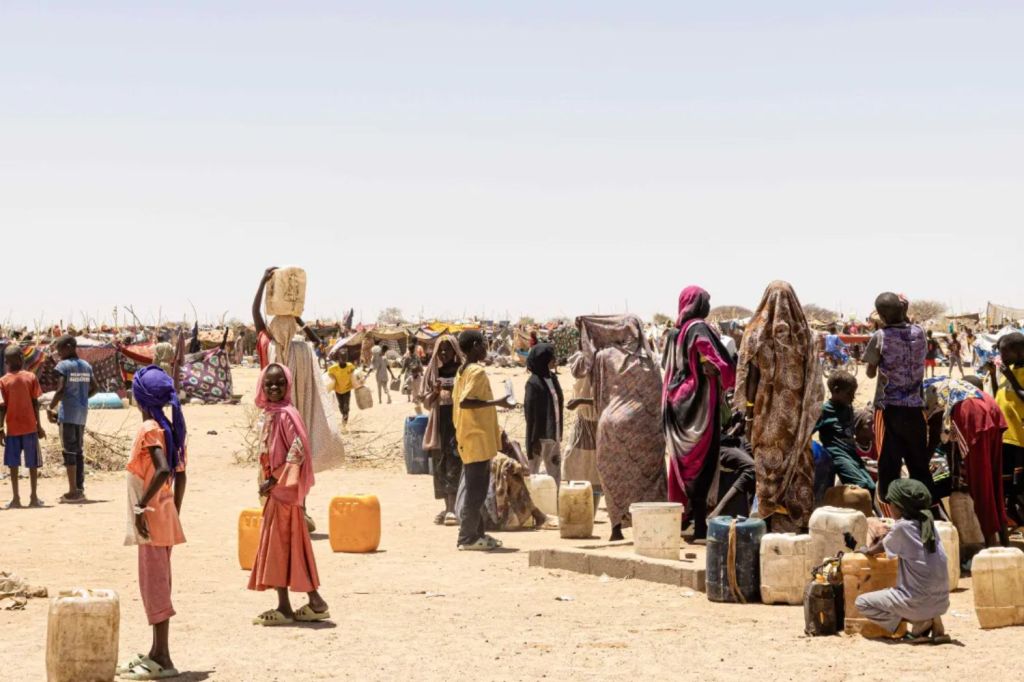
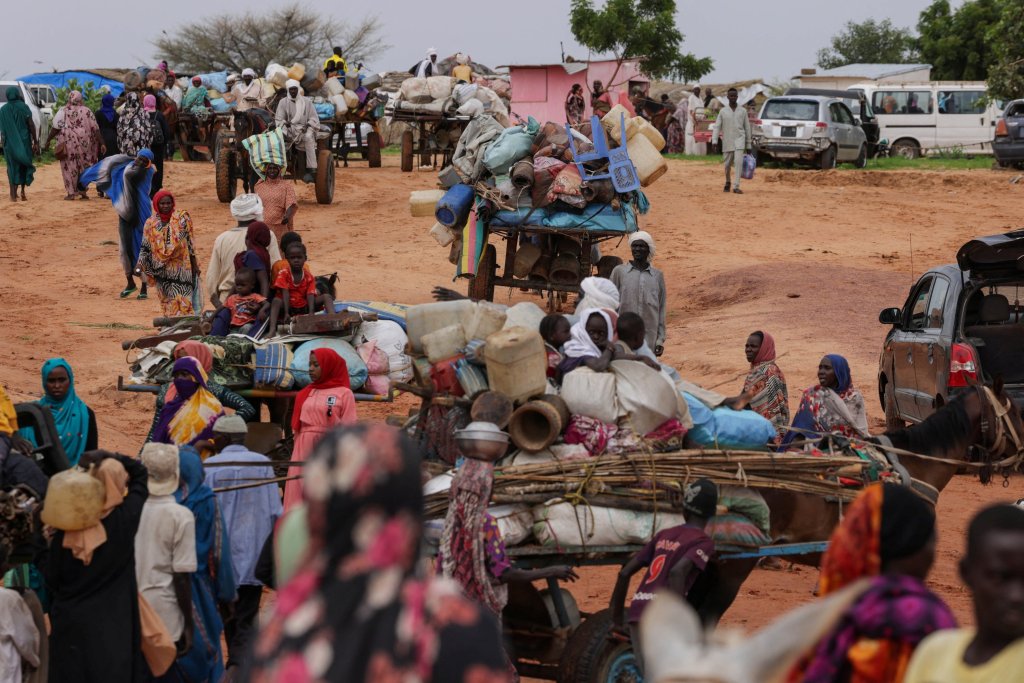
Lamola called Sudan the worst humanitarian crisis in the world, and he is right. Yet Sudan’s head of state never reached the podium. The United States withheld a visa for army leader Abdel Fattah al-Burhan, and Reuters sources reported that it appeared to be conditioned on his accepting a 90-day ceasefire proposed by US adviser Massad Boulos. Guterres’s spokesman said the Secretary-General was deeply concerned and had raised it with US authorities. I have no sympathy for a general whose forces stand accused of grave abuses. But a host country using entry visas as leverage sets a precedent no African government should accept. The Headquarters Agreement exists so that access to the UN does not depend on Washington’s approval.
Ethiopia offered a different kind of silence. President Taye used his address to argue that Ethiopia cannot sustain its development without reliable access to the sea, framed as a regional project rather than a national one. The day before, Guterres had said he was gravely concerned by the rapidly deteriorating situation in northern Ethiopia, including the seizure of the Mekelle, Axum and Shire airports and intensified fighting in and around Tigray. In the coverage of Taye’s speech that I reviewed, Tigray does not appear. When the Secretary-General is warning of a wider war inside your country, the podium is the place to address it.
On Gaza, Mahama accused the international community of hiding behind diplomatic euphemisms while also condemning Hamas’s acts of terrorism. South Africa said Israel’s violations constitute genocide. Nigeria went the other way: its national statement focused on terrorism and insecurity and did not mention Palestine. Africa’s unity has limits.
Who wasn’t in the room
Nigeria’s president sent his deputy. Cyril Ramaphosa did not deliver South Africa’s general debate address, contributing through a pre-recorded message to an inequality event instead. Félix Tshisekedi skipped the week altogether. Sudan’s leader was kept out. None of the three Sahel leaders came.
What was missing, and what was worse than missing
In my first piece, I called the xenophobic attacks on African migrants in South Africa a shame, all the more so because South Africa hosted the original Durban conference. So I read Lamola’s Durban passage closely. He reaffirmed South Africa’s commitment to confronting racism and xenophobia through its Constitution and institutions, then pivoted to calling irregular migration a shared responsibility of all countries. That is a policy line. It is not an answer to Africans being chased from their homes and businesses on African soil. The only leader I found who named the problem head-on was Mahama, who warned that when belonging is weaponized for political expediency it becomes nativism, chauvinism and xenophobia.
The Sahel statement went in the opposite direction, and it deserves to be read carefully. The three juntas confirmed that they have formally notified their withdrawal from the Rome Statute, citing selectivity and politicization. Their slogan: “International justice, yes; variable-geometry justice, no.” They described human rights scrutiny of their emergency measures as partial and selective, said they accept impartial review but reject “political trials”, and attacked the European Parliament for its resolutions on the Sahel. They also argued that the first human right is the right to life.
Some speeches did turn the mirror inward. Mahama told fellow leaders to put their own houses in order: “Whoever comes into equity must come with clean hands.” Lamola called for protecting international justice institutions from sanctions and intimidation, a welcome line while the ICC is under attack.
Ruto made the same point about international law being invoked loudly in one crisis and ignored in another. But leaving the only permanent international criminal court is not a cure for selective justice. It guarantees no justice at all for victims in the Sahel, including victims of abuses by state forces and allied militias. The answer to a court that is too weak on the powerful is a stronger court, not an exit. The same statement that demanded an end to double standards asked the world to trust governments that no longer allow independent international scrutiny. Africans deserve better than that trade.
Across the addresses I reviewed, the shrinking space for journalists, activists and opposition voices on our own continent barely featured. We can’t credibly demand a fairer global order while tolerating unfairness at home.
What I’ll be watching
Bio’s deadline for a consolidated reform model before this session ends, and whether the AU finally agrees on who would take Africa’s seats. Whether the Borrowers’ Club gets real members and rules, starting at the IMF and World Bank Annual Meetings in Bangkok next month. Whether “process at home” produces mining contracts that citizens can actually see. Whether the Sahel states’ ICC exit is matched by credible national accountability, or simply by less of it, and whether Mali’s accusations are ever put before an independent inquiry. And whether Ghana’s AU chairmanship in 2027 turns this week’s words into a continental strategy.
Africa has been permanently discussed for eighty years. This week it spoke up, loudly and with unusual coherence. The next twelve months will show whether anyone was listening, and whether we were listening to ourselves.

