How should Africa’s development be financed?

Colleagues & Friends: You are all invited tomorrow to join us physically of virtually on twitter. Please share this advisory widely!

*** Media advisory for Tuesday, May 19 2015***

How should Africa’s development be financed?

Grand Debate will build consensus on African priorities before FfD3

WHAT: Oxfam and the African Union, as part of the Fridays of the AU Commission regular meeting schedule, invite media to a public discussion on what should be African priorities at the UN Third Conference on Financing for Development (FfD3) scheduled less than eight weeks from now in Addis Ababa.

Discussants will include diplomatic representatives from AU member states and other continents, AUC, Pan-African institutions such as UNECA, African Development Bank (AfDB), Pan-African Parliament and Regional Economic Communities (RECs), multi-lateral and donor agencies, African civil society organizations (CSOs), international non-governmental organizations (INGOs), academia, and community-based organizations.

The July FfD3 negotiations by member states must define innovative ways of mobilizing resources to drive development while addressing extreme poverty, inequality and underdevelopment – the framework to finance the post-2015 sustainable development goals (SDGs). Proposals may include domestic resource mobilization and tax reform, new commitments to Official Development Assistance (ODA), global changes for debt and macroeconomic policies, climate change financing, the role of private sector finance in development, and monitoring mechanisms to ensure commitments are met.

Oxfam is organizing this event to encourage the mobilization of all constituencies towards FfD3.

WHO: Speakers who will be available to meet with and answer questions from the media are:

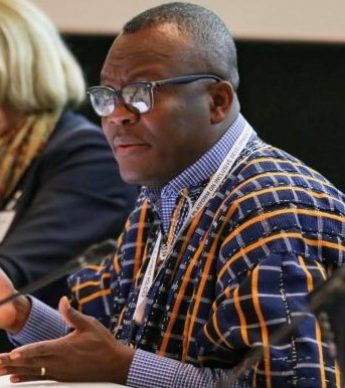
  • Mr. Charles Akelyira: Chief Executive Officer, the Savannah Accelerated Development Authority & Commissioner: Ghana National Development Planning CommissionFormer Director of the United Nations Millennium Campaign for Africa
  • AUC Representative, presenting the results from the FFD African Regional Consultation 2015
  • Dr. Vanessa Inko-Dokubo, Oxfam Pan Africa Policy Advisor on Extractive Industries
  • Dr. Réné Kouassi, Director of Economic Affairs, African Union Commission
  • Mr. Desire Assogbavi, Head of Office, Oxfam International Liaison Office to the African Union (Moderator)

These speakers may be available at other times for interviews. Please contact us to arrange

WHEN: Tuesday, May 19, 2015 14:00 – 18:00 pm

WHERE: AU Commission Headquarters, New Builing, Addis Ababa http://ea.au.int/en/sites/default/files/announcement%20EN%20final_rev1.pdf

Please ask questions during the Debate online using #FFDdebate and follow @assodesire, @Oxfam_AU, @palabanapalms, @Octavio_diogo

Media Contact: Sue Rooks sue.rooks@oxfaminternational.org +1 917 224 0834

Why Should Africa Join the Arms Trade Treaty? – My Speech to African Ambassadors today

“African States and CSOs Consultation on the Arms Trade Treaty”

Why Should Africa Join the Arms Trade Treaty?

Opening Speech by Desire Assogbavi

Head of Oxfam International, Liaison Office to the African Union

Friday 15th May, 2014 – Radisson Blue Hotel, Addis Ababa

IMG_2379

Your Excellences, Ladies and Gentlemen

Welcome and thank you for joining us today in this informal discussion on the ATT co-hosted by Oxfam and Control Arms with the Support of PAX

Arm violence is having a huge impact on our continent. The costs of this violence can be found not just in the many innocent people killed or injured by arms, but also in the impact on the society more broadly. It undermines economies, over-burdens healthcare systems, causes the displacement of entire communities and disrupt education for millions of children. Some of this violence is being perpetrated with an existing pool of weapons, fresh supplies of arms and ammunition, flood into Africa on an almost daily basis.

95% of the weapons being used in Africa’s conflicts are made outside the continent. Greater efforts must be made, to prevent the irresponsible transfer of weapons fuelling Africa’s conflicts and poverty… Today The universalization and the implementation of the  ATT is the solution.

A commentator noted that, bananas, tomatoes and bubble gum are more restricted in markets than the trade of AK-47. Africa should aim for a universal ratification of the Arms Trade Treaty, and for its robust implementation, through regional cooperation.

Although there are many continental and regional agreements on arms in Africa, the globalization of the arms trade will best be controlled through

the Arms Trade Treaty (ATT) that came into force in December 2014.

The ATT binds exporters and importers and put firm regulations on the global, regional and national circulation of arms to minimize the impact of conflicts.

The unregulated trade in arms aggravates poverty and undermines our development goals.

We believe that African nations can contribute to the effective regulation of arms through ratifying, acceding to and implementing the ATT. This will lead to more effective governance of arms and security forces, reduce corruption and arms diversion, and help prevent arms entering illegal markets.

In addition, such action will help build a global practice for the effective control of arms transfers, and force sceptic states like Russia, the US and China to comply with the ATT in order to continue sales to African ATT member States. Signing and Ratifying the ATT alone will not bring peace to Africa but it will build a voice against uncontrolled arms and limit the horrifying effects of conflicts.

Insecurity in connection to arms has been one of the prime concerns of the AU. The initiative and framework of Silencing the Guns by 2020, and its inclusion with the AU vision 2063,  illustrates a strong commitment to control flow and unauthorized use of arms in the continent.

Oxfam is keen to work with the AU on ensuring that Africa becomes a leader on arms control, not just within the continent but across the world.

Africa’s place in ATT global forums awaits to be maximised but this will not happen without joining the Treaty.

So today, we would like to:

  1. Update you on the Arms Trade Treaty process
  2. Discuss opportunities and challenges on the ratification and implementation of the ATT,
  3. Draw roadmap to the first Conference of State Parties of August 2015

African States played an important role in the negotiations and the adoption of the ATT. Our continent insisted on the inclusion of ammunition in the treaty and supported calls for strong provisions based around international human rights and humanitarian law. Many African states played a pioneering role in making the ATT happen. Notably, Africa lobbying of China was decisive in achieving the inclusion of Small Arms and Light Weapons in the categories of arms controlled under the treaty. Forty seven African States voted in favour of ATT at the UN General Assembly.

However, despite this level of support, Africa is currently under-represented amongst ratifying States, with 10 States only having ratified the Treaty as of April 2015. In the course of consultations, with your support, we identify the reasons behind the modest number of countries ratifying the ATT and use this information to develop strategies to match each particular situation to contribute to your efforts towards a safer Africa.

If Africa remains largely outside the Treaty, the voices of the states and the voices of the people will not be heard in the current negotiations of key issues in the framework of the Preparatory Committees.

I would like to share with you some figures reflecting the cost of conflicts in Africa

The Cost of Peace Keeping Operations in Africa

MINUSCA: CAR: annual approved budget (07/2014– 06/2015): $628,724,400

  • United Nations Multidimensional Integrated Stabilization Mission in Mali (MINUSMA): Approved budget: (07/2014– 06/2015): $830,701,700
  1. United Nations Organization Stabilization Mission in the Democratic Republic of the Congo (MONUSCO): Approved budget (07/2014 – 06/2015): $1,398,475,300
  2. African Union-United Nations Hybrid Operation in Darfur (UNAMID): Approved budget (07/2014 – 06/2015): $1,153,611,300
  3. United Nations Mission in the Republic of South Sudan (UNMISS): Approved budget(07/2014 –Approved budget (07/2014 – 06/2015): $493,570,300

I am sure you would agree with me that Africa must join the ATT.

I thank you.

IMG_2459

Burundi: The African Union Must Catch Up Quickly!

La version en Français ici: wp.me/p4ywYV-4J

The situation in Burundi is becoming more and more serious. Police is firing live ammunitions at protesters; armed militias are terrorizing citizens. 24,000 people have already fled the country, including mayors of some areas … At least 12 people have died dozens were seriously injured and over 600 arrested and detained in inhumane conditions…

Yesterday, the Vice President of the Constitutional Court of Burundi Sylvère Nimpagaritse denounced pressures and death threats on his person during the assessment of the constitutionality of 3rd term of the incumbent president. He then fled the country. During deliberations of the Court, while 4 out of 7 members thought the 3rd mandate is unconstitutional, the court deferred its decision. Thus, the death threats started by the government … It is now clear that this court is no more credible and none shall consider its decisions.

The African Union Must Catch up

In its communiqué of 28 April 2015, The Peace and Security Council (PSC) of the African Union has merely ” took note that the Burundian Senate has seized the Constitutional Court on the interpretation of the Constitution regarding the eligibility of President Pierre Nkurunziza’s candidature for re-election and urged all Burundian stakeholders to respect the decision of the Constitution”. The Chairperson of the AU Commission took the same position on her Twitter account a few days before… I had already found this position as weak and ineffective in view of the gravity of the situation on the ground, being aware of the strong influence of the political authorities on the State institutions. Limiting the solution of the Burundian problem to the decision of the current Constitutional Court is simply paving the way for a constitutional coup by the current authorities.  Everyone knows about this practice in many countries in our continent.

Given the gravity of the situation in Burundi, it is no longer enough to just ask the “stakeholders to respect the constitution and the Arusha Agreements.” The African Union must be clear and state that a 3rd term is purely against the constitution and the spirit of the Arusha Agreement.

I believe that the African Union has a certain influence on Burundi. In the past, the AU has led with success a peacekeeping operation in Burundi. The AU has invested its troops and resources in Burundi. Today, the African Union must avoid hesitation and be categorical. We can no more allow a new civil war in Burundi. Our continent has no mean to handle it. We already have too many problems to solve; too many challenges to face. The last civil war in Burundi killed 250,000 people.

Now that the Constitutional Court has no more credibility, the African Union and the PSC must seek advice of their legal bodies on the constitutionality of the 3rd term in Burundi in order to fix this issue once and for good. It is a historic responsibility. Yesterday our continental body missed similar opportunity in Burkina Faso until citizens ousted their dictator. Today a new opportunity shows up for the African Union to join the rest of the world and isolate President Nkurunziza.

The risk of a military coup in Burundi is very high right now. We should not get there. Africa must stop projecting the image of a continent with brutal methods. Political isolation of President Nkurunziza by the African Union will certainly force him to pull back…

The Peace and Security Council must meet urgently to denounce the interference of the Burundian authorities in the functioning of the Constitutional Court, dissociate itself from any decision of a court being ordered by the political power and declare the 3rd term unconstitutional and against the Arusha Agreements.

Note: My opinions are absolutely personal and do not commit my organization

L’Union Africaine doit Sauver le Burundi en Urgence !

English version here: wp.me/p4ywYV-4S

La situation au Burundi devient de plus en plus grave. La police tire à balle réelle sur les manifestants, les milices armées par le pouvoir en place terrorisent les populations. 24,000 personnes ont déjà fui le pays y compris des maires des localités… Au moins 12 personnes ont déjà trouvé la mort des dizaines sont gravement blessées et plus de 600 personnes arrêtées et détenues dans des conditions inhumaines…

Hier, le vice-président de la Cour Constitutionnelle du Burundi Sylvère Nimpagaritse a dénoncé des pressions et menaces de mort sur sa personne dans le cadre de l’évaluation de constitutionalité de la 3eme candidature du président sortant, et a fui le pays.  Lors des délibérations de la Cour, alors que 4 membres sur 7 pensaient que le 3eme mandat est inconstitutionnel, la cour a reporté sa décision. Dès lors, les menaces de mort ont commencé de la part du pouvoir en place… Il est désormais claire que cette cour n’est plus crédible et personne ne dois plus prendre en compte sa décision.

L’Union Africaine doit vite se rattraper !  

Dans son communique du 28 Avril 2015, le Conseil de Paix et de Sécurité de l’Union Africaine s’est borné à « prendre note de la saisine de la Cour Constitutionnelle par le Sénat burundais pour l’interprétation de la Constitution du Burundi en ce qui concerne la recevabilité de la candidature du Président Nkurunziza pour réélection », en demandant aux parties prenantes burundaises de respecter la décision que prendra la Cour Constitutionnelle. La Présidente de la Commission de l’Union Africaine a pris la même position sur son compte Twitter quelques jours au paravent… J’avais déjà jugé cette position de faible et inefficace eu égard à la gravité de la situation sur le terrain étant conscient de la mainmise des autorités politiques  sur les institutions de l’Etat.  Ramener la solution Burundaise à la décision de la « Cour constitutionnelle c’est tout simplement paver la voie au coup d’état constitutionnel du Président Nkurunziza ; tout le monde connait cette pratique de certains pouvoirs africains.

Face à la gravité de la situation au Burundi, il ne suffit plus de demander  aux «parties prenantes de respecter la constitution et les accords d’Arusha». L’Union Africaine doit être claire en déclarant que le 3eme mandat est inconstitutionnel et contre les accords d’Arusha.

Je crois que L’Union Africaine a une influence certaine sur le Burundi, l’Union y a mené dans le passé, avec un certain succès des opérations de maintien de la   paix, l’Union y a investi ses hommes et ses ressources. Aujourd’hui,  l’Union Africaine doit éviter la tergiversation et être catégorique. Il n’est pas question de laisser une nouvelle guerre civile se déclencher au Burundi. Notre continent n’a pas de moyen pour la gérer. Nous avons déjà trop de problèmes à régler ; trop de défis à relever. La dernière guerre civile au Burundi avait fait 250,000 morts.

L’Union Africaine et le CPS devraient avoir demandé l’avis de leurs organes juridiques sur la constitutionalité du 3eme mandat au Burundi et en découdre une fois pour de bon. C’est une responsabilité historique. Hier, notre institution continentale a raté l’occasion de s’imposer au Burkina Faso jusqu’à ce que les citoyens Burkinabè aient chassé eux-mêmes leur dictateur. Aujourd’hui une nouvelle chance s’offre à l’Union Africaine  de se joindre au reste du monde pour isoler le Président  Nkurunziza.

Le risque d’un coup d’état au Burundi est très grand en ce moment. Il ne faut absolument pas en arriver. L’Afrique doit cesser de projeter l’image d’un continent aux méthodes brutales. Une isolation politique  et catégorique du Président Nkurunziza par l’Union Africaine pourra certainement le faire fléchir….

Le Conseil de Paix et de sécurité doit se réunir d’urgence  pour dénoncer l’entrave des autorités burundaise au fonctionnement de la Cour Constitutionnelle, se désolidariser de toute décision d’une Cour aux ordres du pouvoir politique et  déclarer le 3eme mandat inconstitutionnel et contre les accords d’Arusha.    

NB : Mes opinons sont absolument personnelles et n’engagent en rien mon organisation.  

Burundi is burning – Act NOW!

We cannot afford another conflict in Africa at this time. Burundi came from very far and it took a lot of resources, energy and human life to get to the Arusha Peace Agreement. The whole Africa, the African Union and other International actors must standup and be clear on this: No possibility for 3rd term! Please, no more diplomatic or ambiguous language! Citizens are being killed in Bujumbura now; the risk for another human made disaster is very high. Our continent already has enough challenges to face.

The Peace and Security Council must clearly say NO to a 3rd mandate. We have no resources for an additional peace enforcement mission. African cannot continue wasting its resources to make peace while it is easier to abide to democratic principles and our shared values. We need our resources to boost development and take care of our populations, provide free universal health care, promote education, science and technology etc. in order to reach our 2063 targets.

Me must not keep silence and let innocent populations being killed over and over again because of the selfishness of a few leaders. A strong position of the African Union against Nkurunziza’s move for a 3rd term can have an influence. Burkina Faso was a missed opportunity; our Continental Body must seize this one…

Burundi may not be like Burkina Faso because a lot fire arms are circulating there. We may not be able to stop it once it gets worst and the whole region will be affected… So, no time to waste – Act now !

Can the Closing Space for CSOs in Africa be reopened?

By Désiré Assogbavi

This article was published in GREAT Insights Volume 4, Issue 3 (April/May 2015).

Can the closing space for CSOs in Africa be reopened?

The African Union Agenda 2063 recognises that people’s ownership and mobilisation is needed as one of the critical enablers to concretise the seven aspirations of what can be called the business plan of Africa. However, as the Agenda is being launched, citizens’ and civil society organisations’ space is being terribly challenged in a growing number of countries on the continent.


Active citizens for effective and prosperous states


The positive and inclusive economic development that we are aspiring to in Africa requires a vibrant civil society and citizens taking a participative stand in it. Active citizens are fundamental prerequisites for the effective states that we need to change in Africa in order to meet the 2063 outcomes. It is therefore important that the issue of closing of CSOs’ space is dealt with at all levels and now urgently at continental level with a strong role from the African Union (AU) itself.

In a prosperous and democratic society, state and vibrant civil society are two sides of the same coin and must complement each other. Civil society must be seen as a reservoir of social capital capable of contributing to all aspects of the country’s development including health, education, peace, security etc. The role and influence of civil society in national and regional policy making does not diminish the relevance of governmental or inter-governmental processes —rather it enhances it. Nor does it lessen the authority of governments. While civil society can help to put issues on the agenda, only governments have the power to decide on them. The constructive engagement of civil society can reinforce deliberations by informing them, sensitising them to public opinion and grass-roots realities, increasing public understanding of decisions and enhancing accountability.

On peace and security for example, because of its immersion within the society, civil society has vocation and the ability to contribute to peace building initiatives and social cohesion. Civil society has shown its capacity to organise collection, analysis and evaluation of first-hand information allowing the identification of the sources of potential tensions as well as emerging conflicts. Whereas traditional conflicts were well understood by diplomats and specialists in political science, adequately addressing new conflicts requires much more on-the-ground understanding, new skills of social and cultural analysis, the active involvement of communities and their leaders, links to vulnerable groups, bridges into mainstream development processes and new ways of working. Most of the time, civil society organisations have unique capacities in all those areas.


Increased control and undue restrictions on CSOs


Unfortunately, in a growing number of African countries, there is increased control and undue restrictions on the formation and the activities of CSOs.

A common trend on this is to use the issue of foreign funding received by national civil society groups while there are no alternatives proposed by the government. Governments raise a variety of other reasons to justify the restrictive regulations. Some of the concerns are understandable, especially those genuinely linked to security, terrorism, religious extremism and other unlawful activities, but the majority are not and rather reflect a wiliness to shut down legitimate claims for fundamental human rights. In some cases even criticisms and alternative proposals for economic development and social choices are not tolerated. This is happening not just in Africa but globally. Some governments perceive CSOs as economic saboteurs, inciters of violence, or an extension of political opposition parties or even agents of foreign interest. Unfortunately in many cases, reacting to the shrinking of CSOs space, the international community and partner countries balance their interventions in preserving fundamental rights with competing economic and security interests. This is an additional wakeup call for citizens, especially in Africa, that the fight for civic space must be grounded within the continent at national, sub-regional and continental level.


Civil society space at regional and continental level


Regional civil society and coalitions targeting regional and pan African institutions have an important role to play as a complement and a backup to national groups. They are less exposed to risks compared to national CSOs and in many cases they can really contribute, influence and pressurise member states through the regional and continental bodies on regional policy issues. Regional Economic Communities (RECs) react differently to CSO/non-state actor engagement. ECOWAS for example seems to be more open to CSOs than the other RECs but the general trend is more encouraging at regional than at national level.

Despite the recent polemic of the closure of the mid-year African Union Summit to observers including non-African countries but also CSOs, I have observed an increased participation of non-state actors, CSOs and coalitions in the policy process of the African Union over the last five years. Technical experts and ministerial policy debates have been incredibly opened to CSOs as observers all year long in between the bi-annual Summits of the AU. In 2014, the African Union Commission even authorised non-state actors to hold a Continental Conference on Agriculture and Food Security at the AU headquarters. At the same time, Addis Ababa-based country representatives and members of the Peace and Security Council have been open to meet and engage with various CSO groups to discuss important policy issues. Part of the mandate of Oxfam Liaison Office to the African Union is to support this engagement by CSOs.

My office, in the framework of its Active Citizenship programme sponsors over 100 CSOs representatives each year to engage with various organs of the AU. This includes an annual training on Understanding the African Union jointly conducted with the AU Commission. But despite its importance, regional and continental engagement should not replace national CSO spaces, but rather complement it.


Reopening CSOs at national level: The African Union must step in


African countries can only gain from their definitive move towards economic and social development in allowing a genuine participation of all stakeholders, but too many countries on the continent, members of the AU, have adopted and continue to adopt national legislations reducing civic space. It is then important that the AU steps in on this unfortunate trend to seriously question the shrinking of civil society space in a number of its member states and stop it. Agenda 2063 rightly said that the realisation of the agreed aspirations needs the ownership and mobilization of African People (…) in their various formations”. This must start at national level. While discussions are currently happening on the implementation plan of Agenda 2063, the AU must consider adopting a special declaration to stop the closing of civic space in its member countries. The African Year of Human Rights (2016) declared by the Assembly of the Union is another opportunity for the AU to boldly free CSO spaces in its member states. This will be a precious gift to African citizens that will make them proud of the continental body. Of course the implementation of or the compliance to such a declaration by member states is another issue to question but this can be the starting point of a process towards a stronger policy framework and commitment of the AU members to ensure the realisation of Agenda 2063. The African Commission on Human and People Rights’ existing working group on CSOs’ space could also play an important and decisive role in tracking those hostile CSOs’ laws and bring them to AU policy organs. In fact, the AU task force in charge of the implementation of Agenda 2063 must take this issue seriously into consideration.

desire assogbavi photo

Désiré Assogbavi is the Resident Representative and Head of Oxfam International Liaison Office to the African Union.

The views expressed in this article are those of the author and do not necessarily represent the views of Oxfam.


24th African Union Summit: High Expectations !

By Desire Assogbavi, Head of Oxfam Liaison Office to the African Union

The Heads of State and Government of the 54 Member States of the African Union are gathering this week in Addis Ababa for the 24th Ordinary Summit of the African Union. The year 2015 has been declared by the Assembly of the African Union as the “Year of Women Empowerment and Development towards Africa’s Agenda 2063”. Both bi-annual Summits of the AU will then be organized around this theme. In practice, the theme will be symbolically launched during this Summit but actual discussions on the theme will happen in June/July.

This week Oxfam has been following a number of significant issues dominating the AU Summit agenda reflecting the high expectations from African citizens.

Ebola Crisis: Ebola has already claimed more than 8,000 lives in Africa. Currently the AU response is on the right path. The recent move of the AUC Chairperson Mrs. Dlamini-Zuma to call for funds from the private sector within the continent is excellent, but there is a long way to go with the number of cases still increasing and West African economies being extremely hard hit. Beyond the transmission rates, the disease has caused a crisis across the non-Ebola health sector, and major concerns around food security, livelihoods, vulnerability and long term economic impacts are now surfacing. Will the AU take action to prioritize prevention of further infections?  Can the AU member States revive the AU’s Abuja Declaration by which they have committed to allocate 15% of their national budget on health? Beyond containing the epidemic, efforts are needed to begin building stronger and more resilient public health systems. The Assembly should call upon all member states to prioritise free public health care, and increase public expenditure on health care to achieve targets as a minimum.  We’ll be looking forward to seeing the AU Commission’s report this week on the crisis and what decisions are taken.

At a bare minimum, the Summit must strongly call on all member states to intensify their contribution to the fight Ebola. The setting up of the African Centre for Disease Control and Prevention must be speedy.  We need to improve our collective response and make sure this never happens again. This can only be realized through a partnership that includes communities, civil society alongside private sector. The Summit must encourage member states to work proactively to build this partnership.

African Union Agenda 2063: The drafted 50-year plan of the continental body is expected to be adopted during the January Summit. A previous decision taken in Malabo this year by the Executive Council strongly recommended to member states to consult nationally on this important plan but this had not happened in many countries.

There are some bold targets in this visionary document such as the eradication of poverty in one generation by 2025, the elimination of hunger and food security by 2025 including reducing imports of food by 50% and ensuring that women farmers access at least 30% of agricultural financing,            silencing all guns by 2020 to end wars, conflicts, human rights violations, gender based violence and genocide, achieve gender parity in five years in all public & private institutions, abolish visa requirements for all African citizens in all African countries in 3 years, doubling of intra-Africa trade  from 12% to 24% in seven years and by 50% by 2045, among other elements.

This vision is definitely a ground-breaking achievement for Africa. It will enable Africa to give direction to its citizens and all public and private actors in its territories. It will enable Africa to speak with one voice, and negotiate with clarity on what the continent seeks to achieve in all partnerships it engages in.

The milestones and targets articulated in Agenda 2063 are an important catalyst for communicating the urgency required to implement the plan – however much has to move/happen to meet some of the milestones. Are African governments really willing to resolve the immigration issues so that Africans can travel to any African country without requiring a visa in three years? The only regions that have achieved this are ECOWAS and EAC.

Alternative Sources of Financing the African Union: There is still no consensus among AU Members on how to stop or at least to reduce the current financial dependency of the African Union on external donors. Currently, external donors pay 72% of all AU expenses (including peace and security budget). Proposals made by President Obasanjo and a report of the UNECA are the following:

$2 hospitality levy per hotel stay and a $10 airfare levy on international flights originating in or out of Africa (Obasanjo) and a half a cent per SMS levy.

If adopted and implemented, these proposals will theorically generate over 1.8 Billion per year for the AU but how can all this be implemented in practice? Will these be collected directly from the sources or will Member States be able to gather these funds and asked to hand them over to the AU? Are there not more options available from other sectors to generate what funds are needed? Is the SMS option sustainable at a time when many people are moving to free social media such as Viber and What’s Up to communicate? And is the African Union Commission in its current configuration capable of absorbing more than its current budget? But the goal is admirable –   the African Union cannot continue to depend financially from outside donors and keep Africa’s Agenda on track. Something bold and major must be decided…

Presidency of the African Union for 2015: The Chairmanship of the AU shall normally go to Southern Africa for 2015 and the established tradition is that the region presents a candidate. It is vital that the selected Chairperson of the African Union symbolizes and reflects the shared values of democracy, respect for human rights and accountability adopted by the Union.

Citizens’ Participations: Observers (including citizens and CSOs) have been invited for this January Summit- this is great news!!!  In June last year, the African Union did not invite African non-state actors to the Summit held in Malabo, Equatorial Guinea. There is an unfinished discussion on whether observers should be invited to both the January and the July Summit of the Union. There are a growing number of member states that support the idea that observers are to be invited only to the January Summit in order to reserve the July Summit for closed discussions within member States only. CSOsare not in favour of any restriction of access to the Summit. This 24th African Union Summit must clarify this policy.

We should however note our appreciation that, in between the AU summits, other policy spaces including experts and ministerial meetings have been more and more open to non-state actors from civil society in recent years.

Peace and Security: The Summit will review the state of peace and security in the continent and will adopt decisions on each situation. Hot spots include South Sudan, Sudan, DRC, Somalia, CAR and Mali. It is also expected that terrorism including the situations in Nigeria and Kenya will come up. We are hoping for real progress on the situation in the Great Lakes region as it will be discussed in a special meeting on the DRC Framework Agreement at Heads of State level.

On DRC, there is a need for a credible, accountable disarmament, demobilisation, and reintegration process for FDLR which requires stronger action from the government. While working towards its goal of silencing the guns by 2020, the AU must intervene to ensure the protection of Congolese civilians during the recent political unrest.

A High Level dialogue, to include space for CSOs, under the auspices of the UN Secretary General’s Special Envoy for DRC and the Great Lakes must happen.

It is also important to cut the economic channels which allow FDLR and other armed groups to prolong their activities, in accordance with the UN arms embargo, and strengthen accountability mechanisms within the PSCF to ensure signatories uphold their responsibilities.

In Central Africa Republic, there is a concern that since the handover of peacekeeping to the UN, CAR seems to have fallen down on the AU agenda. This is a missed opportunity to ensure sustainable peace and stability in CAR. Atrocities are still being committed against civilians outside the capital of Bangui. AU must remain strongly engaged in CAR to bolster the UN’s intervention.

Illicit Financial Flows and unfair exploitation of mineral resources of Africa: Illicit outflows from Africa are estimated at almost$ 50-60 billion per year. This represents 1 billion per week leaving the continent through extractive industries, tax evasion and trade mispricing. President Tabo M’beki, Chair of the AU High-level Panel on Illicit Financial Flows from Africa is now confirmed to present a report on the issue on January 31st. This issue should be closely tied to AU positions on financing for the further development of the continent as it could mean solutions to numerous African problems.

Citizens are expecting African leaders to act boldly!

African Union Summit: What to expect in January 2015?

An updated version…

Desire Assogbavi's avatarAssodesire

By Desire Assogbavi

The year 2015 has been declared by the Assembly of the African Union as the “Year of Women Empowerment and Development towards Africa’s Agenda 2063”. Both bi-annual Summits of the AU will then be organized around this theme. In the practice, the theme will be symbolically launched during the January Summit but a number of related activities will be organized throughout the year 2015. However, some other burning issues will dominated the various policy discussions during the Summit.

The Summit will be as usual organized in 3 steps:

– The Permanent Representatives Committee (Ambassadors): 23 – 24 January

– The Executive Council (Ministers of Foreign Affairs): 26 – 27 January

– The Assemble of the AU (Heads of State and Government) 30 – 31 January

A number of other parallel/side meetings will also normally be held by states and non-state actors.

What is likely to dominate the…

View original post 945 more words

The African Union Summit Process in 10 Questions

The African Union Summit Process in 10 Questions

The African Union Ordinary Summit is the gathering of all policy organs of the African union. Two ordinary Summits are held every year and each Summit consists of three 2-day meetings that always take place in the same sequence. Usually, there are 1 or 2 days breaks between these meetings. The Permanent Representatives Committee (all ambassadors representing their countries to the AU) meets first, followed by the Executive Council (Ministers of Foreign Affairs) and then the Assembly of Heads of State and Government.

When are the AU Summits Organized?

As a rule, the January Summit takes place at the AU headquarters in Addis Ababa, Ethiopia. The June – July Summit is held in a different Member State each year. The AU can also convene extraordinary Summits at the request of the Chairperson or a Member State with approval by a two-thirds majority of the Member States.

Who Participates in the AU Summit?

The AU Summit gathers up to 4,000 delegates, observers and media from the 54 African Countries, AU organs, partners countries, UN Agencies, other International Organizations and NGOs

How to Obtain Accreditation to the AU Summit?

Accreditation to a summit is a separate process from obtaining observer status with the AU. It is not necessary to have observer status to be accredited to a summit. Accreditation starts three months before a summit. If the summit is taking place elsewhere than Addis Ababa, the host government will usually establish a separate website with protocol information and application forms. This information is normally also posted on the AU website. There are different types of accreditations:

Delegate – Governments of Member States

Observer – NGOs, non-African governments, UN agencies

Staff – Host government, AU Commission and other AU organs

Media – national and international press

Special Guest

Security etc.

Civil society organisations wishing to obtain accreditation to a summit should request accreditation from CIDO (CIDO@africa-union.org) at least 3 months in advance of the Summit. Other AU Directorates and Departments may also forward the names of selected partner organisations to be accredited as observers. The Office of the Chairperson of the AU Commission, where CIDO is located, draws up the final invitation list. Two types of badges are required for the summits. One is a security badge bearing your photograph. The other type (conference badge) indicates the meetings which you can attend. Normally only 2 of the later are given per organization. The Security badge allows access to all open area where you can meet delegates for interactions.

What does Observer Status Mean at the AU Summit?

Observer status at a summit does not give speaking rights, or even the right to attend more than the opening and closing ceremonies of the Executive Council and Assembly sessions but productive lobbying and advocacy can be done in the corridors of the meeting venues and at the parallel side meetings. However, the AU Commission mentions on the invitation letters that observers can be authorized to participate in working sessions of the Council dealing with agenda items of which the AU Commission considers that they are concern.

The PRC and Executive Council meetings may be more productive to engage than the Assembly of Heads of State meetings.

 How Decisions are taken at the AU Summit?

Decisions of the African Union Executive Council and Assembly are normally the result of work done months before each summit by the Commission and other organs, and in decision-making processes within individual member states. The majority of proposals presented to the Assembly have already been largely agreed before they are tabled at a summit. Documents adopted by the Assembly usually start life as a policy proposal from one of the AU Commission’s departments, from another AU organ or from a Member State. These proposals are debated in an experts’ meeting, whose members are nominated by Member States, and then in a meeting called for the relevant Ministers from Member States to approve or amend the experts’ proposals. With the exception of decisions with implications for the budget which are then considered by the PRC, the final documents from the ministerial meeting will go directly to the Executive Council and/or Assembly for adoption.

A group composed of 15 AU member states, supported by the AU Commission, form the Drafting Committee. On the basis of the various reports and recommendations from policy organs and AU members and the AU Commission, the drafting committee prepares decisions for the Executive Council and Assembly normally prior to the Summit. This draft is of course deeply debated and can be widely differ from the actual decision adopted. Reaching consensus, which is the preferred method of the AU, is not always easy; as some Member States attempt to influence the process in order to safeguard their national interests.

Are there any influencing opportunities at the AU Summit for Non State Actors?

Normally, there is very little room to catalyse deep policy changes at the Summit level only. Engagement must start from the birth of the process described above. However influence may happen on current or on-going issues or issues on which countries have failed to reach strong consensus during the process. The AU Summit presents also important opportunities for networking for further engagements and for media work to raise and draw policy makers’ attention on important and current issues. It is also a unique opportunity for organizations, donors and other personalities operating on a wide range of issues from the whole continent and elsewhere to be at the same place at the same time. Non-State actors can hold policy influencing side events during the AU Summit and have their delegates present at the AU Commission, UNECA and in various hotels where official delegates stay. A number of pre-summit consultations are held by CSOs including women groups. ECOSOCC and CIDO are also supposed to hold a CSOs pre-summit event but this has not been consistent in recent years.

What is the criteria for CSOs Accreditation at the Summit?

Access to AU meetings is not automatic. It is based on rules and procedures of the AU. Due to space constraint, the AU Commission makes choices based on the timing of application, role envisaged in the Summit, activities related to the themes of the Summit, history of association and institutional relation with the AU etc. So, not all applicants are accredited. Over the last few years, the number of CSOs invited has been increasing.

 Which Other Meetings are Held during the Summit?

 Other AU organs also hold official side meetings during summits, such as:

– The Peace and Security Council

– The African Peer Review Forum/Mechanism

– The NEPAD Heads of State and Government Implementation

– Sub – Committee etc.

How is Media Work Organized at the AU Summit?

The AU Commission always set up a high-tech press centre offering 24-hour internet facilities, daily press briefings, and press kits. NGOs can also request to use briefing rooms of the Commission to hold their press events. The Department of Information and Communication of the Commission helps to invite the Medias to all press events held at the Commission. Press events are an excellent way to reach policy makers during the Summit.

2015: Opportunities and Challenges for Africa and the African Union

By Desire Assogbavi

On the threshold of this New Year 2015 and on the eve of the Summit of policy and decision-making bodies of the African Union, I would like to share my analysis on the opportunities and challenges facing Africa for the next 12 months.

2014 is gone! Despite some progress in terms of growth it was an eye-opening year of a contradictory reality between the slogan of an Africa whose economies recorded the highest growth rates in the world and a strip of deep failings at many levels and which our continent has to look at seriously in 2015.

Economic growth was real and will continue in 2015 or at least will stabilize but its effects are still not distributed and have not benefited ordinary people. On the contrary, inequality has increased and the youth employment problem is not resolved. States, supported by experts from the African Union, the Economic Commission for Africa and the African Develop Bank should look for urgent and immediate solutions to the problem of inequality in Africa.

Ebola has brought to light the structural deficits of the affected countries but also and especially the fragility and the delusion of “African solidarity” … Ebola has already claimed 7,500 daughters and Sons of the continent in a very short time . The African Union was not prepared to respond to a major crisis such as Ebola and is still financially dependent on partners with 72 % of its expenses  paid from outside. The latest initiative of the African Union to mobilize funds in Africa is positive and should serve as an example to reproduce but the war against Ebola remains largely carried out and funded by external partners. My fear now is that all attentions being turned to Ebola, other diseases that kill 100 times more than Ebola will be forgotten for a time.

Ebola is a serious wake-up all for all African countries and institutions for a real re-prioritization of health. It is time to achieve the free universal health coverage in our countries. The African Union’s Abuja Declaration on health must now be put into action. We need healthy citizens to manage the development we are working for.

The growing attaks easily conducted by Islamists/terrorists show the deficit in leadership in our continent.   Nigeria,  the first African Power in several areas cowardly fled before the bandits …. Kenya is not doing better job to protect its citizens.

The conflicts in South Sudan and Libya have not found solution … we are not even close … There are no concrete signs of hope in the Central Africa Republic and very little progress has been registered in Mali. Africa must focus on the conflicts in 2015 while preventing others, especially those related to political governance to burst. Of course a big part of the continent enjoys peace and better governance over the last few years. We must preserve this.

In 2014, 3,000 of our citizens perished in the Mediterranean Sea … They were fleeing their own continent because life is too hard … Nothing concrete is being done from our side  to solve this problem.

The African Union has had hard time in front of the multiple conflicts mentioned above and our continent has more foreign intervention his the last few years than 20 years before. Apart from the United Nations operations, more than 20,000 foreign soldiers are currently in Africa for various reasons. There has been some progress in Somalia but it remains to be consolidated. The African Union forces have played a key role but US drones have helped tremendously.

The cleaning up of the AU Commission to ensure greater efficiency in its operation has not taken place, or at least is not felt as promised by its Chairperson Dr. Dlamini-Zuma. I think the civic space of citizens has been enlarged and available, far more than in the member states. Discussions on the vision for the next 50 years called Agenda 2063 are still on going. The agenda shall be adopted in late January with a focus on the priorities of the next 10 years.

The issue of exploitation of mineral resources is becoming more crucial. It is compounded by illicit financial flows amounting 60 Billion Dollars a year, leaving Africa illegally and fraudulently. This money could be used to finance development, reduce inequality and pay the debts…. Africa must move quickly in a harmonized process to control the exploitation of its resources. Our resources continue to be sold for cheap … and contracts are fanciful. The International Law Commission of the AU needs to address the issue of contracts. The Conference of Heads of State must take a firm stand for the Implementation of the “African Mining Vision”

Democratic Governance, the subject of higher risk for the Year 2015!

At least 15 crucial elections will be held in the following countries: Benin, Burkina Faso, Burundi, Central Africa Republic, Comoros, Cote d’Ivoire, Ethiopia, Guinea, Nigeria, DRC, Togo, Sudan, South Sudan, Tanzania, Chad, Zambia. The question of limitation of presidential terms will spice up some of these elections … and the risk is serious to see young populations, who can no more wait, to shout and express their anger. The African Union must tighten its belt in anticipation of such eventualities.

Climate Change Negotiations

Africa suffers the most of impacts of climate change. Effects include spreading of deserts, unpredictability of the seasons,   flooding, drought, diseases etc… Some African countries are even forced to divert funds from education and health project to face climate change mitigation issues.

African Governments must prepare a strong common position for the upcoming treaty and put their political weight in the system, start pushing for their position ahead of the Paris Diplomatic Conference in December 2015.

Since we lost Ethiopian Prime Minister Meles Zenawi, the then Champion of climate change issues for Africa, the momentum went down and this is a serious concern. CSOs must mobilize to support African leaders on this. The Tanzanian President  Jakaya Kikwete is now the Coordinator of the Committee of African Heads of State and Government on Climate Change. 2015 must be a Year for Action on climate change.

Integration: There are good and visible signs in some regions. West Africa is well  advanced but the East is catching up. This must be encouraged and duplicated in other regions. Kenya, Uganda, Rwanda, joined by South Sudan and recently by Ethiopia have embarked together in numerous economic/commercial integration projects. I don’t think  a speedy political continental integration is feasible overnight but rather a well managed economic integration that produces concrete results in favour of the citizens. The Africa Free Trade Area project must be fuelled. All these will lead automatically to a wider and comprehensive continental integration with time.

Civil society must be increasingly mobilized. The civic space is being diminished in many countries. We need to stop this trend. The African Union should help to do so. There should be a strong position of the AU on the matter. The AU Commission and some progressive states must take the initiative.

After several years of lethargy and failures, ECOSSOC, the Economic, Social and Cultural Council of the African Union has just woken up with the election of its second General Assembly: Good news !  We need to work with them, support them to ensure that the views of civil society, the affected populations, the youth, are heard in the decision making process of the African Union organs. Its composition will improve with time.

Follow me on Twitter @assodesire for more analysis. I wish you a Happy and Blessed Year 2015 !

Disclaimer: My analysis and opinions are personal and do not necessarily represent the views of the organization for which I work

/home/wpcom/public_html/wp-content/blogs.dir/708/67335281/files/2015/01/img_0087.jpg