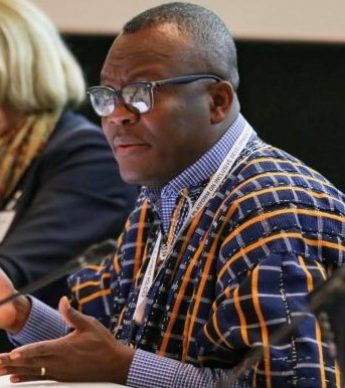
For A People Centred African Union: Lessons from Burkina Faso

By Desire Assogbavi

Following the events that take place in Burkina Faso, which led to the fall of the regime of Blaise Compaoré and the seizure of power by the military, the Peace and Security Council of the African Union met on November 3rd, 2014 and gave a 15-days deadline to the military to hand over power to a civilian authority of consensus. The Concil specifically “demanded that the Army Burkina Faso leaves power, which must be transferred to a civilian authority, in accordance with the Constitution, within a maximum period of two weeks …”

This is certainly a positive and categorical position in favor of the rule of law and democracy which our brothers and sisters of Burkina Faso are looking for. I was then expecting (perhaps naively) a very positive response from the people of Burkina Faso vis a vis that support of the AU. However I have seen a totally different set of reactions posted online. Here is a selection that I copied from the website of Radio France International –  RFI. I have tried to avoid the most insulting comments:

  • “Where was the AU, the Union of dictators, when Compaore threatened democracy by denying the right to change of power in Burkina Faso? What we want is an Union  of peoples who care for progress on the continent”
  • “The AU !!! they still exist ??? “
  • “Go to hell! Where was this UNION of DISHONESTS when Blaise wanted to do his constitutional coup? What did the AU do or said when NATO killed his father Gaddafi? “They are concerned only about their pockets and their stomach …
  • “When Blaise was killing the revolution we heard neither the AU nor France nor the United States nor the United Nations …”
  • “We urge the AU to say a word about what is happening in DRC before it is too late, soon there will be revolt against the constitutional revision
  • “The African Union is an organization to be removed from the list of international organizations because of its inefficiency …”
  • “Why the AU would not punish Blaise Compaoré when he wanted to amend Article 37 and now it is the people of Burkina it wants to punish shame in all its institutions”
  • “Better for the AU to deal with Ebola, we set our business …”

In all honesty, these comments reflect a real feeling experienced by the people  of our continent vis a vis the only Pan African organization that we have. These comments must alert the African Union leadership. These comments should be taken seriously.

The African Union has responded positively but unfortunately too late … as usual … after the people had themselves driven the dictator out with all the risks that this entailed. There was not a single statement of principle towards Compaore since he was trying to change the constitution to run for another term after 27 years of absolute power following the murder Thomas Sankara Lingani and Zongo. Today, the African Union itself is chaired by another author of Coup, the Mauritanian Abdel Aziz … the Peace and Security Council is chaired by the Equatorial Guinea, a country led by another author of coup, Obiang Nguema (35 years in power) …. Many other presidents have seized power for decades and are not ready to go: Dos Santos (35 years), Robert Mugabe (34 years as PM and PR) Paul Biya (32 years), Sassou Ngesso (30 years), Museveni (28 years), Isaias Afwerki (23 years), Yahya Jammey (20 years) etc, the list goes on …. Unfortunately they are the African Union decision makers … So who can say what to whom?

What is the way forward?

1- The Commission of the African Union and its leadership must play their role as the engine of the Union seizing appropriate opportunities to publicly remind Heads of States of the commitments contained in the beautiful texts and principles they themselves, adopted including the shared values

  1. The AU should make a serious, honest and non-discriminatory efforts to encourage citizens’ participation in its business and make the AU and its challenges better known to African citizens.

3- The AU Commission must react faster and make upstream position on the basis of existing texts and principles when such problems arise. This would catalyse its credibility with populations

  1. The Union and the Commission should understand that without the support of the African people the organization is doomed to failure. It must work seriously to show people concrete acts and facts it can generate. I am convinced that it is capable if the political will and courage are there.

5- Having worked for 8 years with the African Union (not for AU ), I am convinced that the AU is full of important resources and potentials that are still unused … leadership must be depoliticized and get to work with courage with the sole objective a collective welfare and the future of Africa, which already lags far behind.

PS: My opinions are personal, they are that of a son of the continent and do not commit the organization for which I work.

I also recommend you read my blog last week: Options for Burkina Faso https://assodesire.wordpress.com/2014/10/31/quelles-sont-les-options-pour-le-burkina-faso/

Pour Une Union Africaine des Peuples: Les Leçons du Burkina Faso

Par Désiré Assogbavi

Suite aux évènements qui ont cours au Burkina Faso et qui ont conduit à la chute du régime de Blaise Compaoré et à la prise du pouvoir par les militaires, le Conseil de Paix et de Sécurité de ‘Union Africaine s’était réuni le 3 Novembre 2014  et avait donné un délai  de 15  jours aux militaires pour remettre le pouvoir a une autorité civile de consensus.   Le Conseil a notamment « exigé que l’Armée du Burkina Faso quitte le pouvoir, qui doit être transféré à une autorité civile, conformément à la Constitution, dans un délai maximal de deux semaines … »

Ceci est certainement une prise de position catégorique en faveur de la primauté du droit et de la démocratie auxquelles aspirent nos frères et sœurs du Faso. Mais alors que je m’attendais (peut être naïvement) à une réaction très positive et de soulagement du peuple Burkinabè face à ce soutien de l’UA les commentaires des internautes du Faso et d’ailleurs nous interpellent. En voici une sélection que j’ai copiée sur le site de RFI tout en évitant les plus insultants :

  • « Où était l’UA, ce syndicat de dictateurs, quand Compaoré menaçait la démocratie en refusant aux Burkinabè le droit à l’alternance? Ce que nous voulons, c’est une Union africaine des peuples, qui se préoccupe un peu plus du progrès du continent »
  • « L’UA !!! ça existe toujours??? »
  • « Que l’UA aille se faire voir en l’enfer. Où était ce SYNDICAT DE MALHONNETE quand Blaise voulait faire son coup constitutionnel? Qu’est-ce que l’UA a dit ou fait quand l’OTAN a tué son père Kadhafi? » Ils ne s’occupent que de leurs poches, de leurs VENTRES…
  • « Quand Blaise matait la révolution on n’a entendu ni l’UA ni la France ni les USA ni l’ONU… »
  •  « Nous demandons à l’UA de dire un mot sur ce qui se passe en RDC avant qu’il ne soit trop tard, bientôt il y aura révolte contre la révision constitutionnelle
  • « L’Union Africaine est une organisation à supprimer sur la liste des organisations internationales a cause de son inefficacité… » 
  • « pourquoi l’UA n’a pas voulu sanctionner Blaise Compaoré lorsqu’il voulait modifier l’article 37 et maintenant c’est le peuple Burkinabé qu’elle veut sanctionner honte à toutes ses institutions »
  • « Mieux vaut pour l’UA de s’occuper d’Ébola, nous réglons nos affaires… »

En toute honnêteté, ces commentaires sont le reflet d’un sentiment réel éprouvé par les fils et filles de notre continent face à la seule organisation panafricaine  dont nous disposons. Ces commentaires doivent interpeller l’Union Africaine e son leadership. Ces commentaires doivent être pris au plus grand sérieux. L’Union Africaine a réagi positivement mais hélas trop tard… comme d’habitude… après que le peuple ait lui-même chassé le dictateur avec tous les risques que cela comportait. Il n’y a pas eu une seule déclaration de principe en direction de Compaoré depuis qu’il machinait pour changer la Constitution  afin de briguer un autre mandat après 27  ans de pouvoir absolu suite à l’assassiné Thoma Sankara, Lingani et Zongo.  Aujourd’hui,  l’Union Africaine est elle-même dirigée un autre auteur de Coup d’Etat le Mauritanien Abdel Aziz… le Conseil de Paix et de Sécurité est présidé par la Guinée Equatorial, pays dirigé par un autre auteur de coup d’Etat, Obiang Nguema  (35 ans au pouvoir)…. Beaucoup d’autres présidents ont confisqué le pouvoir depuis des décennies et ne sont pas prêts à partir : Dos Santos (35 ans), Robert Mugabe (34 ans comme PM puis PR) Paul Biya (32 ans), Museveni (28 ans), Yahya Jammey (20 ans) etc, la liste est longue…. Malheureusement ils constituent l’Union Africaine … Alors qui peut dire quoi a qui ?

Que faut-il faire ?

  1. La Commission de l’Union Africaine et son leadership doivent effectivement jouer leur rôle de moteur de l’Union en saisissant les occasions appropriées pour rappeler publiquement aux Chefs d’Etats  les contenus des beaux textes et principes  qu’ils ont eux-mêmes adoptés y compris les valeurs partagées
  2. L’Union doit faire un effort sérieux, honnête et non-discriminatoire pour encourager la participation citoyenne dans ses affaires et mieux faire connaitre l’Union et ses défis aux citoyens africains.
  3. La Commission de l’Union doit réagir plus promptement et prendre position en amont sur la base des textes et principes déjà existants quand de pareils problèmes de posent. Ceci catalyserait sa crédibilité auprès des populations
  4. L’Union et la Commission doivent comprendre que sans le soutien des populations africaines l’organisation serait vouée à l’échec. Elle doit donc travailler sérieusement pour montrer aux populations des actes et faits concrets qu’elle peut générer. Je suis convaincu qu’elle en est capable si la volonté politique et le courage y sont.
  5. Pour avoir travaillé pendant 8 ans auprès de l’Union Africaine (pas pour l’Union Africaine), je suis convaincu que l’Union regorge de ressources importantes et de potentialités qui sont encore non-utilisées… le leadership doit être dépolitisé et se mettre au travail avec courage en ayant comme seul objectif le bienêtre commun et l’avenir de l’Afrique qui accuse déjà beaucoup de retard.

NB : Je précise que mes opinions sont personnelles, elles sont celle d’un fils du continent et n’engagent aucunement l’organisation pour laquelle je travaille.

Je vous recommande aussi de lire mon blog de la semaine dernière : Quelles Options pour le Burkina Faso ? https://assodesire.wordpress.com/2014/10/31/quelles-sont-les-options-pour-le-burkina-faso/

Options for Burkina Faso: My Opinion…


  1. Establish a consensual transitional government with a Prime Minister and Ministers who agree not to run for the next presidential election, regardless of whether He/She comes from the army or not, but it should be a civilian PM . The PM must have executive power.
  2. It is important that Blaise Compaore is out of the transition for several reasons: He has no more legitimacy before the people even if he remains the “elected ” president. Given his past and his implications in a number of issues on the continent starting with Burkina Faso , Blaise is still able to dribble everybody and rely on a part of the army if his given time, He can  even complicate the situation and make it unmanageable …. I fear disappearances and other retaliations…. I also fear economic crimes which may affect the country. It is important to turn the page here and now.
  3. However, to avoid giving the shadow of Coup d’Etat to the situation and make sure it does not become the only way out in Africa, Blaise can be simply asked to resign against a calm and quiet way out. If he refuses, then he should be forced out by all possible means and why not bring him to court?
  4. Another option is to keep him if he wants to remain president to finish his term but appoint a strong Prime Minister with executive powers.
  5. There is a need for a People’s Council, an interim parliament for the one-year transition which should lead to democratic elections. The Council will be able to monitor the Government. It must be inclusive but with not too strong power.
  6. The army must be represented in the bodies of the transition but must not interfere as such in the conduct of the business. The transition must absolutely be led by civilians and the military must be in their service.
  7. An election timetable should be adopted and strictly adhered to. But a mechanism allowing some flexibility is needed to avoid bottlenecks that could justify other disorders.
  8. A Regional Contact Group of the African Union , ECOWAS and other partners should be set up to ensure compliance with the transition plan.

Finally, victims of the recent events must be treated with dignity. They should get into the History of Burkina Faso.

Quelles sont les Options pour le Burkina Faso?

1- Former un gouvernement consensuel de transition avec un Premier Ministre et des Ministres qui acceptent de ne pas se présenter aux prochaines élections présidentielles. Peu importe s’il ou elle vient de l’armée mais il doit être un PM civil. Le PM doit avoir un pouvoir exécutif.

Il importe que Blaise soit écarté pour plusieurs raisons: Il n’a plus de légitimité devant le peuple même s’il demeure le Président “élu”. Vu son passé et ses implications dans un certain nombre de basses besognes à son actif sur le continent à commencer par le Burkina Faso, Blaise est capable de dribbler encore tout le monde et s’appuyer sur une partie de l’armee s’il a du temps, au même de compliquer la situation et de la rendre ingerable…. Je crains des disparitions et autres règlements de comptes…. Je crains aussi des crimes economiques qui peuvent remettre en cause les aquis du BF. Il importe de tourner la page ici et maintenant.

Cependant, pour éviter de donner la connotation de Coup D’Etat à la situation, et éviter ça ne fasse tâche d’huile, on pourra demander a Blaise tout simplement de démissionner contre une sortie calme et tranquille. S’il refuse, on le boute dehors par tous les moyens possibles et pourquoi pas le juger….

2- Une autre option est de le garder s’il tient à rester President pour finir son mandat mais on lui flanque un Premier Ministre fort avec pouvoir exécutif.

3- Il faut en plus une sorte de Conseil du Peuple, un parlement provisoire pour la transition d’un an qui doit aboutir aux élections démocratiques. le Conseil constituera un contre pouvoir pour surveiller l’exécutif. Il dois être composé de façon très variée incluant toutes les couches sociales du pays avec un pouvoir législatif pas trop fort.

L’armée doit être représentée dans les instances de la transition mais ne doit pas interférer en tant que tel dans la conduite des affaires. La transition doit absolument être dirigée par des civiles et l’armée doit être à leur service.

Un calendrier électoral doit être adopté et scrupuleusement respecté. Mais il faut un mécanisme permettant un peu de flexibilité pour éviter des blocages qui pourraient justifier d’autres désordres.

Un Groupe Regional de Contact de l’Union Africaine, la CEDEAO et autres partenaires doit etre mis en place pour veiller au respect du plan de transition.

Il faut enfin un traitement digne des victimes des événements… Elles doivent rentrer dans l’histoire du Faso.


Africa-USA Summit: Highlights and Lowlights

By Desire Assogbavi – 12th August 2014

I have spent 3 days last week in Washington DC to observe and engage the first Africa – USA Leaders’ Summit held from 4 – 6 August 2014 in Washington DC, where over 50 African countries representatives including 37 Heads of state had direct interactions with their American counterparts. Several civil society events were also organized prior and during the Summit. The summit was set around 3 major thematic: Investing in Africa’s Future, Peace & Regional Stability and Governing for the Next Generation. Here are a summary of the outcomes as well as some personal reflections….

Highlights

A total of 37 Billion mobilized as a commitment from public and private sector to enhance trade, investment, essential services and security across Africa. These include the following:

$14 billion to be invested in aviation, banking, infrastructure and clean, renewable energy development

$12 billion in new funding to the Power Africa Initiative, bringing the total funding for the program to $26 billion. Power Africa Initiative will electrify an estimated 60 million households and businesses, nearly tripling its original target

$7 billion to facilitate U.S.-Africa trade and investment under the Doing Business in Africa (DBIA) Campaign

$4 billion to promote maternal health, children’s health, and the delivery of vaccines and drugs. More support to nutrition and HIV: Pledged to work with 10 countries to help double the number of children with access to ARVs and assist the African Union efforts to create an African Centre for Disease Control.

Lowlights: Governance and Human Rights

With the presence of some of the most brutal and long serving African autocrats having troubling records on human rights and civil liberties, the Summit could have had in-depth discussions agree on strong and concrete actions on issues of governance, human rights and civic space as fundamental prerequisites for business success. President Obama drew the diplomatic line by not inviting Omar Bashir and Robert Mugabe to the Summit but, rolling out the red carpet for leaders like Obiang Nguema, Yahya Jammey or Blaise Compaore  – some of those being in power for 20-35 years – simply showed that business and security interests can easily surpass the need to uphold universal human and civil rights and accountable institutions.

Human Rights Scandals in Washington: During the Summit in Washington, a Congolese demonstrator has been  attacked and severely beaten by  President Joseph Kabila’s guards while him and other Congolese were peacefully demonstrating on the street when Kabila was passing.  The US asked DR Congo to waive immunity for the guards so they could face prosecution in the US, but the guards instead left the country  and were unlikely to face charges. State Department said they have also asked the delegation of Gambia to waive immunity for a guard after President Yahya Jammeh’s security detail similarly cracked down on protesters outside his hotel.

Specific Commitments and other issues

Peace and Security: The United States will build a new security governance initiative to help African countries of Kenya, Niger, Mali, Nigeria, Ghana and Tunisia to build strong professional security forces to build their own security especially in response to terrorism and human trafficking.  It will invest $110 million per year for 3-5 years to help Africa Union’s efforts to strengthen its peacekeeping institutions – launching a new African peacekeeping rapid response partnership that will enable states to quickly deploy African peacekeepers in support of UN or AU Missions. This partnership will begin with 6 countries: Senegal, Ghana, Ethiopia, Rwanda, Tanzania, and Uganda. The U.S. also pledged to provide additional equipment to African peacekeepers in Somalia and the Central African Republic

Illicit Capital Flow and Corruption: New partnership agreed upon to combat illicit finance. An experts group will develop an action plan to promote the transparency.

Promoting Next Generation African Leaders: Commitment for a partnership in supporting young entrepreneurs, including through Obama’s Young African Leaders Initiative was made. Summit also announced new initiatives for promoting economic and leadership opportunities among the youth. Prior to the Summit, President Obama met with 500 young Africans leaders taking part in his Young Africa Leaders Initiatives (YALI) and has promised to double the number of participants from the coming year.

Just a Competition to China? President Obama called Africa “a good partner, an equal partner, and a partner for the long term”, was this initiative, just a hidden competition to China’s presence in Africa? China’s trade with Africa passed 200 Billion in 2013 with over 2000 Chinese firms present in 50 African countries and China said it would extend $1 trillion of loans to Africa by 2015, most of it via its own Export-Import Bank. In any case this competition is likely to be profitable for Africa if the continent manages it well.

AGOA and Intra-Africa Trade: The African Growth Opportunity Act launched 14 years ago gives duty-free incentives for African countries to open their market in order to boost their trade with the US. In Washington last week, African leaders praised AGOA and requested its renewal next year.   There was a general agreement for a long-term renewal of AGOA on due course but the Washington Summit was not set for that. But, while enjoying AGOA, African country must accelerate to move toward an Africa Free Trade Area to enable trades within African Countries. Despite a timid start, intra-African trade links are very weak. The bulk of the continent’s trade is with Europe and America: only 12% or less is with other African countries, according to research by Ecobank, a Togo-based bank. By comparison 60% of Europe’s trade is with its own continent. The same is true in Asia. In North America the figure is 40%. Some commentators argue that countries in Africa have nothing to trade with each other… I do not agree with that. The continent has so many to trade within while developing home grown industry,

Continued Dialogue: US-Africa Leaders agreed that the Summit will be a recurring event to ensure accountability to commitments and to sustain its momentum, with Obama pledging to encourage his successor to carry on this work.

Civil Society engagement with the Peace and Security Council of the AU…

African Union Peace and Security Council Retreat on the Review of the Livingston Formula

for Civil Society engagement with the Peace and Security Council of the AU

Maseru, 22 February 2014 

********************************

Presentation by:

Mr. Désiré Assogbavi

Resident Representative of Oxfam International to the African Union 

Your Excellencies, Ladies and Gentlemen;

First of all, I would like to express my sincere appreciation to the Government of the Kingdom of Lesotho , Chair of the Peace and Security Council for the month of February 2014, and to the PSC for inviting me as a resource person to contribute into the debates of this retreat relating to the Council’s relation with civil society organizations.

We do have operational presence in 33 countries in Africa including the most conflict affected countries…. And we spend about 500 Million USD every year on humanitarian relieve and socio development projects in the continent.

Your Excellencies, Ladies and Gentlemen;

The African Union represents today one of the greatest assets for our continent. It has become an unavoidable instrument to lead on, to manage and resolve various problems that our continent and its people are facing.

The Peace and Security Council, is,  in our view, not only one of the most important organs within the architecture of the continental body but also one of the most effective, innovative and progressive organs in the whole system. Allowing us, citizens to directly engage with your gathering is really a progressive move.

The Audit Report of the African Union a few years ago stated:the AU through the PSC has brought visibility and credibility to Africa in the area of peace and security. It is now invariably that the PSC takes the lead in dealing with conflicts in Africa followed by the international community’’.

Today, the involvement of a diverse range of actors, including civil society and the private sector, is essential for effective action on continental priorities.

By its immersion within the society and its preservation of an identity that is distinct from States, civil society has vocation to contribute in peace building initiatives. You will agree with me that civil society has shown its capacity to organize the collection, the analysis and the evaluation of first hand information. This allows the identification of the sources of potential tensions as well as emerging conflicts.

The characteristics of security issues addressed by the African Union today are radically different from those of the previous decades. Today’s conflicts appear to be more complex than ever and their nature, are then obliging us to change the ways of resolving them.

“Traditional” conflicts were well understood by diplomats and specialists in political science, BUT, addressing new conflicts adequately requires much more on-the-ground  knowledge, new skills of social and cultural analysis, the active involvement of communities and their leaders, links to vulnerable groups etc, and new ways of working.  Civil society organizations, most of the times, have unique capacities in those areas.

 NGOs who are on the ground, doing humanitarian work, who are touching those societies, looking into the eyes of the people in danger, learning who they are and what is going on, who the factions are and what relations people have with their leaders– much of those things, never gets to the table of your Council.

Humanitarian NGOs and other categories of civil society often have first-hand information and strong comparative advantages in all these new needs.  Our aspiration is to be given the opportunity to share more and more often with you those information and analysis to inform your deliberations.

Switching in French!

Excellences, Mesdames et Messieurs ;

En Décembre 2008, j’ai eu l’honneur de m’adresser à votre Conseil à Livingston, lors de votre délibération qui a abouti à l’adoption de la Formule de Livingston.

5 ans après, il importe de relever les importants progrès enregistrés….

En effet, le Conseil a organisé un certain  nombre de débats publics au cours desquelles, les organisations de la société civile et plus précisément les citoyens africains, y compris ceux affectés par les conflits  ont  eu l’opportunité de vous parler  directement. Mon bureau a Addis Abéba utilise la moities de ses ressources pour soutenir les ONGs africaines à coopérer avec l’union Africaine. De la même manière, votre Conseil s’est montré très ouvert vis-à-vis des acteurs non étatiques pour organiser des actions conjointes des séances de briefing etc.

Cependant Excellences, l’interaction des OSC avec le Conseil est restée la plus part du temps très informelle, et beaucoup d’opportunités  ont été perdues du fait que, l’organe désigné pour faciliter cette interaction, l’ECOSOCC, n’as pas été à la hauteur de la tache au cours des 5 dernières années. En effet, aucune rencontre annuelle du Conseil avec les OSC n’a eu lieu depuis l’adoption du Livinstone Formula.

Au-delà de cette réalité,  les conditions posé par l’article 6 du statut de ECOSOCC, repris par la Formule de Livingston a empêché les ONG Africaines qui ont une expérience remarquable dans les domaines d’Action du Conseil d’être membre de l’ECOSOCC et donc de pouvoir effectivement jouer un rôle déterminant  dans la mise en œuvre de la formule.

Je rappelle que ces conditions comprennent, l’exigence pour les ONG en question d’avoir au moins 50% de leurs ressources provenant de leurs propre membres.   Il est tout à  fait justifié que les ONG Internationale ne soient pas membre de l’ECOSOCC, mais les ONG africaines dont la moities des ressources proviennes de leur membres, sont pour la plus part du temps des syndicats ou associations professionnels ou des organisations qui n’ont que très peu d’expérience et de moyens dans le domaine de la paix et de la securite.   Cette situation pourra changer dans l’avenir à mesure que notre continent bénéficie des fruits de la croissance, l’émergence des organisations caritatives et fondations africaines, mais nous devons attendre encore un peu.

Par ailleurs, les conditions actuelles posées par la formule de Livingston ne permettent qu’as très peu d’organisations, non-basées a Addis Abéba de travailler de façon régulière avec le Conseil.

A notre humble avis, le Conseil gagnerait beaucoup en puisant des expériences de terrain des ONG qui opèrent effectivement dans les zones affectées par les conflits.

Excellence mesdames et messieurs les Ambassadeurs,

Au vu de ce qui précède, j’ai l’honneur de soumettre à l’appréciation du Conseil, les propositions suivantes :

1/Que le Conseil responsabilise son Secrétariat, pour faciliter l’interaction avec les ONGs, — du moins pour une période intérimaire, le temps que les problèmes institutionnels de ECOSOCC soit régler.

Ceci renforcera d’ailleurs, le principe selon lequel, le Conseil demeure maitre de ses opérations.

2/Que le Conseil assouplisse les règles d’éligibilité à interagir avec lui, en considérant   au-delà de tout, les avantages comparatifs, l’expérience de terrain, la spécialité, la proximité d’avec les victimes  etc. Ceci reviendra à abandonner la référence  à l’article 6 du Statut de ECOSOCC comme critère à remplir  pour interagir avec vous.

3/ Que le Conseil ou ses membres organisent des réunions plus régulières avec les OSC, peut-être du type « formule Arria »

La formule Aria avait été inventée et employée par l’ONU pour tirer profit de la valeur ajoutée des OSC au travail du Conseil de Sécurité de l’ONU. De telles réunions ont été limitées d’abord aux hauts fonctionnaires des Etats et OI. L’initiative a été élargie par la suite pour inclure des groupes de la société civile particulièrement les ONG humanitaires et des droits de l’homme. Les réunions de La formule Arria se tiennent en dehors de la salle de session du Conseil de Sécurité. Ces réunions ne sont forcément pas présidées par le Président du Conseil, mais par n’importe quelle délégation qui en prend l’initiative. Aujourd’hui, les réunions du type formule Arria ont lieu pratiquement tous les mois, parfois plus d’une fois par mois mais aucune décision n’y est prisent.

En raison de son caractère informel et de sa nature, ad hoc, le CPS pourra expérimenter cette formule, parallèlement aux rencontres formelles annuelles.  Le CPS pourra l’adapter à son contexte particulier afin d’avoir des interactions plus régulières avec les OSC.

Pour terminer mes propos, j’aimerai attirer votre attention sur 2 domaines importants dans le cadre de votre collaboration avec la société civile, des domaines qui méritent d’être considérés de façon spéciale :

  • Il s’agit d’abord de la mise sur pied de mécanismes qui vous permette de prendre en compte les alertes precoces venant des acteurs non-étatiques, mais aussi et surtout de leurs traitement rapide en terme de décision politiques 
  •  
  • Il s’agit ensuite de l’implication plus systématique de la société civile dans l’organisation des  visites de terrain du Conseil.
  • Je vous remercie de votre attention et je vous souhaite de bonnes discussions.


Silencing the guns in Africa

“silencing the guns: Pre-requisites for realising a conflict-free africa by the year 2020” 

Intervention of Desire Assogbavi, Head of Oxfam Liaison Office with the African Union at the Peace and Security Council of the AU – 24 April 2014 

 Image

Excellencies, Distinguish Guests

Allow me on behalf of Oxfam to thank the PSC and the Nigerian presidency, for the choice of this important topic and for inviting us to this public debate.

As we meet today, our continent is celebrated for its increasing economic growth of an average of 5% over the last 10 years.  However, it is also saddening that an important part of our continent is still enduring continued conflicts, insecurity and violence. Despite efforts towards conflict resolution in Africa over the last decade, new and old conflicts continue to delay our development…. Causes and actors are diverse. Their names are Al Shabaab, LRA, Boko haram, Janjaweed, anti-Balaka, Seleka…. But also some government actors, visible and invisible.

The sources of  conflicts in Africa are many. However, inequitable distribution of power and wealth, unfair and unaccountable governance added to illicit flow of arms, have fuelled majority of conflicts and armed violence in our continent, claiming hundreds of thousands of lives and causing us the lost of 18 billion USD per year.  Therefore our actions must be equally multidimensional.

 To achieve the ambitious target of an Africa free of conflicts in 2020, a number of urgent issues need to be addressed… Because of time, I will only mention 3 of them:

1.Early and Courageous Response to early warnings – Existing frameworks such as the continental early warning system and the African Peer Review Mechanism have always detected potential conflicts ahead of time. However, in most of the cases, the warnings have been minimized or simply ignored… Who did not know a year ago that South Sudan was likely to burn? Was the Central Africa Republic conflict a surprise?  —- Our decision making bodies at the highest level must detach from the current polite diplomacy to take courageous actions…. when democratic principles and HR are being violated…. when important AU principles such as unconstitutional change of government are violated, when elections do not reflect the true will of citizens.


2. Addressing the challenges of illicit trade of Arms – most of the arms used in our conflicts are fabricated outside of our continent. A commentator noted recently that, bananas, tomatoes and bubble gum are more restricted in markets than the trade of AK-47. The AU should aim for a universal ratification of the Arms Trade Treaty,   and for its robust implementation, through regional cooperation. The ATT is expected to come into force in September this year.  So far 27 African nations have signed the Treaty but only Mali and Nigeria have ratifie We recommend that your Council call for a mass and immediate ratification of the ATT by all member states as a sign of good will.

3. Strengthen the role of the Panel of the Wise – Identifying eminent personalities, with necessary experience, intellectual and physical ability to engage in ‘good office’ and shuttle diplomacy.  The AU PoW should be established in a way that its members serve as a standby poll of Envoys for the AUC Chairperson and PSC whenever mediation is needed

I thank you!

The role of China in peace and security in Africa

The role of China in peace and security in Africa

By Desire Assogbavi (2010)

In recent years, China’s activities in Africa have expanded dramatically: Africa–China trade increased tenfold between 1999 and 2006. Chinese political and business leaders visit the continent regularly, and the country is pouring investment and aid into Africa. In exchange, China is securing access to the continent’s natural resources, which Beijing considers essential for China’s further development.  Some analysts argue that China–Africa relations have opened up a new era for Africa’s development and a new style of cooperation. But the Chinese engagement is questionable in terms of peace and security, which is now the main problem facing Africa and the fundamental obstacle to the continent’s integration.

In this chapter, I will be looking particularly at the impact of the new China–Africa ‘alliance’ on peace and security in our continent by considering the case of Darfur.

A strong economic interest

China is now the world’s second largest consumer of oil. More than 25 per cent of its oil imports come from the Gulf of Guinea and Sudan. China’s investment in Africa now stands at $1.5 billion a year. There are at least 700 Chinese enterprises operating in the continent. In terms of debt relief, China recently wrote off $1.3 billion owed by African countries, which has led to a fresh injection of good feeling in Africa towards China.

China’s new strategic partnership with Africa effectively took off at the November 2006 Beijing summit. This marked an historic moment in China–Africa relations. At this meeting, 48 African delegations including 44 heads of state lined up in front of the Chinese presidential palace to great the Chinese president. It is rare – even during the African Union summits – to see so many important African heads of state at a single meeting. Something very attractive must have been promised!

In fact, it is raising global energy demands that have caused China to turn to Africa as a major supplier of oil. In addition, Africa seems to have become an open market for comparatively ‘cheap’ Chinese manufactured products.

A challenge for peace and security in Africa

Armed violence is one of the greatest threats to Africa’s development. Africa currently gives the impression of a continent riddled with territorial disputes, armed ethnic conflicts, civil wars, violence and the collapse of governments and states.

In the last 40 years there have been at least 30 major conflicts in Africa, which have claimed the lives of seven million people and displaced more than 20 million. In a report published in October 2007 IANSA, Oxfam and Safeworld estimated the economic cost of armed conflict to Africa’s development.  Findings showed that around $300bn since 1990 has been lost by Algeria, Angola, Burundi, Central African Republic, Chad, Democratic Republic of Congo (DRC), Republic of Congo, Côte d’Ivoire, Djibouti, Eritrea, Ethiopia, Ghana, Guinea, Guinea-Bissau, Liberia, Niger, Nigeria, Rwanda, Senegal, Sierra Leone, South Africa, Sudan and Uganda[1]. Yet 95 per cent of the weapons used during those conflicts come from outside of the continent – many of them from China or marked ‘made in China’.  Reports further revealed that most of those weapons are sold to governments in Africa and end up in the hands of whoever wants to use them.

Behind the so-called principle of ‘non-interference in other’s domestic issues’, China’s relations with Africa create challenges for governance, peace and security in the continent. Supporting and reinforcing despots and genocidal and undemocratic regimes that systematically terrorize their citizens in order to remain in power is just not useful for a continent that has suffered for many decades and that has been trying to escape from this situation.   

A negative influence on the situation in Darfur

China is not the cause of the ongoing conflict in Darfur but Chinese oil investment in Sudan undermines international efforts to end the Darfur crisis. China has acted as Sudan’s key international patron and has been crucial to the ruling National Congress Party’s (NCP) foreign relations on the question of international intervention in Darfur. The NCP would not have been able to pursue its strategy in the absence of Chinese support.  China has so far played a largely negative role in the crisis – it has repeatedly obstructed meaningful UN Security Council resolutions and shielded the government of Sudan from international pressure. There are also numerous reports implicating China as a key provider of military equipment and establishing arms factories in Sudan and Darfur rebels have recently targeted Chinese oil interests in response. However, if China is encouraged to play a more constructive role on Darfur, then potentially it could be a crucial catalyst for change due to its enormous economic leverage over the government of Sudan. China is Sudan’s largest bilateral trading partner, responsible for buying up to 71 per cent of Sudan’s exports. China continues to support the government of Sudan, but its increased diplomatic engagement and more critical posture toward the regime can contribute to peace.

Chinese relationships with some African governments reinforce dictatorship and provide new opportunities for authoritarian regimes that take citizens in a permanent hostage This is undermining all the efforts of the continent to build democratic institutions and states.

The same applies to Zimbabwe. President Robert Mugabe has repeatedly said that he prefers to forge strong relation with China because, unlike the West, China does not place any political conditions on its investment aid. Yet Mugabe, in power for the last 28 years, is seen today as the worst dictator of the region. 

Pang Zhongying, a professor of international studies and director of the Institute of Global Studies at Nankai University said: ‘The Chinese are now finding their people being taken in hostage in Southern Nigeria. They are finding that people are now yelling and protesting as their leaders come to town – just as they did when they said “Yankee go home” when American presidents visit their country.’

From non-interference to non-indifference

The establishment of the African Union (AU) in 2002 reflected a new moral awareness of the need to provide the continent with a political framework and legal tools to deal with issues of ‘non-indifference’. The provisions in both the Constitutive Act of the AU and the Protocol Relating to the Establishment of the Peace and Security Council (PSC) are in proximity with the notion of ‘non-indifference’ when faced with massive and heinous crimes committed against civilians in Africa.

This constituted a major difference between the AU and its predecessor, the Organization of African Unity. The AU founders recognized the right to intervene in the internal affairs of member states in order to protect human rights and constitutional order. This is enshrined in Article 4(h) of the Constitutive Act 2000, which clearly states that the AU has a right to intervene in the affairs of a member state pursuant to a decision of the assembly of heads of state in respect of ‘grave circumstances’, namely war crimes, genocide and crimes against humanity, as well as a serious threat to legitimate order, in order to restore peace and stability in a member state. 

In order to implement this significant shift, the AU has put in place a strong and effective institutional framework to support and sustain that political will. This realization provided the impetus for the elaboration of an African Peace and Security Architecture (APSA), which recognized the importance of investing in the anticipation and prevention of conflict and of putting in place structures to resolve conflicts effectively once they have broken out. APSA consists of the Peace and Security Council, the Framework for the operationalization of the Continental Early Warning System, the Panel of the Wise, the African Standby Force and the AU Policy on Post-Conflict Reconstruction and Development.

In addition, in September 2005, world leaders at the UN General Assembly, made a historic commitment to their collective responsibility to protect civilians from genocide, war crimes, crimes against humanity and ethnic cleansing, including a willingness to take action where the national government – which has primary responsibility – is manifestly failing in this regard.

These new developments, coupled with international and civil society pressures have probably impacted upon China’s thinking and behavior in Africa.

Positive signs from China

Due to both civil society and international pressure, Beijing is learning that separating business from politics is easier said than done. Therefore, over the last two years there have been signs that Chinese language and engagement on the situation in Darfur is improving and that China wants to be seen and credited as a positive actor in the crisis.

After years of repeatedly obstructing United Nation Security Council Resolutions, China agreed to Resolution 1769 authorizing the deployment of UNAMID (the United Nations–African Union Mission in Darfur) – and spent considerable diplomatic time and effort lobbying Sudan to accept it.

The appointment in the summer of 2007 of the first Chinese special envoy, Liu Guijin, is another indication that China at least wants to be seen to be doing something, even though the profile of the special envoy has been very low key since his arrival in Khartoum, where he prefers to do things quietly and behind closed doors. While this may be an alteration of policy more in form than substance, it still presents an opportunity for pressure to be placed on Khartoum via a Chinese interlocutor. At the same time, it allows China to promote its own interests through more vocal diplomacy and participation in multilateral forums on Darfur.

At the January 2008 AU summit, the Chinese delegation issued an unprecedented public warning to the government of Sudan that the world is ‘running out of patience on Darfur’. Prior to that the Chinese ambassador to Sudan, Wang Gangly, was reported as saying, in February 2007, ‘Usually China doesn’t send messages, but this time [on the occasion of Chinese President Hu Jintao’s recent visit to Sudan] they did … It was a clear strong message that the proposal from Kofi Annan is a good one and Sudan has to accept it.’ To try and improve public perceptions of its role, China has also increased humanitarian aid to Sudan, including assisting in the construction of 120 schools and hospitals. However, at around $10m this is still relatively small compared to China’s economic interests. Some Chinese companies are building an 85km-long water project in South Darfur and  315 Chinese engineers were deployed to Darfur in October 2007 to take part in UNAMID.

The way forward

Despite this progress, there is still much more that China could be doing. As such an important ally, China needs to be encouraged to:

Promote a peaceful environment in Africa as a catalyst for a good business

Improve their role at the UN Security Council 

Sustain diplomatic pressure on the government of Sudan and rebel groups to cease hostilities in Darfur and reach a political solution to the conflict

Stop the sale of weapons to the government of Sudan. China has previously exported military helicopters to a number of countries including Sudan and there have been a number of documented cases of helicopters killing civilians in Sudan’s conflicts

Press for full and unimpeded UNAMID deployment and performance

Contribute more funding, military and police assets, and personnel to UNAMID. A greater Chinese involvement in peacekeeping operations in Darfur could substantially enhance peacekeepers’ ability to protect civilians

Encourage the government of Sudan to cease any support of actors destabilising and exacerbating the crisis in Darfur and Chad.

Contribute more financially to the African Union’s Peace and Security Architecture.


Bibliography

Erica S. Downs; The fact and Fiction of Sino African energy relations’, China Security Vol. 3 No.3 Summer 2007

Darren Taylor; VOA article: ‘Analysts explain the significance of the evolving relationship between China and Africa’, published on 3 May 2007

Ambassador Djinit Said, Commissioner for peace and security, AU; speech on the responsibility to protect, Addis Ababa 8 June 2007

Geoffrey Mugumya, Director Peace and Security, AU; speech on the responsibility to protect, Addis Ababa 8 June 2007

About the Author

A native of Togo, Desire Assogbavi is currently the Head of Oxfam International’s Liaison office with the African Union. . 

The opinions expressed in this article are entirely those of the author and do not reflect the view of his organization. 

Note

1. China is the largest arms supplier to Sudan, officially selling the country $83 million in weapons, aircraft and spare parts in 2005, according to Amnesty International USA. That is the latest year for which figures are available.  China provided Sudan with A-5 Fantan bomber aircraft, helicopter gunships, K-8 military training/attack aircraft and light weapons used in Sudan’s proxy invasion of Chad in 2007.


[1] Africa’s missing Billions: International Arms flows and the cost of conflict. Oxfam publication 107, October 2007.