
“Free Visa” Is Not “Visa-Free”

The forgotten Free Movement Protocol, and the integration Africa owes its People

In recent months, some African governments have announced new “free visa” or “visa free” policies for African travelers. The headlines were enthusiastic. Social media celebrated another victory for Pan-Africanism. Governments presented the measures as evidence of progress toward continental integration. Yet beyond the applause lies an uncomfortable reality: a free visa is not the same as visa-free travel. Not even close. The distinction matters. It is not a technicality. It is not a matter of semantics. It is a question of how seriously Africa is prepared to embrace the free movement of its own people. It is the difference between a policy that changes the architecture of African mobility and one that simply discounts the cost of applying for the same old permission slip. More importantly: both fall short of what Africa already agreed to do in a treaty that the continent has adopted since 2018 and only 4 countries have ratified.

What Is a “Free Visa”?

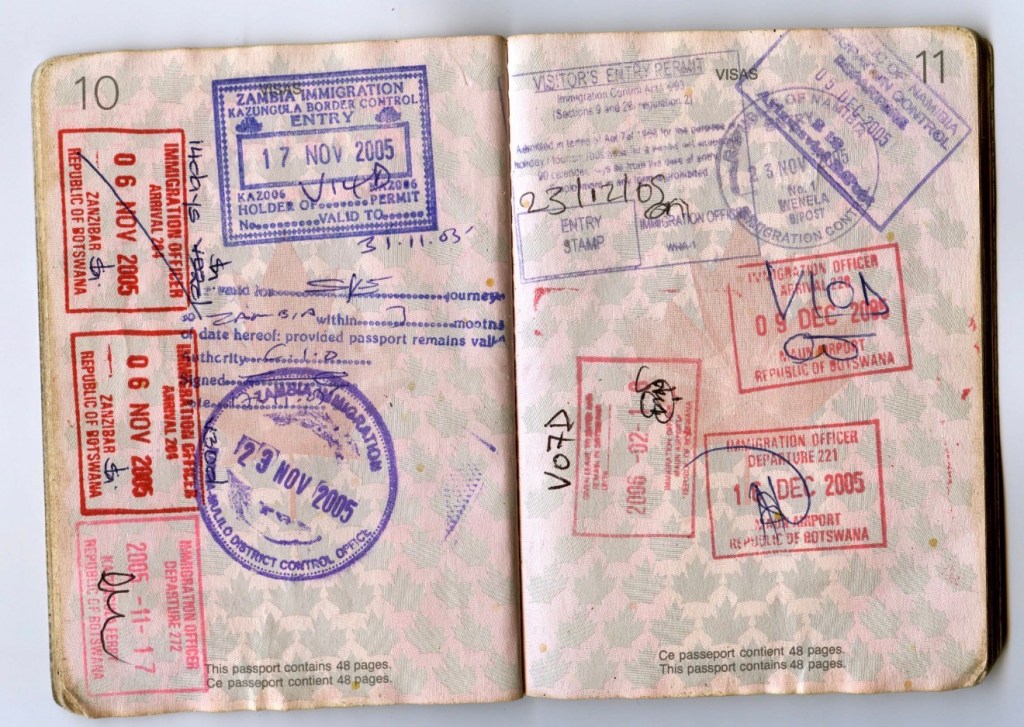
A free visa means you still need to obtain a visa. You still apply. You still submit documents. You still wait for approval. A government officer still retains the power to deny you entry. The only thing removed is the monetary fee at one step in that process. The bureaucratic relationship between you and that border remains completely unchanged. You are an applicant seeking permission. The other African country is a gatekeeper deciding whether to grant it. The visa requirement, with all its paperwork, waiting time, uncertainty, and power asymmetry, is fully intact.

What Is “Visa-Free”?
Visa-free means no visa is required at all. You present your valid African passport at the port of entry and are admitted, subject to standard border checks, without any prior application, fee, embassy queue, or risk of pre-departure rejection. Your right to enter is treated as a given, not a privilege to be earned.

The difference is not just procedural. It is philosophical: A free visa says: “You may apply to come.” Visa-free says: “You are welcome.”

The case of Ghana

In April 2026, President John Mahama announced a new visa policy for Africans, set to take effect on May 25, 2026 (Africa Day), anchored in a newly introduced national e-Visa platform. The headlines again celebrated. But Ghana’s official was clear about what the policy does and does not do: “Not paying visa fees is not the same as automatic entry into Ghana. There shall be no automatic and unvetted entries.”

African travelers will still be required to submit applications and undergo screening through the new e-Visa system. What changes is the cost, not the controls. This is, by definition, a free visa policy, not a visa-free one. So, to go to Ghana with an African nation’s passport you must complete an e-Visa application online before departure. No fee will be charged. But you must apply, be vetted, and receive approval. Do not arrive without completing the e-Visa process. ECOWAS citizens can still travel to Ghana visa-free.

Given that Ghana hosts the AfCFTA Secretariat in Accra and positions itself as a champion of regional integration, one might have expected a more open and facilitative visa regime, similar to the models adopted by Rwanda and Kenya, which have significantly eased entry requirements for African travelers.

Some of the Countries That Have Done It Well…

As of 2025-2026, the following African countries have visa-free entry policy for all African passport holders:

  • Rwanda: Full visa-free. Any African enters by passport alone. No application, no fee, no prior approval.
  • Kenya: Full visa-free. Any African enters by passport alone. No application, no fee, no prior approval.
  • Benin: Eliminated visa requirements for all Africans.
  • Seychelles: First African country to offer visa-free access to all nationalities.
  • Togo: Visa-free entry for African citizens but online registration of travel required  
  • Congo: Visa-free policy announced on 25th May 2026, Africa Day but the policy is not yet published

The Forgotten Treaty: Africa’s Broken Promise to Itself
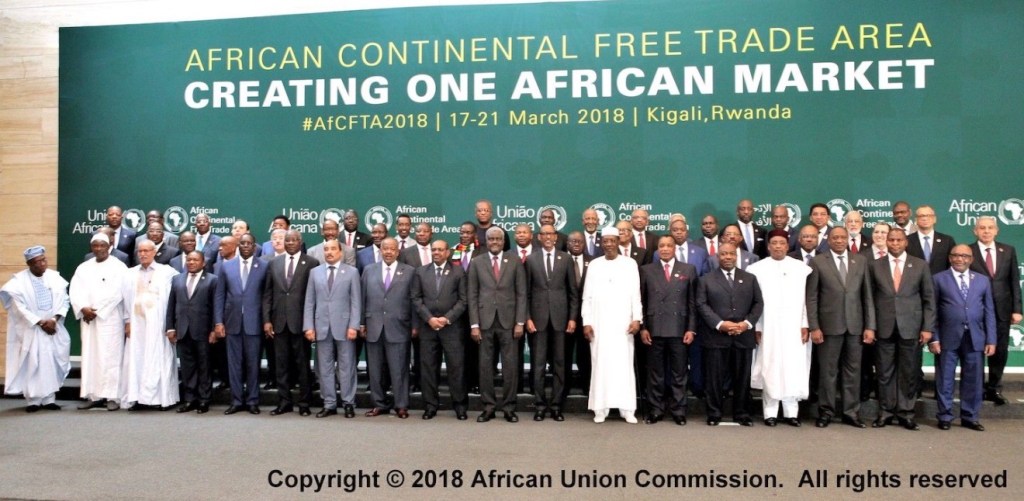
On January 29, 2018, the African Union Summit adopted two landmark agreements side by side:

They were adopted together. They were designed together. They are inseparable in logic: you cannot build a continental market if the people who make up that market cannot move freely within it but what happened next tells you everything about political will.

The AfCFTA gathered ratifications quickly. It entered into force in May 2019. Today, 54 of 55 AU member states have signed it. It is nearly operational.

The Free Movement Protocol has been ratified by only 4 countries: Mali, Niger, Rwanda, and São Tomé and Príncipe. The Protocol requires 15 ratifications to enter into force. It remains eleven short.

What the Protocol Actually Promises

The Protocol is not a vague declaration. Article 6(4) states plainly that a national of a Member State permitted to enter another State shall be allowed to move freely or stay for a maximum period of ninety (90) days, without a visa. This is Phase 1: the immediate promise. Phases 2 and 3 progressively add the right of residence and the right of establishment.

  • Phase 1: Right of Entry: Visa-free entry and stays of up to 90 days. Achievable now.
  • Phase 2: Right of Residence: The right to live and seek employment in another Member State.
  • Phase 3: Right of Establishment: The right to set up businesses in any Member State.

Phase 1 alone would be revolutionary. But it requires 15 ratifications to begin. The continent has been stuck at 4 for six years.

How Can You Trade If You Cannot Move?
Africa’s intra-continental trade stands at just 17% of total exports. Europe’s comparable figure is around 60%. The World Bank estimates AfCFTA could increase Africa’s total exports by nearly 29% by 2035 and lift 30 million people out of extreme poverty. But those projections assume the treaty’s logic is followed through, including the free movement that makes trade in services possible.

“As an investor, as someone who wants to make Africa great, I have to apply for 35 different visas on my passport.”: Aliko Dangote.

AfCFTA lowers tariffs on goods. But services trade, finance, technology, logistics, healthcare, education, are built by people who must move. The AfCFTA and the Free Movement Protocol are two wheels of the same vehicle. Africa has chosen to build one wheel and leave the other in the warehouse.

The “Security” Objection Does Not Excuse Inaction

The most common reason governments give for not ratifying the Protocol is security. It is not an illegitimate concern, but it is consistently overstated. Border security and visa requirements are not the same thing. Countries can maintain robust screening, biometric databases, advance passenger information systems, and cross-border security cooperation entirely independent of whether a visa is required in advance.

ECOWAS has operated a free movement protocol among 15 member states since 1979, without evidence that this has destabilized any member economy or compromised security in ways that outweigh the benefits.

The AU’s own Peace and Security Council acknowledged before the Protocol was even adopted that “the benefits of free movement of people, goods and services far outweigh the real and potential security and economic challenges.” If the Peace and Security Council can reach that conclusion, the political reluctance to ratify is not about security. It is about political will.

Stop the Distractions. Ratify the Protocol !

Individual countries announcing visa-free policies deserve credit. But these gestures should not substitute for, or distract from, the legal instrument that would make free movement a continent-wide right rather than a favor dispensed country by country.

11 more ratifications. That is all that stands between the current patchwork of bilateral goodwill and a legally enforceable continental right to enter, stay for up to 90 days, and ultimately live and work across Africa.

Every summit at which African leaders celebrate AfCFTA without accelerating ratification of the Free Movement Protocol is an exercise in deliberate incompleteness. The continent does not lack analysis. It does not lack consensus. It does not lack the legal instrument. It lacks eleven ratifications.

The Africa We Want Already Exists on Paper, We need to make it happen in real life.

The Africa we want, where any African can travel to any African country with nothing more than their passport, stay, build relationships, trade, study, and eventually live and work without bureaucratic obstruction is not a dream. It is a treaty, adopted in Addis on January 29, 2018.

The distinction between “free visa” and “visa-free” is important. The distinction between “visa-free by individual policy” and “visa-free by continental law” is even more important.

If you’d like to receive my articles automatically as soon as they’re published, simply follow this blog using the “Follow” button at the bottom left of this page or send me an email at Desire.Assogbavi@Assodesire.com

African Union Summit in Niger: Historic Rendezvous!

Last update: 1st July 2019

The African Union Heads of State will hold an extraordinary Summit on the African Continental Free Trade Area (AfCFTA) on the 7th July 2019 in Niamey, Niger. The Summit will be dedicated to the launch of the operational phase of the AfCFTA as well as its operational instruments.

The extraordinary Summit will be held in the margins of the inaugural session of the Mid-Year Coordination Meeting of the African Union and the Regional Economic Communities (8th July) that replaces the previous mid-year AU Summit, as decided within the framework of the ongoing African Union reform.

The Executive Council of the AU (Ministers of Foreign Affairs) will have its ordinary session on the 4th & 5th July on the same occasion deliberate on important documents and reports of AU organs including most likely the 2020 budget of the Union the legal documents of the new African Union Development Agency (AUDA-NEPAD), the theme of the year 2020 among other things.

In this personal blog I am sharing an overview of the key items on the Agenda of these important gatherings, the outcome of which would be a big step toward the  implementation of the Agenda 2063, the Africa we want.

The Launch of the African Continental Free Trade Area: What Expectations?

The Treaty establishing the African Continental Free Trade Area aims to 1/ Create a single continental market for goods and services, with free movement of business persons and investments, therefore, pave the way for accelerating the establishment of a continental customs union, 2/ Expand intra-Africa trade through better harmonization and coordination of trade liberalization, facilitation regimes and instruments across the continent, 3/ Resolve the challenges of multiple and overlapping memberships and expedite the regional and continental integration processes , 4/Enhance competitiveness at the industry and enterprise level through exploiting opportunities for scale production, continental market access and better reallocation of resources in Africa.

The African Continental Free Trade Area then provides an opportunity to promote policies  and resources that could create conditions for harnessing Africa demographic dividend in the context of creating space for jobs, especially for the youth and economic diversification. This requires attention to expediting domestic capital formation and using capital market strategies to drive the creation and expansion of small and medium enterprises involving youth ownership.

If genuinely implemented, the AfCFTA will provide a framework to ease the cost of doing business within Africa. It will aggregate the very fragmented African market  but,… will the continent quickly address non-tariff barriers, such as infrastructure backlogs, border corruption, poor communication means etc? Above all I am also wondering if we have enough to trade among ourselves with this ambitious trade agreement while our economies are mostly alike and largely dominated by the exportation of raw material. To take full advantage of the AfCFTA African leaders should deliberately and aggressively invest in industrialization without waiting. An initial focus should be on agriculture and agro-industry development.

The Agreement establishing the African Continental Free Trade Agreement (AfCFTA) entered into force on 30th May 2019 for the 24 countries that ratified it. 52 of the 55 AU Member states signed the AfCFTA. Only Benin, Eritrea and Nigeria have not signed the Treaty. If fully ratified, the AfCFTA will open the largest free trade zone in the world with a collective GDP of over $3 trillion and more than 1.2 billion consumers. AfCFTA is expected to boost intra-Africa trade, which accounts roughly for 17% only of all the continent’s exports. The UN Economic Commission for Africa (UNECA) has estimated that intra-Africa trade would likely increase to 52.3 % by 2020 due to the AfCFTA.

The Extraordinary Summit

Hotel Niamey

Beside the launch of the operational phase of the AfCFTA, the AU Summit’s delegations to be hosted in the newly built Radisson Blu Hotel of Niamey are expected to launch the following operational instruments of the treaty.

  • Rules of Origin Portal
  • Tariff Concession Portals
  • Portal on Monitoring and Elimination of Non-Tariff Barriers
  • Digital Payments and Clearing System
  • African Trade Observatory Dashboard

The Niamey Summit will surely be one of the most attended  AU Summit by Heads of State and other personalities in recent time.  Special guests will likely include the Secretary General of the United Nations António Guterres, the Director General of the World Trade Organization, Roberto Azevêdo, the Secretary General of the United Nations Conference on Trade and Development Dr.  Mukhisa Kituyi, the President and Chairman of the Board of Directors of the African Export–Import Bank (AFREXIMBANK) Professor  Benedict Okey Oramah, the Executive Director of International Trade Center Dr. Arancha Gonzalez, the European Commissioner for International Cooperation and Development Neven Mimica among others.

The Summit will also consider and approve a set of other decisions coming from the Executive Council as part of the reform of the African Union.

On the Agenda of the Executive Council

The Ministers of Foreign Affairs will most likely discuss and eventually make decisions on the following:

  • The legal instruments of the new African Union Development Agency – NEPAD including the statutes and the rules of procedures of its governing structures
  • The new statutes of the African Peer Review Mechanism (APRM)
  • AU budget for 2020: the current draft budget is around 647 Million USD, more than 60% of which will be paid by external partners
  • The Theme of the year 2020. The current proposal is:“Silencing the Guns: Creating Conducive Conditions for Africa’s Development”
  • The Implementation of Agenda 2063
  • The African Court on Human and People’s Rights
  • The African Commission on Human and People’s Rights
  • The Challenges and Ratification/Accession and Implementation of the OAU/AU Treaties and decisions

In addition the Council will consider the agenda, working documents and expected outcomes of the Mid-Year Coordination Meeting of the African Union and the Regional Economic Communities.

Discussions and decisions on the new departmental structure of the AU Commission in the framework of the African Union reform will likely be differed  to the February 2020 Summit.

Several side events are also on the Summit agenda.

The Mid-Year Coordination Meeting of the African Union and the Regional Economic Communities: The way forward toward Effectiveness and Efficiency?

au-summit_banners_july2019_website

From now on, according to a decision of the Assembly of the Union, there will be only one ordinary AU Summit per year instead of the two Summits previously held. The Mid-year Summit has now become a Coordination Meeting with the Regional Economic Communities (RECS). The Permanent Representatives Committee (Ambassadors) and the Executive Council of the Union will normally convene as before, prior to the Coordination Meeting. In Niamey, the rules of procedure of the coordination meeting will be considered and eventually adopted. The Mid-Year Coordination Meeting will normally be the highest committee for the African Union and RECs to align their work and coordinate the implementation of the continental integration agenda. The rules of procedures to be discussed in Niamey will define the composition of the gathering, criteria for participation, the running of its business, powers and decision making mechanisms. These policies would have to be adopted ultimately by the Assembly of the Union.

Regional Economic Communities (RECs) are regional groupings of African States each lead by a Head of State or Government on a rotational basis.  Currently the African Union recognizes 8 RECs from the 5 geographical regions of the continent. They are seen as the building blocks of the African Union in its economic integration process. The 8 RECs are: AMUCEN-SADCOMESAEACECCASECOWASIGAD and SADC.

The RECs work more and more closely with the African Union and are expected to serve their member States with the implementation of the regional integration agenda. The RECs were formed on either historical, political or economic basis. Their members are generally of more than one regional economic community and they operate at different levels of capacity and efficiency. You can read more about the RECs here.

The launch of the mid-year coordination meeting between the AU and the RECs carries the hope to deal with the cumbersome issue of overlap, duplication and sometime competition between the African Union and the RECs, to finally insure complementarity, subsidiarity and to use the comparative advantages  of each of the regional bodies vis a vis the African Union. It will also create an important platform to track the implementation of the African Union decisions at country level; more than 80% of which remain in the shelves untouched according to various reports.

If you would like to continue receiving my articles, follow this blog at the bottom left of this page.

Please share the article within your network using the link. Your comments and suggestions are also welcome on this site or directly to my email address: Desire.Assogbavi@assodesire.com or Assogbavi@me.com