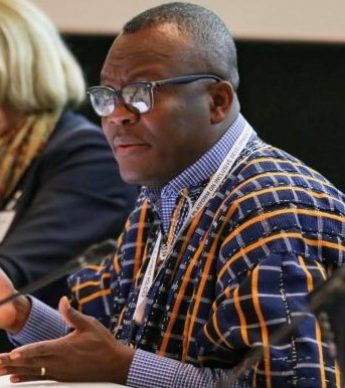
Three days in Accra (27-29 July 2026) kept circling back to a single triangle: governance, conflict and critical minerals, and how tightly the three are bound together. Where governance is transparent, accountable and inclusive, minerals become a foundation for peace and shared prosperity. Where it is weak or captured, the same minerals become a driver of exclusion, instability and, too often, war, from the Democratic Republic of Congo to Sudan to Mozambique’s Cabo Delgado. Our final plenary did not treat these as three separate conversations. It treated governance as the variable that decides which way the other two tip, and it converged on seven propositions built on that premise, concrete enough to act on Monday morning, ambitious enough to still matter in ten years.

1. Make Ownership Visible
Nothing else on this list matters if citizens cannot see who profits from what comes out of their soil. That starts with beneficial ownership registers that end opaque permitting and unmonitored contracts, and with legal and policy frameworks built specifically for the energy-transition era rather than retrofitted from decades-old mining codes. Human rights and environmental protection have to sit inside that foundation from the start, not arrive as an afterthought once the contracts are already signed. Transparency is not a compliance checkbox, it is the precondition for everything that follows, and it is where every other proposition on this list begins.
2. Turn Consultation into Ownership
Communities have been consulted for decades. What they have rarely been given is a stake, and exclusion, not scarcity, is what turns a mining region into a conflict zone. The room pointed to models that already exist and work: the Bafokeng arrangement in South Africa and comparable Australian examples, where community ownership and revenue equity are structural, not symbolic. That principle has to extend to the estimated 150,000 artisanal miners in Kenya alone, through formalization, licensing, skills, financing, safer practices, and to the communities left exposed to unregulated private security forces, a conflict driver raised pointedly in the Nigerian context. None of it holds without protecting the people who expose corruption when it happens: whistleblowers, journalists, and human rights defenders. Governance reform means nothing if the people doing the accountability work aren’t safe doing it.
3. Mandate Value Addition, Not Just Extraction
Africa’s oldest mineral trap is exporting raw material and importing the finished product. The fix has to be written into contracts themselves: local value addition mandated from extraction through processing, not left to goodwill or market forces. This is where the continent’s industrial future is actually decided, not in the mine, but in whether the processing, manufacturing and skills development happen here or somewhere else. Every proposition above depends on this one holding: ownership and community equity mean little if the value they’re entitled to share in keeps leaving the continent unprocessed.

4. Build Strong Continental Institutions
Rather than wait another twenty years for 55 countries to align, the AfCFTA‘s own timeline was raised, more than once, as a cautionary tale, the room pushed toward institutions with real financial and legal weight. A Pan-African Sovereign Wealth Fund to finance skills development, green industrial policy and compliance monitoring. A Pan-African Critical Minerals Council bringing mining chambers, chambers of commerce, central bank governors and technical experts to one table. A functional African Commodities Exchange, already operating across sixteen countries and linked to AfCFTA, proof this is not purely aspirational. And standardized templates for strategic partnership agreements, so no single government negotiates alone against far better-resourced global counterparts. These institutions are what turn Propositions 1 through 3 from national good intentions into continental practice.
5. Close the Enforcement Gap, Don’t Just Widen It
The single most important intervention from our closing session was also the most uncomfortable: new instruments without a supervision mandate just become paper. We already have mining codes. We already have an African Mining Vision, we already have a progressive Africa’s Green Mineral Strategy. The gap has never been imagination, it is enforcement, and the alignment between what continental frameworks promise and what national law actually delivers. That means evaluating and reviving what already exists before building new instruments on top of one we never finished implementing, and it means giving Open Society Foundations and partners, an evaluative role that multiple participants asked for directly: assess the real implementation gap and support a citizen-facing tracking dashboard so civil society can do the accountability work governments are unlikely to do on themselves. This proposition is the test the other six will ultimately be judged by, whether the dashboard tracking our own promises actually goes live.
6. Build the Tools, Not Just the Asks
We were rightly challenged to move beyond broad recommendations and develop practical instruments that policymakers, communities, and advocates can immediately use. These should include a model strategic partnership agreement and a standardized beneficial ownership registry template to operationalize Proposition 1. For Proposition 2, we need a community-level free, prior and informed consent (FPIC) standard that is legally enforceable, not merely an aspiration contained in an international document.
Our advocacy must also focus on a concrete and immediate opportunity: securing the ratification of the statute establishing the African Minerals Development Centre. This is an existing AU commitment awaiting sufficient ratifications and therefore represents an achievable near-term win, distinct from the longer-term institution-building agenda set out in Proposition 4. Strengthening the African Legal Support Facility at the African Development Bank should also be part of this effort, giving Member States the technical and legal capacity to negotiate mineral agreements collectively and from a position of strength, rather than in isolation.
7. Negotiate as One Africa

We are not negotiating in a vacuum. The United States, Russia, China, and now the EU through Global Gateway, are actively reshaping their national mining policies, in some cases, even constitutions. Much of that financing is debt, not grants, and several of our countries are already highly leveraged from oil and gas; ownership rhetoric has to be matched with honest debt-risk analysis, or we simply repeat the extractive cycle in a new form, with better branding. The only viable counterweight, raised again and again in the room, is unity: a common continental negotiating position, backed by a political and advocacy engagement strategy with the African Union and its Member States, and by engaging ECOSOCC, the AU’s Economic, Social and Cultural Council, to broaden this coalition well beyond the people who happened to be in Accra with us.
That coalition is where all seven propositions ultimately have to live, not as seven separate initiatives, but as one continental position on the same triangle we opened with: governance, conflict and critical minerals, and the conviction that the first can be made strong enough to defuse the second and make the third a genuine foundation for peace.
This is the work carried forward by the Open Society Foundations across our Democratic Futures, Transformative Peace and Resource Futures in Africa Programs, and by every government, institution and movement that sat in this room with us. Accra was the diagnosis and the design. These seven propositions are what we build next.

If you’d like to receive my articles automatically as soon as they’re published, simply follow this blog using the “Follow” button at the bottom left of this page or send me an email at Desire.Assogbavi@Assodesire.com

