Empty Chairs in Luanda, Full Rooms in Moscow
I have sat through more African Union summits than I can count. I have waited in the summit corridors for presidents who never came and listened to ministers or ambassadors read speeches written for their heads of state. So, when the photographs from Moscow came through last week, African leaders filing one after another into the Kremlin, I wasn’t surprised. I was tired. Then I did the arithmetic.
Only 6 heads of state went to AU Extraordinary Summit in Luanda on 30 August 2026 to talk about how Africa stops its wars. 22 went to Moscow last week to talk about new Russia-Africa action plan for 2027-2029, discuss geopolitics, negotiate grains, fertilizers, miming, nuclear power and other individual national contracts… We should be honest about what that gap says.
The Luanda Summit was not a routine meeting. It was the 21st Extraordinary AU Summit, convened under Assembly decision 949 of February 2026, and Angola’s own diplomats described it as the first extraordinary summit of heads of state devoted to conflict prevention since the AU was founded. Its agenda was the Luanda Plan of Action, the Continental Early Warning System and the African Peace Fund. In other words, the machinery that is supposed to keep our people alive
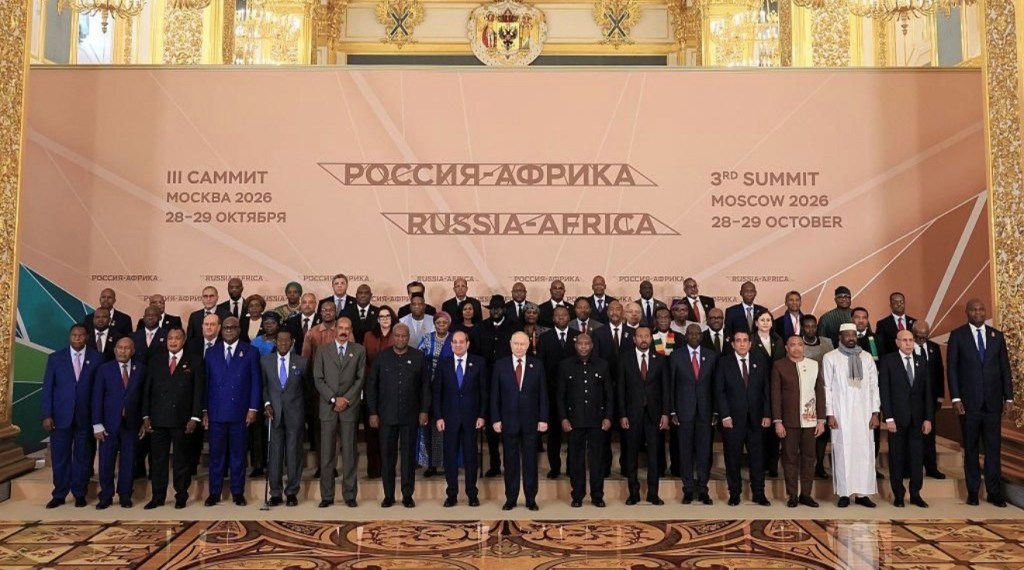
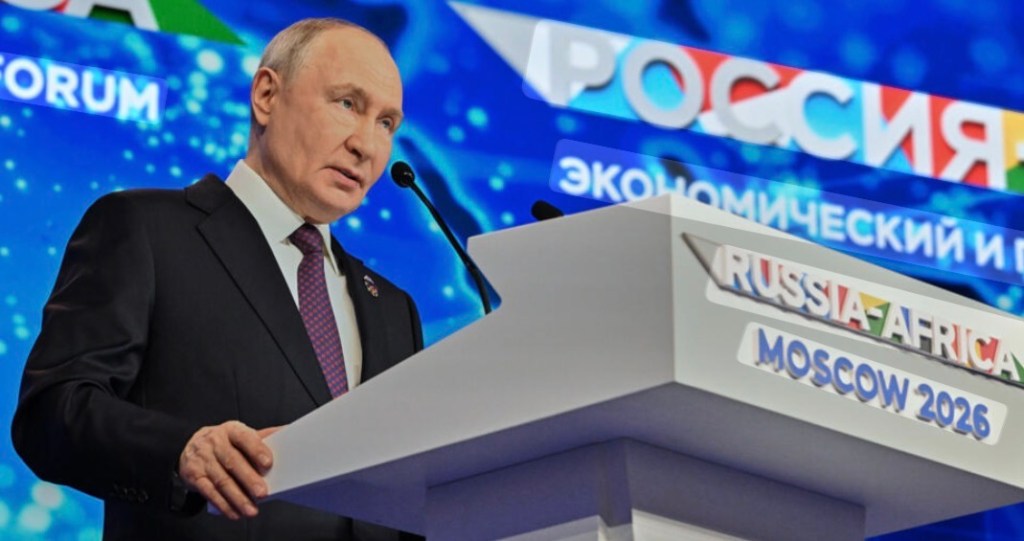
Eight weeks later, 48 African delegations went to the third Russia-Africa Summit in Moscow (28-29 October), 22 of them led by heads of state. That is five more than the 17 who went to St Petersburg in 2023. The summit was co-chaired by President Putin and the AU Chairperson, Burundi’s Évariste Ndayishimiye.
Inside the Moscow Summit
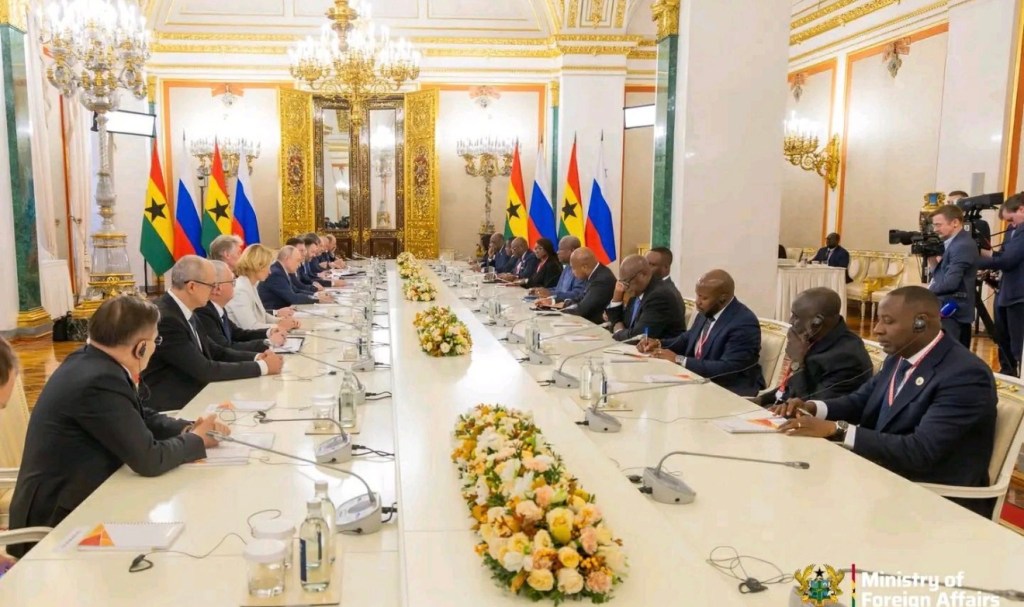
The summit closed on 29 October with three documents: a summit declaration, a declaration on civilian uses of artificial intelligence, and a Russia-Africa action plan for 2027-2029. The Kremlin says about 150 documents were signed on the sidelines, 53 of them between governments or ministries. Rosatom signed nuclear cooperation agreements with Rwanda, Togo and Uganda. Russia and South Sudan, a country still at war with itself, signed a military cooperation agreement. In Ghana, Rusal agreed joint ventures for bauxite mining of up to 5 million tonnes a year and an alumina refinery, with Rusal holding the majority stakes.
The declaration itself is worth reading closely. It backs a “more multipolar world order”, greater African representation on the UN Security Council, and it opposes “unilateral coercive measures and the unlawful seizure of sovereign assets”. It also proposes a permanent high-level Russia-Africa dialogue on counterterrorism, food security and information security.
This is what troubles me. Eight weeks after only 6 heads of state adopted the Luanda Plan of Action, more than three times as many endorsed, in Moscow, a text that describes the world order and creates a standing mechanism on Africa’s security. The continental position we still haven’t written at home has, in effect, been drafted with someone else holding the pen.
The question about delivery. Most of the nuclear items are memoranda, working groups and talks, not contracts. Russia has signed nuclear cooperation agreements with at least 15 African states, and none has yet become a completed project. Trade reached about USD 27 billion in 2025, still well short of the USD 40 billion target set at Sochi in 2019. And some things never made it onto the official page. The recruitment of Africans to fight in Ukraine, which investigative journalists say had cost 502 African lives by June, went unmentioned in the summit’s outcomes. So did the conflicts that brought only six presidents to Luanda.
I have nothing against African leaders engaging Moscow, Washington, Paris, Beijing, Brussels or Ankara. Partnerships matter. But for years many of us have asked our leaders to hold exactly this strategic conversation at home first: to define our collective interests and agree how the continent should move through a world that is being rearranged. That conversation still hasn’t happened. And the numbers below show what its absence is costing us.
Our house is on fire
Africa is now the world’s main theatre of armed conflict, by almost any measure. The numbers are not ambiguous. In 2025, Africa recorded 29 state-based armed conflicts, more than any other region and the highest number since 2020. It also accounted for 34 of the world’s 75 non-state conflicts, 14 of them in Nigeria alone. Violence linked to militant Islamist groups killed 24,000 people on the continent that year, a 24% rise in twelve months, across a record of over 8,000 violent events.
The human displacement is on a scale that is hard to take in. By mid-2026, 45.7 million Africans had been forced from their homes, about 3% of the continent’s population. Sudan’s war alone has displaced nearly 14 million people: 9.1 million inside the country and 4.5 million who have fled abroad. In West and Central Africa, some 20 million people were forcibly displaced as of April this year.
Two of these numbers deserve a second look. Six years ago, 29 million Africans were displaced. Today it is close to 46 million. That is a population larger than Morocco’s, living away from home because of war and repression.
And Sudan has become a test the continent is failing in public. Globally, deliberate killings of civilians jumped from 14,200 in 2024 to 76,500 in 2025, a rise PRIO attributes to Sudan, and above all to the massacre in El Fasher. The Sahel, Somalia and the Lake Chad Basin together account for 98% of all deaths linked to militant Islamist groups on the continent. None of these crises is new. All of them were on the Luanda agenda.
The conversation we keep postponing
The world is being rearranged around us. Aid budgets are being redirected to defense. Great powers are competing openly for our minerals, our votes at the UN and our ports. In that kind of world, every summit with an external partner is also a negotiation. Moscow, like Washington, Beijing, Brussels, Tokyo or Ankara, arrives with a clear idea of what it wants from Africa. The question is whether Africa arrives with a clear idea of what it wants from them.
Too often, it doesn’t. We have Agenda 2063, the African Common Position on UN reform, the African Mining Vision, the AfCFTA, The African Common Portion on Debt… These are serious frameworks. But we have never sat down, at the level of heads of state, to agree a shared reading of the geopolitical shifts and a common line for engaging the powers that are courting us. So 22 presidents can travel to Moscow, each with a separate bilateral agenda, while the continental position is spoken by whoever happens to be chairing that year. And they can come home having endorsed someone else’s description of the world order.
This is also why Luanda mattered. Conflict prevention is a strategic issue. Wars in Sudan, eastern DRC and the Sahel are increasingly internationalized, with outside powers supplying weapons, fighters, money or diplomatic cover. A continent that cannot agree on its own interests will keep finding those interests settled by others, on its own soil.
7 actions our leaders should take now
The Luanda Plan of Action already exists on paper. What’s missing is follow-through. Here is what would change that.
- Hold an African summit on the changing world order before the next external one. The AU Assembly should convene a dedicated session, ideally at the January 2027 ordinary summit, to adopt a short continental position on the geopolitical shifts: what Africa wants on security, minerals, trade, finance and global governance reform. Every head of state attending a Russia, China, US, EU, Japan, Türkiye or Gulf summit would then carry that same brief.
- Make Luanda measurable. The AU Commission should publish a public scorecard on the Luanda Plan of Action every six months, country by country, with the Peace and Security Council reviewing it in open session. Ndayishimiye said it himself in Luanda: the commitments must produce results that can be measured on the ground.
- Fund our own peace. Member states should close the gap to the USD 1 billion Peace Fund target by the end of 2027, and use more than interest earnings for prevention. The 2016 Kigali levy of 0.2% on eligible imports was designed to do exactly this; it should be applied by every member state, not a handful.
- Put prevention money where the early warnings are. The Continental Early Warning System already flags crises months in advance. Link its alerts to an automatic trigger for mediation teams and Crisis Reserve Facility funding, so a warning produces action instead of a communiqué.
- Protect development in fragile zones. Ministers of finance and planning, working with the AfDB, World Bank (IDA) and RECs, should agree conflict-sensitive investment rules: risk-sharing guarantees, local procurement and community ownership that keep projects running when security deteriorates, rather than shutting them down at the first incident.
- Turn up for Africa. Heads of state should treat AU extraordinary summits on peace and security as non-delegable. If 22 presidents can find time for Moscow, a full house in Addis Ababa, Luanda or Malabo is not too much to ask. Citizens, parliaments and the press should keep count, and say so.
- Bring citizens and the Pan-African Parliament into the room. ECOSOCC, civil society, women’s and youth networks and the Pan-African Parliament should be part of monitoring Luanda and shaping the continental position on geopolitics. People living with these wars know what prevention requires.
None of this is an argument against partnerships. Africa should talk to everyone. But a continent of 1.5 billion people, with 29 active state-based conflicts and nearly 46 million people driven from their homes, cannot afford to keep arriving at other people’s tables before agreeing on what it wants at its own.
Africa needs leadership that anticipates and acts. The next time an extraordinary AU summit is called on the lives and security of our people, the attendance list should look like Moscow’s. Better still, it should look fuller.

