Lire la version en Français ici
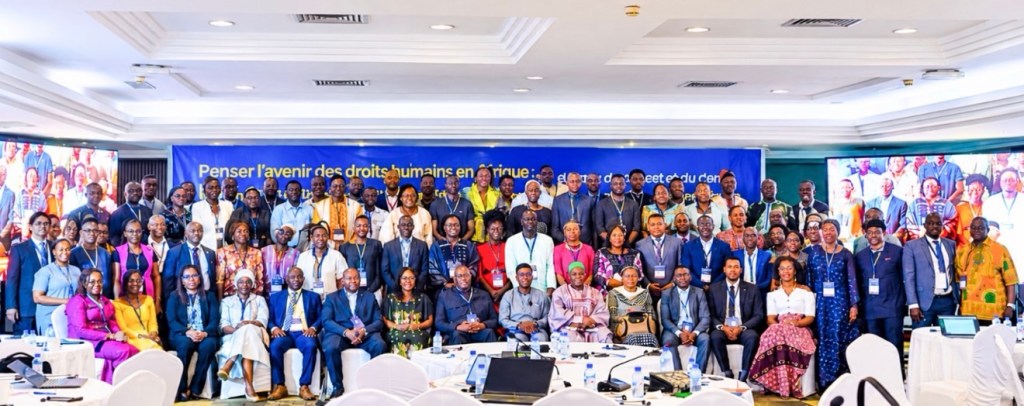
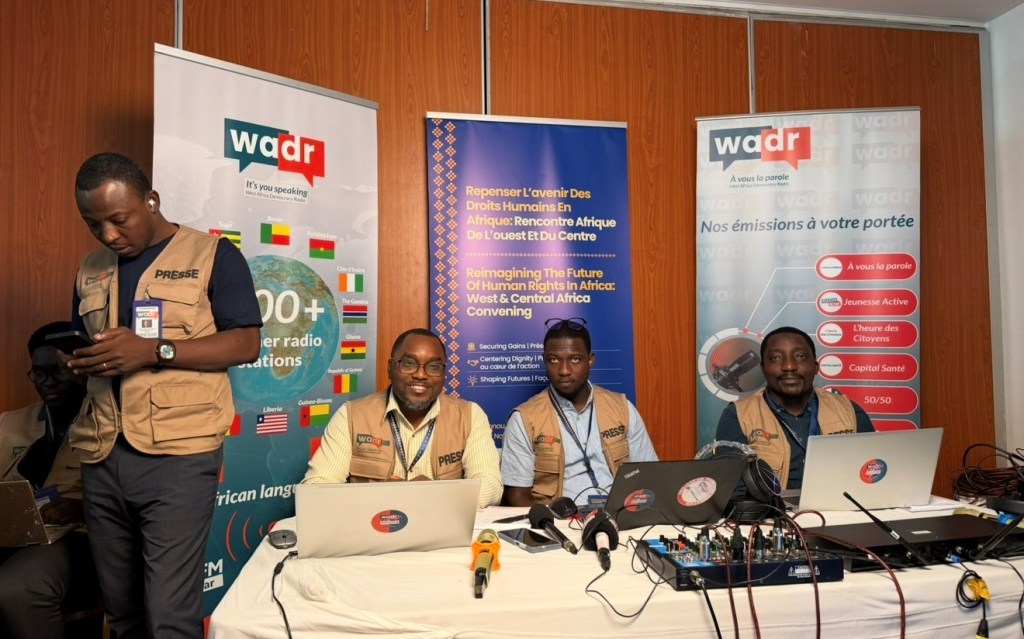
This year, Open Society Foundations, together with the UN Human Rights Office, the African Commission on Human and Peoples’ Rights, the Network of African National Human Rights Institutions and other partners, embarked on a series of regional conversations to confront that question honestly. Following convenings in Southern and Eastern Africa, the West and Central Africa dialogue takes place in Cotonou, Benin on 10-12 November 2026. The ambition is to contribute to the Roadmap for a Future-Fit African Human Rights Architecture.
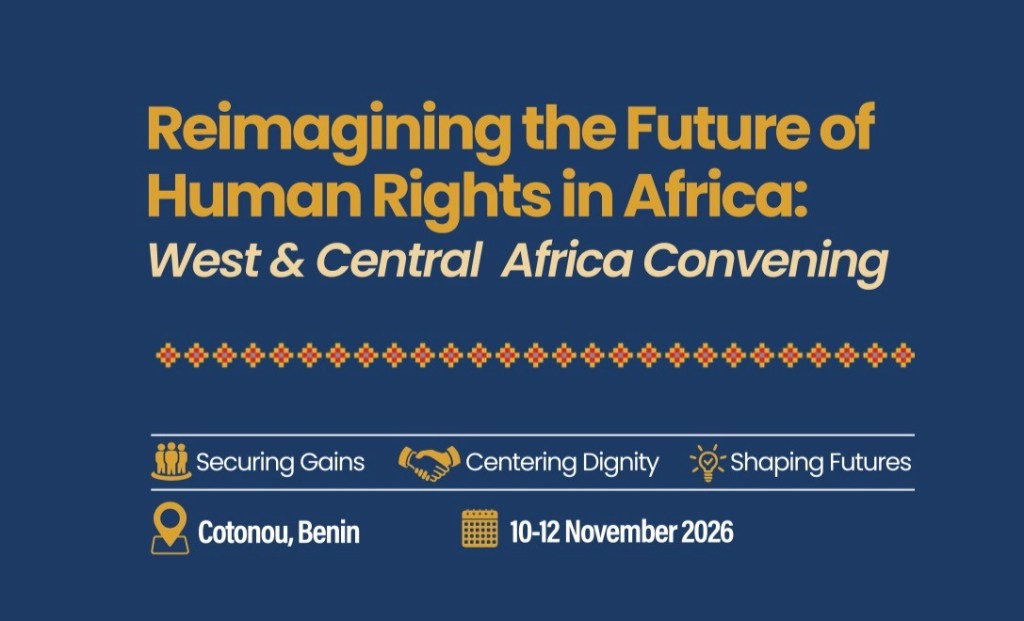
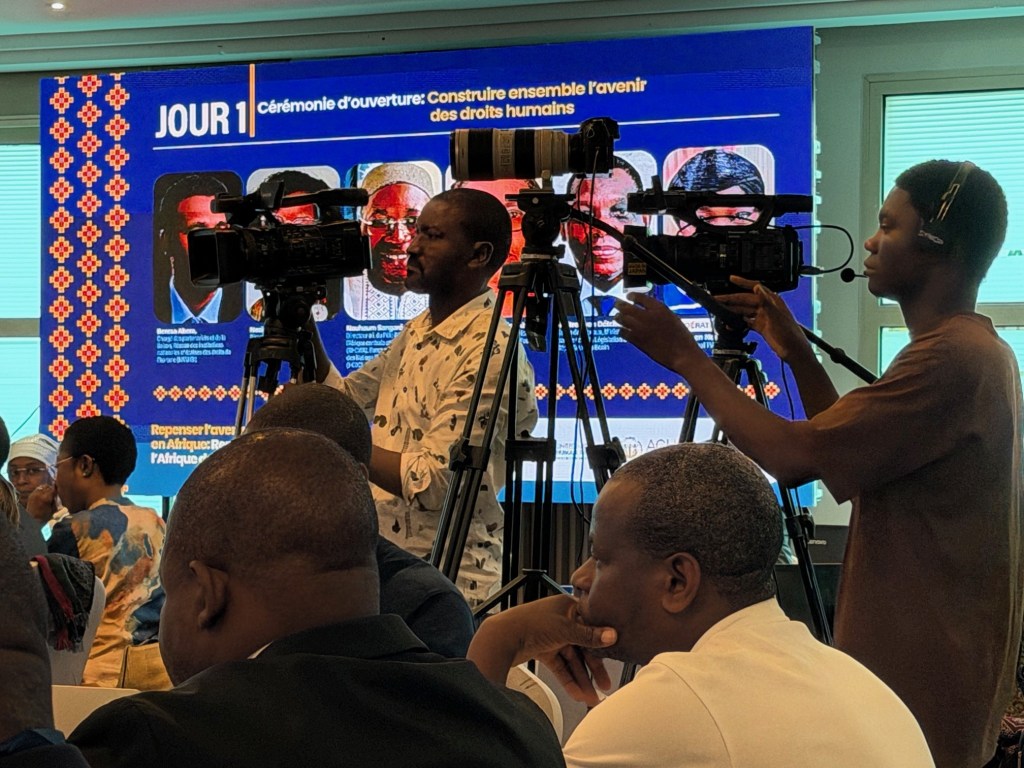
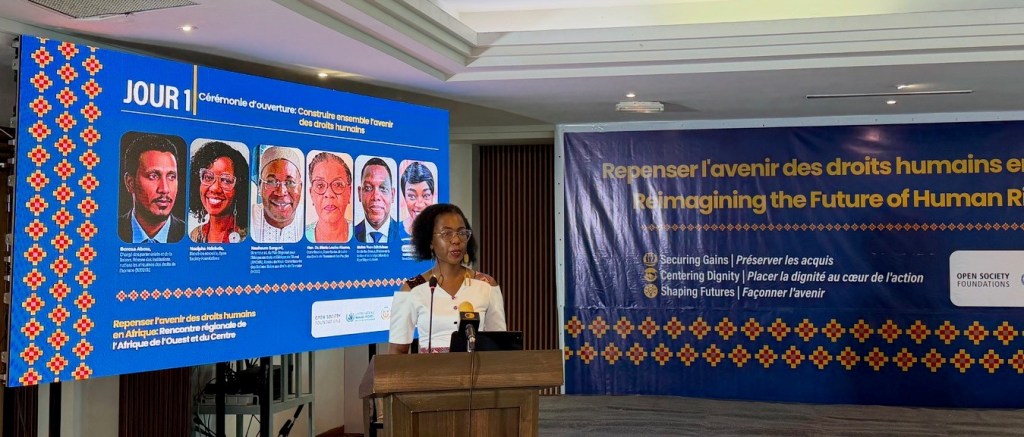
I am in Cotonou, Benin, taking part in this conversation that feels both urgent and deeply personal: “Reimagining the Future of Human Rights in Africa”. What will it take to ensure that human rights and dignity remain at the center of Africa’s future?
The program brings four connected questions into focus: democratic governance, constitutionalism and civic space; peace, security and human rights; human rights economies, climate and natural resource governance; and the regional institutions and partnerships needed to make protection effective. Technology, gender equality, youth leadership and inclusion run across these discussions.
We should approach this exercise with a willingness to examine our own assumptions. Have our institutions kept pace with changes in political and economic power? Do people recognize their everyday struggles in the language we use? Can those whose rights are violated reach the mechanisms established to protect them? And when they do, does anything change?
These questions have accompanied much of my working life. At a young age, I was elected by Togo’s Parliament to serve on the National Human Rights Commission, becoming its youngest commissioner. I also spent four years hosting human rights education programs on the national broadcaster, Radio-Lomé. Those moments remain a reference point for how I think about this work: institutions need independence and authority, and people need to understand their rights well enough to claim them.
A right that exists in a legal text but remains unknown to its holder has a long way to travel before it becomes protection.
Why this conversation cannot wait
Africa’s human rights movement has achievements worth defending. Liberation struggles, women’s organizing, independent journalism, public-interest litigation and community resistance have helped build an extensive body of rights and institutions. The African Charter’s recognition of individual and peoples’ rights offers a powerful foundation for addressing freedom, collective wellbeing and development together.
Yet that foundation is under pressure. Conflict, restrictions on civic space, economic exclusion and organized opposition to equality are testing the credibility of rights commitments. Technological change is redistributing power faster than many accountability systems can respond. International institutions face their own crises of confidence, aggravated by the selective application of principles that are supposed to be universal.
The public mood deserves careful attention. Afrobarometer’s September 2026 analysis of surveys conducted in 38 countries in 2024-2025 found that 64% of respondents preferred democracy, while only 38% were satisfied with how it worked in their country. Support for democracy and rejection of authoritarian alternatives had also weakened over the preceding decade. These are findings from surveyed countries, rather than a census of the continent, but they reveal a serious challenge to democratic confidence.
We cannot assume that people will continue to defend institutions whose promises they rarely experience. Nor should frustration with those institutions be treated as consent to repression.
For a young person facing unemployment, a woman denied justice after violence, or a community displaced by mining, the credibility of human rights depends on whether they offer a usable route to change. Freedom of expression matters to the person exposing a stolen health budget. Access to information matters to the community questioning a land concession. Economic justice and civic freedom belong in the same conversation.
Our Southern Africa convening in Gaborone made that connection explicit highlighting the need to translate the region’s considerable institutional assets into stronger coordination, community ownership and prevention, and to make rights tangible through access to essential services, livelihoods and a healthy environment.
The Eastern Africa discussions added a call for African ownership of future-making, youth leadership, political education and sustained movement-building. Our closing account also called for African-led financing, better institutional coordination and measurable follow-up, while questioning whether existing systems can respond adequately to artificial intelligence, climate disruption and transnational repression.
These are useful starting points. Our agenda creates room for traditional communicators, oral knowledge and cultural expression. That should help challenge the claim that dignity and accountability are foreign to Africa. But we must examine our traditions honestly, drawing on their resources for solidarity while confronting practices that exclude women, younger people or minorities. Historical legitimacy cannot excuse present-day discrimination.
Security and economic policy belong at the center
The Cotonou agenda asks how human rights can become integral to security, early warning and transitional justice. It also includes displacement, forced migration and third-country deportations. These choices matter in a region where protection must work across borders and through periods of conflict or political rupture.
We should reject the assumption that respect for rights can wait until security has been restored. Security responses that abuse civilians risk deepening the mistrust on which armed actors feed. Community reporting should lead to action before violence escalates, with clear responsibility for assessing warnings and responding to them. Military and police operations need independent scrutiny, accessible complaints and credible investigation of abuses.
People displaced by conflict, refugees, migrants and stateless people must remain part of this discussion as rights holders. Cooperation on migration should be assessed against protection obligations, including safeguards against return to persecution or serious harm. Regional political disagreements must not become an excuse to abandon people whose safety depends on cross-border assistance.
Economic decisions deserve the same scrutiny. The program explicitly connects human rights to taxation, debt management, fiscal space, corruption and illicit financial flows. It asks how natural resource extraction can generate fairer benefits for communities and how environmental policy can protect critical ecosystems such as the Congo Basin.
A human rights economy should change the questions asked before decisions are made. Who bears a tax increase? What happens to access to healthcare when debt service squeezes a budget? Does a mining agreement create decent work and retain value locally? Can affected communities influence its terms and obtain remedy? Are Indigenous peoples and forest-dependent communities shaping conservation decisions?
For OSF and its partners, this is an opportunity to connect human rights advocacy more closely with work on development finance, critical minerals and economic transformation. Finance ministries, debt negotiators, public auditors and development banks belong in these conversations. Rights organizations need the expertise to challenge economic choices with evidence, while community organizations need access to the information that makes participation possible.
Institutions must be judged by the protection they deliver
We should avoid a sweeping verdict that African human rights institutions have failed. Their mandates, independence, resources and records differ. The African Commission has developed standards and exposed violations; the African Court has delivered judgments advancing protection. National institutions and civil society have created avenues for accountability under difficult conditions.
The more uncomfortable question is why these achievements coexist with such restricted access and persistent failures of implementation.
Only 34 of the African Union’s 55 member states had ratified the protocol establishing the African Court, and only seven then allowed direct applications by individuals and eligible NGOs. Five states had withdrawn their declarations permitting that access. The Court’s promise is continental; direct access remains severely limited.
We have too often treated the creation of an institution, the adoption of a resolution or the delivery of a judgment as the end of the work. For the person seeking protection, these may be only the beginning. Implementation requires political pressure, public resources, legal support and persistent follow-up.
Responsibility rests first with states. Governments must prevent violations, investigate abuses and provide remedies. Regional and international bodies cannot compensate indefinitely for national authorities that refuse to fulfil their obligations. Equally, inadequate funding does not explain every failure: political interference, selective condemnation and reluctance to confront powerful actors also require scrutiny.
Our division of labor needs to become clearer. Independent national human rights institutions should provide accessible scrutiny, investigate within their mandates, monitor places of detention and track the domestic implementation of recommendations. They need transparent appointments, secure funding and freedom to challenge the state. They should never become substitutes for independent courts or civil society.
Civil society’s role is to organize, document, litigate and hold power accountable, including the power exercised by human rights institutions themselves. Regional mechanisms should address cross-border patterns, offer avenues beyond compromised national systems and connect their findings to sustained political engagement. The African Commission’s recommendations and the African Court’s binding judgments require different follow-up strategies. UN bodies should reinforce these efforts through their own mandates, expertise and international scrutiny. ECOWAS and ECCAS should be part of this coordination, with approaches adapted to their different powers and institutional capacities; a regional label alone does not guarantee an effective remedy.
Coordination should make this system easier to navigate. A survivor should not have to understand the entire institutional landscape before finding help. We need referral arrangements that respect each mechanism’s rules, access to legal assistance, and clear responsibility for following a case through. Shared information must protect confidentiality and never create another route through which defenders can be identified and targeted.
Protecting defenders must be a central test
Recently, I visited the Karibu shelter in Dakar and met activists who had been forced to flee their countries. We discussed regional human rights mechanisms available to them. The encounter brought a practical question into sharp focus: what does access to a mechanism mean for someone who needs safety now, while a legal process may take years?
Explaining available avenues matters. So does ensuring that defenders have somewhere safe to sleep, legal status in a host country, healthcare, secure communications and the means to keep working. Protection must extend to families and colleagues exposed to retaliation. Exile should not mean the disappearance of a person’s voice from the struggle they helped build.
The risks are stark. Front Line Defenders’ Global Analysis 2025/26 reported at least 357 human rights defenders killed in 27 countries during 2025. This is a documented global minimum, not an Africa-specific total. The same report described arrests, threats, legal harassment and digital attacks against defenders.
An effective African response should connect emergency assistance with longer-term protection. Governments willing to offer refuge, shelters, bar associations, national institutions, regional mechanisms and funders should establish dependable arrangements for relocation, legal support and continued organizing. Responses must account for the different risks faced by women defenders, LGBTIQ+ activists, rural organizers and those documenting conflict or challenging powerful commercial interests.
We must also ask who remains outside our usual networks. A community journalist, an informal settlement organizer or a woman defending access to land may be doing human rights work without using that description. Protection systems should recognize the work and the danger, rather than depend on an organization’s visibility or its ability to complete a donor application.
The Road to Gaborone, our continental convening
The conversation in Cotonou is part of a larger journey. Following these regional discussions, we will gather in Gaborone, Botswana, for a continental conversation, bringing together the experiences, ideas and proposals emerging from across Africa. Our ambition is to shape a continental roadmap that policymakers can act on, grounded in people lived realities and clear about what must change, who must act and how progress should be measured.
We intend to carry that roadmap into upcoming gatherings of human rights institutions, African Union ministerial meetings and the AU Summit, using every opportunity to turn collective reflection into political commitment and practical action. The voices heard throughout this process must travel beyond our meeting rooms and reach the places where decisions affecting people’s lives are made.
Stay tuned to this platform as I share further reflections, updates and opportunities to contribute. The conversation continues, and so does our responsibility to make it count.
On this page, I write on African policy, politics and institutions. If you’d like to receive my articles automatically as soon as they’re published, simply follow this blog using the “Follow” button at the bottom left of the page or send me an email at Desire.Assogbavi@Assodesire.com.