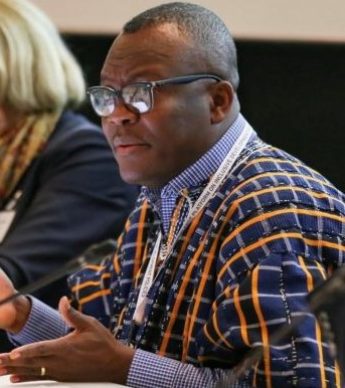
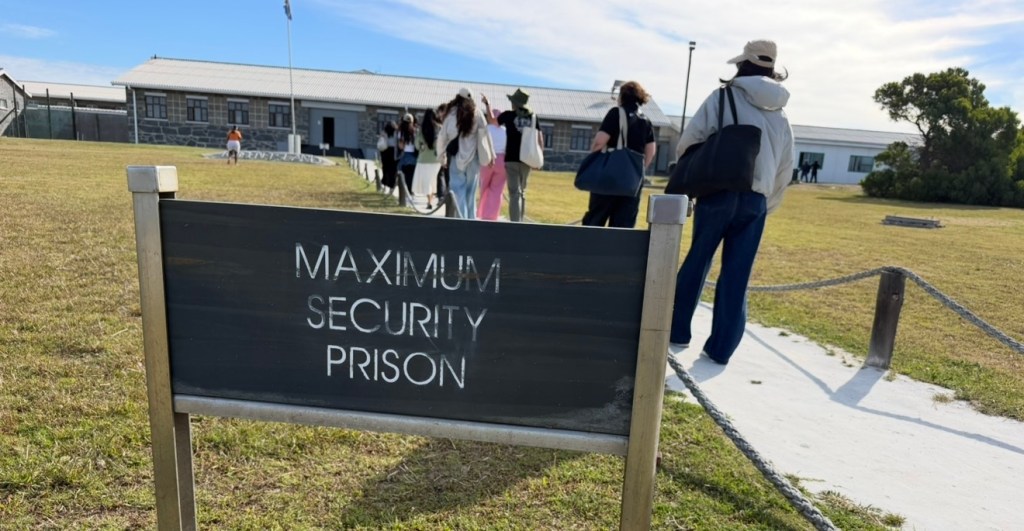
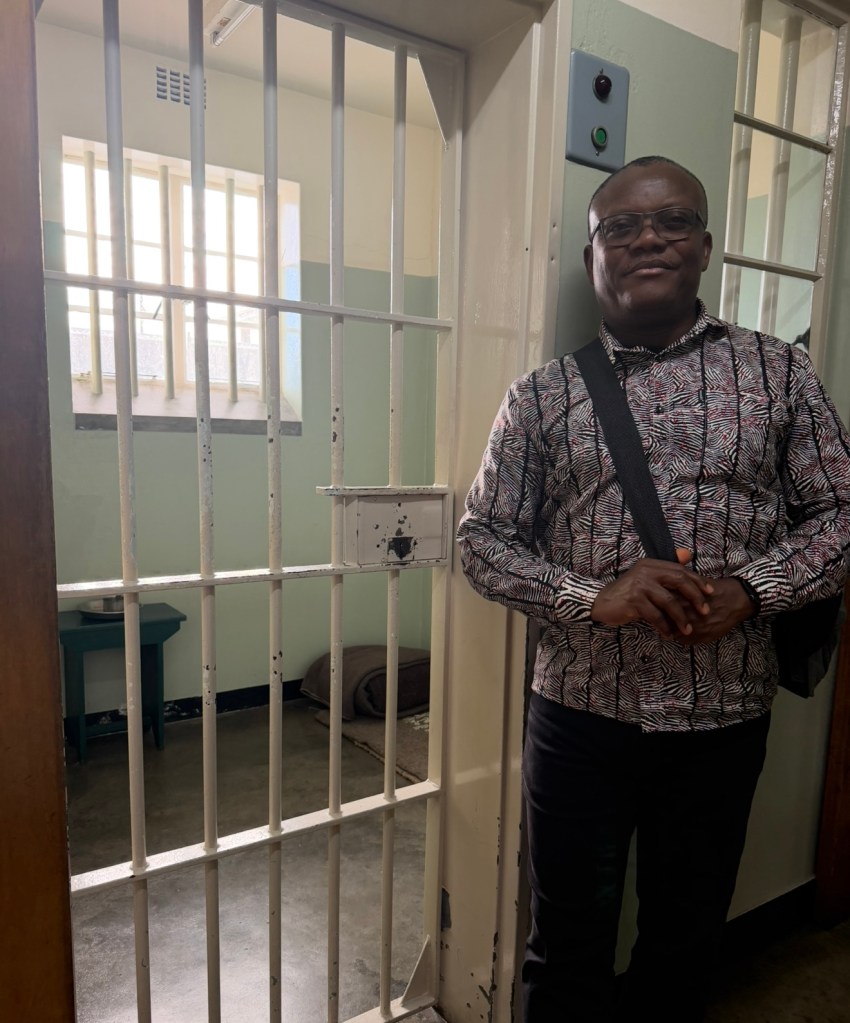
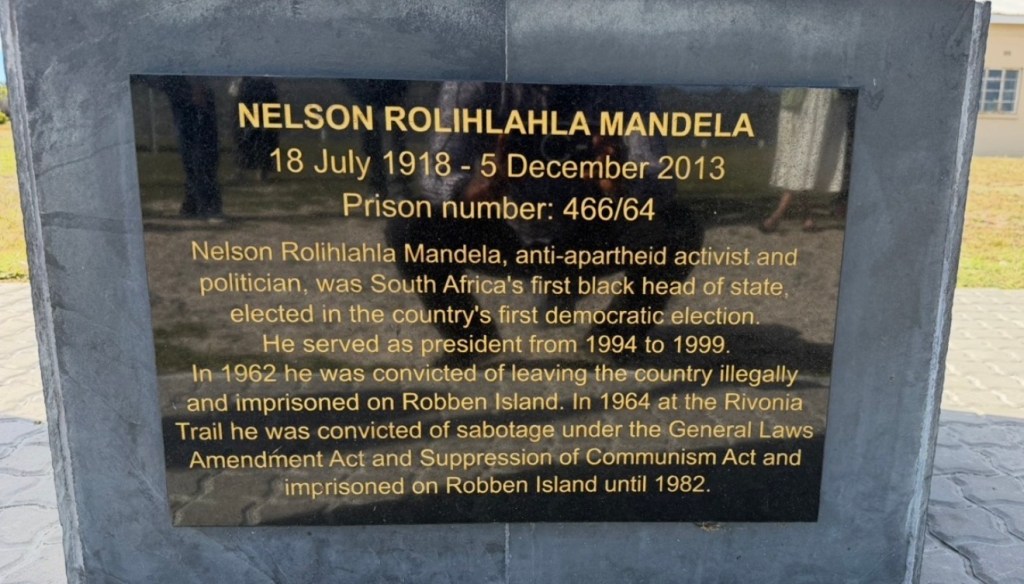
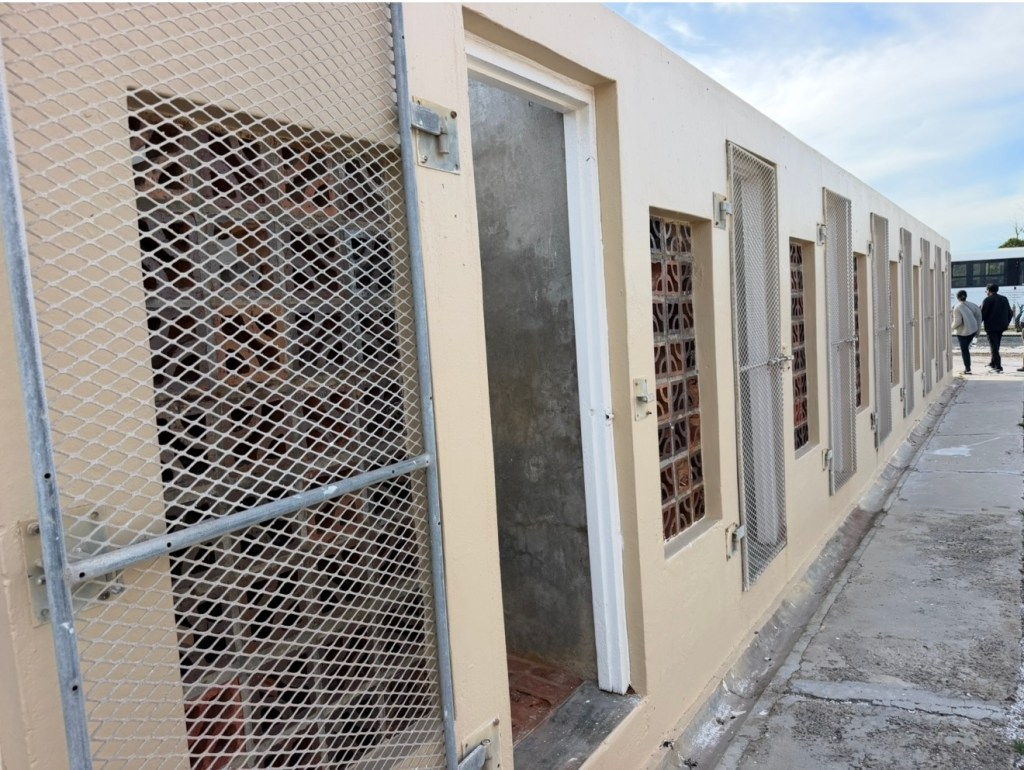
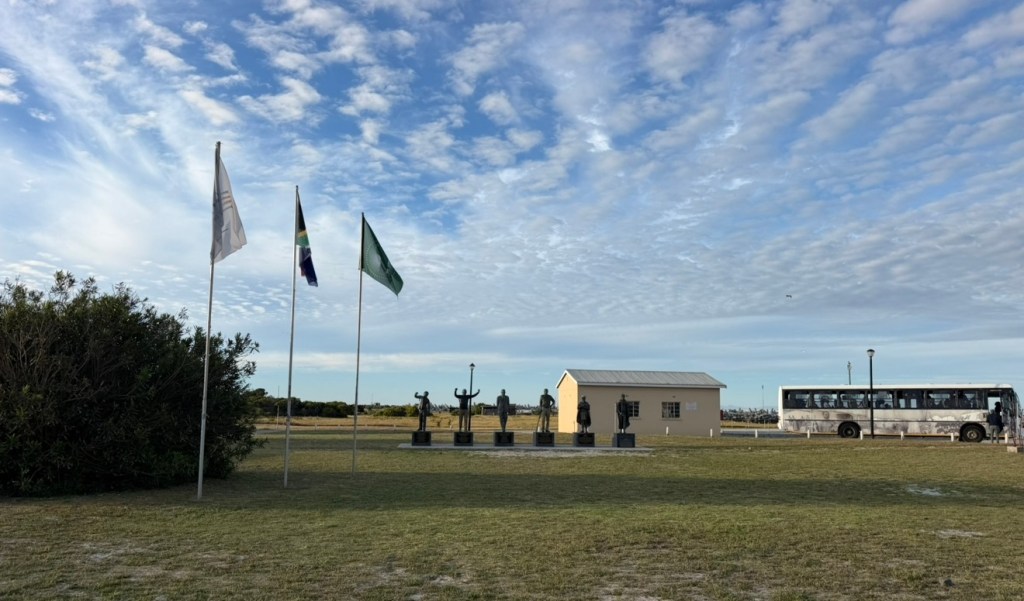
Today, I visited Robben Island Maximum Security Prison in Cape Town… I stood at Nelson Mandela’s cell, with Professor Saths Cooper, a former political prisoner who now chairs the Robben Island Museum.
Walking through this prison as he shared his own experiences gave the visit a deeply personal meaning. Seeing his name on the museum’s display, then hearing him tell his story, brought the history before us to life. A man once imprisoned here now helps ensure that the world remembers.
Standing at Mandela’s cell, I reflected on the sacrifices behind freedoms we too easily take for granted, and on our responsibility to protect and extend them.
The visit also brought me back to what the Open Society Foundations stand for: promoting human rights, equity and justice across the world and advocating for a society where everyone can participate fully, regardless of who they are. These principles take on a deeper meaning in a place where people were imprisoned for demanding recognition of their equal humanity.
For me, that is the thread connecting this history to our work today: defending the right to speak and organise, supporting those who challenge injustice, and ensuring that people excluded from power can shape the decisions affecting their lives. That responsibility extends to economic justice. The promise of liberation remains unfinished when people can vote but have little influence over decisions that shape their livelihoods, education and opportunities.
I leave grateful to Professor Cooper, and with a question that will stay with me: what are we doing with the freedom others paid so dearly to secure? The deepest tribute we can offer those who fought for freedom is to make it real for those still waiting to experience it.
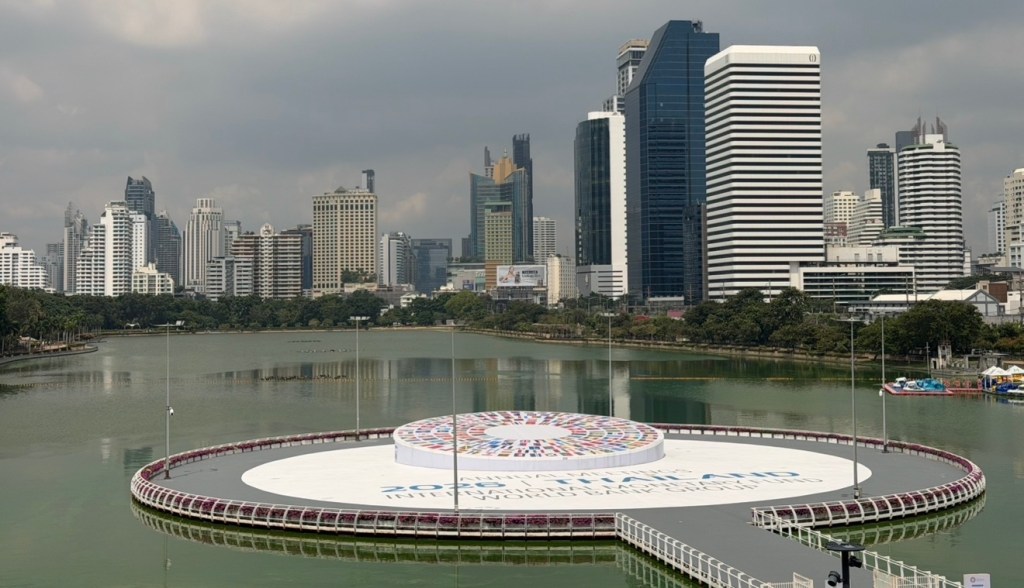
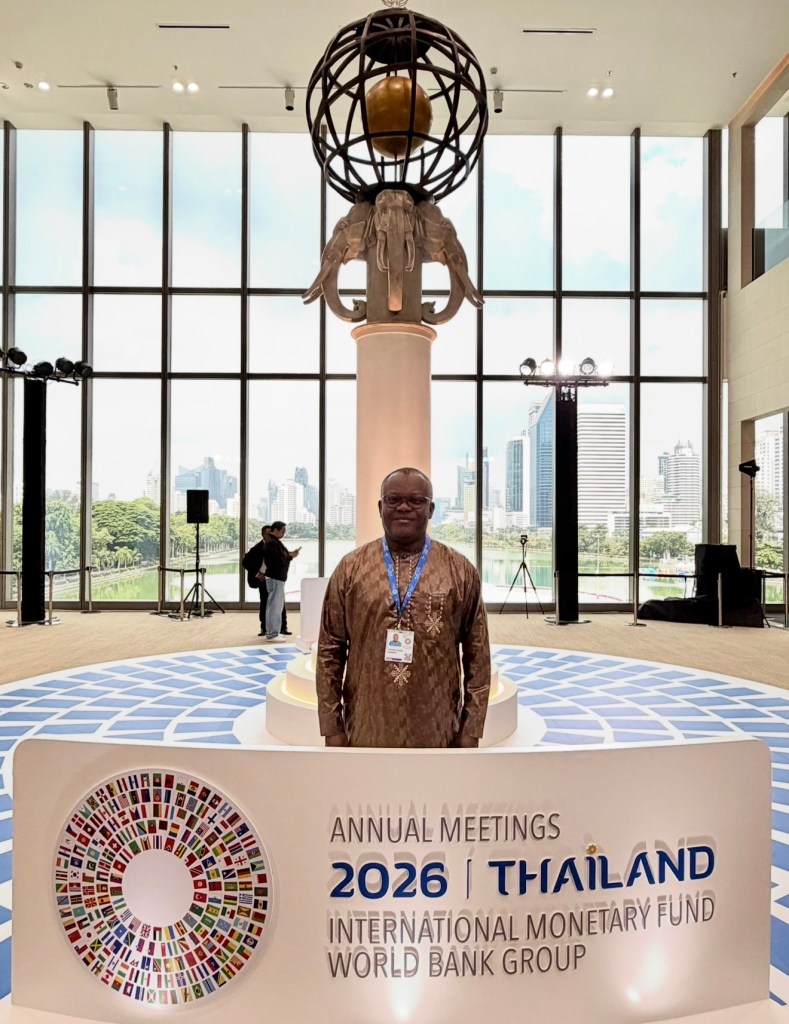
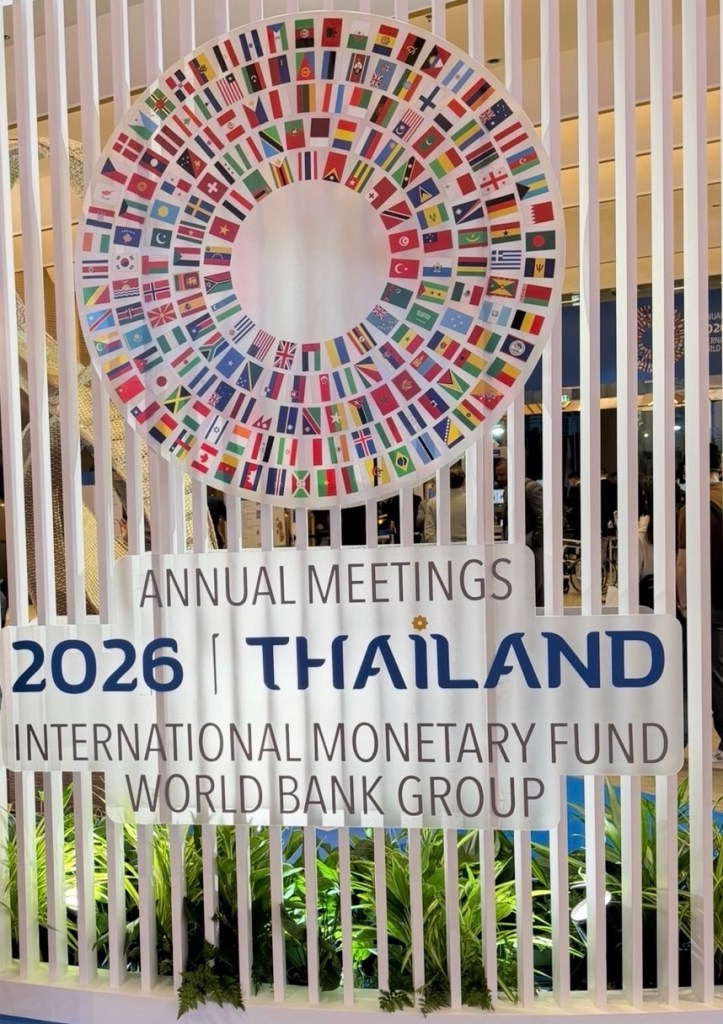
I spent last week in Bangkok with the Open Society Foundations delegation at the Annual Meetings of the IMF and the World Bank from 12-18 October 2026. More than 18,000 people came: finance ministers, central bankers, bankers, researchers, activists, civil society…. What actually happened?
My short answer: Bangkok was a week of honest diagnosis and very little cure. The two institutions now describe the pain of developing countries almost exactly as African ministers do. But they left the rules that cause much of that pain largely untouched.
Here are what I saw, what the numbers say, and what I think should come next.
1. Everyone agreed the debt burden is crushing. Nobody agreed to change much.
IMF Managing Director Kristalina Georgieva gave the clearest number of the week. In low-income countries, debt repayments now take about 14% of government revenue, more than double the level of a decade ago. That happened even though their total debt has gone down. The reason is simple: interest rates in rich countries went up, and poor countries pay the price.
The World Bank’s own data shows that nearly four in five African countries now spend more on interest than on health or education. The UK’s Foreign Secretary told the meetings that sub-Saharan governments spend more than three times as much on debt service as on education.
Yet the official answer stayed the same. The IMF’s steering committee asked governments to cut deficits and “rebuild buffers”, while protecting the most vulnerable. Many of us in civil society call that austerity with a softer name. Georgieva herself admitted, “We are in a place where we have many more questions than we have answers.”
2. The World Bank bet on jobs and private money.
World Bank President Ajay Banga said “this meeting is all about jobs, private capital mobilization and micro- and small businesses.” The Bank announced a record $112 billion in private capital mobilized last year and pointed to a gap of 800 million jobs for young people entering work in the next decade. That sounds impressive. But most of that private money went to middle-income countries, not to the poorest. Banga admitted that getting it into low-income countries remains “a challenge.”
3. Africa’s growth looks fine on paper.
The IMF raised its growth forecast for sub-Saharan Africa to 4.5% for this year and next. That is faster than the world average of about 3.1%. But the IMF’s own Africa Director, Zeine Zeidane, said growth per person “remains quite weak.” He also warned that bilateral aid to the region will fall by another 12% this year, after a sharp cut in 2025.
4. On debt workouts, small steps.
The Global Sovereign Debt Roundtable reported that most restructurings started in 2021-22 are now nearly done, with Ethiopia’s bond deal still pending. The US Treasury said it wants Senegal’s debt treatment finished in under a year. That would be much faster than earlier cases: Ghana took more than a year just to reach a deal with its official creditors.
5. On voice, nothing new.
Africa is home to about 18% of the world’s people but holds only about 6.5% of the votes at the IMF. Ministers in Bangkok “looked forward” to ratifying a quota increase agreed back in 2023, and said future reform would follow principles adopted in April. There was no new seat and no new timetable.
6. Climate quietly left the room.
This was striking. Bangkok opened with unusual floods, and the IMF itself flags a severe El Niño as a major risk for Africa. Yet climate barely featured. Months earlier, under US pressure, the World Bank dropped its goal of putting 45% of its financing into climate. The US Treasury Secretary did not even come to Bangkok.
Here is the honest picture. Africa came to Bangkok asking for new rules, and it mostly got sympathy. But I did not leave discouraged, for three reasons.
A quiet reform with big potential. Just before Bangkok, the IMF and World Bank updated the tool they use to judge whether a poor country can carry its debt: The debt framework for low-income countries. It is the first full rewrite since 2017. The new version can finally count the long-term payoff of spending on people. Their own simulations show that spending 1% of GDP more on health and education lifts long-run output by about 1.9%. On infrastructure, it is about 3%. In plain words, building schools and clinics can pay for itself. The new tool starts in late 2027. Almost nobody talked about it in Bangkok. That is exactly why Africa should own it now.
The AU at the center. At the African Caucus meeting, according to the African Union, Banga said he wants to work with and through the AU rather than through scattered initiatives across the continent. That is a public commitment. Africa should hold him to it.
Africa building its own tools. While the big meetings repeated old answers, African and Southern countries were busy elsewhere. The African Union launched the Africa Credit Rating Agency in Mauritius on 7 October. Why does this matter? In 2024, African countries paid about $9 in interest for every $100 they borrowed on international markets, according to OECD estimates. Emerging Asia paid about $4.70 and Latin America about $6.50. Twenty-three African countries are not rated at all by the big agencies. A credible African agency, one that is willing to downgrade an African government when it must, could help bring that cost down. The continent has also adopted in February this year, a Common Position on Debt. If it is properly implemented, it could help shift the debate from debt sustainability to debt productivity.
In Bangkok itself, the new Borrowers’ Platform held its first governing council, with Pakistan taking over the chair from Egypt. For the first time, debtor countries have a place to compare notes and learn from each other. Its message was simple: debt should be a tool for development, not a brake on it.
There is also a lesson from the host. When Thailand last hosted these meetings in 1991, Asia-Pacific produced about a quarter of the world’s output. Today it is 43%. Industrial policy, patient public banks and strong tax systems played a big part. Even so, Thai officials said in Bangkok that their next challenge is turning foreign investment into local skills and local value. That is exactly the argument Africa must make about its minerals.
Bangkok is over. The real work happens in the next six months. Here is what I think Africa and its partners should do.
Make the new debt tool count. The IMF should use the long-term module when it designs loan programmes, not only in its reports. African think tanks should test it on real country cases now, before the 2027 start, so Africa shapes how it is used.
AU Summit: one voice. Ghana takes the AU chair in 2027. The Summit in Addis Ababa early next year is the moment to bring the threads together: the new debt tool, faster debt workouts, the rating agency, the Borrowers’ Platform and a fair share of votes at the IMF.
Treat Senegal as the test. If Senegal’s debt treatment is done in under a year, every African country in trouble gains a precedent. If it drags, the Common Framework loses what credibility it has left. Transparency and protection of social spending must be part of the deal.
Use the UK’s G20 year. The UK takes the G20 presidency in 2027 and has said debt reform will be a priority. Its Foreign Secretary called in Bangkok for an overhaul of the Common Framework, an end to private creditors stalling talks, and money set aside before crises hit. Africa should help write that agenda early.
Ask the simple question about private capital. Of the $112 billion the World Bank mobilised, how much reached the poorest countries, and how many decent jobs did it create? Until we have that answer, the jobs agenda is a promise, not a result.
Fight for IDA and for climate grants. With bilateral aid falling again, a strong replenishment of IDA, the World Bank’s fund for the poorest countries, matters more than ever. Climate money for Africa should come as grants, not new loans.
Turn minerals into jobs. Half of the ministers now talk about critical minerals. Africa holds a large share of the world’s reserves. It must use that moment to insist on processing at home, fair contracts, open public budgets and a say for the communities who live next to the mines.
The checkpoint is close. The next Spring Meetings in Washington are in April 2027. We will see then whether Bangkok’s honest diagnosis turned into any treatment.
During the week, farmers and fishermen travelled hundreds of kilometres to protest outside the convention centre. Inside, ministers talked about “resilience”. Outside, people asked who that resilience was for.
Both groups were right about something. The world economy did not collapse this year, and that matters. But a system where the poorest countries pay the highest interest, hold the fewest votes and receive less and less aid is not resilient. It is just holding on.
Africa should stop waiting for these meetings to fix this. The tools are starting to appear: a new way to measure debt, an African rating agency, a borrowers’ club, a chance at the AU Summit. Our job now is to use them, together, and to arrive in Washington next April with our own answers.
On this page,I write on African policy, politics and institutions. If you’d like to receive my articles automatically as soon as they’re published, simply follow this blog using the “Follow” button at the bottom left of the page or send me an email at Desire.Assogbavi@Assodesire.com
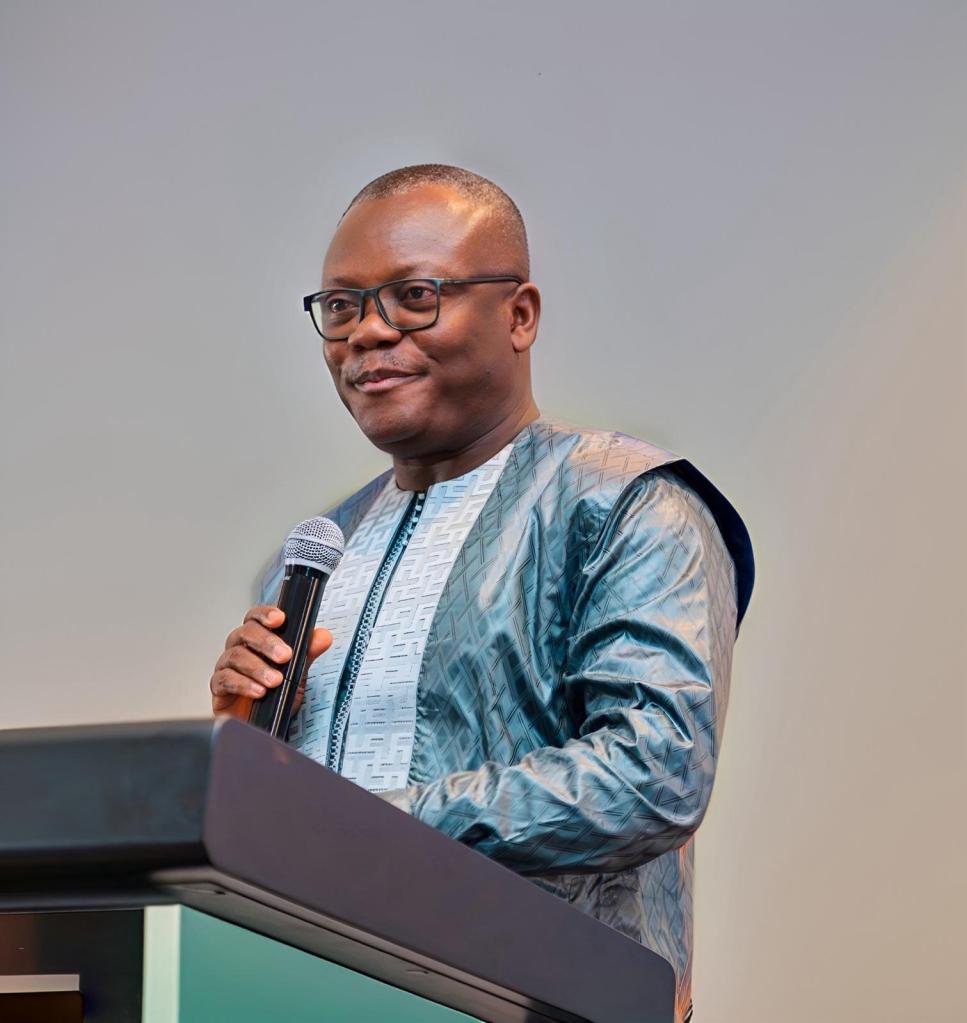
This new article, by the Senegalese State Press Agency based on my interview during the IMF-World Bank Annual Meetings in Bangkok, focuses on Africa’s underrepresentation in IMF governance and the need to reform the international financial architecture.
Key messages:
Africa remains seriously underrepresented at the IMF. The continent’s 54 countries hold only around 6.5% of IMF voting rights, despite representing approximately 18% of the world’s population.
Reform of IMF voting power is overdue. The 2028 review of voting rights should deliver a meaningful redistribution of decision-making power, with concrete commitments emerging from Bangkok.
Africa must also strengthen its collective influence. Beyond institutional reforms, African governments need stronger coordination, common negotiating positions, solid technical expertise and strategic alliances.
African countries must help shape the rules. Countries directly affected by IMF decisions on debt, financing and economic reforms should have greater influence over those decisions before they become conditions attached to financing.
Debt sustainability must account for development needs. Debt assessments and restructuring mechanisms should preserve governments’ ability to invest in healthcare, education and climate adaptation.
Debt repayments are crowding out development spending. In many developing countries, interest payments alone exceed spending on health or education. Austerity cannot be the only response.
A comprehensive approach is needed. African countries must simultaneously address debt pressures, strengthen domestic revenue mobilisation and expand productive economic capacity.
The central message: Africa needs both a fairer distribution of power within global financial institutions and a stronger, more coordinated African voice to influence decisions that shape its development future.
I am sharing 2 articles published by the Senegalese state press agency (APS), based on my interview yesterday. They cover Africa’s development financing priorities and Senegal’s debt negotiations as a test of whether international debt mechanisms can deliver faster and fairer outcomes. I also touch on the role of philanthropy.
The main messages are as follows:
Development financing: Senegal must regain financial certainty while preserving its ability to invest.
Better financing for Africa: Cheaper, longer-term funding, faster debt negotiations and private investment aligned with national priorities.
Senegal as a test case: Credible public accounts, fair burden-sharing and recovery without stifling growth.
Meaningful debt relief: Reduce annual repayment pressure without creating a bigger burden later.
Benefits for people: Protect public services, support businesses and jobs, and safeguard savings and financial stability.
Accountability: Publish agreement terms and track commitments through clear responsibilities, deadlines and public indicators.
Philanthropy’s role: Support independent expertise, citizen oversight and dialogue that delivers policy change.
Bangkok’s success will be measured in the budgets, agreements and public services that follow.
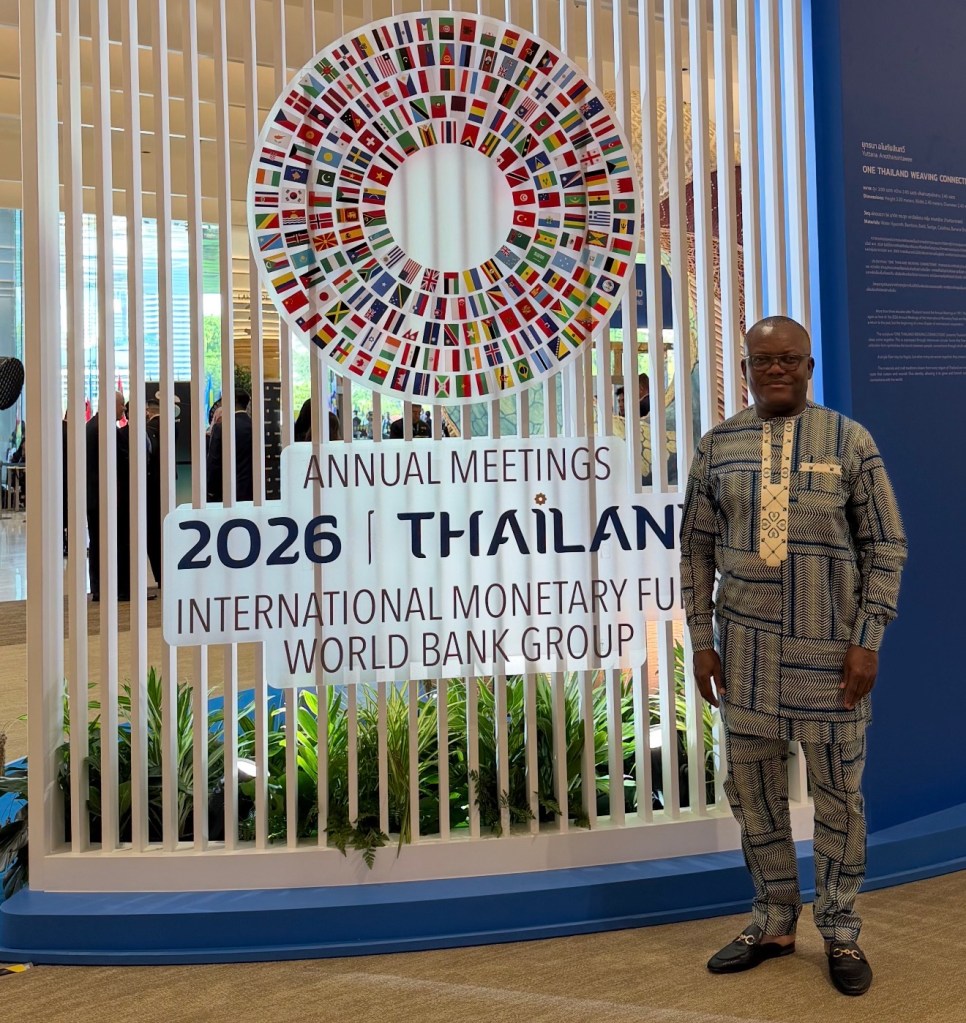
Our Open Society Foundations’ team working on economic justice and development finance is now on the ground in Bangkok. I am here with my colleagues and partners as we prepare for the Annual Meetings from 12-18 October 2026 under the theme: “Mobilizing Private Capital, Creating Jobs”.
On the 7th October 2026, IMF chief Kristalina Georgieva, gave a speech to open the season of the Annual Meetings. She told finance ministers: “Winter is coming.” She meant that energy would stay expensive. Oil costs about $100 a barrel. Markets expect high prices to last until 2027. For many African countries, this warning comes late. Countries that buy their fuel from abroad have been living through this for months.
The World Bank’s latest regional outlook offers some encouragement: sub-Saharan Africa is expected to grow by 4.3% in 2026. But the Bank also warns that growth remains too weak to reduce extreme poverty substantially or create enough jobs. It expects median inflation to rise from 3.7% in 2025 to 5.5% this year, but figures describe an uncomfortable reality. Economies can grow while families struggle and governments lose the financial room to act. For countries facing conflict, displacement or repeated climate disasters, the margin is narrower still.
The host region matters: When Thailand last hosted these meetings, in 1991, Asia-Pacific produced about 25% of world output. Today it is 43%. Industrial policy, patient public banks and strong tax systems did that. African delegations should pay close attention. This is the most useful lesson on offer in Bangkok.
Better rules, more than new money: Africa should not expect large amounts of new money in Bangkok. What matters more are the rules that decide how existing money is lent and repaid.
Debt: The IMF and the World Bank use a tool called thedebt sustainability frameworkfor low-income countries to judge whether poor countries can afford their debts. They have just updated this tool for the first time since 2017. Of the roughly 70 countries it covers, 39 are in Africa. The new version looks more closely at what governments owe to lenders at home. It also adds a part that should show how much room a government has to spend on development and climate. But it will only start in late 2027, and some of its new warning signals will not be made public for now. So, the real work now is about how the tool will be used in practice. If spending on a school or a hospital is treated as a danger to the budget and not as a real need, then the reform will change very little. About 14% of low-income countries already cannot pay their debts as planned, and another 33% are at high risk. In most African countries, governments now spend more on paying debt than on health or education. When countries try to renegotiate their debts through the G20’s Common Framework, the process takes years and private lenders are still not asked to give the same relief as governments and public lenders.
Senegal is the case to watch: In September, it reached an agreement with IMF staff on a $2.2 billion loan program over three years. It also wants to renegotiate about $5 billion of debt owed to private lenders under an improved version of the Common Framework. The IMF itself calls Senegal “the next test case”, and every African country in debt trouble will be watching. Two questions matter: how fast the renegotiation will move, and whether Senegal will keep enough room to raise its own taxes and invest in its long-term plans.
Voice: Africa has 54 of the IMF’s 191 members, the largest single bloc, yet only 6.5% of the votes for 18% of the world’s population. Each country’s share of votes is set by a review of “quotas”. The next review has been pushed back to 2028. When the promised reform keeps being delayed, people stop believing in it.
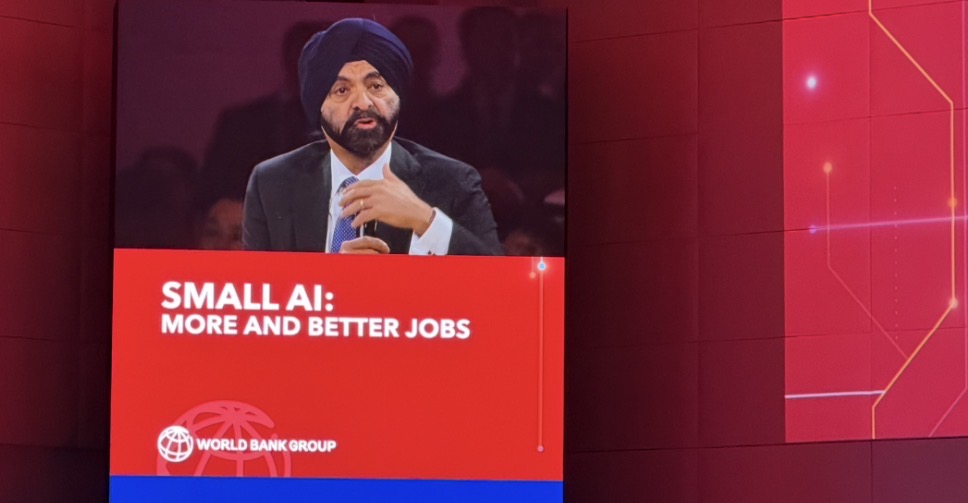
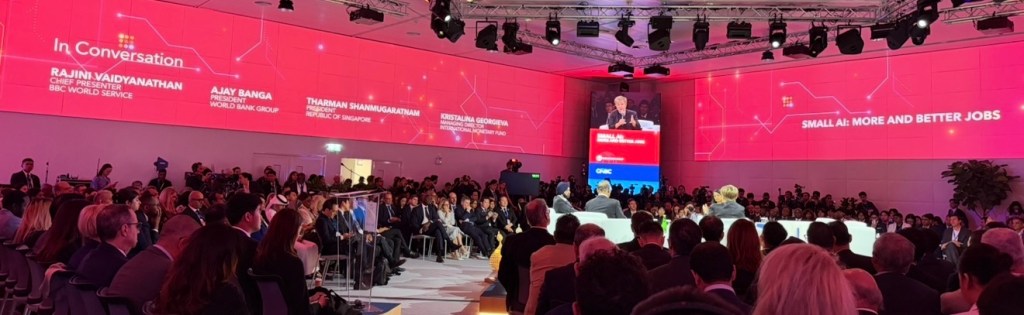
Jobs, private money and AI: good, but not enough: The IMF and the World Bank have built their Bangkok program around jobs, private investment and AI. The World Bank’s main sessions are called “Small AI, Big Jobs” and “Mobilizing Private Capital for Jobs”. No one is against jobs or investment. But something is missing: the Asian countries that succeeded did not rely on private money alone. Their governments had clear plans to build industries. Public development banks lent money patiently and for a long time. Their tax systems raised enough money to build roads, power and skills. Private investment can help a lot. But we must ask which projects it supports, who pays when things go wrong, and whether it builds real local capacity or simply sends profits out of the country.
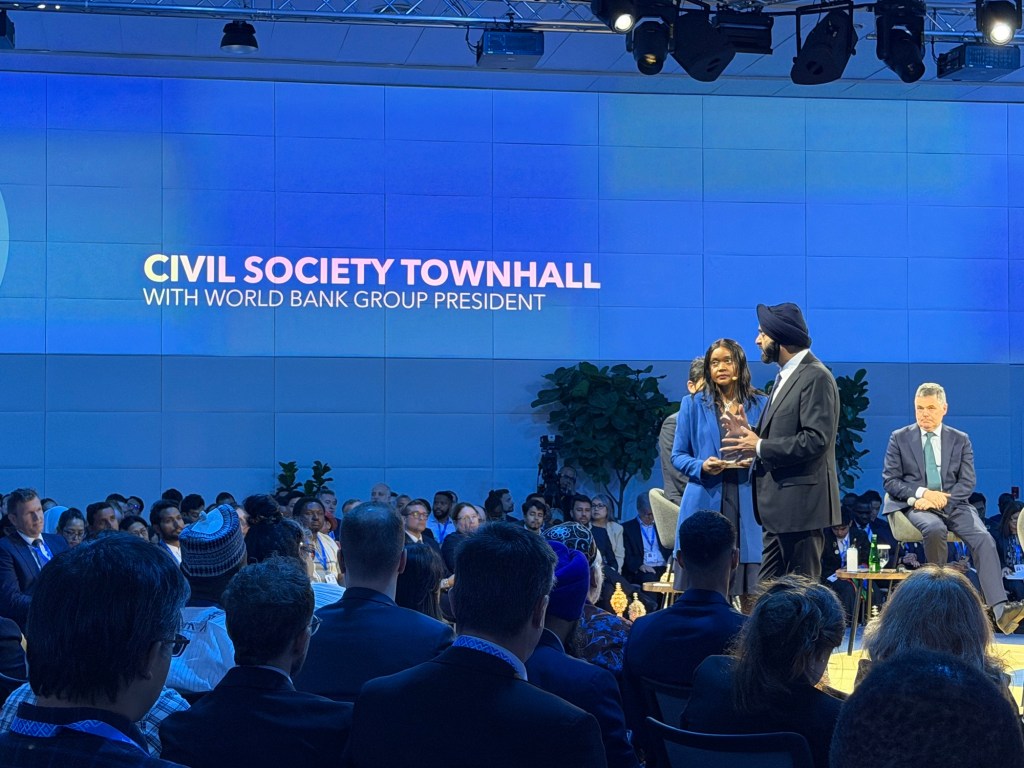
Town hall with the president of the World Bank Group
5 Things Bangkok Should Deliver
1/ Treat development needs as real needs: The new debt tool should give governments real room to spend on health, education and adapt to climate change. Detailed guidance on how to use the tool is where this will be decided.
2/ Set deadlines for debt talks: Debt renegotiations under the Common Framework need clear time limits. Private lenders should give the same relief as public lenders. Senegal should not have to wait two years like others before it.
3/ Keep the promise on voice: A review of votes in 2028 will only be believed if there are concrete steps before then. Africa’s third seat on the IMF Board should come with real influence over decisions.
4/ Turn minerals into development, not just exports: The World Bank launched its new critical minerals strategy in June. It rightly looks beyond the mine to power, water, transport, skills and local suppliers, and it promises to work through country-led compacts. That is welcome. Now the test is on the ground. The Democratic Republic of Congo alone mines 72% of the world’s cobalt, yet most of the value is added elsewhere. Changing these needs more than new investment. Mining contracts must be public and fair. Parliaments, civil society, trade unions and local communities must have a real say, not only governments. Mining corridors should develop the regions they cross, not just carry ore from pit to port, and should never take scarce water and power away from the people who live there. And the state must lead: national development banks, sovereign funds and local-content rules in public procurement can give Africans a real stake in the value chain. Bangkok, where Asian and African producers meet in the same building, is the right place to start learning from each other. The real question is not only how much money flows into mining, but who owns the resources, who decides, who benefits and who pays the costs.
5/ Make private money to serve the public: Investment deals should be open and clear. Risks should be shared fairly. Projects should follow national plans led by governments, with public development banks playing a leading role.
After Bangkok
One meeting cannot fix the whole system, and Bangkok will not. The G20 finance talks are quiet this year, and no one expects a joint statement here. But the next steps are clear. The United Kingdom will lead the G20 in 2027 and is already talking with the African Union, which is now a full member of the G20.
The World Bank will soon start raising new money for the International Development Association (IDA), its fund for the poorest countries. And African Heads of State will meet in Addis Ababa early next year.
Bangkok is a good place to start these conversations well. Africa should come with its own proposals, in the same building as Asian partners who have already built industries.
Georgieva ended her speech by saying that countries work together “not out of charity but out of self-interest”. Africa should take her at her word. A world economy that keeps one in five people on the planet stuck paying debts and selling raw materials does not serve anyone’s interest.
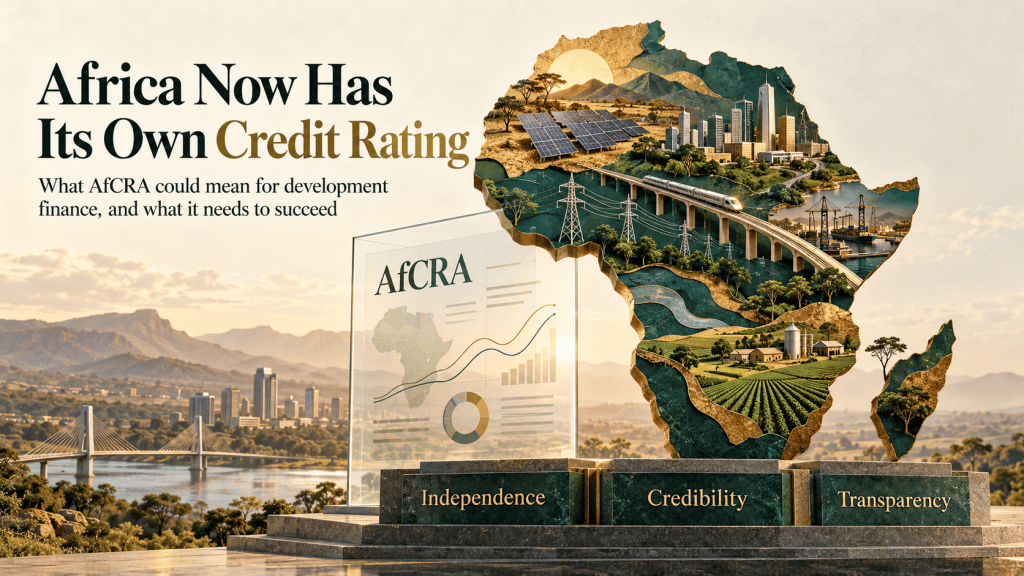
For Africa’s development, what borrowed money costs matters as much as how much of it is available. That is why in this article I reflect on what the Africa Credit Rating Agency (AfCRA) could change for development finance, and what it will take to get there.
Three months ago in Abidjan, AfCRA was still a plan presented to African Ministers of Finance, Economic Development and Trade. This week in Port Louis, Mauritius, it becomes real. I am watching the launch from Bangkok, Thailand, where the IMF and World Bank meet next week for their 2026 Annual Meetings to discuss the very questions this new agency wants to answer: how risky is Africa?
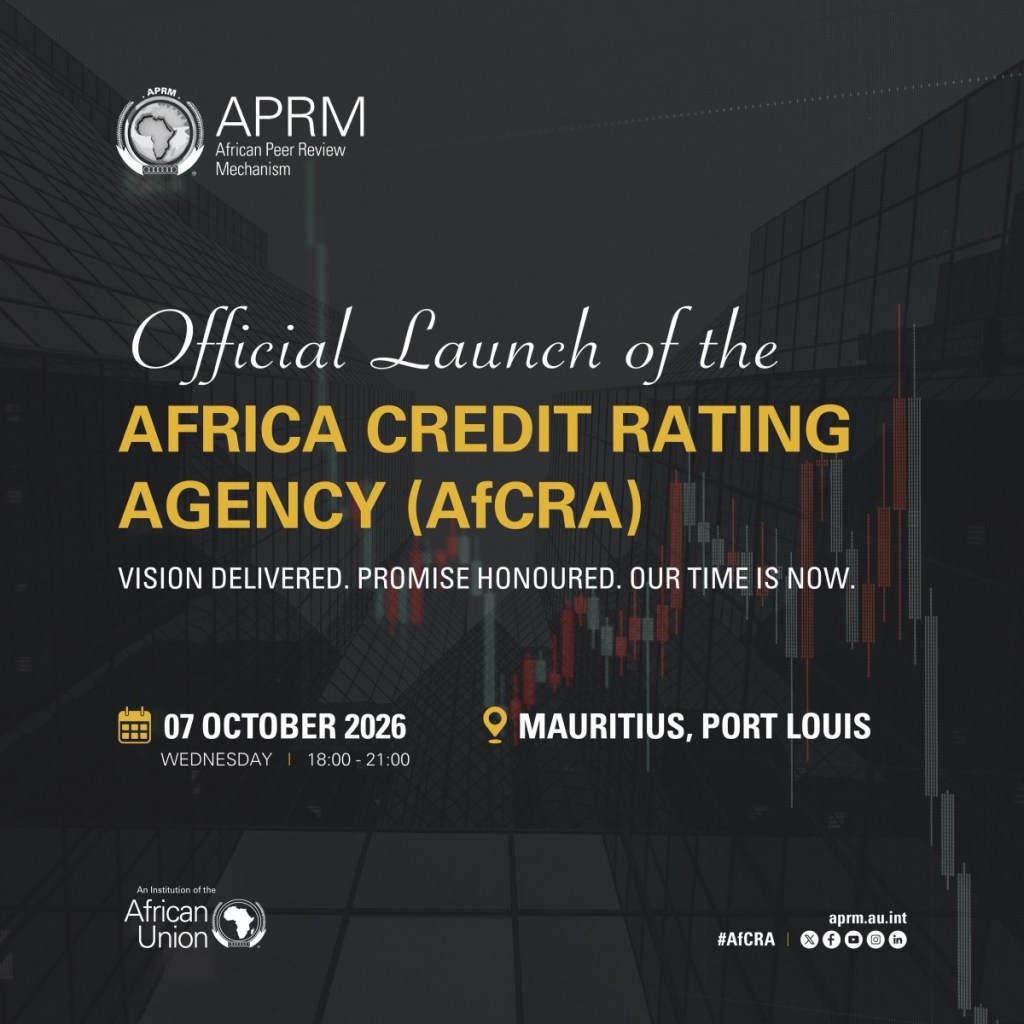
On Wednesday, 7 October 2026, the African Union officially launched AfCRA in Port Louis, Mauritius, eight years after African leaders endorsed the idea in 2018. Backed by institutions such as Afreximbank, the new agency will rate governments, sub-national authorities such as cities and regions, financial institutions and private companies. One of its first goals is to give a rating to the 23 African countries that Moody’s, S&P and Fitch do not rate today. The stakes are high: Africa’s external debt service reached $163 billion in 2024, and every percentage point of interest Africa pays above what its risk justifies means less money for development.
Many of the issues to be discussed in Bangkok, such as debt and how to attract private money for development, come back to one simple question: how risky is it to lend to Africa, and how much should Africa pay to borrow?
The launch of AfCRA is a real achievement. The African Union asked the African Peer Review Mechanism (APRM) to study the idea in 2017, and African leaders approved it in 2018. Since then, it has been discussed, redesigned and delayed many times. But creating an agency is one thing. Lowering the cost of borrowing for Africa is another. The first happens this week. The second depends on conditions that are still far from being met. AfCRA will complement existing global credit rating agencies by offering an alternatif perspective rooted in African contextual data, expertise and realities.
What ratings cost Africa
A credit rating is a grade that tells lenders how likely a borrower is to repay. It affects who can lend to a government or a company, and at what interest rate. Some investors, such as pension funds and insurance companies, are often only allowed to buy bonds that have a rating.
Africa faces two problems here. The first is that much of the continent is invisible to investors. 23 African countries have no credit rating at all. APRM says Africa’s financial markets are worth about $4 trillion, but less than 5% of them are rated. UNDP estimates that rating more companies and cities could unlock about $46 billion in business.
The second problem is that, where ratings do exist, African governments say they are often based more on perception than on facts. UNDP has estimated that this unfair part of ratings could cost African countries up to $74.5 billion, through higher interest payments and loans they never receive. Not everyone agrees with this number, and it is best seen as a maximum rather than an exact bill. But the concern behind it is real.
There is another cost, and it concerns the IMF and World Bank directly. During the COVID-19 pandemic, the G20 offered poor countries a pause on their debt payments. When some countries applied, including Ethiopia, Moody’s warned that it might lower their rating. Several other African countries chose not to apply at all. When asking for help leads to punishment by the markets, the system is not working properly.
What AfCRA is, and what it is not
AfCRA will not replace the three big global agencies, Moody’s, S&P and Fitch. It will work alongside them. It is a private company, owned by Africans and based in Mauritius. It is meant to pay for itself and to be independent. APRM helped to set it up and will now step back.
At first, AfCRA will rate governments, regional and city authorities, company bonds, banks and other financial institutions. It will pay special attention to debt in local African currencies.
AfCRA is also not Africa’s first rating agency. Some operate on the continent, including GCR, Agusto & Co and Bloomfield. What Africa lacks is an agency that covers the whole continent, rates governments, and is taken seriously by investors in London and New York as well as in Lagos and Nairobi. That is the gap AfCRA wants to fill.
AfCRA has been honest about its limits. It says that an African rating cannot replace better information from governments. That is the right message. A rating agency measures risk. It does not reduce it.
What AfCRA needs to succeed
At least 5 conditions will decide whether AfCRA becomes truly useful or is politely ignored by investors.
First, real independence. AfCRA was created by an African Union decision, and its first clients will mostly be African governments paying to be rated. The global agencies are also paid by those they rate, which creates a conflict of interest. AfCRA faces the same risk, plus a political one. It must show clearly that no president or minister can influence its decisions. That means independent board members, public rules on conflicts of interest, ratings that are never negotiated with governments, and open information about its fees.
Second, the courage to deliver bad news. AfCRA is right that timing and communication matter during a crisis. But if investors believe it delays bad news to protect a government, they will stop trusting it.
Third, a clear and open method. AfCRA says its method reflects African realities. To convince investors, it must publish exactly how it works: what data it uses and how much weight it gives to each factor. Over time, it should also publish studies showing how accurate its ratings turned out to be.
Fourth, better data from governments. This depends on governments, not on AfCRA. Hidden loans, guarantees kept off the budget, and unclear debts of state-owned companies have damaged Africa’s credit more than any foreign agency. AfCRA cannot rate what governments hide. Countries that want fairer ratings must publish all their debts, including loans backed by oil, minerals or other resources.
Fifth, official recognition. Ratings matter most when the rules require people to use them. If African central banks and market regulators officially accept AfCRA ratings, banks and investment funds at home will have to take them into account. Work on this is already under way with the Association of African Central Banks and the Africa Securities Exchanges Association. Recognition by regulators in Europe and the United States will take years and a proven record. It is a good goal, but not something to count on soon.
What the IMF and World Bank can do
The IMF and World Bank do not control AfCRA, and they should not try to. But they shape the system it works in, and they can take four practical steps.
They can help improve data. Their support to help countries report all their debts gives every rating agency, African or not, better information to work with.
They can use AfCRA ratings where it makes sense. The World Bank’s private sector arms, IFC and MIGA, and the regional development banks increasingly lend and offer guarantees in local currencies. If they consider AfCRA ratings alongside others, the agency will gain early users who expect high quality.
They can make room for it in their analysis. The IMF and World Bank are reviewing the tool they use to judge whether poor countries’ debts are sustainable. That review should explain clearly how ratings are used, and leave room for trusted regional ratings as a reference.
They can tackle the punishment problem. As long as countries fear a rating cut when they ask for debt relief, they will avoid tools like the G20 Common Framework. The IMF and World Bank can bring global and African rating agencies together to agree on how ratings should treat countries that seek official debt relief.
The Real Test
AfCRA has taken a long time to arrive, and its launch is worth celebrating. But its real test will not take place in Port Louis this week or in Bangkok next week. It will come slowly, over the next five years: each time an African pension fund decides whether to buy a city bond, and each time AfCRA has to tell a government something it does not want to hear.