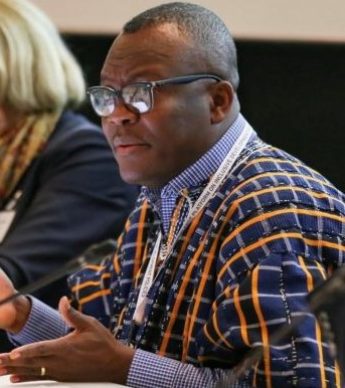
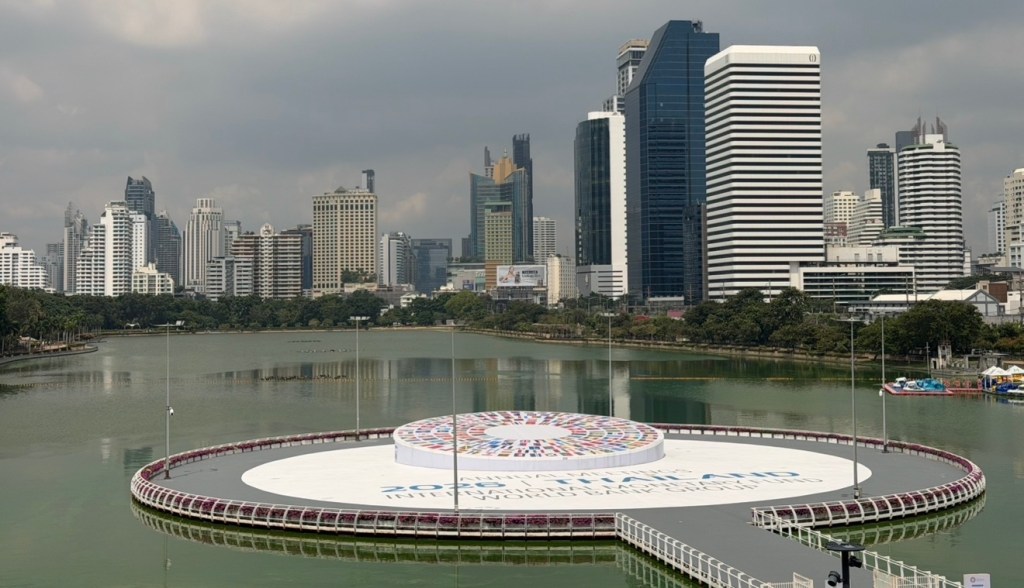
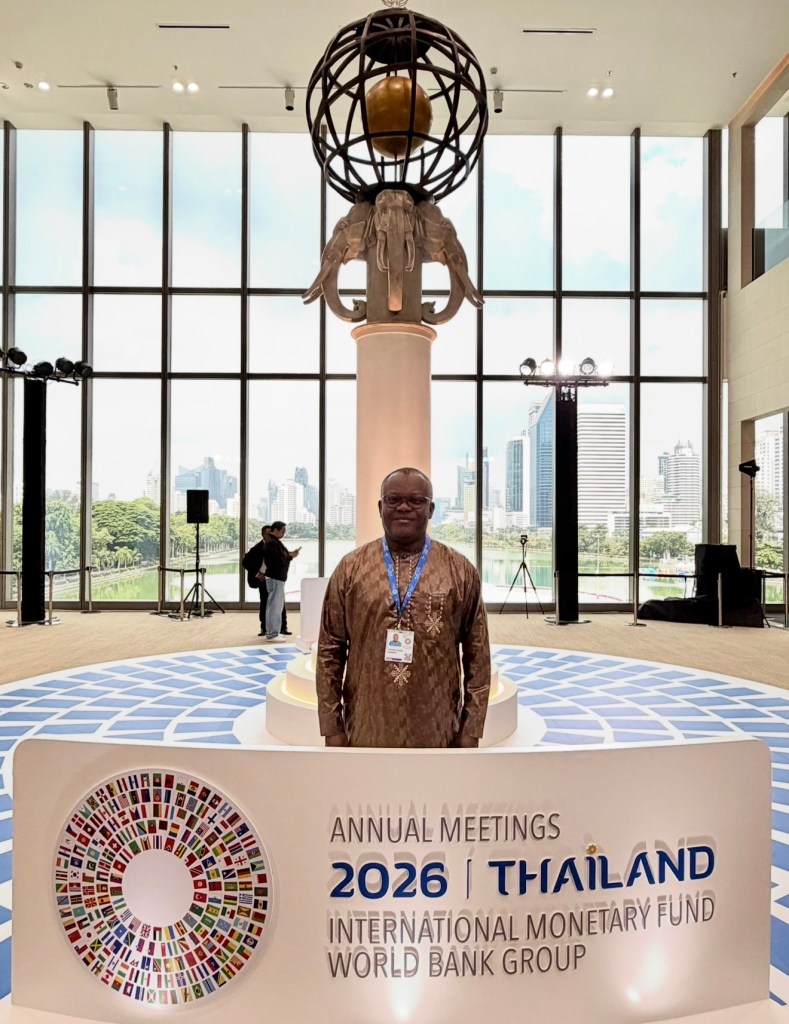
I spent last week in Bangkok with the Open Society Foundations delegation at the Annual Meetings of the IMF and the World Bank from 12-18 October 2026. More than 18,000 people came: finance ministers, central bankers, bankers, researchers, activists, civil society…. What actually happened?
My short answer: Bangkok was a week of honest diagnosis and very little cure. The two institutions now describe the pain of poor countries almost exactly as African ministers do. But they left the rules that cause much of that pain largely untouched.
Here are what I saw, what the numbers say, and what I think should come next.
What happened in Bangkok
1. Everyone agreed the debt burden is crushing. Nobody agreed to change much.
IMF Managing Director Kristalina Georgieva gave the clearest number of the week. In low-income countries, debt repayments now take about 14% of government revenue, more than double the level of a decade ago. That happened even though their total debt has gone down. The reason is simple: interest rates in rich countries went up, and poor countries pay the price.
The World Bank’s own data shows that nearly four in five African countries now spend more on interest than on health or education. The UK’s Foreign Secretary told the meetings that sub-Saharan governments spend more than three times as much on debt service as on education.
Yet the official answer stayed the same. The IMF’s steering committee asked governments to cut deficits and “rebuild buffers”, while protecting the most vulnerable. Many of us in civil society call that austerity with a softer name. Georgieva herself admitted, “We are in a place where we have many more questions than we have answers.”
2. The World Bank bet on jobs and private money.
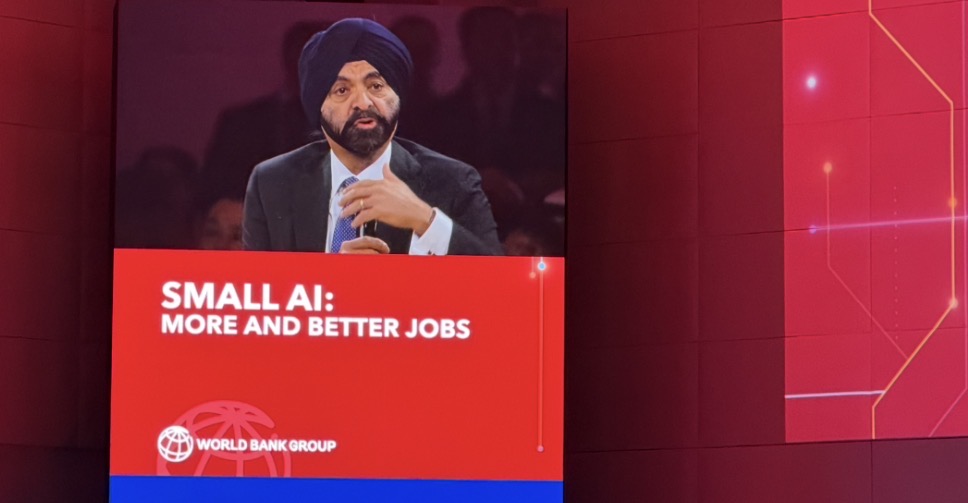
World Bank President Ajay Banga said “this meeting is all about jobs, private capital mobilization and micro- and small businesses.” The Bank announced a record $112 billion in private capital mobilised last year, and pointed to a gap of 800 million jobs for young people entering work in the next decade.
That sounds impressive. But most of that private money went to middle-income countries, not to the poorest. Banga admitted that getting it into low-income countries remains “a challenge.”
3. Africa’s growth looks fine on paper.
The IMF raised its growth forecast for sub-Saharan Africa to 4.5% for this year and next. That is faster than the world average of about 3.1%. But the IMF’s own Africa Director, Zeine Zeidane, said growth per person “remains quite weak.” He also warned that bilateral aid to the region will fall by another 12% this year, after a sharp cut in 2025.
4. On debt workouts, small steps.
The Global Sovereign Debt Roundtable reported that most restructurings started in 2021-22 are now nearly done, with Ethiopia’s bond deal still pending. The US Treasury said it wants Senegal’s debt treatment finished in under a year. That would be much faster than earlier cases: Ghana took more than a year just to reach a deal with its official creditors.
5. On voice, nothing new.
Africa is home to about 18% of the world’s people but holds only about 6.5% of the votes at the IMF. Ministers in Bangkok “looked forward” to ratifying a quota increase agreed back in 2023, and said future reform would follow principles adopted in April. There was no new seat and no new timetable.
6. Climate quietly left the room.
This was striking. Bangkok opened with unusual floods, and the IMF itself flags a severe El Niño as a major risk for Africa. Yet climate barely featured. Months earlier, under US pressure, the World Bank dropped its goal of putting 45% of its financing into climate. The US Treasury Secretary did not even come to Bangkok.
What it means for Africa
Here is the honest picture. Africa came to Bangkok asking for new rules, and it mostly got sympathy. But I did not leave discouraged, for three reasons.
A quiet reform with big potential. Just before Bangkok, the IMF and World Bank updated the tool they use to judge whether a poor country can carry its debt. It is the first full rewrite since 2017. The new version can finally count the long-term payoff of spending on people. Their own simulations show that spending 1% of GDP more on health and education lifts long-run output by about 1.9%. On infrastructure, it is about 3%. In plain words, building schools and clinics can pay for itself. The new tool starts in late 2027. Almost nobody talked about it in Bangkok. That is exactly why Africa should own it now.
The AU at the centre. At the African Caucus meeting, according to the African Union, Banga said he wants to work with and through the AU rather than through scattered initiatives across the continent. That is a public commitment. Africa should hold him to it.
Africa building its own tools. While the big meetings repeated old answers, African and Southern countries were busy elsewhere. The African Union launched the Africa Credit Rating Agency in Mauritius on 7 October. Why does this matter? In 2024, African countries paid about $9 in interest for every $100 they borrowed on international markets, according to OECD estimates. Emerging Asia paid about $4.70 and Latin America about $6.50. Twenty-three African countries are not rated at all by the big agencies. A credible African agency, one that is willing to downgrade an African government when it must, could help bring that cost down.
In Bangkok itself, the new Borrowers’ Platform held its first governing council, with Pakistan taking over the chair from Egypt. For the first time, debtor countries have a place to compare notes and learn from each other. Its message was simple: debt should be a tool for development, not a brake on it.
There is also a lesson from the host. When Thailand last hosted these meetings in 1991, Asia-Pacific produced about a quarter of the world’s output. Today it is 43%. Industrial policy, patient public banks and strong tax systems played a big part. Even so, Thai officials said in Bangkok that their next challenge is turning foreign investment into local skills and local value. That is exactly the argument Africa must make about its minerals.
What should come next
Bangkok is over. The real work happens in the next six months. Here is what I think Africa and its partners should do.
- Make the new debt tool count. The IMF should use the long-term module when it designs loan programmes, not only in its reports. African think tanks should test it on real country cases now, before the 2027 start, so Africa shapes how it is used.
- Go to the AU Summit with one voice. Ghana takes the AU chair in 2027. The Summit in Addis Ababa early next year is the moment to bring the threads together: the new debt tool, faster debt workouts, the rating agency, the Borrowers’ Platform and a fair share of votes at the IMF.
- Treat Senegal as the test. If Senegal’s debt treatment is done in under a year, every African country in trouble gains a precedent. If it drags, the Common Framework loses what credibility it has left. Transparency and protection of social spending must be part of the deal.
- Use the UK’s G20 year. The UK takes the G20 presidency in 2027 and has said debt reform will be a priority. Its Foreign Secretary called in Bangkok for an overhaul of the Common Framework, an end to private creditors stalling talks, and money set aside before crises hit. Africa should help write that agenda early.
- Ask the simple question about private capital. Of the $112 billion the World Bank mobilised, how much reached the poorest countries, and how many decent jobs did it create? Until we have that answer, the jobs agenda is a promise, not a result.
- Fight for IDA and for climate grants. With bilateral aid falling again, a strong replenishment of IDA, the World Bank’s fund for the poorest countries, matters more than ever. Climate money for Africa should come as grants, not new loans.
- Turn minerals into jobs. Half of the ministers now talk about critical minerals. Africa holds a large share of the world’s reserves. It must use that moment to insist on processing at home, fair contracts, open public budgets and a say for the communities who live next to the mines.
The checkpoint is close. The next Spring Meetings in Washington are in April 2027. We will see then whether Bangkok’s honest diagnosis turned into any treatment.
A closing thought
During the week, farmers and fishermen travelled hundreds of kilometres to protest outside the convention centre. Inside, ministers talked about “resilience”. Outside, people asked who that resilience was for.
Both groups were right about something. The world economy did not collapse this year, and that matters. But a system where the poorest countries pay the highest interest, hold the fewest votes and receive less and less aid is not resilient. It is just holding on.
Africa should stop waiting for these meetings to fix this. The tools are starting to appear: a new way to measure debt, an African rating agency, a borrowers’ club, a chance at the AU Summit. Our job now is to use them, together, and to arrive in Washington next April with our own answers.
On this page, I write on African policy, politics and institutions. If you’d like to receive my articles automatically as soon as they’re published, simply follow this blog using the “Follow” button at the bottom left of this page or send me an email at Desire.Assogbavi@Assodesire.com

