IMF & World Bank Annual Meetings 2026
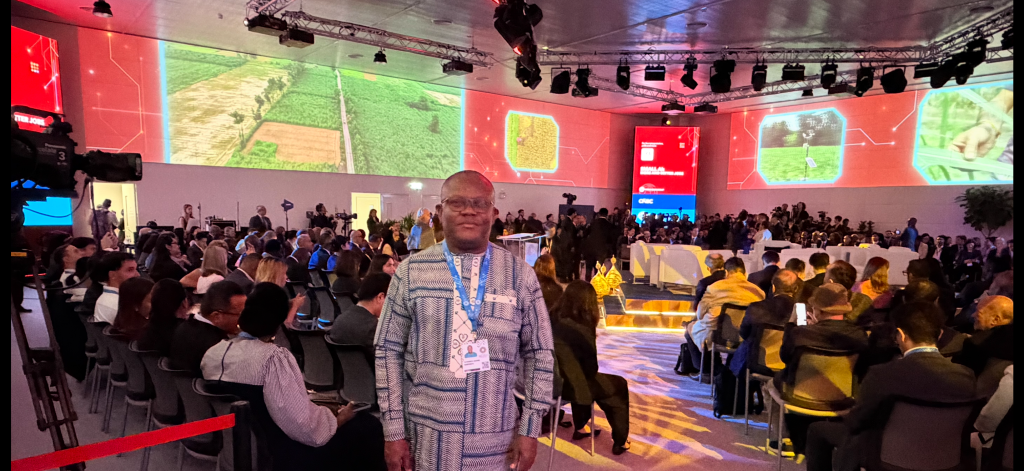
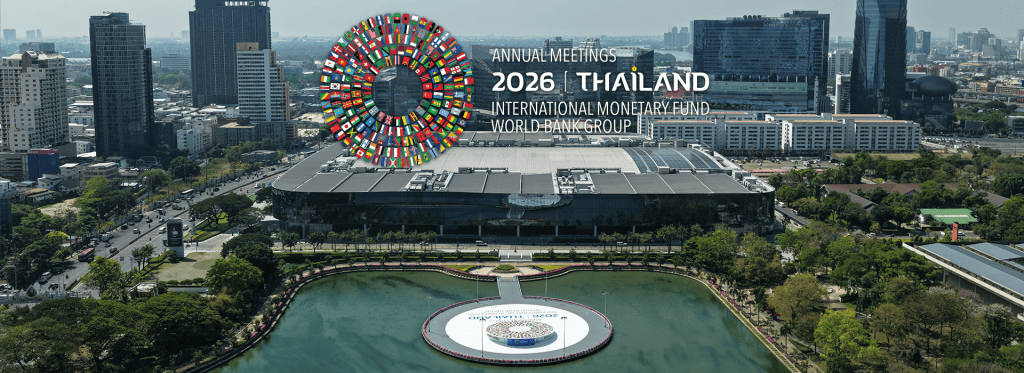
Our Open Society Foundations’ team working on economic justice and development finance is now on the ground in Bangkok. I am here with my colleagues and partners as we prepare for the Annual Meetings opening on 12 October 2026.
On the 7th October 2026, IMF chief Kristalina Georgieva, gave a speech to open the season of the Annual Meetings. She told finance ministers: “Winter is coming.” She meant that energy would stay expensive. Oil costs about $100 a barrel. Markets expect high prices to last until 2027. For many African countries, this warning comes late. Countries that buy their fuel from abroad have been living through this for months.
The World Bank’s latest regional outlook offers some encouragement: sub-Saharan Africa is expected to grow by 4.3% in 2026. But the Bank also warns that growth remains too weak to reduce extreme poverty substantially or create enough jobs. It expects median inflation to rise from 3.7% in 2025 to 5.5% this year, but figures describe an uncomfortable reality. Economies can grow while families struggle and governments lose the financial room to act. For countries facing conflict, displacement or repeated climate disasters, the margin is narrower still.
The host region matters: When Thailand last hosted these meetings, in 1991, Asia-Pacific produced about 25% of world output. Today it is 43%. Industrial policy, patient public banks and strong tax systems did that. African delegations should pay close attention. This is the most useful lesson on offer in Bangkok.
Better rules, more than new money: Africa should not expect large amounts of new money in Bangkok. What matters more are the rules that decide how existing money is lent and repaid.
Debt: The IMF and the World Bank use a tool called the debt sustainability framework for low-income countries to judge whether poor countries can afford their debts. They have just updated this tool for the first time since 2017. Of the roughly 70 countries it covers, 39 are in Africa. The new version looks more closely at what governments owe to lenders at home. It also adds a part that should show how much room a government has to spend on development and climate. But it will only start in late 2027, and some of its new warning signals will not be made public for now. So, the real work now is about how the tool will be used in practice. If spending on a school or a hospital is treated as a danger to the budget and not as a real need, then the reform will change very little. About 14% of low-income countries already cannot pay their debts as planned, and another 33% are at high risk. In most African countries, governments now spend more on paying debt than on health or education. When countries try to renegotiate their debts through the G20’s Common Framework, the process takes years and private lenders are still not asked to give the same relief as governments and public lenders.
Senegal is the case to watch: In September, it reached an agreement with IMF staff on a $2.2 billion loan program over three years. It also wants to renegotiate about $5 billion of debt owed to private lenders under an improved version of the Common Framework. The IMF itself calls Senegal “the next test case”, and every African country in debt trouble will be watching. Two questions matter: how fast the renegotiation will move, and whether Senegal will keep enough room to raise its own taxes and invest in its long-term plans.
Voice: Africa has 54 of the IMF’s 191 members, the largest single bloc, yet only 6.5% of the votes for 18% of the world’s population. Each country’s share of votes is set by a review of “quotas”. The next review has been pushed back to 2028. When the promised reform keeps being delayed, people stop believing in it.
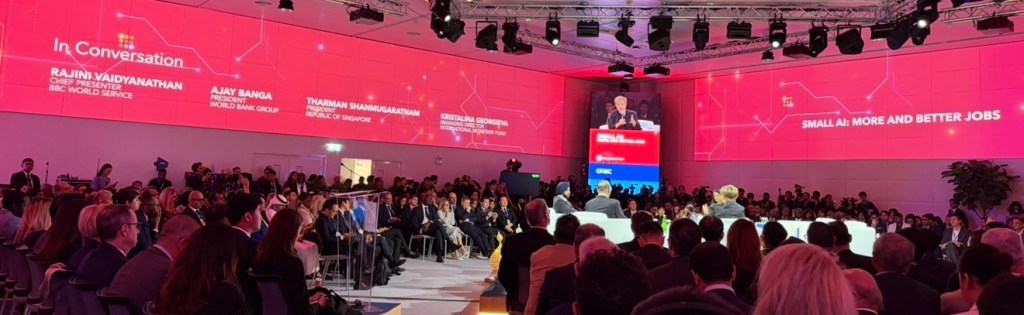
Jobs, private money and AI: good, but not enough: The IMF and the World Bank have built their Bangkok program around jobs, private investment and AI. The World Bank’s main sessions are called “Small AI, Big Jobs” and “Mobilizing Private Capital for Jobs”. No one is against jobs or investment. But something is missing: the Asian countries that succeeded did not rely on private money alone. Their governments had clear plans to build industries. Public development banks lent money patiently and for a long time. Their tax systems raised enough money to build roads, power and skills. Private investment can help a lot. But we must ask which projects it supports, who pays when things go wrong, and whether it builds real local capacity or simply sends profits out of the country.
5 Things Bangkok Should Deliver
1/ Treat development needs as real needs: The new debt tool should give governments real room to spend on health, education and adapt to climate change. Detailed guidance on how to use the tool is where this will be decided.
2/ Set deadlines for debt talks: Debt renegotiations under the Common Framework need clear time limits. Private lenders should give the same relief as public lenders. Senegal should not have to wait two years like others before it.
3/ Keep the promise on voice: A review of votes in 2028 will only be believed if there are concrete steps before then. Africa’s third seat on the IMF Board should come with real influence over decisions.
4/ Turn minerals into development, not just exports: The World Bank launched its new critical minerals strategy in June. It rightly looks beyond the mine to power, water, transport, skills and local suppliers, and it promises to work through country-led compacts. That is welcome. Now the test is on the ground. The Democratic Republic of Congo alone mines 72% of the world’s cobalt, yet most of the value is added elsewhere. Changing these needs more than new investment. Mining contracts must be public and fair. Parliaments, civil society, trade unions and local communities must have a real say, not only governments. Mining corridors should develop the regions they cross, not just carry ore from pit to port, and should never take scarce water and power away from the people who live there. And the state must lead: national development banks, sovereign funds and local-content rules in public procurement can give Africans a real stake in the value chain. Bangkok, where Asian and African producers meet in the same building, is the right place to start learning from each other. The real question is not only how much money flows into mining, but who owns the resources, who decides, who benefits and who pays the costs.
5/ Make private money to serve the public: Investment deals should be open and clear. Risks should be shared fairly. Projects should follow national plans led by governments, with public development banks playing a leading role.
After Bangkok
One meeting cannot fix the whole system, and Bangkok will not. The G20 finance talks are quiet this year, and no one expects a joint statement here. But the next steps are clear. The United Kingdom will lead the G20 in 2027 and is already talking with the African Union, which is now a full member of the G20.
The World Bank will soon start raising new money for the International Development Association (IDA), its fund for the poorest countries. And African Heads of State will meet in Addis Ababa early next year.
Bangkok is a good place to start these conversations well. Africa should come with its own proposals, in the same building as Asian partners who have already built industries.
Georgieva ended her speech by saying that countries work together “not out of charity but out of self-interest”. Africa should take her at her word. A world economy that keeps one in five people on the planet stuck paying debts and selling raw materials does not serve anyone’s interest.