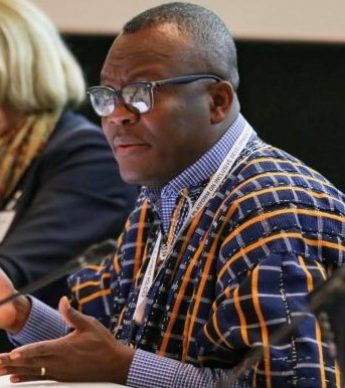
By Michelle Ndiaye, Desire Assogbavi and Mwende Mueke
The article has been published in French by MONDAFRIQUE
“The UN was not created to take mankind to heaven, but to save humanity from hell.”: Dag Hammarskjöld
There is a question that used to be whispered at the margins of diplomatic gatherings. Today it is asked openly in African Union corridors, in Global South think-tanks, in the halls of the US Congress: Is the United Nations still relevant? Does the world still need it?
It deserves a serious, unsentimental answer, not a defensive reflex from those who work in multilateral institutions, and not a cynical reaction from those exhausted by their failures. So let us face the full picture: the strongest case against the UN, an honest look at a world without it, and the answer both point toward.
The World Changed. The UN Didn’t.
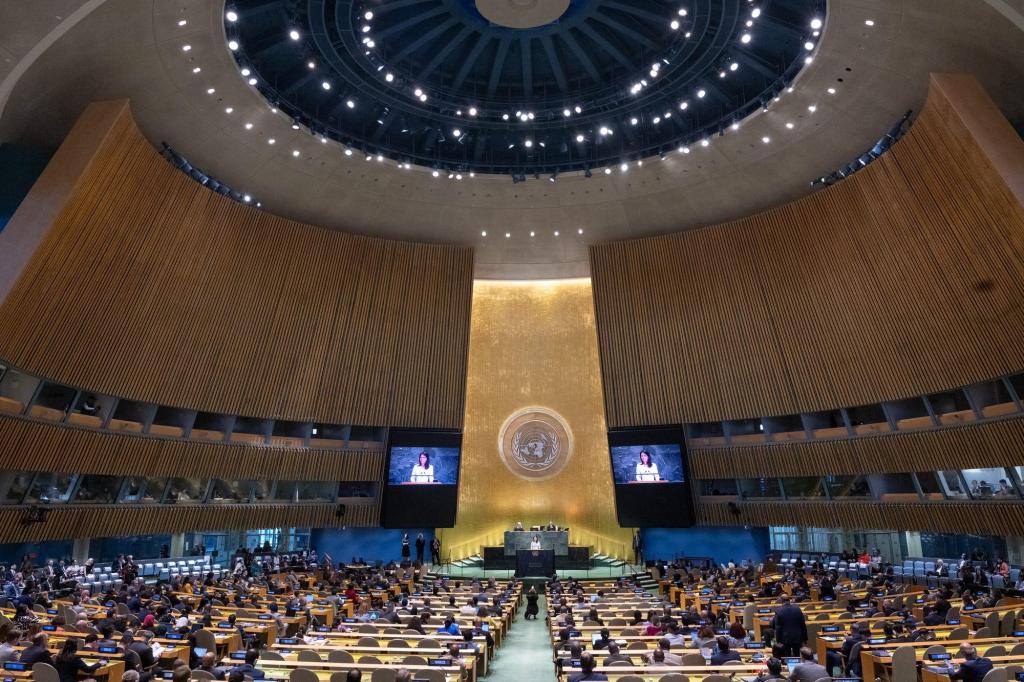
The United Nations was designed in 1945 by 51 countries emerging from the most destructive war in history. The five victors, the United States, the United Kingdom, France, the Soviet Union, and China, wrote the rules, gave themselves permanent Security Council seats, and armed each seat with a veto. A grand bargain for global security.
The world that institution was built for no longer exists. The UN now counts 193 member states, nearly four times the original number. The global population has more than tripled, from 2.5 billion to over 8 billion. And the entire continent of Africa, 54 nations, more than 1.4 billion people, was largely under colonial rule when the Charter was signed. Africans were not at the table when the rules were written. Yet roughly 70 percent of the Security Council’s agenda now concerns Africa, and Africa does not hold a single permanent seat on that Council. The UN Secretary-General himself has called this arrangement “a relic of the colonial era.” The African Union’s Ezulwini Consensus has demanded two permanent seats with full veto rights since 2005. Two decades of diplomacy. No structural change – yet: that is not a footnote. That is an indictment.
The numbers on paralysis are just as damning. In 2024, the permanent members cast eight vetoes on seven draft resolutions, the most since 1986. In 2025, vetoes again blocked meaningful action on Gaza and Ukraine, and the Council adopted only 44 resolutions, the lowest figure since 1991. Wars in Sudan, Myanmar, Gaza, and Ukraine have unfolded before a body structurally incapable of acting whenever a permanent member, or its close ally, is a party to the conflict. The pattern is old: in 1994, the Council received prior warning of the Rwandan genocide and failed to act; closed to one million people were killed in 100 days. A law that cannot be enforced is, in practice, no law at all.
Then there is the money. The United States owes roughly $1.5 billion in unpaid assessments, arrears that have since climbed above $2 billion, while China has run hundreds of millions behind. Secretary-General António Guterres has warned bluntly of a “race to bankruptcy,” proposing a 15 percent cut to the UN’s regular budget for 2026 and the elimination of roughly 2,600 posts. Meanwhile, the wider financial architecture built alongside the UN, the IMF and World Bank, still weights voting power toward wealthy nations, and many African countries lose more each year in debt-servicing payments than they receive in development aid.
Under-resourced. Structurally unrepresentative. Repeatedly unable to act. The critics are not wrong about any of this.
The Thought Experiment: Close the UN Tomorrow
So, imagine the institution dissolves tomorrow. What actually happens?
First, humanitarian collapse: within days, not years. UN agencies are the primary responders to the world’s crises. The World Food Program feeds on the order of 150 million people a year. UNHCR protects more than 40 million refugees among over 100 million forcibly displaced people worldwide. UNICEF vaccinates children in over 190 countries. These are not bureaucratic abstractions; they are lifelines. Cambodia, the Great Lakes, Yemen, shows exactly what happens when crises fall outside great powers’ strategic interests: the world looks away.
Second, the framework of international law buckles. The Universal Declaration of Human Rights (UDHR), The Geneva Conventions, the Genocide Convention, the Convention on the Rights of the Child, the Law of the Sea, the treaties would survive on paper, but the machinery that monitors and implements them would not. Without a universal body, international law reverts to what it was before 1945: an instrument wielded chiefly by those powerful enough to enforce it.
Third, the only universal forum disappears. The UN General Assembly is the one place on earth where all nations, large and small, rich and desperately poor, speak with equal formal standing. Scholars have observed that if the UN did not exist, it could never be created today; it was only possible because of the cataclysmic shock of the Second World War, a window that will not reopen. What would remain are clubs of the powerful and exclusive: the G7, the G20, BRICS, ad hoc coalitions. Collective action through those groupings would always be seen, correctly, as the strong imposing their will on the weak. Not representative of a global consensus. The small island state facing sea-level rise, the landlocked developing nation, the post-conflict society: their voices exist in the global conversation because the UN gives them a seat.
The choice, then, is not between the imperfect UN and some better alternative. It is between the imperfect UN and a more dangerous, more fragmented, and less accountable approach to multilateralism.
What the UN Has Actually Delivered
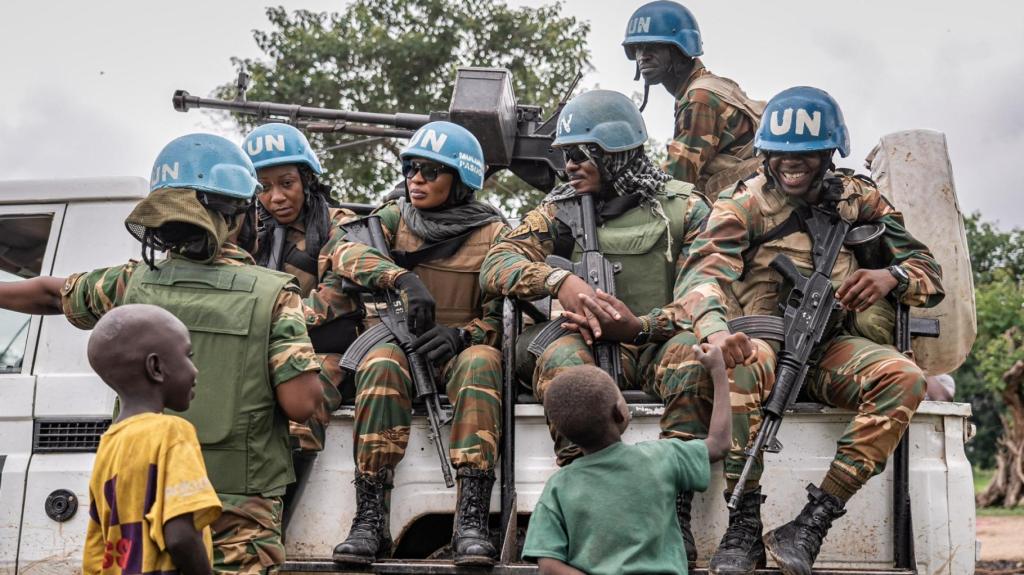
The legitimate critique should not bury the record. Since 1948, the UN has mounted more than 70 peacekeeping operations, helping end conflicts in Cambodia, Mozambique, and East Timor, among others. Its system helped pressure apartheid South Africa toward transition. It drove the eradication of smallpox and the near elimination of polio. The Montreal Protocol, a UN-negotiated treaty, is healing the ozone layer. The Paris Agreement, however imperfect, exists only because the UN’s negotiating architecture exists.
Most significantly: no war between the great powers in 80 years, the longest such stretch in modern history, sustained by norms, institutions, and permanent channels for dialogue that did not exist in 1914 or 1939. And there is a deeper achievement still. Before the Universal Declaration of Human Rights in 1948, human rights were philosophical aspirations, not legal entitlements. The UN created the framework within which governments are, however imperfectly, held to account for what they do to their own citizens. The Global South then used that framework to expand the idea itself: the 1986 Declaration on the Right to Development was fought for and won inside the UN, through the Group of 77 and decades of coalition-building. Remove the institution, and those hard-won gains lose their home.
Not Whether, But Which
The real question is not whether the world needs the United Nations. It is which United Nations the world needs. A body that devotes 70 percent of its security agenda to Africa while denying Africa a permanent voice is not just unjust, it is operationally dysfunctional. A Council whose vetoes shield aggression and block action on mass atrocity is not a security council; it is a great-power protection racket dressed in the language of law. These are not reasons to walk away. They are the reasons reform is urgent and non-negotiable.
Expand the Security Council with genuine African permanent representation. Consistent with the Ezulwini Consensus: permanent African seats with full veto rights, or, if the veto is curbed, equal standing for all permanent members. The 2024 Pact for the Future committed leaders to a consolidated reform model; that commitment must now be forced from paper into negotiation.
Rebuild international financial architecture as a matter of justice, not charity. Restructure IMF and World Bank voting weights and deliver systematic debt relief for countries trapped in cycles of extraction, and stabilize the UN’s own finances, starting with major powers paying what they legally owe.
Create universal governance for the new existential challenges. Artificial intelligence, climate change, cyber conflict, and pandemic preparedness cannot be managed through bilateral deals and clubs of the rich. Only a universal framework confers legitimacy on rules meant to bind everyone.
Organize the Global South to negotiate as a force, not a fragment. Common African and Global South positions on Council reform, climate finance, AI governance, and the post-SDG agenda, developed internally, deployed coherently, so that every multilateral room is entered with one voice and real leverage.
The Courage to Reform What We Cannot Afford to Lose
Hammarskjöld’s words remain the most honest description of the UN: not a vehicle for perfection, but a barrier against catastrophe, a hedge against a world where the only law is power and the only protection is the alliance you can assemble before the shooting starts.
The world has transformed since 1945. The institution has not kept pace, and the costs fall heaviest on those least able to bear them. But the answer to an imperfect institution is not its destruction; it is its transformation. As WTO Director-General Ngozi Okonjo-Iweala has urged: preserve what works, reform what no longer does, and reposition for a future the founders could not imagine.
We still need the United Nations more, not less, as the world grows more dangerous and more interdependent. But the UN we have is not yet the UN we need. Building it, rule-based, representative, just, effective, and genuinely inclusive of the Global South, is the defining challenge of this multilateral moment.
About the authors
Michelle Ndiaye is Director of Transformative Peace in Africa at the Open Society Foundations.
Désiré Assogbavi is Advocacy Advisor for Africa at the Open Society Foundations.
Mwende Mueke is Associate Director of Democratic Futures in Africa at the Open Society Foundations.
If you’d like to receive my articles automatically as soon as they’re published, simply follow this blog using the “Follow” button at the bottom left of this page or send me an email at Desire.Assogbavi@Assodesire.com

