Dear Friends
I am sharing here a presentation I made today at Kaleb University in Lagos, Nigeria on Innovations in International Development – Agendas 2030 and 2063.
Dear Friends
I am sharing here a presentation I made today at Kaleb University in Lagos, Nigeria on Innovations in International Development – Agendas 2030 and 2063.
I was recently invited by the Washington DC-based Centre for Strategic and International Studies (CSIS) to suggest what the Biden Administration could do in Togo.
I mostly focused on the importance of Job Creation for the youth in the Framework of the National Development Plan of #Togo . This can be done by promoting agriculture and agribusiness as well as tackling the Illicit Financial Flows (IFF)in order to generate more money for investment.
Listen to the podcast here: https://www.csis.org/node/62064
Cheers
This is the summary of a paper I presented today 1st September 2021 at the University of Johannesburg, South Africa, during the conference on “Good governance, participatory democracy, and social justice: Civil society as an agent of change and innovation in Africa”
Good morning, Ladies and Gentlemen
My main point for the 10 minutes I have, is to demonstrate how citizens’ participation in governance, which includes accountability from power holders, could make a big difference, and shorten our journey to development, reduces corruption, and obviously reduce inequality and poverty.
I will quickly look at it from a national angle to regional and continental perspectives and I will conclude with a few recommendations on how we can remove obstacles to active citizens’ participation.
The realization of an integrated, peaceful, and economically developed Africa needs the full involvement of all segments of our society. It cannot be left in the hands of the only politicians holding office.
The conduct of national, regional, and pan African affairs should make room, both institutionally and informally for the participation of citizens as individual and their formations, in groups.
Our continental Agenda 2063 itself, recognizes that people’s ownership and mobilization are crucial,… as critical enablers to concretize Africa’s aspirations. So, for a prosperous and democratic society, the state, and a well-organized civil society should be seen as the two sides of the same coin. They complement each other. Civil society must be seen as a reservoir of social capital, capable of contributing into all aspects of national, regional and continental development.
The evidence is clear. We have seen it ! Citizens’ engagement with their leaders improves the delivery of inclusive, accessible, and responsive public service. These include the provision of healthcare, safe water, quality education and decent jobs etc…. Today, looking at the challenges that our continent is facing, supporting democratic accountability and participation towards, a people-driven development has never been more urgent.
If we exclude or limit citizens from policy development, we will experience poor political and policy accountability mechanisms. Poor accountability leads to service failure, abandoned projects, waste, institutional inefficiencies and, will further exacerbate poverty…. That is why, my organization, the ONE campaign focuses its entire actions on citizens participation, active citizenship!!!
We identify recruit, train, mobilize and provide platforms for grassroots campaigners and their formations, to engage with political leaders and policymakers in order to catalyse change.
The influence of civil society in national and continental policy making does not diminish the relevance of governmental or inter-governmental processes, rather, citizens’ actions enhance and inform it.
If we look at the area of human security, for example, because of their immersion within the society, civil society organizations have vocation, and the ability to contribute to peace building initiatives and social cohesion.
In conflict affected area, Civil Society has shown its capacity to organise the collection, analysis, and evaluation of first-hand information, allowing the identification of the sources of potential tensions as well as emerging conflicts.
While traditional conflicts were well understood by diplomats and specialists in political science, addressing adequately new conflicts, requires much more on-the-ground understanding, new skills of social and cultural analysis, the active involvement of communities and their leaders, links to vulnerable groups, and new ways of working. Most of the time, civil society organisations have unique capacities in all those areas.
At national level
Unfortunately, we have been facing a reality in which, too many countries on the continent, have adopted and continue to adopt national legislations reducing civic space. There are increased control and undue restrictions on the formation and the activities of CSOs.
Some governments perceive CSOs as economic saboteurs, inciters of violence, or, an extension of political opposition parties or even, agents of foreign interest.
The reality is that since 2012, new restrictive CSOs laws have been adopted in more than 30 countries in Africa. Limited civic space, restricts the ability of citizens to participate in public life, and speak truth to power. This constrains one of society’s primary tools to prevent political capture of the state and its resources.
Of course, promoting civic space does not tacitly imply that civil society should be unregulated and free from government oversight. We are not saying that. On the contrary, reasonable regulation is legitimate, necessary and can enhance effectiveness and accountability in the sector. Yet regulations must not be overly burdensome, driven by political motives, and design to shot down independent voices.
Africa has a proud history of civic activism. social movements and activists were a vital component of most independence struggles, and, civil society was a driving force behind state formation and state building.
This should continue as we face new challenge. Unfortunately, CSOs are under threat!!! Especially at national level.
At Regional Level
Civil society and coalitions that are targeting regional and pan African institutions have an important role to play as a complement and a backup to national groups. They are less exposed to risks compared to national CSOs and in many cases they can really contribute, influence and pressurize member states through regional and continental bodies on regional policy issues.
While this is important, we know that, the actual implementation of decisions happens at country level, Fundamental changes in people’s life happens at national level so we should mobilize, and regroup to stand strongly against any shrinking or even shifting of civic space in our countries.
It is then important that the African Union and the Regional Economic Communities step in, this unfortunate trend.
So, what can we do?
At continental and regional levels, we do have a strong normative framework!
The entire transformation of the OAU to the AU is justified by the importance of citizens’ participation. Other Regional bodies such as ECOWAS, SADC, EAC etc, give ways legally to CSOs participation and constitutions of many member states recognize that organized civil society is a legitimate and authentic expression of fundamental human rights…. But then, laws being made on political consideration come to mess things up…
A few suggestions:
I thank you !!!
To Mark the Day of International Criminal Justice, today 17 July, here is another article I published some years back after speaking to African Ministers of Justice gathered in Dakar, Senegal by the then Minister of Justice of Senegal and President of the Assembly of States Parties to the ICC Treaty, Mr. Sidiki Kaba.
Subsequent to my article on Africa and the ICCpublished on this blog, I was invited by H.E. Sidiki Kaba, Minister of Justice of Senegal and President of the Assembly of States parties to the International Criminal Court to resource a ministerial discussion on the challenges and opportunities of the International Criminal Court going forward. Present at this meeting was also the ICC Chief Prosecutor, Fatou Bensouda as well as other officials of the court.
In my presentation at a session chaired by H.E. Cheik Sako, Minister of Justice of Guinea, I proposed to African Ministers of Justice ideas that would re-establish trust between Africa and the ICC in order to work together to address impunity and ensure justice for victims. I argued that grievances of the African Union against the ICC’s “exclusive” targeting of Africa is understandable because crimes under ICC jurisdictions are also committed by none Africans, outside of Africa and the ICC does not seem to be in…
View original post 139 more words
Today, 17 July is the Day of International Criminal Justice, marking the anniversary of the adoption of the International Criminal Court Treaty in 1998. I am sharing an article I published some years back, but still relevant today on Africa and the #ICC: https://assodesire.com/2017/02/14/the-international-criminal-court-or-the-african-union-who-can-ensure-justice-for-african-victims/
La version en Français ici
I spent several years of my professional career working on human rights and justice first as the Founder and Chairperson of Juris-Club, then as Commissioner at the National Commission of Human Rights following my election by the Parliament of Togo, then as Outreach Liaison for Africa at the Global Coalition for the International Criminal Court in New York among others … The conflict between the African Union and the ICC therefore interests me in several respects but especially as African and a human rights lawyer; therefore I would like to share here some personal reflections on the different episodes of the serial “ICC versus the African Union”.
The International Criminal Court: The Basics
The creation of the International Criminal Court is an important step in mankind’s efforts to make our world more just. The court was established by an international law treaty “The Rome…
View original post 1,816 more words
The African Centre for the Constructive Resolution of Disputes (ACCORD) has published my article titled “Will the Restructured African Union meet the Continent’s Urgent Challenges?”, written from the notes bellow. You can read it here.
I have used the same notes below as talking points to speak at the Seminar hosted jointly by the Institute for Security Studies (ISS) and the Institute for Peace and Security Studies (IPSS) on the 16th February 2021 following the 34th Session of the Assembly of the Heads of State and Government of the African Union.
Talking Points:
To answer the question above, I propose we analyze 3 key elements against the reform agenda proposed by President Kagame and adopted by the Assembly of the Union.
Let’s look back into the reform agenda:
1st : The new setting, including the scope of intervention of the AU
The African Union should focus on a fewer number of priority areas, which are by nature, continental in scope, such as political affairs, peace and security, economic integration, and Africa’s global representation and voice: this has not happened enough in the new structure of the commission. Basically, we find every issues/thematic that were in the previous structure with 8 departments, squeezed within new 6-department Commission, sometimes under different names. There are even new items added. I believe we failed here…
On the positive side we have the merging of Political Affairs with the Peace and Security Department. This will catalyze a stronger synergy and, the Commissioner will have a unique opportunity to effectively work on the root causes of the conflicts (the political Affairs side), and not just to embrace the conflicts when they happen with their, already devastating consequences and implications. That was a missing link in the previous setting of the AU Commission.
There is an unfinished business: The Peace and Security Council (PSC) needs to be reformed with a focus on results. We can’t continue evaluating the PSC just by counting the number of meetings they have had. They should be judged by how many conflicts they have helped to stop, or to prevent.
Also, the situation where countries in conflict continue to be member of the PSC or even chairing the PSC need to be resolved in the new setting because it has had negative influence on the work of the PSC and on its credibility.
2nd: The Leadership/Management
The Kagame Report called for managing the African Union efficiently at both political and operational levels. This is not only directed to the AU Commission. It is for the entire African Union System, including Member States:
Following are a few facts from a recent forensic and performance Audit of the AU Commission covering the period 2012- 2018:
Political Efficiency at member States level: the need to embrace our shared values
3rd: Financial Resources
It is one of the pillars of the reform agenda. The African Union should be financed by resources from within the continent. Progress have been very weak on this:
Current average contribution of the 55 AU member states all together is still less than 40%!!!
Development partners continue paying more than 60% of the African Union budget. This is happening despite all the talks, the scenarios, the decisions many years back, from President Obassanjo’s proposals in 2013 to President Kagame’s recommendations in 2017.
Lack of an Accountability Mechanism for the Implementation of AU Decisions at National Level
There is no practical accountability mechanism to track progress in the implementation at national level, of AU decisions, policies standards, treaties etc, adopted. There is no sanction for the lack of the implementation of these decisions by member states. AU Policy organs have been even trying to weaken the African Commission on Human and People’s Rights, as the Banjul based body questions member states’ behaviors that go against AU human rights policies.
The only sanction mechanism in the reform agenda is the sanction imposed to members for not paying their contributions to the AU. We need to do more on this. I believe a comprehensive sanction project need to find it way to the table at some point, but in the meantime the Commission’s leadership could come up with a few innovative ideas to have at least, a certain system of political pressure on members who violate AU principles in their countries. This could be championed by a group of Heads of State.
Maybe, it is time to start talking about an eventual safety guaranty for Heads of State who stayed too long on power and may be concern for their life if they are out. There should not be a taboo in terms of proposals that can bring peace in the continent.
So…. back to the main question: Is the African Union and its Commission ready to meet the challenges of the continent? Not yet!
I believe we are getting somehow on the track…. we have a potential to make it if we are courageous enough. It is looking a bit better than before, but we are not there yet!
The very first leadership team of the restructured African Union Commission has been elected this 6th February 2021 for a 4-year term as follow:
Chairperson: Mr. Moussa Faki Mahamat (re-elected) from Chad, Central Africa
Deputy Chairperson: Ms. Monique Nsanzabaganwa from Rwanda, East Africa
Commissioner for Agriculture, Rural Development, Blue Economy and Sustainable Environment: Ms. Josefa Sacko (re-elected) from Angola, Southern Africa
Commissioner for Economic Development, Trade and Industry, and Mining: Mr. Albert Muchanga (re-elected) from Zambia, Southern Africa
Commissioner for Infrastructure and Energy: Ms. Amani Abou-Zeid (re-elected) from Egypt, North Africa
Commissioner for Political Affairs, Peace and Security: Mr. Bankole Adeoye from Nigeria, West Africa
Postponement:
The elections for the following posts have been postponed likely for six months when the Executive Council meet next (June/July 2021)
– Commissioner for Health, Humanitarian Affairs, and Social Development
– Commissioner for Education, Science, Technology, and Innovation
The outgoing 2 Commissioners Ms. Amira Elfadil and Ms. Sarah Agbor, respectively, will continue to serve in their positions until the next elections.
Why the postponement of the last two elections?
According to the rules and regulations of the African Union, the Commission’s leadership should respect a fair balance between the 5 geographical regions (North, Central, West, East, South) as well as a gender balance (male/female) in the overall team.
There are 8 positions, so, every region would have at least 1 post, and no region could have more than 2 posts. The Chairperson and the Deputy Chairperson should be from different regions. If the Chairperson is a male, the Deputy Chairperson should be a female and vise versa. In addition, the regions of the Chairperson and the Deputy Chairperson could not have a second post. This will allow the other 3 regions to share the remaining 6 posts: 2 for each region. When a region has 2 posts, it should be 1 male and 1 female, so the whole leadership team should have an equal number of males and females meaning 4 men 4 women.
By the time the voting reached these two posts, the regions from which the candidates had come had already met their regional and gender quotas, so those candidates became automatically disqualified to be voted for due to regional and gender balance rules.
Technically the two upcoming Commissioners should come from West Africa (female) and Nord Africa (Male). ECOWAS has already decided internally that the second West Africa post would go to Burkina Faso. Central Africa and East Africa have already been granted the two highest posts (Chair and Deputy Chair), so, they could not have a second post.
A similar scenario already happened during the 2017 AUC elections, and voting for the remaining posts has been postponed for the following Summit.
So far the African Union is the only regional body with a strict written gender balance policy at the leadership level, a situation to be celebrated.

Other highlights from the Summit:
Watch this space for more updates and analysis. Your comments and suggestions will be highly appreciated at Desire.Assogbavi@assodesire.com
Dear Friends
Here are the key outcomes (unofficial) of the just-ended summit of Heads of State and Government of the African Union held in Addis Ababa 8 – 10 February 2020. While the theme of the year 2020 is “Silencing the Guns: Creating Conducive Conditions for Africa’s Development”, no concrete decision has been taken on the matter besides the acknowledgment of the Orientation Concept Note on the theme and a request by the Assembly of the Union for a comprehensive report on the implementation of the AU Master Roadmap at the end of the year. South Africa offered to host an extraordinary Summit end of May 2020 on Silencing the Guns. In my last blog, I have suggested 7 prerequisites for the guns to be silenced in Africa.
1/ LEADERSHIP

Chairperson of the African Union for 2020: President Cyril Ramaphosa of South Africa
Chairperson of the African Union for 2021: President Felix Tshisekedi of DRC
Chairperson of NEPAD Heads of State and Government Orientation Committee HSGOC: President Paul Kagame, of Rwanda elected to replace President Macky Sall of Senegal
AU Champion for Financial Institutions: President Nana Addo Dankwa Akufo-Addo of Ghana, to provide political leadership and awareness to accelerate their establishment as scheduled in the First Ten-Year Implementation Plan of Agenda 2063: The Africa We Want.
2/ INSTITUTIONAL REFORM OF THE AFRICAN UNION
Read my previous articles on the AU Reform here.
New Structures of the following organs have been adopted:
The Executive Council got delegated authority to appoint (not only to elect) members of the following AU Organs and Institutions:
3/ AFRICAN CONTINENTAL FREE TRADE AREA (AfCFTA)
4/ LEGAL INSTRUMENTS & ELECTION
The following Legal Instruments have been adopted:
Election:
The following 10 Members have been elected for the Peace and Security Council (PSC) of the African Union for a 2-year term starting from April 2020:
The New PSC (from 1st April 2020) will be composed of: Algeria, Benin, Burundi, Cameroon, Chad, Djibouti, Egypt, Ethiopia, Ghana, Kenya, Lesotho, Malawi, Mozambique, Nigeria, and Senegal.
5/ CALENDAR
Please send me your comments and suggestions via email to Desire.Assogbavi@assodesire.com or what’s App/Telegram to +19172160155
If you would like to continue receiving my articles, follow this blog at the bottom left side of this page.
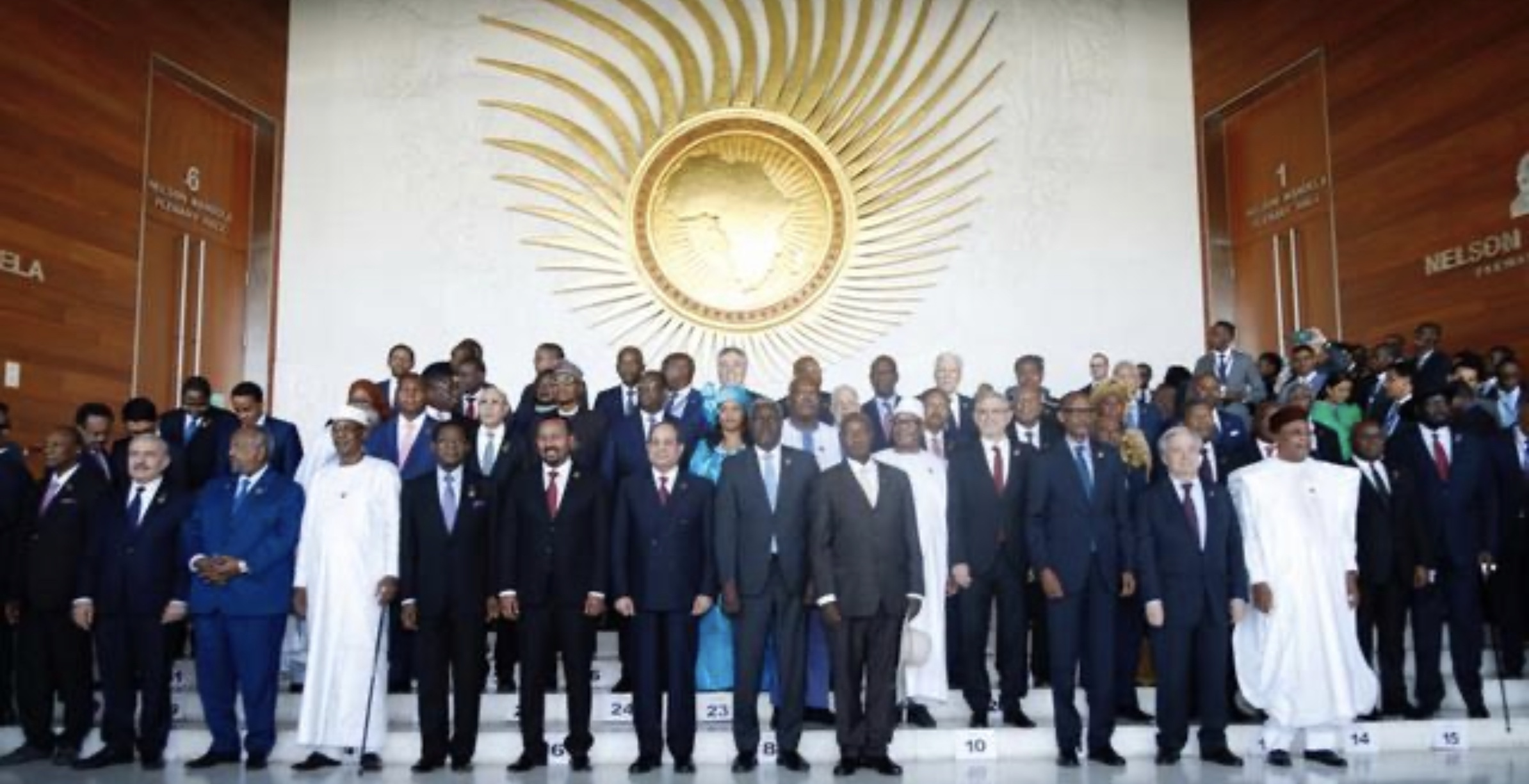
Les Chefs d’État de l’Union africaine se réuniront prochainement pour leur 33eme session ordinaire prévue pour les 9 et 10 février 2020 à Addis-Abeba, en Éthiopie.
Comme d’habitude, ceci est le premier de ma série de réflexions et d’analyses que je partagerai sur ce blog www.assodesire.com avant et après le Sommet.
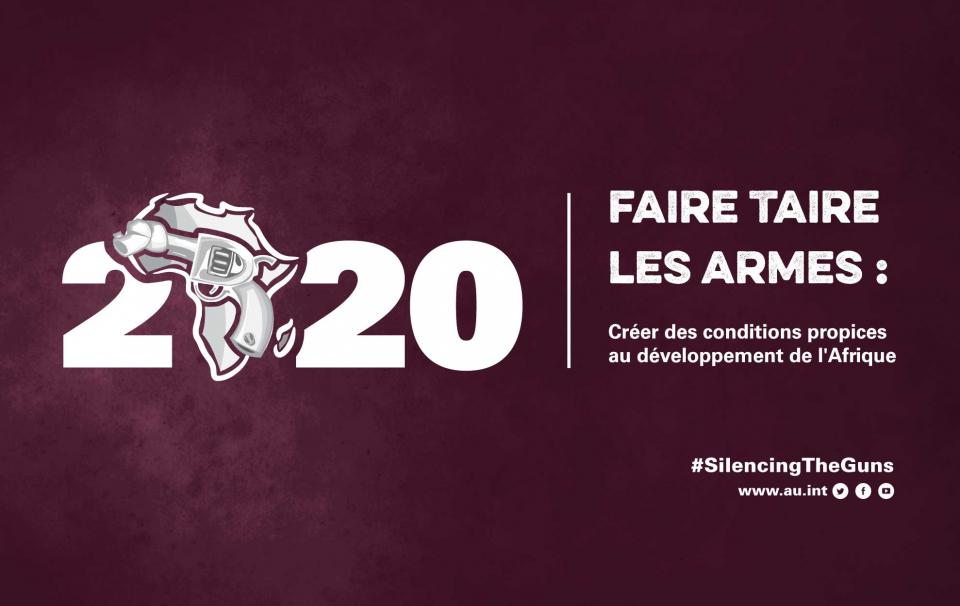
Le thème de l’année 2020 est «Faire taire les armes: créer des conditions propices au développement de l’Afrique». J’ai eu l’honneur de contribuer à ce débat depuis 2017 à l’Union africaine sur invitation du Conseil de paix et de sécurité de l’Union comme personne ressource, à plusieurs de ses sessions sur la question.
Dans leur déclaration solennelle du 50e anniversaire de l’Union africaine, les Chefs d’État et de Gouvernement africains se sont engagés «à atteindre l’objectif d’une Afrique sans conflits, à faire de la paix une réalité pour tous nos peuples et à débarrasser le continent des guerres, conflits, violations des droits de l’homme, des catastrophes humanitaires, et prévenir le génocide ».
En novembre 2017, le Conseil de paix et de sécurité a adopté une « feuille de route traitant des étapes pratiques pour faire taire les armes à l’horizon 2020 ». La feuille de route a également été approuvée par le Sommet des Chefs d’État. La Feuille de route reconnaît qu’au-delà des efforts politiques et militaires en cours, il y a un besoin urgent d’interventions structurelles dans le domaine du développement socio-économique, pour tenir compte des questions de gouvernance, des jeunes et des femmes, de l’emploi et de l’éducation, du changement climatique et d’autres facteurs pertinents.
Qu’est-ce qui pousse les individus et groupes d’individus à détenir et faire confiance aux armes?
Aujourd’hui, seulement 1/3 de toutes les armes légères en circulation sont aux mains des forces de sécurité légalement constituées. Les 2/3 sont détenues illégalement par des acteurs non étatiques ou des individus, ce qui est préoccupant car, l’utilisation de ces armes affecte directement et indirectement des centaines de milliers de personnes et compromet gravement nos engagements en faveur du développement durable.
Chaque année, la Commission de l’Union africaine présente un rapport sur l’état de la paix et de la sécurité sur le continent à l’Assemblée des Chefs d’État, et des décisions sont prises en conséquence, mais la paix ne se fait toujours pas voir. Dans de nombreux cas, les gens détiennent, gardent et font confiance aux armes, parce que leurs divers problèmes récurrents restent non résolus par les détenteurs du pouvoir.
Les institutions africaines doivent se comporter différemment
Les détenteurs d’armes illégales sur notre continent ne considèrent pas leurs propres actions comme illégales mais plutôt légitimes contre des problèmes tels que le partage inéquitable des ressources nationales, la confiscation du pouvoir d’État et des ressources d’État par un individu ou un groupe d’individus, des formes modernes de changements anticonstitutionnels de gouvernement qui se manifestent aujourd’hui par des élections frauduleuses ou «cosmétiques» pour se maintenir au pouvoir, souvent avec la bénédiction déguisée de certaines de nos institutions régionales et continentales à travers l’observation des élections qui ne portent principalement que sur les opérations de vote, et qui sont toujours «déclarées libres et équitables».
Si nous maintenons cette façon de conduire nos affaires, je crains que nous ne revenions ici à la fin de 2020 ou même 2030, seulement pour réaliser que les armes ne sont pas réduites au silence sur notre continent. Cela veut dire que le voyage vers notre Agenda 2063 deviendra plus long que prévu et les promesses contenues dans l’Agenda 2030 ne seront que de beaux rêves. En conséquence, la crise de confiance de nos populations – en particulier les jeunes – envers nos institutions, les instances régionales et continentales, va plutôt augmenter. Les populations affectées et marginalisées continueront bien sûr de ne faire confiance qu’aux armes.
Je dois insister sur le fait que la modification des constitutions nationales aux fins de garantir des mandats présidentiels supplémentaires ou illimités, renforcés par des élections injustes, constitue un réel risque de fragilité qui ne contribuera pas à faire taire les armes en Afrique. Pour que la campagne «Faire taire les armes» atteigne ses objectifs, nous devons faire les choses différemment. Nous devons être plus courageux si nous voulons voir des résultats différents.
Nos institutions continentales et régionales devraient avoir le pouvoir et l’autorité de faire un monitoring objectif de la performance des États membres dans la mise en œuvre de nos valeurs partagées qui sont contenues dans les nombreuses décisions, cadres d’action, traités, etc adoptés . Il devrait y avoir un mécanisme solide de sanction pour violation de nos valeurs partagées. Les sanctions ne doivent pas seulement viser le non-paiement des contributions financières. Je ne vois pas d’autre moyens pour changer l’Afrique et y assurer la paix et la sécurité.
Curieusement, l’Assemblée des Chefs d’Etat de l’Union Africaine dans sa dernière décision prise au Niger en juillet 2019 sur «l’Année pour faire taire les armes» a souligné le lien entre la bonne gouvernance, la paix, la stabilité et le développement et a reconnu que ces concepts sont intimement liés et ne peuvent pas être traités les uns sans les autres.
Ça ne commence pas forcément par les armes
La disponibilité des armes ne crée pas nécessairement des conflits. Mais leur prolifération et leur circulation incontrôlée peuvent entraîner une propagation plus rapide de la violence et amplifier leurs effets dévastateurs. Bien entendu, les pays sont moins sûrs si les armes sont facilement disponibles. Cependant, les conflits en cours en Afrique n’ont pas commencé simplement parce que des armes étaient disponibles. En fait, les armes sont arrivées plus tard dans la plupart des cas parce que les problèmes ne sont pas résolus.
7 Prérequis pour faire taire les armes en Afrique
Voici quelques conditions préalables clés que l’Union africaine, les États membres, les organismes régionaux, les citoyens et leurs groupes ainsi que les partenaires devraient rechercher si nous voulons vraiment faire taire les armes:
1 / La constitution et les lois de tous les États membres de l’Union africaine garantissent tous les droits civils et politiques à tous les citoyens sans discrimination. Cela signifie également que des manifestations pacifiques peuvent avoir lieu chaque fois que les citoyens ne sont pas satisfaits de la conduite des affaires publiques, et sans intimidation ni violence contre les citoyens.
2 / Les systèmes de justice de tous les États membres sont indépendants et exempts de pressions indues de la part de l’exécutif dans leur fonctionnement. Les auteurs de violations des droits de l’homme et les criminels sont effectivement poursuivis quel que soit leur statut social et politique et la réparation des victimes est assurée au niveau national… Si cela se produit constamment, la Cour pénale internationale n’aura plus grand chose à faire…Souvenons-nous que sans justice et sans redevabilité, les gens perdront confiance en tout sauf en les armes.
3 / Les institutions étatiques mettent en place des mécanismes socio-économiques et juridiques pour lutter contre les inégalités, l’extrême pauvreté et la corruption à tous les niveaux. Les flux financiers illicites sont considérablement réduits… De gros investissements sont réalisés à partir des ressources nationales, soutenues par la coopération internationale Sud-Sud et Nord-Sud, pour assurer les services sociaux essentiels, principalement l’éducation, les infrastructures et les soins de santé à tous les citoyens.
4 / Des élections crédibles sont regulierement tenues et gérées par des commissions électorales indépendantes sans aucune ingérence, et les résultats du vote reflètent le véritable choix de la majorité mais, les minorités sont respectées, délibérément protégées et ont la possibilité de participer aux affaires publiques à travers différentes autres institutions et par les lois et les règlements. Cela conduira naturellement à une situation où les élections seront davantage influencées par des programmes politiques et non par des origines ethniques. Les perdants des élections, y compris les anciens Chefs d’État ou les Chefs de l’opposition, sont traités avec dignité, respectés et bénéficient de la protection de l’État, mais ils sont tenus responsables s’ils ont commis de crimes.
5 / Des programmes innovants créent des opportunités d’éducation et de formation diverses et de qualité. Le secteur privé est réglementé, accompagné et encouragé pour créer de nouvelles opportunités d’emploi pour les jeunes. Les institutions publiques garantissent l’égalité des chances aux citoyens, sans discrimination d’être employés et engagés dans les affaires publiques.
6 / Le Traité de l’Union africaine sur la libre circulation des personnes et des biens est ratifié et pleinement mis en œuvre sur tout le continent. Le passeport panafricain ou même une carte d’identité africaine standardisée est délivrée rapidement sur demande aux citoyens. Ainsi, l’interaction entre les peuples de différentes nationalités et régions du continent catalyse d’importantes opportunités d’apprentissage, crée une synergie et stimule notre intégration économique. Les jeunes ne ressentent plus le besoin d’immigrer vers l’extérieur. Aucun décès n’est enregistré en Mer Méditerranée ou dans le désert du Sahara et une bonne partie de la diaspora rentre au bercail pour participer à la reconstruction du continent.
7 / L’Union africaine regagne la confiance de ses citoyens et devient une organisation véritablement axée sur les citoyens, et efficace pour assurer la mise en œuvre de ses décisions par les États membres. L’espace civique est garanti pour que les citoyens et leurs groupes participent à la vie politique. Cela signifie que l’UA a déclaré illégales toutes les lois draconiennes votées, empêchant la société civile d’opérer normalement dans les Etats membres. La liberté d’association est respectée mais les ONG sont redevables pour leurs actions.
Si tous ces prérequis sont observés, les armes seront sûrement réduites au silence en Afrique.
Observez cet endroit!!!
Je partagerai bientôt ma note d’information sur les autres questions clés de l’ordre du jour du Sommet à venir.
Veuillez m’envoyer vos commentaires et suggestions par e-mail à Desire.Assogbavi@assodesire.com ou sur What’sApp / Telegram au +19172160155
La version en Français est ici
Dear Friends
The Heads of State of the African Union will soon meet for their 33rd Ordinary Session scheduled for the 9th and 10th February 2020 in Addis Ababa, Ethiopia.
As usual, this is the first of my series of reflections and analysis to be shared on this blog www.assodesire.com in the lead up to the Summit and after.
The theme of the year 2020 is “Silencing the Guns: Creating Conducive Conditions for Africa’s Development”. I have had the honor to contribute to this debate several times since 2017 at the African Union as an invited Guest Speaker at the Peace and Security Council of the Union to its sessions on the issue.
In their Solemn Declaration of the 50th Anniversary of the African Union, African Heads of State and Government have committed themselves “to achieve the goal of a conflict-free Africa, to make peace a reality for all our people and to rid the continent of wars, civil conflicts, human rights violations, humanitarian disasters, and violent conflicts and to prevent genocide.” They further pledged “not to bequeath the burden of conflicts to the next generation of Africans and undertake to end all wars by 2020”.
 In November 2017, the Peace and Security Council adopted a Master Roadmap of Practical Steps to silencing the guns by 2020. The Roadmap has been also endorsed by the Assembly of Heads of State. The Roadmap recognizes that, beyond the ongoing political and military efforts, there is a need for structural interventions in the area of socio-economic development, to allow for issues of governance, youth and women, employment and education, climate change and other pertinent factors to play constructive roles in the efforts to silencing the guns in Africa.
Why are people holding and trusting the guns?
Only 1/3 of all small arms in circulation today are in the hands of legally constituted security forces. The remaining 2/3 are held illegally by non-state groups or individuals and this is cause for concern because, the use of these weapons, directly and indirectly, affects hundreds of thousands of people and severely undermines our commitments for sustainable development.
Every year, the African Union Commission presents a report on the state of peace and security in the continent to the Assembly of Heads of State, and decisions are made accordingly but peace is still not happening. People are holding, keeping and trusting the guns, mostly because their various recurrent problems remain unsolved by power holders.
African institutions must do business differently
Illegal weapon bearers in our continent do not consider their own actions as illegal, but rather legitimate against issues like the inequitable sharing of national resources, the confiscation of state power and state resources by an individual or group of individuals, modern forms of unconstitutional change of government manifested today by fraudulent or “cosmetic elections” to ensure additional or unlimited terms on power, often with the hidden blessing of some of our regional and continental bodies through election observation that mostly look at just the voting operations, often “declared free and fair”.
If we stick to the current way of doing business, I am afraid we will come back here at the end of 2020 or even 2030 or later, only to realize that guns are not silenced in our continent. This means that the journey to our Agenda 2063 will become longer than planned and the promises contained in the Agenda 2030 will remain beautiful dreams. As a result, the mistrust of our populations – especially the youth – and in our institutions, regional and continental bodies, will rather increase. Affected and marginalized populations will continue trusting nothing else but the guns.
I should insist that changing national constitutions in order to ensure additional or unlimited presidential terms, reinforced by unfair elections constitute a real risk for fragility that will not help to silence the guns in Africa. So, for the “Silencing the Guns” Campaign to happen, we must do things differently. We must do something courageous and probably painful if we want to see different results.
Our continental and regional bodies should be given power and authority to objectively monitor member states’ performance in implementing our adopted shared values contained in the numerous progressive decisions, frameworks, treaties adopted by the African Union. There should be a serious sanction mechanism to be used in case of violation of our values on which the African Union was built. Sanctions should not be limited to the non-payment of financial contributions to the Union. I see no other ways to change Africa and ensure peace and security.
Curiously, the Assembly of the Union in its last decision taken in Niger in July 2019 on the “Year of Silencing the Guns” underscored the nexus between good governance, peace, stability and development and recognized that these concepts are thoroughly intertwined and cannot be considered exclusive of each other.
It does not necessarily start with the guns
The availability of arms does not necessarily create conflicts. But their proliferation and their uncontrolled circulation can lead to a more rapid spread of violence and, magnify their devastating effects. Of course, countries are less safe if weapons are easily available. However, conflicts that are going on in Africa have not started just because arms were available. In fact, arms come in later in most of the cases because problems are not resolved. So silencing or collecting the guns can only succeed with a holistic approach.
7 Prerequisites to silence the guns in Africa
Here are some key prerequisites that the African Union, member states, regional bodies, citizens and their formations, as well as partners, should look after if we truly want to silence the guns in Africa:
1/ Constitutions and laws of all member states of the African Union guaranty all civil and political rights for all citizens with no discrimination. This also means that peaceful demonstrations can be held whenever citizens are not happy about the conduct of public affairs, without intimidation or violence against citizens.
2/ Justice systems of all member states are made independent and free of undue pressure from the executive in their functioning. Human rights violators and criminals are effectively prosecuted regardless of their social and political status and reparation for victims is ensured at the national level… If this happens constantly, the International Criminal Court will have nothing else to do… Let us remember that without justice and accountability people will lose their trust in everything except for the guns.
3/ State institutions set up socio-economic and legal mechanisms to tackle inequality and extreme poverty and to combat corruption at all levels. Illicit Financial Flows are significantly reduced and stopped… Heavy investments are made from national resources, supported by international South-South and North-South cooperation, to ensure essential services, mainly, quality education, infrastructures, and health care are accessible for all citizens.
4/ Credible elections are regularly held and managed by independent electoral boards with no interference, and the results of the pools reflect the true choice of the majority but, minorities are respected, deliberately protected and given the opportunity to participate in public affairs through different other institutions, by the law and affirmative actions. This naturally will lead to a situation where elections are influenced more by political agendas and not by ethnic origins. Losers of elections including former Heads of state and opposition leaders are treated with dignity, respect and enjoy state protection, but they are held accountable if they are responsible for crimes.
5/ Innovative programs create diverse and quality education and training opportunities for the youth. The private sector is regulated, accompanied and encouraged to create increased job opportunities. State institutions ensure equal opportunity to citizens with no discrimination, to be employed and engaged in public affairs.
6/ The African Union Treaty on Free Movement of People and Goods is universally ratified and fully implemented all over the continent… The Pan African Passport or even an African standardized ID is delivered promptly upon request to citizens. So, Interaction between peoples of different nationalities and regions of the continent catalyzes strong opportunities for learning, creates synergy, and boosts our economic integration. Young people feel no need to immigrate to Europe or America. No death is recorded in the Mediterranean Sea or in the Sahara Desert and, a good part of the diaspora comes back home to take part in the reconstruction of the continent.
7/ The African Union gains trust from its citizens and becomes a truly people-driven body, and effective to ensure the implementation of its decisions by member states… A genuine and effective space is provided for citizens and their formations to be part of the decision-making process. But this means that the AU has declared illegal, all draconian laws against CSOs in member states, and pushed countries to abolish them, and replace them by provisions that respect universally agreed freedom of association principles while ensuring accountability of NGOs.
If we do these, guns will be surely silenced in Africa.
Watch this Space!!!
I will soon share my briefing note on the key other issues on the upcoming Summit agenda.
Please send me your comments and suggestions via email to Desire.Assogbavi@assodesire.com or what’s App/Telegram to +19172160155


